



Question: Revise the class OneWayNoRepeatsList, as given in Listing 7.9, so that it allocates an extra element in the array entry and ignores entry[0], as suggested
Revise the class OneWayNoRepeatsList, as given in Listing 7.9, so that it allocates an extra element in the array entry and ignores entry[0], as suggested earlier near the end of the section entitled “More About Array Indices.”
Listing 7.9
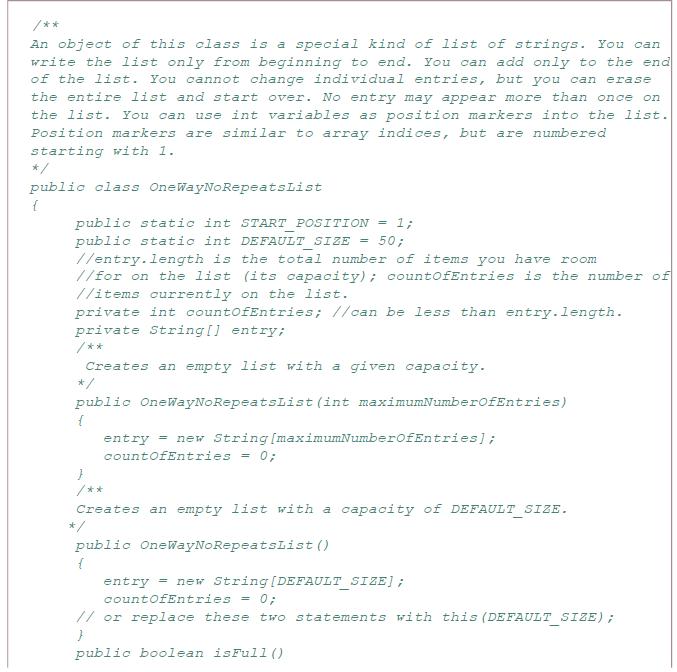
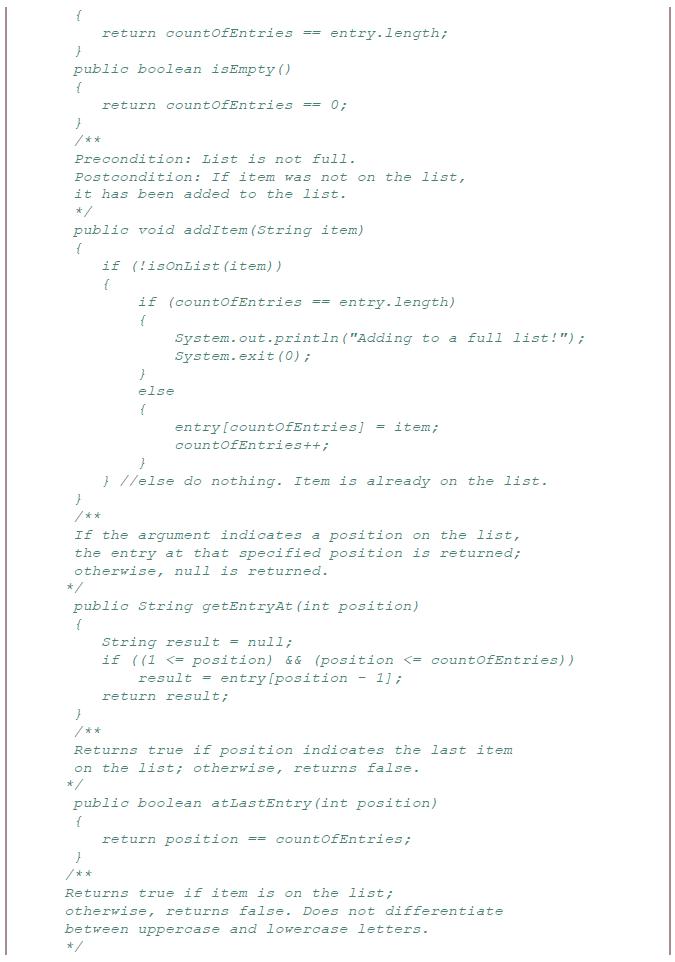
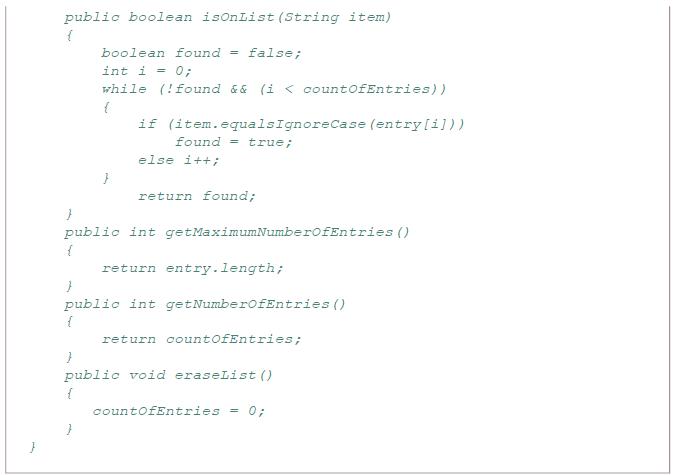
/** An object of this class is a special kind of list of strings. You can write the list only from beginning to end. You can add only to the end of the list. You cannot change individual entries, but you can erase the entire list and start over. No entry may appear more than once on the list. You can use int variables as position markers into the list. Position markers are similar to array indices, but are numbered starting with 1. * / public class OneWayNoRepeatsList public static int START POSITION = 1; public static int DEFAULT SIZE = 50; //entry.length is the total number of items you have room //for on the list (its capacity); countofEntries is the number of //items currently on the list. private int countofEntries; //can be less than entry.length. private String[] entry; /** Creates an empty list with a given capacity. */ public OnewayNoRepeatsList (int maximumNumberofEntries) entry = new String [maximumNumberofEntries]; countofEntries = 0; /** Creates an empty list with a capacity of DEFAULT SIZE. */ public OneWayNoRepeatsList () entry = new String [DEFAULT SIZE]; = 0; countofEntries // or replace these two statements with this (DEFAULT SIZE); public boolean isFull ()
Step by Step Solution
3.33 Rating (165 Votes )
There are 3 Steps involved in it
ANSWER An object of this class is a special kind of list of strings You can write the list only from ... View full answer

Get step-by-step solutions from verified subject matter experts