







Question: 2. Werck, a pharmaceutical company, is developing a new AIDS drug. The demand schedule for the drug, once it has been developed, is shown in
2. Werck, a pharmaceutical company, is developing a new AIDS drug. The demand schedule for the drug, once it has been developed, is shown in Table 2a. If Werck can act as a monopolist, its marginal revenue from selling the drug will be as given in Table 2B.
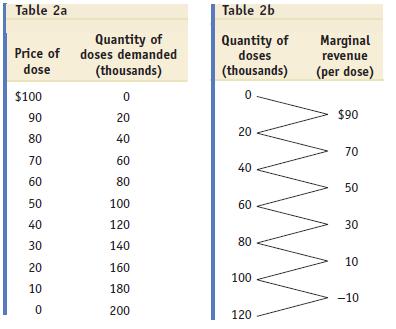
Werck’s fixed cost in developing the drug is $4 million. The marginal cost of producing the drug is zero.
a. If Werck develops the drug and can act as a monopolist, which quantity of output will it choose to produce? What will its profit be? Does Werck therefore have an incentive to engage in the costly development of the drug?
b. Suppose now that the government announces that in order to make AIDS drugs more widely available, it will force the producer to sell the drug at marginal cost. If Werck develops the drug, what will the price be and how much of the drug will be sold? What will its profit be?
Does Werck have an incentive to engage in the costly development of the drug?
Table 2a Price of dose Quantity of doses demanded (thousands) Table 2b Quantity of doses (thousands) Marginal (per dose) revenue $100 0 90 20 $90 80 40 20 70 60 60 80 50 100 40 60 60 40 120 30 140 80 80 20 160 100 10 180 0 200 120 www 40 70 50 30 10 -10
Step by Step Solution
There are 3 Steps involved in it

Get step-by-step solutions from verified subject matter experts
 Study Help