







Question: AP12.3 Antiskid braking systems present a challenging control problem, since brake/automotive system pa rameter variations can vary significantly (e.g., due to the brake-pad coefficient of
AP12.3 Antiskid braking systems present a challenging control problem, since brake/automotive system pa
rameter variations can vary significantly (e.g., due to the brake-pad coefficient of friction changes or road slope variations) and environmental influences (e.g., due to adverse road conditions). The objective of the antiskid system is to regulate wheel slip to maximize the coefficient of friction between the tire and road for any given road surface [8]. As we expect, the braking coefficient of friction is greatest for dry asphalt, slightly reduced for wet asphalt, and greatly reduced for ice.
A unity feedback simplified model of the brak
ing system is represented by a plant transfer function
G s( ) with
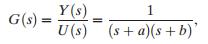
where normally a = 1 and b = 4.
a. Using a PID controller, design a very robust system where, for a step input, the percent over
shoot is P O. . ≤ 4% and the settling time (with a 2% criterion) is Ts ≤ 1 s. The steady-state error must be less than 1% for a step. We expect a and
b to vary by ±50%.
b. Design a system to yield the specifications of part
(a) using an ITAE performance index. Predict the percent overshoot and settling time for this design.
G(s)= Y(s) 1 U(s) (sa)(s+b)'
Step by Step Solution
There are 3 Steps involved in it

Get step-by-step solutions from verified subject matter experts
 Study Help