







Question: Suppose the light striking the reflective diffraction grating in Figure 34.13 is white light-that is, light consisting of all the colors of the rainbow. Red
Suppose the light striking the reflective diffraction grating in Figure 34.13 is white light-that is, light consisting of all the colors of the rainbow. Red light has the longest wavelength of the colors that make up white light; violet has the shortest.
(a) Is the angle at which first-order constructive interference occurs for violet light less than, equal to, or greater than the angle for red light?
(b) Why are multiple rainbows visible in the reflected light?
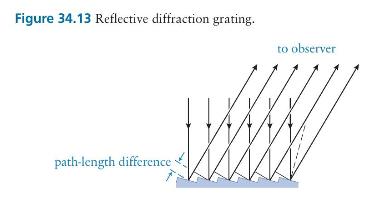
Figure 34.13 Reflective diffraction grating. path-length difference to observer
Step by Step Solution
3.52 Rating (145 Votes )
There are 3 Steps involved in it
a The angle of the fringes increases with wavelength and so the angle ... View full answer

Get step-by-step solutions from verified subject matter experts
 Study Help