







Question: 09. What is the output of this program? public class Java1109 public static void main(String args[ D { ArrayList numbers = new ArrayList(); numbers.add(new Integer(11));
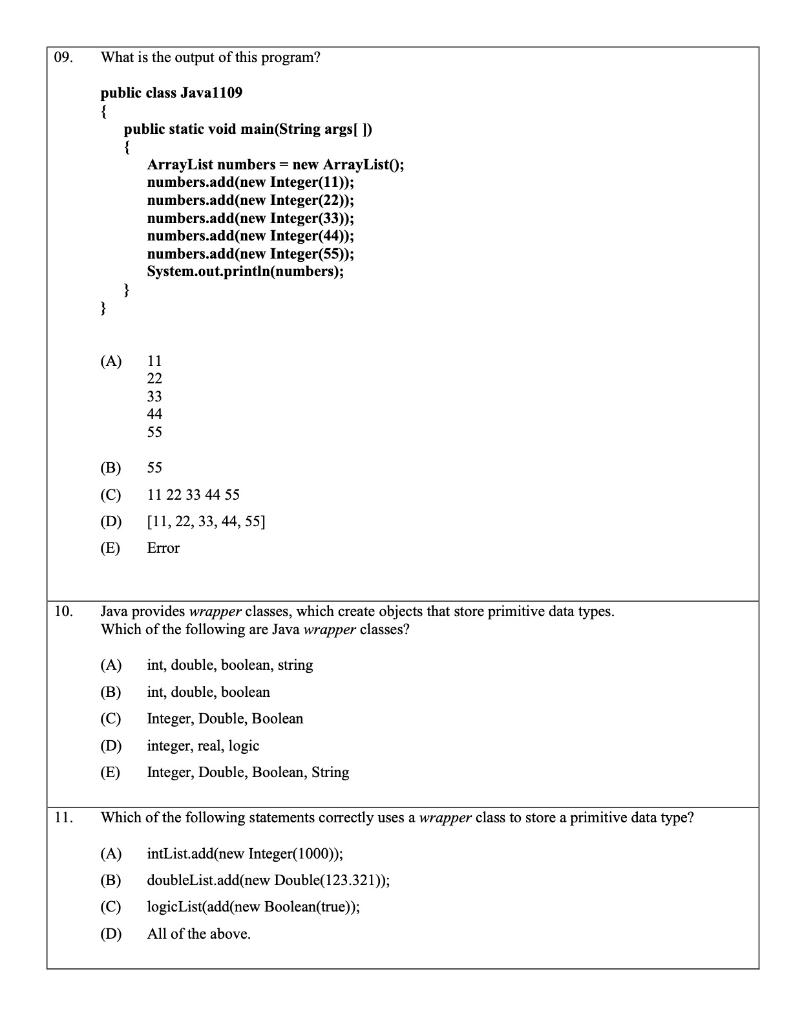
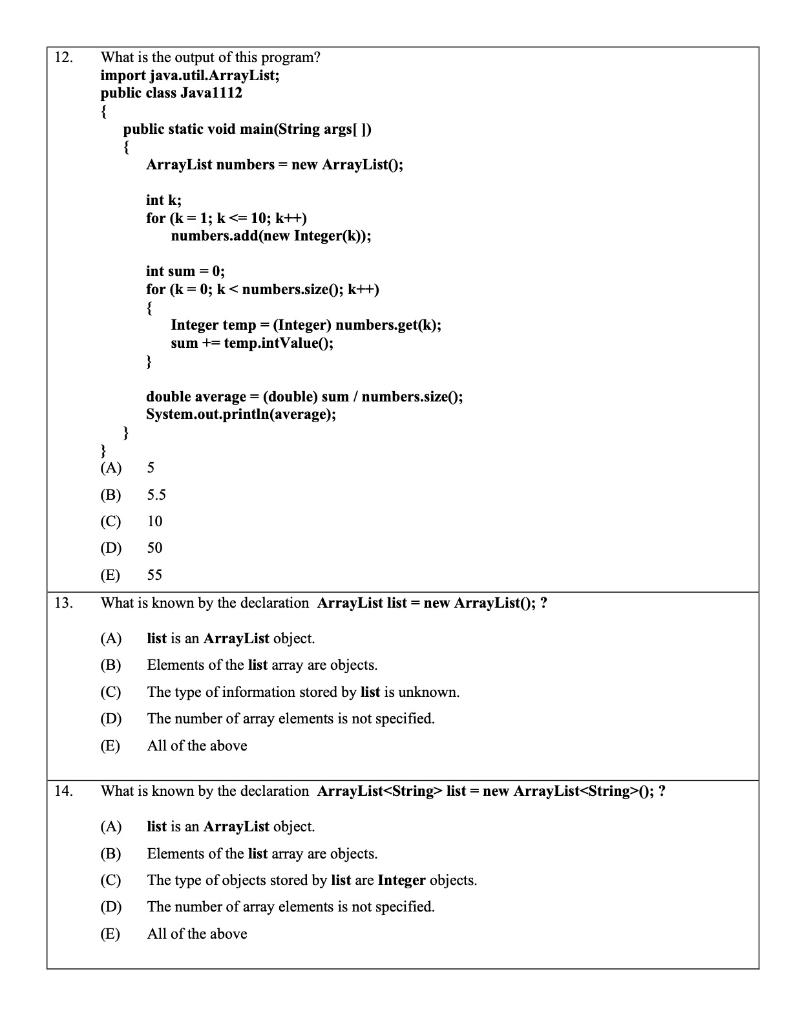
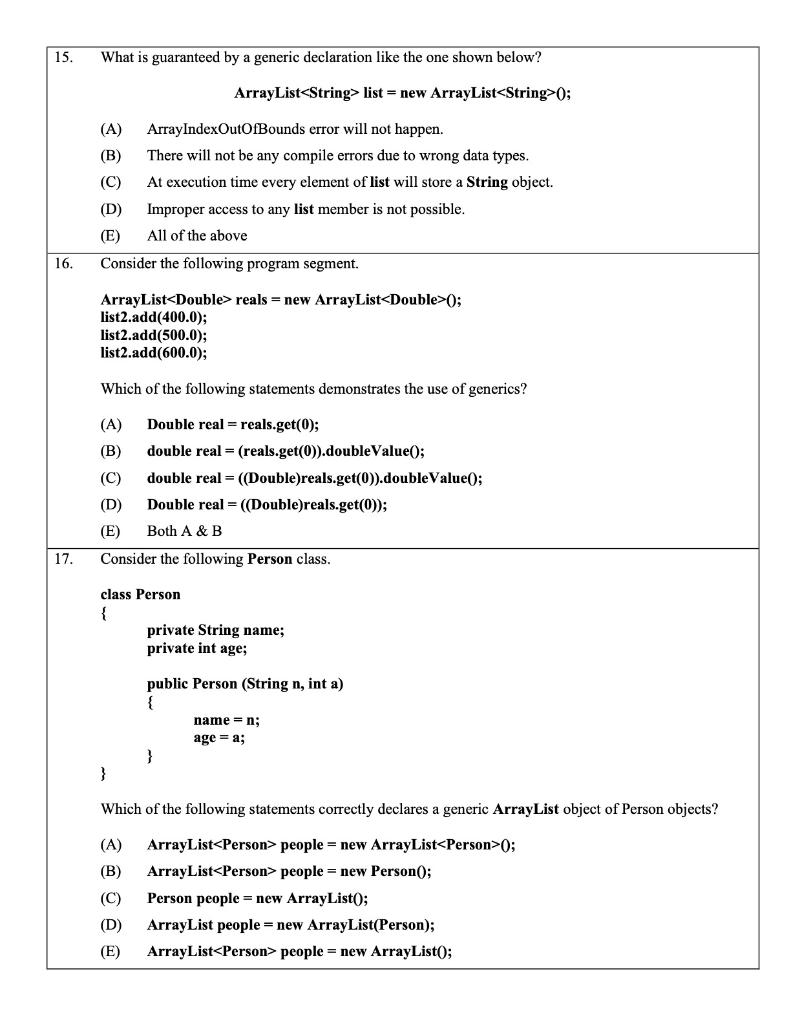
09. What is the output of this program? public class Java1109 public static void main(String args[ D { ArrayList numbers = new ArrayList(); numbers.add(new Integer(11)); numbers.add(new Integer(22)); numbers.add(new Integer(33)); numbers.add(new Integer(44)); numbers.add(new Integer(55)); System.out.println(numbers); } (A) 11 22 33 44 55 (B) 55 (C) (D) 11 22 33 44 55 [11, 22, 33, 44, 55) Error (E) 10. Java provides wrapper classes, which create objects that store primitive data types. Which of the following are Java wrapper classes? (A) (B) (C) int, double, boolean, string int, double, boolean Integer, Double, Boolean integer, real, logic Integer, Double, Boolean, String (D) (E) 11. Which of the following statements correctly uses a wrapper class to store a primitive data type? (A) (B) (C) intList.add(new Integer(1000)); doubleList.add(new Double(123.321)); logicList(add(new Boolean(true)); All of the above. (D) 12. What is the output of this program? import java.util.ArrayList; public class Java1112 public static void main(String args[]) ArrayList numbers = new ArrayList(); int k; for (k = 1; k list = new ArrayList
Step by Step Solution
There are 3 Steps involved in it

Get step-by-step solutions from verified subject matter experts
 Study Help