







Question: 1. 2 3 please answer all the iellts questions 18 to 26 please answer all the questions answer as soon as possible BHydrothermal Vents Prior
1. 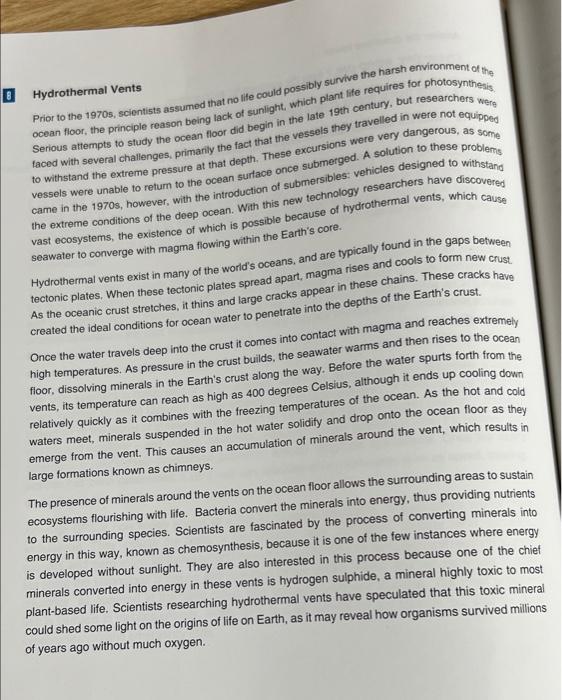
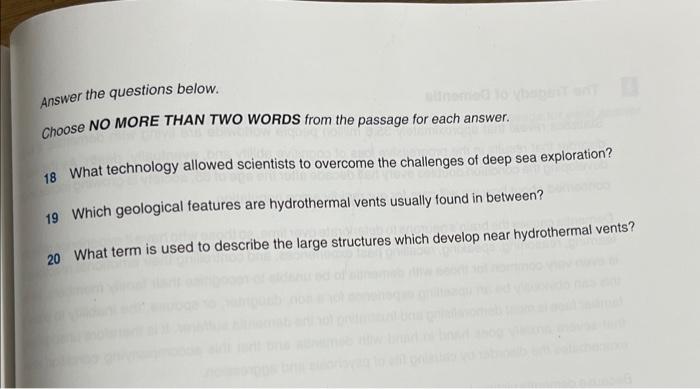
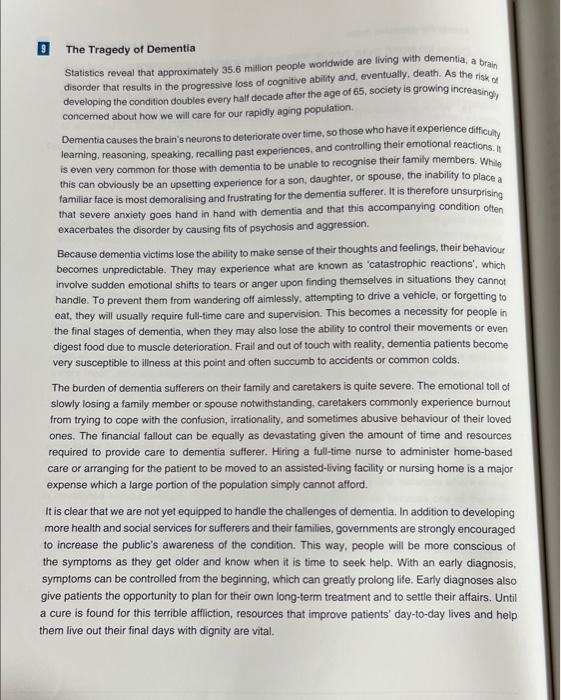
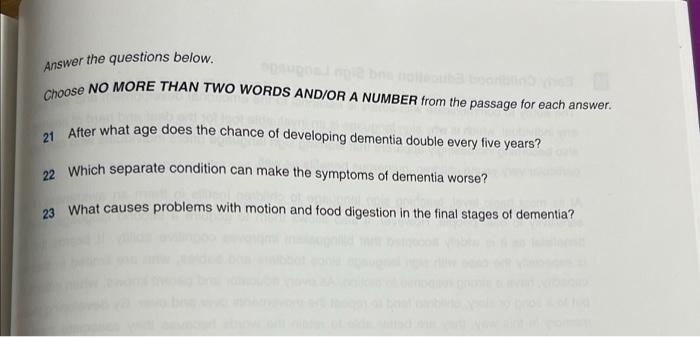
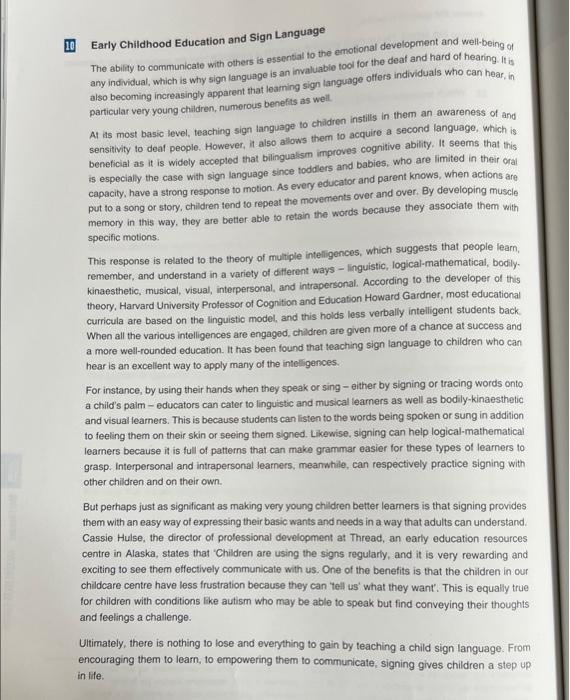
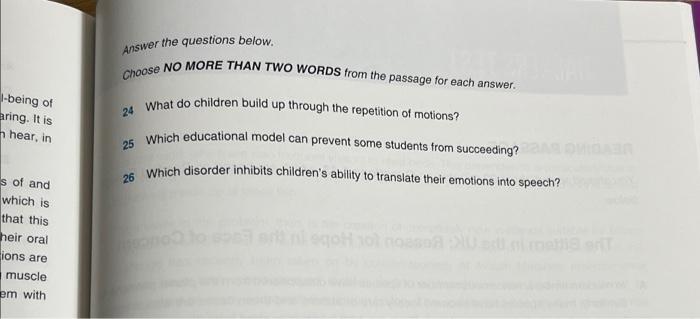
BHydrothermal Vents Prior to the 1970s, scientists assumed that no life could possibly survive the harsh environment of the ocean floor, the principle reason being lack of sunlight, which plant life requires for photosynthesis Serious attempts to study the ocean floor did begin in the late 19th century, but researchers were faced with several challenges, primarily the fact that the vessels they travelled in were not equipped to withstand the extreme pressure at that depth. These excursions were very dangerous, as some vessels were unable to return to the ocean surface once submerged. A solution to these problems came in the 1970s, however, with the introduction of submersibles: vehicles designed to withstand the extreme conditions of the deep ocean. With this new technology researchers have discovered vast ecosystems, the existence of which is possible because of hydrothermal vents, which cause seawater to converge with magma flowing within the Earth's core. Hydrothermal vents exist in many of the world's oceans, and are typically found in the gaps between tectonic plates. When these tectonic plates spread apart, magma rises and cools to form new crust. As the oceanic crust stretches, it thins and large cracks appear in these chains. These cracks have created the ideal conditions for ocean water to penetrate into the depths of the Earth's crust. Once the water travels deep into the crust it comes into contact with magma and reaches extremely high temperatures. As pressure in the crust builds, the seawater warms and then rises to the ocean floor, dissolving minerals in the Earth's crust along the way. Before the water spurts forth from the vents, its temperature can reach as high as 400 degrees Celsius, although it ends up cooling down relatively quickly as it combines with the freezing temperatures of the ocean. As the hot and cold waters meet, minerals suspended in the hot water solidify and drop onto the ocean floor as they emerge from the vent. This causes an accumulation of minerals around the vent, which results in large formations known as chimneys. The presence of minerals around the vents on the ocean floor allows the surrounding areas to sustain ecosystems flourishing with life. Bacteria convert the minerals into energy, thus providing nutrients to the surrounding species. Scientists are fascinated by the process of converting minerals into energy in this way, known as chemosynthesis, because it is one of the few instances where energy is developed without sunlight. They are also interested in this process because one of the chief minerals converted into energy in these vents is hydrogen sulphide, a mineral highly toxic to most plant-based life. Scientists researching hydrothermal vents have speculated that this toxic mineral could shed some light on the origins of life on Earth, as it may reveal how organisms survived millions of years ago without much oxygen. Answer the questions below. Choose NO MORE THAN TWO WORDS from the passage for each answer. 18 What technology allowed scientists to overcome the challenges of deep sea exploration? 19 Which geological features are hydrothermal vents usually found in between? 20 What term is used to describe the large structures which develop near hydrothermal vents? The Tragedy of Dementia Statistics reveal that approximately 35.6 million people worldwide are living with dementia, a brain disorder that results in the progressive loss of cognitive ability and, eventually, death. As the risk of developing the condition doubles every half decade after the age of 65, society is growing increasingly concerned about how we will care for our rapidly aging population. Dementia causes the brain's neurons to deteriorate over time, so those who have it experience difficulty learning, reasoning, speaking, recalling past experiences, and controlling their emotional reactions. It is even very common for those with dementia to be unable to recognise their family members. While this can obviously be an upsetting experience for a son, daughter, or spouse, the inability to place a familiar face is most demoralising and frustrating for the dementia sufferer. It is therefore unsurprising that severe anxiety goes hand in hand with dementia and that this accompanying condition often exacerbates the disorder by causing fits of psychosis and aggression. Because dementia victims lose the ability to make sense of their thoughts and feelings, their behaviour becomes unpredictable. They may experience what are known as 'catastrophic reactions', which involve sudden emotional shifts to tears or anger upon finding themselves in situations they cannot handle. To prevent them from wandering off aimlessly, attempting to drive a vehicle, or forgetting to eat, they will usually require full-time care and supervision. This becomes a necessity for people in the final stages of dementia, when they may also lose the ability to control their movements or even digest food due to muscle deterioration. Frail and out of touch with reality, dementia patients become very susceptible to illness at this point and often succumb to accidents or common colds. The burden of dementia sufferers on their family and caretakers is quite severe. The emotional toll of slowly losing a family member or spouse notwithstanding, caretakers commonly experience burnout from trying to cope with the confusion, irrationality, and sometimes abusive behaviour of their loved ones. The financial fallout can be equally as devastating given the amount of time and resources required to provide care to dementia sufferer. Hiring a full-time nurse to administer home-based care or arranging for the patient to be moved to an assisted-living facility or nursing home is a major expense which a large portion of the population simply cannot afford. It is clear that we are not yet equipped to handle the challenges of dementia. In addition to developing more health and social services for sufferers and their families, governments are strongly encouraged to increase the public's awareness of the condition. This way, people will be more conscious of the symptoms as they get older and know when it is time to seek help. With an early diagnosis, symptoms can be controlled from the beginning, which can greatly prolong life. Early diagnoses also give patients the opportunity to plan for their own long-term treatment and to settle their affairs. Until a cure is found for this terrible affliction, resources that improve patients' day-to-day lives and help them live out their final days with dignity are vital. Answer the questions below. Choose NO MORE THAN TWO WORDS AND/OR A NUMBER from the passage for each answer. 21 After what age does the chance of developing dementia double every five years? 22 Which separate condition can make the symptoms of dementia worse? 23 What causes problems with motion and food digestion in the final stages of dementia? 10 Early Childhood Education and Sign Language The ability to communicate with others is essential to the emotional development and well-being of any individual, which is why sign language is an invaluable tool for the deaf and hard of hearing. It is also becoming increasingly apparent that learning sign language offers individuals who can hear, in particular very young children, numerous benefits as well. At its most basic level, teaching sign language to children instills in them an awareness of and sensitivity to deaf people. However, it also allows them to acquire a second language, which is beneficial as it is widely accepted that bilingualism improves cognitive ability. It seems that this is especially the case with sign language since toddlers and babies, who are limited in their oral capacity, have a strong response to motion. As every educator and parent knows, when actions are put to a song or story, children tend to repeat the movements over and over. By developing muscle memory in this way, they are better able to retain the words because they associate them with specific motions. This response is related to the theory of multiple intelligences, which suggests that people learn, remember, and understand in a variety of different ways - linguistic, logical-mathematical, bodily. kinaesthetic, musical, visual, interpersonal, and intrapersonal. According to the developer of this theory, Harvard University Professor of Cognition and Education Howard Gardner, most educational curricula are based on the linguistic model, and this holds less verbally intelligent students back When all the various intelligences are engaged, children are given more of a chance at success and a more well-rounded education. It has been found that teaching sign language to children who can hear is an excellent way to apply many of the intelligences. For instance, by using their hands when they speak or sing- either by signing or tracing words onto a child's paim - educators can cater to linguistic and musical learners as well as bodily-kinaesthetic and visual learners. This is because students can listen to the words being spoken or sung in addition to feeling them on their skin or seeing them signed. Likewise, signing can help logical-mathematical learners because it is full of patterns that can make grammar easier for these types of learners to grasp. Interpersonal and intrapersonal learners, meanwhile, can respectively practice signing with other children and on their own. But perhaps just as significant as making very young children better learners is that signing provides them with an easy way of expressing their basic wants and needs in a way that adults can understand. Cassie Hulse, the director of professional development at Thread, an early education resources centre in Alaska, states that Children are using the signs regularly, and it is very rewarding and exciting to see them effectively communicate with us. One of the benefits is that the children in our childcare centre have less frustration because they can tell us what they want. This is equally true for children with conditions like autism who may be able to speak but find conveying their thoughts and feelings a challenge. Ultimately, there is nothing to lose. everything to gain by teaching a child sign language. From encouraging them to learn, to empowering them to communicate, signing gives children a step up in life. 1-being of aring. It is hear, in s of and which is that this heir oral ions are muscle em with Answer the questions below. Choose NO MORE THAN TWO WORDS from the passage for each answer. 24 What do children build up through the repetition of motions? 25 Which educational model can prevent some students from succeeding? 26 Which disorder inhibits children's ability to translate their emotions into speech
2
3
please answer all the iellts questions 18 to 26 please answer all the questions answer as soon as possible
Step by Step Solution
There are 3 Steps involved in it
1 Expert Approved Answer
Step: 1 Unlock

Question Has Been Solved by an Expert!
Get step-by-step solutions from verified subject matter experts
Step: 2 Unlock
Step: 3 Unlock
 Study Help