Question: 1. Use excel solver to solve for different scenarios shown by the questions at the end of the case. 2. You need to submit your
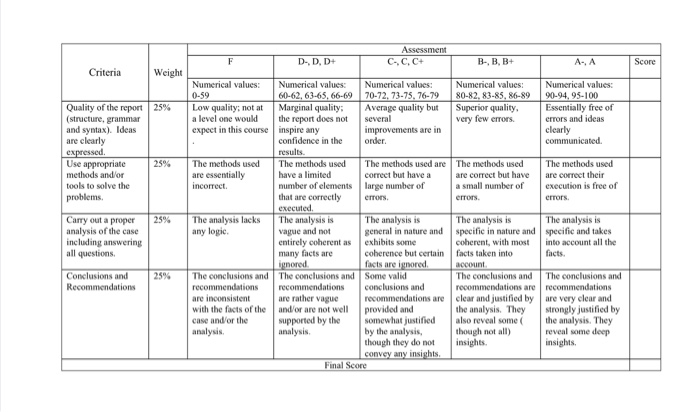
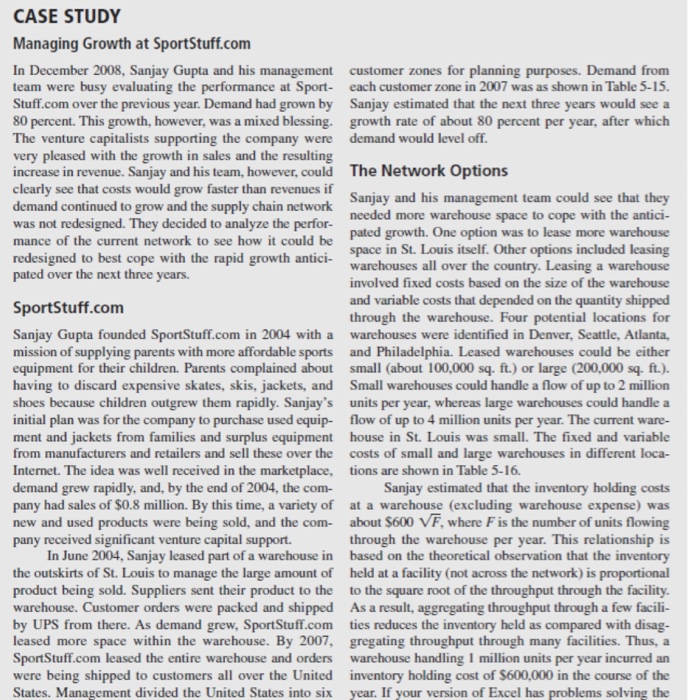
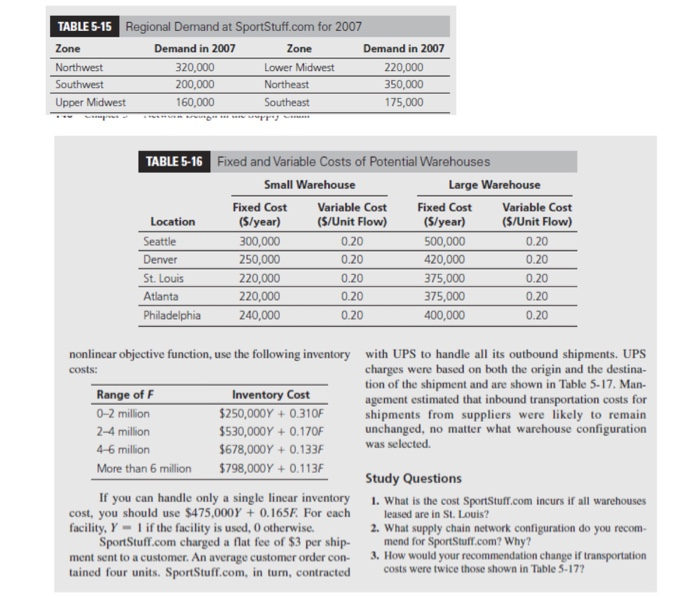
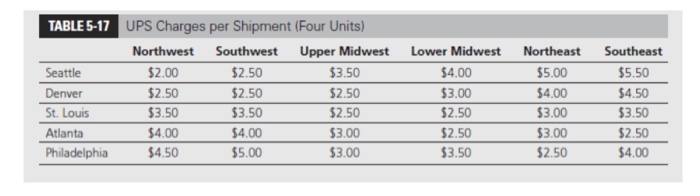
1. Use excel solver to solve for different scenarios shown by the questions at the end of the case. 2. You need to submit your work as a report addressing the questions. Assessment C, C+ F D . D D+ C B, B, B+ A, A Score Criteria Weight Numerical values: 90-94, 95-100 Numerical values: 0.59 Low quality, not at a level one would expect in this course Numerical values: 80-82, 83-85, 86-89 Superior quality, very few errors. 25% crrors and ideas clearly communicated Quality of the report (structure, grammar and syntax), Ideas are clearly expressed. Use appropriate methods and/or tools to solve the problems 25% The methods used are essentially incorrect The methods used are correct but have a small number of errors. The methods used are correct their execution is free of errors. 25% Carry out a proper analysis of the case including answering all questions, The analysis lacks any logic Numerical values: Numerical values: 60-62, 63-65, 66-69 70-72, 73-75. 76-79 Marginal quality: Average quality but the report does not several inspire any improvements are in confidence in the order. results The methods used The methods used are have a limited correct but have a number of elements large number of that are correctly errors executed. The analysis is The analysis is vague and not general in nature and entirely coherent as exhibits some many facts are coherence but certain nored facts are ignored. The conclusions and some valid recommendations conclusions and are rather vague recommendations are and/or are not well provided and supported by the somewhat justified analysis by the analysis, though they do not convey any insights Final Score Conclusions and Recommendations The conclusions and recommendations are inconsistent with the facts of the case and/or the analysis The analysis is The analysis is specific in nature and specific and takes coherent, with most into account all the facts taken into facts account The conclusions and The conclusions and recommendations are recommendations clear and justified by are very clear and the analysis. They strongly justified by also reveal some the analysis. They though not all) reveal some deep insights. insights CASE STUDY Managing Growth at SportStuff.com In December 2008, Sanjay Gupta and his management customer zones for planning purposes. Demand from team were busy evaluating the performance at Sport- each customer zone in 2007 was as shown in Table 3-15. Stuff.com over the previous year. Demand had grown by Sanjay estimated that the next three years would see a 80 percent. This growth, however, was a mixed blessing. growth rate of about 80 percent per year, after which The venture capitalists supporting the company were demand would level off. very pleased with the growth in sales and the resulting increase in revenue. Sanjay and his team, however, could The Network Options clearly see that costs would grow faster than revenues if Sanjay and his management team could see that they demand continued to grow and the supply chain network needed more warehouse space to cope with the antici- was not redesigned. They decided to analyze the perfor- pated growth. One option was to lease more warehouse mance of the current network to see how it could be space in St. Louis itself. Other options included leasing redesigned to best cope with the rapid growth antici- warehouses all over the country. Leasing a warehouse pated over the next three years. involved fixed costs based on the size of the warehouse and variable costs that depended on the quantity shipped SportStuff.com through the warehouse. Four potential locations for Sanjay Gupta founded SportStuff.com in 2004 with a warehouses were identified in Denver, Seattle, Atlanta, mission of supplying parents with more affordable sports and Philadelphia. Leased warehouses could be either equipment for their children. Parents complained about small about 100,000 sq. ft.) or large (200,000 sq. ft.). having to discard expensive skates, skis, jackets, and Small warehouses could handle a flow of up to 2 million shoes because children outgrew them rapidly. Sanjay's units per year, whereas large warehouses could handle a initial plan was for the company to purchase used equip- flow of up to 4 million units per year. The current ware- ment and jackets from families and surplus equipment house in St. Louis was small. The fixed and variable from manufacturers and retailers and sell these over the costs of small and large warehouses in different loca- Internet. The idea was well received in the marketplace, tions are shown in Table 5-16. demand grew rapidly, and, by the end of 2004, the com Sanjay estimated that the inventory holding costs pany had sales of $0.8 million. By this time, a variety of at a warehouse (excluding warehouse expense) was new and used products were being sold, and the com- about $600 VF, where F is the number of units flowing pany received significant venture capital support through the warehouse per year. This relationship is In June 2004, Sanjay leased part of a warehouse in based on the theoretical observation that the inventory the outskirts of St. Louis to manage the large amount of held at a facility (not across the network) is proportional product being sold. Suppliers sent their product to the to the square root of the throughput through the facility. warehouse. Customer orders were packed and shipped As a result, aggregating throughput through a few facili- by UPS from there. As demand grew, SportStuff.com ties reduces the inventory held as compared with disag. leased more space within the warehouse. By 2007, gregating throughput through many facilities. Thus, a SportStuff.com leased the entire warehouse and orders warehouse handling 1 million units per year incurred an were being shipped to customers all over the United inventory holding cost of $600,000 in the course of the States. Management divided the United States into six year. If your version of Excel has problems solving the TABLE 5-15 Regional Demand at SportStuff.com for 2007 Zone Demand in 2007 Zone Demand in 2007 Northwest 320,000 Lower Midwest 220,000 Southwest 200,000 Northeast 350,000 Upper Midwest 160,000 Southeast 175,000 R PP TABLE 5-16 Location Seattle Denver St. Louis Atlanta Philadelphia Fixed and Variable Costs of Potential Warehouses Small Warehouse Large Warehouse Fixed Cost Variable Cost Fixed Cost Variable Cost (S/year) ($/Unit Flow) (5/year) ($/Unit Flow) 300,000 0.20 500,000 0.20 250,000 0.20 420,000 0.20 220,000 0.20 375,000 0.20 220,000 0.20 375,000 0.20 240,000 0.20 400,000 0.20 nonlinear objective function, use the following inventory costs: Range of F 0-2 million 2-4 million 4-6 million More than 6 million Inventory Cost $250,000Y + 0.310F $530,000Y + 0.170F $678,000Y + 0.133F $798,000Y + 0.113F with UPS to handle all its outbound shipments. UPS charges were based on both the origin and the destina- tion of the shipment and are shown in Table 5-17. Man- agement estimated that inbound transportation costs for shipments from suppliers were likely to remain unchanged, no matter what warehouse configuration was selected. If you can handle only a single linear inventory cost, you should use $475,000Y + 0.165F For each facility, Y - 1 if the facility is used, 0 otherwise. SportStuff.com charged a flat fee of $3 per ship- ment sent to a customer. An average customer order con- tained four units. SportStuff.com, in tum, contracted Study Questions 1. What is the cost SportStufr.com incurs if all warehouses leased are in St. Louis? 2. What supply chain network configuration do you recom- mend for SportStuff.com? Why? 3. How would your recommendation change if transportation costs were twice those shown in Table 5-17? TABLE 5-17 UPS Charges per Shipment (Four Units) Northwest Southwest Upper Midwest Seattle $2.00 $2.50 $3.50 Denver $2.50 $2.50 $2.50 St. Louis $3.50 $3.50 $2.50 Atlanta $4.00 $4.00 $3.00 Philadelphia $4.50 $5.00 $3.00 Lower Midwest $4.00 $3.00 $2.50 $2.50 $3.50 Northeast $5.00 54.00 $3.00 $3.00 $2.50 Southeast $5.50 $4.50 $3.50 $2.50 $4.00 1. Use excel solver to solve for different scenarios shown by the questions at the end of the case. 2. You need to submit your work as a report addressing the questions. Assessment C, C+ F D . D D+ C B, B, B+ A, A Score Criteria Weight Numerical values: 90-94, 95-100 Numerical values: 0.59 Low quality, not at a level one would expect in this course Numerical values: 80-82, 83-85, 86-89 Superior quality, very few errors. 25% crrors and ideas clearly communicated Quality of the report (structure, grammar and syntax), Ideas are clearly expressed. Use appropriate methods and/or tools to solve the problems 25% The methods used are essentially incorrect The methods used are correct but have a small number of errors. The methods used are correct their execution is free of errors. 25% Carry out a proper analysis of the case including answering all questions, The analysis lacks any logic Numerical values: Numerical values: 60-62, 63-65, 66-69 70-72, 73-75. 76-79 Marginal quality: Average quality but the report does not several inspire any improvements are in confidence in the order. results The methods used The methods used are have a limited correct but have a number of elements large number of that are correctly errors executed. The analysis is The analysis is vague and not general in nature and entirely coherent as exhibits some many facts are coherence but certain nored facts are ignored. The conclusions and some valid recommendations conclusions and are rather vague recommendations are and/or are not well provided and supported by the somewhat justified analysis by the analysis, though they do not convey any insights Final Score Conclusions and Recommendations The conclusions and recommendations are inconsistent with the facts of the case and/or the analysis The analysis is The analysis is specific in nature and specific and takes coherent, with most into account all the facts taken into facts account The conclusions and The conclusions and recommendations are recommendations clear and justified by are very clear and the analysis. They strongly justified by also reveal some the analysis. They though not all) reveal some deep insights. insights CASE STUDY Managing Growth at SportStuff.com In December 2008, Sanjay Gupta and his management customer zones for planning purposes. Demand from team were busy evaluating the performance at Sport- each customer zone in 2007 was as shown in Table 3-15. Stuff.com over the previous year. Demand had grown by Sanjay estimated that the next three years would see a 80 percent. This growth, however, was a mixed blessing. growth rate of about 80 percent per year, after which The venture capitalists supporting the company were demand would level off. very pleased with the growth in sales and the resulting increase in revenue. Sanjay and his team, however, could The Network Options clearly see that costs would grow faster than revenues if Sanjay and his management team could see that they demand continued to grow and the supply chain network needed more warehouse space to cope with the antici- was not redesigned. They decided to analyze the perfor- pated growth. One option was to lease more warehouse mance of the current network to see how it could be space in St. Louis itself. Other options included leasing redesigned to best cope with the rapid growth antici- warehouses all over the country. Leasing a warehouse pated over the next three years. involved fixed costs based on the size of the warehouse and variable costs that depended on the quantity shipped SportStuff.com through the warehouse. Four potential locations for Sanjay Gupta founded SportStuff.com in 2004 with a warehouses were identified in Denver, Seattle, Atlanta, mission of supplying parents with more affordable sports and Philadelphia. Leased warehouses could be either equipment for their children. Parents complained about small about 100,000 sq. ft.) or large (200,000 sq. ft.). having to discard expensive skates, skis, jackets, and Small warehouses could handle a flow of up to 2 million shoes because children outgrew them rapidly. Sanjay's units per year, whereas large warehouses could handle a initial plan was for the company to purchase used equip- flow of up to 4 million units per year. The current ware- ment and jackets from families and surplus equipment house in St. Louis was small. The fixed and variable from manufacturers and retailers and sell these over the costs of small and large warehouses in different loca- Internet. The idea was well received in the marketplace, tions are shown in Table 5-16. demand grew rapidly, and, by the end of 2004, the com Sanjay estimated that the inventory holding costs pany had sales of $0.8 million. By this time, a variety of at a warehouse (excluding warehouse expense) was new and used products were being sold, and the com- about $600 VF, where F is the number of units flowing pany received significant venture capital support through the warehouse per year. This relationship is In June 2004, Sanjay leased part of a warehouse in based on the theoretical observation that the inventory the outskirts of St. Louis to manage the large amount of held at a facility (not across the network) is proportional product being sold. Suppliers sent their product to the to the square root of the throughput through the facility. warehouse. Customer orders were packed and shipped As a result, aggregating throughput through a few facili- by UPS from there. As demand grew, SportStuff.com ties reduces the inventory held as compared with disag. leased more space within the warehouse. By 2007, gregating throughput through many facilities. Thus, a SportStuff.com leased the entire warehouse and orders warehouse handling 1 million units per year incurred an were being shipped to customers all over the United inventory holding cost of $600,000 in the course of the States. Management divided the United States into six year. If your version of Excel has problems solving the TABLE 5-15 Regional Demand at SportStuff.com for 2007 Zone Demand in 2007 Zone Demand in 2007 Northwest 320,000 Lower Midwest 220,000 Southwest 200,000 Northeast 350,000 Upper Midwest 160,000 Southeast 175,000 R PP TABLE 5-16 Location Seattle Denver St. Louis Atlanta Philadelphia Fixed and Variable Costs of Potential Warehouses Small Warehouse Large Warehouse Fixed Cost Variable Cost Fixed Cost Variable Cost (S/year) ($/Unit Flow) (5/year) ($/Unit Flow) 300,000 0.20 500,000 0.20 250,000 0.20 420,000 0.20 220,000 0.20 375,000 0.20 220,000 0.20 375,000 0.20 240,000 0.20 400,000 0.20 nonlinear objective function, use the following inventory costs: Range of F 0-2 million 2-4 million 4-6 million More than 6 million Inventory Cost $250,000Y + 0.310F $530,000Y + 0.170F $678,000Y + 0.133F $798,000Y + 0.113F with UPS to handle all its outbound shipments. UPS charges were based on both the origin and the destina- tion of the shipment and are shown in Table 5-17. Man- agement estimated that inbound transportation costs for shipments from suppliers were likely to remain unchanged, no matter what warehouse configuration was selected. If you can handle only a single linear inventory cost, you should use $475,000Y + 0.165F For each facility, Y - 1 if the facility is used, 0 otherwise. SportStuff.com charged a flat fee of $3 per ship- ment sent to a customer. An average customer order con- tained four units. SportStuff.com, in tum, contracted Study Questions 1. What is the cost SportStufr.com incurs if all warehouses leased are in St. Louis? 2. What supply chain network configuration do you recom- mend for SportStuff.com? Why? 3. How would your recommendation change if transportation costs were twice those shown in Table 5-17? TABLE 5-17 UPS Charges per Shipment (Four Units) Northwest Southwest Upper Midwest Seattle $2.00 $2.50 $3.50 Denver $2.50 $2.50 $2.50 St. Louis $3.50 $3.50 $2.50 Atlanta $4.00 $4.00 $3.00 Philadelphia $4.50 $5.00 $3.00 Lower Midwest $4.00 $3.00 $2.50 $2.50 $3.50 Northeast $5.00 54.00 $3.00 $3.00 $2.50 Southeast $5.50 $4.50 $3.50 $2.50 $4.00










 Study Help