







Question: 1. What is a composite entity, and when is it used? 2. Suppose you are working within the framework of the conceptual model in Figure
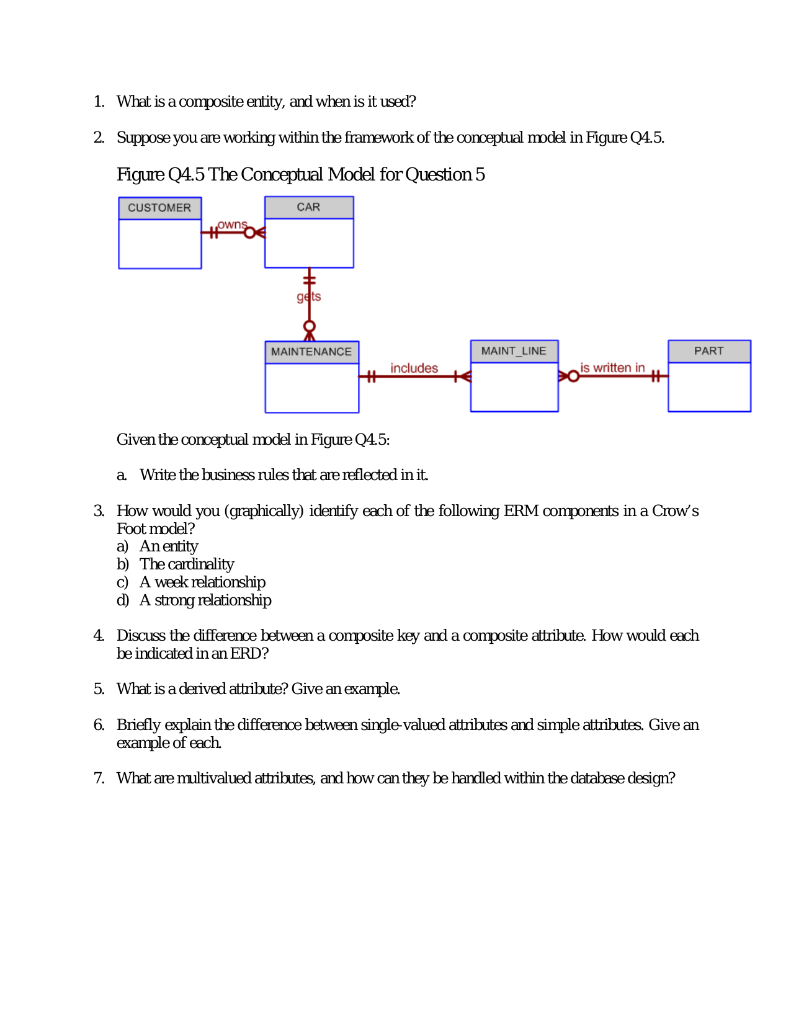
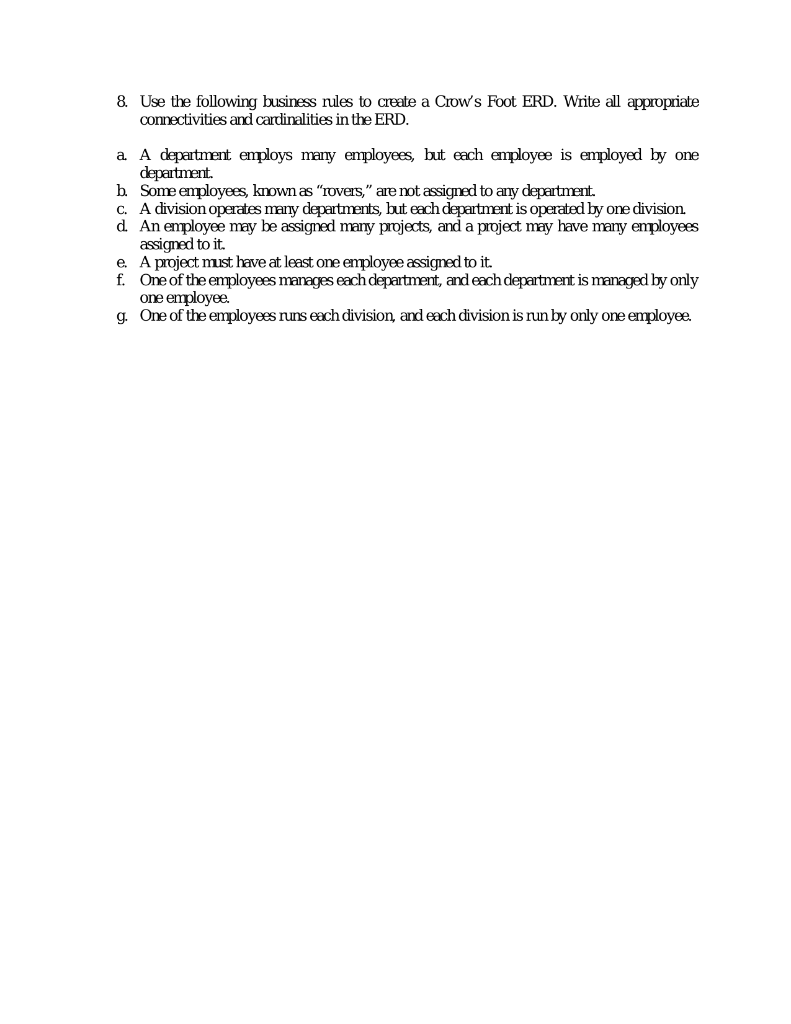
1. What is a composite entity, and when is it used? 2. Suppose you are working within the framework of the conceptual model in Figure 24.5. Figure 24.5 The Conceptual Model for Question 5 CUSTOMER CAR howns MAINTENANCE MAINT_LINE PART t includes is written in Given the conceptual model in Figure Q4.5: a Write the business rules that are reflected in it. 3. How would you (graphically) identify each of the following ERM components in a Crow's Foot model? a) An entity b) The cardinality c) A week relationship d) A strong relationship 4 Discuss the difference between a composite key and a composite attribute. How would each be indicated in an ERD? 5. What is a derived attribute? Give an example. 6. Briefly explain the difference between single valued attributes and simple attributes. Give an example of each 7. What are multivalued attributes, and how can they be handled within the database design? 8. Use the following business rules to create a Crow's Foot ERD. Write all appropriate connectivities and cardinalities in the ERD. a A department employs many employees, but each employee is employed by one department. b. Some employees, known as "rovers," are not assigned to any department. C. A division operates many departments, but each department is operated by one division d An employee may be assigned many projects, and a project may have many employees assigned to it. project must have at least one enployee assigned to it. f. One of the employees manages each department, and each department is managed by only one employee. g. One of the employees runs each division, and each division is run by only one employee
Step by Step Solution
There are 3 Steps involved in it

Get step-by-step solutions from verified subject matter experts
 Study Help