



Question: 1.What does a retail director at Nine West Retail Stores do? 2.What does a merchant or RD have to be good at? 3.What is the
1.What does a retail director at Nine West Retail Stores do?
2.What does a merchant or RD have to be good at?
3.What is the role of the merchandising manager or president of NWRS?
4.How does the president or merchandising manager exert control over the RDs?
5.How do the president or merchandising manager ensure that the merchant makes decisions that are optimal for the organisation?
Discuss the merits of two unique aspects of the NWRS merchandising organisation
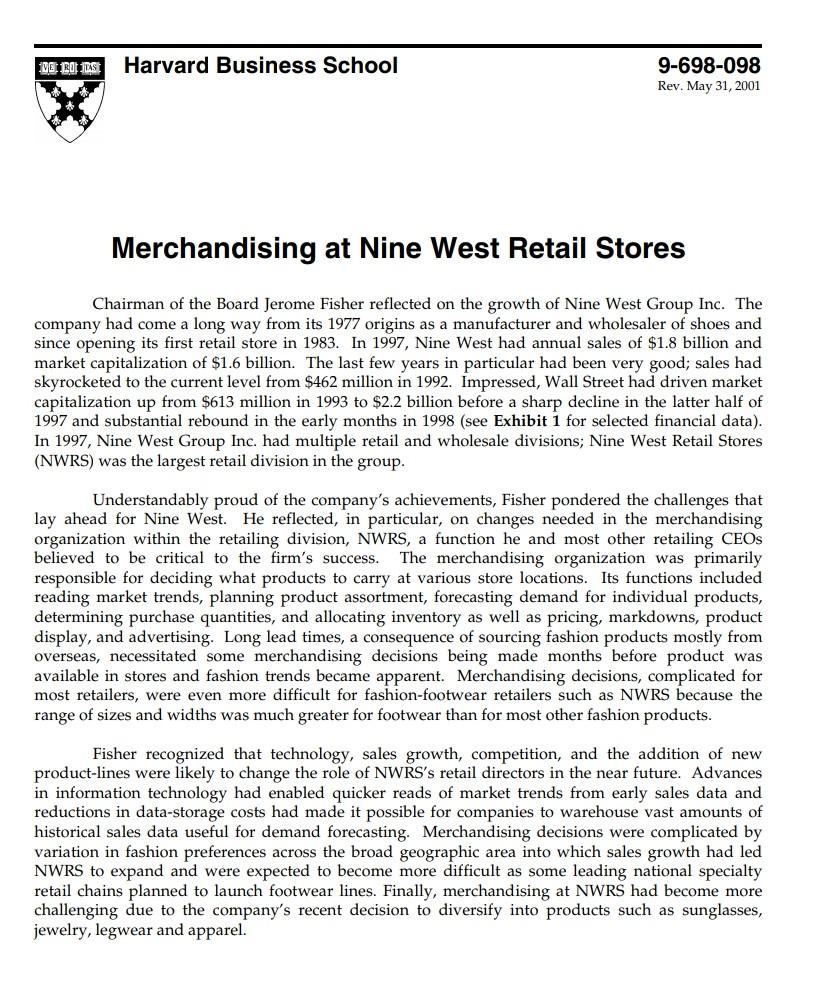
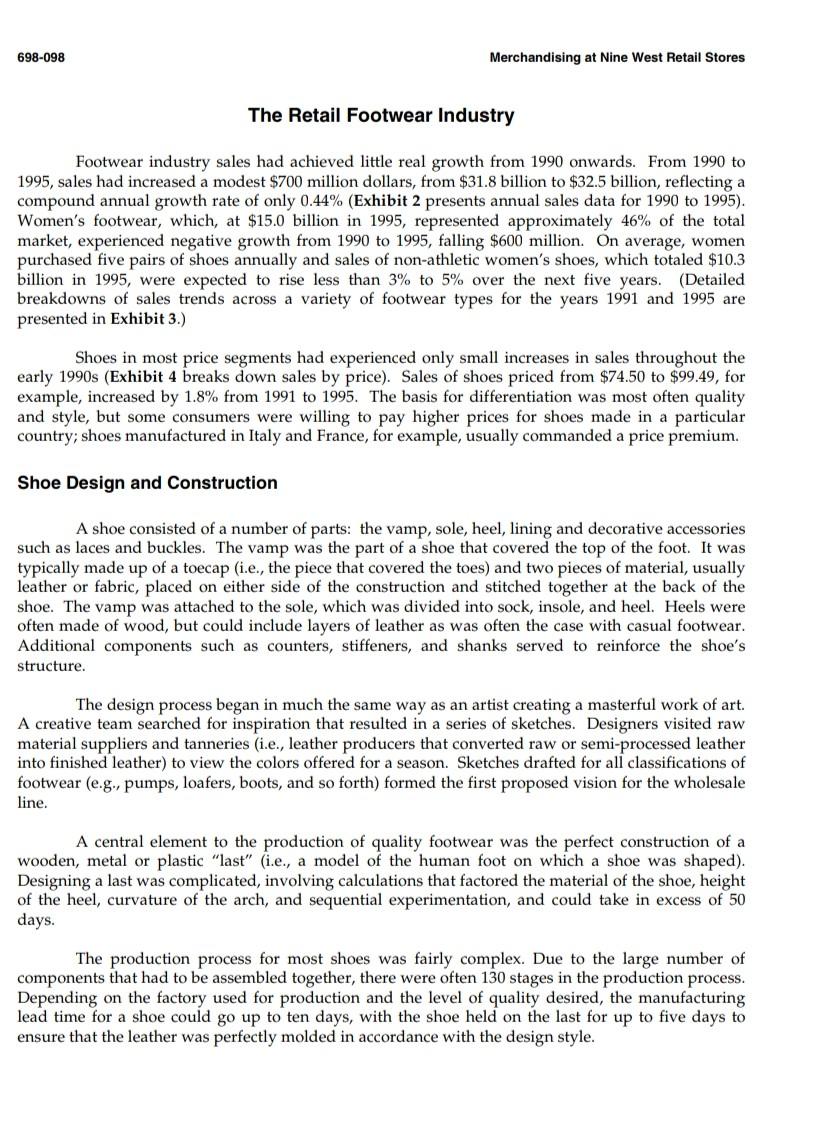
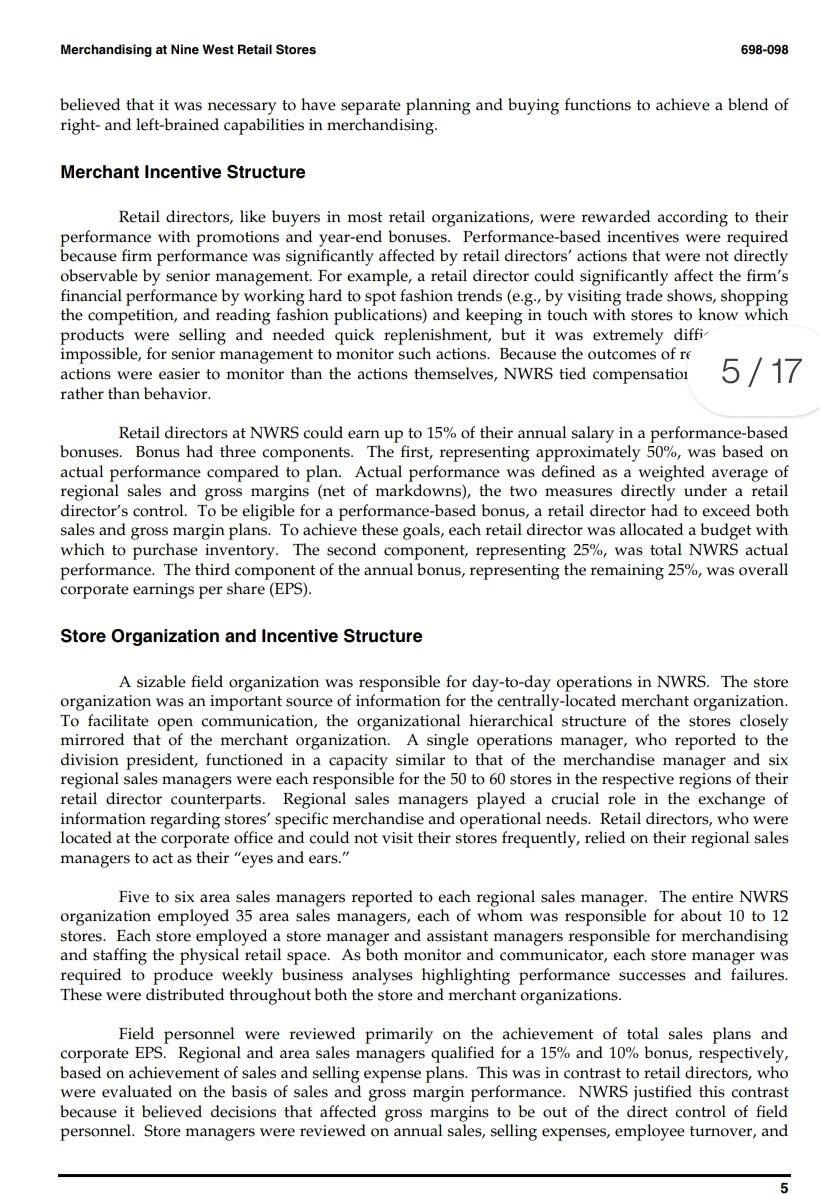
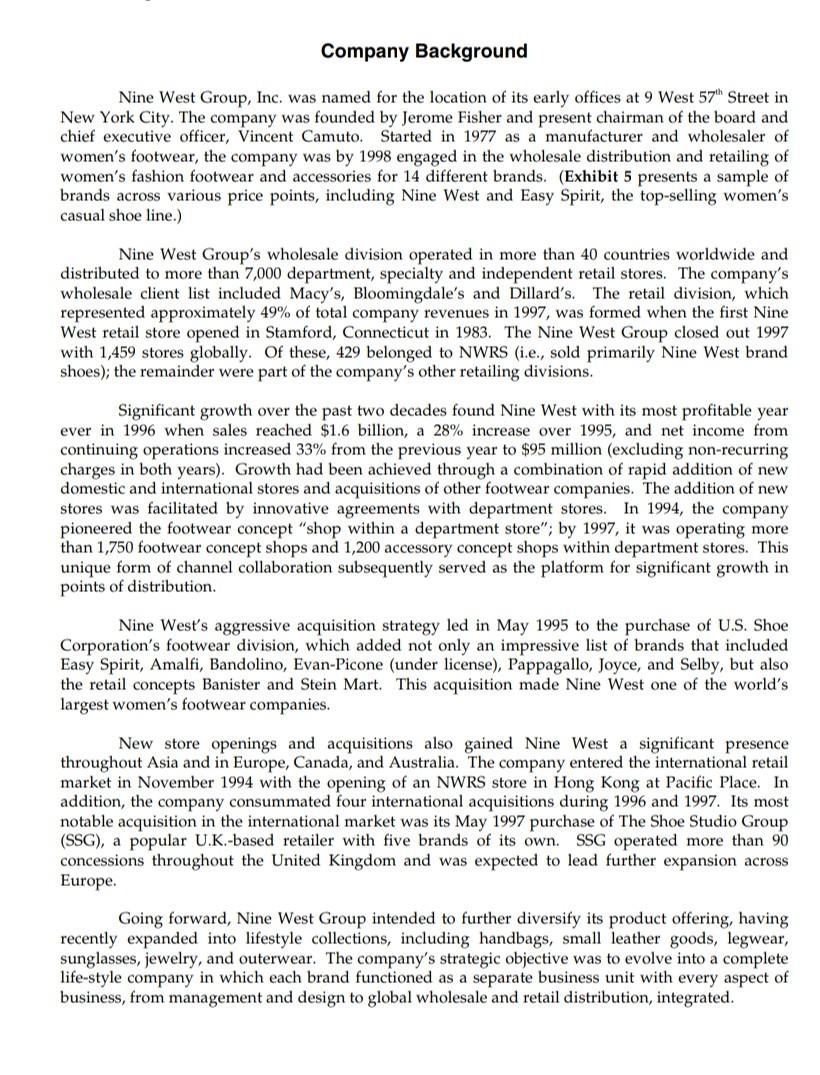
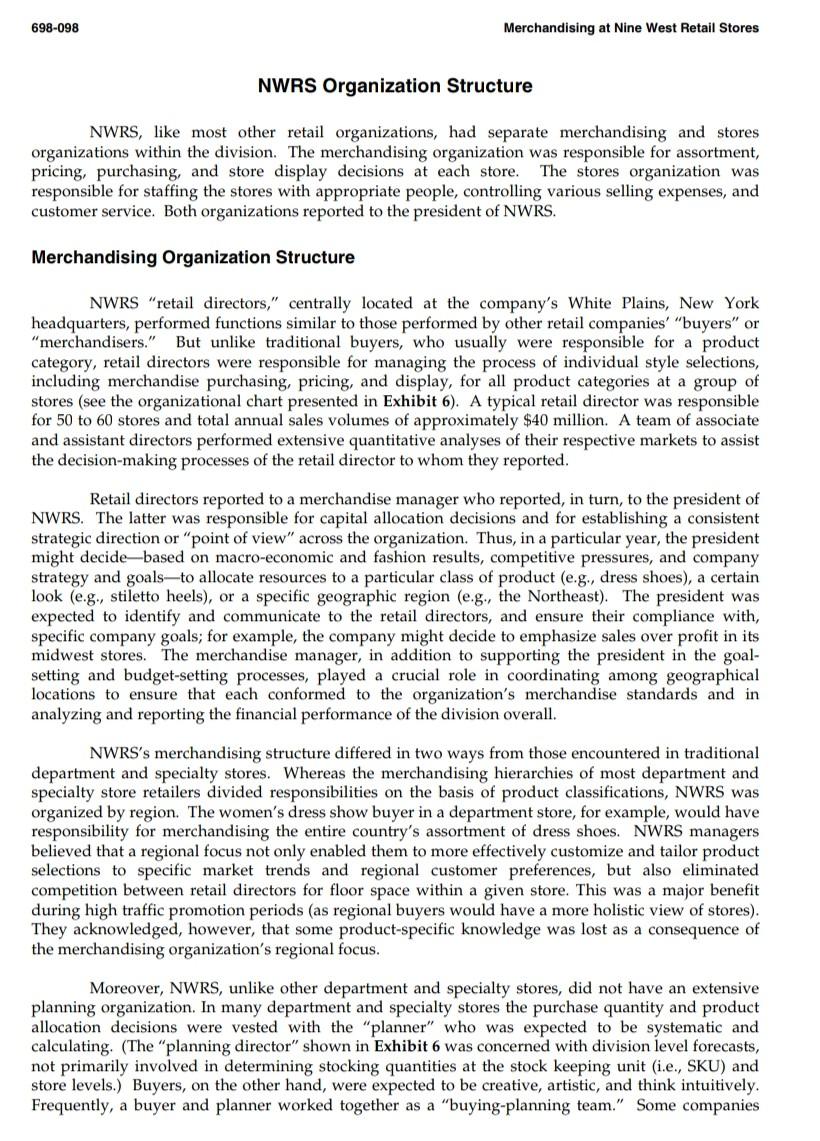
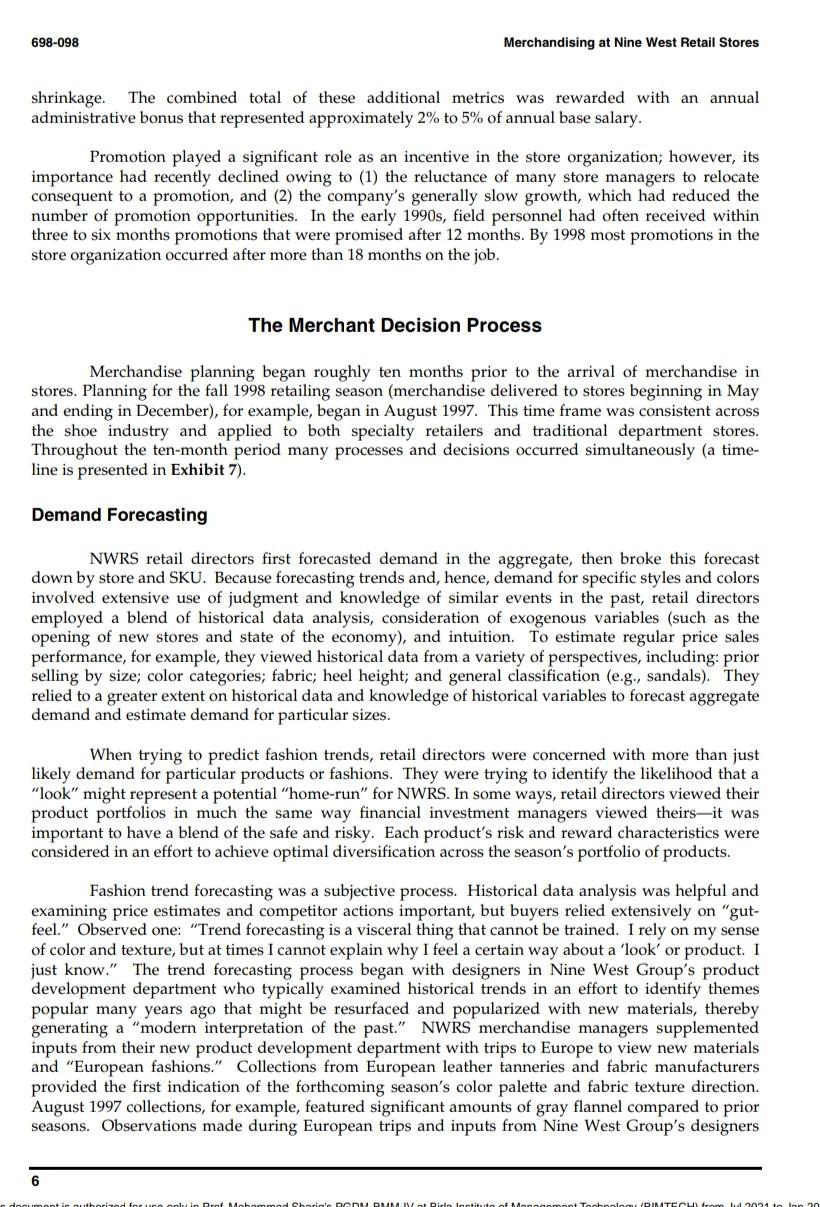
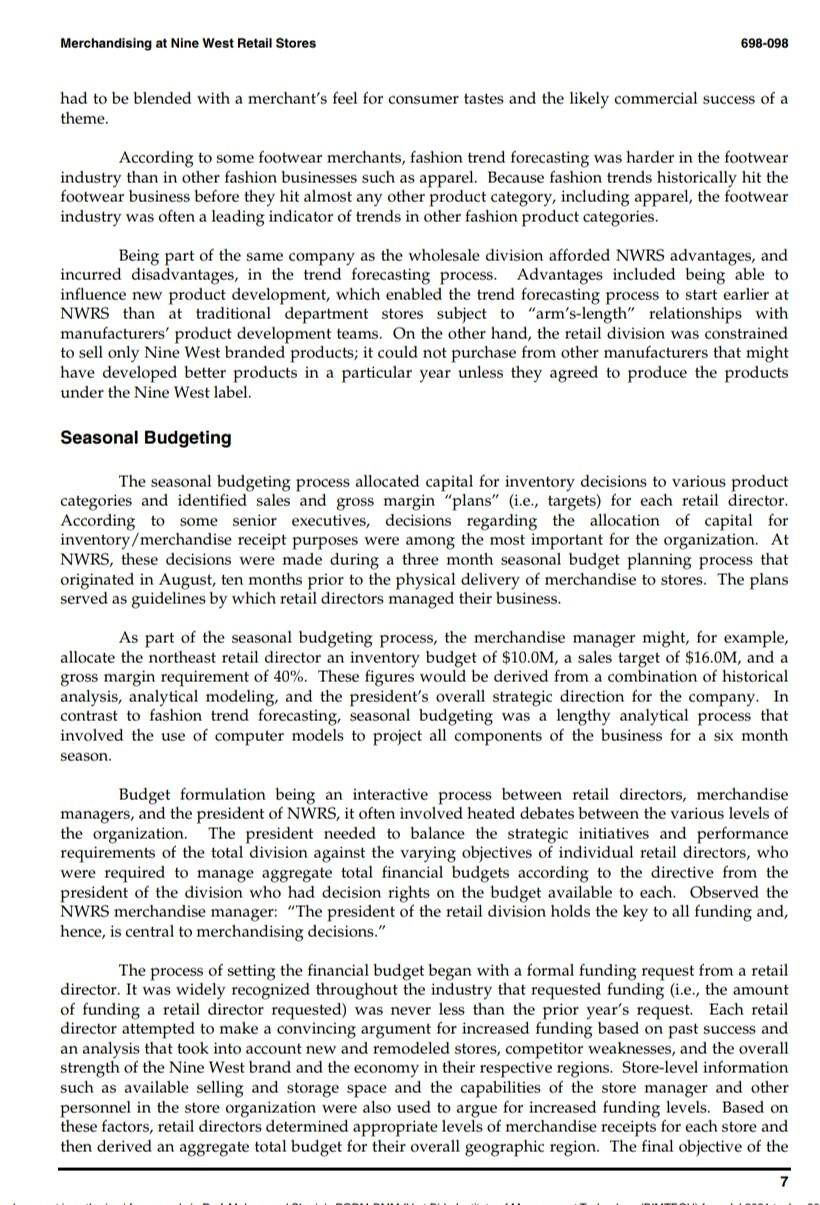
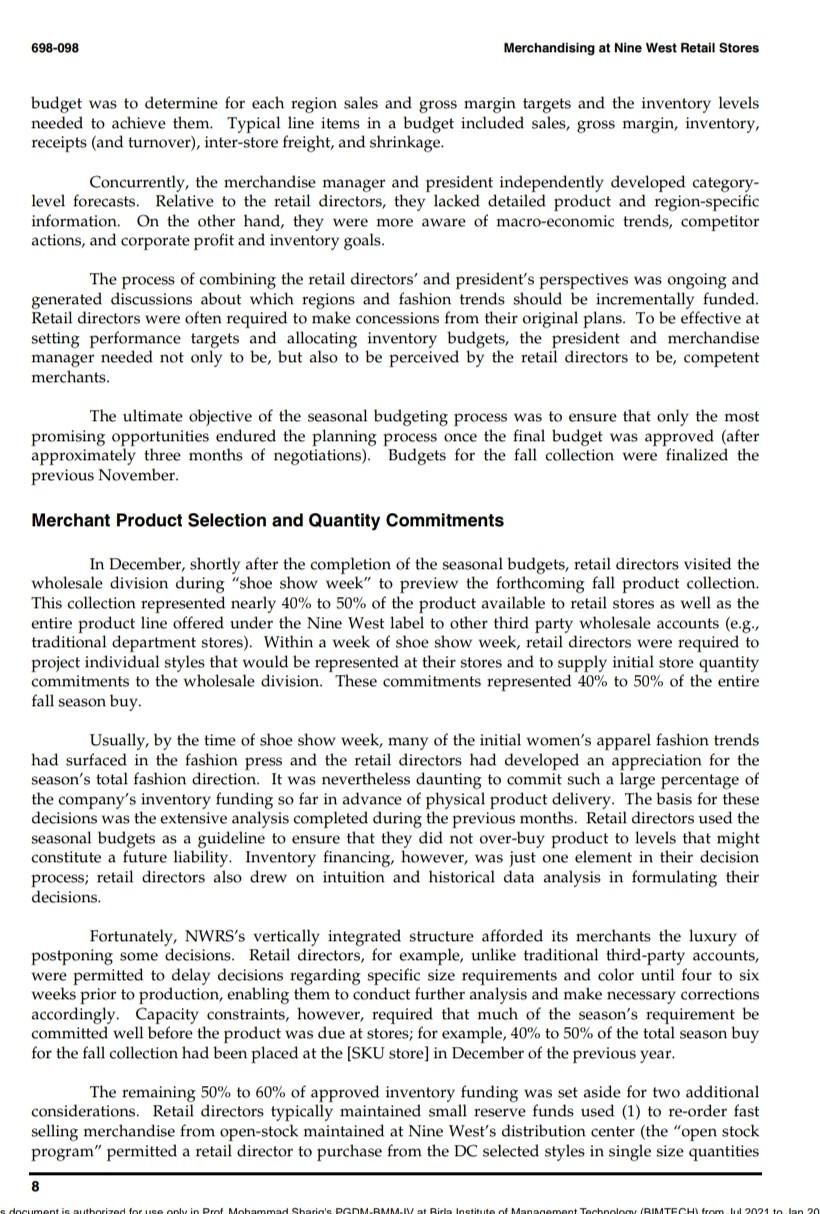
VEDTAS Harvard Business School 9-698-098 Rev. May 31, 2001 Merchandising at Nine West Retail Stores Chairman of the Board Jerome Fisher reflected on the growth of Nine West Group Inc. The company had come a long way from its 1977 origins as a manufacturer and wholesaler of shoes and since opening its first retail store in 1983. In 1997, Nine West had annual sales of $1.8 billion and market capitalization of $1.6 billion. The last few years in particular had been very good; sales had skyrocketed to the current level from $462 million in 1992. Impressed, Wall Street had driven market capitalization up from $613 million in 1993 to $2.2 billion before a sharp decline in the latter half of 1997 and substantial rebound in the early months in 1998 (see Exhibit 1 for selected financial data). In 1997, Nine West Group Inc. had multiple retail and wholesale divisions; Nine West Retail Stores (NWRS) was the largest retail division in the group. Understandably proud of the company's achievements, Fisher pondered the challenges that lay ahead for Nine West. He reflected, in particular, on changes needed in the merchandising organization within the retailing division, NWRS, a function he and most other retailing CEOs believed to be critical to the firm's success. The merchandising organization was primarily responsible for deciding what products to carry at various store locations. Its functions included reading market trends, planning product assortment, forecasting demand for individual products, determining purchase quantities, and allocating inventory as well as pricing, markdowns, product display, and advertising. Long lead times, a consequence of sourcing fashion products mostly from overseas, necessitated some merchandising decisions being made months before product was available in stores and fashion trends became apparent. Merchandising decisions, complicated for most retailers, were even more difficult for fashion-footwear retailers such as NWRS because the range of sizes and widths was much greater for footwear than for most other fashion products. Fisher recognized that technology, sales growth, competition, and the addition of new product-lines were likely to change the role of NWRS's retail directors in the near future. Advances in information technology had enabled quicker reads of market trends from early sales data and reductions in data storage costs had made it possible for companies to warehouse vast amounts of historical sales data useful for demand forecasting. Merchandising decisions were complicated by variation in fashion preferences across the broad geographic area into which sales growth had led NWRS to expand and were expected to become more difficult as some leading national specialty retail chains planned to launch footwear lines. Finally, merchandising at NWRS had become more challenging due to the company's recent decision to diversify into products such as sunglasses, jewelry, legwear and apparel. 698-098 Merchandising at Nine West Retail Stores The Retail Footwear Industry Footwear industry sales had achieved little real growth from 1990 onwards. From 1990 to 1995, sales had increased a modest $700 million dollars, from $31.8 billion to $32.5 billion, reflecting a compound annual growth rate of only 0.44% (Exhibit 2 presents annual sales data for 1990 to 1995). Women's footwear, which, at $15.0 billion in 1995, represented approximately 46% of the total market, experienced negative growth from 1990 to 1995, falling $600 million. On average, women purchased five pairs of shoes annually and sales of non-athletic women's shoes, which totaled $10.3 billion in 1995, were expected to rise less than 3% to 5% over the next five years. (Detailed breakdowns of sales trends across a variety of footwear types for the years 1991 and 1995 are presented in Exhibit 3.) Shoes in most price segments had experienced only small increases in sales throughout the early 1990s (Exhibit 4 breaks down sales by price). Sales of shoes priced from $74.50 to $99.49, for example, increased by 1.8% from 1991 to 1995. The basis for differentiation was most often quality and style, but some consumers were willing to pay higher prices for shoes made in a particular country; shoes manufactured in Italy and France, for example, usually commanded a price premium. Shoe Design and Construction A shoe consisted of a number of parts: the vamp, sole, heel, lining and decorative accessories such as laces and buckles. The vamp was the part of a shoe that covered the top of the foot. It was typically made up of a toecap (i.e., the piece that covered the toes) and two pieces of material, usually leather or fabric, placed on either side of the construction and stitched together at the back of the shoe. The vamp was attached to the sole, which was divided into sock, insole, and heel. Heels were often made of wood, but could include layers of leather as was often the case with casual footwear. Additional components such as counters, stiffeners, and shanks served to reinforce the shoe's structure. The design process began in much the same way as an artist creating a masterful work of art. A creative team searched for inspiration that resulted in a series of sketches. Designers visited raw material suppliers and tanneries (i.e., leather producers that converted raw or semi-processed leather into finished leather) to view the colors offered for a season. Sketches drafted for all classifications of footwear (e.g., pumps, loafers, boots, and so forth) formed the first proposed vision for the wholesale line. A central element to the production of quality footwear was the perfect construction of a wooden, metal or plastic "last" (i.e., a model of the human foot on which a shoe was shaped). Designing a last was complicated, involving calculations that factored the material of the shoe, height of the heel, curvature of the arch, and sequential experimentation, and could take in excess of 50 days. The production process for most shoes was fairly complex. Due to the large number of components that had to be assembled together, there were often 130 stages in the production process. Depending on the factory used for production and the level of quality desired, the manufacturing lead time for a shoe could go up to ten days, with the shoe held on the last for up to five days to ensure that the leather was perfectly molded in accordance with the design style. Merchandising at Nine West Retail Stores 698-098 believed that it was necessary to have separate planning and buying functions to achieve a blend of right- and left-brained capabilities in merchandising. Merchant Incentive Structure Retail directors, like buyers in most retail organizations, were rewarded according to their performance with promotions and year-end bonuses. Performance-based incentives were required because firm performance was significantly affected by retail directors' actions that were not directly observable by senior management. For example, a retail director could significantly affect the firm's financial performance by working hard to spot fashion trends (e.g., by visiting trade shows, shopping the competition, and reading fashion publications) and keeping in touch with stores to know which products were selling and needed quick replenishment, but it was extremely diffi impossible, for senior management to monitor such actions. Because the outcomes of re actions were easier to monitor than the actions themselves, NWRS tied compensation 5/ 17 rather than behavior. Retail directors at NWRS could earn up to 15% of their annual salary in a performance-based bonuses. Bonus had three components. The first, representing approximately 50%, was based on actual performance compared to plan. Actual performance was defined as a weighted average of regional sales and gross margins (net of markdowns), the two measures directly under a retail director's control. To be eligible for a performance-based bonus, a retail director had to exceed both sales and gross margin plans. To achieve these goals, each retail director was allocated a budget with which to purchase inventory. The second component, representing 25%, was total NWRS actual performance. The third component of the annual bonus, representing the remaining 25%, was overall corporate earnings per share (EPS). Store Organization and Incentive Structure A sizable field organization was responsible for day-to-day operations in NWRS. The store organization was an important source of information for the centrally-located merchant organization. To facilitate open communication, the organizational hierarchical structure of the stores closely mirrored that of the merchant organization. A single operations manager, who reported to the division president, functioned in a capacity similar to that of the merchandise manager and six regional sales managers were each responsible for the 50 to 60 stores in the respective regions of their retail director counterparts. Regional sales managers played a crucial role in the exchange of information regarding stores' specific merchandise and operational needs. Retail directors, who were located at the corporate office and could not visit their stores frequently, relied on their regional sales managers to act as their eyes and ears." Five to six area sales managers reported to each regional sales manager. The entire NWRS organization employed 35 area sales managers, each of whom was responsible for about 10 to 12 stores. Each store employed a store manager and assistant managers responsible for merchandising and staffing the physical retail space. As both monitor and communicator, each store manager was required to produce weekly business analyses highlighting performance successes and failures. These were distributed throughout both the store and merchant organizations. Field personnel were reviewed primarily on the achievement of total sales plans and corporate EPS. Regional and area sales managers qualified for a 15% and 10% bonus, respectively, based on achievement of sales and selling expense plans. This was in contrast to retail directors, who were evaluated on the basis of sales and gross margin performance. NWRS justified this contrast because it believed decisions that affected gross margins to be out of the direct control of field personnel. Store managers were reviewed on annual sales, selling expenses, employee turnover, and Company Background Nine West Group, Inc. was named for the location of its early offices at 9 West 57th Street in New York City. The company was founded by Jerome Fisher and present chairman of the board and chief executive officer, Vincent Camuto. Started in 1977 as a manufacturer and wholesaler of women's footwear, the company was by 1998 engaged in the wholesale distribution and retailing of women's fashion footwear and accessories for 14 different brands. (Exhibit 5 presents a sample of brands across various price points, including Nine West and Easy Spirit, the top-selling women's casual shoe line.) Nine West Group's wholesale division operated in more than 40 countries worldwide and distributed to more than 7,000 department, specialty and independent retail stores. The company's wholesale client list included Macy's, Bloomingdale's and Dillard's. The retail division, which represented approximately 49% of total company revenues in 1997, was formed when the first Nine West retail store opened in Stamford, Connecticut in 1983. The Nine West Group closed out 1997 with 1,459 stores globally. Of these, 429 belonged to NWRS (i.e., sold primarily Nine West brand shoes); the remainder were part of the company's other retailing divisions. Significant growth over the past two decades found Nine West with its most profitable year ever in 1996 when sales reached $1.6 billion, a 28% increase over 1995, and net income from continuing operations increased 33% from the previous year to $95 million (excluding non-recurring charges in both years). Growth had been achieved through a combination of rapid addition of new domestic and international stores and acquisitions of other footwear companies. The addition of new stores was facilitated by innovative agreements with department stores. In 1994, the company pioneered the footwear concept "shop within a department store"; by 1997, it was operating more than 1,750 footwear concept shops and 1,200 accessory concept shops within department stores. This unique form of channel collaboration subsequently served as the platform for significant growth in points of distribution. Nine West's aggressive acquisition strategy led in May 1995 to the purchase of U.S. Shoe Corporation's footwear division, which added not only an impressive list of brands that included Easy Spirit, Amalfi, Bandolino, Evan-Picone (under license), Pappagallo, Joyce, and Selby, but also the retail concepts Banister and Stein Mart. This acquisition made Nine West one of the world's largest women's footwear companies. New store openings and acquisitions also gained Nine West a significant presence throughout Asia and in Europe, Canada, and Australia. The company entered the international retail market in November 1994 with the opening of an NWRS store in Hong Kong at Pacific Place. In addition, the company consummated four international acquisitions during 1996 and 1997. Its most notable acquisition in the international market was its May 1997 purchase of The Shoe Studio Group (SSG), a popular U.K.-based retailer with five brands of its own. SSG operated more than 90 concessions throughout the United Kingdom and was expected to lead further expansion across Europe. Going forward, Nine West Group intended to further diversify its product offering, having recently expanded into lifestyle collections, including handbags, small leather goods, legwear, sunglasses, jewelry, and outerwear. The company's strategic objective was to evolve into a complete life-style company in which each brand functioned as a separate business unit with every aspect of business, from management and design to global wholesale and retail distribution, integrated. 698-098 Merchandising at Nine West Retail Stores NWRS Organization Structure NWRS, like most other retail organizations, had separate merchandising and stores organizations within the division. The merchandising organization was responsible for assortment, pricing, purchasing, and store display decisions at each store. The stores organization was responsible for staffing the stores with appropriate people, controlling various selling expenses, and customer service. Both organizations reported to the president of NWRS. Merchandising Organization Structure NWRS "retail directors," centrally located at the company's White Plains, New York headquarters, performed functions similar to those performed by other retail companies' "buyers" or "merchandisers." But unlike traditional buyers, who usually were responsible for a product category, retail directors were responsible for managing the process of individual style selections, including merchandise purchasing, pricing, and display, for all product categories at a group of stores (see the organizational chart presented in Exhibit 6). A typical retail director was responsible for 50 to 60 stores and total annual sales volumes of approximately $40 million. A team of associate and assistant directors performed extensive quantitative analyses of their respective markets to assist the decision-making processes of the retail director to whom they reported. Retail directors reported to a merchandise manager who reported, in turn, to the president of NWRS. The latter was responsible for capital allocation decisions and for establishing a consistent strategic direction or "point of view" across the organization. Thus, in a particular year, the president might decide-based on macro-economic and fashion results, competitive pressures, and company strategy and goals-to allocate resources to a particular class of product (e.g., dress shoes), a certain look (e.g., stiletto heels), or a specific geographic region (e.g., the Northeast). The president was expected to identify and communicate to the retail directors, and ensure their compliance with, specific company goals; for example, the company might decide to emphasize sales over profit in its midwest stores. The merchandise manager, in addition to supporting the president in the goal- setting and budget-setting processes, played a crucial role in coordinating among geographical locations to ensure that each conformed to the organization's merchandise standards and in analyzing and reporting the financial performance of the division overall. NWRS's merchandising structure differed in two ways from those encountered in traditional department and specialty stores. Whereas the merchandising hierarchies of most department and specialty store retailers divided responsibilities on the basis of product classifications, NWRS was organized by region. The women's dress show buyer in a department store, for example, would have responsibility for merchandising the entire country's assortment of dress shoes. NWRS managers believed that a regional focus not only enabled them to more effectively customize and tailor product selections to specific market trends and regional customer preferences, but also eliminated competition between retail directors for floor space within a given store. This was a major benefit during high traffic promotion periods (as regional buyers would have a more holistic view of stores). They acknowledged, however, that some product-specific knowledge was lost as a consequence of the merchandising organization's regional focus. Moreover, NWRS, unlike other department and specialty stores, did not have an extensive planning organization. In many department and specialty stores the purchase quantity and product allocation decisions were vested with the "planner" who was expected to be systematic and calculating. (The "planning director" shown in Exhibit 6 was concerned with division level forecasts, not primarily involved in determining stocking quantities at the stock keeping unit (i.e., SKU) and store levels.) Buyers, on the other hand, were expected to be creative, artistic, and think intuitively. Frequently, a buyer and planner worked together as a "buying-planning team." Some companies 698-098 Merchandising at Nine West Retail Stores shrinkage. The combined total of these additional metrics was rewarded with an annual administrative bonus that represented approximately 2% to 5% of annual base salary. Promotion played a significant role as an incentive in the store organization; however, its importance had recently declined owing to (1) the reluctance of many store managers to relocate consequent to a promotion, and (2) the company's generally slow growth, which had reduced the number of promotion opportunities. In the early 1990s, field personnel had often received within three to six months promotions that were promised after 12 months. By 1998 most promotions in the store organization occurred after more than 18 months on the job. The Merchant Decision Process Merchandise planning began roughly ten months prior to the arrival of merchandise in stores. Planning for the fall 1998 retailing season (merchandise delivered to stores beginning in May and ending in December), for example, began in August 1997. This time frame was consistent across the shoe industry and applied to both specialty retailers and traditional department stores. Throughout the ten-month period many processes and decisions occurred simultaneously (a time- line is presented in Exhibit 7). Demand Forecasting NWRS retail directors first forecasted demand in the aggregate, then broke this forecast down by store and SKU. Because forecasting trends and, hence, demand for specific styles and colors involved extensive use of judgment and knowledge of similar events in the past, retail directors employed a blend of historical data analysis, consideration of exogenous variables (such as the opening of new stores and state of the economy), and intuition. To estimate regular price sales performance, for example, they viewed historical data from a variety of perspectives, including: prior selling by size; color categories; fabric; heel height; and general classification (e.g., sandals). They relied to a greater extent on historical data and knowledge of historical variables to forecast aggregate demand and estimate demand for particular sizes. When trying to predict fashion trends, retail directors were concerned with more than just likely demand for particular products or fashions. They were trying to identify the likelihood that a "look" might represent a potential "home-run" for NWRS. In some ways, retail directors viewed their product portfolios in much the same way financial investment managers viewed theirsit was important to have a blend of the safe and risky. Each product's risk and reward characteristics were considered in an effort to achieve optimal diversification across the season's portfolio of products. Fashion trend forecasting was a subjective process. Historical data analysis was helpful and examining price estimates and competitor actions important, but buyers relied extensively on "gut- feel. Observed one: "Trend forecasting is a visceral thing that cannot be trained. I rely on my sense of color and texture, but at times I cannot explain why I feel a certain way about a 'look' or product. I just know." The trend forecasting process began with designers in Nine West Group's product development department who typically examined historical trends in an effort to identify themes popular many years ago that might be resurfaced and popularized with new materials, thereby generating a "modern interpretation of the past." NWRS merchandise managers supplemented inputs from their new product development department with trips to Europe to view new materials and "European fashions." Collections from European leather tanneries and fabric manufacturers provided the first indication of the forthcoming season's color palette and fabric texture direction. August 1997 collections, for example, featured significant amounts of gray flannel compared to prior seasons. Observations made during European trips and inputs from Nine West Group's designers 6 abammad Chariot DOM DAANAN Dirto latite Mont Toobalom IDINATEUren 21ean 20 Merchandising at Nine West Retail Stores 698-098 had to be blended with a merchant's feel for consumer tastes and the likely commercial success of a theme. According to some footwear merchants, fashion trend forecasting was harder in the footwear industry than in other fashion businesses such as apparel. Because fashion trends historically hit the footwear business before they hit almost any other product category, including apparel, the footwear industry was often a leading indicator of trends in other fashion product categories. Being part of the same company as the wholesale division afforded NWRS advantages, and incurred disadvantages, in the trend forecasting process. Advantages included being able to influence new product development, which enabled the trend forecasting process to start earlier at NWRS than at traditional department stores subject to "arm's-length" relationships with manufacturers' product development teams. On the other hand, the retail division was constrained to sell only Nine West branded products; it could not purchase from other manufacturers that might have developed better products in a particular year unless they agreed to produce the products under the Nine West label. Seasonal Budgeting The seasonal budgeting process allocated capital for inventory decisions to various product categories and identified sales and gross margin "plans" (i.e., targets) for each retail director. According to some senior executives, decisions regarding the allocation of capital for inventory/merchandise receipt purposes were among the most important for the organization. At NWRS, these decisions were made during a three month seasonal budget planning process that originated in August, ten months prior to the physical delivery of merchandise to stores. The plans served as guidelines by which retail directors managed their business. As part of the seasonal budgeting process, the merchandise manager might, for example, allocate the northeast retail director an inventory budget of $10.0M, a sales target of $16.0M, and a gross margin requirement of 40%. These figures would be derived from a combination of historical analysis, analytical modeling, and the president's overall strategic direction for the company. In contrast to fashion trend forecasting, seasonal budgeting was a lengthy analytical process that involved the use of computer models to project all components of the business for a six month season Budget formulation being an interactive process between retail directors, merchandise managers, and the president of NWRS, it often involved heated debates between the various levels of the organization. The president needed to balance the strategic initiatives and performance requirements of the total division against the varying objectives of individual retail directors, who vere required to manage aggregate total financial budgets according to the directive from the president of the division who had decision rights on the budget available to each. Observed the NWRS merchandise manager: "The president of the retail division holds the key to all funding and, hence, is central to merchandising decisions." The process of setting the financial budget began with a formal funding request from a retail director. It was widely recognized throughout the industry that requested funding (i.e., the amount of funding a retail director requested) was never less than the prior year's request. Each retail director attempted to make a convincing argument for increased funding based on past success and an analysis that took into account new and remodeled stores, competitor weaknesses, and the overall strength of the Nine West brand and the economy in their respective regions. Store-level information such as available selling and storage space and the capabilities of the store manager and other personnel in the store organization were also used to argue for increased funding levels. Based on these factors, retail directors determined appropriate levels of merchandise receipts for each store and then derived an aggregate total budget for their overall geographic region. The final objective of the 7 698-098 Merchandising at Nine West Retail Stores budget was to determine for each region sales and gross margin targets and the inventory levels needed to achieve them. Typical line items in a budget included sales, gross margin, inventory, receipts (and turnover), inter-store freight, and shrinkage. Concurrently, the merchandise manager and president independently developed category- level forecasts. Relative to the retail directors, they lacked detailed product and region-specific information. On the other hand, they were more aware of macro-economic trends, competitor actions, and corporate profit and inventory goals. The process of combining the retail directors' and president's perspectives was ongoing and generated discussions about which regions and fashion trends should be incrementally funded. Retail directors were often required to make concessions from their original plans. To be effective at setting performance targets and allocating inventory budgets, the president and merchandise manager needed not only to be, but also to be perceived by the retail directors to be, competent merchants. The ultimate objective of the seasonal budgeting process was to ensure that only the most promising opportunities endured the planning process once the final budget was approved (after approximately three months of negotiations). Budgets for the fall collection were finalized the previous November Merchant Product Selection and Quantity Commitments In December, shortly after the completion of the seasonal budgets, retail directors visited the wholesale division during "shoe show week" to preview the forthcoming fall product collection. This collection represented nearly 40% to 50% of the product available to retail stores as well as the entire product line offered under the Nine West label to other third party wholesale accounts (e.g., traditional department stores). Within a week of shoe show week, retail directors were required to project individual styles that would be represented at their stores and to supply initial store quantity commitments to the wholesale division. These commitments represented 40% to 50% of the entire fall season buy. Usually, by the time of shoe show week, many of the initial women's apparel fashion trends had surfaced in the fashion press and the retail directors had developed an appreciation for the season's total fashion direction. It was nevertheless daunting to commit such a large percentage of the company's inventory funding so far in advance of physical product delivery. The basis for these decisions was the extensive analysis completed during the previous months. Retail directors used the seasonal budgets as a guideline to ensure that they did not over-buy product to levels that might constitute a future liability. Inventory financing, however, was just one element in their decision process; retail directors also drew on intuition and historical data analysis in formulating their decisions. Fortunately, NWRS's vertically integrated structure afforded its merchants the luxury of postponing some decisions. Retail directors, for example, unlike traditional third-party accounts, were permitted to delay decisions regarding specific size requirements and color until four to six weeks prior to production, enabling them to conduct further analysis and make necessary corrections accordingly. Capacity constraints, however, required that much of the season's requirement be committed well before the product was due at stores; for example, 40% to 50% of the total season buy for the fall collection had been placed at the [SKU store) in December of the previous year. The remaining 50% to 60% of approved inventory funding was set aside for two additional considerations. Retail directors typically maintained small reserve funds used (1) to re-order fast selling merchandise from open-stock maintained at Nine West's distribution center (the "open stock program" permitted a retail director to purchase from the DC selected styles in single size quantities 8 s document is authorized for use only in Prof Mohammad Sharin's PGOM.BMMIV at Birla Institute of Management Technolo (BIMTECH from 2021 tolan 20 Merchandising at Nine West Retail Stores 698-098 or combinations of sizes and quantities), and (2) to buy new products that appeared in the market (i.e., products developed, manufactured, and delivered closer to the selling season). For example, a March visit to a world-renowned shoe show in Dusseldorf, Germany generated many new product ideas for which the retail directors had reserved some of their inventory budget. Rolling Financial Forecasting With the formal budget finalized and purchase orders placed, the retail directors continued to acquire additional information and applied this knowledge to the formulation of updated financial forecasts. The forecast updating process was informal and relied substantially on retail directors' intuition. Merchandise managers forwarded updated forecasts to top management for review after new sales data were available. Prior to the selling season, forecasts were updated if major events such as a competitor going out of business or production problems in the factory caused the retail director or merchandise manager to reevaluate the initial projection. This updating mitigated the likelihood of unanticipated over-stocked inventory positions and against retail directors placing orders that exceeded pre-approved receipt plans. Moreover, it highlighted "fast-selling" successes and provided an analysis to support incremental budget funding for specific products or geographical areas. Merchandise Display Decisions Merchandising display recommendations developed by retail directors and visual marketing manager dictated in-store visual presentation across the company and were communicated to individual stores via "planagrams." Each month of the fall season was associated with a new merchandise "group," a combination of styles designed to be sold together and to produce an aesthetically pleasing presentation on the sales floor. Because stores received only one delivery of merchandise per week from the company's distribution center, retail directors were required to coordinate the flow of receipts so that each store could effectively implement its display initiatives. Moreover, retail directors needed to ensure that display formats addressed any unique regional merchandise requirements. For example, during the month of May the color white was much more prevalent in the southern United States than in the northeast. Consequently, the retail director for the southern region might be inclined to delay any shipments of heavy-soled brown suede boots until later in the season. Retail Pricing, Inter-store Transfers, Re-orders and Markdowns NWRS's process for initial pricing of merchandise was similar to that seen in traditional department stores. The portion of merchandise purchased directly from the wholesale division was listed at a "suggested retail price to ensure consistency across all points of distribution, including third-party wholesale accounts. Nine West could not, however, dictate retail prices to department stores, which often elected to discount Nine West products to drive customer traffic in other departments. To ensure that customers would find the same price for an identical shoe in contiguous NWRS and third-party wholesale account stores, retail directors often had to match department store discounts. NWRS had significant latitude over decisions of initial retail price for merchandise not sold by the wholesale division to wholesale account stores. For this merchandise, NWRS was able to negotiate with suppliers to obtain the best cost available, whereupon they decided either to pass the value on to consumers or to capture it within the company. Retail directors monitored selling in individual stores weekly using an integrated merchandise information system that provided detailed point-of-sale data. Reports generated by the system (see Exhibits 8 and 9) served as the basis for managing inventory across the division, 9Step by Step Solution
There are 3 Steps involved in it
1 Expert Approved Answer
Step: 1 Unlock

Question Has Been Solved by an Expert!
Get step-by-step solutions from verified subject matter experts
Step: 2 Unlock
Step: 3 Unlock