Question: (88% Canvas Student 12:08 PM Wed Mar 22 LTJ Chapter+17 PDF trice suggests that appropriate psychosocial treatment significantly reduces development of assessment instruments. As noted
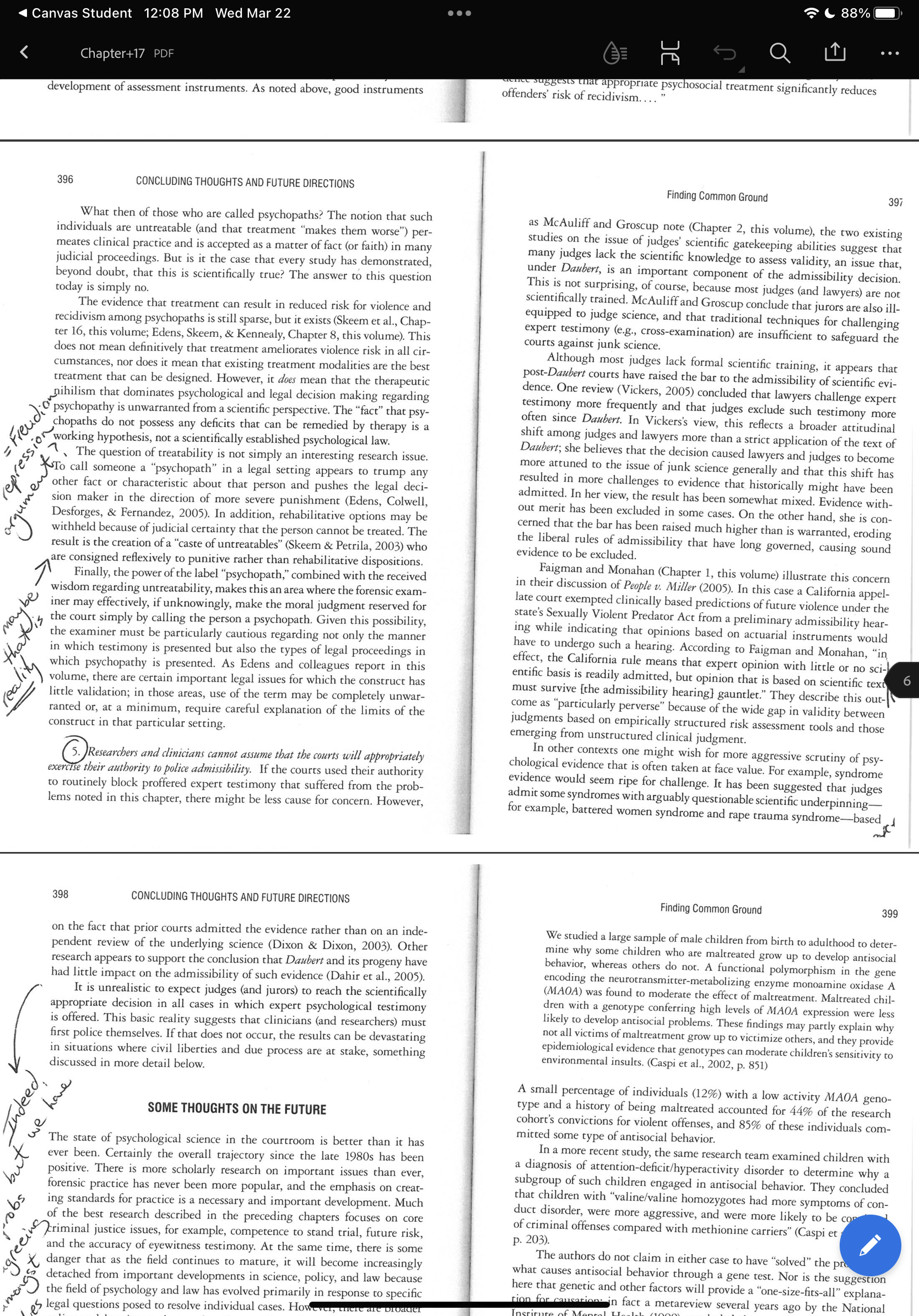
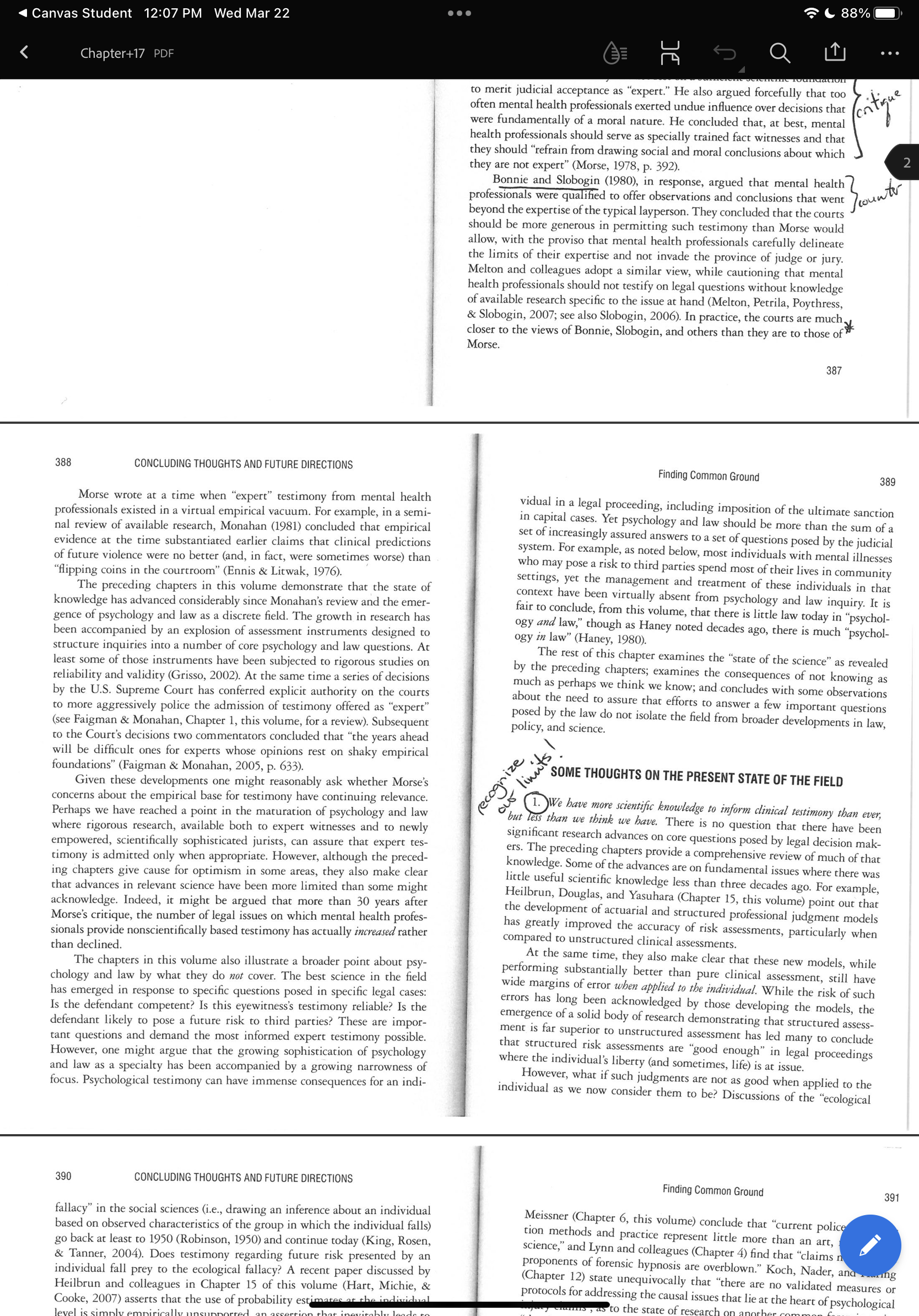
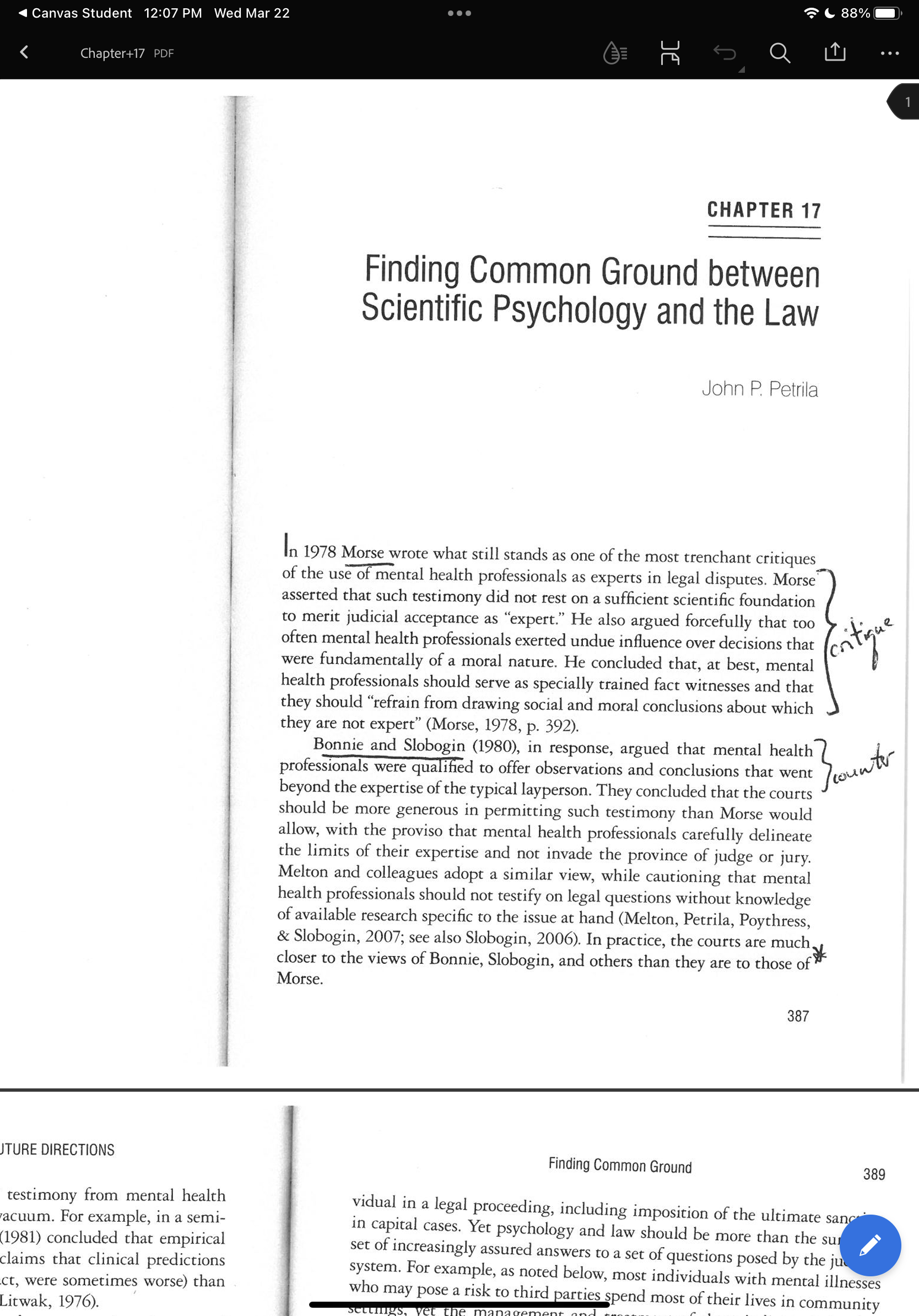
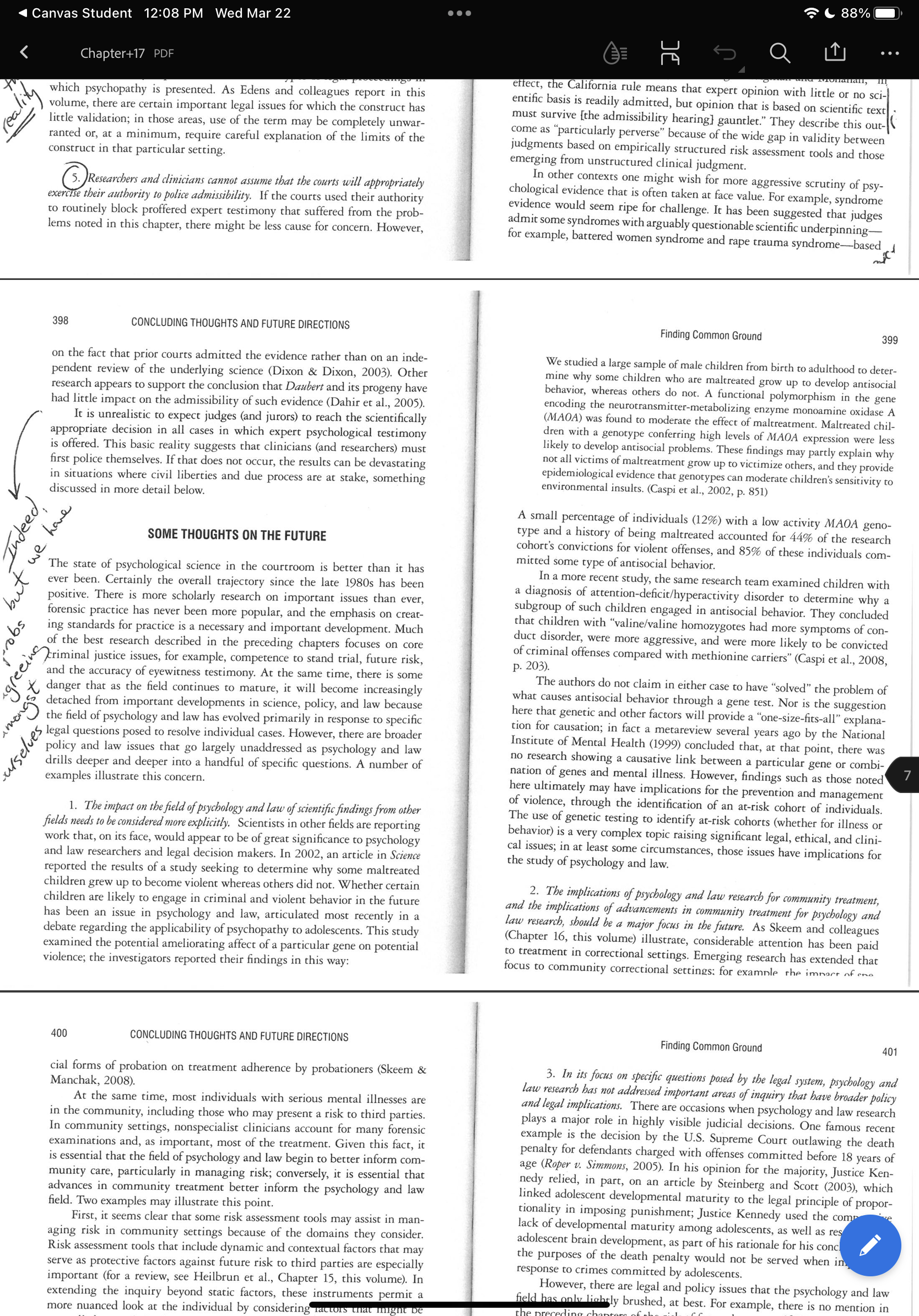
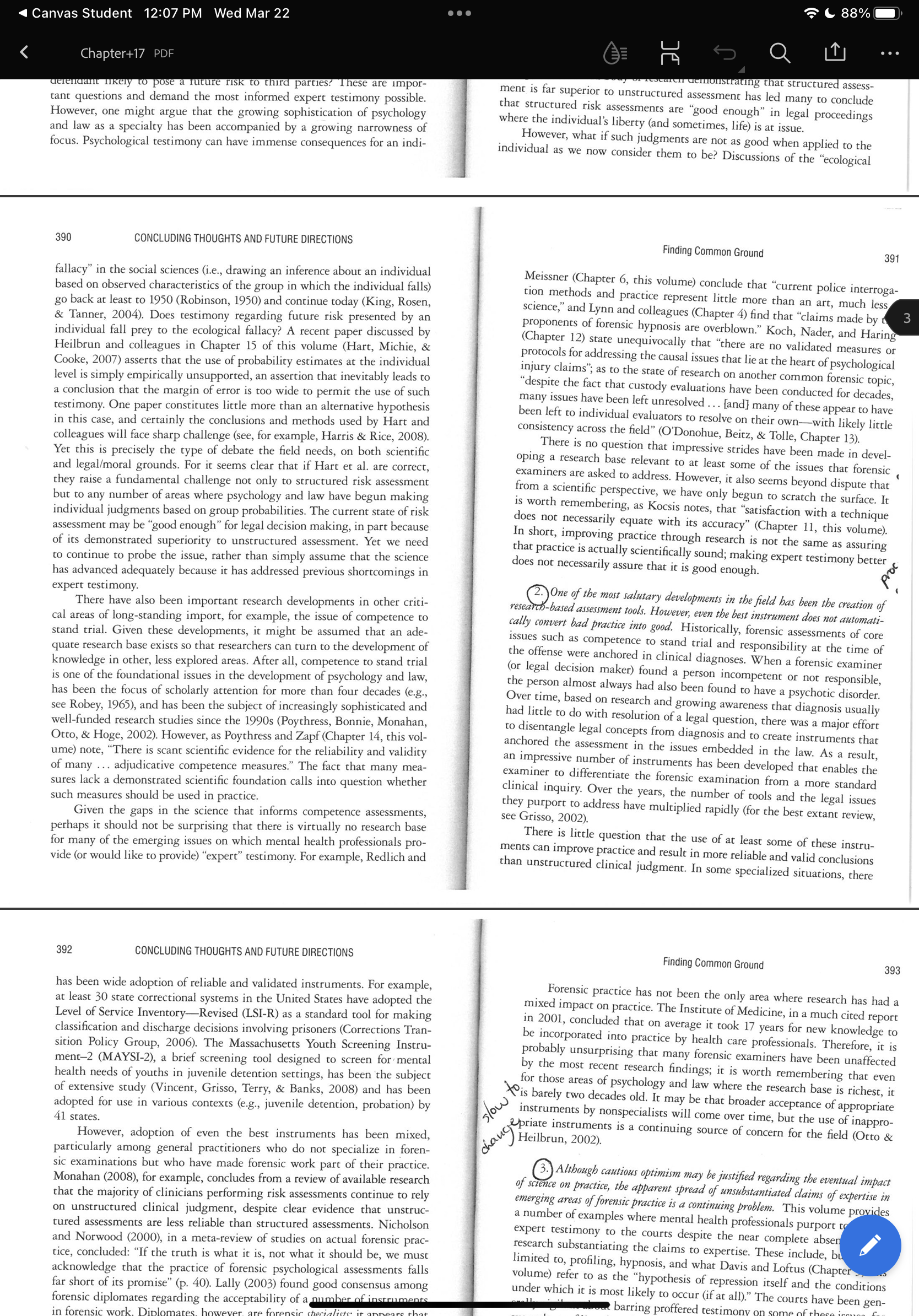
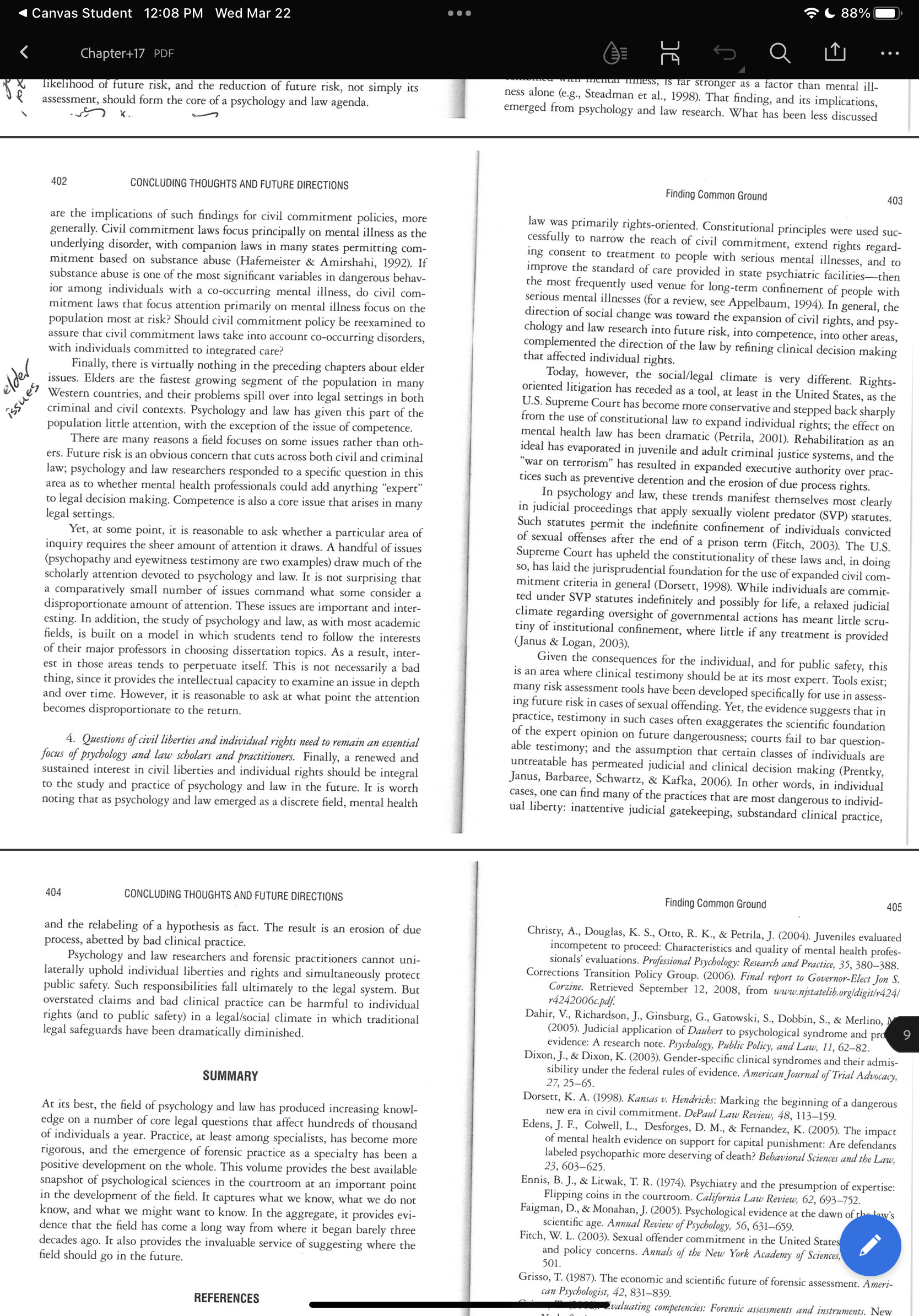
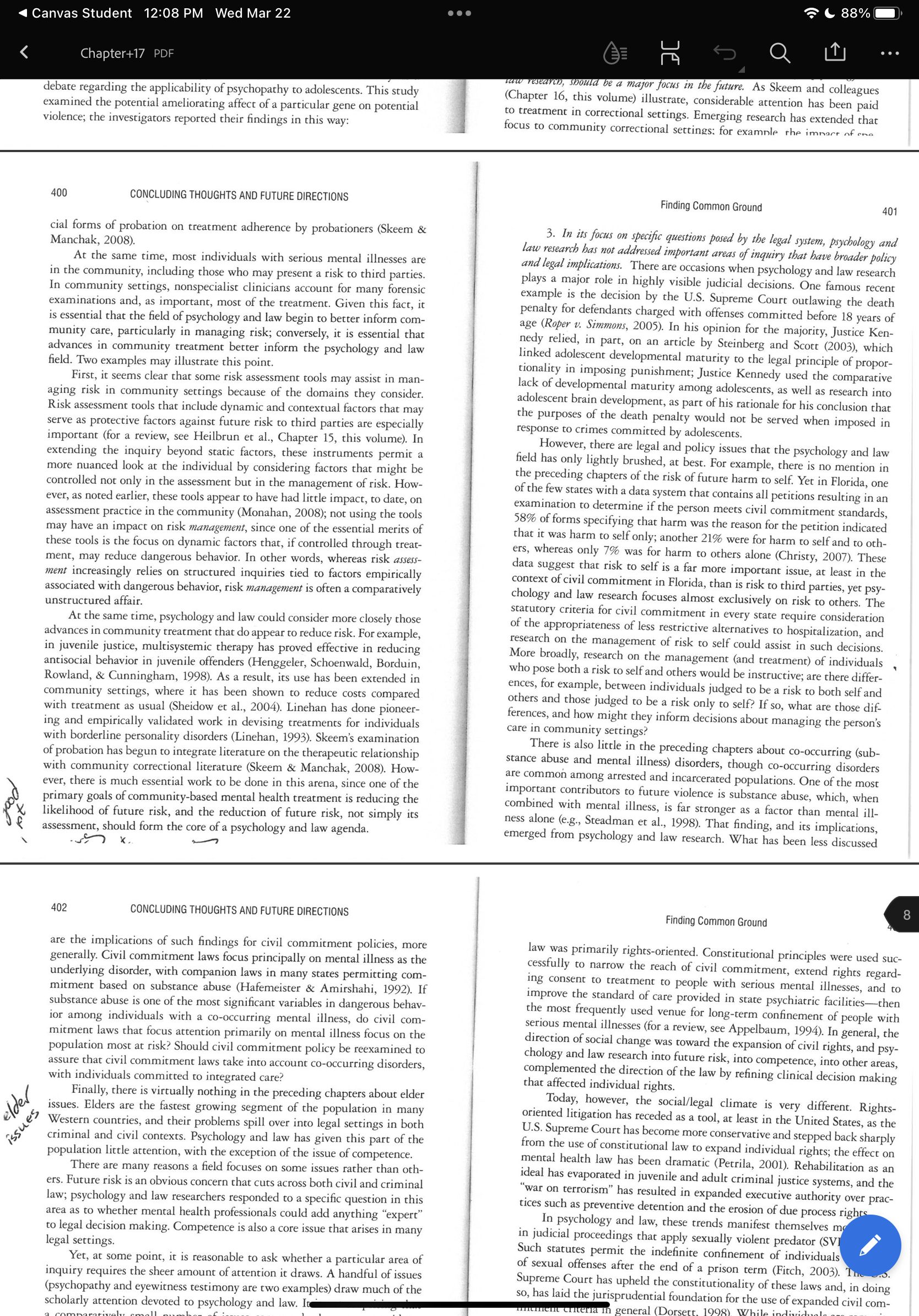
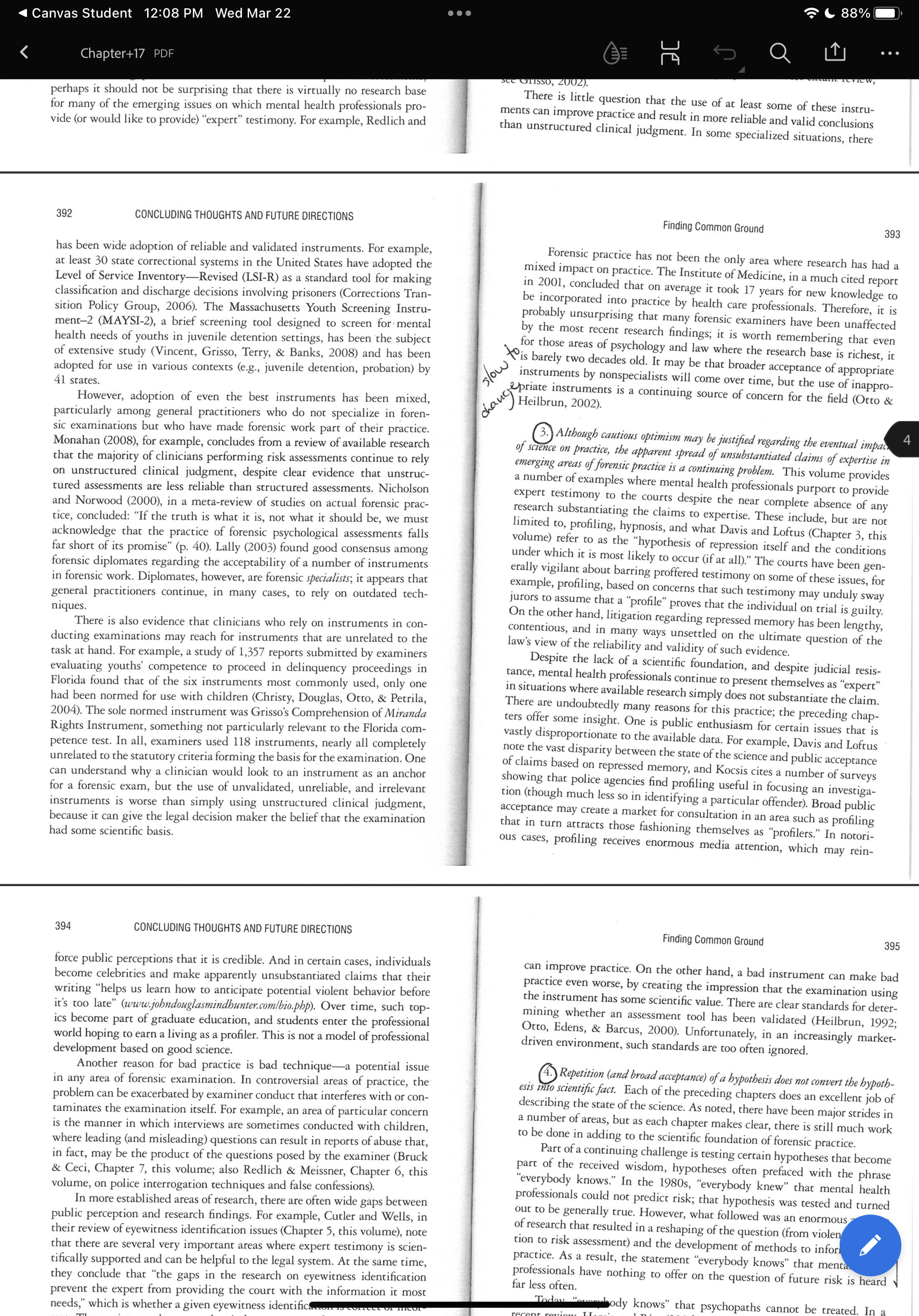
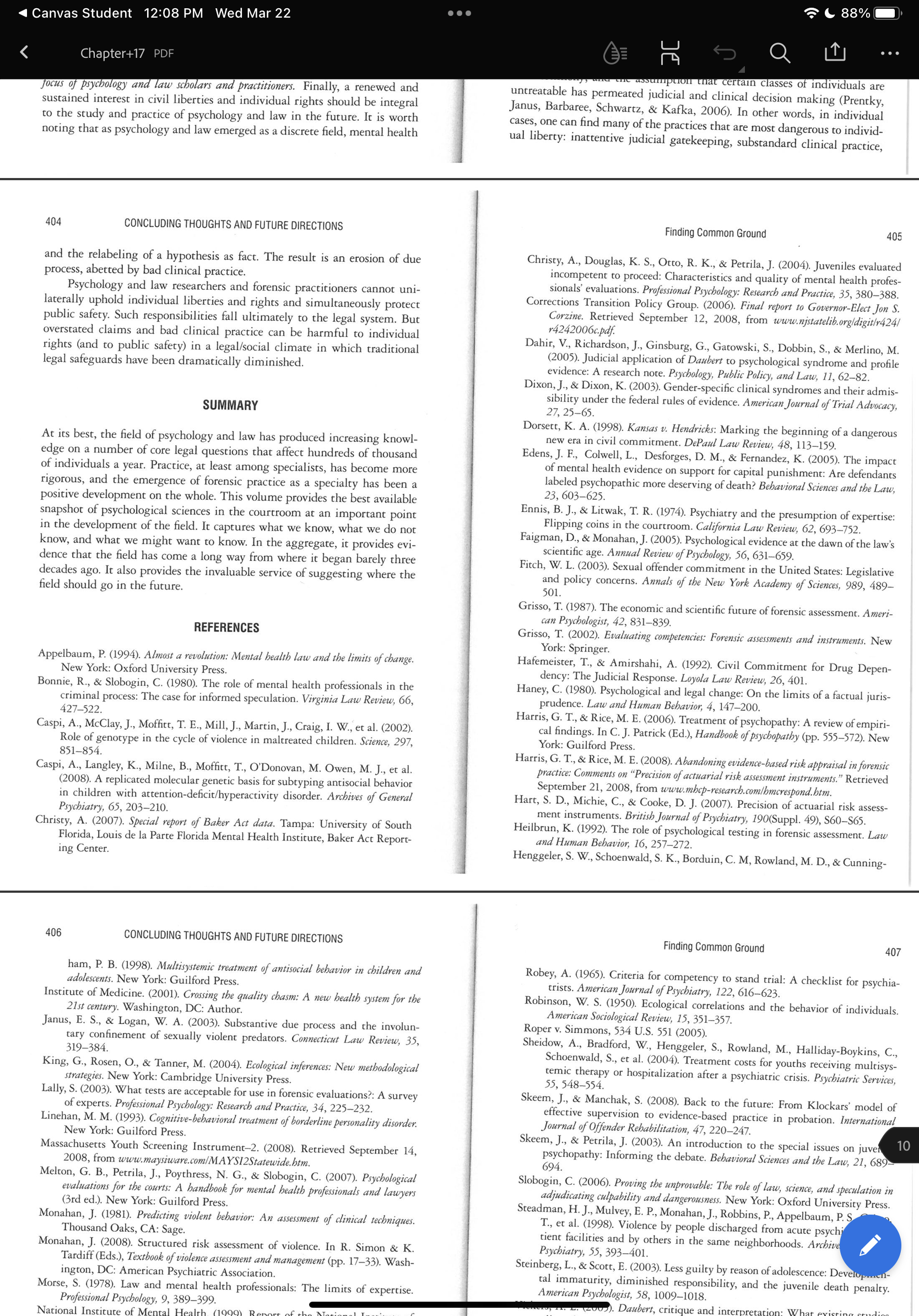
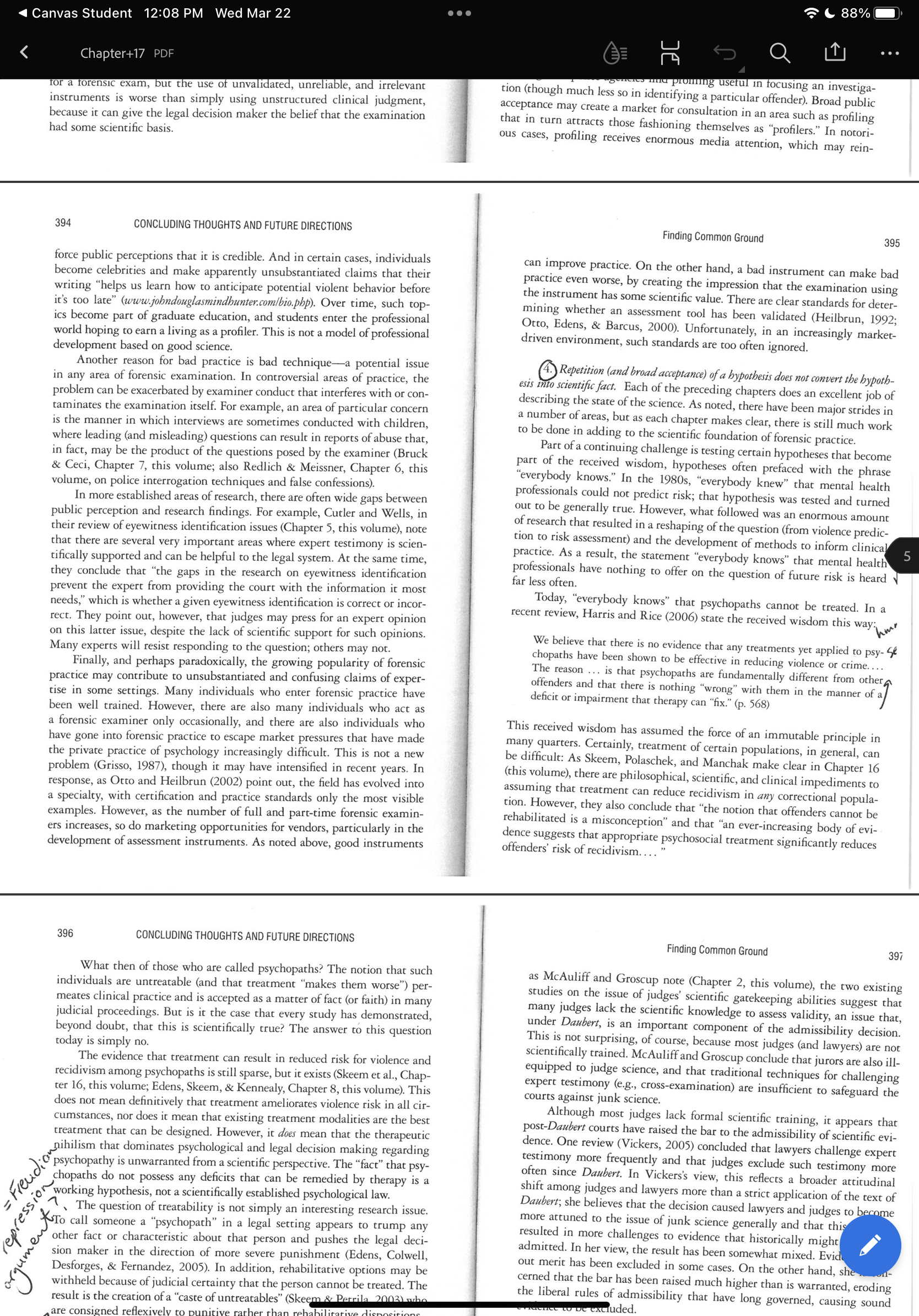
(88% Canvas Student 12:08 PM Wed Mar 22 LTJ Chapter+17 PDF trice suggests that appropriate psychosocial treatment significantly reduces development of assessment instruments. As noted above, good instruments offenders' risk of recidivism. ... " 396 CONCLUDING THOUGHTS AND FUTURE DIRECTIONS Finding Common Ground 397 What then of those who are called psychopaths? The notion that such as McAuliff and Groscup note (Chapter 2, this volume), the two existing individuals are untreatable (and that treatment "makes them worse") per- studies on the issue of judges' scientific gatekeeping abilities suggest that meates clinical practice and is accepted as a matter of fact (or faith) in many many judges lack the scientific knowledge to assess validity, an issue that, judicial proceedings. But is it the case that every study has demonstrated, under Daubert, is an important component of the admissibility decision. beyond doubt, that this is scientifically true? The answer to this question This is not surprising, of course, because most judges (and lawyers) are not today is simply no. scientifically trained. McAuliff and Groscup conclude that jurors are also ill- The evidence that treatment can result in reduced risk for violence and equipped to judge science, and that traditional techniques for challenging recidivism among psychopaths is still sparse, but it exists (Skeem et al., Chap- expert testimony (e.g., cross-examination) are insufficient to safeguard the ter 16, this volume; Edens, Skeem, & Kennealy, Chapter 8, this volume). This courts against junk science. does not mean definitively that treatment ameliorates violence risk in all cir- Although most judges lack formal scientific training, it appears that cumstances, nor does it mean that existing treatment modalities are the best post-Daubert courts have raised the bar to the admissibility of scientific evi- treatment that can be designed. However, it does mean that the therapeutic dence. One review (Vickers, 2005) concluded that lawyers challenge expert nihilism that dominates psychological and legal decision making regarding testimony more frequently and that judges exclude such testimony more psychopathy is unwarranted from a scientific perspective. The "fact" that psy- often since Daubert. In Vickers's view, this reflects a broader attitudinal Freudic chopaths do not possess any deficits that can be remedied by therapy is a shift among judges and lawyers more than a strict application of the text of working hypothesis, not a scientifically established psychological law. The question of treatability is not simply an interesting research issue. Daubert; she believes that the decision caused lawyers and judges to become repression XTo call someone a "psychopath" in a legal setting appears to trump any more attuned to the issue of junk science generally and that this shift has resulted in more challenges to evidence that historically might have been other fact or characteristic about that person and pushes the legal deci- admitted. In her view, the result has been somewhat mixed. Evidence with- argument sion maker in the direction of more severe punishment (Edens, Colwell, out merit has been excluded in some cases. On the other hand, she is con- Desforges, & Fernandez, 2005). In addition, rehabilitative options may be cerned that the bar has been raised much higher than is warranted, eroding withheld because of judicial certainty that the person cannot be treated. The the liberal rules of admissibility that have long governed, causing sound esult is the creation of a "caste of untreatables" (Skeem & Petrila, 2003) who evidence to be excluded. are consigned reflexively to punitive rather than rehabilitative dispositions. Faigman and Monahan (Chapter 1, this volume) illustrate this concern Finally, the power of the label "psychopath," combined with the received in their discussion of People v. Miller (2005). In this case a California appel- wisdom regarding untreatablety, makes this an area where the forensic exam- late court exempted clinically based predictions of future violence under the iner may effectively, if unknowingly, make the moral judgment reserved for maybe state's Sexually Violent Predator Act from a preliminary admissibility hear- the court simply by calling the person a psychopath. Given this possibility, ing while indicating that opinions based on actuarial instruments would that's the examiner must be particularly cautious regarding not only the manner have to undergo such a hearing. According to Faigman and Monahan, "in in which testimony is presented but also the types of legal proceedings in which psychopathy is presented. As Edens and colleagues report in this effect, the California rule means that expert opinion with little or no sci- entific basis is readily admitted, but opinion that is based on scientific text 6 volume, there are certain important legal issues for which the construct has little validation; in those areas, use of the term may be completely unwar- must survive [the admissibility hearing] gauntlet." They describe this out- ranted or, at a minimum, require careful explanation of the limits of the come as "particularly perverse" because of the wide gap in validity between judgments based on empirically structured risk assessment tools and those construct in that particular setting. emerging from unstructured clinical judgment. 3. ) Researchers and clinicians cannot assume that the courts will appropriately In other contexts one might wish for more aggressive scrutiny of psy- exercise their authority to police admissibility. If the courts used their authority chological evidence that is often taken at face value. For example, syndrome to routinely block proffered expert testimony that suffered from the prob- evidence would seem ripe for challenge. It has been suggested that judges lems noted in this chapter, there might be less cause for concern. However, admit some syndromes with arguably questionable scientific underpinning- for example, battered women syndrome and rape trauma syndrome-based 398 CONCLUDING THOUGHTS AND FUTURE DIRECTIONS Finding Common Ground 399 on the fact that prior courts admitted the evidence rather than on an inde- We studied a large sample of male children from birth to adulthood to deter- pendent review of the underlying science (Dixon & Dixon, 2003). Other mine why some children who are maltreated grow up to develop antisocial research appears to support the conclusion that Daubert and its progeny have behavior, whereas others do not. A functional polymorphism in the gene had little impact on the admissibility of such evidence (Dahir et al., 2005) encoding the neurotransmitter-metabolizing enzyme monoamine oxidase A It is unrealistic to expect judges (and jurors) to reach the scientifically (MAOA) was found to moderate the effect of maltreatment. Maltreated chil- appropriate decision in all cases in which expert psychological testimony dren with a genotype conferring high levels of MAOA expression were less is offered. This basic reality suggests that clinicians (and researchers) must likely to develop antisocial problems. These findings may partly explain why first police themselves. If that does not occur, the results can be devastating not all victims of maltreatment grow up to victimize others, and they provide n situations where civil liberties and due process are at stake, something epidemiological evidence that genotypes can moderate children's sensitivity to environmental insults. (Caspi et al., 2002, p. 851) discussed in more detail below. A small percentage of individuals (12%) with a low activity MAOA geno- Indeed. SOME THOUGHTS ON THE FUTURE type and a history of being maltreated accounted for 44% of the research cohort's convictions for violent offenses, and 85% of these individuals com- but we have mitted some type of antisocial behavior. The state of psychological science in the courtroom is better than it has ever been. Certainly the overall trajectory since the late 1980s has been In a more recent study, the same research team examined children with a diagnosis of attention-deficit/hyperactivity disorder to determine why a positive. There is more scholarly research on important issues than ever, subgroup of such children engaged in antisocial behavior. They concluded forensic practice has never been more popular, and the emphasis on creat- that children with "valine/valine homozygotes had more symptoms of con- ng standards for practice is a necessary and important development. Much duct disorder, were more aggressive, and were more likely to be co -robs of the best research described in the preceding chapters focuses on core of criminal offenses compared with methionine carriers" (Caspi et criminal justice issues, for example, competence to stand trial, future risk, p. 203). greeing and the accuracy of eyewitness testimony. At the same time, there is some The authors do not claim in either case to have "solved" the pro danger that as the field continues to mature, it will become increasingly what causes antisocial behavior through a gene test. Nor is the suggestion igs& detached from important developments in science, policy, and law because here that genetic and other factors will provide a "one-size-fits-all" explanat the field of psychology and law has evolved primarily in response to specific tion for fact a metareview several years ago by the National of legal questions posed to resolve individual cases. HoweveCanvas Student 12:07 PM Wed Mar 22 (88% Chapter+17 PDF Q IT to merit judicial acceptance as "expert." He also argued forcefully that too often mental health professionals exerted undue influence over decisions that (orits were fundamentally of a moral nature. He concluded that, at best, mental health professionals should serve as specially trained fact witnesses and that they should "refrain from drawing social and moral conclusions about which they are not expert" (Morse, 1978, p. 392). Bonnie and Slobogin (1980), in response, argued that mental health professionals were qualified to offer observations and conclusions that went Toun beyond the expertise of the typical layperson. They concluded that the courts should be more generous in permitting such testimony than Morse would allow, with the proviso that mental health professionals carefully delineate the limits of their expertise and not invade the province of judge or jury. Melton and colleagues adopt a similar view, while cautioning that mental health professionals should not testify on legal questions without knowledge of available research specific to the issue at hand (Melton, Petrila, Poythress, & Slobogin, 2007; see also Slobogin, 2006). In practice, the courts are much closer to the views of Bonnie, Slobogin, and others than they are to those of Morse. 387 388 CONCLUDING THOUGHTS AND FUTURE DIRECTIONS Finding Common Ground 389 Morse wrote at a time when "expert" testimony from mental health professionals existed in a virtual empirical vacuum. For example, in a semi- vidual in a legal proceeding, including imposition of the ultimate sanction in capital cases. Yet psychology and law should be more than the sum of a nal review of available research, Monahan (1981) concluded that empirical evidence at the time substantiated earlier claims that clinical predictions set of increasingly assured answers to a set of questions posed by the judicial of future violence were no better (and, in fact, were sometimes worse) than system. For example, as noted below, most individuals with mental illnesses 'flipping coins in the courtroom" (Ennis & Litwak, 1976). who may pose a risk to third parties spend most of their lives in community The preceding chapters in this volume demonstrate that the state of settings, yet the management and treatment of these individuals in that knowledge has advanced considerably since Monahan's review and the emer- context have been virtually absent from psychology and law inquiry. It is gence of psychology and law as a discrete field. The growth in research has fair to conclude, from this volume, that there is little law today in "psychol- been accompanied by an explosion of assessment instruments designed to ogy and law," though as Haney noted decades ago, there is much "psychol- gy in law" (Haney, 1980). structure inquiries into a number of core psychology and law questions. At least some of those instruments have been subjected to rigorous studies on The rest of this chapter examines the "state of the science" as revealed reliability and validity (Grisso, 2002). At the same time a series of decisions by the preceding chapters; examines the consequences of not knowing as by the U.S. Supreme Court has conferred explicit authority on the courts much as perhaps we think we know; and concludes with some observations to more aggressively police the admission of testimony offered as "expert' about the need to assure that efforts to answer a few important questions (see Faigman & Monahan, Chapter 1, this volume, for a review). Subsequent posed by the law do not isolate the field from broader developments in law, policy, and science. to the Court's decisions two commentators concluded that "the years ahead will be difficult ones for experts whose opinions rest on shaky empirical foundations" (Faigman & Monahan, 2005, p. 633). us limits / SOME THOUGHTS ON THE PRESENT STATE OF THE FIELD Given these developments one might reasonably ask whether Morse's recognize concerns about the empirical base for testimony have continuing relevance. Perhaps we have reached a point in the maturation of psychology and law (1. We have more scientific knowledge to inform clinical testimony than ever, where rigorous research, available both to expert witnesses and to newly but less than we think we have. There is no question that there have been empowered, scientifically sophisticated jurists, can assure that expert tes- significant research advances on core questions posed by legal decision mak- timony is admitted only when appropriate. However, although the preced ers. The preceding chapters provide a comprehensive review of much of that ing chapters give cause for optimism in some areas, they also make clear knowledge. Some of the advances are on fundamental issues where there was that advances in relevant science have been more limited than some might little useful scientific knowledge less than three decades ago. For example, acknowledge. Indeed, it might be argued that more than 30 years after Heilbrun, Douglas, and Yasuhara (Chapter 15, this volume) point out that Morse's critique, the number of legal issues on which mental health profes- the development of actuarial and structured professional judgment models sionals provide nonscientifically based testimony has actually increased rather has greatly improved the accuracy of risk assessments, particularly when compared to unstructured clinical assessments. than declined. The chapters in this volume also illustrate a broader point about psy- At the same time, they also make clear that these new models, while chology and law by what they do not cover. The best science in the field performing substantially better than pure clinical assessment, still have has emerged in response to specific questions posed in specific legal cases: wide margins of error when applied to the individual. While the risk of such Is the defendant competent? Is this eyewitness's testimony reliable? Is the errors has long been acknowledged by those developing the models, the defendant likely to pose a future risk to third parties? These are impor- emergence of a solid body of research demonstrating that structured assess- tant questions and demand the most informed expert testimony possible. ment is far superior to unstructured assessment has led many to conclude However, one might argue that the growing sophistication of psychology that structured risk assessments are "good enough" in legal proceedings and law as a specialty has been accompanied by a growing narrowness of where the individual's liberty (and sometimes, life) is at issue. focus. Psychological testimony can have immense consequences for an indi- However, what if such judgments are not as good when applied to the individual as we now consider them to be? Discussions of the "ecological 390 CONCLUDING THOUGHTS AND FUTURE DIRECTIONS Finding Common Ground 391 fallacy" in the social sciences (i.e., drawing an inference about an individual based on observed characteristics of the group in which the individual falls) Meissner (Chapter 6, this volume) conclude that "current polic go back at least to 1950 (Robinson, 1950) and continue today (King, Rosen, tion methods and practice represent little more than an art, & Tanner, 2004). Does testimony regarding future risk presented by an science," and Lynn and colleagues (Chapter 4) find that "claims n individual fall prey to the ecological fallacy? A recent paper discussed by proponents of forensic hypnosis are overblown." Koch, Nader, and ming Heilbrun and colleagues in Chapter 15 of this volume (Hart, Michie, & (Chapter 12) state unequivocally that "there are no validated measures or Cooke, 2007) asserts that the use of probability estimates protocols for addressing the causal issues that lie at the heart of psychological , as to the state of resCanvas Student 12:07 PM Wed Mar 22 88% Chapter+17 PDF C CHAPTER 17 Finding Common Ground between Scientific Psychology and the Law John P. Petrila In 1978 Morse wrote what still stands as one of the most trenchant critiques of the use of mental health professionals as experts in legal disputes. Morse asserted that such testimony did not rest on a sufficient scientific foundation to merit judicial acceptance as "expert." He also argued forcefully that too often mental health professionals exerted undue influence over decisions that (critique were fundamentally of a moral nature. He concluded that, at best, mental health professionals should serve as specially trained fact witnesses and that they should "refrain from drawing social and moral conclusions about which they are not expert" (Morse, 1978, p. 392). Bonnie and Slobogin (1980), in response, argued that mental health professionals were qualified to offer observations and conclusions that went Toun to beyond the expertise of the typical layperson. They concluded that the courts should be more generous in permitting such testimony than Morse would allow, with the proviso that mental health professionals carefully delineate the limits of their expertise and not invade the province of judge or jury. Melton and colleagues adopt a similar view, while cautioning that mental health professionals should not testify on legal questions without knowledge of available research specific to the issue at hand (Melton, Petrila, Poythress, & Slobogin, 2007; see also Slobogin, 2006). In practice, the courts are much closer to the views of Bonnie, Slobogin, and others than they are to those of Morse. 387 TURE DIRECTIONS Finding Common Ground 389 testimony from mental health acuum. For example, in a semi- vidual in a legal proceeding, including imposition of the ultimate sang 1981) concluded that empirical in capital cases. Yet psychology and law should be more than the sur claims that clinical predictions set of increasingly assured answers to a set of questions posed by the ju system. For example, as noted below, most individuals with mental illnesses ct, were sometimes worse) than who may pose a risk to third parties spend most of their lives in community Litwak, 1976).(88% Canvas Student 12:08 PM Wed Mar 22 Q Chapter+17 PDF effect, the California rule means that expert opinion with little or no sci- which psychopathy is presented. As Edens and colleagues report in this entific basis is readily admitted, but opinion that is based on scientific text volume, there are certain important legal issues for which the construct has must survive [the admissibility hearing] gauntlet." They describe this out-| little validation; in those areas, use of the term may be completely unwar- come as "particularly perverse" because of the wide gap in validity between ranted or, at a minimum, require careful explanation of the limits of the judgments based on empirically structured risk assessment tools and those construct in that particular setting. emerging from unstructured clinical judgment. 3. ) Researchers and clinicians cannot assume that the courts will appropriately In other contexts one might wish for more aggressive scrutiny of psy- chological evidence that is often taken at face value. For example, syndrome exercise their authority to police admissibility. If the courts used their authority evidence would seem ripe for challenge. It has been suggested that judges to routinely block proffered expert testimony that suffered from the prob- admit some syndromes with arguably questionable scientific underpinning- lems noted in this chapter, there might be less cause for concern. However, for example, battered women syndrome and rape trauma syndrome-based 398 CONCLUDING THOUGHTS AND FUTURE DIRECTIONS Finding Common Ground 399 on the fact that prior courts admitted the evidence rather than on an inde- We studied a large sample of male children from birth to adulthood to deter- pendent review of the underlying science (Dixon & Dixon, 2003). Other mine why some children who are maltreated grow up to develop antisocial research appears to support the conclusion that Daubert and its progeny have behavior, whereas others do not. A functional polymorphism in the gene had little impact on the admissibility of such evidence (Dahir et al., 2005) encoding the neurotransmitter-metabolizing enzyme monoamine oxidase A It is unrealistic to expect judges (and jurors) to reach the scientifically (MAOA) was found to moderate the effect of maltreatment. Maltreated chil- appropriate decision in all cases in which expert psychological testimony dren with a genotype conferring high levels of MAOA expression were less is offered. This basic reality suggests that clinicians (and researchers) must likely to develop antisocial problems. These findings may partly explain why first police themselves. If that does not occur, the results can be devastating not all victims of maltreatment grow up to victimize others, and they provide epidemiological evidence that genotypes can moderate children's sensitivity to in situations where civil liberties and due process are at stake, something environmental insults. (Caspi et al., 2002, p. 851) discussed in more detail below. A small percentage of individuals (12%) with a low activity MAOA geno- indeed. type and a history of being maltreated accounted for 44% of the research SOME THOUGHTS ON THE FUTURE cohort's convictions for violent offenses, and 85% of these individuals com- but we have mitted some type of antisocial behavior. The state of psychological science in the courtroom is better than it has In a more recent study, the same research team examined children with ever been. Certainly the overall trajectory since the late 1980s has been a diagnosis of attention-deficit/hyperactivity disorder to determine why a positive. There is more scholarly research on important issues than ever, subgroup of such children engaged in antisocial behavior. They concluded forensic practice has never been more popular, and the emphasis on creat- that children with "valine/valine homozygotes had more symptoms of con- ng standards for practice is a necessary and important development. Much obs duct disorder, were more aggressive, and were more likely to be convicted of the best research described in the preceding chapters focuses on core of criminal offenses compared with methionine carriers" (Caspi et al., 2008, Criminal justice issues, for example, competence to stand trial, future risk, p. 203). greeing and the accuracy of eyewitness testimony. At the same time, there is some The authors do not claim in either case to have "solved" the problem of danger that as the field continues to mature, it will become increasingly what causes antisocial behavior through a gene test. Nor is the suggestion detached from important developments in science, policy, and law because here that genetic and other factors will provide a "one-size-fits-all" explanat the field of psychology and law has evolved primarily in response to specific tion for causation; in fact a metareview several years ago by the National legal questions posed to resolve individual cases. However, there are broader Institute of Mental Health (1999) concluded that, at that point, there was uselves policy and law issues that go largely unaddressed as psychology and law no research showing a causative link between a particular gene or combi- drills deeper and deeper into a handful of specific questions. A number of nation of genes and mental illness. However, findings such as those noted examples illustrate this concern. here ultimately may have implications for the prevention and management of violence, through the identification of an at-risk cohort of individuals. 1. The impact on the field of psychology and law of scientific findings from other The use of genetic testing to identify at-risk cohorts (whether for illness or fields needs to be considered more explicitly. Scientists in other fields are reporting behavior) is a very complex topic raising significant legal, ethical, and clini- work that, on its face, would appear to be of great significance to psychology cal issues; in at least some circumstances, those issues have implications for and law researchers and legal decision makers. In 2002, an article in Science the study of psychology and law. eported the results of a study seeking to determine why some maltreated children grew up to become violent whereas others did not. Whether certain 2. The implications of psychology and law research for community treatment, children are likely to engage in criminal and violent behavior in the future and the implications of advancements in community treatment for psychology and has been an issue in psychology and law, articulated most recently in a law research, should be a major focus in the future. As Skeem and colleagues debate regarding the applicability of psychopathy to adolescents. This study Chapter 16, this volume) illustrate, considerable attention has been paid examined the potential ameliorating affect of a particular gene on potential to treatment in correctional settings. Emerging research has extended that violence; the investigators reported their findings in this way: focus to community correctional settings: for example the impact of one 400 CONCLUDING THOUGHTS AND FUTURE DIRECTIONS Finding Common Ground 401 cial forms of probation on treatment adherence by probationers (Skeem & 3. In its focus on specific questions posed by the legal system, psychology and Manchak, 2008) law research has not addressed important areas of inquiry that have broader policy At the same time, most individuals with serious mental illnesses are and legal implications. There are occasions when psychology and law research in the community, including those who may present a risk to third parties. plays a major role in highly visible judicial decisions. One famous recent In community settings, nonspecialist clinicians account for many forensic example is the decision by the U.S. Supreme Court outlawing the death examinations and, as important, most of the treatment. Given this fact, it penalty for defendants charged with offenses committed before 18 years of s essential that the field of psychology and law begin to better inform com- age (Roper v. Simmons, 2005). In his opinion for the majority, Justice Ken- munity care, particularly in managing risk; conversely, it is essential that nedy relied, in part, on an article by Steinberg and Scott (2003), which advances in community treatment better inform the psychology and law linked adolescent developmental maturity to the legal principle of propor- field. Two examples may illustrate this point. tionality in imposing punishment; Justice Kennedy used the comp First, it seems clear that some risk assessment tools may assist in man- lack of developmental maturity among adolescents, as well as res aging risk in community settings because of the domains they consider. adolescent brain development, as part of his rationale for his conc Risk assessment tools that include dynamic and contextual factors that may the purposes of the death penalty would not be served when in. serve as protective factors against future risk to third parties are especially response to crimes committed by adolescents. important (for a review, see Heilbrun et al., Chapter 15, this volume). In However, there are legal and policy issues that the psychology and law extending the inquiry beyond static factors, these instruments permit a field has only lightly brushed, at best. For example, there is no mention in more nuanced look at the individual by considering raCanvas Student 12:07 PM Wed Mar 22 88% Chapter+17 PDF LT defendant likely to pose a future risk to third parties? These are impor- search demonstrating that structured assess- tant questions and demand the most informed expert testimony possible. ment is far superior to unstructured assessment has led many to conclude However, one might argue that the growing sophistication of psychology that structured risk assessments are "good enough" in legal proceedings and law as a specialty has been accompanied by a growing narrowness of where the individual's liberty (and sometimes, life) is at issue. focus. Psychological testimony can have immense consequences for an indi- However, what if such judgments are not as good when applied to the individual as we now consider them to be? Discussions of the "ecological 390 CONCLUDING THOUGHTS AND FUTURE DIRECTIONS Finding Common Ground 391 fallacy" in the social sciences (i.e., drawing an inference about an individual based on observed characteristics of the group in which the individual falls) Meissner (Chapter 6, this volume) conclude that "current police interroga go back at least to 1950 (Robinson, 1950) and continue today (King, Rosen, tion methods and practice represent little more than an art, much less & Tanner, 2004). Does testimony regarding future risk presented by an science," and Lynn and colleagues (Chapter 4) find that "claims made by 3 individual fall prey to the ecological fallacy? A recent paper discussed by proponents of forensic hypnosis are overblown." Koch, Nader, and Haring Heilbrun and colleagues in Chapter 15 of this volume (Hart, Michie, & (Chapter 12) state unequivocally that "there are no validated measures or Cooke, 2007) asserts that the use of probability estimates at the individual protocols for addressing the causal issues that lie at the heart of psychological level is simply empirically unsupported, an assertion that inevitably leads to injury claims"; as to the state of research on another common forensic topic, a conclusion that the margin of error is too wide to permit the use of such despite the fact that custody evaluations have been conducted for decades, testimony. One paper constitutes little more than an alternative hypothesis many issues have been left unresolved ... [and} many of these appear to have in this case, and certainly the conclusions and methods used by Hart and been left to individual evaluators to resolve on their own-with likely little colleagues will face sharp challenge (see, for example, Harris & Rice, 2008) consistency across the field" (O'Donohue, Beitz, & Tolle, Chapter 13). Yet this is precisely the type of debate the field needs, on both scientific There is no question that impressive strides have been made in devel- and legal/moral grounds. For it seems clear that if Hart et al. are correct, oping a research base relevant to at least some of the issues that forensic they raise a fundamental challenge not only to structured risk assessment examiners are asked to address. However, it also seems beyond dispute that but to any number of areas where psychology and law have begun making from a scientific perspective, we have only begun to scratch the surface. It individual judgments based on group probabilities. The current state of risk s worth remembering, as Kocsis notes, that "satisfaction with a technique assessment may be "good enough" for legal decision making, in part because does not necessarily equate with its accuracy" (Chapter 11, this volume). of its demonstrated superiority to unstructured assessment. Yet we need In short, improving practice through research is not the same as assuring to continue to probe the issue, rather than simply assume that the science that practice is actually scientifically sound; making expert testimony better does not necessarily assure that it is good enough. has advanced adequately because it has addressed previous shortcomings in expert testimony. There have also been important research developments in other criti- 2.) One of the most salutary developments in the field has been the creation of cal areas of long-standing import, for example, the issue of competence to research-based assessment tools. However, even the best instrument does not automati- stand trial. Given these developments, it might be assumed that an ade- cally convert bad practice into good. Historically, forensic assessments of core quate research base exists so that researchers can turn to the development of issues such as competence to stand trial and responsibility at the time of knowledge in other, less explored areas. After all, competence to stand trial the offense were anchored in clinical diagnoses. When a forensic examiner is one of the foundational issues in the development of psychology and law, (or legal decision maker) found a person incompetent or not responsible, has been the focus of scholarly attention for more than four decades (e.g., the person almost always had also been found to have a psychotic disorder. see Robey, 1965), and has been the subject of increasingly sophisticated and Over time, based on research and growing awareness that diagnosis usually well-funded research studies since the 1990s (Poythress, Bonnie, Monahan, had little to do with resolution of a legal question, there was a major effort Otto, & Hoge, 2002). However, as Poythress and Zapf (Chapter 14, this vol- to disentangle legal concepts from diagnosis and to create instruments that ume) note, "There is scant scientific evidence for the reliability and validity anchored the assessment in the issues embedded in the law. As a result, of many ... adjudication competence measures." The fact that many mea- an impressive number of instruments has been developed that enables the sures lack a demonstrated scientific foundation calls into question whether examiner to differentiate the forensic examination from a more standard such measures should be used in practice. clinical inquiry. Over the years, the number of tools and the legal issues Given the gaps in the science that informs competence assessments, they purport to address have multiplied rapidly (for the best extant review, see Grisso, 2002). perhaps it should not be surprising that there is virtually no research base for many of the emerging issues on which mental health professionals pro- There is little question that the use of at least some of these instru- vide (or would like to provide) "expert" testimony. For example, Redlich and ments can improve practice and result in more reliable and valid conclusions than unstructured clinical judgment. In some specialized situations, there 392 CONCLUDING THOUGHTS AND FUTURE DIRECTIONS Finding Common Ground 393 has been wide adoption of reliable and validated instruments. For example, at least 30 state correctional systems in the United States have adopted the Forensic practice has not been the only area where research has had a Level of Service Inventory-Revised (LSI-R) as a standard tool for making mixed impact on practice. The Institute of Medicine, in a much cited report classification and discharge decisions involving prisoners (Corrections Tran- in 2001, concluded that on average it took 17 years for new knowledge to sition Policy Group, 2006). The Massachusetts Youth Screening Instru- be incorporated into practice by health care professionals. Therefore, it is ment-2 (MAYSI-2), a brief screening tool designed to screen for mental probably unsurprising that many forensic examiners have been unaffected health needs of youths in juvenile detention settings, has been the subject by the most recent research findings; it is worth remembering that even of extensive study (Vincent, Grisso, Terry, & Banks, 2008) and has been for those areas of psychology and law where the research base is richest, it adopted for use in various contexts (e.g., juvenile detention, probation) by is barely two decades old. It may be that broader acceptance of appropriate slow 41 states. instruments by nonspecialists will come over time, but the use of inappro- However, adoption of even the best instruments has been mixed, Upriate instruments is a continuing source of concern for the field (Otto & Heilbrun, 2002). particularly among general practitioners who do not specialize in foren- sic examinations but who have made forensic work part of their practice Monahan (2008), for example, concludes from a review of available research 3. Although cautious optimism may be justified regarding the eventual impact that the majority of clinicians performing risk assessments continue to rely of science on practice, the apparent spread of unsubstantiated claims of expertise in on unstructured clinical judgment, despite clear evidence that unstruc emerging areas of forensic practice is a continuing problem. This volume provides a number of examples where mental health professionals purport t cured assessments are less reliable than structured assessments. Nicholson and Norwood (2000), in a meta-review of studies on actual forensic prac- expert testimony to the courts despite the near complete absen tice, concluded: "If the truth is what it is, not what it should be, we must research substantiating the claims to expertise. These include, bu limited to, profiling, hypnosis, and what Davis and Loftus (Chapter acknowledge that the practice of forensic psychological assessments falls far short of its promise" (p. 40). Lally (2003) found good consensus among volume) refer to as the "hypothesis of repression itself and the conditions forensic diplomates regarding the acceptability of a number of instruments under which it is most likely to occur (if at all)." The courts have been gen- barring proffered testi88% Canvas Student 12:08 PM Wed Mar 22 LT Chapter+17 PDF n mental finess, Is far stronger as a factor than mental ill- ikelihood of future risk, and the reduction of future risk, not simply its ness alone (e.g., Steadman et al., 1998). That finding, and its implications, assessment, should form the core of a psychology and law agenda. emerged from psychology and law research. What has been less discussed s! ) X .. 402 CONCLUDING THOUGHTS AND FUTURE DIRECTIONS Finding Common Ground 403 are the implications of such findings for civil commitment policies, more law was primarily rights-oriented. Constitutional principles were used suc- generally. Civil commitment laws focus principally on mental illness as the cessfully to narrow the reach of civil commitment, extend rights regard- underlying disorder, with companion laws in many states permitting com- ing consent to treatment to people with serious mental illnesses, and to mitment based on substance abuse (Hafemeister & Amirshahi, 1992). If improve the standard of care provided in state psychiatric facilities-then substance abuse is one of the most significant variables in dangerous behav- the most frequently used venue for long-term confinement of people with ior among individuals with a co-occurring mental illness, do civil com- serious mental illnesses (for a review, see Appelbaum, 1994). In general, the mitment laws that focus attention primarily on mental illness focus on the direction of social change was toward the expansion of civil rights, and psy- population most at risk? Should civil commitment policy be reexamined to chology and law research into future risk, into competence, into other areas, assure that civil commitment laws take into account co-occurring disorders, complemented the direction of the law by refining clinical decision making with individuals committed to integrated care? that affected individual rights. Finally, there is virtually nothing in the preceding chapters about elder Today, however, the social/legal climate is very different. Rights- elder issues. Elders are the fastest growing segment of the population in many oriented litigation has receded as a tool, at least in the United States, as the Issues Western countries, and their problems spill over into legal settings in both U.S. Supreme Court has become more conservative and stepped back sharply criminal and civil contexts. Psychology and law has given this part of the from the use of constitutional law to expand individual rights; the effect on population little attention, with the exception of the issue of competence. mental health law has been dramatic (Petrila, 2001). Rehabilitation as an There are many reasons a field focuses on some issues rather than oth- deal has evaporated in juvenile and adult criminal justice systems, and the ers. Future risk is an obvious concern that cuts across both civil and criminal "war on terrorism" has resulted in expanded executive authority over prac- law; psychology and law researchers responded to a specific question in this tices such as preventive detention and the erosion of due process rights. area as to whether mental health professionals could add anything "expert" In psychology and law, these trends manifest themselves most clearly to legal decision making. Competence is also a core issue that arises in many in judicial proceedings that apply sexually violent predator (SVP) statutes. legal settings. Such statutes permit the indefinite confinement of individuals convicted Yet, at some point, it is reasonable to ask whether a particular area of of sexual offenses after the end of a prison term (Fitch, 2003). The U.S. inquiry requires the sheer amount of attention it draws. A handful of issues Supreme Court has upheld the constitutionality of these laws and, in doing (psychopathy and eyewitness testimony are two examples) draw much of the so, has laid the jurisprudenceal foundation for the use of expanded civil com- scholarly attention devoted to psychology and law. It is not surprising that mitment criteria in general (Dorsett, 1998). While individuals are commit- a comparatively small number of issues command what some consider a ted under SVP statutes indefinitely and possibly for life, a relaxed judicial disproportionate amount of attention. These issues are important and inter- climate regarding oversight of governmental actions has meant little scru- esting. In addition, the study of psychology and law, as with most academic tiny of institutional confinement, where little if any treatment is provided fields, is built on a model in which students tend to follow the interests Janus & Logan, 2003). of their major professors in choosing dissertation topics. As a result, inter- Given the consequences for the individual, and for public safety, this est in those areas tends to perpetuate itself. This is not necessarily a bad is an area where clinical testimony should be at its most expert. Tools exist; thing, since it provides the intellectual capacity to examine an issue in depth many risk assessment tools have been developed specifically for use in assess- and over time. However, it is reasonable to ask at what point the attention ing future risk in cases of sexual offending. Yet, the evidence suggests that in becomes disproportionate to the return practice, testimony in such cases often exaggerates the scientific foundation of the expert opinion on future dangerousness; courts fail to bar question- 4. Questions of civil liberties and individual rights need to remain an essential able testimony; and the assumption that certain classes of individuals are focus of psychology and law scholars and practitioners. Finally, a renewed and untreatable has permeated judicial and clinical decision making (Prentky, sustained interest in civil liberties and individual rights should be integral Janus, Barbaree, Schwartz, & Kafka, 2006). In other words, in individual to the study and practice of psychology and law in the future. It is worth cases, one can find many of the practices that are most dangerous to individ- noting that as psychology and law emerged as a discrete field, mental health ual liberty: inattentive judicial gatekeeping, substandard clinical practice, 404 CONCLUDING THOUGHTS AND FUTURE DIRECTIONS Finding Common Ground 405 and the relabeling of a hypothesis as fact. The result is an erosion of due Christy, A., Douglas, K. S., Otto, R. K., & Petrila, J. (2004). Juveniles evaluated process, abetted by bad clinical practice. incompetent to proceed: Characteristics and quality of mental health profes- Psychology and law researchers and forensic practitioners cannot uni- sionals' evaluations. Professional Psychology: Research and Practice, 35, 380-388. laterally uphold individual liberties and rights and simultaneously protect Corrections Transition Policy Group. (2006). Final report to Governor-Elect Jon S. public safety. Such responsibilities fall ultimately to the legal system. But Corzine. Retrieved September 12, 2008, from www.njstatelib.org/digit/r424/ overstated claims and bad clinical practice can be harmful to individual 4242006c.pdf. rights (and to public safety) in a legal/social climate in which traditional Dahir, V., Richardson, J., Ginsburg, G., Gatowski, S., Dobbin, S., & Merlino, (2005). Judicial application of Daubert to psychological syndrome and pr legal safeguards have been dramatically diminished. evidence: A research note. Psychology, Public Policy, and Law, 11, 62-82. Dixon, J., & Dixon, K. (2003). Gender-specific clinical syndromes and their admis- sibility under the federal rules of evidence. American Journal of Trial Advocacy, SUMMARY 27, 25-65. Dorsett, K. A. (1998). Kansas v. Hendricks: Marking the beginning of a dangerous At its best, the field of psychology and law has produced increasing knowl- new era in civil commitment. DePaul Law Review, 48, 113-159. edge on a number of core legal questions that affect hundreds of thousand Edens, J. F., Colwell, L., Desforges, D. M., & Fernandez, K. (2005). The impact of individuals a year. Practice, at least among specialists, has become more of mental health evidence on support for capital punishment: Are defendants rigorous, and the emergence of forensic practice as a specialty has been a labeled psychopathic more deserving of death? Behavioral Sciences and the Law, positive development on the whole. This volume provides the best available 23, 603-625. snapshot of psychological sciences in the courtroom at an important point Ennis, B. J., & Litwak, T. R. (1974). Psychiatry and the presumption of expertise: in the development of the field. It captures what we know, what we do not Flipping coins in the courtroom. California Law Review, 62, 693-752. Faigman, D., & Monahan, J. (2005). Psychological evidence at the dawn of the know, and what we might want to know. In the aggregate, it provides evi- TV'S scientific age. Annual Review of Psychology, 56, 631-659. dence that the field has come a long way from where it began barely three Fitch, W. L. (2003). Sexual offender commitment in the United States decades ago. It also provides the invaluable service of suggesting where the and policy concerns. Annals of the New York Academy of Sciences, field should go in the future. 501. Grisso, T. (1987). The economic and scientific future of forensic assessment. Ameri- can Psychologist, 42, 831-839. REFERENCES Evaluating competencies: Forensic assessmen(88% Canvas Student 12:08 PM Wed Mar 22 Chapter+17 PDF raw research, should be a major focus in the future. As Skeem and colleagues debate regarding the applicability of psychopathy to adolescents. This study Chapter 16, this volume) illustrate, considerable attention has been paid examined the potential ameliorating affect of a particular gene on potential to treatment in correctional settings. Emerging research has extended that violence; the investigators reported their findings in this way: focus to community correctional settings: for example the impact of one 400 CONCLUDING THOUGHTS AND FUTURE DIRECTIONS Finding Common Ground 401 cial forms of probation on treatment adherence by probationers (Skeem & 3. In its focus on specific questions posed by the legal system, psychology and Manchak, 2008). law research has not addressed important areas of inquiry that have broader policy At the same time, most individuals with serious mental illnesses are and legal implications. There are occasions when psychology and law research in the community, including those who may present a risk to third parties. plays a major role in highly visible judicial decisions. One famous recent In community settings, nonspecialist clinicians account for many forensic example is the decision by the U.S. Supreme Court outlawing the death examinations and, as important, most of the treatment. Given this fact, it penalty for defendants charged with offenses committed before 18 years of is essential that the field of psychology and law begin to better inform com- age (Roper v. Simmons, 2005). In his opinion for the majority, Justice Ken- munity care, particularly in managing risk; conversely, it is essential that nedy relied, in part, on an article by Steinberg and Scott (2003), which advances in community treatment better inform the psychology and law linked adolescent developmental maturity to the legal principle of propor- field. Two examples may illustrate this point. tionality in imposing punishment; Justice Kennedy used the comparative First, it seems clear that some risk assessment tools may assist in man- lack of developmental maturity among adolescents, as well as research into aging risk in community settings because of the domains they consider. adolescent brain development, as part of his rationale for his conclusion that Risk assessment tools that include dynamic and contextual factors that may the purposes of the death penalty would not be served when imposed in serve as protective factors against future risk to third parties are especially response to crimes committed by adolescents. important (for a review, see Heilbrun et al., Chapter 15, this volume). In However, there are legal and policy issues that the psychology and law extending the inquiry beyond static factors, these instruments permit a field has only lightly brushed, at best. For example, there is no mention in more nuanced look at the individual by considering factors that might be the preceding chapters of the risk of future harm to self. Yet in Florida, one controlled not only in the assessment but in the management of risk. How- of the few states with a data system that contains all petitions resulting in an ever, as noted earlier, these tools appear to have had little impact, to date, on examination to determine if the person meets civil commitment standards, assessment practice in the community (Monahan, 2008); not using the tools 58% of forms specifying that harm was the reason for the petition indicated may have an impact on risk management, since one of the essential merits of that it was harm to self only; another 21% were for harm to self and to oth- these tools is the focus on dynamic factors that, if controlled through treat- ers, whereas only 7% was for harm to others alone (Christy, 2007). These ment, may reduce dangerous behavior. In other words, whereas risk assess- data suggest that risk to self is a far more important issue, at least in the ment increasingly relies on structured inquiries tied to factors empirically context of civil commitment in Florida, than is risk to third parties, yet psy- associated with dangerous behavior, risk management is often a comparatively chology and law research focuses almost exclusively on risk to others. The unstructured affair. statutory criteria for civil commitment in every state require consideration At the same time, psychology and law could consider more closely those of the appropriateness of less restrictive alternatives to hospitalization, and advances in community treatment that do appear to reduce risk. For example, research on the management of risk to self could assist in such decisions. in juvenile justice, multisystemic therapy has proved effective in reducing More broadly, research on the management (and treatment) of individuals antisocial behavior in juvenile offenders (Henggeler, Schoenwald, Borduin, who pose both a risk to self and others would be instructive; are there differ- Rowland, & Cunningham, 1998). As a result, its use has been extended in ences, for example, between individuals judged to be a risk to both self and community settings, where it has been shown to reduce costs compared others and those judged to be a risk only to self? If so, what are those dif- with treatment as usual (Sheidow et al., 2004). Linehan has done pioneer- ferences, and how might they inform decisions about managing the person's ing and empirically validated work in devising treatments for individuals care in community settings? with borderline personality disorders (Linehan, 1993). Skeem's examination There is also little in the preceding chapters about co-occurring (sub- of probation has begun to integrate literature on the therapeutic relationship stance abuse and mental illness) disorders, though co-occurring disorders with community correctional literature (Skeem & Manchak, 2008). How- are common among arrested and incarcerated populations. One of the most ever, there is much essential work to be done in this arena, since one of the important contributors to future violence is substance abuse, which, when primary goals of community-based mental health treatment is reducing the combined with mental illness, is far stronger as a factor than mental ill- likelihood of future risk, and the reduction of future risk, not simply its ness alone (e.g., Steadman et al., 1998). That finding, and its implications, assessment, should form the core of a psychology and law agenda. emerged from psychology and law research. What has been less discussed s x .. 402 CONCLUDING THOUGHTS AND FUTURE DIRECTIONS 8 Finding Common Ground are the implications of such findings for civil commitment policies, more law was primarily rights-oriented. Constitutional principles were used suc- generally. Civil commitment laws focus principally on mental illness as the cessfully to narrow the reach of civil commitment, extend rights regard- underlying disorder, with companion laws in many states permitting com- ing consent to treatment to people with serious mental illnesses, and to mitment based on substance abuse (Hafemeister & Amirshahi, 1992). If improve the standard of care provided in state psychiatric facilities-then substance abuse is one of the most significant variables in dangerous behav- the most frequently used venue for long-term confinement of people with ior among individuals with a co-occurring mental illness, do civil com- serious mental illnesses (for a review, see Appelbaum, 1994). In general, the mitment laws that focus attention primarily on mental illness focus on the direction of social change was toward the expansion of civil rights, and psy- population most at risk? Should civil commitment policy be reexamined to chology and law research into future risk, into competence, into other areas, assure that civil commitment laws take into account co-occurring disorders, complemented the direction of the law by refining clinical decision making with individuals committed to integrated care? that affected individual rights. Finally, there is virtually nothing in the preceding chapters about elder Today, however, the social/legal climate is very different. Rights- Elder issues. Elders are the fastest growing segment of the population in many oriented litigation has receded as a tool, at least in the United States, as the Western countries, and their problems spill over into legal settings in both ISSUEs U.S. Supreme Court has become more conservative and stepped back sharply criminal and civil contexts. Psychology and law has given this part of the from the use of constitutional law to expand individual rights; the effect on population little attention, with the exception of the issue of competence. mental health law has been dramatic (Petrila, 2001). Rehabilitation as an There are many reasons a field focuses on some issues rather than oth- ideal has evaporated in juvenile and adult criminal justice systems, and the ers. Future risk is an obvious concern that cuts across both civil and criminal war on terrorism" has resulted in expanded executive authority over prac- law; psychology and law researchers responded to a specific question in this tices such as preventive detention and the erosion of due process rights area as to whether mental health professionals could add anything "expert" In psychology and law, these trends manifest themselves m to legal decision making. Competence is also a core issue that arises in many in judicial proceedings that apply sexually violent predator (SVI legal settings. Such statutes permit the indefinite confinement of individuals Yet, at some point, it is reasonable to ask whether a particular area of of sexual offenses after the end of a prison term (Fitch, 2003). The inquiry requires the sheer amount of attention it draws. A handful of issues Supreme Court has upheld the constitutionality of these laws and, in doing (psychopathy and eyewitness testimony are two examples) draw much of the so, has laid the jurisprudenceal foundation for the use of expanded civil com- scholarly attention devoted to psychology and law. It Iterra In ral (Do88% Canvas Student 12:08 PM Wed Mar 22 Chapter+17 PDF Q LTJ STISSO, 2002). perhaps it should not be surprising that there is virtually no research base for many of the emerging issues on which mental health professionals pro- There is little question that the use of at least some of these instru- vide (or would like to provide) "expert" testimony. For example, Redlich and ments can improve practice and result in more reliable and valid conclusions than unstructured clinical judgment. In some specialized situations, there 392 CONCLUDING THOUGHTS AND FUTURE DIRECTIONS Finding Common Ground 393 has been wide adoption of reliable and validated instruments. For example, at least 30 state correctional systems in the United States have adopted the Forensic practice has not been the only area where research has had a Level of Service Inventory-Revised (LSI-R) as a standard tool for making mixed impact on practice. The Institute of Medicine, in a much cited report classification and discharge decisions involving prisoners (Corrections Tran- in 2001, concluded that on average it took 17 years for new knowledge to sition Policy Group, 2006). The Massachusetts Youth Screening Instru- be incorporated into practice by health care professionals. Therefore, it is ment-2 (MAYSI-2), a brief screening tool designed to screen for mental probably unsurprising that many forensic examiners have been unaffected health needs of youths in juvenile detention settings, has been the subject by the most recent research findings; it is worth remembering that even of extensive study (Vincent, Grisso, Terry, & Banks, 2008) and has been for those areas of psychology and law where the research base is richest, it adopted for use in various contexts (e.g., juvenile detention, probation) by is barely two decades old. It may be that broader acceptance of appropriate 41 states. instruments by nonspecialists will come over time, but the use of inappro- However, adoption of even the best instruments has been mixed, wow instruments is a continuing source of concern for the field (Otto & Heilbrun, 2002). particularly among general practitioners who do not specialize in foren- sic examinations but who have made forensic work part of their practice Monahan (2008), for example, concludes from a review of available research 3. Although cautious optimism may be justified regarding the eventual impar that the majority of clinicians performing risk assessments continue to rely of science on practice, the apparent spread of unsubstantiated claims of expertise in on unstructured clinical judgment, despite clear evidence that unstruc emerging areas of forensic practice is a continuing problem. This volume provides tured assessments are less reliable than structured assessments. Nicholson a number of examples where mental health professionals purport to provide and Norwood (2000), in a meta-review of studies on actual forensic prac- expert testimony to the courts despite the near complete absence of any tice, concluded: "If the truth is what it is, not what it should be, we must esearch substantiating the claims to expertise. These include, but are not acknowledge that the practice of forensic psychological assessments falls limited to, profiling, hypnosis, and what Davis and Loftus (Chapter 3, this far short of its promise" (p. 40). Lally (2003) found good consensus among volume) refer to as the "hypothesis of repression itself and the conditions forensic diplomates regarding the acceptability of a number of instruments under which it is most likely to occur (if at all)." The courts have been gen- in forensic work. Diplomates, however, are forensic specialists; it appears that erally vigilant about barring proffered testimony on some of these issues, for general practitioners continue, in many cases, to rely on outdated tech- example, profiling, based on concerns that such testimony may unduly sway jurors to assume that a "profile" proves that the individual on trial is guilty. niques. There is also evidence that clinicians who rely on instruments in con- On the other hand, litigation regarding repressed memory has been lengthy, ducting examinations may reach for instruments that are unrelated to the contentious, and in many ways unsettled on the ultimate question of the law's view of the reliability and validity of such evidence. task at hand. For example, a study of 1,357 reports submitted by examiners evaluating youths' competence to proceed in delinquency proceedings in Despite the lack of a scientific foundation, and despite judicial resis- Florida found that of the six instruments most commonly used, only one tance, mental health professionals continue to present themselves as "expert" had been normed for use with children (Christy, Douglas, Otto, & Petrila, in situations where available research simply does not substantiate the claim. 2004). The sole normed instrument was Grisso's Comprehension of Miranda There are undoubtedly many reasons for this practice; the preceding chap- Rights Instrument, something not particularly relevant to the Florida com- ters offer some insight. One is public enthusiasm for certain issues that is petence test. In all, examiners used 118 instruments, nearly all completely vastly disproportionate to the available data. For example, Davis and Loftus unrelated to the statutory criteria forming the basis for the examination. One note the vast disparity between the state of the science and public acceptance can understand why a clinician would look to an instrument as an anchor of claims based on re
Step by Step Solution
There are 3 Steps involved in it
1 Expert Approved Answer
Step: 1 Unlock
Question Has Been Solved by an Expert!
Get step-by-step solutions from verified subject matter experts
Step: 2 Unlock
Step: 3 Unlock
Students Have Also Explored These Related Mathematics Questions!