







Question: According to all other resources, the answer for part b is 14, not 13. This solution is from Chegg, but from my experience, there are
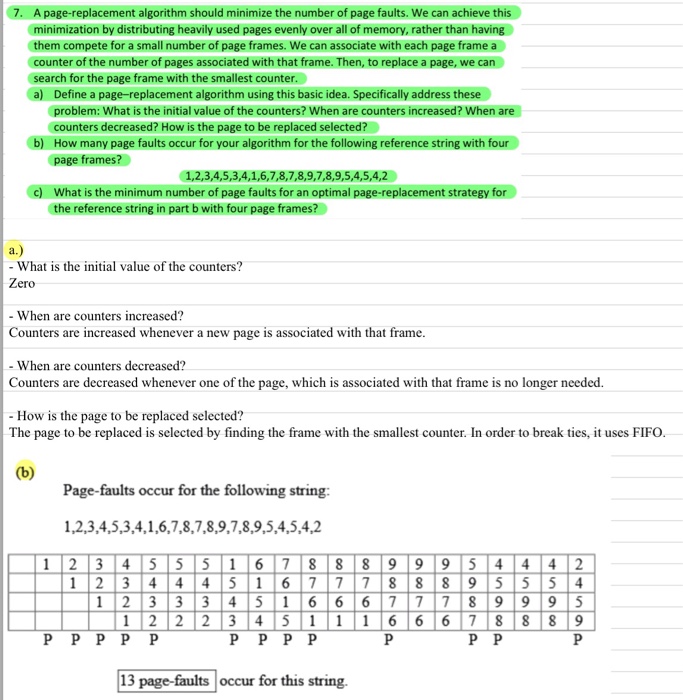
7. A page-replacement algorithm should minimize the number of page faults. We can achieve this minimization by distributing heavily used pages evenly over all of memory, rather than having them compete for a small number of page frames. We can associate with each page frame a counter of the number of pages associated with that frame. Then, to replace a page, we can search for the page frame with the smallest counter. a) Define a page-replacement algorithm using this basic idea. Specifically address these problem: What is the initial value of the counters? When are counters increased? When are counters decreased? How is the page to be replaced selected? How many page faults occur for your algorithm for the following reference string with four page frames? b) 1,2,3,4,5,3,4,1,6,7,8,7,8,9,7,8,9,5,4,5,4,2 c) What is the minimum number of page faults for an optimal page-replacement strategy for the reference string in part b with four page frames? What is the initial value of the counters? Zero - When are counters increased? Counters are increased whenever a new page is associated with that frame When are counters d Counters are decreased whenever one of the page, which is associated with that frame is no longer needed. ecreased? - How is the page to be replaced selected? The page to be replaced is selected by finding the frame with the smallest counter. In order to break ties, it uses FIFO Page-faults occur for the following string 1,2,3.4,5,3,4,1,6,7,8,7,8,9,7,8,9,5,4,5,4,2 1 2 3 4 5 5 5 1 6 7 8 8 8 9 9 9 5 4 4 4 2 1 2 3 4 4 451 67 7 7 8 8 8 9 5 5 5 4 1 2 2 2 34 511 6 6 6 7888 9 13 page-faults occur for this string
Step by Step Solution
There are 3 Steps involved in it

Get step-by-step solutions from verified subject matter experts
 Study Help