



Question: (b) (11 points) The following ciphertexts are obtained via the wrapping variant of one-time pad encryption scheme, both using the same pad. ciphertext, = 07
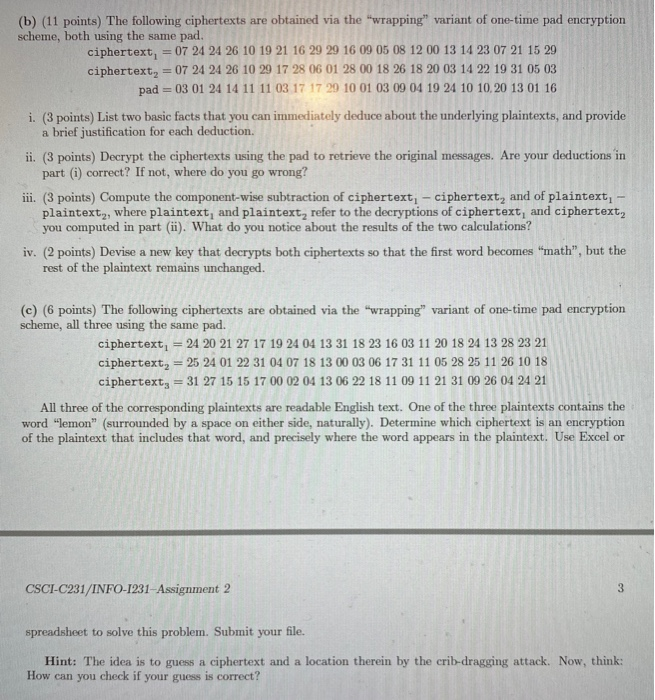
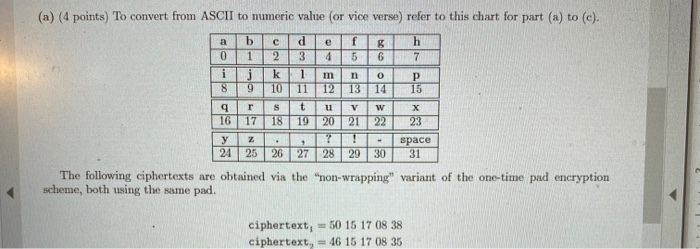
(b) (11 points) The following ciphertexts are obtained via the "wrapping" variant of one-time pad encryption scheme, both using the same pad. ciphertext, = 07 24 24 26 10 19 21 16 29 29 16 09 05 08 12 00 13 14 23 07 21 15 29 ciphertext= 07 24 24 26 10 29 17 28 06 01 28 00 18 26 18 20 03 14 22 19 31 05 03 pad = 03 01 24 14 11 11 03 17 17 29 10 01 03 09 04 19 24 10 10 20 13 01 16 i. (3 points) List two basic facts that you can immediately deduce about the underlying plaintexts, and provide a brief justification for each deduction. ii. (3 points) Decrypt the ciphertexts using the pad to retrieve the original messages. Are your deductions in part (i) correct? If not, where do you go wrong? iii. (3 points) Compute the component-wise subtraction of ciphertexti - ciphertext, and of plaintext; - plaintexty, where plaintext, and plaintext, refer to the decryptions of ciphertext, and ciphertext, you computed in part (ii). What do you notice about the results of the two calculations? iv. (2 points) Devise a new key that decrypts both ciphertexts so that the first word becomes "math", but the rest of the plaintext remains unchanged. (c) (6 points) The following ciphertexts are obtained via the "wrapping" variant of one-time pad encryption scheme, all three using the same pad. ciphertext = 24 20 21 27 17 19 24 04 13 31 18 23 16 03 11 20 18 24 13 28 23 21 ciphertexty = 25 24 01 22 31 04 07 18 13 00 03 06 17 31 11 05 28 25 11 26 10 18 ciphertexty = 31 27 15 15 17 00 02 04 13 06 22 18 11 09 11 21 31 09 26 04 24 21 All three of the corresponding plaintexts are readable English text. One of the three plaintexts contains the word "lemon" (surrounded by a space on either side, naturally). Determine which ciphertext is an encryption of the plaintext that includes that word, and precisely where the word appears in the plaintext. Use Excel or CSCI-C231/INFO-1231-Assignment 2 spreadsheet to solve this problem. Submit your file. Hint: The idea is to guess a ciphertext and a location therein by the crib-dragging attack. Now, think: How can you check if your guess is correct? (a) (4 points) To convert from ASCII to numeric value (or vice verse) refer to this chart for part (a) to (c). b c d e f g h 0 1 2 3 4 5 6 7 i j k l m n o P 9 10 11 12 13 14 15 q r s t u v w 16 17 18 19 20 21 22 23 . ? ! - space 26 27 28 29 30 31 The following ciphertexts are obtained via the "non-wrapping" variant of the one-time pad encryption scheme, both using the same pad. ciphertext, = 50 15 17 08 38 ciphertext, = 46 15 17 08 35 (b) (11 points) The following ciphertexts are obtained via the "wrapping" variant of one-time pad encryption scheme, both using the same pad. ciphertext, = 07 24 24 26 10 19 21 16 29 29 16 09 05 08 12 00 13 14 23 07 21 15 29 ciphertext= 07 24 24 26 10 29 17 28 06 01 28 00 18 26 18 20 03 14 22 19 31 05 03 pad = 03 01 24 14 11 11 03 17 17 29 10 01 03 09 04 19 24 10 10 20 13 01 16 i. (3 points) List two basic facts that you can immediately deduce about the underlying plaintexts, and provide a brief justification for each deduction. ii. (3 points) Decrypt the ciphertexts using the pad to retrieve the original messages. Are your deductions in part (i) correct? If not, where do you go wrong? iii. (3 points) Compute the component-wise subtraction of ciphertexti - ciphertext, and of plaintext; - plaintexty, where plaintext, and plaintext, refer to the decryptions of ciphertext, and ciphertext, you computed in part (ii). What do you notice about the results of the two calculations? iv. (2 points) Devise a new key that decrypts both ciphertexts so that the first word becomes "math", but the rest of the plaintext remains unchanged. (c) (6 points) The following ciphertexts are obtained via the "wrapping" variant of one-time pad encryption scheme, all three using the same pad. ciphertext = 24 20 21 27 17 19 24 04 13 31 18 23 16 03 11 20 18 24 13 28 23 21 ciphertexty = 25 24 01 22 31 04 07 18 13 00 03 06 17 31 11 05 28 25 11 26 10 18 ciphertexty = 31 27 15 15 17 00 02 04 13 06 22 18 11 09 11 21 31 09 26 04 24 21 All three of the corresponding plaintexts are readable English text. One of the three plaintexts contains the word "lemon" (surrounded by a space on either side, naturally). Determine which ciphertext is an encryption of the plaintext that includes that word, and precisely where the word appears in the plaintext. Use Excel or CSCI-C231/INFO-1231-Assignment 2 spreadsheet to solve this problem. Submit your file. Hint: The idea is to guess a ciphertext and a location therein by the crib-dragging attack. Now, think: How can you check if your guess is correct? (a) (4 points) To convert from ASCII to numeric value (or vice verse) refer to this chart for part (a) to (c). b c d e f g h 0 1 2 3 4 5 6 7 i j k l m n o P 9 10 11 12 13 14 15 q r s t u v w 16 17 18 19 20 21 22 23 . ? ! - space 26 27 28 29 30 31 The following ciphertexts are obtained via the "non-wrapping" variant of the one-time pad encryption scheme, both using the same pad. ciphertext, = 50 15 17 08 38 ciphertext, = 46 15 17 08 35
Step by Step Solution
There are 3 Steps involved in it

Get step-by-step solutions from verified subject matter experts