







Question: Back to Assignment Attempts Average/3 4. Paying taxes on stocks What does it mean to invest in stocks? Common stock is considered to be one
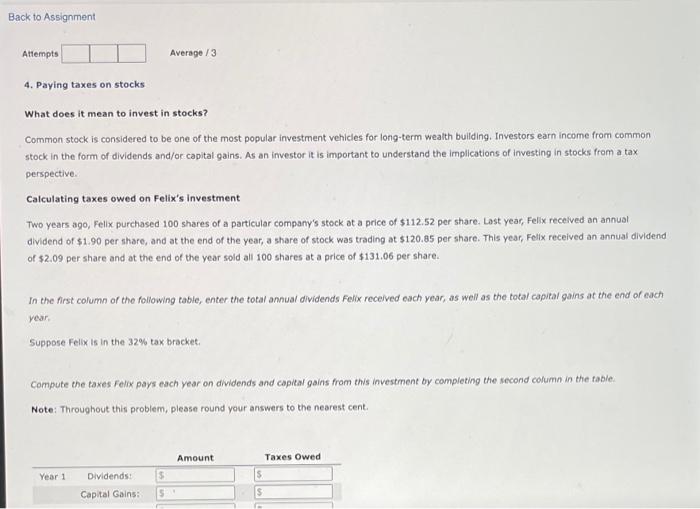
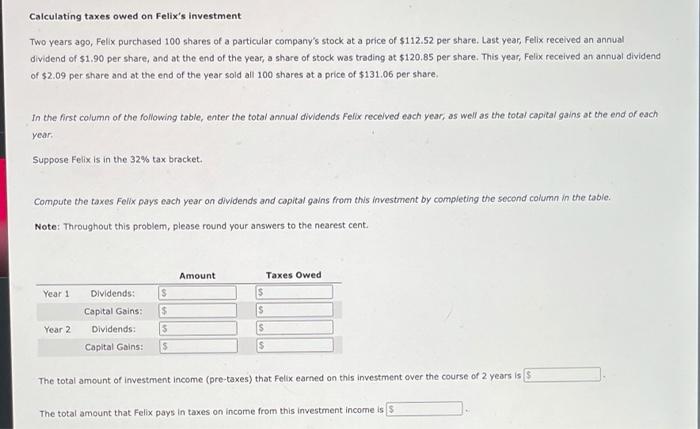
Back to Assignment Attempts Average/3 4. Paying taxes on stocks What does it mean to invest in stocks? Common stock is considered to be one of the most popular investment vehicles for long-term wealth building. Investors earn income from common stock in the form of dividends and/or capital gains. As an investor it is important to understand the implications of investing in stocks from a tax perspective Calculating taxes owed on Felix's Investment Two years ago, Felix purchased 100 shares of a particular company's stock at a price of $112.52 per share. Last year, Felix received an annual dividend of $1.90 per share, and at the end of the year, a share of stock was trading at $120.85 per share. This year, Felix received an annual dividend of $2.09 per share and at the end of the year sold all 100 shares at a price of $131.06 per share. In the first column or the following table, enter the total anual dividends Felix received each year, as well as the total capital gains at the end of each year Suppose Felix is in the 32% tax bracket Compute the taxes Felix pays each year on dividends and capital gains from this investment by completing the second column in the table: Note: Throughout this problem, please round your answers to the nearest cent. Amount Taxes Owed Year 1 S Dividends: Capital Gains: S s Calculating taxes owed on Felix's Investment Two years ago, Felix purchased 100 shares of a particular company's stock at a price of $112.52 per share. Last year, Felix received an annual dividend of $1.90 per share, and at the end of the year, a share of stock was trading at $120,85 per share. This year, Felix received an annual dividend of $2.09 per share and at the end of the year sold all 100 shares at a price of $131.06 per share, In the first column of the following table, enter the total annual dividends Felix received each year, as well as the total capital gains at the end of each year Suppose Felix is in the 32% tax bracket. Compute the taxes Felix pays each year on dividends and capital gains from this investment by completing the second column in the table. Note: Throughout this problem, please round your answers to the nearest cent. Amount Taxes Owed S Year 1 Dividends: S $ s $ Capital Gains: Dividends: Capital Gains: Year 2 s s s The total amount of investment income (pre-taxes) that Felix earned on this investment over the course of 2 years is The total amount that Felix pays in taxes on income from this investment income is 5
Step by Step Solution
There are 3 Steps involved in it

Get step-by-step solutions from verified subject matter experts
 Study Help