Question: Background Information: Effective training practices rely on the ability of the organization to determine, first and foremost, whether an organizational problem or situation can be
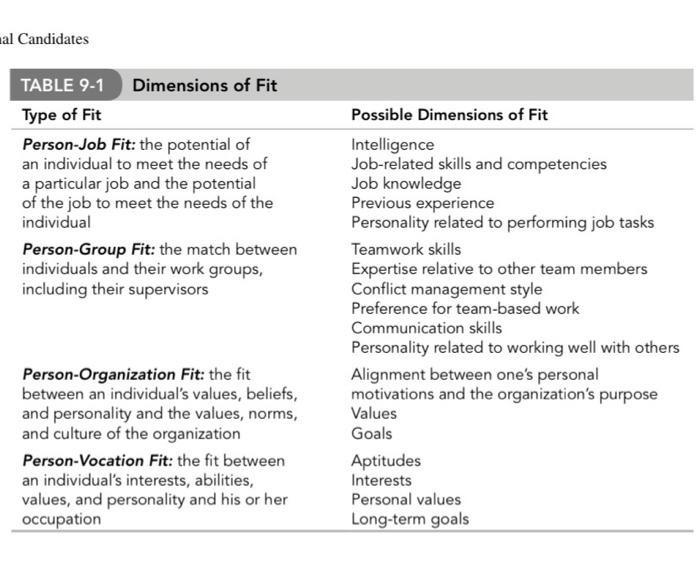
Background Information: Effective training practices rely on the ability of the organization to determine, first and foremost, whether an organizational problem or situation can be resolved with employee training. Therefore, the training design process must begin with a needs assessment whereby the organization can find out whether training is necessary. There are multiple analyses done during a needs assessment (i.e., organizational analysis, person analysis, task analysis) and multiple methods for conducting needs assessments (e.g., observation, interviews, focus groups, technology). Ultimately, organizations need to decide whether sinking time, money, effort, and energy into developing, running, and assessing a training program will fix the problem at hand before they even begin to design the training program. That's where needs assessments come into play. A careful needs assessment will tell an organization who needs training and what those individuals need to learning, including the tasks involved, any additional knowledge or skills to be developed, or additional behaviors to acquire and enact. Assignment: I will give you two scenarios and you will need to conduct a short needs assessment for each. To earn full credit for this assignment, you will need to think about each type of analysis required in a needs assessment and answer the main questions of each analysis depending on who is being represented in the scenario. You will then need to recommend two specific methods of conducting needs assessments for each scenario. I suggest you pay close attention to Table 3.1 and Table 3.2. Your final deliverable is a written submission in either PDF or Word doc form. Scenario #1: You are the executive vice-president of a strategic marketing firm located in the northeast United States. While your clients are mostly pleased with the results of your marketing campaigns, there is one client who is not happy. This client is a personal care product manufacturer that targets adolescent and young adult men and women and sells skincare, haircare, make-up, and nailcare lines that are moderately priced. The marketing director for this client is an older individual and the team supporting that director is not particularly computer- savvy so they tend to market these products in newspaper fliers, on Facebook, and with in-person product demonstrations at Wal-Mart and Target. You want to keep your client happy, so you decide to conduct a needs assessment to see what's happening and whether training can solve the issue at hand. Scenario #2: You are a senior staff engineer with the Philadelphia Water Department who manages green stormwater infrastructure design projects. Briefly, green stormwater infrastructures are soil-water-plant systems that collect stormwater, filter some of it into the grand, evaporate some of it back into the air, and sometimes release the final portion back into a sewer system (reference Philadelphia Water Department for more information, it's pretty cool). You have worked predominantly on projects involving hard surfaces (porous paving, stormwater trenches, and infiltration trenches) and you've just begun designing a green stormwater infrastructure project for a neighborhood playground. While the neighborhood association is pleased with some of the design work, they would prefer the incorporation of plants and trees to ensure that the playground is green by design and also beautiful for the enjoyment of the entire neighborhood. Given that this is a new type of project for you, you decide to conduct a needs assessment to see whether training is necessary for your success on this project al Candidates TABLE 9-1 Dimensions of Fit Type of Fit Person-Job Fit: the potential of an individual to meet the needs of a particular job and the potential of the job to meet the needs of the individual Person-Group Fit: the match between individuals and their work groups, including their supervisors Possible Dimensions of Fit Intelligence Job-related skills and competencies Job knowledge Previous experience Personality related to performing job tasks Teamwork skills Expertise relative to other team members Conflict management style Preference for team-based work Communication skills Personality related to working well with others Alignment between one's personal motivations and the organization's purpose Values Goals Aptitudes Interests Personal values Long-term goals Person-Organization Fit: the fit between an individual's values, beliefs, and personality and the values, norms, and culture of the organization Person-Vocation Fit: the fit between an individual's interests, abilities, values, and personality and his or her occupation









 Study Help