







Question: Can someone help me with my Java assignment please? It's so confusinf and I need help please Understand the Class and Problem We continue to
Can someone help me with my Java assignment please? It's so confusinf and I need help please
Understand the Class and Problem
We continue to work on the card game effort, now adding the source of all cards for the various players, the Deck.
Deck: A class that represents the source of the cards for dealing and, as the game progresses, the place from which players can receive new cards (say, as they pick cards "from the deck" or when future hands are to be dealt from the same deck). Recall this picture, which relates the Deck to the various Handsthat it creates through the process called "dealing":
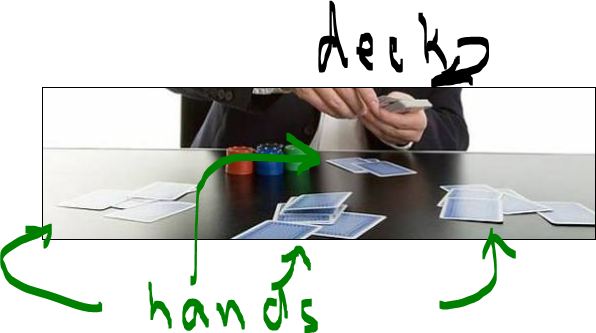
Let's deconstruct the meaning of this important class.
Deck: A Deck object is the source of all cards. It's where the dealer gets cards to deal, and if a player takes an individual card after the deal, he takes it from the Deck object. Naturally, the primary member here is an array of Card objects, much like Hand. We'll call this member cards[]. A deck normally consists of a single pack of cards: 52 cards (four suits of 13 values each). However, some games usetwo, three or more packs. If a card game requires two packs, then the deck will consist of two full 52-card packs: 104 cards. (Many games throw away some cards before beginning. For example Pinochle wants all cards with values 8-and-below to be taken out of the deck, but we will not trouble ourselves with this complexity.) A newly instantiated deck will have a multiple of 52 cards and will contain all the standard cards, so the number of cards in a newly instantiated deck will be 52, 104, 156, ..., i.e., numPacks 52.
Clearly, we need an int like Hand's numCards, to keep track of how many cards are actually in the cards[] array. To this end, we'll use topCard (not numCards), since a deck typically removes and delivers cards to players from the top-of-the-deck, and this is a convenient variable to use for the number of cards as well as the position of the top of the deck.
There are a few other useful members (numPacks, for example). In addition to the the usual constructors and accessors, we'll want a dealCard() to return and remove the card at the top of the deck (which may be received by a client and added to some player's hand), and a shuffle() to re-order the cards in a random fashion. Also, we'll need to restock the deck (init()) to the original full condition in preparation for a fresh deal (we would certainly not want to re-instantiate a new deck when we have a perfectly good one available: garbage collection, done by us or by the operating system, is a resource we do not abuse).
Phase 1: The Deck Class
Private Static Class Constants
Define a private final int value like MAX_PACKS = 6 , NUM_CARDS_PER_PACK= 52 , and MAX_CARDS_PER_DECK = MAX_PACKS*NUM_CARDS_PER_PACK. Use them to their full benefit in the class code.
Static Member Data
Card[] masterPack
This is a private static Card array, masterPack[], containing exactly 52 card references, which point to all the standard cards. It will enable us to avoid capriciously and repeatedly declaring the same 52 cards which are needed as the game proceeds. In other words, once we have, say, a ('6', spades)Cardconstructed and stored (inside this masterPack[]), we use that same instance whenever we need it as a source to copy in various places, notably during a re-initialization of the Deck object; it will always be in the masterPack[] array for us to copy.
Private Member Data
Card[] cards; int topCard; int numPacks;
Public Methods
Deck(int numPacks) - a constructor that populates the arrays and assigns initial values to members. Overload so that if no parameters are passed, one pack is assumed. This constructor can call a helper, allocateMasterPack() (see below), but that helper would only do something the very first time it gets called per program (no need to allocate a static array more than once per program, right?). It would then use another helper, init(), to assign the master pack Cards to the various cards[] elements.
boolean init(int numPacks) - re-populate cards[] with the standard 52 numPacks cards. (This also gives the client a chance to change the number of packs in the deck in preparation for a new game.) We should not repopulate the static array, masterPack[], since that was done once, in the (first-invoked) constructor and never changes. The elements of the cards[] array can referencethe masterPack[] objects -- that's safe since we will never give the client any of those objects to modify (see dealCard() on this issue). If numPacks is out-of-range, return false without changing the object; else return true and make the change.
void shuffle() - mixes up the cards with the help of the standard random number generator.
Card dealCard() - returns and removes (effectively, not physically) the card in the top occupied position of cards[]. Here we have to return a copy of the card, not the actual reference to the object in the cards[] array, since that object is also the object in the masterPack[] array, which the client must not be allowed to change.
An accessor for the int, topCard (no mutator.)
Card inspectCard(int k) - Accessor for an individual card. Returns a card with errorFlag = true if k is bad. Otherwise returns a copy of the card (see admonition for dealCard()).
Private Methods
static void allocateMasterPack() - this is a method that will be called by the constructor. However, it has to be done with a very simple twist: even if manyDeckobjects are constructed in a given program, this static method will not allow itself to be executed more than once. Since masterPack[] is a static, unchanging, entity, it need not be built every time a new Deck is instantiated. So this method needs to be able to ask itself, "Have I been here before?", and if the answer is "yes", it will immediately return without doing anything; it has already builtmasterPack[] in a previous invocation.
Recommended test of Class Deck
Declare a deck containing two packs of cards. Do not shuffle. Deal all the cards in a loop until the deck is empty (dealt directly to the display/screen, not to anyHandobjects just yet). Display each card as it comes off the deck. Next, reset the deck by initializing it again (to the same two packs). Shuffle the deck this time, and re-deal to the screen in a loop again. Notice that the cards are now coming off in a random order.
Repeat this double deal, unshuffled, then shuffled, but this time using a single pack deck.
Example Test Run of Card Class
/* --------------------------------------------------------- A of spades / K of spades / Q of spades / J of spades / T of spades / 9 of spades / 8 of spades / 7 of spades / 6 of spades / 5 of spades / 4 of spade s / 3 of spades / 2 of spades / A of hearts / K of hearts / Q of hearts / J of hearts / T of hearts / 9 of hearts / 8 of hearts / 7 of hearts / 6 of hearts / 5 of hearts / 4 of hearts / 3 of hearts / 2 of hearts / A of diamo nds / K of diamonds / Q of diamonds / J of diamonds / T of diamonds / 9 of diamonds / 8 of diamonds / 7 of diamonds / 6 of diamonds / 5 of diamonds / 4 of diamonds / 3 of diamonds / 2 of diamonds / A of clubs / K of clubs / Q of clubs / J of clubs / T of clubs / 9 of clubs / 8 of clubs / 7 of clubs / 6 of clubs / 5 of clubs / 4 of clubs / 3 of clubs / 2 of clubs / A of sp ades / K of spades / Q of spades / J of spades / T of spades / 9 of spades / 8 of spades / 7 of spades / 6 of spades / 5 of spades / 4 of spades / 3 of spades / 2 of spades / A of hearts / K of hearts / Q of hearts / J of he arts / T of hearts / 9 of hearts / 8 of hearts / 7 of hearts / 6 of hearts / 5 of hearts / 4 of hearts / 3 of hearts / 2 of hearts / A of diamonds / K of diamonds / Q of diamonds / J of diamonds / T of diamonds / 9 of diamond s / 8 of diamonds / 7 of diamonds / 6 of diamonds / 5 of diamonds / 4 of di amonds / 3 of diamonds / 2 of diamonds / A of clubs / K of clubs / Q of clu bs / J of clubs / T of clubs / 9 of clubs / 8 of clubs / 7 of clubs / 6 of clubs / 5 of clubs / 4 of clubs / 3 of clubs / 2 of clubs / 7 of spades / 6 of diamonds / 2 of hearts / 7 of clubs / 3 of clubs / 7 of diamo nds / 2 of clubs / J of spades / 4 of diamonds / 2 of spades / J of spades / A o f spades / 3 of spades / 2 of diamonds / 2 of clubs / 7 of hearts / A of spades / A of clubs / K of clubs / 9 of hearts / T of spades / 6 of clubs / Q of clubs / 8 of hearts / Q of spades / J of hearts / 5 of hearts / T of hearts / 5 of spa des / Q of diamonds / 7 of clubs / K of hearts / K of hearts / 5 of spades / T o f hearts / 3 of diamonds / 7 of spades / 8 of diamonds / A of clubs / 8 of heart s / 6 of spades / 7 of hearts / Q of clubs / K of spades / 6 of hearts / 5 of cl ubs / A of hearts / Q of diamonds / 9 of spades / Q of hearts / 2 of diamonds / 9 of spades / 5 of clubs / 4 of spades / 2 of spades / 5 of diamonds / 3 of spad es / 9 of clubs / 6 of diamonds / J of hearts / T of diamonds / A of diamonds / A of diamonds / 6 of clubs / 4 of hearts / K of spades / 4 of clubs / 3 of heart s / 9 of diamonds / T of spades / T of clubs / 8 of spades / T of diamonds / 6 o f spades / 8 of spades / K of diamonds / K of diamonds / 9 of diamonds / 4 of cl ubs / Q of spades / 8 of clubs / K of clubs / 8 of clubs / 5 of hearts / 4 of di amonds / 6 of hearts / 4 of hearts / T of clubs / 7 of diamonds / J of diamonds / 8 of diamonds / 2 of hearts / 9 of clubs / 3 of clubs / 9 of hearts / J of clu bs / 3 of hearts / J of diamonds / 3 of diamonds / 5 of diamonds / A of hearts / 4 of spades / Q of hearts / J of clubs / A of spades / K of spades / Q of spades / J of spades / T of spades / 9 of spades / 8 of spades / 7 of spades / 6 of spades / 5 of spades / 4 of spade s / 3 of spades / 2 of spades / A of hearts / K of hearts / Q of hearts / J of hearts / T of hearts / 9 of hearts / 8 of hearts / 7 of hearts / 6 of hearts / 5 of hearts / 4 of hearts / 3 of hearts / 2 of hearts / A of diamo nds / K of diamonds / Q of diamonds / J of diamonds / T of diamonds / 9 of diamonds / 8 of diamonds / 7 of diamonds / 6 of diamonds / 5 of diamonds / 4 of diamonds / 3 of diamonds / 2 of diamonds / A of clubs / K of clubs / Q of clubs / J of clubs / T of clubs / 9 of clubs / 8 of clubs / 7 of clubs / 6 of clubs / 5 of clubs / 4 of clubs / 3 of clubs / 2 of clubs / 6 of diamonds / A of spades / 6 of spades / K of spades / 9 of clubs / Q of spades / J of diamonds / Q of diamonds / 8 of spades / 9 of spades / T of clubs / 5 of clubs / T of diamonds / A of diamonds / 2 of clubs / 5 of diam onds / T of spades / J of spades / 9 of diamonds / A of hearts / 8 of heart s / 8 of clubs / 2 of spades / 3 of diamonds / A of clubs / J of clubs / J of hearts / 5 of hearts / 9 of hearts / 4 of clubs / 5 of spades / K of di amonds / Q of hearts / 6 of hearts / 4 of diamonds / 2 of hearts / Q of clu bs / 3 of clubs / K of hearts / 7 of spades / 4 of spades / 7 of diamonds / 7 of clubs / K of clubs / 3 of spades / 8 of diamonds / 3 of hearts / T o f hearts / 6 of clubs / 4 of hearts / 7 of hearts / 2 of diamonds / --------------------------------------------------------- */
Phase 2: The Deck and Hand Classes
For your second test client, allow your Deck class to interact with your Hand class. Don't add anything to the two classes, but do everything in this phase from within your main() client.
Ask the user (interactively) to select the number of players (a number from 1 to 10). That's one question, one numeric answer, and no further user-interaction. Once you have a legal value, instantiate a single-pack Deck object without shuffling,deal a deck into that many Hand objects, dealing all cards until the deck is empty. Since the number of players chosen by the user may not divide evenly into 52, the number of cards dealt into the various hands might differ, but only by, at most, one. Display all the hands after the deal.
Reset the objects to their initial state, but this time shuffle the deck before a second deal (same # of players).
To be clear, dealing to hands means dealing a single card to each hand, until all hands have one card, then repeating to give all hands a second card, etc., until the cards are gone, and each hand has (nearly) the same number of cards. It doesnotmean dealing x cards to one hand, then x to the next hand, etc. This is very important.
You don't need any more classes than the ones we've already created, since there should not be that much to do in main().
Example of One of Possibly Many Test Runs of Deck + Card Classes
--------------- run #2 ---------------------------------- How many hands? (1 - 10, please): 6 Here are our hands, from unshuffled deck: Hand = ( A of spades, 8 of spades, 2 of spades, 9 of hearts, 3 of hearts, T of diamonds, 4 of diamonds, J of clubs, 5 of clubs ) Hand = ( K of spades, 7 of spades, A of hearts, 8 of hearts, 2 of hearts, 9 of diamonds, 3 of diamonds, T of clubs, 4 of clubs ) Hand = ( Q of spades, 6 of spades, K of hearts, 7 of hearts, A of diamonds, 8 o f diamonds, 2 of diamonds, 9 of clubs, 3 of clubs ) Hand = ( J of spades, 5 of spades, Q of hearts, 6 of hearts, K of diamonds, 7 o f diamonds, A of clubs, 8 of clubs, 2 of clubs ) Hand = ( T of spades, 4 of spades, J of hearts, 5 of hearts, Q of diamonds, 6 o f diamonds, K of clubs, 7 of clubs ) Hand = ( 9 of spades, 3 of spades, T of hearts, 4 of hearts, J of diamonds, 5 o f diamonds, Q of clubs, 6 of clubs ) Here are our hands, from SHUFFLED deck: Hand = ( J of diamonds, 9 of hearts, Q of spades, 5 of clubs, 8 of spades, 4 of spades, T of diamonds, Q of clubs, K of clubs ) Hand = ( 4 of diamonds, 3 of clubs, T of spades, 5 of diamonds, 7 of diamonds, 8 of hearts, A of diamonds, 6 of diamonds, 3 of diamonds ) Hand = ( 7 of clubs, 6 of spades, K of diamonds, 6 of clubs, 8 of clubs, 5 of s pades, 8 of diamonds, 4 of hearts, 4 of clubs ) Hand = ( T of clubs, 2 of diamonds, 6 of hearts, 2 of hearts, 9 of clubs, A of clubs, K of hearts, A of spades, A of hearts ) Hand = ( 7 of spades, J of clubs, 9 of spades, 3 of spades, J of hearts, 5 of h earts, K of spades, 3 of hearts ) Hand = ( 9 of diamonds, J of spades, 2 of spades, 2 of clubs, Q of hearts, T of hearts, Q of diamonds, 7 of hearts ) --------------------------------------------------------- */
Here you will find more information about the Hand & Card class. You will need them for the assignment.
import java.util.*; import java.io.*; import java.lang.*;
public class Foothill { public static void main(String[] args) { // declare the references Card card1, card2, card3, card4, card5, card6, card7, card8, NewCard; Hand hand1;
// instantiate the objects card1 = new Card(); card2 = new Card('K', Card.Suit.spades); card3 = new Card('4', Card.Suit.diamonds); card4 = new Card('M', Card.Suit.hearts); card5 = new Card('Q', Card.Suit.clubs); card6 = new Card(); card7 = new Card(); card8 = new Card();
System.out.println("****** Phase 1****** ");
String report = card2.toString() + " " + card3.toString() + " " + card4.toString();
System.out.println(report);
System.out.println();
card2.set('O', Card.Suit.clubs); card4.set('J', Card.Suit.hearts);
String NewVal = card2.toString() + " " + card4.toString() + " " + card3.toString();
System.out.println(NewVal);
System.out.println();
System.out.println("****** Phase 2****** ");
hand1 = new Hand();
for (int i = 0; i
String displayCard = hand1.toString();
System.out.println(displayCard);
System.out.println(); System.out.println("Testing inspectCard"); System.out.println(hand1.inspectCard(20).toString()); System.out.println(hand1.inspectCard(80).toString());
System.out.println();
for (int i = hand1.getNumCards(); i > 0; i--) { NewCard = hand1.inspectCard(i); System.out.println("Playing " + hand1.inspectCard(i).toString()); hand1.playCard(); }
System.out.println();
System.out.println("After playing all cards ");
System.out.println(hand1.toString());
} }
class Card { public static enum Suit { clubs, diamonds, hearts, spades }
// member data private char value; private Suit suit; private boolean errorFlag;
// declare the char values final char LETTER_A = 'A'; final char LETTER_T = 'T'; final char LETTER_J = 'J'; final char LETTER_Q = 'Q'; final char LETTER_K = 'K'; final char NUMBER_2 = '2'; final char NUMBER_3 = '3'; final char NUMBER_4 = '4'; final char NUMBER_5 = '5'; final char NUMBER_6 = '6'; final char NUMBER_7 = '7'; final char NUMBER_8 = '8'; final char NUMBER_9 = '9';
// default constructor public Card() { value = 'A'; suit = Suit.spades; }
// constructor with parameters public Card(char value, Suit suit) { if (isValid(value, suit) == true) { this.value = value; this.suit = suit; this.errorFlag = false; } else errorFlag = true; }
// stringizer public String toString() {
if (errorFlag == true) return "Invalid"; return value + " of " + suit; }
public boolean set(char value, Suit suit) {
if (isValid(value, suit) == true) { this.value = value; errorFlag = false; this.suit = suit; return true; } else { errorFlag = true; return false; } }
private static boolean isValid(char value, Suit suit) { if (value == 'A' || value == 'T' || value == 'J' || value == 'Q' || value == 'K' || (value >= '2' && value
return true; else return false; }
// accessors public Suit getSuit() { return suit; }
public char getValue() { return value; }
public boolean getErrorFlag() { return errorFlag; }
public boolean equals(Card card) { if (card.value == this.value && card.suit == this.suit && card.errorFlag == this.errorFlag) return true;
else return false; }
}
class Hand { // static constant public static final int Max_Card = 50;
// member data private Card[] myCards; private int numCards;
// default constructor public Hand() { myCards = new Card[Max_Card]; numCards = 0; }
public void resetHand() { myCards = new Card[Max_Card]; numCards = 0; }
public boolean takeCard(Card card) { boolean result; if (numCards >= Max_Card) { result = false; } else { if (card.getErrorFlag() == false) { myCards[numCards] = new Card(card.getValue(), card.getSuit()); numCards++; }
result = true; } return result; }
public Card playCard() { Card card1 = myCards[numCards - 1]; // myCards[numCards-1] = null; numCards = numCards - 1; return card1; }
public String toString() { String ValCard = "Hand = ( ";
if (numCards == 0) { ValCard = ValCard + ")"; } else { for (int i = 0; i
public int getNumCards() { return numCards; }
public Card inspectCard(int k) { Card card1;
if (k > numCards) { card1 = new Card('Z', Card.Suit.spades); }
else { card1 = myCards[k - 1]; }
return card1; }
}
Step by Step Solution
There are 3 Steps involved in it

Get step-by-step solutions from verified subject matter experts
 Study Help