







Question: Case Study: Surviving in the Media and Environment Industry . . Required: Write on the below points related to the case study 1. Corporate Strategy
Case Study: Surviving in the Media and Environment Industry
.
.
Required:
Write on the below points related to the case study
1. Corporate Strategy
2. SWOT ANALYSIS
3. IFAS
4. OUR OPENINION AND WHY IF THEY ARE SUCCEED?
5. New strategy
.
Note: Please the answer must be related to the case study
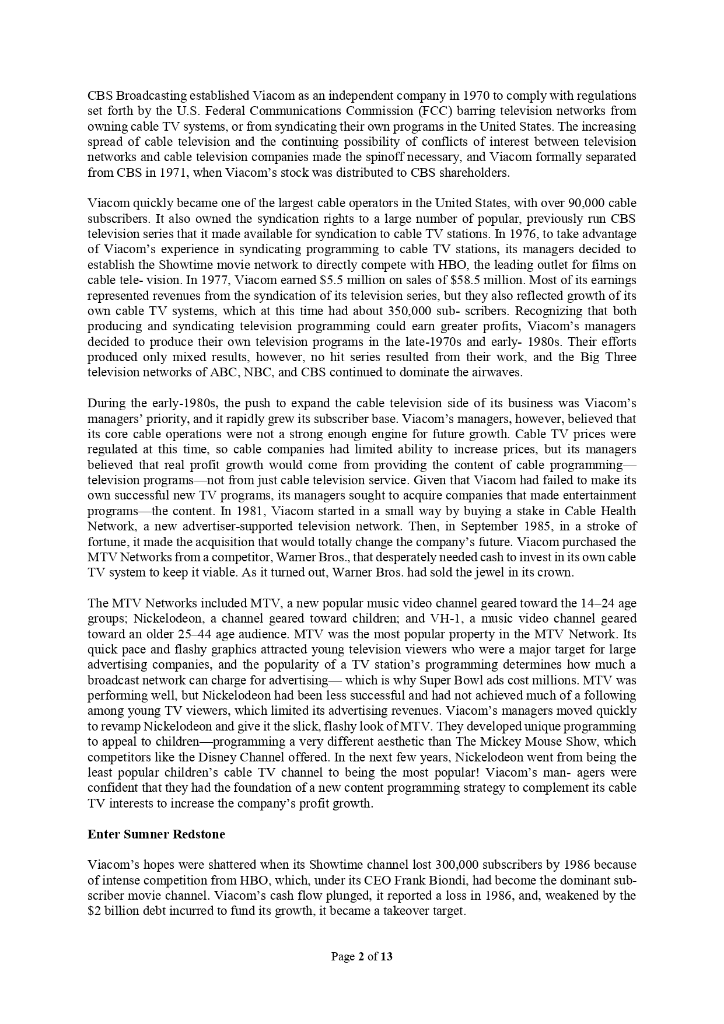
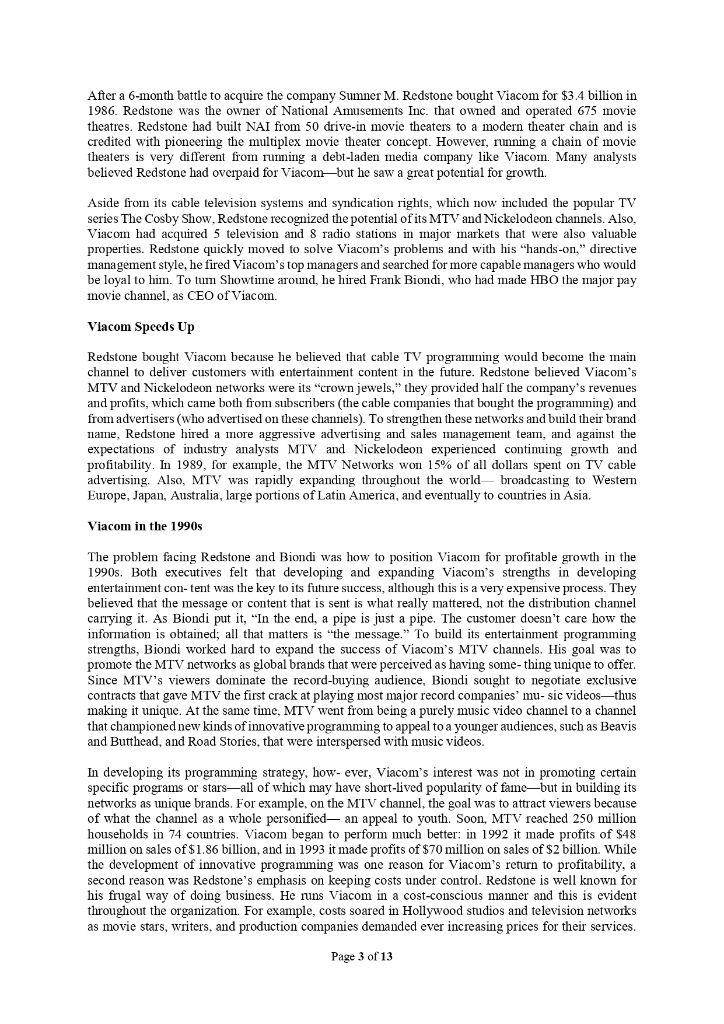
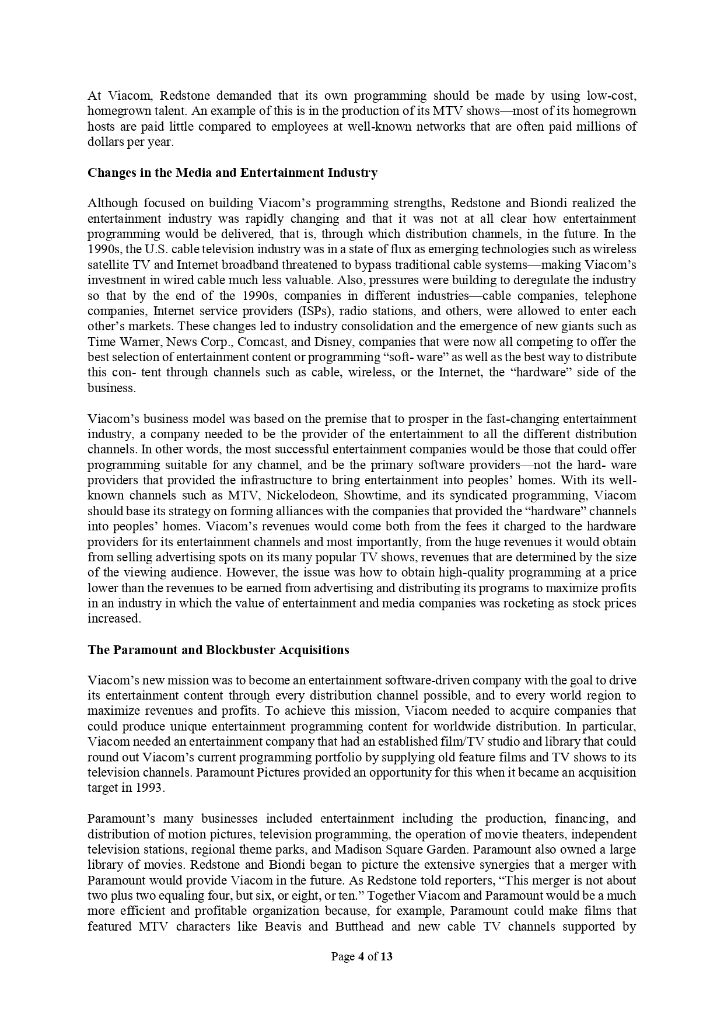
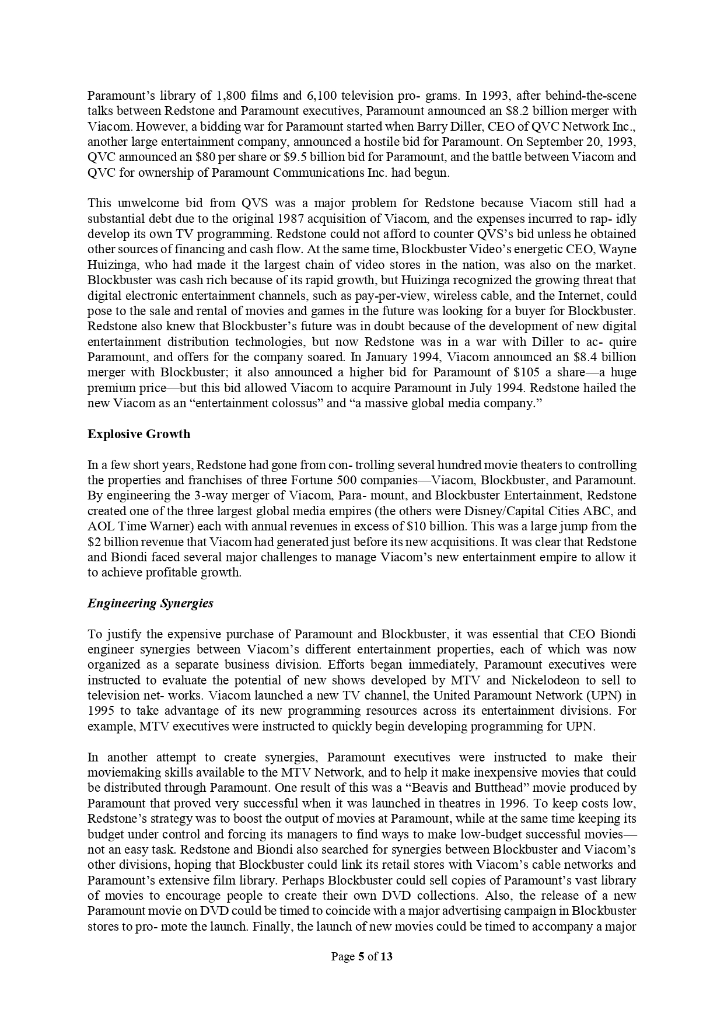
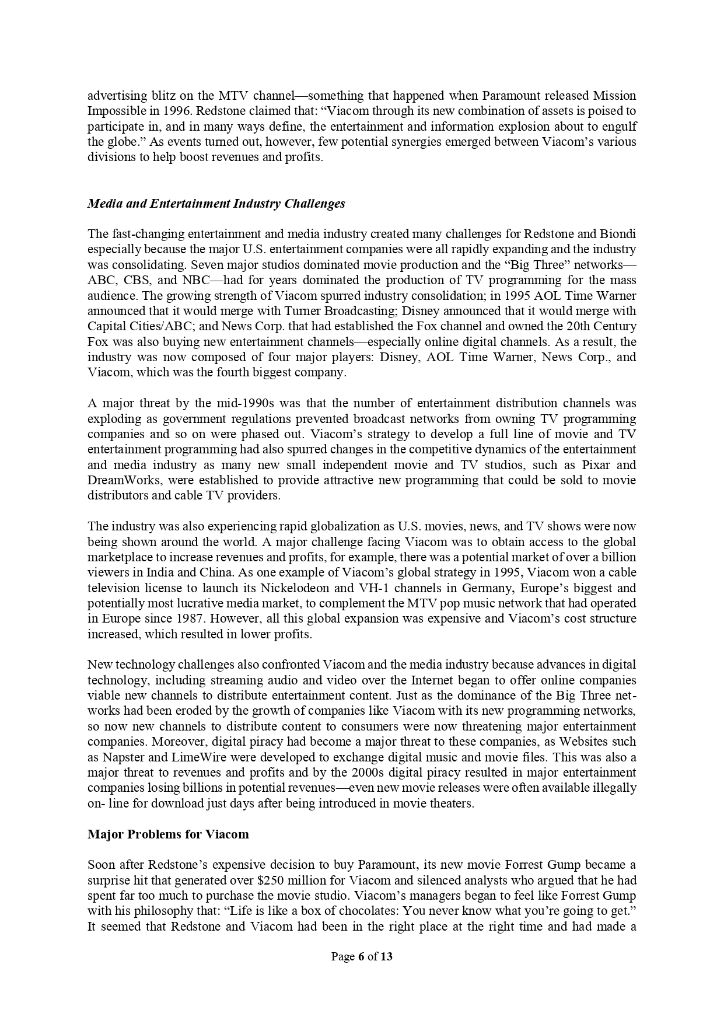
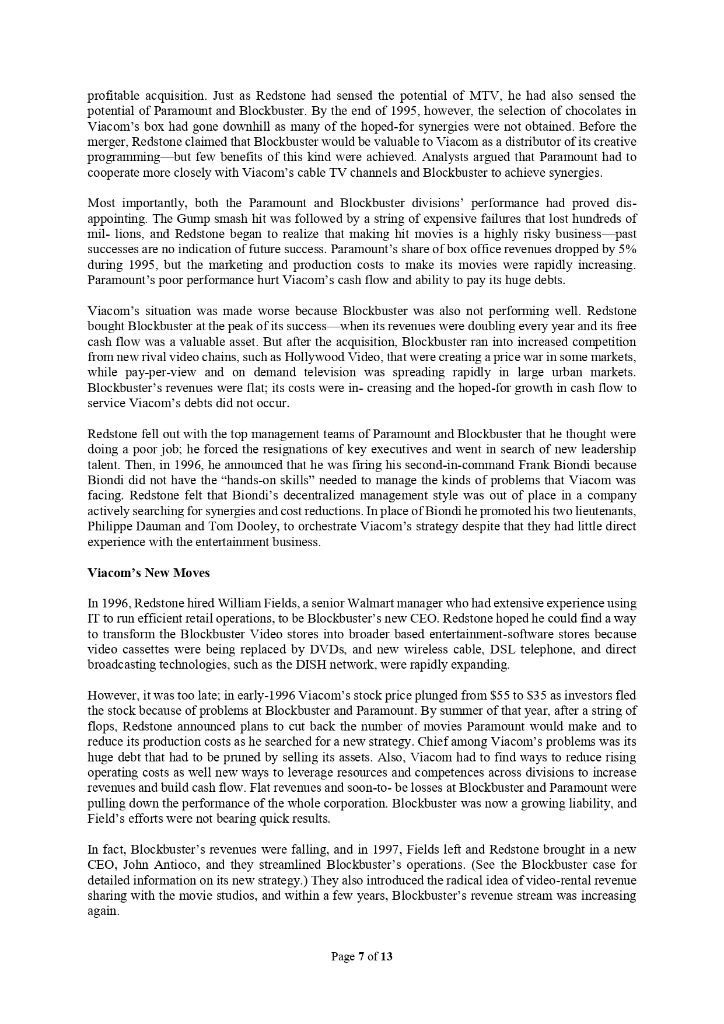
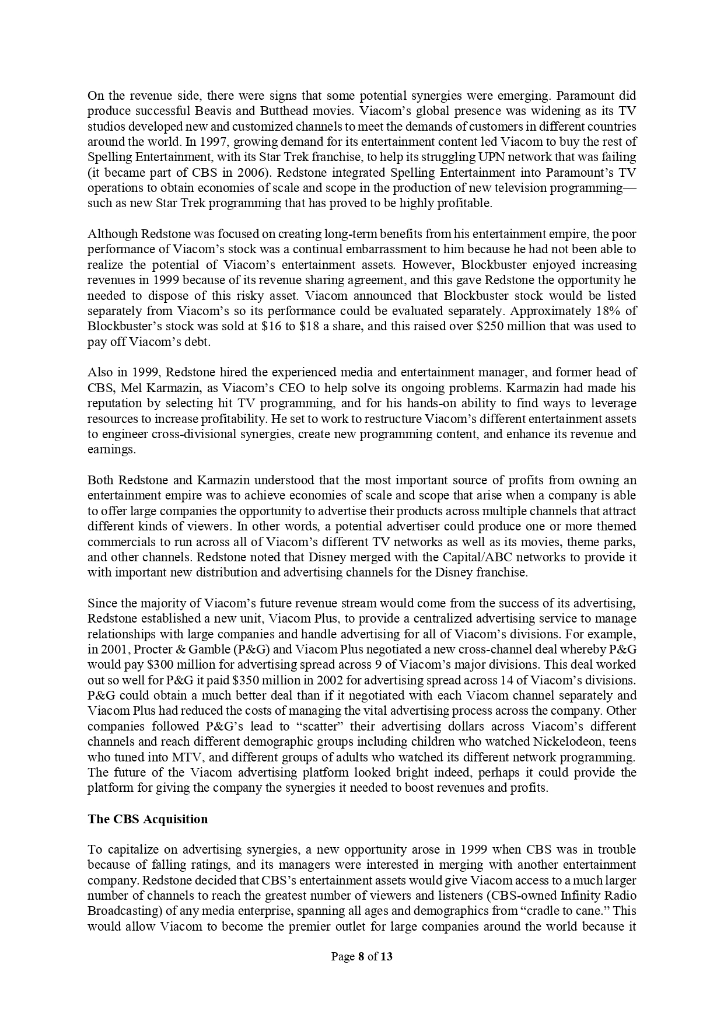
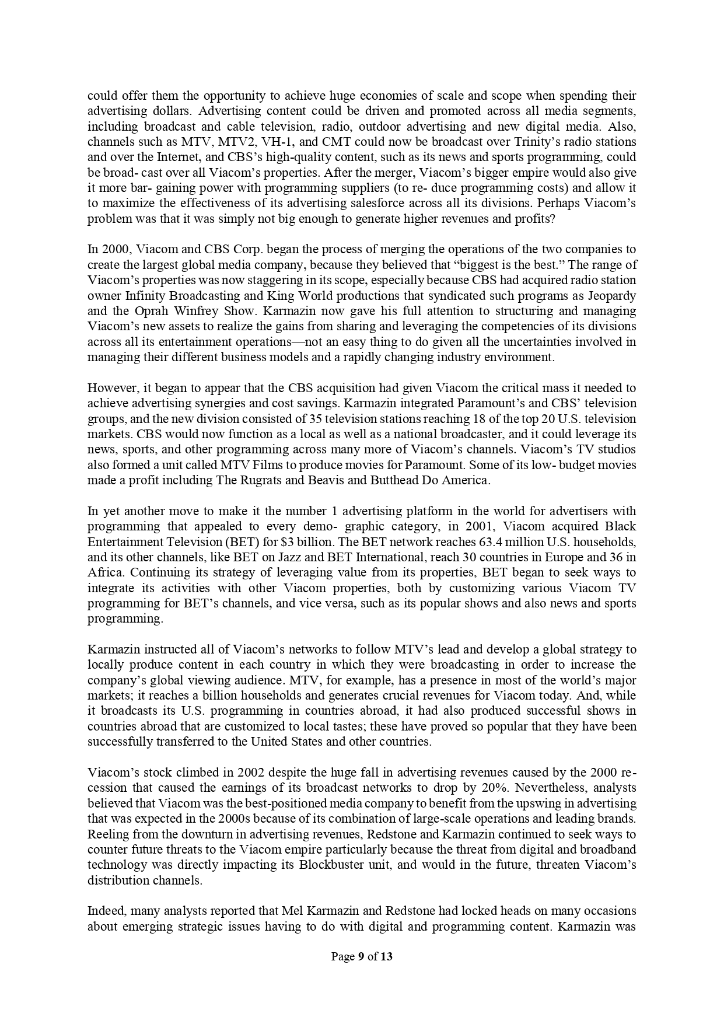
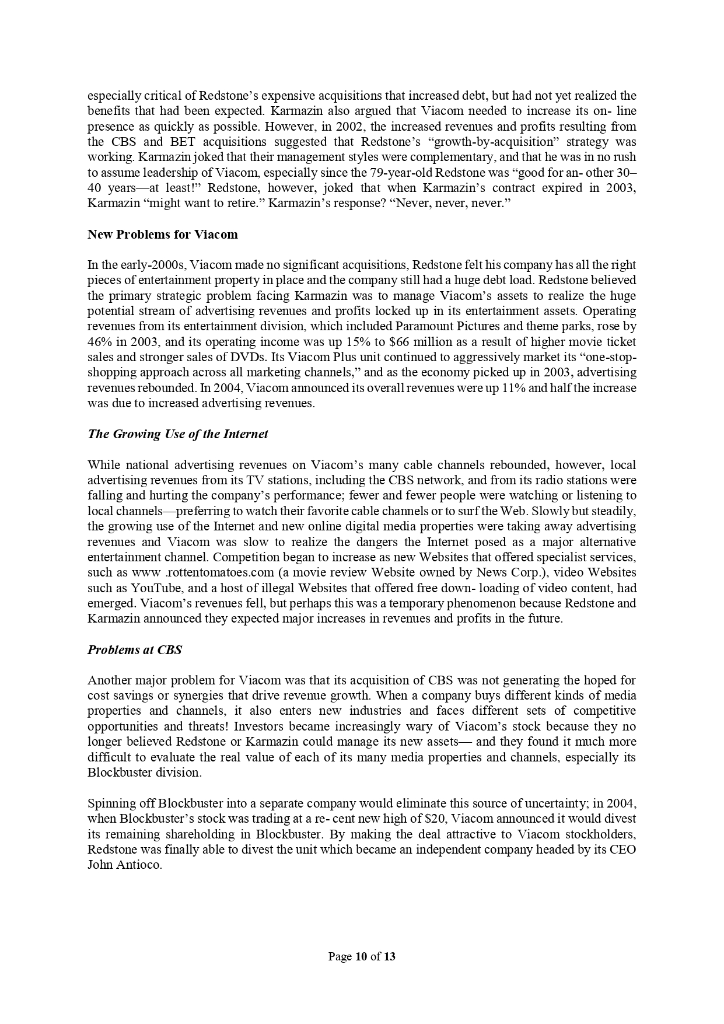
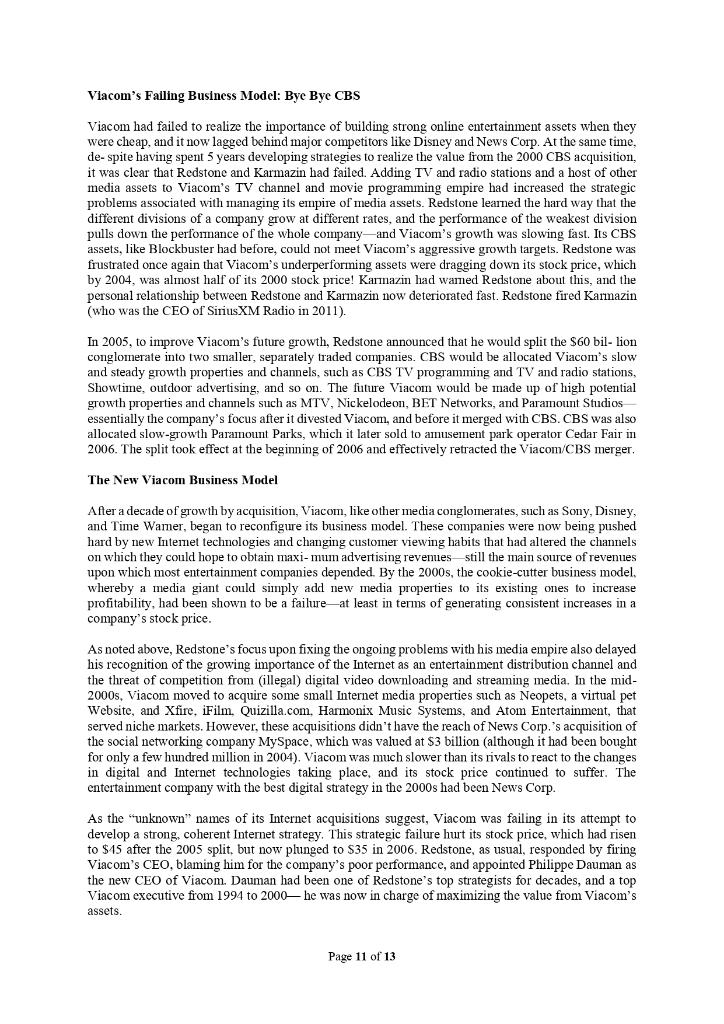
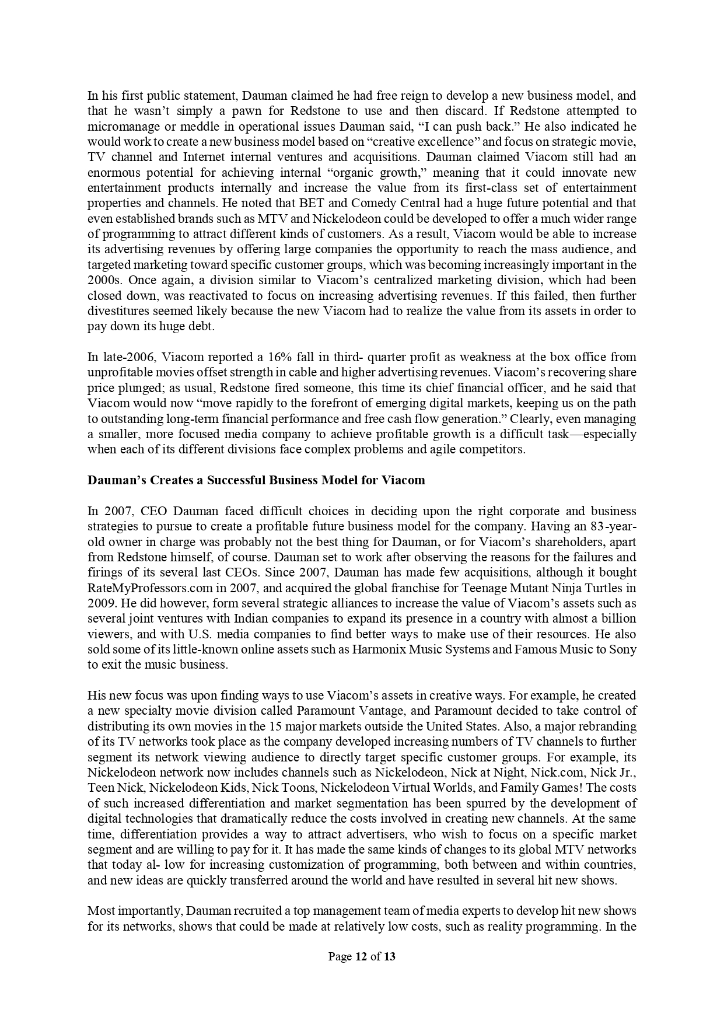
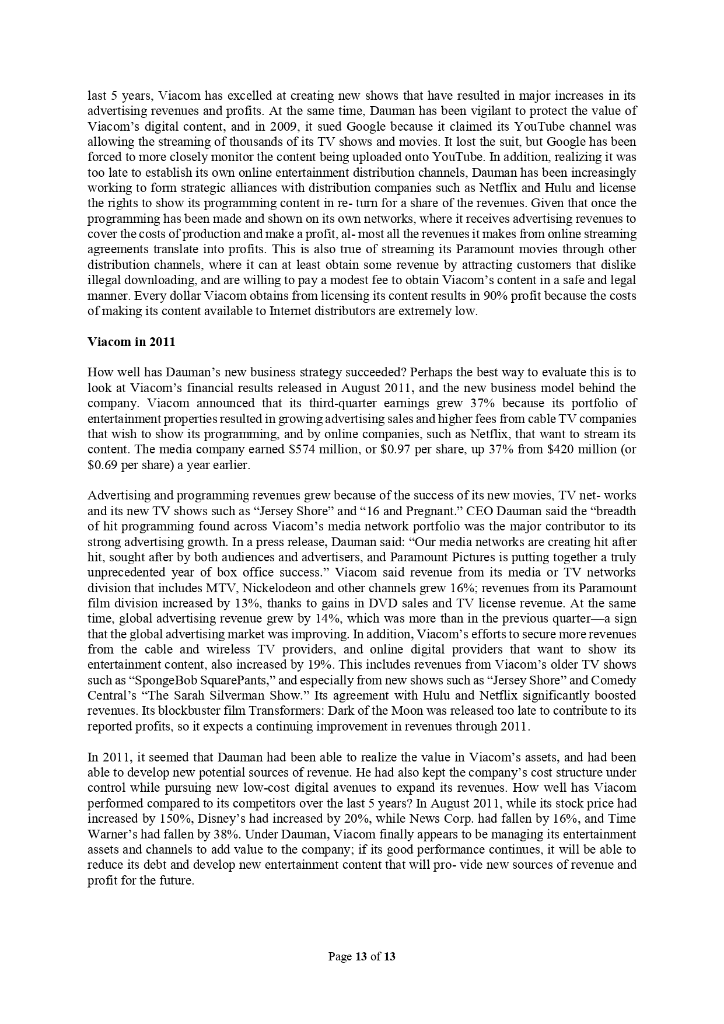
CBS Broadcasting established Viacom as an independent company in 1970 to comply with regulations set forth by the U.S. Federal Communications Commission (FCC) bairing television networks from owning cable TV systems, or from syndicating their own programs in the United States. The increasing spread of cable television and the continuing possibility of conflicts of interest between television networks and cable television companies made the spinoff necessary, and Viacom formally separated from CBS in 1971, when Viacom's stock was distributed to CBS shareholders. Viacom quickly became one of the largest cable operators in the United States, with over 90,000 cable subscribers. It also owned the syndication rights to a large number of popular, previously run CBS television series that it made available for syndication to cable TV stations. In 1976, to take advantage of Viacom's experience in syndicating programming to cable TV stations, its managers decided to establish the Showtime movie network to directly compete with HBO, the leading outlet for films on cable tele- vision. In 1977, Viacom eamed S5.5 million on sales of $58.5 million. Most of its earnings represented revenues from the syndication of its television series, but they also reflected growth of own cable TV systems, which at this time had about 350,000 sub- scribers. Recognizing that both producing and syndicating television programming could earn greater profits, Viacom's managers decided to produce their own television programs in the late-1970s and early- 1980s. Their efforts produced only inixed results, however, no hit series resulted from their work, and the Big Three television networks of ABC, NBC, and CBS continued to dominate the airwaves. TV system During the early-1980s, the push to expand the cable television side of its business was Viacom's managers' priority, and it rapidly grew subscriber base. Viacom's managers, however, believed that its core cable operations were not a strong enough engine for future growth. Cable TV prices were regulated at this time, so cable companies had limited ability to increase prices, but its managers believed that real profit growth would come from providing the content of cable television programs not from just cable television service. Given that Viacom had failed to make its programming own successful new TV programs, its managers sought to acquire companies that made entertainment programs the content. In 1981, Viacom started in a small way by buying a stake in Cable Health Network, a new advertiser-supported television network. Then, in September 1985, in a stroke of fortune, it made the acquisition that would totally change the company's future. Viacom purchased the MTV Networks from a competitor, Wamer Bros., that desperately needed cash to invest in its own cable keep it viable. As it turned out, Warner Bros, had sold the jewel in its crown. The MTV Networks included MTV, a new popular music video channel geared toward the 14-24 age groups; Nickelodeon, a channel geared toward children, and VH-1, a music video channel geared toward an older 25 44 age audience. MTV was the most popular property in the MTV Network. Its quick pace and flashy graphics attracted young television viewers who were a major target for large advertising companies, and the popularity of a TV station's programming determines how much a broadcast network can charge for advertising, which is why Super Bowl ads cost millions. MTV was performing well, but Nickelodeon had been less successful and had not achieved much of a following among young TV viewers, which limited its advertising revenues. Viacom's managers moved quickly to revamp Nickelodeon and give it the slick, flashy look of MTV. They developed unique programming to to childrenprogramming a very different aesthetic than The Mickey Mouse Show, which competitors like the Disney Channel offered. In the next few years, Nickelodeon went from being the least popular children's cable TV channel to being the most popular! Viacom's man- agers were confident that they had the foundation of a new content programming strategy to complement its cable TV interests to increase the company's profit growth. appeal Enter Sumner Redstone Viacom's hopes were shattered when its Showtime channel lost 300,000 subscribers by 1986 because of intense competition from HBO, which, under its CEO Frank Biondi, had become the dominant sub- scriber movie channel. Viacom's cash flow plunged, it reported a loss in 1986, and, weakened by the $2 billion debt incurred to fund its growth, it became a takeover target. Page 2 of 13 After a 6-month battle to acquire the company Sumner M. Redstone bought Viacom for $3.4 billion in 1986. Redstone was the owner of National Amusements Inc. that owned and operated 675 movie theatres. Redstone had built NAI from 50 drive-in movie theaters to a modern theater chain and is credited with pioneering the multiplex movie theater concept. However, running a chain of movie theaters is very different from rumming a debt-laden media company like Viacom. Many analysts believed Redstone had overpaid for Viacombut he saw a great potential for growth. Aside from its cable television systeins and syndication rights, which now included the popular TV series The Cosby Show, Redstone recognized the potential of its MTV and Nickelodeon channels. Also, Viacom had acquired 5 television and 8 radio stations in major markets that were also valuable properties. Redstone quickly moved to solve Viacom's problems and with his "hands-on," directive management style, he fired Viacom's top managers and searched for more capable managers who would be loyal to him. To tum Showtime around, he hired Frank Biondi, who had made HBO the major pay movie channel, as CEO of Viacom. Viacom Speeds Up Redstone bought Viacom because he believed that cable TV programming would become the main channel to deliver customers with entertainment content in the future. Redstone believed Viacom's MTV and Nickelodeon networks were its "crown jewels," they provided half the company's revenues and profits, which came both from subscribers (the cable companies that bought the programming) and from advertisers (who advertised on these channels). To strengthen these networks and build their brand name, Redstone hired a more aggressive advertising and sales management team, and against the expectations of industry analysts MTV and Nickelodeon experienced continuing growth and profitability. In 1989, for example, the MTV Networks won 15% of all dollars spent on TV cable advertising. Also, MTV was rapidly expanding throughout the world broadcasting to Western Europe, Japan, Australia, large portions of Latin America, and eventually to countries in Asia. Viacom in the 1990s The problem facing Redstone and Biondi was how to position Viacom for profitable growth in the 1990s. Both executives felt that developing and expanding Viacom's strengths developing entertainment con was the key to its future success, although this is a very expensive process. They believed that the message or content that is sent is what really mattered, not the distribution channel carrying it. As Biondi put it, In the end, a pipe is just a pipe. The customer doesn't care how the information is obtained; all that matters is "the message." To build its entertainment programming strengths, Biondi worked hard to expand the success of Viacoms MTV channels. His goal was to promote the MTV networks as global brands that were perceived as having something unique to offer. Since MTV's viewers dominate the record-buying audience, Biondi sought to negotiate exclusive contracts that gave MTV the first crack at playing most major record companies' mu- sic videosthus making it unique. At the same time, MTV went from being a purely music video channel to a channel that championed new kinds of innovative programming to appeal to a younger audiences, such as Beavis and Butthead, and Road Stories, that were interspersed with music videos In developing its programming strategy, how-ever, Viacom's interest was not in promoting certain specific programs or starsall of which may have short-lived popularity of famebut in building its networks as unique brands. For example, on the MTV channel, the goal was to attract viewers because of what the channel as a whole personified- an appeal to youth. Soon, MTV reached 250 million households in 74 countries. Viacom began to perform much better: in 1992 it made profits of $48 million on sales of $1.86 billion, and in 1993 it made profits of $70 million on sales of $2 billion. While the development of innovative programming was one reason for Viacom's return to profitability, a second reason was Redstone's emphasis on keeping costs under control. Redstone is well known for his frugal way of doing business. He runs Viacom in a cost-conscious manner and this is evident throughout the organization. For example, costs soared in Hollywood studios and television networks as movie stars, writers, and production companies demanded ever increasing prices for their services. Page 3 of 13 At Viacom. Redstone demanded that its own programming should be made by using low-cost, homegrown talent. An example of this is in the production of its MTV shows most of its homegrown hosts are paid little compared to employees at well-known networks that are often paid millions of dollars per year. Changes in the Media and Entertainment Industry Although focused on building Viacom's programming strengths, Redstone and Biondi realized the entertainment industry was rapidly changing and that it was not at all clear how entertainment programming would be delivered, that is, through which distribution channels, in the future. In the 1990s, the U.S. cable television industry was in a state of flux as emerging technologies such as wireless satellite TV and Intemet broadband threatened to bypass traditional cable systemsmaking Viacom's investinent in wired cable much less valuable. Also, pressures were building to deregulate the industry so that by the end of the 1990s, companies in different industriescable companies, telephone companies, Internet service providers (ISPS), radio stations, and others, were allowed to enter each other's markets. These changes led to industry consolidation and the emergence of new giants such as Time Wamer News Corp., Comcast, and Disney, companies that were now all competing to offer the best selection of entertainment content or programming "soft-ware": well as the best way to distribute this con- tent through channels such as cable, wireless, or the Internet, the "hardware" side of the business. Viacom's business model was based on the premise that to prosper in the fast-changing entertainment industry, a company needed to be the provider of the entertainment to all the different distribution channels. In other words, the most successful entertainment companies would be those that could offer programming suitable for any chamel, and be the primary software providers not the hard ware providers that provided the infrastructure to bring entertainment into peoples' homes. With its well- known channels such as MTV. Nickelodeon, Showtime, and its syndicated programming, Viacom should base its strategy on forming alliances with the companies that provided the hardware" channels into peoples' homes. Viacom's revenues would come both from the fees it charged to the hardware providers for its entertaiment channels and most importantly, from the huge revenues it would obtain from selling advertising spots on its many popular TV shows, revenues that are determined by the size of the viewing audience. However, the issue was how to obtain high-quality programming at a price lower than the revenues to be earned from advertising and distributing its programs to maximize profits in an industry in which the value of entertainment and media companies was rocketing as stock prices increased The Paramount and Blockbuster Acquisitions Viacom's new mission was to become an entertainment software-driven company with the goal to drive its entertainment content through every distribution channel possible, and to every world region to maximize revenues and profits. To achieve this mission, Viacom needed to acquire companies that could produce unique entertainment programming content for worldwide distribution. In particular, Viacom needed an entertainment company that had an established film/TV studio and library that could round out Viacom's current programming portfolio by supplying old feature films and TV shows to its television channels. Paramount Pictures provided an opportunity for this when it became an acquisition target in 1993 Paramount's many businesses included entertainment including the production, financing, and distribution of motion pictures, television programming, the operation of movie theaters, independent television stations, regional theme parks, and Madison Square Garden. Paramount also owned a large library of movies. Redstone and Biondi began to picture the extensive synergies that a merger with Paramount would provide Viacom in the future. As Redstone told reporters, This merger is not about two plus two equaling four, but six, or eight, or ten. Together Viacom and Paramount would be a much more efficient and profitable organization because, for example, Paramount could make films that featured MTV characters like Beavis and Butthead and new cable TV channels supported by Page 4 of 13 Paramount's library of 1,800 films and 6,100 television programs. In 1993, after behind-the-scene talks between Redstone and Paramount executives, Paramount announced an 88.2 billion merger with Viacom. However, a bidding war for Paramount started when Barry Diller, CEO of QVC Network Inc., another large entertainment company, announced a hostile bid for Paramount. On September 20, 1993, QVC amounced an $80 per share or $9.5 billion bid for Paramount, and the battle between Viacom and QVC for ownership of Paramount Communications Inc. had begun. This unwelcome bid from QVS was a major problem for Redstone because Viacom still had a substantial debt due to the original 1987 acquisition of Viacom, and the expenses incurred to rapidly develop its own TV programming. Redstone could not afford to counter QVS's bid unless he obtained other sources of financing and cash flow. At the same time, Blockbuster Video's energetic CEO, Wayne Huizinga, who had made it the largest chain of video stores in the nation, was also on the market. Blockbuster was cash rich because of its rapid growth, but Huizinga recognized the growing threat that digital electronic entertainment channels, such as pay-per-view, wireless cable, and the Internet, could pose to the sale and rental of movies and games in the future was looking for a buyer for Blockbuster Redstone also knew that Blockbuster's future was in doubt because of the development of new digital entertainment distribution techmologies, but now Redstone was in a war with Diller to ac- quire Paramount, and offers for the company soared. In January 1994. Viacom announced an $8.4 billion merger with Blockbuster; it also announced a higher bid for Paramount of $105 a share-a huge premiun price but this bid allowed Viacom to acquire Paramount in July 1994. Redstone hailed the new Viacom as an "entertainment colossus and a massive global media company." Explosive Growth In a few short years, Redstone had gone from con- trolling several hundred movie theaters to controlling the properties and franchises of three Fortune 500 companies-Viacom, Blockbuster, and Paramount. By engineering the 3-way merger of Viacom, Para- mount, and Blockbuster Entertainment, Redstone created one of the three largest global media empires (the others were Disney Capital Cities ABC, and AOL Time Warner) each with annual revenues in excess of $10 billion. This was a large jump from the $2 billion revenue that Viacoin had generated just before its new acquisitions. It was clear that Redstone and Biondi faced several major challenges to manage Viacom's new entertainment empire to allow it to achieve profitable growth. Engineering Synergies To justify the expensive purchase of Paramount and Blockbuster, it was essential that CEO Biondi engineer synergies between Viacom's different entertainment properties, each of which was now organized as a separate business division. Efforts began immediately. Paramount executives were instructed to evaluate the potential of new shows developed by MTV and Nickelodeon to sell to television net-works. Viacom launched a new TV channel, the United Paramount Network (UPN) in 1995 to take advantage of its new programming resources across its entertainment divisions. For example, MTV executives were instructed to quickly begin developing programming for UPN. In another attempt to create synergies, Paramount executives were instructed to make their moviemaking skills available to the MTV Network, and to help it make inexpensive movies that could be distributed through Paramount. One result of this was a Beavis and Butthead" movie produced by Paramount that proved very successful when it was launched in theatres in 1996. To keep costs low, Redstone's strategy was boost the output of movies at Paramount, while at the same time keeping its budget under control and forcing its managers to find ways to make low-budget successful movies not an easy task. Redstone and Biondi also searched for synergies between Blockbuster and Viacom's other divisions, hoping that Blockbuster could link its retail stores with Viacom's cable networks and Paramount's extensive film library. Perhaps Blockbuster could sell copies of Paramount's vast library of movies to encourage people create their own DVD collections. Also, the release of a new Paramount movie on DVD could be timed to coincide with a major advertising campaign in Blockbuster stores to pro-mote the launch. Finally, the launch of new movies could be timed to accompany a major Page 5 of 13 advertising blitz on the MTV channelsomething that happened when Paramount released Mission Impossible in 1996. Redstone claimed that: Viacom through its new combination of assets is poised to participate in, and in many ways define the entertainment and information explosion about to engulf the globe." As events tumed out, however, few potential synergies emerged between Viacom's various divisions to help boost revenues and profits. Media and Entertainment Industry Challenges The fast-changing entertainment and media industry created many challenges for Redstone and Biondi especially because the major U.S. entertaimnent companies were all rapidly expanding and the industry was consolidating. Seven major studios dominated movie production and the "Big Three" networks ABC, CBS, and NBC had for years dominated the production of TV programming for the mass audience. The growing strength of Viacom spurred industry consolidation; in 1995 AOL Time Warner announced that it would merge with Tuner Broadcasting: Disney announced that it would merge with Capital Cities/ABC, and News Corp. that had established the Fox channel and owned the 20th Century Fox was also buying new entertainment chamels especially online digital channels. As a result, the industry was now composed of four major players: Disney, AOL Time Warner, News Corp., and Viacom, which was the fourth biggest company A major threat by the mid-1990s was that the number of entertainment distribution channels was exploding as government regulations prevented broadcast networks from owning TV programming companies and so on were phased out. Viacom's strategy to develop a full line of movie and TV entertainment programming had also spurred changes in the competitive dynamics of the entertainment and media industry as many new sinall independent movie and TV studios, such as Pixar and DreamWorks, were established to provide attractive new programming that could be sold to movie distributors and cable TV providers. The industry was also experiencing rapid globalization as U.S. movies, news, and TV shows were now being shown around the world A major challenge facing Viacom was to obtain access to the global marketplace to increase revenues and profits, for example, there was a potential market of over a billion viewers in India and China. As one example of Viacom's global strategy in 1995, Viacom won a cable television license to launch its Nickelodeon and VH-1 channels in Germany, Europe's biggest and potentially most lucrative media market, to complement the MTV pop music network that had operated in Europe since 1987. However, all this global expansion was expensive and Viacom's cost structure increased, which resulted in lower profits. New technology challenges also confronted Viacom and the media industy because advances in digital technology, including streaming audio and video over the Internet began to offer online companies viable new channels to distribute entertainment content. Just as the dominance of the Big Three net- works had been eroded by the growth of companies like Viacom with its new programming networks, so now new channels to distribute content to consumers were now threatening major entertainment companies. Moreover, digital piracy had become a major threat to these companies, as Websites such as Napster and LimeWire were developed to exchange digital music and movie files. This was also a major threat to revenues and profits and by the 2000s digital piracy resulted in major entertainment companies losing billions in potential revenueseven new movie releases were often available illegally on-line for download just days after being introduced in movie theaters. Major Problems for Viacom Soon after Redstone's expensive decision to buy Paramount, its new movie Forrest Gump became a surprise hit that generated over $250 million for Viacom and silenced analysts who argued that he had spent far too much to purchase the movie studio. Viacom's managers began to feel like Forrest Gump with his philosophy that: "Life is like a box of chocolates: You never know what you're going to get." It seemed that Redstone and Viacom had been in the right place at the right time and had made a Page 6 of 13 In his first public statement, Dauman claimed he had free reign to develop a new business model, and that he wasn't simply a pawn for Redstone to use and then discard. If Redstone attempted to micromanage or meddle in operational issues Dauman said, "I can push back." He also indicated he would work to create a new business model based on "creative excellence" and focus on strategic movie, TV channel and Internet internal ventures and acquisitions. Dauman claimed Viacom still had an enormous potential for achieving internal "organic growth. meaning that it could innovate new entertainment products internally and increase the value from its first-class set of entertainment properties and channels. He noted that BET and Comedy Central had a huge future potential and that even established brands such as MTV and Nickelodeon could be developed to offer a much wider range of programming attract different kinds of customers. As a result, Viacom would be able to increase its advertising revenues by offering large companies the opportunity to reach the mass audience, and targeted marketing toward specific customer groups, which was becoming increasingly important in the 2000s. Once again, a division similar to Viacom's centralized marketing division, which had been closed down, was reactivated to focus on increasing advertising revenues. If this failed, then further divestitures seemed likely because the new Viacom had to realize the value from its assets in order to pay down its huge debt. In late-2006, Viacom reported a 16% fall in third-quarter profit as weakness at the box office from unprofitable movies offset strength in cable and higher advertising revenues. Viacom's recovering share price plumged; as usual, Redstone fired someone, this time ils chief financial officer, and he said that Viacom would now "move rapidly to the forefront of emerging digital markets, keeping us on the path to outstanding long-tenn financial performance and free cash flow generation." Clearly, even managing a smaller, more focused media company to achieve profitable growth is a difficult task especially when each of its different divisions face complex problems and agile competitors. Dauman's Creates a Successful Business Model for Viacom In 2007, CEO Dauman faced difficult choices in deciding upon the right corporate and business strategies to pursue to create a profitable future business model for company. Having an 83-year- old owner in charge was probably not the best thing for Dauman, or for Viacom's shareholders, apart from Redstone himself, of course. Dauman set to work after observing the reasons for the failures and firings of its several last CEOs. Since 2007, Dauman has made few acquisitions, although it bought RateMyProfessors.com in 2007, and acquired the global franchise for Teenage Mutant Ninja Turtles in 2009. He did however, form several strategic alliances to increase the value of Viacom's assets such as several joint ventures with Indian companies to expand its presence in a country with almost a billion viewers, and with U.S. media companies to find better ways to make use of their resources. He also sold some of its little-known online assets such as Harmonix Music Systems and Famous Music to Sony to exit the music business. His new focus was upon finding ways to use Viacom's assets in creative ways. For example, he created a new specialty movie division called Paramount Vantage, and Paramount decided to take control of distributing its own movies in the 15 major markets outside the United States. Also, a major rebranding of its TV networks took place as the company developed increasing numbers of TV channels to further segment its network viewing audience to directly target specific customer groups. For example, its Nickelodeon network now includes channels such as Nickelodeon, Nick at Night, Nick.com, Nick Jr., Teen Nick, Nickelodeon Kids, Nick Toons, Nickelodeon Virtual Worlds, and Family Games! The costs of such increased differentiation and market segmentation has been spurred by the development of digital technologies that dramatically reduce the costs involved in creating new channels. At the same time, differentiation provides a way to attract advertisers, who wish to focus on a specific market segment and are willing to pay for it. It has made the same kinds of changes to its global MTV networks that today al- low for increasing customization of programming, both between and within countries, and new ideas are quickly transferred around the world and have resulted in several hit new shows. Most importantly, Dauman recruited a top management team of media experts to develop hit new shows for its networks, shows that could be made at relatively low costs, such as reality programming. In the Page 12 of 13 CBS Broadcasting established Viacom as an independent company in 1970 to comply with regulations set forth by the U.S. Federal Communications Commission (FCC) bairing television networks from owning cable TV systems, or from syndicating their own programs in the United States. The increasing spread of cable television and the continuing possibility of conflicts of interest between television networks and cable television companies made the spinoff necessary, and Viacom formally separated from CBS in 1971, when Viacom's stock was distributed to CBS shareholders. Viacom quickly became one of the largest cable operators in the United States, with over 90,000 cable subscribers. It also owned the syndication rights to a large number of popular, previously run CBS television series that it made available for syndication to cable TV stations. In 1976, to take advantage of Viacom's experience in syndicating programming to cable TV stations, its managers decided to establish the Showtime movie network to directly compete with HBO, the leading outlet for films on cable tele- vision. In 1977, Viacom eamed S5.5 million on sales of $58.5 million. Most of its earnings represented revenues from the syndication of its television series, but they also reflected growth of own cable TV systems, which at this time had about 350,000 sub- scribers. Recognizing that both producing and syndicating television programming could earn greater profits, Viacom's managers decided to produce their own television programs in the late-1970s and early- 1980s. Their efforts produced only inixed results, however, no hit series resulted from their work, and the Big Three television networks of ABC, NBC, and CBS continued to dominate the airwaves. TV system During the early-1980s, the push to expand the cable television side of its business was Viacom's managers' priority, and it rapidly grew subscriber base. Viacom's managers, however, believed that its core cable operations were not a strong enough engine for future growth. Cable TV prices were regulated at this time, so cable companies had limited ability to increase prices, but its managers believed that real profit growth would come from providing the content of cable television programs not from just cable television service. Given that Viacom had failed to make its programming own successful new TV programs, its managers sought to acquire companies that made entertainment programs the content. In 1981, Viacom started in a small way by buying a stake in Cable Health Network, a new advertiser-supported television network. Then, in September 1985, in a stroke of fortune, it made the acquisition that would totally change the company's future. Viacom purchased the MTV Networks from a competitor, Wamer Bros., that desperately needed cash to invest in its own cable keep it viable. As it turned out, Warner Bros, had sold the jewel in its crown. The MTV Networks included MTV, a new popular music video channel geared toward the 14-24 age groups; Nickelodeon, a channel geared toward children, and VH-1, a music video channel geared toward an older 25 44 age audience. MTV was the most popular property in the MTV Network. Its quick pace and flashy graphics attracted young television viewers who were a major target for large advertising companies, and the popularity of a TV station's programming determines how much a broadcast network can charge for advertising, which is why Super Bowl ads cost millions. MTV was performing well, but Nickelodeon had been less successful and had not achieved much of a following among young TV viewers, which limited its advertising revenues. Viacom's managers moved quickly to revamp Nickelodeon and give it the slick, flashy look of MTV. They developed unique programming to to childrenprogramming a very different aesthetic than The Mickey Mouse Show, which competitors like the Disney Channel offered. In the next few years, Nickelodeon went from being the least popular children's cable TV channel to being the most popular! Viacom's man- agers were confident that they had the foundation of a new content programming strategy to complement its cable TV interests to increase the company's profit growth. appeal Enter Sumner Redstone Viacom's hopes were shattered when its Showtime channel lost 300,000 subscribers by 1986 because of intense competition from HBO, which, under its CEO Frank Biondi, had become the dominant sub- scriber movie channel. Viacom's cash flow plunged, it reported a loss in 1986, and, weakened by the $2 billion debt incurred to fund its growth, it became a takeover target. Page 2 of 13 After a 6-month battle to acquire the company Sumner M. Redstone bought Viacom for $3.4 billion in 1986. Redstone was the owner of National Amusements Inc. that owned and operated 675 movie theatres. Redstone had built NAI from 50 drive-in movie theaters to a modern theater chain and is credited with pioneering the multiplex movie theater concept. However, running a chain of movie theaters is very different from rumming a debt-laden media company like Viacom. Many analysts believed Redstone had overpaid for Viacombut he saw a great potential for growth. Aside from its cable television systeins and syndication rights, which now included the popular TV series The Cosby Show, Redstone recognized the potential of its MTV and Nickelodeon channels. Also, Viacom had acquired 5 television and 8 radio stations in major markets that were also valuable properties. Redstone quickly moved to solve Viacom's problems and with his "hands-on," directive management style, he fired Viacom's top managers and searched for more capable managers who would be loyal to him. To tum Showtime around, he hired Frank Biondi, who had made HBO the major pay movie channel, as CEO of Viacom. Viacom Speeds Up Redstone bought Viacom because he believed that cable TV programming would become the main channel to deliver customers with entertainment content in the future. Redstone believed Viacom's MTV and Nickelodeon networks were its "crown jewels," they provided half the company's revenues and profits, which came both from subscribers (the cable companies that bought the programming) and from advertisers (who advertised on these channels). To strengthen these networks and build their brand name, Redstone hired a more aggressive advertising and sales management team, and against the expectations of industry analysts MTV and Nickelodeon experienced continuing growth and profitability. In 1989, for example, the MTV Networks won 15% of all dollars spent on TV cable advertising. Also, MTV was rapidly expanding throughout the world broadcasting to Western Europe, Japan, Australia, large portions of Latin America, and eventually to countries in Asia. Viacom in the 1990s The problem facing Redstone and Biondi was how to position Viacom for profitable growth in the 1990s. Both executives felt that developing and expanding Viacom's strengths developing entertainment con was the key to its future success, although this is a very expensive process. They believed that the message or content that is sent is what really mattered, not the distribution channel carrying it. As Biondi put it, In the end, a pipe is just a pipe. The customer doesn't care how the information is obtained; all that matters is "the message." To build its entertainment programming strengths, Biondi worked hard to expand the success of Viacoms MTV channels. His goal was to promote the MTV networks as global brands that were perceived as having something unique to offer. Since MTV's viewers dominate the record-buying audience, Biondi sought to negotiate exclusive contracts that gave MTV the first crack at playing most major record companies' mu- sic videosthus making it unique. At the same time, MTV went from being a purely music video channel to a channel that championed new kinds of innovative programming to appeal to a younger audiences, such as Beavis and Butthead, and Road Stories, that were interspersed with music videos In developing its programming strategy, how-ever, Viacom's interest was not in promoting certain specific programs or starsall of which may have short-lived popularity of famebut in building its networks as unique brands. For example, on the MTV channel, the goal was to attract viewers because of what the channel as a whole personified- an appeal to youth. Soon, MTV reached 250 million households in 74 countries. Viacom began to perform much better: in 1992 it made profits of $48 million on sales of $1.86 billion, and in 1993 it made profits of $70 million on sales of $2 billion. While the development of innovative programming was one reason for Viacom's return to profitability, a second reason was Redstone's emphasis on keeping costs under control. Redstone is well known for his frugal way of doing business. He runs Viacom in a cost-conscious manner and this is evident throughout the organization. For example, costs soared in Hollywood studios and television networks as movie stars, writers, and production companies demanded ever increasing prices for their services. Page 3 of 13 At Viacom. Redstone demanded that its own programming should be made by using low-cost, homegrown talent. An example of this is in the production of its MTV shows most of its homegrown hosts are paid little compared to employees at well-known networks that are often paid millions of dollars per year. Changes in the Media and Entertainment Industry Although focused on building Viacom's programming strengths, Redstone and Biondi realized the entertainment industry was rapidly changing and that it was not at all clear how entertainment programming would be delivered, that is, through which distribution channels, in the future. In the 1990s, the U.S. cable television industry was in a state of flux as emerging technologies such as wireless satellite TV and Intemet broadband threatened to bypass traditional cable systemsmaking Viacom's investinent in wired cable much less valuable. Also, pressures were building to deregulate the industry so that by the end of the 1990s, companies in different industriescable companies, telephone companies, Internet service providers (ISPS), radio stations, and others, were allowed to enter each other's markets. These changes led to industry consolidation and the emergence of new giants such as Time Wamer News Corp., Comcast, and Disney, companies that were now all competing to offer the best selection of entertainment content or programming "soft-ware": well as the best way to distribute this con- tent through channels such as cable, wireless, or the Internet, the "hardware" side of the business. Viacom's business model was based on the premise that to prosper in the fast-changing entertainment industry, a company needed to be the provider of the entertainment to all the different distribution channels. In other words, the most successful entertainment companies would be those that could offer programming suitable for any chamel, and be the primary software providers not the hard ware providers that provided the infrastructure to bring entertainment into peoples' homes. With its well- known channels such as MTV. Nickelodeon, Showtime, and its syndicated programming, Viacom should base its strategy on forming alliances with the companies that provided the hardware" channels into peoples' homes. Viacom's revenues would come both from the fees it charged to the hardware providers for its entertaiment channels and most importantly, from the huge revenues it would obtain from selling advertising spots on its many popular TV shows, revenues that are determined by the size of the viewing audience. However, the issue was how to obtain high-quality programming at a price lower than the revenues to be earned from advertising and distributing its programs to maximize profits in an industry in which the value of entertainment and media companies was rocketing as stock prices increased The Paramount and Blockbuster Acquisitions Viacom's new mission was to become an entertainment software-driven company with the goal to drive its entertainment content through every distribution channel possible, and to every world region to maximize revenues and profits. To achieve this mission, Viacom needed to acquire companies that could produce unique entertainment programming content for worldwide distribution. In particular, Viacom needed an entertainment company that had an established film/TV studio and library that could round out Viacom's current programming portfolio by supplying old feature films and TV shows to its television channels. Paramount Pictures provided an opportunity for this when it became an acquisition target in 1993 Paramount's many businesses included entertainment including the production, financing, and distribution of motion pictures, television programming, the operation of movie theaters, independent television stations, regional theme parks, and Madison Square Garden. Paramount also owned a large library of movies. Redstone and Biondi began to picture the extensive synergies that a merger with Paramount would provide Viacom in the future. As Redstone told reporters, This merger is not about two plus two equaling four, but six, or eight, or ten. Together Viacom and Paramount would be a much more efficient and profitable organization because, for example, Paramount could make films that featured MTV characters like Beavis and Butthead and new cable TV channels supported by Page 4 of 13 Paramount's library of 1,800 films and 6,100 television programs. In 1993, after behind-the-scene talks between Redstone and Paramount executives, Paramount announced an 88.2 billion merger with Viacom. However, a bidding war for Paramount started when Barry Diller, CEO of QVC Network Inc., another large entertainment company, announced a hostile bid for Paramount. On September 20, 1993, QVC amounced an $80 per share or $9.5 billion bid for Paramount, and the battle between Viacom and QVC for ownership of Paramount Communications Inc. had begun. This unwelcome bid from QVS was a major problem for Redstone because Viacom still had a substantial debt due to the original 1987 acquisition of Viacom, and the expenses incurred to rapidly develop its own TV programming. Redstone could not afford to counter QVS's bid unless he obtained other sources of financing and cash flow. At the same time, Blockbuster Video's energetic CEO, Wayne Huizinga, who had made it the largest chain of video stores in the nation, was also on the market. Blockbuster was cash rich because of its rapid growth, but Huizinga recognized the growing threat that digital electronic entertainment channels, such as pay-per-view, wireless cable, and the Internet, could pose to the sale and rental of movies and games in the future was looking for a buyer for Blockbuster Redstone also knew that Blockbuster's future was in doubt because of the development of new digital entertainment distribution techmologies, but now Redstone was in a war with Diller to ac- quire Paramount, and offers for the company soared. In January 1994. Viacom announced an $8.4 billion merger with Blockbuster; it also announced a higher bid for Paramount of $105 a share-a huge premiun price but this bid allowed Viacom to acquire Paramount in July 1994. Redstone hailed the new Viacom as an "entertainment colossus and a massive global media company." Explosive Growth In a few short years, Redstone had gone from con- trolling several hundred movie theaters to controlling the properties and franchises of three Fortune 500 companies-Viacom, Blockbuster, and Paramount. By engineering the 3-way merger of Viacom, Para- mount, and Blockbuster Entertainment, Redstone created one of the three largest global media empires (the others were Disney Capital Cities ABC, and AOL Time Warner) each with annual revenues in excess of $10 billion. This was a large jump from the $2 billion revenue that Viacoin had generated just before its new acquisitions. It was clear that Redstone and Biondi faced several major challenges to manage Viacom's new entertainment empire to allow it to achieve profitable growth. Engineering Synergies To justify the expensive purchase of Paramount and Blockbuster, it was essential that CEO Biondi engineer synergies between Viacom's different entertainment properties, each of which was now organized as a separate business division. Efforts began immediately. Paramount executives were instructed to evaluate the potential of new shows developed by MTV and Nickelodeon to sell to television net-works. Viacom launched a new TV channel, the United Paramount Network (UPN) in 1995 to take advantage of its new programming resources across its entertainment divisions. For example, MTV executives were instructed to quickly begin developing programming for UPN. In another attempt to create synergies, Paramount executives were instructed to make their moviemaking skills available to the MTV Network, and to help it make inexpensive movies that could be distributed through Paramount. One result of this was a Beavis and Butthead" movie produced by Paramount that proved very successful when it was launched in theatres in 1996. To keep costs low, Redstone's strategy was boost the output of movies at Paramount, while at the same time keeping its budget under control and forcing its managers to find ways to make low-budget successful movies not an easy task. Redstone and Biondi also searched for synergies between Blockbuster and Viacom's other divisions, hoping that Blockbuster could link its retail stores with Viacom's cable networks and Paramount's extensive film library. Perhaps Blockbuster could sell copies of Paramount's vast library of movies to encourage people create their own DVD collections. Also, the release of a new Paramount movie on DVD could be timed to coincide with a major advertising campaign in Blockbuster stores to pro-mote the launch. Finally, the launch of new movies could be timed to accompany a major Page 5 of 13 advertising blitz on the MTV channelsomething that happened when Paramount released Mission Impossible in 1996. Redstone claimed that: Viacom through its new combination of assets is poised to participate in, and in many ways define the entertainment and information explosion about to engulf the globe." As events tumed out, however, few potential synergies emerged between Viacom's various divisions to help boost revenues and profits. Media and Entertainment Industry Challenges The fast-changing entertainment and media industry created many challenges for Redstone and Biondi especially because the major U.S. entertaimnent companies were all rapidly expanding and the industry was consolidating. Seven major studios dominated movie production and the "Big Three" networks ABC, CBS, and NBC had for years dominated the production of TV programming for the mass audience. The growing strength of Viacom spurred industry consolidation; in 1995 AOL Time Warner announced that it would merge with Tuner Broadcasting: Disney announced that it would merge with Capital Cities/ABC, and News Corp. that had established the Fox channel and owned the 20th Century Fox was also buying new entertainment chamels especially online digital channels. As a result, the industry was now composed of four major players: Disney, AOL Time Warner, News Corp., and Viacom, which was the fourth biggest company A major threat by the mid-1990s was that the number of entertainment distribution channels was exploding as government regulations prevented broadcast networks from owning TV programming companies and so on were phased out. Viacom's strategy to develop a full line of movie and TV entertainment programming had also spurred changes in the competitive dynamics of the entertainment and media industry as many new sinall independent movie and TV studios, such as Pixar and DreamWorks, were established to provide attractive new programming that could be sold to movie distributors and cable TV providers. The industry was also experiencing rapid globalization as U.S. movies, news, and TV shows were now being shown around the world A major challenge facing Viacom was to obtain access to the global marketplace to increase revenues and profits, for example, there was a potential market of over a billion viewers in India and China. As one example of Viacom's global strategy in 1995, Viacom won a cable television license to launch its Nickelodeon and VH-1 channels in Germany, Europe's biggest and potentially most lucrative media market, to complement the MTV pop music network that had operated in Europe since 1987. However, all this global expansion was expensive and Viacom's cost structure increased, which resulted in lower profits. New technology challenges also confronted Viacom and the media industy because advances in digital technology, including streaming audio and video over the Internet began to offer online companies viable new channels to distribute entertainment content. Just as the dominance of the Big Three net- works had been eroded by the growth of companies like Viacom with its new programming networks, so now new channels to distribute content to consumers were now threatening major entertainment companies. Moreover, digital piracy had become a major threat to these companies, as Websites such as Napster and LimeWire were developed to exchange digital music and movie files. This was also a major threat to revenues and profits and by the 2000s digital piracy resulted in major entertainment companies losing billions in potential revenueseven new movie releases were often available illegally on-line for download just days after being introduced in movie theaters. Major Problems for Viacom Soon after Redstone's expensive decision to buy Paramount, its new movie Forrest Gump became a surprise hit that generated over $250 million for Viacom and silenced analysts who argued that he had spent far too much to purchase the movie studio. Viacom's managers began to feel like Forrest Gump with his philosophy that: "Life is like a box of chocolates: You never know what you're going to get." It seemed that Redstone and Viacom had been in the right place at the right time and had made a Page 6 of 13 In his first public statement, Dauman claimed he had free reign to develop a new business model, and that he wasn't simply a pawn for Redstone to use and then discard. If Redstone attempted to micromanage or meddle in operational issues Dauman said, "I can push back." He also indicated he would work to create a new business model based on "creative excellence" and focus on strategic movie, TV channel and Internet internal ventures and acquisitions. Dauman claimed Viacom still had an enormous potential for achieving internal "organic growth. meaning that it could innovate new entertainment products internally and increase the value from its first-class set of entertainment properties and channels. He noted that BET and Comedy Central had a huge future potential and that even established brands such as MTV and Nickelodeon could be developed to offer a much wider range of programming attract different kinds of customers. As a result, Viacom would be able to increase its advertising revenues by offering large companies the opportunity to reach the mass audience, and targeted marketing toward specific customer groups, which was becoming increasingly important in the 2000s. Once again, a division similar to Viacom's centralized marketing division, which had been closed down, was reactivated to focus on increasing advertising revenues. If this failed, then further divestitures seemed likely because the new Viacom had to realize the value from its assets in order to pay down its huge debt. In late-2006, Viacom reported a 16% fall in third-quarter profit as weakness at the box office from unprofitable movies offset strength in cable and higher advertising revenues. Viacom's recovering share price plumged; as usual, Redstone fired someone, this time ils chief financial officer, and he said that Viacom would now "move rapidly to the forefront of emerging digital markets, keeping us on the path to outstanding long-tenn financial performance and free cash flow generation." Clearly, even managing a smaller, more focused media company to achieve profitable growth is a difficult task especially when each of its different divisions face complex problems and agile competitors. Dauman's Creates a Successful Business Model for Viacom In 2007, CEO Dauman faced difficult choices in deciding upon the right corporate and business strategies to pursue to create a profitable future business model for company. Having an 83-year- old owner in charge was probably not the best thing for Dauman, or for Viacom's shareholders, apart from Redstone himself, of course. Dauman set to work after observing the reasons for the failures and firings of its several last CEOs. Since 2007, Dauman has made few acquisitions, although it bought RateMyProfessors.com in 2007, and acquired the global franchise for Teenage Mutant Ninja Turtles in 2009. He did however, form several strategic alliances to increase the value of Viacom's assets such as several joint ventures with Indian companies to expand its presence in a country with almost a billion viewers, and with U.S. media companies to find better ways to make use of their resources. He also sold some of its little-known online assets such as Harmonix Music Systems and Famous Music to Sony to exit the music business. His new focus was upon finding ways to use Viacom's assets in creative ways. For example, he created a new specialty movie division called Paramount Vantage, and Paramount decided to take control of distributing its own movies in the 15 major markets outside the United States. Also, a major rebranding of its TV networks took place as the company developed increasing numbers of TV channels to further segment its network viewing audience to directly target specific customer groups. For example, its Nickelodeon network now includes channels such as Nickelodeon, Nick at Night, Nick.com, Nick Jr., Teen Nick, Nickelodeon Kids, Nick Toons, Nickelodeon Virtual Worlds, and Family Games! The costs of such increased differentiation and market segmentation has been spurred by the development of digital technologies that dramatically reduce the costs involved in creating new channels. At the same time, differentiation provides a way to attract advertisers, who wish to focus on a specific market segment and are willing to pay for it. It has made the same kinds of changes to its global MTV networks that today al- low for increasing customization of programming, both between and within countries, and new ideas are quickly transferred around the world and have resulted in several hit new shows. Most importantly, Dauman recruited a top management team of media experts to develop hit new shows for its networks, shows that could be made at relatively low costs, such as reality programming. In the Page 12 of 13Step by Step Solution
There are 3 Steps involved in it
1 Expert Approved Answer
Step: 1 Unlock

Question Has Been Solved by an Expert!
Get step-by-step solutions from verified subject matter experts
Step: 2 Unlock
Step: 3 Unlock
 Study Help