Question: Competitive Analysis Competitive advantages can be built on a variety of factors, but those that are sustainable are typically built on some distinctive competence possessed
Competitive Analysis
Competitive advantages can be built on a variety of factors, but those that are sustainable are
typically built on some distinctive competence possessed by a firm and which are difficult for others to
copy, or some first mover advantage that cannot again be replicated. Among the issues we will discuss
are the multiple sources of sustainable advantages those that are highly tangible and those that are less
so and the risks inherent in entering business that may not offer the same advantages.
Case: Whole Foods Market, Inc. by John R. Wells and Travis Haglock. Published by Harvard Business Publishing on April 3, 2008
1.What are natural foods? Is natural foods a good business definition? What
opportunities do natural foods offer producers, distributors, retailers?
2.What is Whole Foods Strategy? How has it adapted over time?
3.What challenges does Whole Foods face in 2006?
4.What would you advise CEO John Mackey to do to sustain Whole Foods lead?
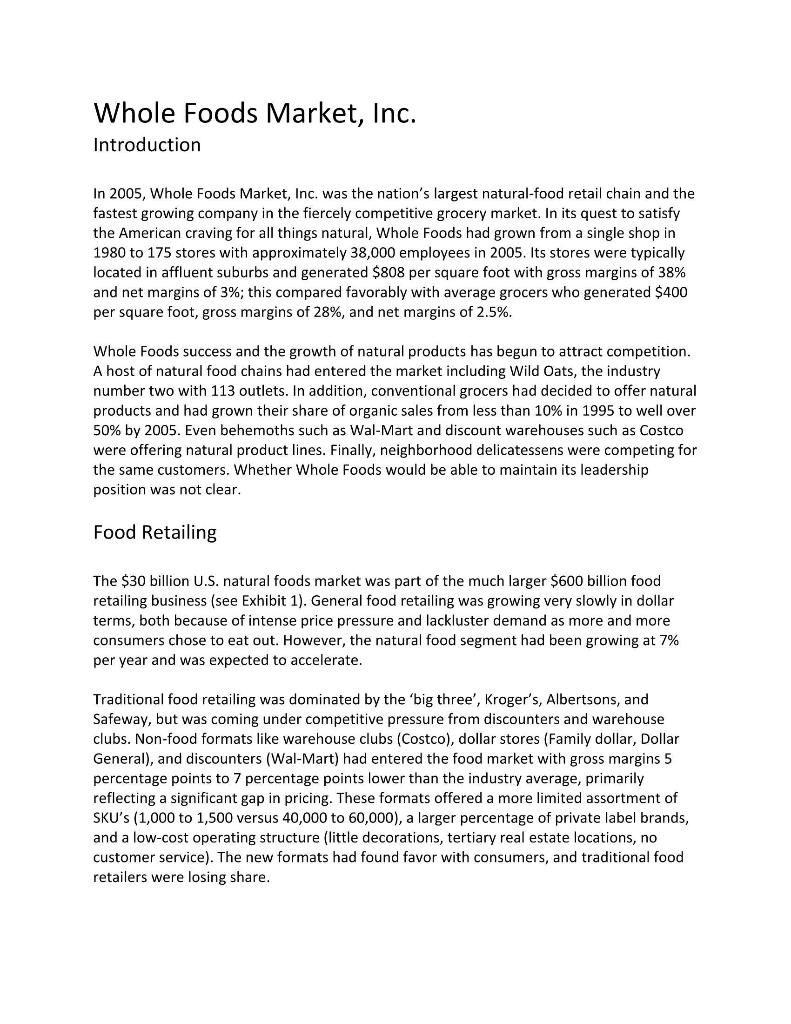
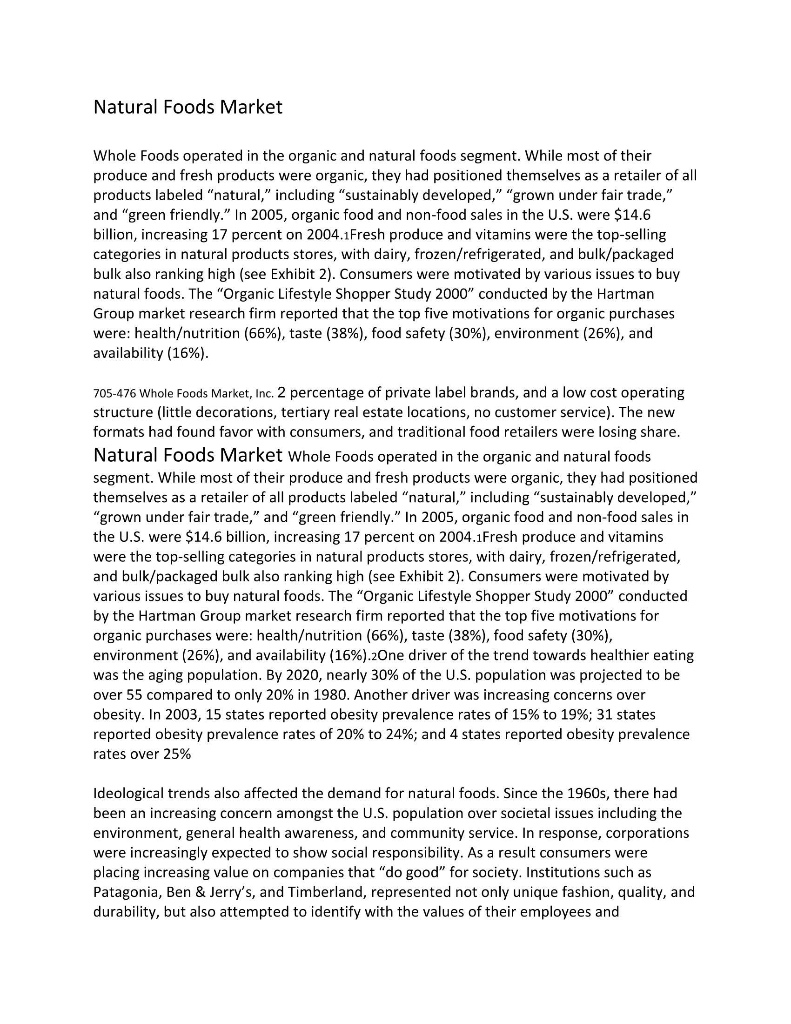
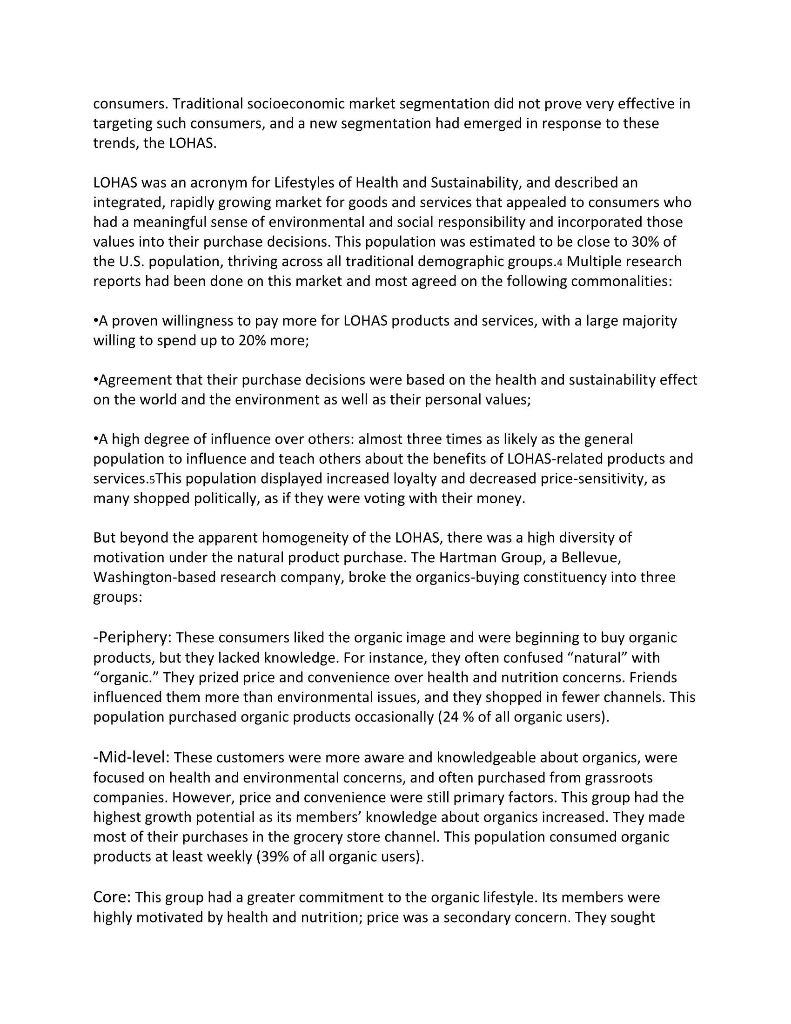
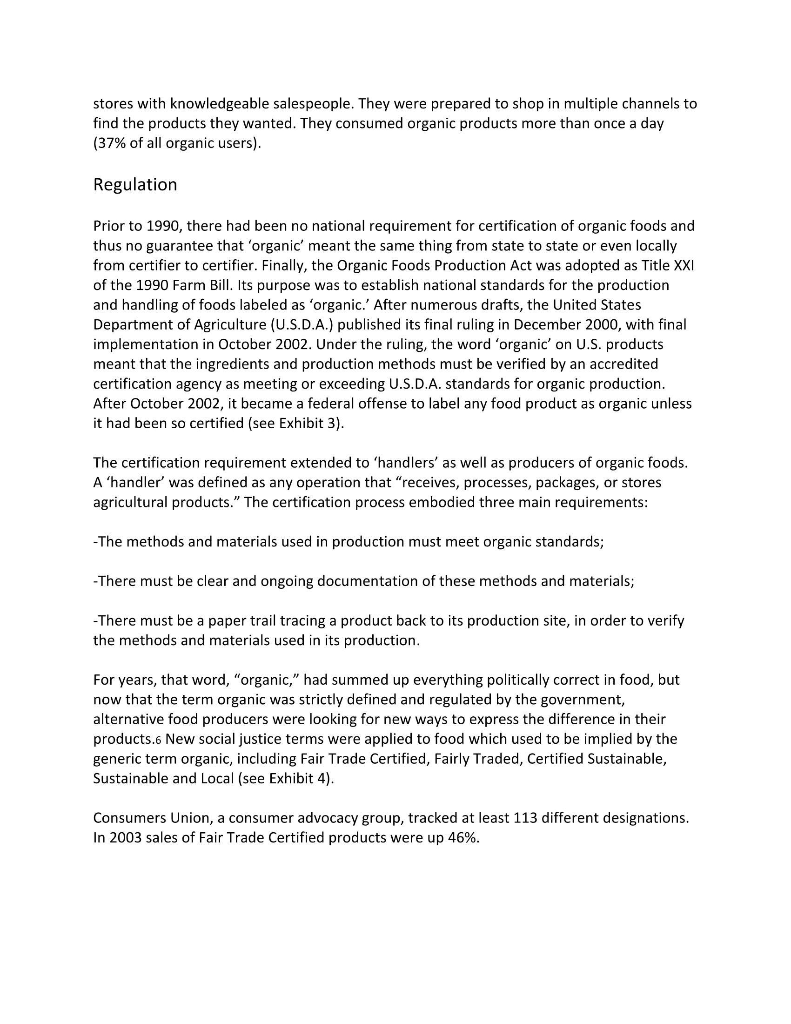
Whole Foods Market, Inc. Introduction In 2005, Whole Foods Market, Inc. was the nation's largest natural-food retail chain and the fastest growing company in the fiercely competitive grocery market. In its quest to satisfy the American craving for all things natural, Whole Foods had grown from a single shop in 1980 to 175 stores with approximately 38,000 employees in 2005. Its stores were typically located in affluent suburbs and generated $808 per square foot with gross margins of 38% and net margins of 3%; this compared favorably with average grocers who generated $400 per square foot, gross margins of 28%, and net margins of 2.5%. Whole Foods success and the growth of natural products has begun to attract competition. A host of natural food chains had entered the market including Wild Oats, the industry number two with 113 outlets. In addition, conventional grocers had decided to offer natural products and had grown their share of organic sales from less than 10% in 1995 to well over 50% by 2005. Even behemoths such as Wal-Mart and discount warehouses such as Costco were offering natural product lines. Finally, neighborhood delicatessens were competing for the same customers. Whether Whole Foods would be able to maintain its leadership position was not clear. Food Retailing The $30 billion U.S. natural foods market was part of the much larger $600 billion food retailing business (see Exhibit 1). General food retailing was growing very slowly in dollar terms, both because of intense price pressure and lackluster demand as more and more consumers chose to eat out. However, the natural food segment had been growing at 7% per year and was expected to accelerate. Traditional food retailing was dominated by the 'big three', Kroger's, Albertsons, and Safeway, but was coming under competitive pressure from discounters and warehouse clubs. Non-food formats like warehouse clubs (Costco), dollar stores (Family dollar, Dollar General), and discounters (Wal-Mart) had entered the food market with gross margins 5 percentage points to 7 percentage points lower than the industry average, primarily reflecting a significant gap in pricing. These formats offered a more limited assortment of SKU's (1,000 to 1,500 versus 40,000 to 60,000), a larger percentage of private label brands, and a low-cost operating structure (little decorations, tertiary real estate locations, no customer service). The new formats had found favor with consumers, and traditional food retailers were losing share. Natural Foods Market Whole Foods operated in the organic and natural foods segment. While most of their produce and fresh products were organic, they had positioned themselves as a retailer of all products labeled "natural," including "sustainably developed," "grown under fair trade," and "green friendly." In 2005, organic food and non-food sales in the U.S. were $14.6 billion, increasing 17 percent on 2004.1Fresh produce and vitamins were the top-selling categories in natural products stores, with dairy, frozen/refrigerated, and bulk/packaged bulk also ranking high (see Exhibit 2). Consumers were motivated by various issues to buy natural foods. The "Organic Lifestyle Shopper Study 2000" conducted by the Hartman Group market research firm reported that the top five motivations for organic purchases were: healthutrition (66%), taste (38%), food safety (30%), environment (26%), and availability (16%). 705-476 Whole Foods Market, Inc. 2 percentage of private label brands, and a low cost operating structure (little decorations, tertiary real estate locations, no customer service). The new formats had found favor with consumers, and traditional food retailers were losing share. Natural Foods Market Whole Foods operated in the organic and natural foods segment. While most of their produce and fresh products were organic, they had positioned themselves as a retailer of all products labeled "natural," including "sustainably developed," "grown under fair trade," and "green friendly." In 2005, organic food and non-food sales in the U.S. were $14.6 billion, increasing 17 percent on 2004.1Fresh produce and vitamins were the top-selling categories in natural products stores, with dairy, frozen/refrigerated, and bulk/packaged bulk also ranking high (see Exhibit 2). Consumers were motivated by various issues to buy natural foods. The "Organic Lifestyle Shopper Study 2000" conducted by the Hartman Group market research firm reported that the top five motivations for organic purchases were: healthutrition (66%), taste (38%), food safety (30%), environment (26%), and availability (16%).2One driver of the trend towards healthier eating was the aging population. By 2020, nearly 30% of the U.S. population was projected to be over 55 compared to only 20% in 1980. Another driver was increasing concerns over obesity. In 2003, 15 states reported obesity prevalence rates of 15% to 19%; 31 states reported obesity prevalence rates of 20% to 24%; and 4 states reported obesity prevalence rates over 25% Ideological trends also affected the demand for natural foods. Since the 1960s, there had been an increasing concern amongst the U.S. population over societal issues including the environment, general health awareness, and community service. In response, corporations were increasingly expected to show social responsibility. As a result consumers were placing increasing value on companies that "do good" for society. Institutions such as Patagonia, Ben & Jerry's, and Timberland, represented not only unique fashion, quality, and durability, but also attempted to identify with the values of their employees and consumers. Traditional socioeconomic market segmentation did not prove very effective in targeting such consumers, and a new segmentation had emerged in response to these trends, the LOHAS. LOHAS was an acronym for Lifestyles of Health and Sustainability, and described an integrated, rapidly growing market for goods and services that appealed to consumers who had a meaningful sense of environmental and social responsibility and incorporated those values into their purchase decisions. This population was estimated to be close to 30% of the U.S. population, thriving across all traditional demographic groups. Multiple research reports had been done on this market and most agreed on the following commonalities: A proven willingness to pay more for LOHAS products and services, with a large majority willing to spend up to 20% more; Agreement that their purchase decisions were based on the health and sustainability effect on the world and the environment as well as their personal values; A high degree of influence over others: almost three times as likely as the general population to influence and teach others about the benefits of LOHAS-related products and services. This population displayed increased loyalty and decreased price-sensitivity, as many shopped politically, as if they were voting with their money. But beyond the apparent homogeneity of the LOHAS, there was a high diversity of motivation under the natural product purchase. The Hartman Group, a Bellevue, Washington-based research company, broke the organics-buying constituency into three groups: -Periphery: These consumers liked the organic image and were beginning to buy organic products, but they lacked knowledge. For instance, they often confused "natural" with "organic." They prized price and convenience over health and nutrition concerns. Friends influenced them more than environmental issues, and they shopped in fewer channels. This population purchased organic products occasionally (24% of all organic users). -Mid-level: These customers were more aware and knowledgeable about organics, were focused on health and environmental concerns, and often purchased from grassroots companies. However, price and convenience were still primary factors. This group had the highest growth potential as its members' knowledge about organics increased. They made most of their purchases in the grocery store channel. This population consumed organic products at least weekly (39% of all organic users). Core: This group had a greater commitment to the organic lifestyle. Its members were highly motivated by health and nutrition; price was a secondary concern. They sought stores with knowledgeable salespeople. They were prepared to shop in multiple channels to find the products they wanted. They consumed organic products more than once a day (37% of all organic users). Regulation Prior to 1990, there had been no national requirement for certification of organic foods and thus no guarantee that 'organic' meant the same thing from state to state or even locally from certifier to certifier. Finally, the Organic Foods Production Act was adopted as Title XXI of the 1990 Farm Bill. Its purpose was to establish national standards for the production and handling of foods labeled as 'organic.' After numerous drafts, the United States Department of Agriculture (U.S.D.A.) published its final ruling in December 2000, with final implementation in October 2002. Under the ruling, the word 'organic' on U.S. products meant that the ingredients and production methods must be verified by an accredited certification agency as meeting or exceeding U.S.D.A. standards for organic production. After October 2002, it became a federal offense to label any food product as organic unless it had been so certified (see Exhibit 3). The certification requirement extended to 'handlers' as well as producers of organic foods. A'handler' was defined as any operation that "receives, processes, packages, or stores agricultural products." The certification process embodied three main requirements: -The methods and materials used in production must meet organic standards; -There must be clear and ongoing documentation of these methods and materials; -There must be a paper trail tracing a product back to its production site, in order to verify the methods and materials used in its production. For years, that word,"organic," had summed up everything politically correct in food, but now that the term organic was strictly defined and regulated by the government, alternative food producers were looking for new ways to express the difference in their products. New social justice terms were applied to food which used to be implied by the generic term organic, including Fair Trade Certified, Fairly Traded, Certified Sustainable, Sustainable and Local (see Exhibit 4). Consumers Union, a consumer advocacy group, tracked at least 113 different designations. In 2003 sales of Fair Trade Certified products were up 46%. Organic Food Producers Since the 1990s, certified organic acreage in the United States had increased significantly as producers strove to meet the ever increasing demand in this category and to take advantage of the higher margins. U.S. certified organic cropland doubled between 1992 and 1997 to 1.3 million acres.7Organic farming was more developed in the fruit, vegetable, and other high-value specialty crop industries than in the major grain and oilseed industries. Likewise, organic meat and poultry markets had also lagged behind because regulation had prevented these commodities from being labeled organic before 1999. In 2004 the organic meat and poultry market was growing fast in line with organic eggs and milk. As a result, acreage for certified organic pasture and demand for organic grains and oilseeds had been increasing (see Exhibit 5). Organic producers enjoyed price premiums that were believed to support higher profits than conventional chemical-intensive systems. Indeed some studies had found that some organic systems might be more profitable than conventional systems, even without price premiums, due to lower input costs, or crop mix. However, evidence was sparse, and the interest in more sustainable farming had led to an increase in research at the U.S.D.A. and Universities. As of 2004, the long term impact on farm incomes was not clear. Manufacturers and Distributors of Natural Products Most foodstuffs passed through a number of intermediaries from the farm to the consumer. The organic pipeline was distinctive in two major of respects; the regulatory environment required that organic integrity be maintained throughout the food chain; and the nature of organic foods made them more perishable than conventional foods so they required faster and more careful handling. The manufacturing base for organic products was highly fragmented, and there was a lack of any dominant brand in 2004. Experts estimated that more than 1,500 companies marketed natural foods.10 The majority of these players were regional independents with sales of less than $5 million. Since they processed or packaged organic foods, they had to be certified. Unless they processed or repackaged organic products, organic foods distributors and retailers were not required to be certified. However, regulatory requirements created a higher labeling and record-keeping burden. After years of consolidation through bankruptcies, acquisitions, etc., the natural and organic foods distribution market was highly concentrated in 2004, with United Natural Foods, Inc. and Tree of Life, Inc. accounting for approximately 80% of sales.11 United Natural Foods, Inc., headquartered in Connecticut, was the leading distributor of natural and organic foods and products and had sales of $1,380 million in 2003. Tree of Life, Inc. (a subsidiary of Koninklijke Wessanen, a Dutch food company), headquartered in Florida, was the leading distributor of certified organic and had sales of $1,987 million in 2003. Margins of roughly 1% were typical. United Natural Foods, Inc. margins were better than the industry average at 3.1%, but low compared to Sysco, the leading food distributor with margins of 6.2%.1 Retailers of Natural Products Once niche products sold in a large number of small specialist health and natural products stores, by 2004, organic and natural products were part of the mainstream, sold in a wide variety of venues ranging from farmers markets, natural products supermarkets, to conventional supermarkets and discount/club stores. In 1991, 68% of organic products were sold in specialist health and natural products stores, and only 7% in conventional supermarkets.13 However, the conventional grocer's share grew as they expanded their organic food offering. By 2000, about half of the $7.8 billion spent on organic food was sold in traditional supermarkets. By 2002, organic products were available in close to 20,000 natural food stores and were sold in 73% of all conventional grocery stores (see Exhibit 6 and Exhibit 7).14 Over this same period, the specialist natural product stores had undergone consolidation (see Exhibit 8). By 2002, 22% of total sales in the category were made by 2 large retail chains, Whole Foods and Wild Oats through just 234 stores. Whole Foods In 2005, Whole Foods had become the largest specialist natural foods chain in the United States. Sales in 2005 were $4.7 billion, representing approximately 18% share of the $25.5 billion natural foods store market, and net income was $136 million (see Exhibit 9). Whole Foods operated 175 stores in the United States and one in Canada, and planned to expand into the UK. Most of the stores and facilities were leased. Stores ranged between 35,000 square feet and 55,000 square feet, skewing towards larger format in more recent years (see Exhibit 10). Of the existing stores, 86% were located in the top 50 statistical metropolitan areas. Sales per square foot were the highest in the industry (see Exhibit 11). Indeed, Whole Foods performance compared favorably with competitors on numerous measures, including net income, inventory turnover, and return on common equity (see Exhibit 12). John Mackey, the founder and CEO of Whole Foods, did not study business at a prestigious business school. Nor did he learn the retail trade working for the likes of Wal-Mart. He was a former student of philosophy and religion who spent six years in the 1970s dropping in and out of two Texas colleges.15 In fact, he very often explained that the concept of Whole Foods was an application of Maslow's theory about human hierarchy of needs: human beings, once their need for food and safety was met, would aspire to fulfill their needs for belonging, community and beauty. Applying his theory of "truth, love and beauty," Mackey hired a local artist to design each new store and insisted on having a comfortable seating area to allow people to have lunch or a quick break. The strong emphasis on in-store tasting and on sampling was also his retail expression of his sense of sharing as well as the best way to promote its tasty gourmet or natural products. Whole Foods origins stemmed back to 1977, when Mackey joined a vegetarian cooperative in Austin, Texas. He left soon after, in 1978, to set up his own business with his girlfriend. With a $45,000 stake from friends and family he opened Safer Way, a 3,000 square foot vegetarian health-food store on the first two floors of a house. Frustrated by the difficulty of getting appealing products and the effects on profits of having only a limited range, Mackey decided to close the original store and open Whole Foods, a 10,000 square foot store where he would sell not only the typical organic products but also hormone-free meat and preservative-free ice-cream, corn-flakes, and chocolate. In the 1980s, Whole Foods acquired four stores and built seven others, becoming one of several natural-food chains in the country. In 1992, Mackey decided to accelerate the growth of the company and launched an IPO, raising $23 million. Mackey took advantage of the highly fragmented natural food retail industry, acquiring many local natural-food outlets to give access to key locations and markets, as well as opening new stores. But his appetite was also geared towards larger direct competitors such as Bread & Circus in New England, Fresh Fields in Mid-Atlantic States, and Mrs. Gooch's Natural Food Markets in California. These chains not only provided entry into new regions, but also provided Whole Food with valuable expertise. For instance, Bread & Circus' skills in the produce, meat, and sea-food departments made them very profitable in these categories while Whole Foods barely broke even. Mackey quickly spread those best practices to the entire Whole Foods market. In 2005, John Mackey did not cut the figure of a typical large company CEO. About 50 years old, his uniform was a short-sleeved shirt, shorts, Teva sandals, and a ruddy tan acquired while roaming the 720 acre ranch outside Austin he shared with his wife, Deborah, a yoga teacher. He didn't act much like a CEO either. In 2002, during one of the worst economic slumps in decades, he took five months off to hike the entire length of the 2,168-mile Appalachian Trail. Discreet, some would say shy, John Mackey did not like to spend time with the press or investors. Some thought he sounded less like the leader of a company than the leader of a cult. "When I peel away the onion of my personal consciousness down to its core in trying to understand what has driven me to create and grow this company. I come to my desire to promote the general well-being of everyone on earth as well as the earth itself. (One of my goals) is to help create an organization which manifests love, joy, and happiness. [Still,] profit is the lifeblood of every business. It's like air."16 Product and Merchandizing Whole Foods has a broad range of natural and organic products, roughly 20,000 SKU's, one the largest ranges available in the industry. Whole Foods laid heavy emphasis on perishable foods, particularly fresh produce, designed to appeal to both natural food and gourmet shoppers. This accounted for 68% of the chain's total sales in 2005, up from 57% 10 years earlier.17 Given the short shelf life and the high quality of Whole Foods' fresh produce, this department was a major traffic driver for the stores. Many consumers shopped two or three times a week to pick-up their fresh produce, buying other items in the process. As a result, the average basket was smaller than a typical supermarket, and the checkout time shorter. The image of natural food products and Whole Foods was intimately connected to the fresh produce sections. In perishable, more than in any category, Whole Foods focused on arousing the consumer's senses by sampling, and by creating very colorful gondolas of fruits and vegetables. "85% of U.S. consumers normally dread to go to the supermarkets, Whole Foods managed to create a food fest."18 Fresh produce was one of the most challenging product categories to operate due to the limited shelf life of the products and the high cost of spoilage. Whole Foods invested heavily in developing expertise, building its own national distribution network, and aligning with local suppliers, to ensure the best quality. As a result, perishables had become the anchor product to Whole Foods. Most of the products sold in Whole Foods were from natural food vendors. However, stores carried a limited selection of conventional brands provided that they met Whole Food standards: no use of antibiotics or pesticides; not genetically modified; free from unnecessary preservatives or artificial ingredients. This included supplements and vitamins, natural hygiene products, and personal care and household goods. Within its standards, Whole Foods sought to provide the complete range of basic grocery products and thereby avoid having customers travel to the closest conventional supermarket to buy soap or toothpaste, providing, of course, that customer was willing to pay an approximately 15% to 50% price premium. Store managers and regional directors were given wide freedom to choose their vendors and assortment. As a consequence, Whole Food clients might find different products and brands in Miami, Florida compared to Cambridge, Massachusetts. Given the lack of strong natural food brands, Whole Foods was building a range of private label brands in its stores. In 2005, Whole Foods retailed 1,500 SKU's under four private- labels brands, including Whole Foods, Whole Kids, 365, and Allegro, as well as under the Authentic Food Artisan, label (AFA) introduced in January 2003. In addition to these nation- wide programs, store managers had the right to retail certain items that were sourced at a local level under those private-label brands. In 2005, Private labels represented 15% of total sales19 and were expected to reach 20% to 25% in the coming years.2 In all categories, Whole Foods sought to maintain its competitive edge by challenging regular food safety standards and educating its customers on such practices. For instance, in 2003, in meat and poultry, the company had spearheaded the initiative to push for higher quality, safety and sustainability standards and alleviate consumer concerns surrounding Mad Cow disease and E. coli bacteria poisoning. Given the confusion created by the profusion of term used in the natural foods sector, Whole Food aimed to play a leading role in defining standards. Notices close to the check- outs in its stores explained what each standard meant and Whole Foods labeled each of its products accordingly. In October 2003, Whole Foods announced a new initiative to create an 'animal compassionate' standard that "underscores the Company's belief that the needs of an animal should be the first criteria in the development of standards. The primary focus will be providing environments and conditions for each species that support the animal's natural physical needs, behavior, and well-being. Work on the new "animal compassionate" standards will start with the development of enhanced animal welfare standards for ducks with the goal of completion and implementation by the end of 2004. Development of standards for each of the other species will follow."21 Prepared foods were also an important offering in Whole Foods stores.According to Whole Foods' website, 'The Prepared Foods area bustles-especially around the lunch and dinner hours. Many customers have shunned the burger joints and corporate cafeterias for the tasty and more healthful fare of dishes such as enlightened fried rice, earthy quinoa and couscous salads, and tangy sesame-crusted salmon. It's not fast food; it's good food that customers can pick up quickly." The prepared food section helped to create more of an experience in Whole Foods stores. "The Whole Foods Market in Manhattan's Chelsea neighborhood is a Friday-night scene. Singles flirt over a table of organic tomatoes on the vine, balls of fresh mozzarella, and fragrant bunches of basil. A well-dressed man marvels at a perfectly polished kohlrabi; his companion says into her cell phone, "I am going with the wild salmon." The wood paneling, neutral colors, and mellow Latin music would suit a holistic spa." 23 Real Estate Whole Foods sought to locate its stores near its target customers. This required urban locations, near well educated populations with higher earnings and a greater focus on health issues. When opening a new store, Whole Foods sought to fit the local taste and neighborhood. For each store opening, the real estate team would study in detail catchment's areas, education levels, population density and income levels. Logistics Whole Foods' approach to logistics had evolved as the chain had grown. Historically, the supply base was managed in a decentralized fashion, with store managers in charge of all purchasing and product selection. As the Company had matured, more of the purchasing and distribution of products had been transferred to regional and national decision making points, but store managers were able to customize their product mix to meet local needs. Whole Foods used third party distributors, but had built out its own distribution network to supplement its third party suppliers. In 2005, they operated ten regional distribution centers across the United States and United Kingdom.24 There were two produce procurement centers and most of the produce was distributed by Whole Foods themselves. Other facilities included three seafood processing and distribution facilities, a specialty coffee roaster and distributor, five regional commissaries, and 12 bake-houses. In 2005, United National Foods, Inc. was Whole Foods' largest third party distributor and accounted for approximately 22% of total purchases.25 Whole Foods was the only supermarket chain that owned and operated a waterfront seafood facility. Located in Gloucester, Massachusetts, this facility processed fish caught by 15 boats working exclusively for Whole Foods.26 This partnership allowed the company to make sure that fishing practices respected the "environmentally-friendly and natural practices highly publicized in the stores, and also maintained high quality standards. Human Resources Whole Foods employed 38,000 people (32,900 full time, 3,300 part time, and 1,800 temporary) in 2005. They were non-unionized. Employees were expected to share Whole Foods "Declaration of Interdependence" which proclaimed a commitment to diversity, community and saving the planet but were also expected to commit to Whole Foods competitive, results-oriented operations.27 Each store employed between 72 people and 391 people who were organized into approximately 10 teams per store. Each team within a store was responsible for a different product category or aspect of store operations such as customer service or customer checkout lines. Each team was led by a team leader, who reported to the store manager. Store operations were highly decentralized with many of the personnel, merchandising, and operational decisions being made by teams at the store level. As a result there was no standard store design, instead each store was customized to the particular location and community in which it was located. The team was central to Whole Foods operations and as a result, teams played a critical role in the hiring process. Team leaders screened and recommended candidates for jobs with specific teams but a two-thirds majority of the team had to approve every hire. This approval only came after a 30-day trial for the candidate Promotions were primarily from within and people from one region were continuously being placed across the organization, or being promoted to start new stores in new locations. Teams were continuously measured and evaluated, and rewards were team based. Everything was measured from operations to morale. Operational measurements took numerous forms; the previous days' sales by team was posted daily, often then benchmarked against last year's sales, or against all the other teams in a region. Stores also received detailed information on profitability. These reports measured sales, product costs, salaries, and operating profits. Furthermore, once a year Whole Foods conducted a morale survey to measure employee attitudes. Questions often probed into the confidence that team members had in team leaders, store leaders, regional leaders, and the company's values. These measurements were not collected at the head office for analysis - but to be provided to every team at every store. This open book policy allowed teams to compete not only against their own goals but also against other teams at their store or in their region. Competition was encouraged and teams, because of this transparency, were pressured to set ambitious goals for themselves. These performance measurements were balanced with two formal review processes at the store level: the "Store Tour" and "The Customer Snapshot" (T.C.S.). The Store Tour was the most intense; each store was periodically toured by a group of as many as 40 visitors from another region. The tour group included regional leaders, store team leaders, and associate store team leaders, and leaders from two operating teams. The tour consisted of social interactions, reviews, performance audits, and structured feedback sessions. The T.C.S. was slightly different in that it was a surprise inspection of a store by a headquarters official or regional leader. These T.C.S.'s, which were conducted 10 times a year per store, rated a store on 300 different items. The results of the T.C.S. were distributed to every store and reflected in the reward system.28 The reward system at Whole Foods was also very transparent and measurement based. Store employees were compensated based on their performance metrics, and all compensation was publicly disclosed. Store team leaders were also eligible for an Economic Value Added bonus based on the extent to which the store delivered a higher return than the corporate cost of capital. Team member rewards also included a stock option plan, a stock purchase plan, and a 401k plan. As well as promoting performance, the reward system at Whole Foods embodied a number of important features. The highest salary could not exceed eight times that of the average salary, 5% of all after-tax-profits were donated to charitable organizations, and a program provided paid time-off to team members for working with qualified community service organizations. This provided more than 57,500 hours of service to communities in 2003.2 Whole Foods' approach to hiring, managing, and rewarding its personnel resulted in lower employee turnover than the industry average (60% versus the industry average of 90- 100%)30 and high morale. Indeed, in the 2003 annual Morale Survey, 86% of employees responded as saying that they almost always or frequently enjoy their jobs.31 In its annual survey, Whole Foods was named by Fortune as one of the best companies to work for the eighth time in a row in 2005.32 Competition Whole Foods competed with natural-food retailers, gourmet retailers, traditional retailers, and food discounters that had recently introduced natural-food store concepts or natural food stores within their stores. Examples are profiled below.33 Wild Oats Throughout the 1990s, Wild Oats competed head-to-head in a battle for customers, real estate, and acquisitions against Whole Foods. The battle between Whole Foods and Wild Oats was one of the most intense, most talked about rivalries in the industry. Mike Gilliland, CEO of Wild Oats, once compared Mackey to "Chainsaw Al" Dunlap, the job-slashing head of appliance-maker Sunbeam Corporation. Mackey responded by sending Gilliland a gift: Risk, the board game of world domination. A note to Gilliland added, "Forewarned is forearmed." It was signed, "Chainsaw John Mackey." 34 By 2000, Wild Oats found itself in financial difficulties. Its service levels had also come under criticism, and observers felt that it had failed to differentiate itself from other natural food retailers or from the mass merchants that were entering this market segment.35 As a result, the company introduced new leadership in March 2001, (Perry D Odak, ex CEO of Ben & Jerry's) and instituted more rigorous management discipline in store opening and acquisition. In 2005, Wild Oats was the second largest natural foods chain in the United States (see Appendix A), and operated 113 stores in 24 states under four brands (Wild Oats Natural Marketplace, Henry's Farmers Market, Sun Harvest Farms, and Capers Community Market). It operated two store formats, a larger natural-food supermarket format (20,000 square feet to 35,000 square feet) and a more recently developed smaller format (between 15,000 square feet and 25,000 square feet) farmers market. Wild Oats had lower gross margins than Whole Foods (32% versus 38%), lower inventory turns (13.1 versus 17.7), and lower sales per square foot ($436 versus $808). Trader Joes Trader Joe's mission was to bring its customers "the best food and beverage values to be found anywhere, and the information to make informed buying decisions." Private-label products accounted for the majority of 80% of sales. Trader Joe's offered "more than 2000 unique grocery items [a]ll at great everyday low prices." Low prices were achieved by a very tight management philosophy, and a culture of buying cheap and direct throughout the world. Products ranged from "vegetarian, Kosher, organic or just plain decadent, and all with minimally processed ingredients."36 Trader Joe's store count was approaching 250 stores in 20 states in 2005. Stores were 7,500 square feet to 10,000 square feet and located in urban areas. The stores attracted educated and wealthy shoppers. Trader Joe's was acquired by the German giant retailer Aldi in 1983. H. E. Butt (HEB) In 1994, HEB introduced the concept of Central Market in Austin, Texas. It featured a European bakery, a deli with meats and cheeses from around the globe, and a juice and ice cream bar. The merchandising focus was more fresh and gourmet foods than natural foods. However, the concept quickly evolved towards a similar format to Whole Foods Market store, but with larger outlets of 70,000 square feet. By 2005, HEB was one of the ten largest supermarket chains in the United States with sales over $11 billion and more than 300 stores. Information technology had always been a big priority at HEB and was believed to be one of the key assets that had allowed the company to maintain prices low and to control costs.37In addition, HEB had always been at the forefront of retail innovations in Customer Relationship Management, employees' motivation, private labels, and supply chain/vendor collaboration Costco Costco was the leading discount warehouse in the United States in 2005. It offered a limited number of typically products at very low prices. It capped markups at about 14%38 Costco catered to an upscale and urban population, with the members' average salary being about $95,000.39 It stocked premium brands such as Cuisinart, Tiltleist, Levi's, and Ralph Lauren. In addition, Costco has made strong inroads into perishable goods, starting with produce and meat in 1986. By 2005, Costco stocked 4,000 food SKU's versus 40,000 food SKU's to 50,000 food SKU's in a typical supermarket and 200,000 food SKU's in a super center. Costco worked to empower its staff and offered the best wages and benefits in the industry. Kroger Kroger was the leading U.S. supermarket chain in 2005 with a broad national reach. It had a diversified portfolio of successful formats, including food/drug combo stores (the bulk of the chain), neighborhood perishable-oriented upscale format (Fresh Fair and QFC), food discounters (Food 1 Less), and super centers (Fred Meyer). To compete in natural foods, Kroger had launched its own brand of premium quality natural and organic products. The company's Naturally Preferred line featured approximately 140 items including baby food, pastas, cereal, snacks, milk, and soy items. With 8% of its grocery sales on organicatural food in 2004, Kroger was possibly the largest natural foods retailer in the industry. Wegman's Wegman's was one the leading regional gourmet store chains in the United States with 20 outlets in the New England area. It had developed a European-style open-air market atmosphere, with such offerings as artisan breads baked in the stores' Spanish-style brick ovens and inviting displays of fresh seafood, meats, cheeses, and international foods. It offered a broad range of products with 60,000 SKU's, including 400 specialty cheeses. Wegman's stores were large with wide aisles, terrazzo floors, exposed ceilings, and granite countertops in some places. Market cafes offered in-store dining and takeout, including a sub shop, Mediterranean bar, Asian buffet, fruit and grain bar, and cappuccino bar. Supervised play areas were provided for children between the ages of 3 and 8 while their parents shopped. Child magazine had named Wegman's the most family friendly supermarket in the country. Attention to customer service was almost fanatical; the company provided wipes so that customers could clean the germs off shopping cart handles. Wegman's offered a full range of healthy food choices, such as hormone-free meats and a "Food You Feel Good About" line of products that were free of partially hydrogenated oils









 Study Help