







Question: Convert the following 1-NFA into the corresponding DFA. < Let I = (a, b). A 2-NFA M is defined as M = (QM, 8M,
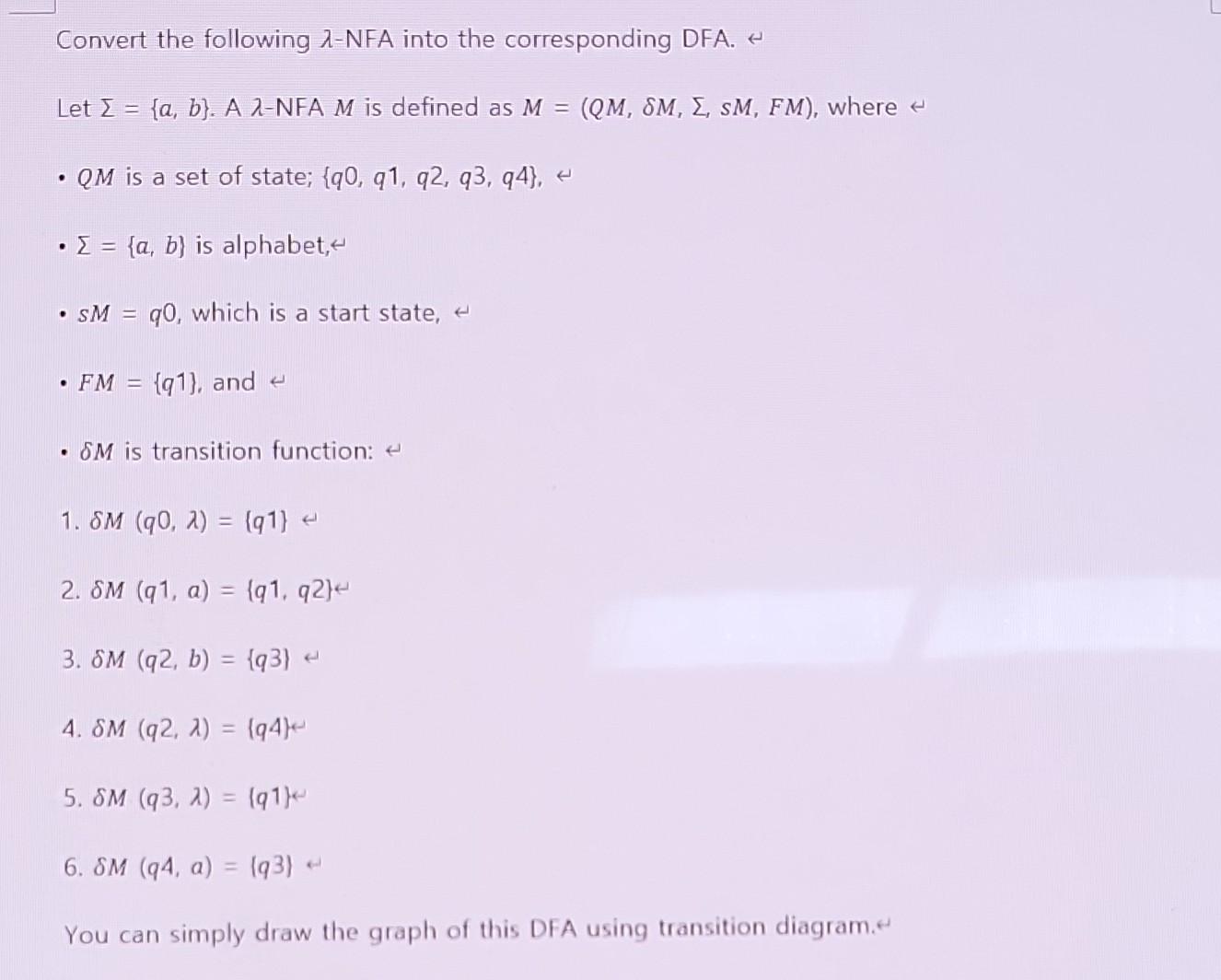
Convert the following 1-NFA into the corresponding DFA. < Let I = (a, b). A 2-NFA M is defined as M = (QM, 8M, , sM, FM), where QM is a set of state; {q0, q1, q2, q3, q4}, = {a, b) is alphabet, < . SM = q0, which is a start state, {q1), and < FM = . SM is transition function: 1. SM (90, 2) = (q1) < 2. SM (q1, a) = (q1, q2} < 3. SM (q2, b) = {q3} < 4. SM (q2, 2) = {q4) < 5. SM (q3, 2) = (q1} < 6. SM (q4, a) = (93) < You can simply draw the graph of this DFA using transition diagram.
Step by Step Solution
3.31 Rating (157 Votes )
There are 3 Steps involved in it
To convert the given 2NFA into a DFA well need to create a transition diagram for the DFA based on t... View full answer

Get step-by-step solutions from verified subject matter experts
 Study Help