







Question: Design a simple relational database for Amazon with at least three tables (refer to slides 18, 19 and 21). Answer the following questions for
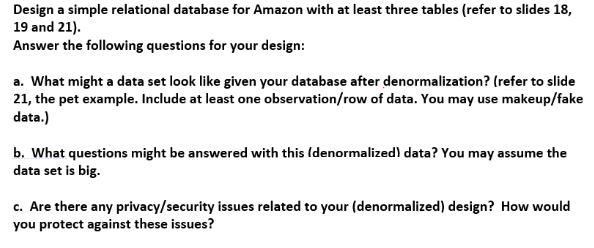
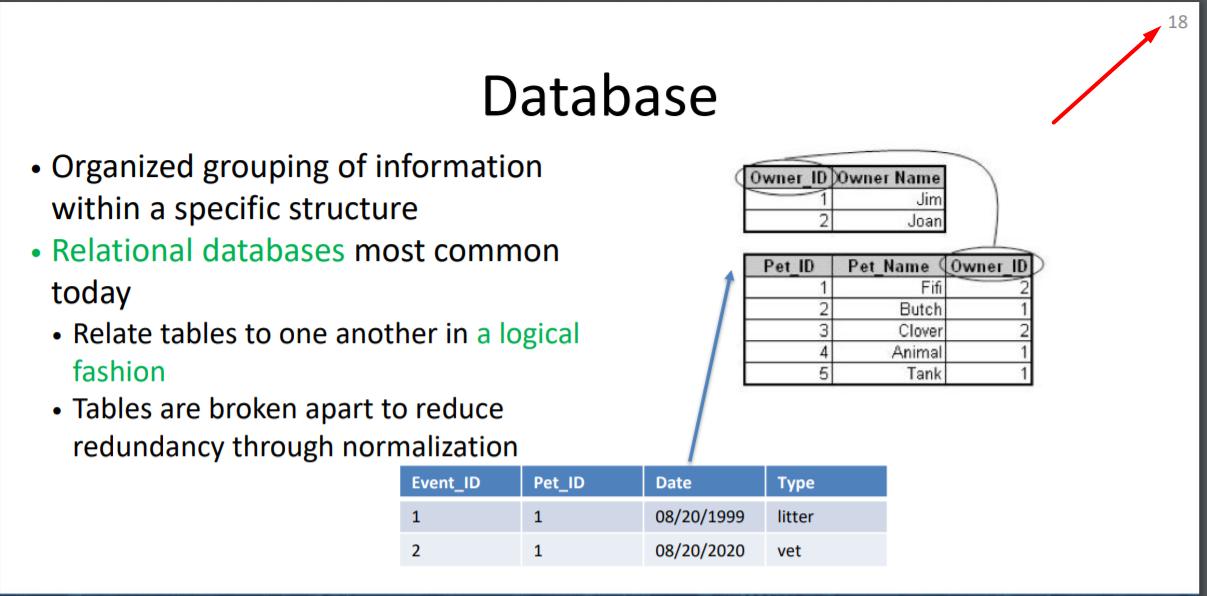
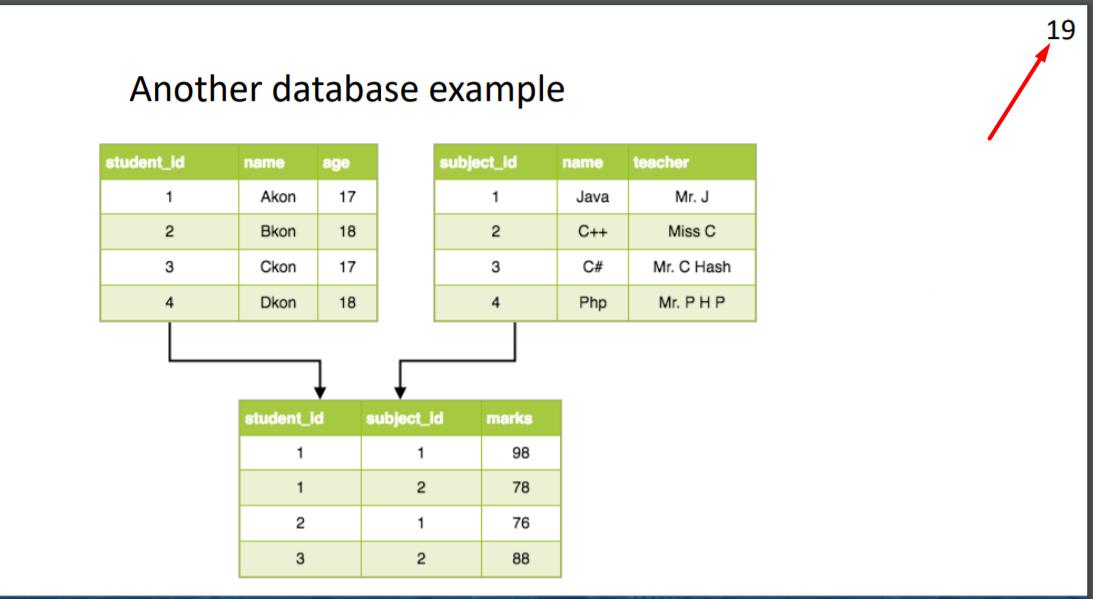
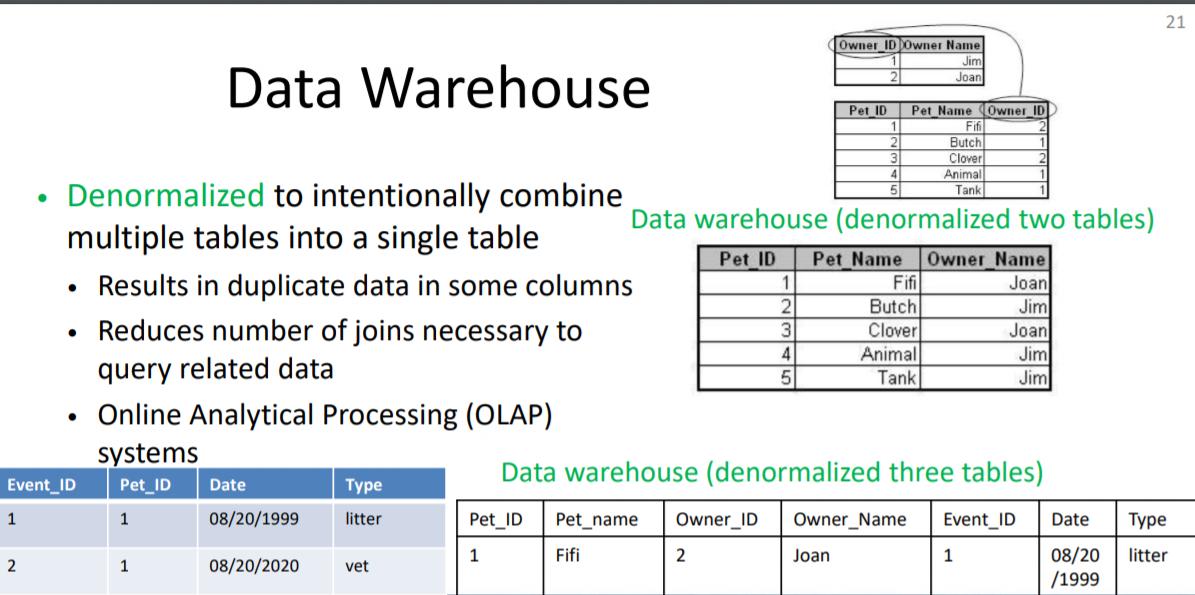
Design a simple relational database for Amazon with at least three tables (refer to slides 18, 19 and 21). Answer the following questions for your design: a. What might a data set look like given your database after denormalization? (refer to slide 21, the pet example. Include at least one observation/row of data. You may use makeup/fake data.) b. What questions might be answered with this (denormalized) data? You may assume the data set is big. c. Are there any privacy/security issues related to your (denormalized) design? How would you protect against these issues? Organized grouping of information within a specific structure Relational databases most common today Relate tables to one another in a logical fashion Tables are broken apart to reduce redundancy through normalization Event_ID Database 1 2 Pet_ID 1 1 Date 08/20/1999 08/20/2020 Owner IDDOwner Name Jim Joan Pet ID Type litter vet 21 1 2 31 4 5 Pet Name Fifi Butch Clover Animal Tank Owner ID 1 18 Another database example student_id 1 2 3 4 name Akon Bkon Ckon Dkon student_id 1 1 2 age 3 17 18 17 18 subject_id 1 2 1 subject_id 2 1 2 3 4 marks 98 78 76 88 name Java C++ C# Php teacher Mr. J Miss C Mr. C Hash Mr. PHP 19 1 2 Data Warehouse Denormalized to intentionally combine multiple tables into a single table Event_ID Results in duplicate data in some columns Reduces number of joins necessary to query related data Online Analytical Processing (OLAP) systems Pet_ID 1 1 Date 08/20/1999 Type litter 08/20/2020 vet 1 Fifi Owner IDDOwner Name Jim Joan 1 2 3 4 5 Pet ID Data warehouse (denormalized two tables) Pet ID 2 4 Pet_ID Pet_name Owner_ID Owner Name Joan Pet Name Owner ID Fifi Butch Clover Animal Tank Data warehouse (denormalized three tables) Event ID Pet Name Owner Name Fifi Butch Joan Jim Clover Joan Animal Jim Tank Jim 1 Date 08/20 /1999 21 Type litter
Step by Step Solution
There are 3 Steps involved in it

Get step-by-step solutions from verified subject matter experts
 Study Help