







Question: Developing Relevant Cash Flows for Part-Time Student Company's Machine Renewal or Replacement Decision Mclovin, chief financial officer of Part-Time Student Company (PTSC), expects the firm's
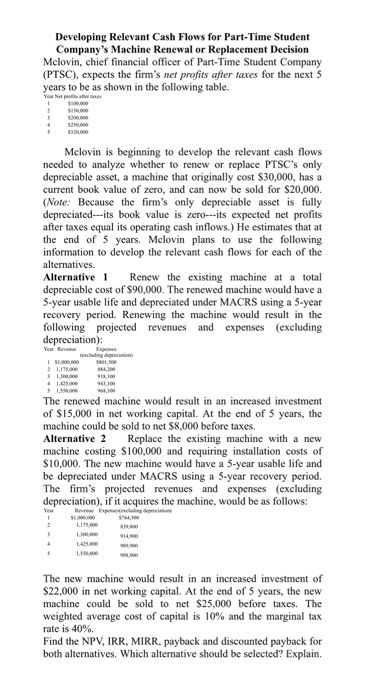
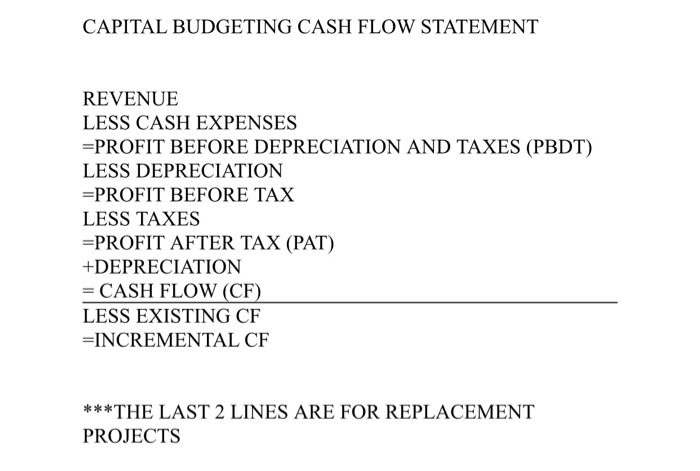
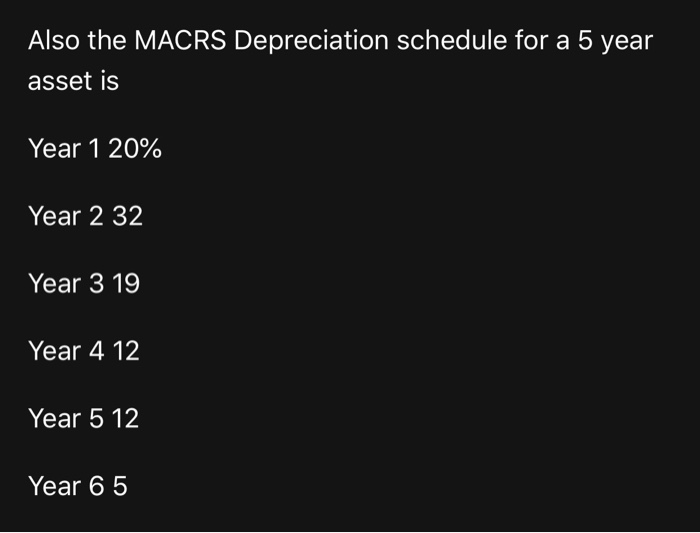
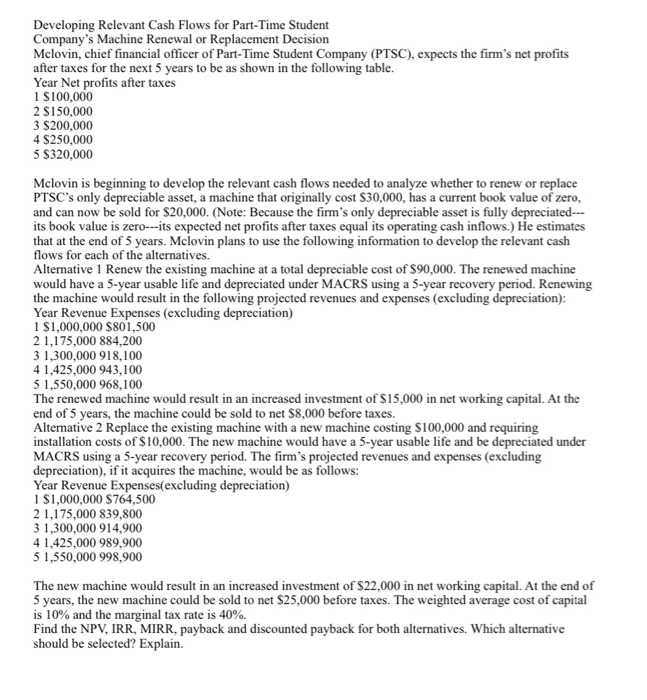
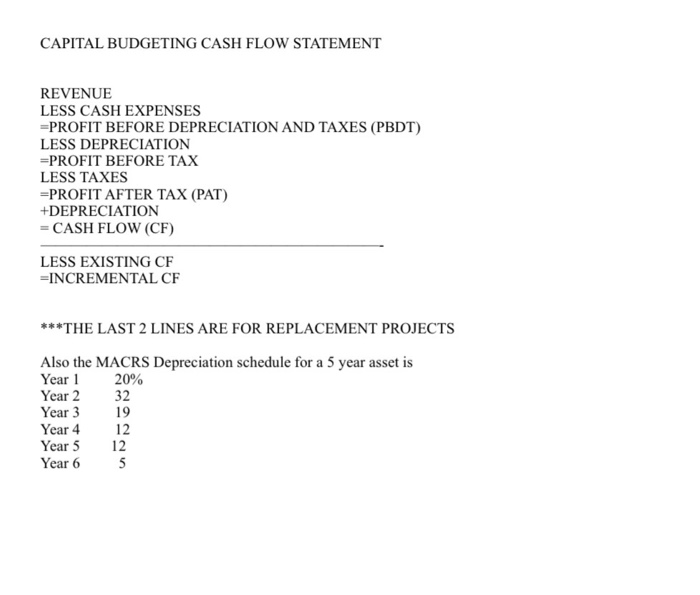
Developing Relevant Cash Flows for Part-Time Student Company's Machine Renewal or Replacement Decision Mclovin, chief financial officer of Part-Time Student Company (PTSC), expects the firm's net profits after faxes for the next 5 years to be as shown in the following table. Your poster Mclovin is beginning to develop the relevant cash flows needed to analyze whether to renew or replace PTSC's only depreciable asset, a machine that originally cost $30,000, has a current book value of zero, and can now be sold for $20,000. (Note: Because the firm's only depreciable asset is fully depreciated---its book value is zero---its expected net profits after taxes equal its operating cash inflows.) He estimates that at the end of 5 years. Mclovin plans to use the following information to develop the relevant cash flows for each of the alternatives. Alternative 1 Renew the existing machine at a total depreciable cost of $90,000. The renewed machine would have a 5-year usable life and depreciated under MACRS using a 5-year recovery period. Renewing the machine would result in the following projected revenues and expenses (excluding depreciation): The renewed machine would result in an increased investment of $15,000 in net working capital. At the end of 5 years, the machine could be sold to net $8,000 before taxes. Alternative 2 Replace the existing machine with a new machine costing S100,000 and requiring installation costs of $10,000. The new machine would have a 5-year usable life and be depreciated under MACRS using a 5-year recovery period. The firm's projected revenues and expenses (excluding depreciation), if it acquires the machine, would be as follows: The new machine would result in an increased investment of $22.000 in net working capital. At the end of 5 years, the new machine could be sold to net $25,000 before taxes. The weighted average cost of capital is 10% and the marginal tax rate is 40%. Find the NPV, IRR, MIRR, payback and discounted payback for both alternatives. Which alternative should be selected? Explain. CAPITAL BUDGETING CASH FLOW STATEMENT REVENUE LESS CASH EXPENSES =PROFIT BEFORE DEPRECIATION AND TAXES (PBDT) LESS DEPRECIATION =PROFIT BEFORE TAX LESS TAXES =PROFIT AFTER TAX (PAT) +DEPRECIATION = CASH FLOW (CF) LESS EXISTING CF =INCREMENTAL CF ***THE LAST 2 LINES ARE FOR REPLACEMENT PROJECTS Also the MACRS Depreciation schedule for a 5 year asset is Year 1 20% Year 2 32 Year 3 19 Year 4 12 Year 5 12 Year 6 5 Developing Relevant Cash Flows for Part-Time Student Company's Machine Renewal or Replacement Decision Mclovin, chief financial officer of Part-Time Student Company (PTSC), expects the firm's net profits after taxes for the next 5 years to be as shown in the following table. Year Net profits after taxes 1 $100,000 2 $150,000 3 $200,000 4 $250,000 5 $320,000 Mclovin is beginning to develop the relevant cash flows needed to analyze whether to renew or replace PTSC's only depreciable asset, a machine that originally cost $30,000, has a current book value of zero, and can now be sold for $20,000. (Note: Because the firm's only depreciable asset is fully depreciated --- its book value is zero---its expected net profits after taxes equal its operating cash inflows.) He estimates that at the end of 5 years. Mclovin plans to use the following information to develop the relevant cash flows for each of the alternatives. Alternative 1 Renew the existing machine at a total depreciable cost of $90,000. The renewed machine would have a 5-year usable life and depreciated under MACRS using a 5-year recovery period. Renewing the machine would result in the following projected revenues and expenses (excluding depreciation): Year Revenue Expenses (excluding depreciation) 1 $1,000,000 $801,500 2 1,175,000 884,200 3 1,300,000 918,100 41,425,000 943, 100 5 1,550,000 968, 100 The renewed machine would result in an increased investment of $15,000 in net working capital. At the end of 5 years, the machine could be sold to net $8,000 before taxes. eplace the existing machine with a new machine costing $100,000 and requiring installation costs of $10,000. The new machine would have a 5-year usable life and be depreciated under MACRS using a 5-year recovery period. The firm's projected revenues and expenses (excluding depreciation), if it acquires the machine, would be as follows: Year Revenue Expenses(excluding depreciation) 1 $1,000,000 $764,500 2 1,175,000 839,800 3 1,300,000 914,900 4 1,425,000 989,900 5 1,550,000 998,900 The new machine would result in an increased investment of $22,000 in net working capital. At the end of 5 years, the new machine could be sold to net $25,000 before taxes. The weighted average cost of capital is 10% and the marginal tax rate is 40%. Find the NPV, IRR, MIRR, payback and discounted payback for both alternatives. Which alternative should be selected? Explain. CAPITAL BUDGETING CASH FLOW STATEMENT REVENUE LESS CASH EXPENSES -PROFIT BEFORE DEPRECIATION AND TAXES (PBDT) LESS DEPRECIATION -PROFIT BEFORE TAX LESS TAXES -PROFIT AFTER TAX (PAT) +DEPRECIATION -CASH FLOW (CF) LESS EXISTING CF -INCREMENTAL CF ***THE LAST 2 LINES ARE FOR REPLACEMENT PROJECTS 32 Also the MACRS Depreciation schedule for a 5 year asset is Year 20% Year 2 Year 3 19 Year 4 12 Year 5 Year 6 Developing Relevant Cash Flows for Part-Time Student Company's Machine Renewal or Replacement Decision Mclovin, chief financial officer of Part-Time Student Company (PTSC), expects the firm's net profits after faxes for the next 5 years to be as shown in the following table. Your poster Mclovin is beginning to develop the relevant cash flows needed to analyze whether to renew or replace PTSC's only depreciable asset, a machine that originally cost $30,000, has a current book value of zero, and can now be sold for $20,000. (Note: Because the firm's only depreciable asset is fully depreciated---its book value is zero---its expected net profits after taxes equal its operating cash inflows.) He estimates that at the end of 5 years. Mclovin plans to use the following information to develop the relevant cash flows for each of the alternatives. Alternative 1 Renew the existing machine at a total depreciable cost of $90,000. The renewed machine would have a 5-year usable life and depreciated under MACRS using a 5-year recovery period. Renewing the machine would result in the following projected revenues and expenses (excluding depreciation): The renewed machine would result in an increased investment of $15,000 in net working capital. At the end of 5 years, the machine could be sold to net $8,000 before taxes. Alternative 2 Replace the existing machine with a new machine costing S100,000 and requiring installation costs of $10,000. The new machine would have a 5-year usable life and be depreciated under MACRS using a 5-year recovery period. The firm's projected revenues and expenses (excluding depreciation), if it acquires the machine, would be as follows: The new machine would result in an increased investment of $22.000 in net working capital. At the end of 5 years, the new machine could be sold to net $25,000 before taxes. The weighted average cost of capital is 10% and the marginal tax rate is 40%. Find the NPV, IRR, MIRR, payback and discounted payback for both alternatives. Which alternative should be selected? Explain. CAPITAL BUDGETING CASH FLOW STATEMENT REVENUE LESS CASH EXPENSES =PROFIT BEFORE DEPRECIATION AND TAXES (PBDT) LESS DEPRECIATION =PROFIT BEFORE TAX LESS TAXES =PROFIT AFTER TAX (PAT) +DEPRECIATION = CASH FLOW (CF) LESS EXISTING CF =INCREMENTAL CF ***THE LAST 2 LINES ARE FOR REPLACEMENT PROJECTS Also the MACRS Depreciation schedule for a 5 year asset is Year 1 20% Year 2 32 Year 3 19 Year 4 12 Year 5 12 Year 6 5 Developing Relevant Cash Flows for Part-Time Student Company's Machine Renewal or Replacement Decision Mclovin, chief financial officer of Part-Time Student Company (PTSC), expects the firm's net profits after taxes for the next 5 years to be as shown in the following table. Year Net profits after taxes 1 $100,000 2 $150,000 3 $200,000 4 $250,000 5 $320,000 Mclovin is beginning to develop the relevant cash flows needed to analyze whether to renew or replace PTSC's only depreciable asset, a machine that originally cost $30,000, has a current book value of zero, and can now be sold for $20,000. (Note: Because the firm's only depreciable asset is fully depreciated --- its book value is zero---its expected net profits after taxes equal its operating cash inflows.) He estimates that at the end of 5 years. Mclovin plans to use the following information to develop the relevant cash flows for each of the alternatives. Alternative 1 Renew the existing machine at a total depreciable cost of $90,000. The renewed machine would have a 5-year usable life and depreciated under MACRS using a 5-year recovery period. Renewing the machine would result in the following projected revenues and expenses (excluding depreciation): Year Revenue Expenses (excluding depreciation) 1 $1,000,000 $801,500 2 1,175,000 884,200 3 1,300,000 918,100 41,425,000 943, 100 5 1,550,000 968, 100 The renewed machine would result in an increased investment of $15,000 in net working capital. At the end of 5 years, the machine could be sold to net $8,000 before taxes. eplace the existing machine with a new machine costing $100,000 and requiring installation costs of $10,000. The new machine would have a 5-year usable life and be depreciated under MACRS using a 5-year recovery period. The firm's projected revenues and expenses (excluding depreciation), if it acquires the machine, would be as follows: Year Revenue Expenses(excluding depreciation) 1 $1,000,000 $764,500 2 1,175,000 839,800 3 1,300,000 914,900 4 1,425,000 989,900 5 1,550,000 998,900 The new machine would result in an increased investment of $22,000 in net working capital. At the end of 5 years, the new machine could be sold to net $25,000 before taxes. The weighted average cost of capital is 10% and the marginal tax rate is 40%. Find the NPV, IRR, MIRR, payback and discounted payback for both alternatives. Which alternative should be selected? Explain. CAPITAL BUDGETING CASH FLOW STATEMENT REVENUE LESS CASH EXPENSES -PROFIT BEFORE DEPRECIATION AND TAXES (PBDT) LESS DEPRECIATION -PROFIT BEFORE TAX LESS TAXES -PROFIT AFTER TAX (PAT) +DEPRECIATION -CASH FLOW (CF) LESS EXISTING CF -INCREMENTAL CF ***THE LAST 2 LINES ARE FOR REPLACEMENT PROJECTS 32 Also the MACRS Depreciation schedule for a 5 year asset is Year 20% Year 2 Year 3 19 Year 4 12 Year 5 Year 6
Step by Step Solution
There are 3 Steps involved in it

Get step-by-step solutions from verified subject matter experts
 Study Help