Question: For Disney+ to guarantee that its content is readily discoverable using voice commands on devices such as Amazon Alexa, Google Home, and Apple's Siri, it
For Disney+ to guarantee that its content is readily discoverable using voice commands on devices such as Amazon Alexa, Google Home, and Apple's Siri, it is essential for the service to optimize its voice search capabilities and integrate with smart devices. By embracing these trends, Disney+ will be able to maintain its lead over the competition, as well as assure further growth and a more profound connection with its audience.
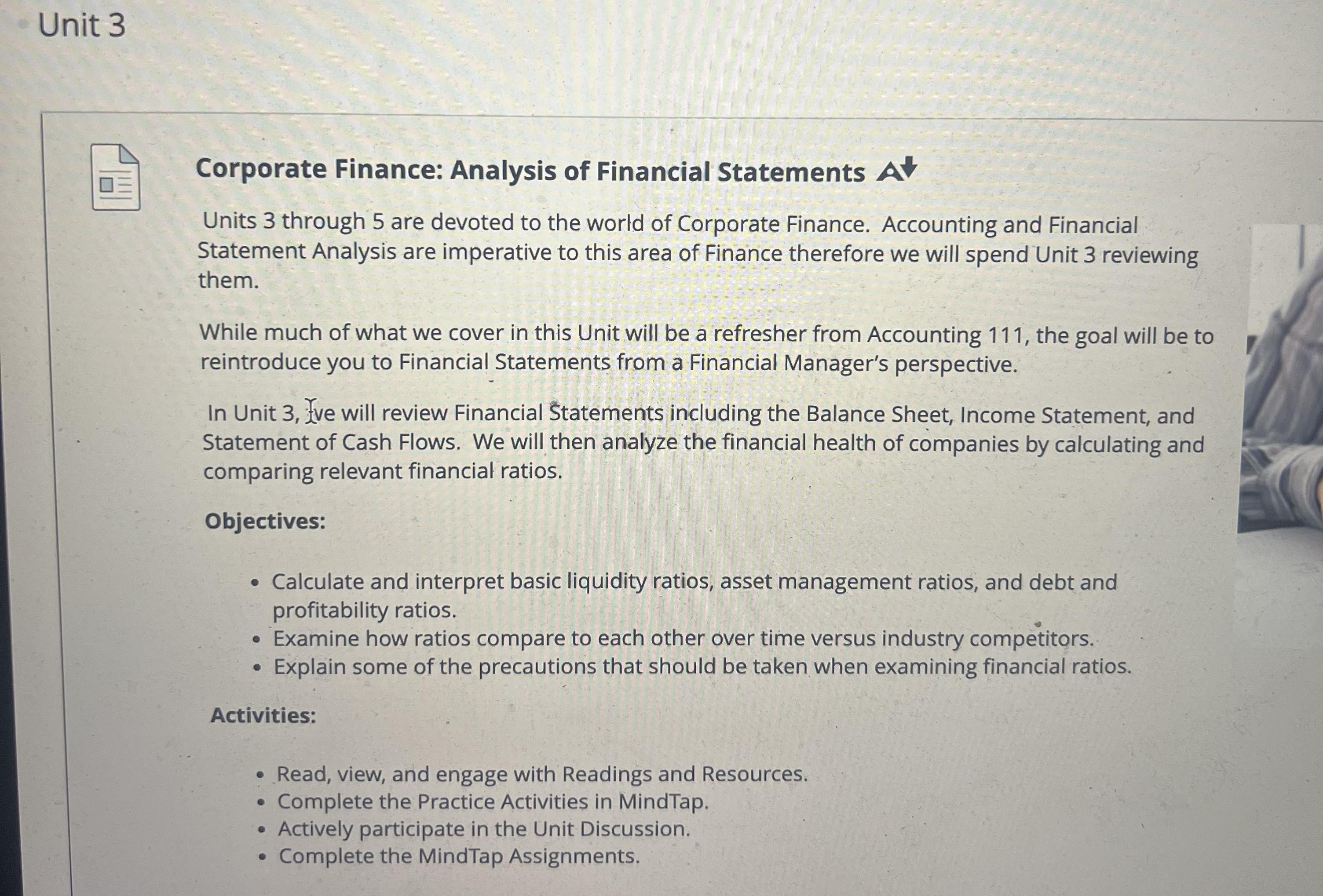
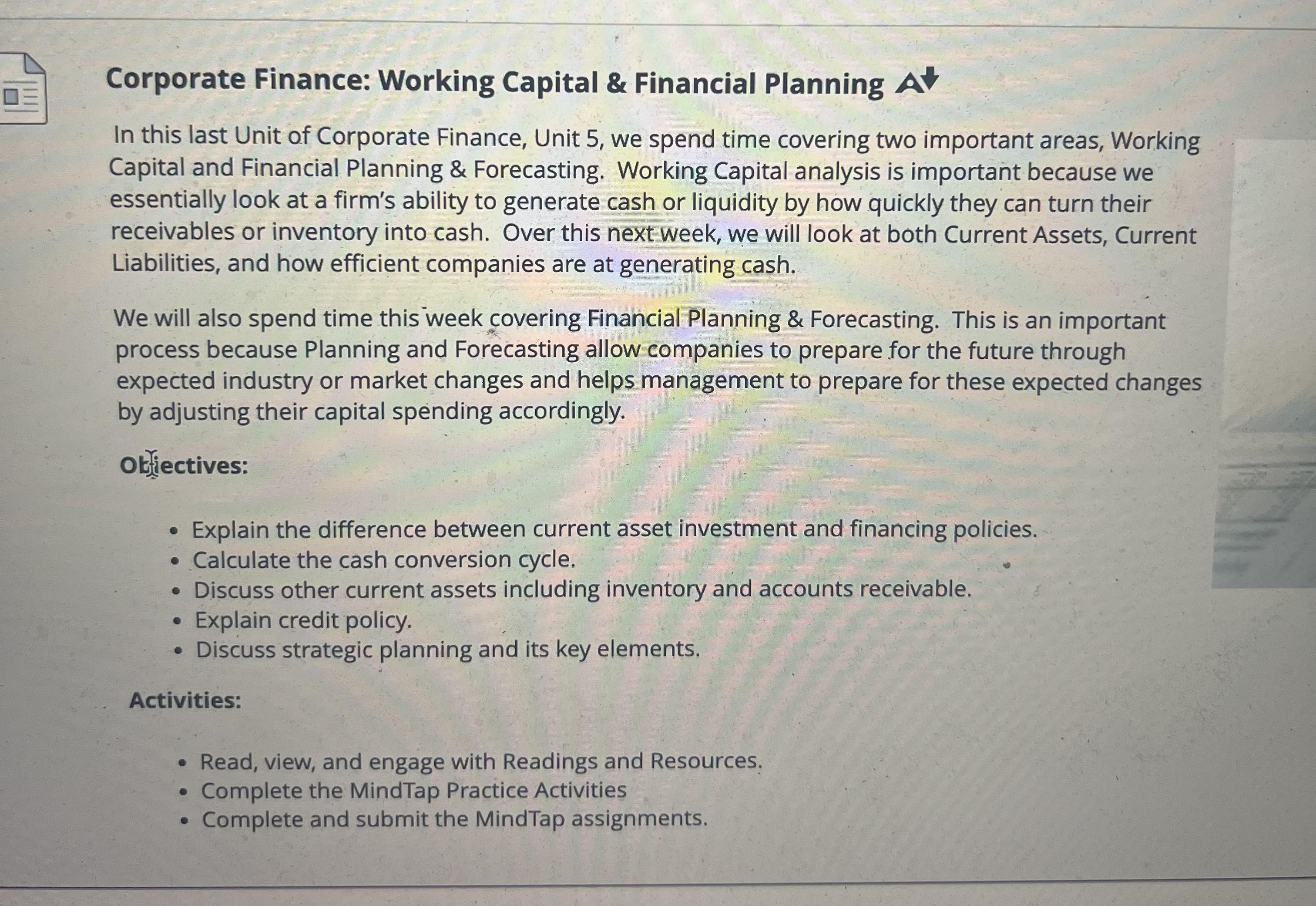
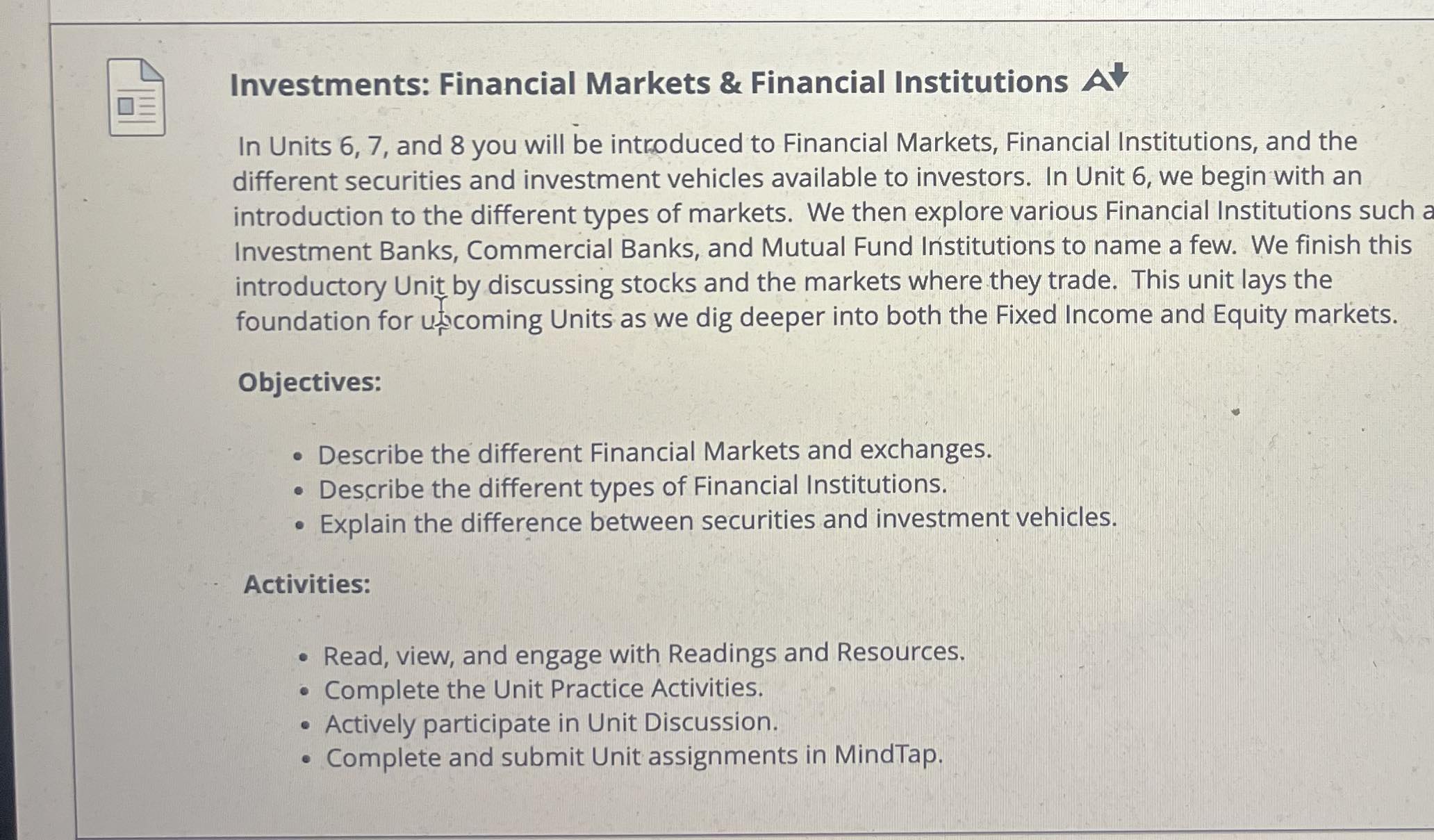
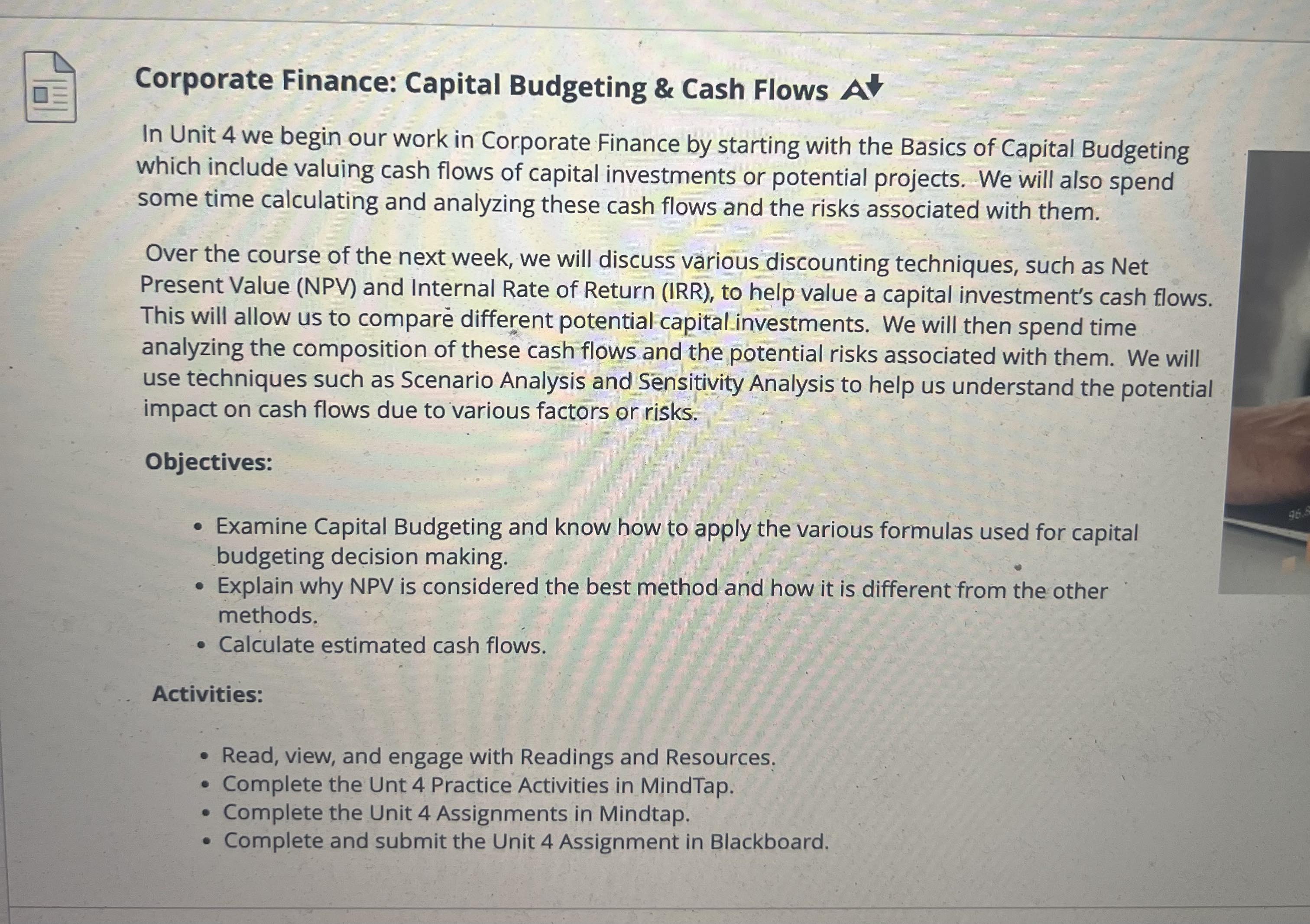
Unit 3 Corporate Finance: Analysis of Financial Statements AV Units 3 through 5 are devoted to the world of Corporate Finance. Accounting and Financial Statement Analysis are imperative to this area of Finance therefore we will spend Unit 3 reviewing them. While much of what we cover in this Unit will be a refresher from Accounting 111, the goal will be to reintroduce you to Financial Statements from a Financial Manager's perspective. In Unit 3, Ive will review Financial Statements including the Balance Sheet, Income Statement, and Statement of Cash Flows. We will then analyze the financial health of companies by calculating and comparing relevant financial ratios. Objectives: . Calculate and interpret basic liquidity ratios, asset management ratios, and debt and profitability ratios. . Examine how ratios compare to each other over time versus industry competitors. . Explain some of the precautions that should be taken when examining financial ratios. Activities: . Read, view, and engage with Readings and Resources. . Complete the Practice Activities in MindTap. . Actively participate in the Unit Discussion. . Complete the MindTap Assignments.Corporate Finance: Working Capital & Financial Planning AV In this last Unit of Corporate Finance, Unit 5, we spend time covering two important areas, Working Capital and Financial Planning & Forecasting. Working Capital analysis is important because we essentially look at a firm's ability to generate cash or liquidity by how quickly they can turn their receivables or inventory into cash. Over this next week, we will look at both Current Assets, Current Liabilities, and how efficient companies are at generating cash. We will also spend time this week covering Financial Planning & Forecasting. This is an important process because Planning and Forecasting allow companies to prepare for the future through expected industry or market changes and helps management to prepare for these expected changes by adjusting their capital spending accordingly. Objectives: . Explain the difference between current asset investment and financing policies. . Calculate the cash conversion cycle. . Discuss other current assets including inventory and accounts receivable. . Explain credit policy. . Discuss strategic planning and its key elements. Activities: . Read, view, and engage with Readings and Resources. . Complete the MindTap Practice Activities . Complete and submit the MindTap assignments.Investments: Financial Markets & Financial Institutions AV In Units 6, 7, and 8 you will be introduced to Financial Markets, Financial Institutions, and the different securities and investment vehicles available to investors. In Unit 6, we begin with an introduction to the different types of markets. We then explore various Financial Institutions such a Investment Banks, Commercial Banks, and Mutual Fund Institutions to name a few. We finish this introductory Unit by discussing stocks and the markets where they trade. This unit lays the foundation for upcoming Units as we dig deeper into both the Fixed Income and Equity markets. Objectives: . Describe the different Financial Markets and exchanges. . Describe the different types of Financial Institutions. . Explain the difference between securities and investment vehicles. Activities: . Read, view, and engage with Readings and Resources. . Complete the Unit Practice Activities. . Actively participate in Unit Discussion. . Complete and submit Unit assignments in MindTap.Corporate Finance: Capital Budgeting & Cash Flows AV In Unit 4 we begin our work in Corporate Finance by starting with the Basics of Capital Budgeting which include valuing cash flows of capital investments or potential projects. We will also spend some time calculating and analyzing these cash flows and the risks associated with them. Over the course of the next week, we will discuss various discounting techniques, such as Net Present Value (NPV) and Internal Rate of Return (IRR), to help value a capital investment's cash flows. This will allow us to compare different potential capital investments. We will then spend time analyzing the composition of these cash flows and the potential risks associated with them. We will use techniques such as Scenario Analysis and Sensitivity Analysis to help us understand the potential impact on cash flows due to various factors or risks. Objectives: . Examine Capital Budgeting and know how to apply the various formulas used for capital budgeting decision making. . Explain why NPV is considered the best method and how it is different from the other methods. . Calculate estimated cash flows. Activities: . Read, view, and engage with Readings and Resources. . Complete the Unt 4 Practice Activities in MindTap. . Complete the Unit 4 Assignments in Mindtap. . Complete and submit the Unit 4 Assignment in Blackboard.nit 7 Interest Rates and Bonds A Unit 7 is an introduction to Interest Rates and the factors that influence them including inflation and risk. We will discuss the Term Structure of Interest Rates also known as the Yield Curve, what factors influence its shape and what it says about future interest rates. We then spend time discussing Fixed Income Securities or Bonds and how Interest Rates, Inflation, and Risk impact their valuations, but first, we start by exploring the key characteristics of bonds including Coupon Interest Rate, Maturity, and Par amounts. These and other characteristics play a key role in how they are valued. Objectives: . Explain the determinants of Market Interest Rates. . Describe the Term Structure of Interest Rates and how it estimates future interest rates. . Describe the Macroeconomic Factors that influence Interest Rates. . List the Characteristics of Bonds. . Calculate the value of Bonds. . .Discuss the various types of Bond risk. Activities: . Read, view, and engage with Readings and Resources. . Complete the Unit Practice Activities in MindTap. . Complete and submit the Mindtap assignment. . Complete and submit the Unit 7 assignment in Blackboard. . Complete the Business Outcomes Assessment.Investments: Risk and Stock Valuations A* In this last Unit of Investments, Unit 8, we wrap up the Investments section of the course by discussing risk on both a Stand-Alone basis as well as at the Portfolio level. We use the Capital Asset Pricing Model (CAPM) to evaluate risk at the Portfolio level. We finish our discussion on Risk by reviewing how Risk impacts Required Returns. We conclude Unit 8 by covering different types of stocks available to investors including Common and Preferred stocks and how to value them through different valuation models such as the Dividend Discount Model. Objectives: AWL 73.38 . Differentiate between Stand-Alone Risk and Portfolio Risk. PIE . Explain the Relationship between Risk and Rates of Return. . Define the Capital Asset Pricing Model (CAPM) and its use. . Differentiate between Stock Value and Intrinsic Value. . Calculate the different valuation models including the Dividend Discount Model and the Constant Growth Model. Activities: . . Read, view, and engage with Readings and Resources. . Complete and submit Mnidtap activities and assignments.Unit 1 Introduction to Finance AV This course represents an important building block in your business education here at the Malcolm Baldridge School of Business at Post University. We are going to introduce fundamental financial concepts and their role in Corporate Finance, Investments as well as Personal Finance through this course . We begin by exploring the different career paths available to Finance graduates. By exploring these different avenues, we can focus on which of these paths may interest you. As the term progresses, we will introduce the different areas of Finance and their building blocks so that you will be able to gain insight into the important functions of the role or roles in Finance that you find interesting. Lastly, we will introduce you to The Time Value of Money concept. It is a foundational concept and used in all areas of Finance. It will be covered in-depth and put into practice in Unit 2. Objectives: . Articulate the roles of a Financial Manager. . -Identify careers in finance Activities: . Review the Course Information page. . Download/save the course syllabus. . Introduce yourself in the Introduction discussion forum. . Read, view, and engage with Readings and Resources. . Complete the Unit 1 Practice Activities in MindTap . Actively participate in the Unit Discussion. . Complete the Unit 1 Assignments in MindTap . Complete and submit the Unit 1 Blog Assignment.Time Value of Money AV The Time Value of Money is a foundational concept in Finance. It is used to calculate valuations, both present and future, through different analytical techniques. The Time Value of Money concept is used in all aspects of Finance including Corporate Finance, Investments, and Personal Finance. This Unit is devoted to explaining The Time Value of Money and putting it into practice. We will calculate Present Values and Future Values of both single cash flows as well as multiple cash flows. We will be given different variables to solve for, much like an algebraic equation. We will be putting this equation into practice as we solve for valuations on potential capital investments for a Rcorporation, security valuations such as stocks or bonds, and we will even calculate loan payments. This foundational concept will be used in every Unit of this course going forward therefore it is important to be comfortable with all calculations and uses. Objectives: Calculate the present value of money for single and multiple cash flows. Calculate the future value of money for single and multiple cash flows. Explain the role of compounding interest in building wealth. . Appvly the Time Value of Money concept into real-world examples such as; mortgage calculations, annuities, and capital investments. - Activities: Read, view, and engage with Readings and Resources. Submit the Unit 2 MindTap Activities. Actively participate in Unit Discussion. Complete the assignments in MindTap. Complete and submit the Unit 2 assignment in Blackboard
Step by Step Solution
There are 3 Steps involved in it
1 Expert Approved Answer
Step: 1 Unlock
Question Has Been Solved by an Expert!
Get step-by-step solutions from verified subject matter experts
Step: 2 Unlock
Step: 3 Unlock
Students Have Also Explored These Related Finance Questions!









 Study Help