







Question: Forbidden Built-ins/Methods/etc This is not a complete listing, but it includes: - list slicing - Declaring your own Functions - Dictionaries creation using dict(), or
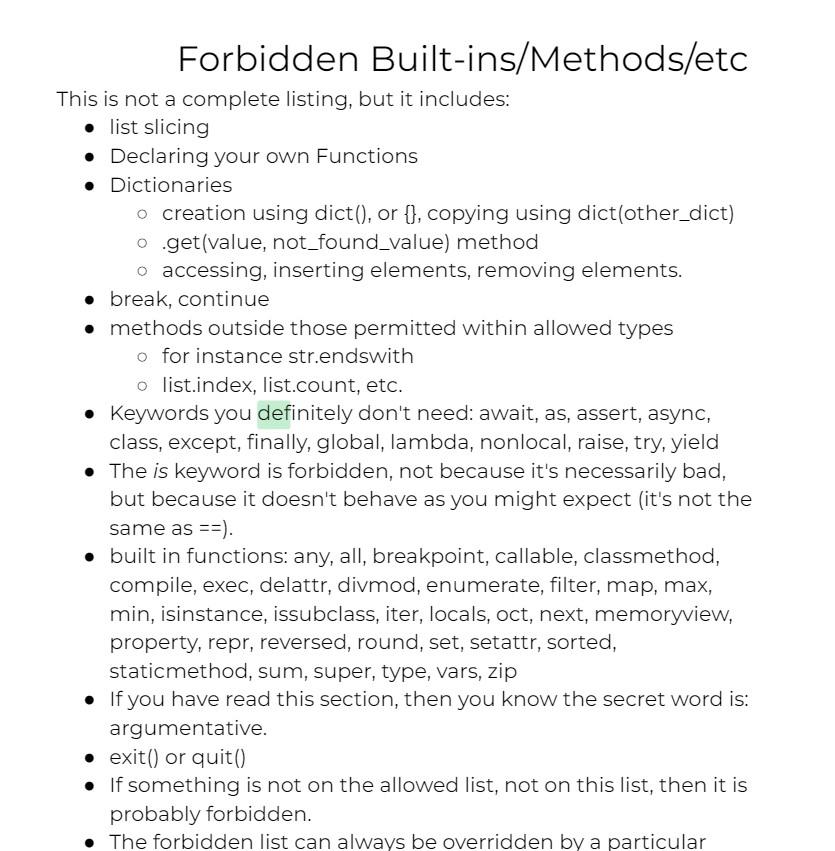
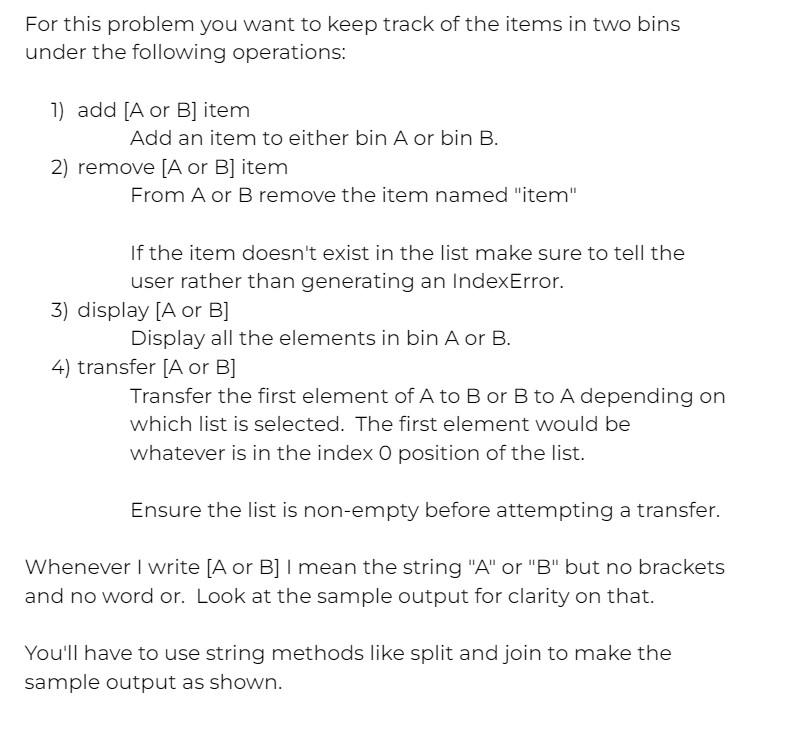
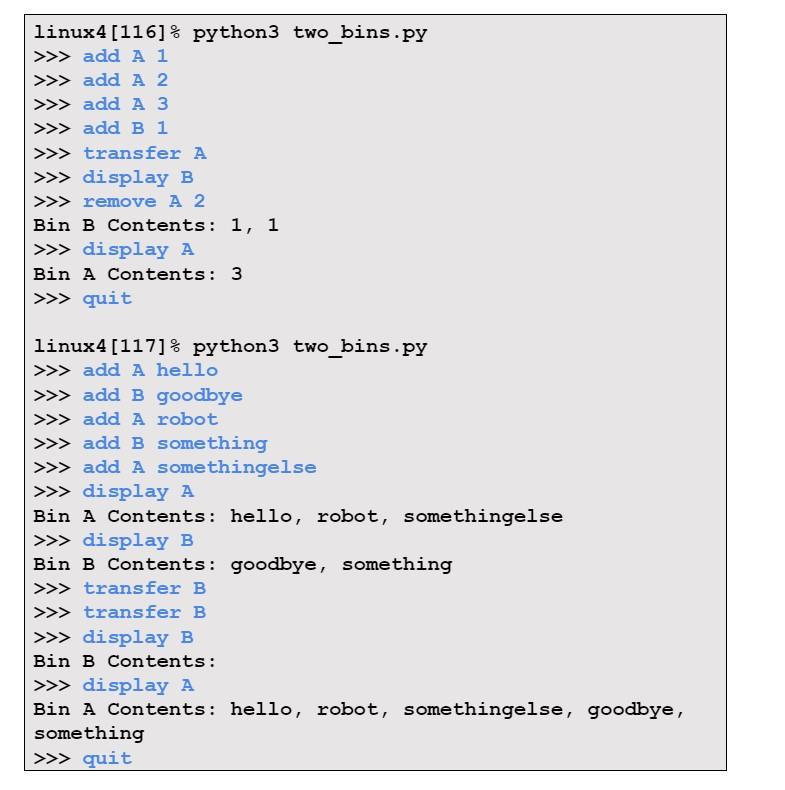
Forbidden Built-ins/Methods/etc This is not a complete listing, but it includes: - list slicing - Declaring your own Functions - Dictionaries creation using dict(), or \{\} , copying using dict (other_dict) .get(value, not_found_value) method accessing, inserting elements, removing elements. - break, continue - methods outside those permitted within allowed types for instance str.endswith list.index, list.count, etc. - Keywords you definitely don't need: await, as, assert, async, class, except, finally, global, lambda, nonlocal, raise, try, yield - The is keyword is forbidden, not because it's necessarily bad, but because it doesn't behave as you might expect (it's not the same as ==. - built in functions: any, all, breakpoint, callable, classmethod, compile, exec, delattr, divmod, enumerate, filter, map, max, min, isinstance, issubclass, iter, locals, oct, next, memoryview, property, repr, reversed, round, set, setattr, sorted, staticmethod, sum, super, type, vars, zip - If you have read this section, then you know the secret word is: argumentative. - exit() or quit() - If something is not on the allowed list, not on this list, then it is probably forbidden. - The forbidden list can always be overridden by a particular For this problem you want to keep track of the items in two bins under the following operations: 1) add [A or B] item Add an item to either bin A or bin B. 2) remove [A or B] item From A or B remove the item named "item" If the item doesn't exist in the list make sure to tell the user rather than generating an IndexError. 3) display [A or B] Display all the elements in bin A or B. 4) transfer [A or B] Transfer the first element of A to B or B to A depending on which list is selected. The first element would be whatever is in the index 0 position of the list. Ensure the list is non-empty before attempting a transfer. Whenever I write [A or B] I mean the string "A" or "B" but no brackets and no word or. Look at the sample output for clarity on that. You'll have to use string methods like split and join to make the sample output as shown
Step by Step Solution
There are 3 Steps involved in it

Get step-by-step solutions from verified subject matter experts
 Study Help