Question: i need a summary for the case ans the questions answer this is the case i need a summary for it and the question answers
i need a summary for the case ans the questions answer
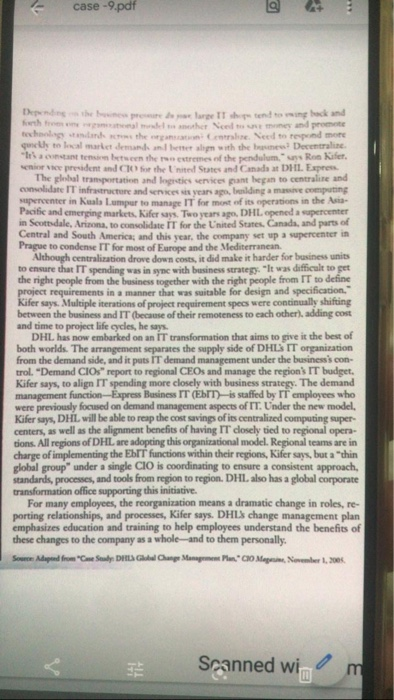
this is the case i need a summary for it and the question answers
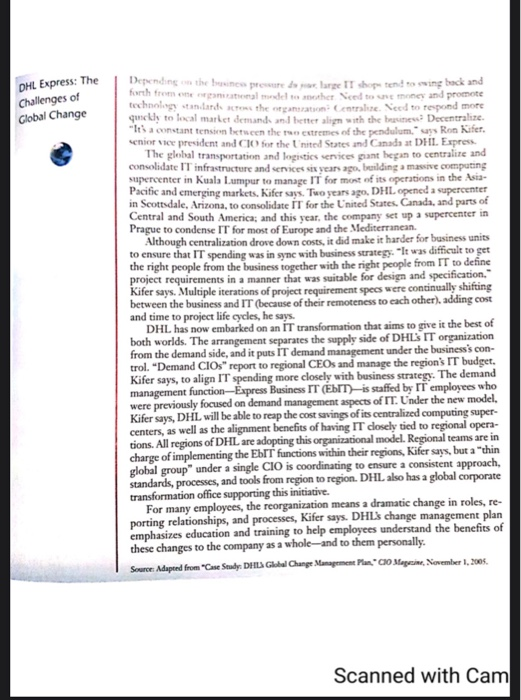
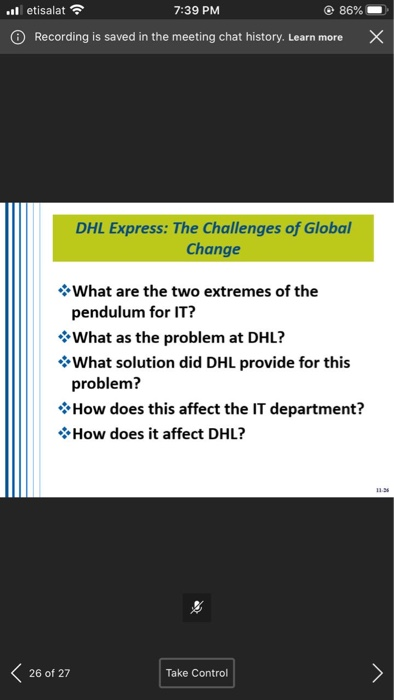
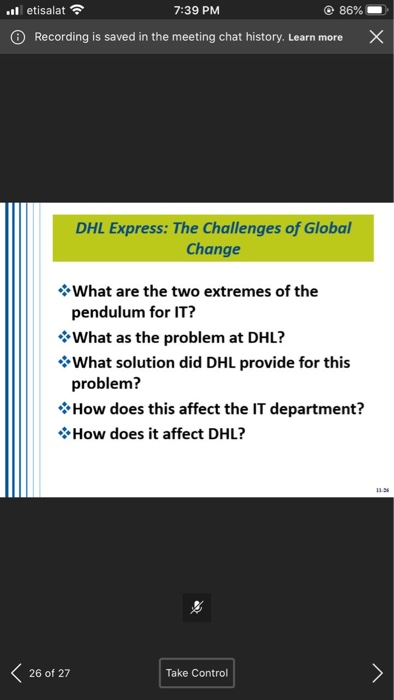
case-9.pdf Den the back and ha n dpromete than th e Need to repd more un to market with the Decentraline aunt test the street the pendulum." Ron Net. no se president and for the United States and Canada at DHL Express The bal tratti d i cant began to centre and consolidate IT Infrastructure and years o ldinga m e computing supercenter in Kuala Lumpur to manage IT for most of its operations in the Asia- Pacific and emerging markets, Kifer says. Two years ago, DHL opened a supercenter in Scottsdale, Arizona, to consolidate it for the United States, Canada, and parts of Central and South America; and this year, the company set up a supercenter in Prague to condense IT for most of Europe and the Mediterranean Although centralization drove down costs, it did make it harder for business units to ensure that IT spending was in sync with business strategy. It was difficult to get the right people from the business together with the right people from IT to define project requirements in a manner that was suitable for design and specification." Kifer says. Multiple iterations of project requirement specs were continually shifting between the business and IT (because of their remoteness to each other), adding cost and time to project life cycles, he says. DHL has now embarked on an IT transformation that aims to give it the best of both worlds. The arrangement separates the supply side of DHL IT organization from the demand side, and it puts IT demand management under the business's con- trol. "Demand CIOS" report to regional CEOs and manage the regions IT budget. Kifer says, to align IT spending more closely with business strategy. The demand management function-Express Business IT (EI)-is staffed by IT employees who were previously focused on demand management aspects of IT. Under the new model, Kifer says, DHL will be able to reap the cost savings of its centralized computing super centers, as well as the alignment benefits of having IT closely tied to regional opera tions. All regions of DHL are adopting this organizational model. Regional teams are in charge of implementing the EbIT functions within their regions, Kifer says, but a "thin global group" under a single CIO is coordinating to ensure a consistent approach, standards, processes, and tools from region to region. DHL also has a global corporate transformation office supporting this initiative. For many employees, the reorganization means a dramatic change in roles, re- porting relationships, and processes, Kifer says. DHLS change management plan emphasizes education and training to help employees understand the benefits of these changes to the company as a whole- and to them personally. Sewe Maped from "Get DRILSG Change Management Man." CIO M . N r , 2006 ort P Scanned wim ... etisalat 7:39 PM @ 86% O Recording is saved in the meeting chat history. Learn more X DHL Express: The Challenges of Global Change What are the two extremes of the pendulum for IT? What as the problem at DHL? What solution did DHL provide for this problem? How does this affect the IT department? How does it affect DHL? 26 of 27 Take Control DHL Express: The Challenges of Global Change Derning the b ea presure de lange IT so tend to swing back and forth fr e e and promote technol an are the natu r ale Weed to respond more quely to local market demands and better align with the begins Decentralize. "Its a constant tension tween the the extremes of the pendulum, Ron kifer. Senior vice president and C for the United States and Canada at DHL Express The global transportation and logistics services punt began to centralite and consolidate IT infrastructure and services six years ago, building a massive computing supercenter in Kuala Lumpur to manage IT for most of its operations in the Asia- Pacific and emerging markets. Kifer says. Two years ago, DHL opened a supercenter in Scottsdale, Arizona, to consolidate IT for the United States, Canada, and parts of Central and South America; and this year, the company set up a supercenter in Prague to condense IT for most of Europe and the Mediterranean Although centralization drove down costs, it did make it harder for business units to ensure that IT spending was in sync with business strategy. It was difficult to get the right people from the business together with the right people from IT to define project requirements in a manner that was suitable for design and specification." Kifer says. Multiple iterations of project requirement specs were continually shifting between the business and IT (because of their remoteness to each other), adding cost and time to project life cycles, he says. DHL has now embarked on an IT transformation that aims to give it the best of both worlds. The arrangement separates the supply side of DHLS IT organization from the demand side, and it puts IT demand management under the business's con- trol. "Demand CIOs report to regional CEOs and manage the region's IT budget. Kifer says, to align IT spending more closely with business strategy. The demand management function-Express Business IT (EDIT) is staffed by IT employees who were previously focused on demand management aspects of IT. Under the new model, Kifer says, DHL will be able to reap the cost savings of its centralized computing super- centers, as well as the alignment benefits of having IT closely tied to regional opera- tions. All regions of DHL are adopting this organizational model. Regional teams are in charge of implementing the Ebre functions within their regions, Kifer says, but a "thin global group" under a single CIO is coordinating to ensure a consistent approach, standards, processes, and tools from region to region. DHL also has a global corporate transformation office supporting this initiative. For many employees, the reorganization means a dramatic change in roles, re- porting relationships, and processes, Kifer says. DHLS change management plan emphasizes education and training to help employees understand the benefits of these changes to the company as a whole and to them personally Souro: Adapted from "Case Study DHL Global Change Management Plan CO Magazine, November 1, 2005, Scanned with Cam ... etisalat 7:39 PM @ 86% O Recording is saved in the meeting chat history. Learn more X DHL Express: The Challenges of Global Change What are the two extremes of the pendulum for IT? What as the problem at DHL? What solution did DHL provide for this problem? How does this affect the IT department? How does it affect DHL? 26 of 27 Take Control case-9.pdf Den the back and ha n dpromete than th e Need to repd more un to market with the Decentraline aunt test the street the pendulum." Ron Net. no se president and for the United States and Canada at DHL Express The bal tratti d i cant began to centre and consolidate IT Infrastructure and years o ldinga m e computing supercenter in Kuala Lumpur to manage IT for most of its operations in the Asia- Pacific and emerging markets, Kifer says. Two years ago, DHL opened a supercenter in Scottsdale, Arizona, to consolidate it for the United States, Canada, and parts of Central and South America; and this year, the company set up a supercenter in Prague to condense IT for most of Europe and the Mediterranean Although centralization drove down costs, it did make it harder for business units to ensure that IT spending was in sync with business strategy. It was difficult to get the right people from the business together with the right people from IT to define project requirements in a manner that was suitable for design and specification." Kifer says. Multiple iterations of project requirement specs were continually shifting between the business and IT (because of their remoteness to each other), adding cost and time to project life cycles, he says. DHL has now embarked on an IT transformation that aims to give it the best of both worlds. The arrangement separates the supply side of DHL IT organization from the demand side, and it puts IT demand management under the business's con- trol. "Demand CIOS" report to regional CEOs and manage the regions IT budget. Kifer says, to align IT spending more closely with business strategy. The demand management function-Express Business IT (EI)-is staffed by IT employees who were previously focused on demand management aspects of IT. Under the new model, Kifer says, DHL will be able to reap the cost savings of its centralized computing super centers, as well as the alignment benefits of having IT closely tied to regional opera tions. All regions of DHL are adopting this organizational model. Regional teams are in charge of implementing the EbIT functions within their regions, Kifer says, but a "thin global group" under a single CIO is coordinating to ensure a consistent approach, standards, processes, and tools from region to region. DHL also has a global corporate transformation office supporting this initiative. For many employees, the reorganization means a dramatic change in roles, re- porting relationships, and processes, Kifer says. DHLS change management plan emphasizes education and training to help employees understand the benefits of these changes to the company as a whole- and to them personally. Sewe Maped from "Get DRILSG Change Management Man." CIO M . N r , 2006 ort P Scanned wim ... etisalat 7:39 PM @ 86% O Recording is saved in the meeting chat history. Learn more X DHL Express: The Challenges of Global Change What are the two extremes of the pendulum for IT? What as the problem at DHL? What solution did DHL provide for this problem? How does this affect the IT department? How does it affect DHL? 26 of 27 Take Control DHL Express: The Challenges of Global Change Derning the b ea presure de lange IT so tend to swing back and forth fr e e and promote technol an are the natu r ale Weed to respond more quely to local market demands and better align with the begins Decentralize. "Its a constant tension tween the the extremes of the pendulum, Ron kifer. Senior vice president and C for the United States and Canada at DHL Express The global transportation and logistics services punt began to centralite and consolidate IT infrastructure and services six years ago, building a massive computing supercenter in Kuala Lumpur to manage IT for most of its operations in the Asia- Pacific and emerging markets. Kifer says. Two years ago, DHL opened a supercenter in Scottsdale, Arizona, to consolidate IT for the United States, Canada, and parts of Central and South America; and this year, the company set up a supercenter in Prague to condense IT for most of Europe and the Mediterranean Although centralization drove down costs, it did make it harder for business units to ensure that IT spending was in sync with business strategy. It was difficult to get the right people from the business together with the right people from IT to define project requirements in a manner that was suitable for design and specification." Kifer says. Multiple iterations of project requirement specs were continually shifting between the business and IT (because of their remoteness to each other), adding cost and time to project life cycles, he says. DHL has now embarked on an IT transformation that aims to give it the best of both worlds. The arrangement separates the supply side of DHLS IT organization from the demand side, and it puts IT demand management under the business's con- trol. "Demand CIOs report to regional CEOs and manage the region's IT budget. Kifer says, to align IT spending more closely with business strategy. The demand management function-Express Business IT (EDIT) is staffed by IT employees who were previously focused on demand management aspects of IT. Under the new model, Kifer says, DHL will be able to reap the cost savings of its centralized computing super- centers, as well as the alignment benefits of having IT closely tied to regional opera- tions. All regions of DHL are adopting this organizational model. Regional teams are in charge of implementing the Ebre functions within their regions, Kifer says, but a "thin global group" under a single CIO is coordinating to ensure a consistent approach, standards, processes, and tools from region to region. DHL also has a global corporate transformation office supporting this initiative. For many employees, the reorganization means a dramatic change in roles, re- porting relationships, and processes, Kifer says. DHLS change management plan emphasizes education and training to help employees understand the benefits of these changes to the company as a whole and to them personally Souro: Adapted from "Case Study DHL Global Change Management Plan CO Magazine, November 1, 2005, Scanned with Cam ... etisalat 7:39 PM @ 86% O Recording is saved in the meeting chat history. Learn more X DHL Express: The Challenges of Global Change What are the two extremes of the pendulum for IT? What as the problem at DHL? What solution did DHL provide for this problem? How does this affect the IT department? How does it affect DHL? 26 of 27 Take Control









 Study Help