Question: I need help with these math questions. Pre-Requisite Review for Section 5.3 - Graphs of Polynomial Functions The Zero-Product Principle If the product of two
I need help with these math questions.
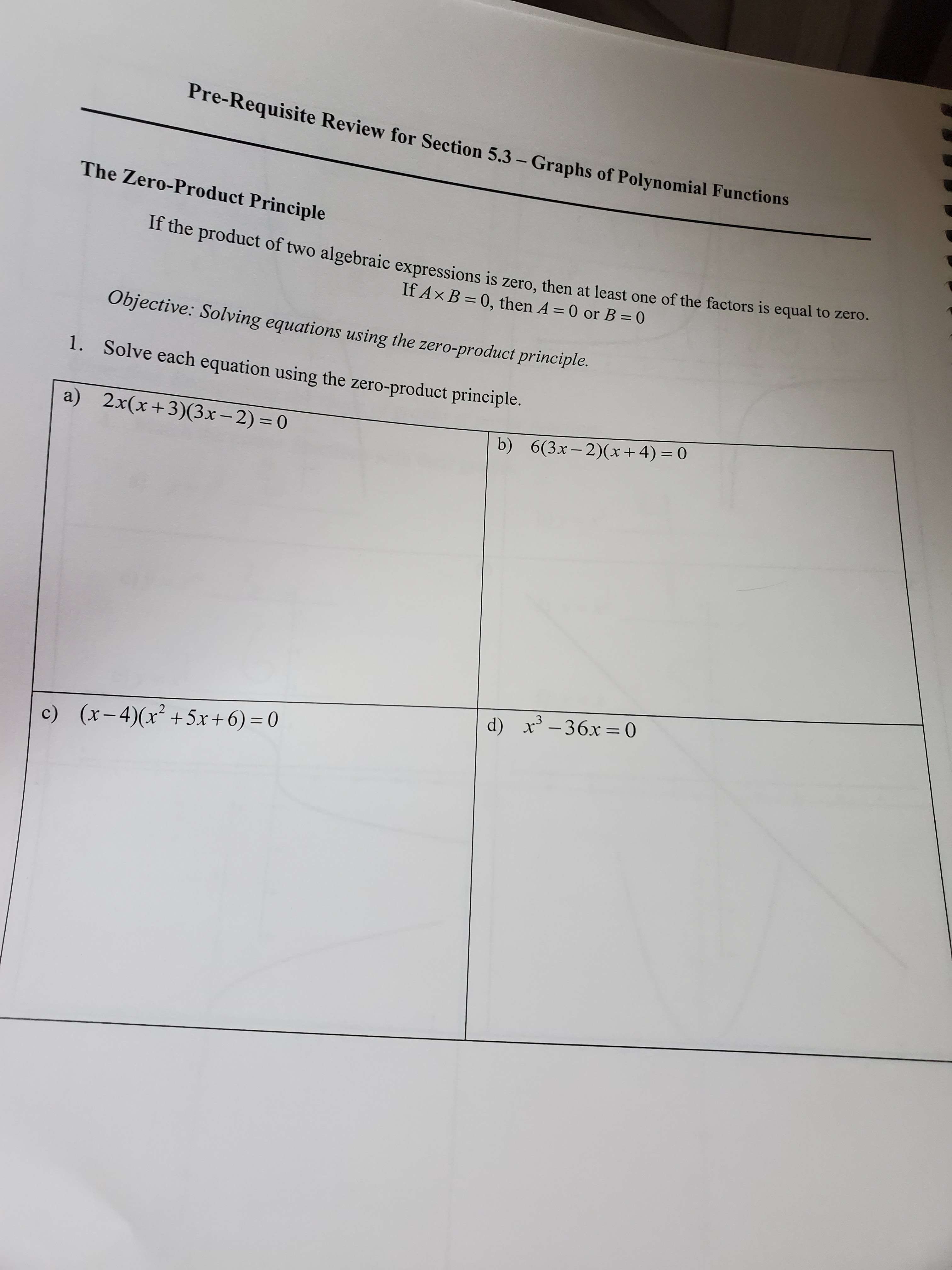
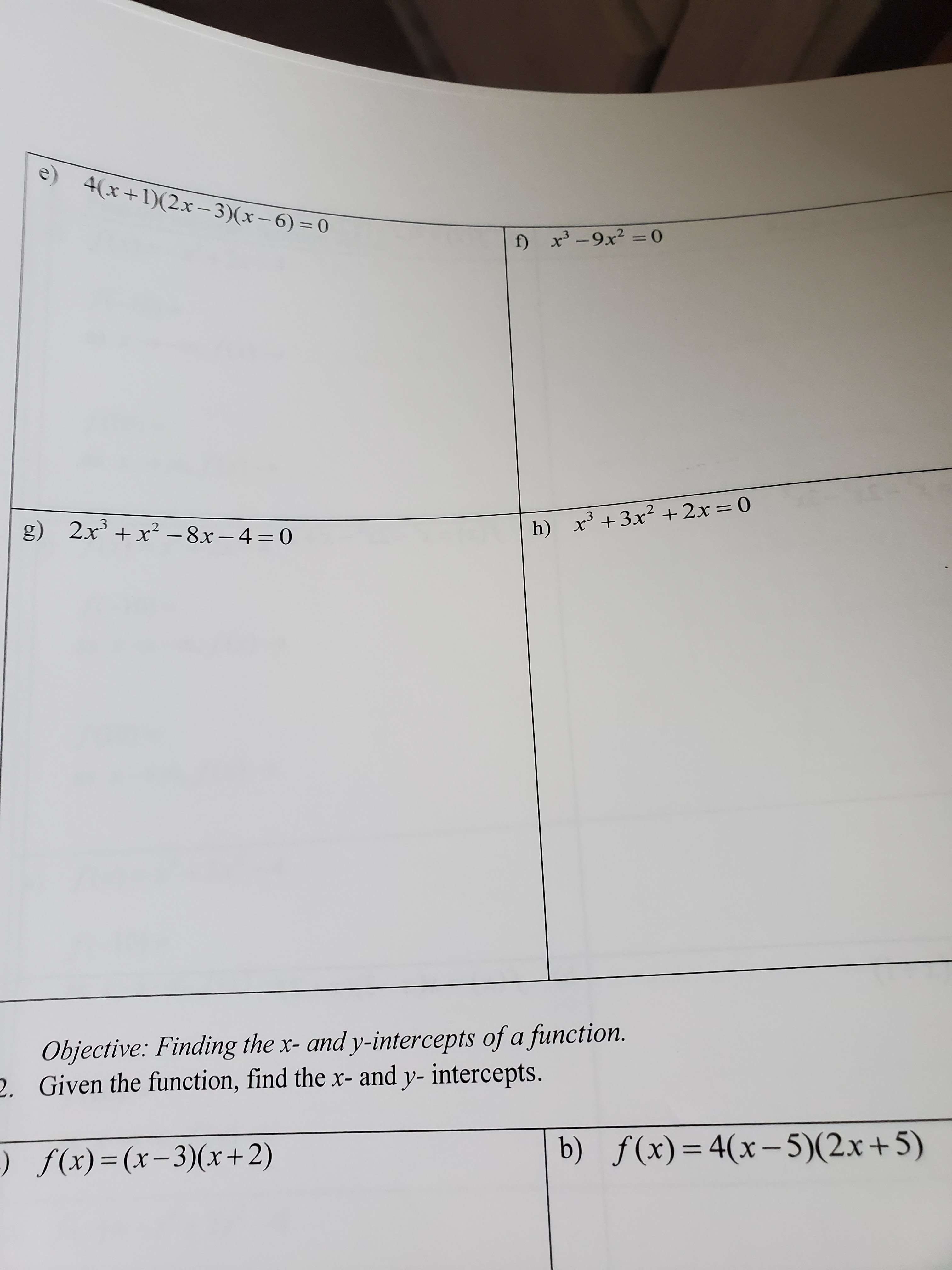
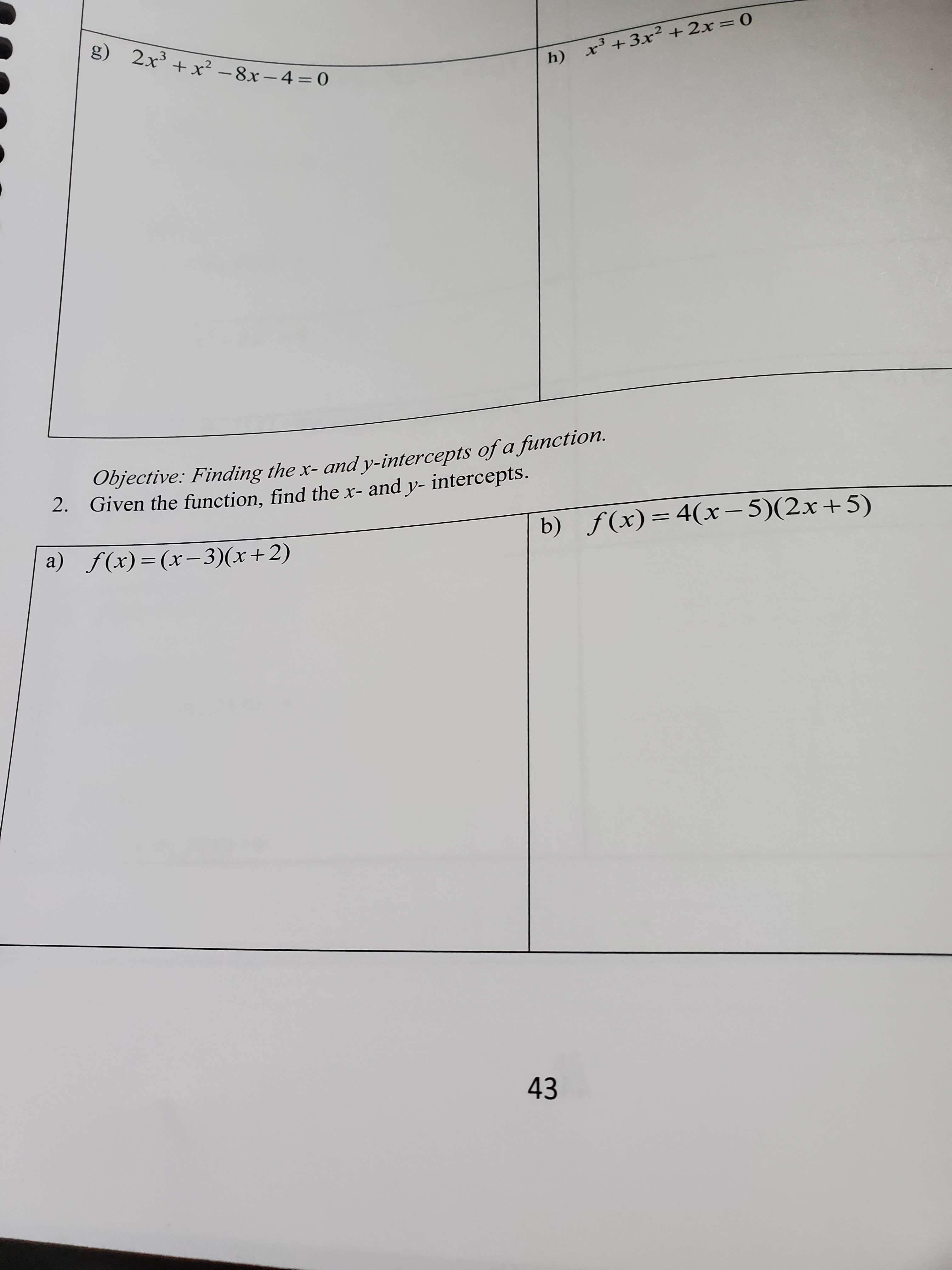
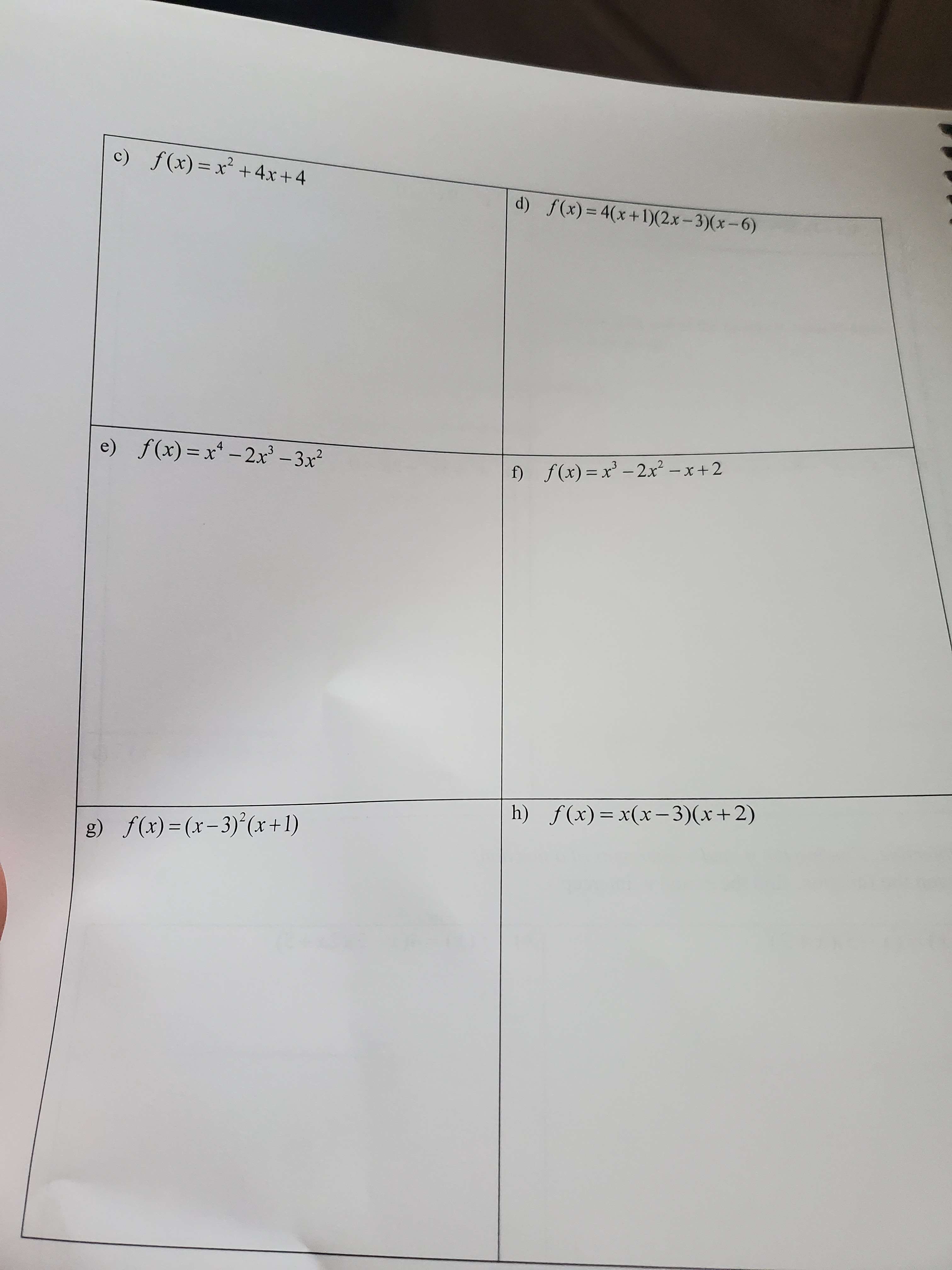
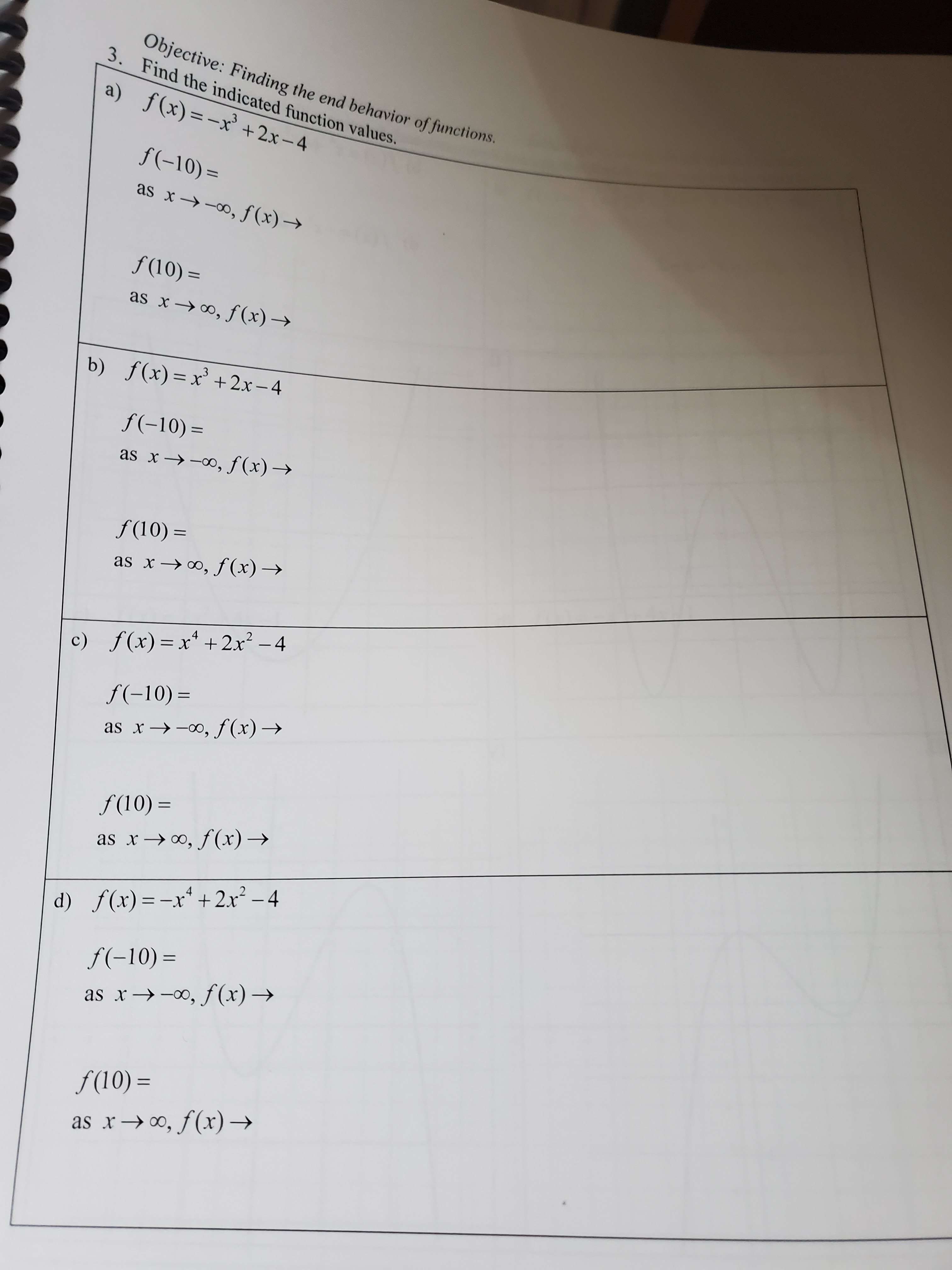
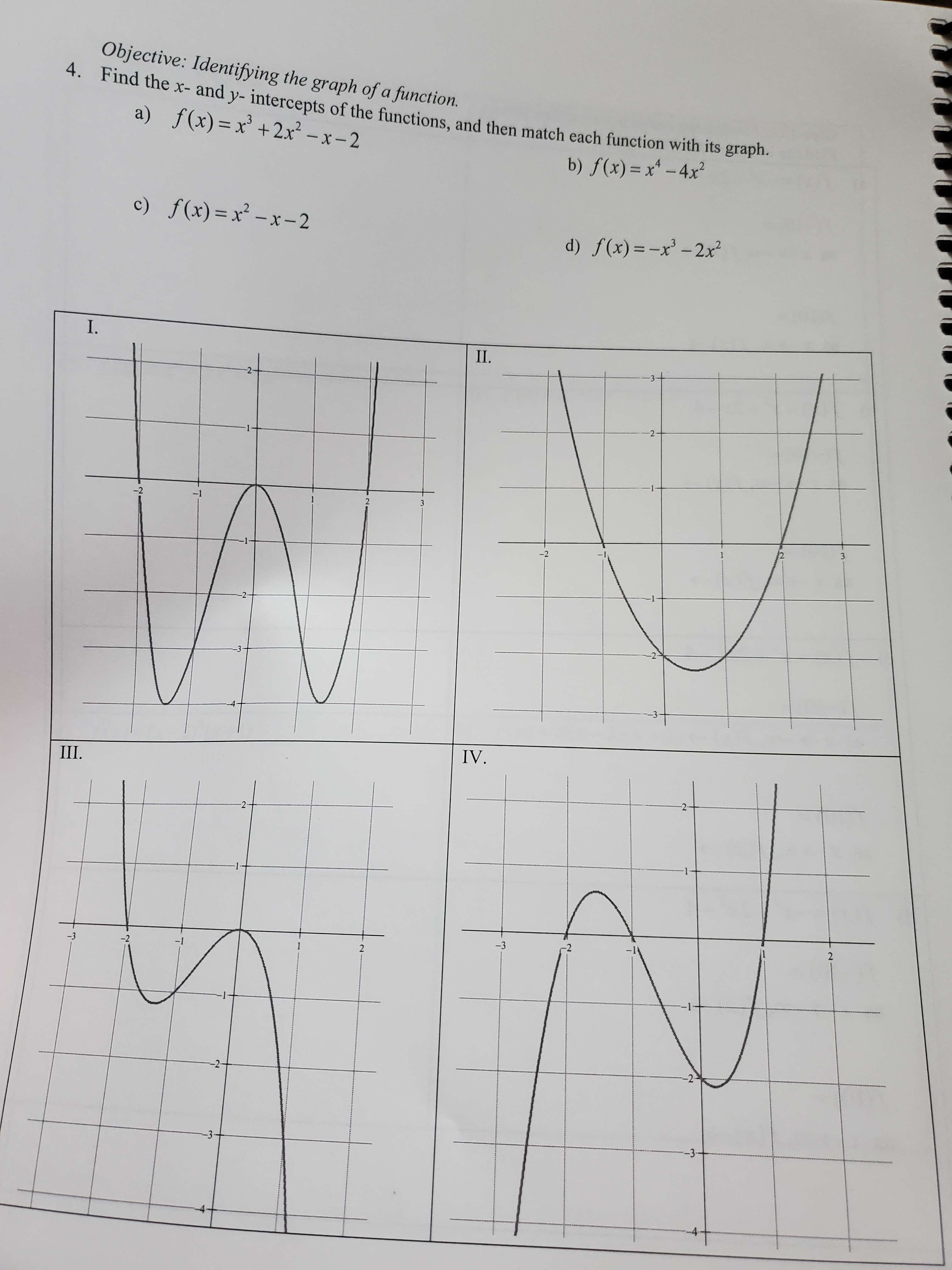
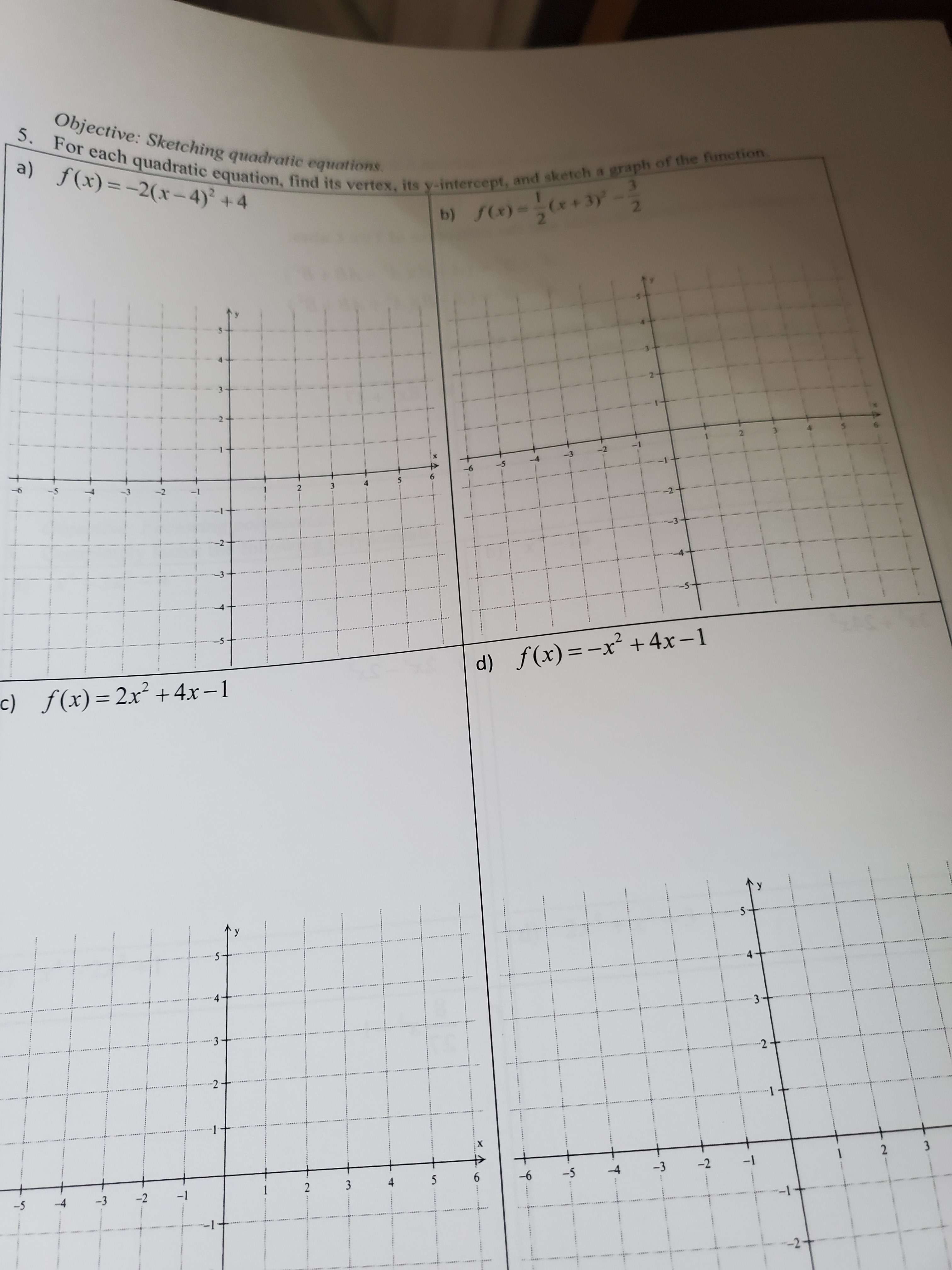
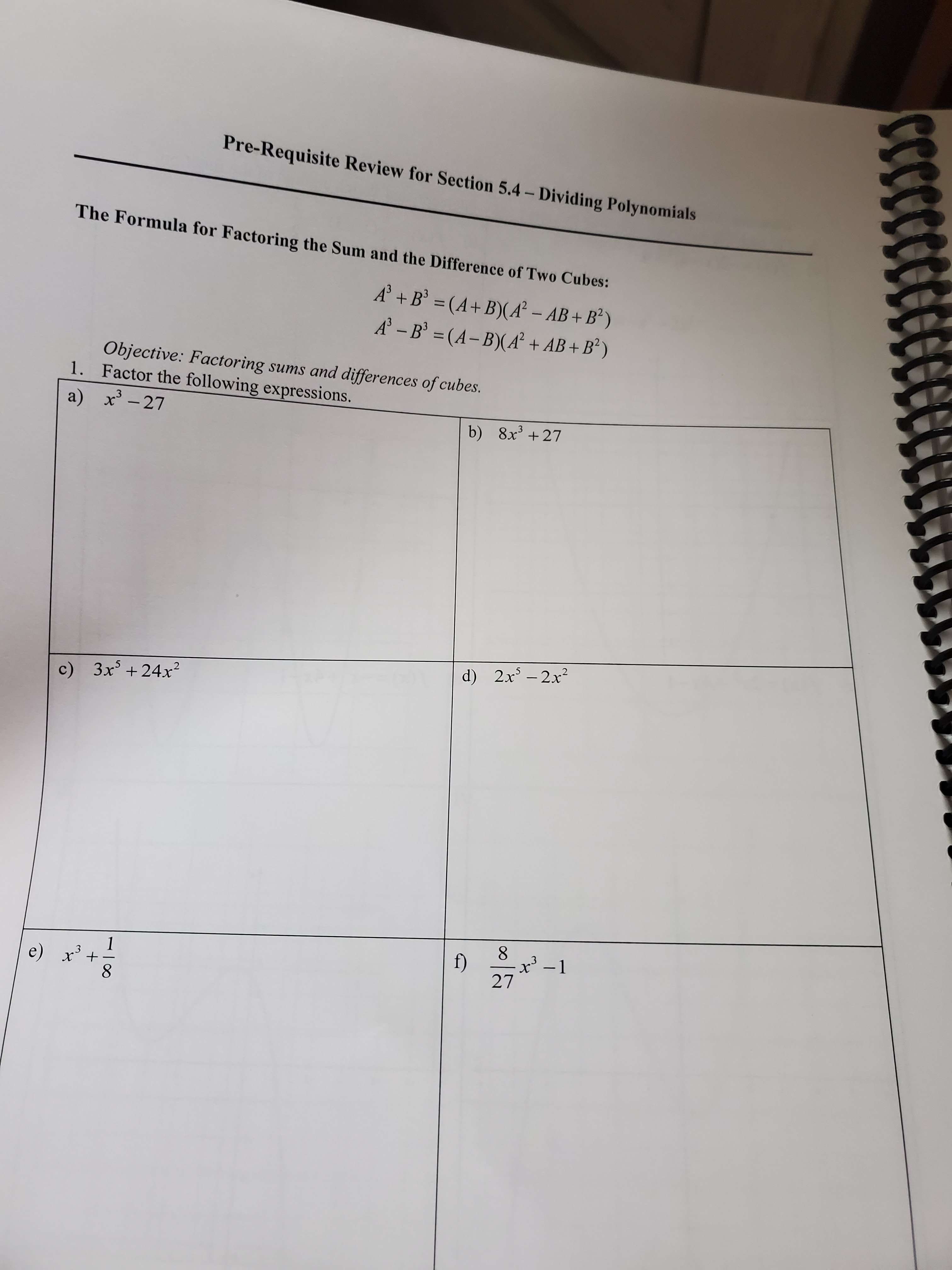
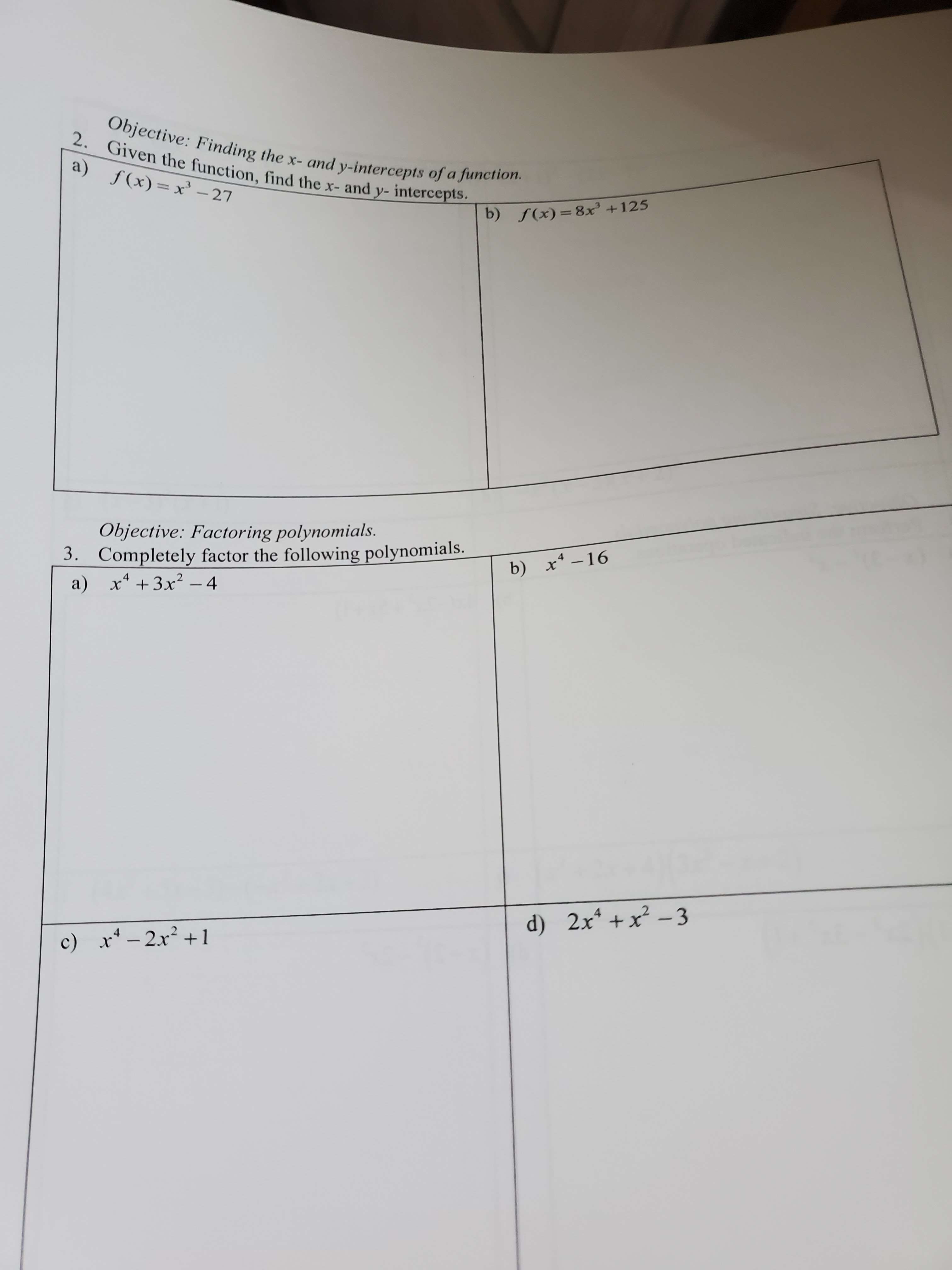
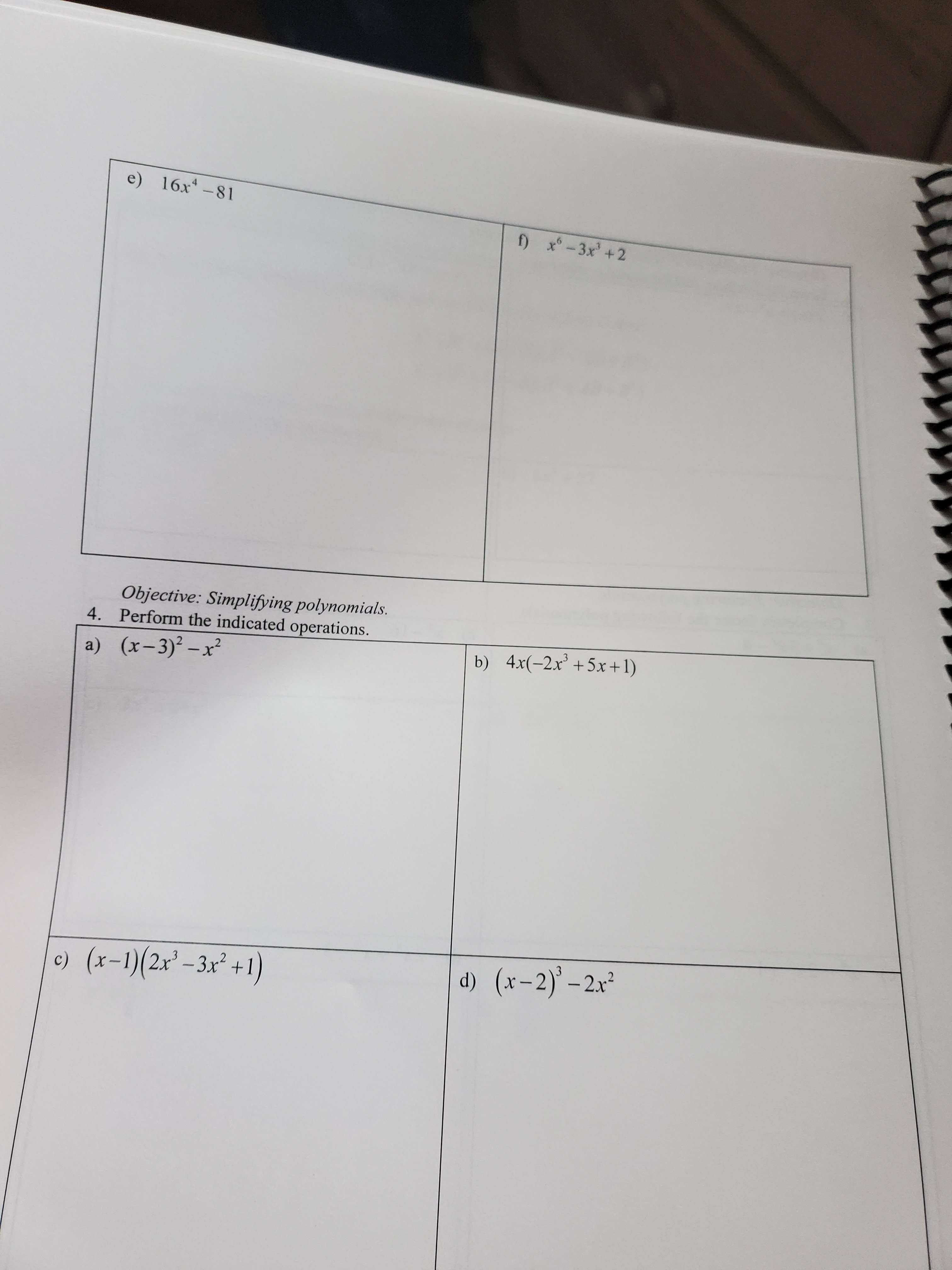
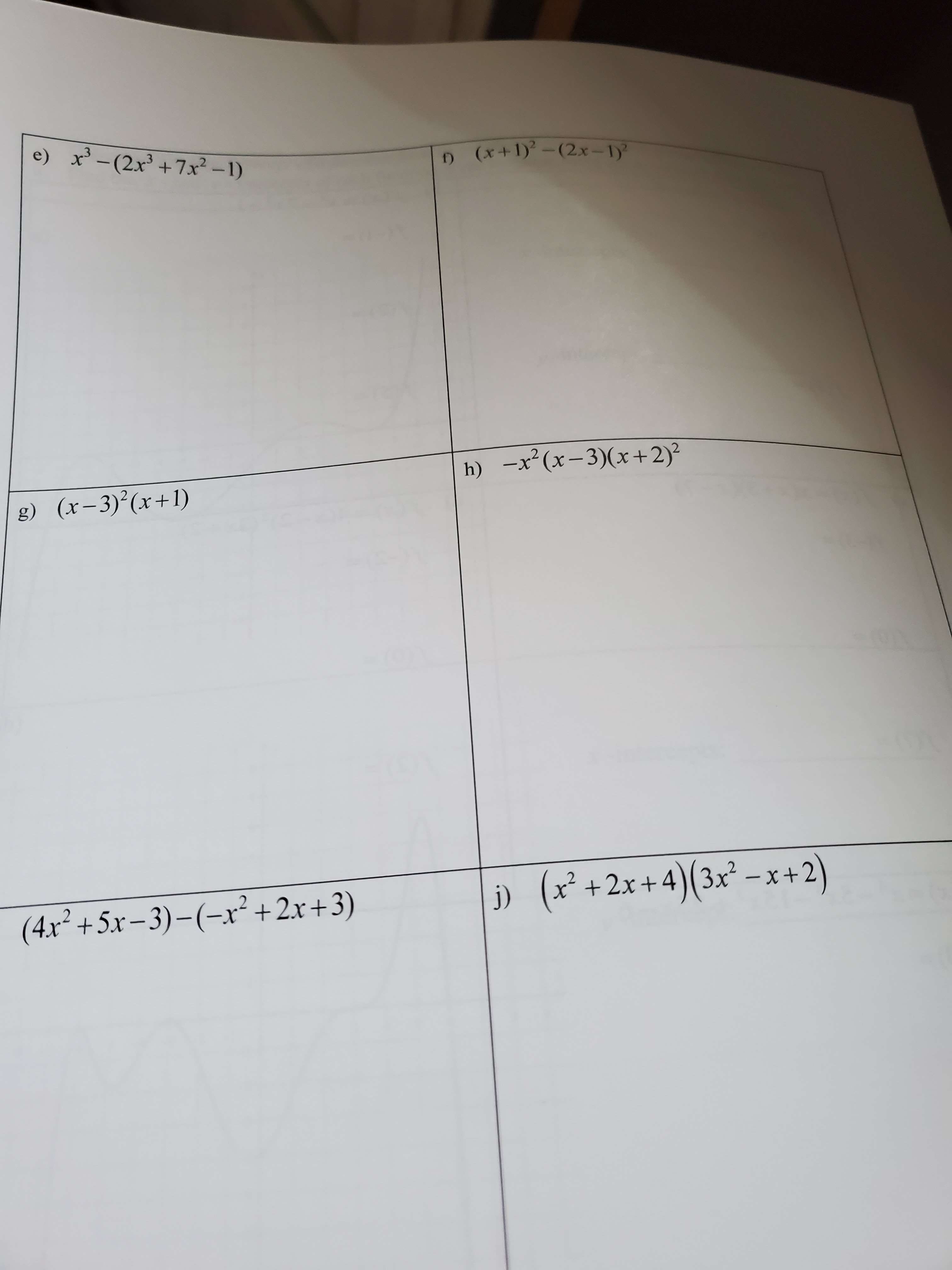
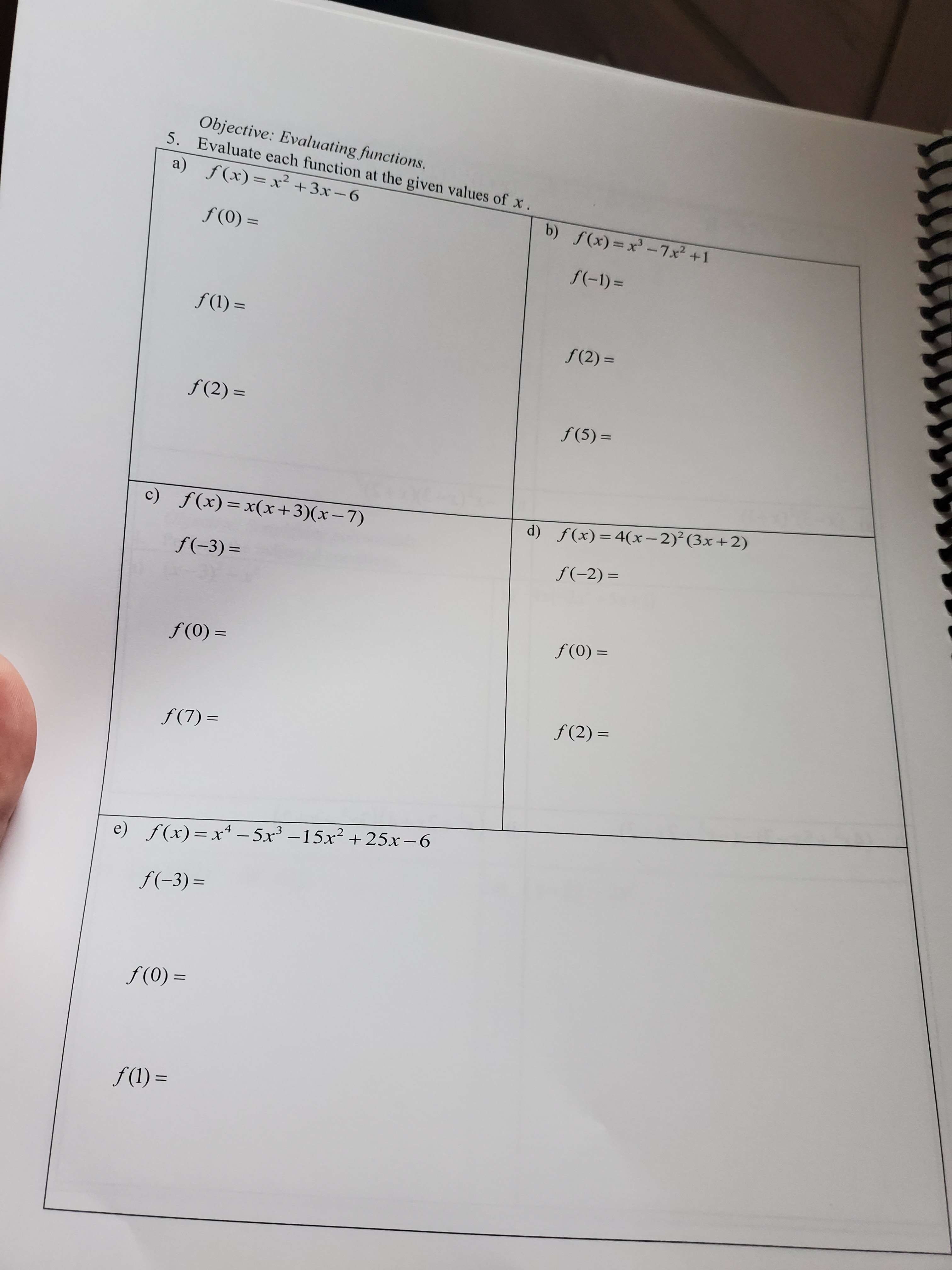
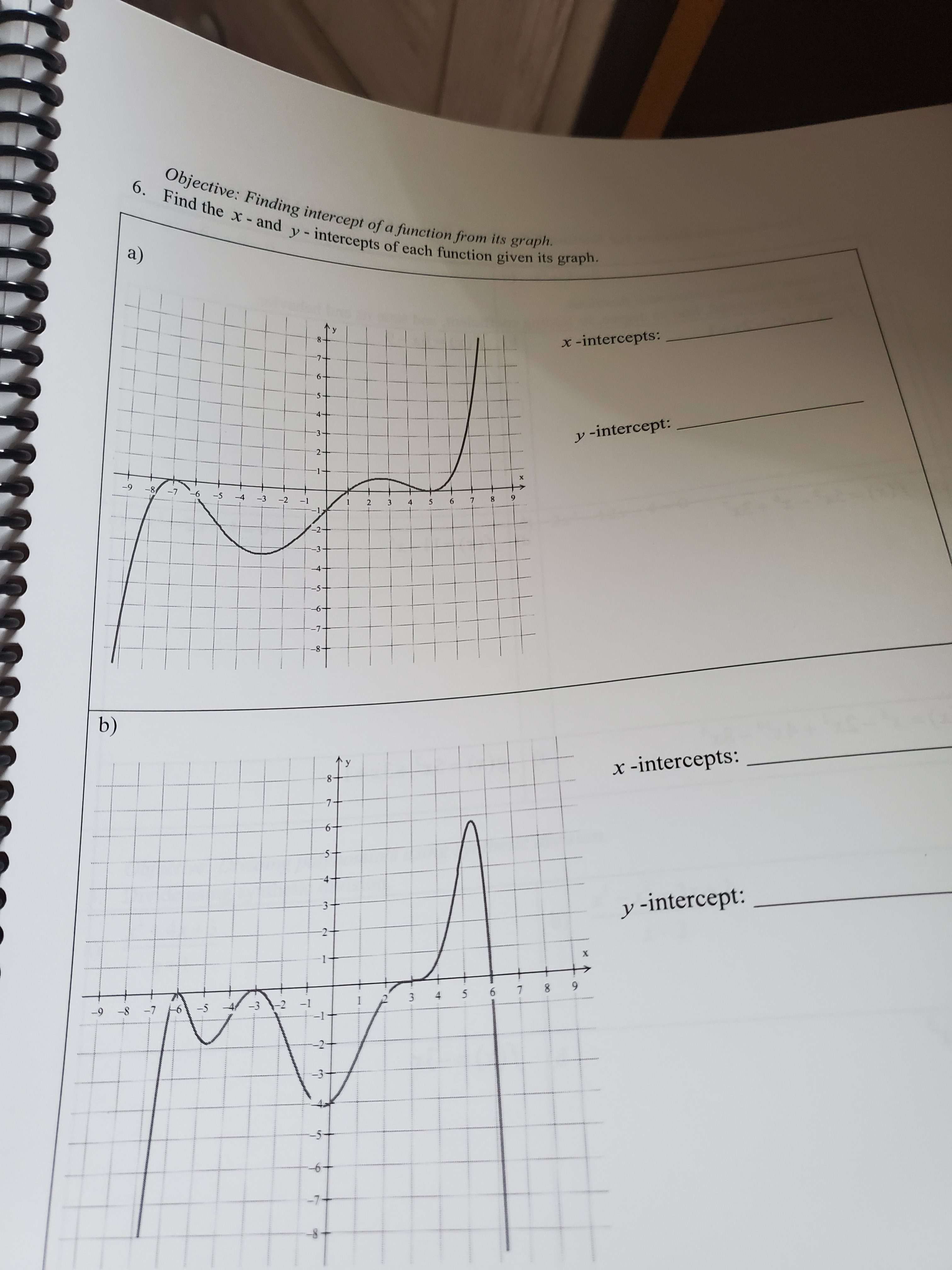
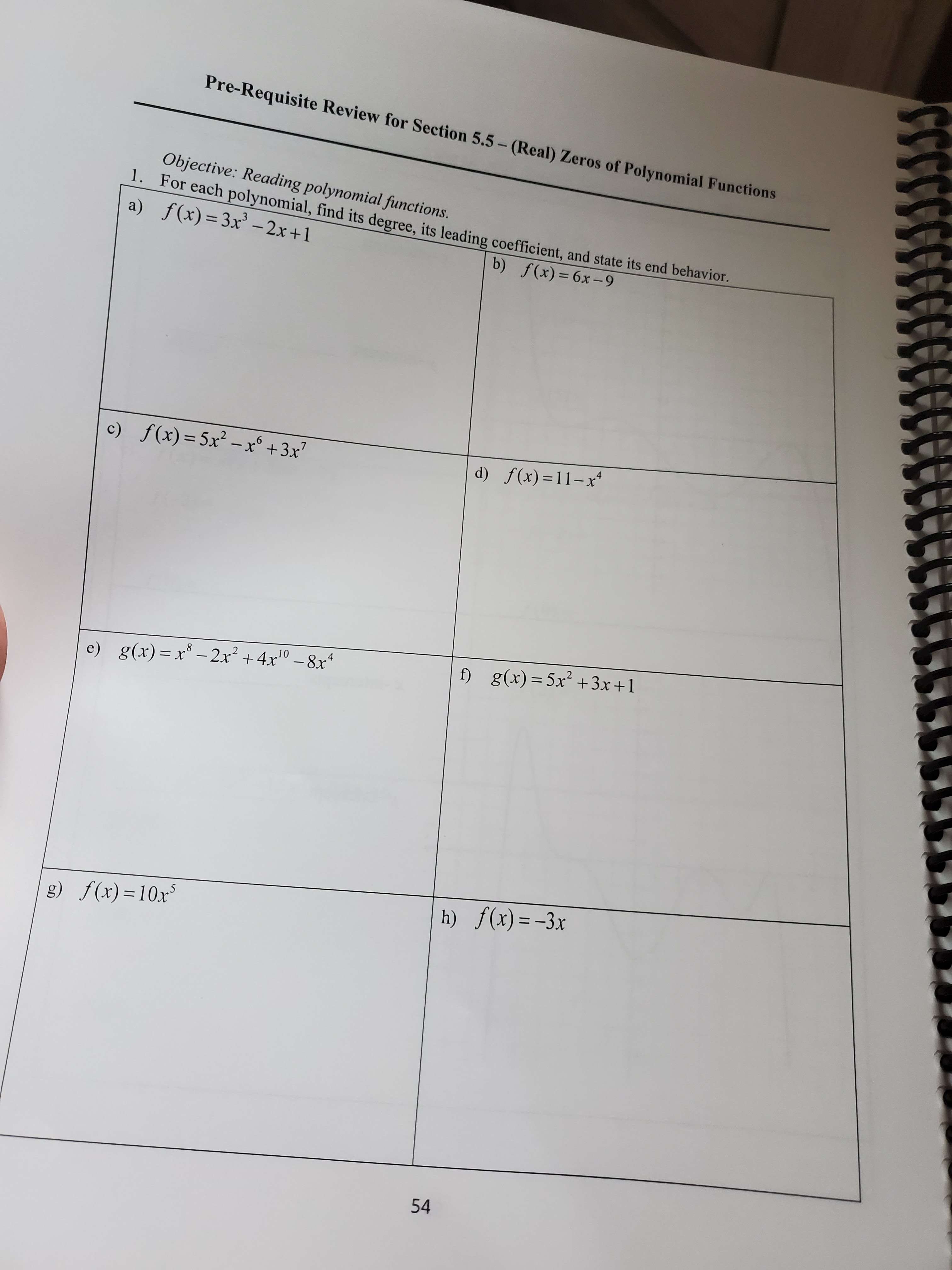
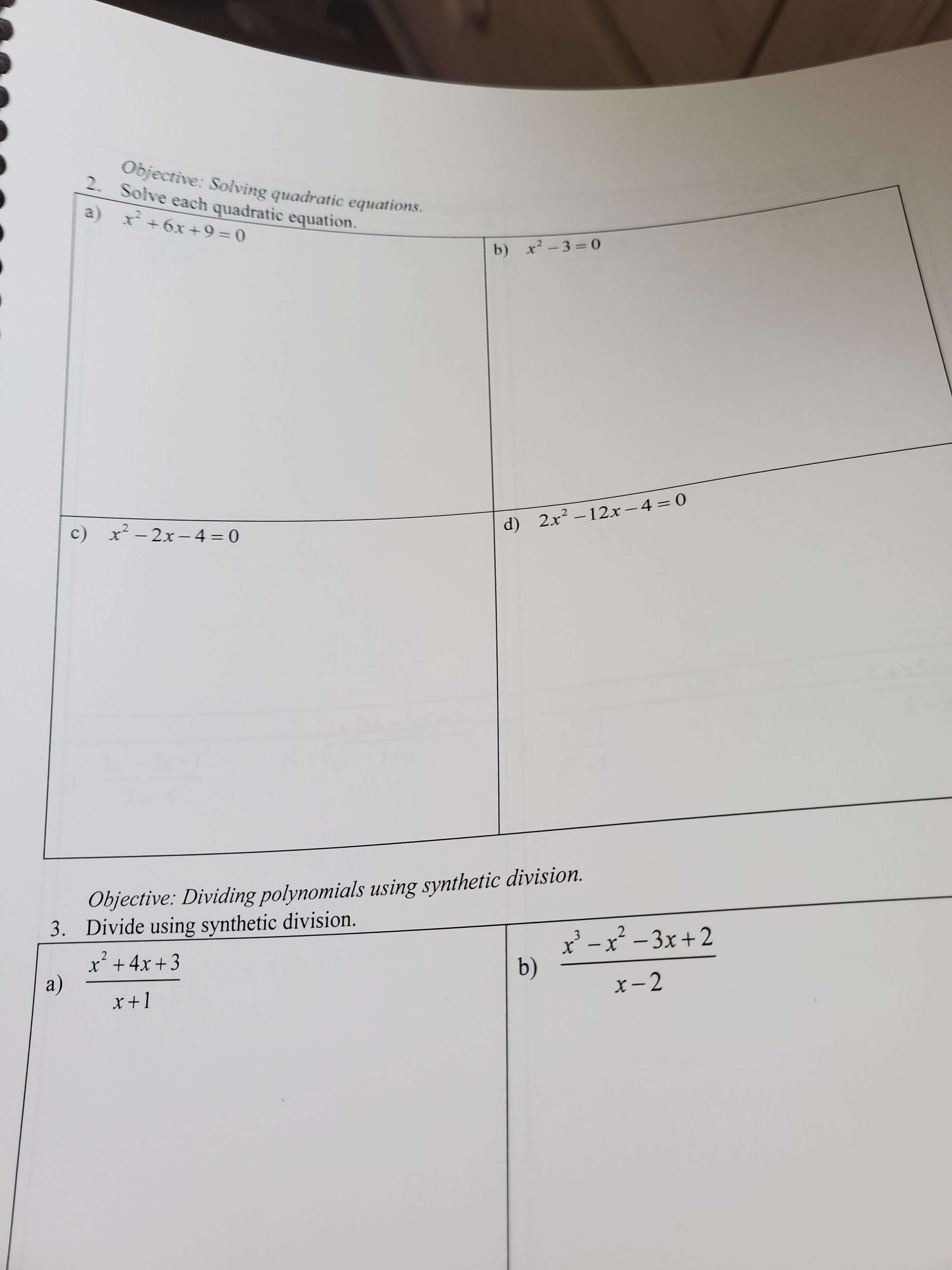
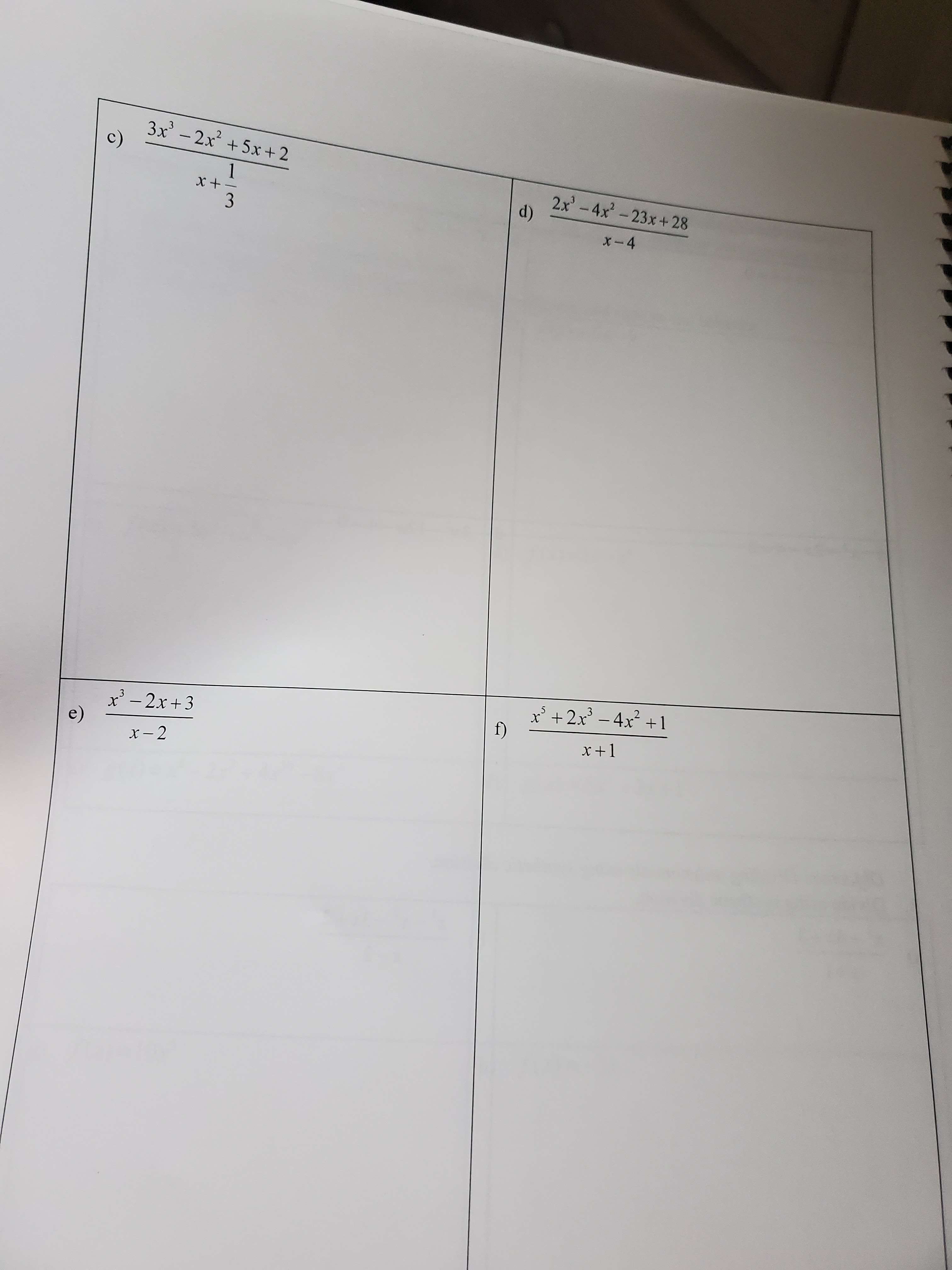
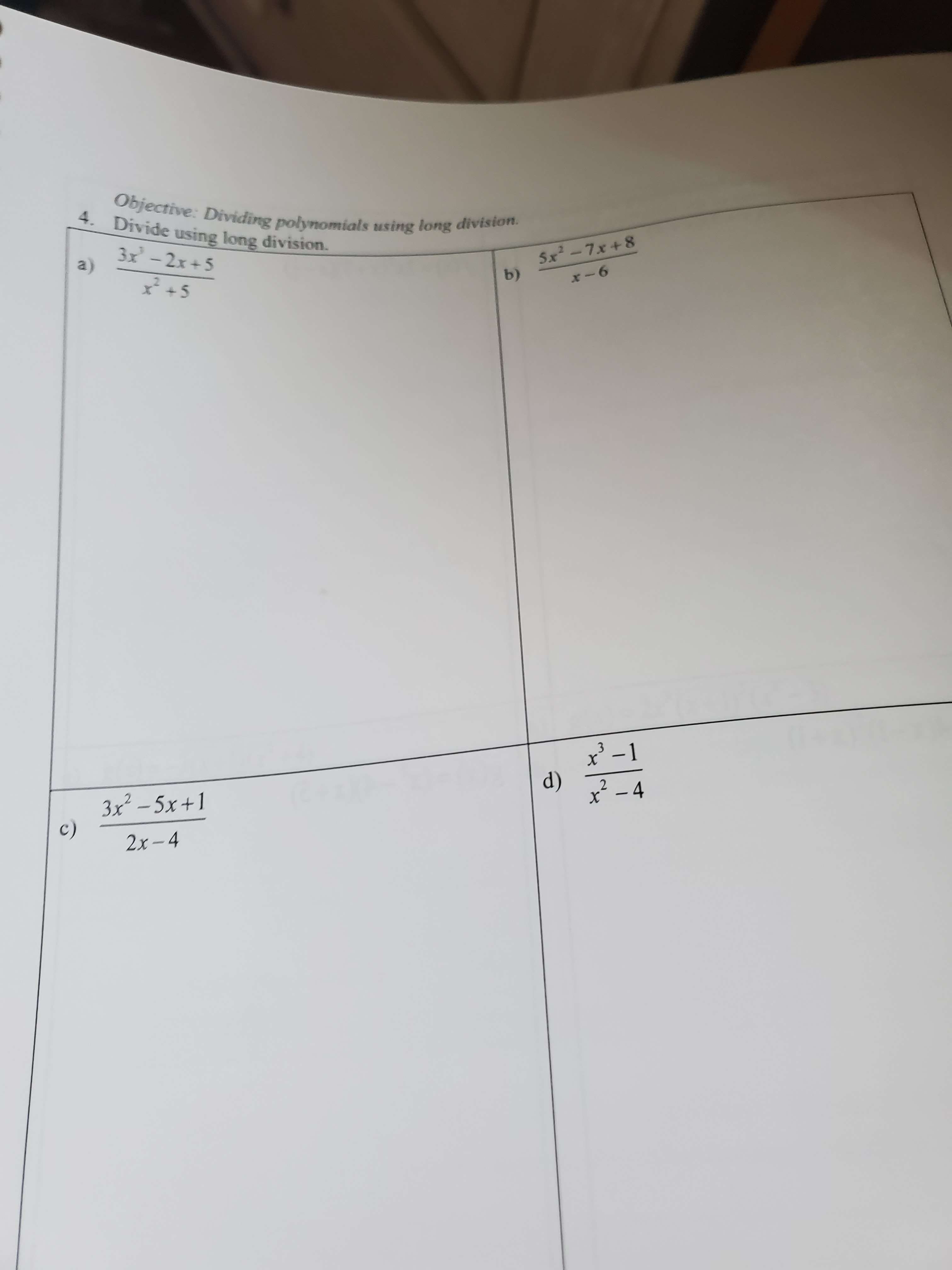
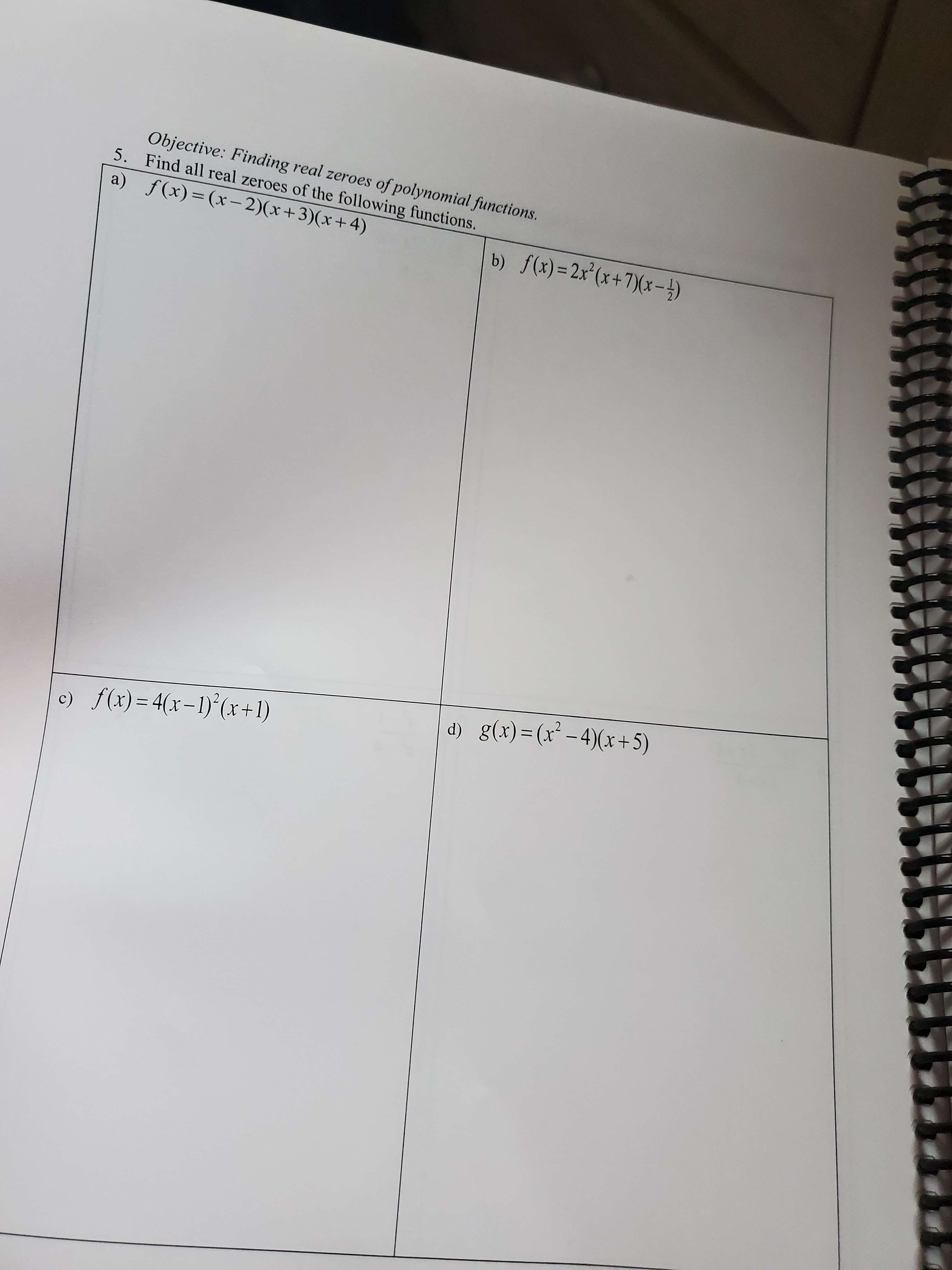
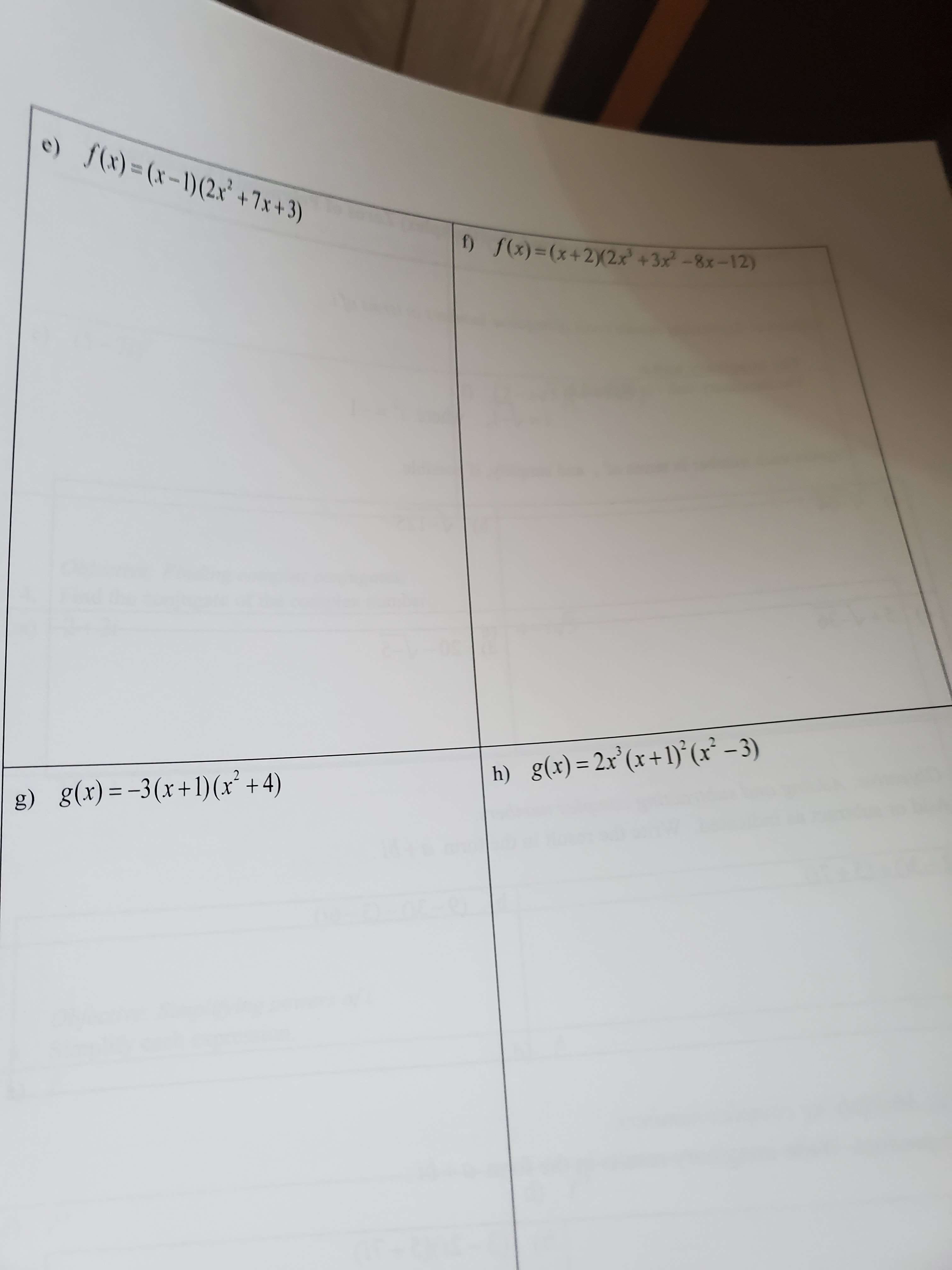
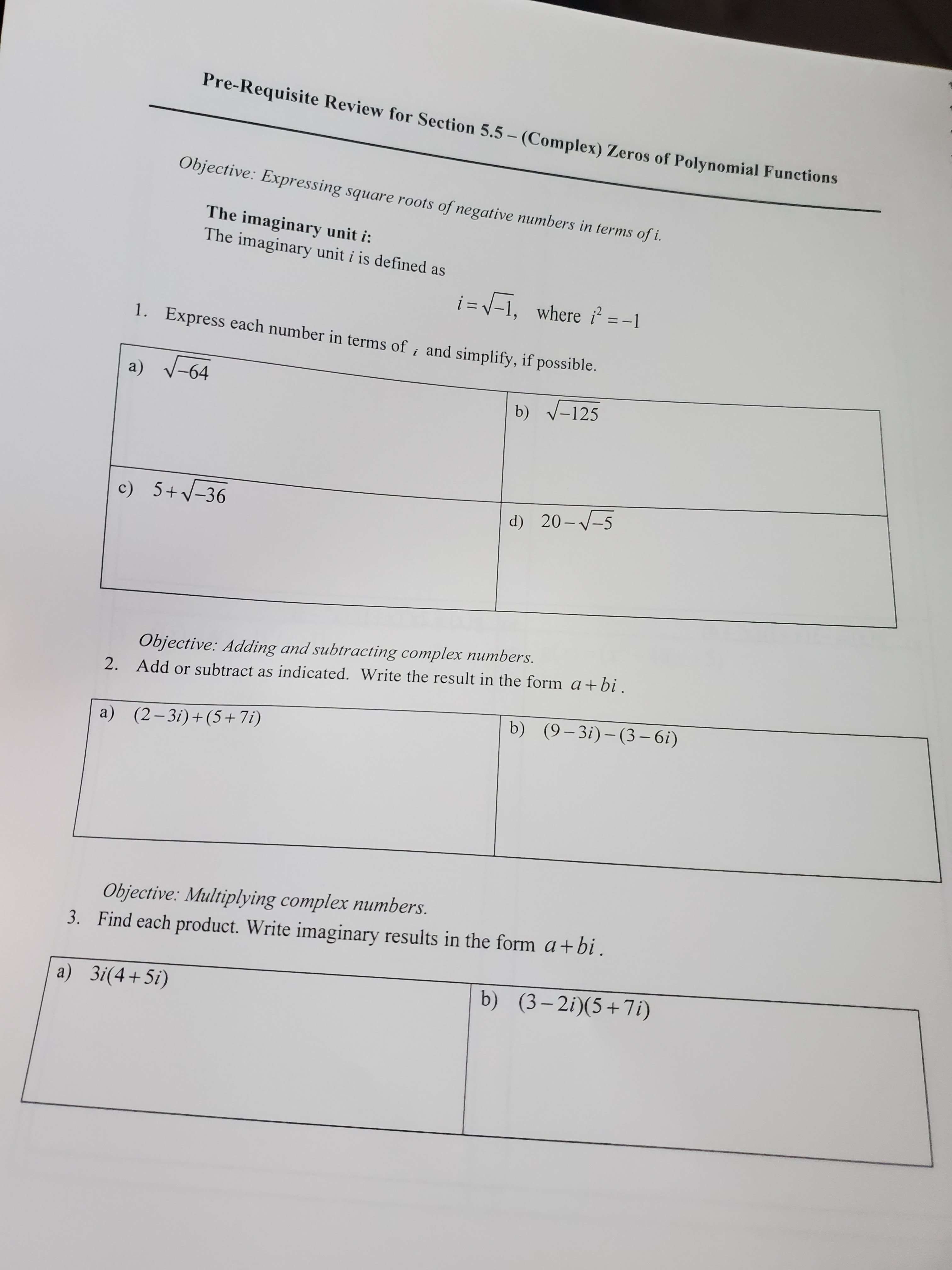
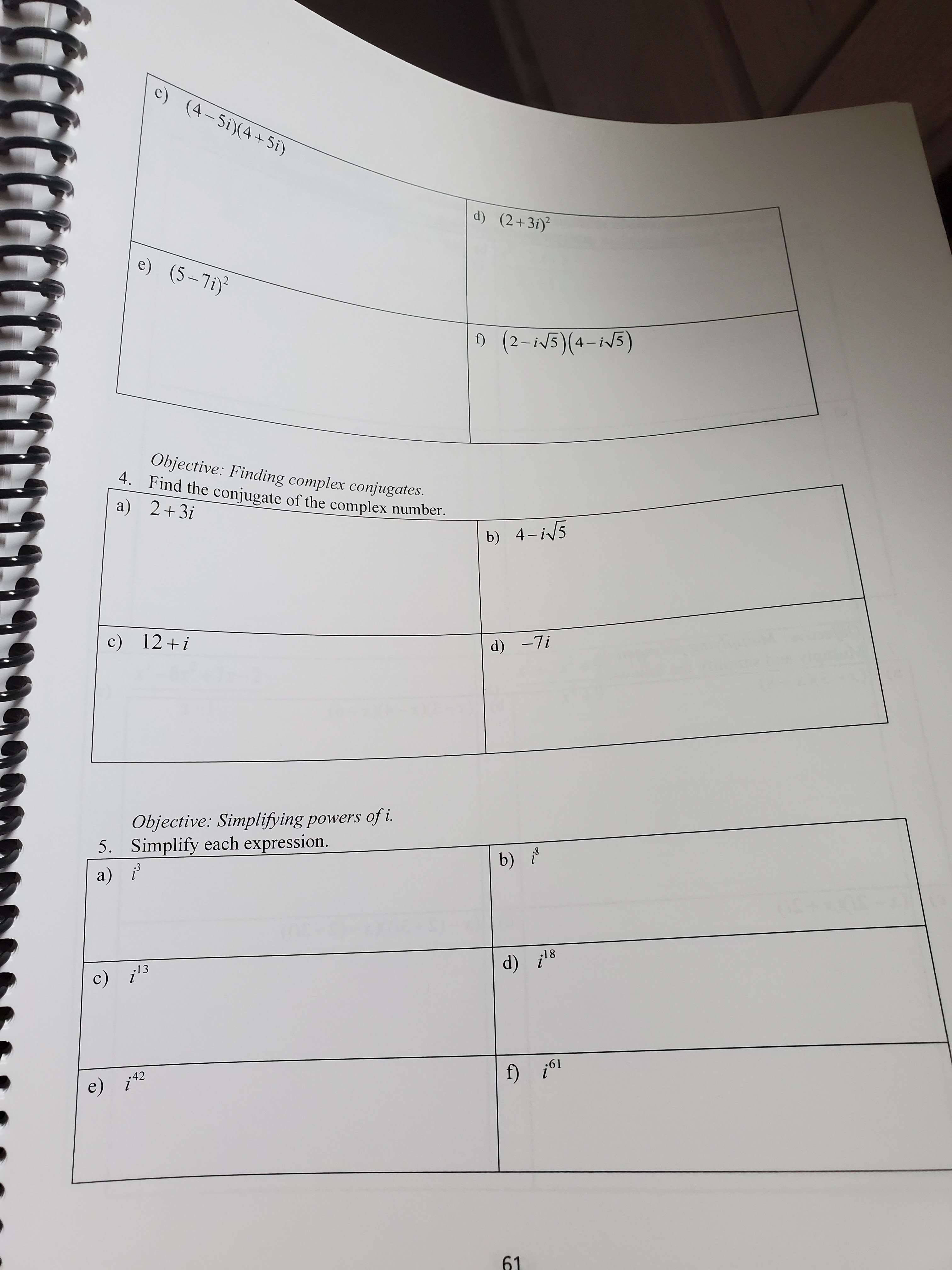
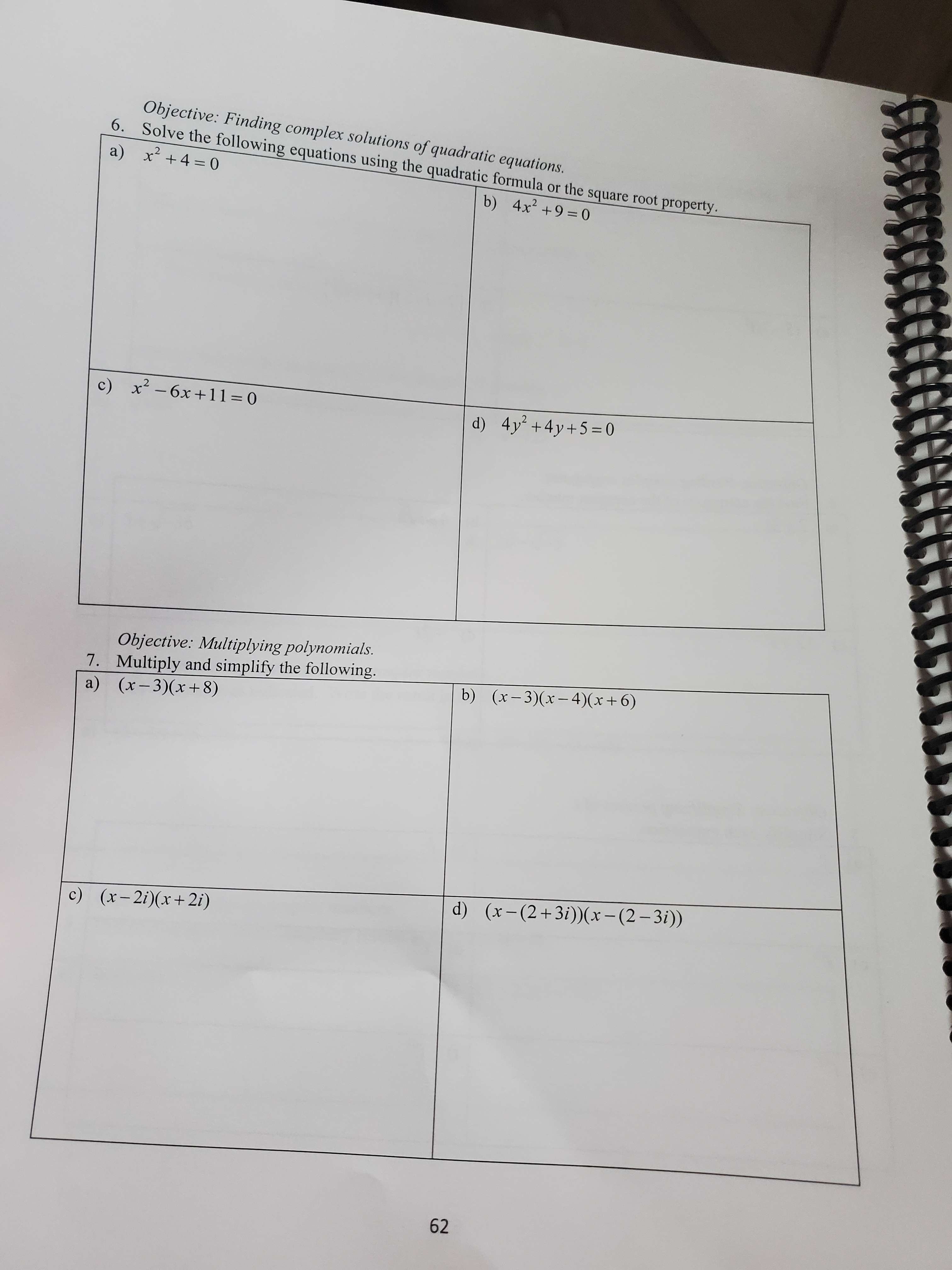
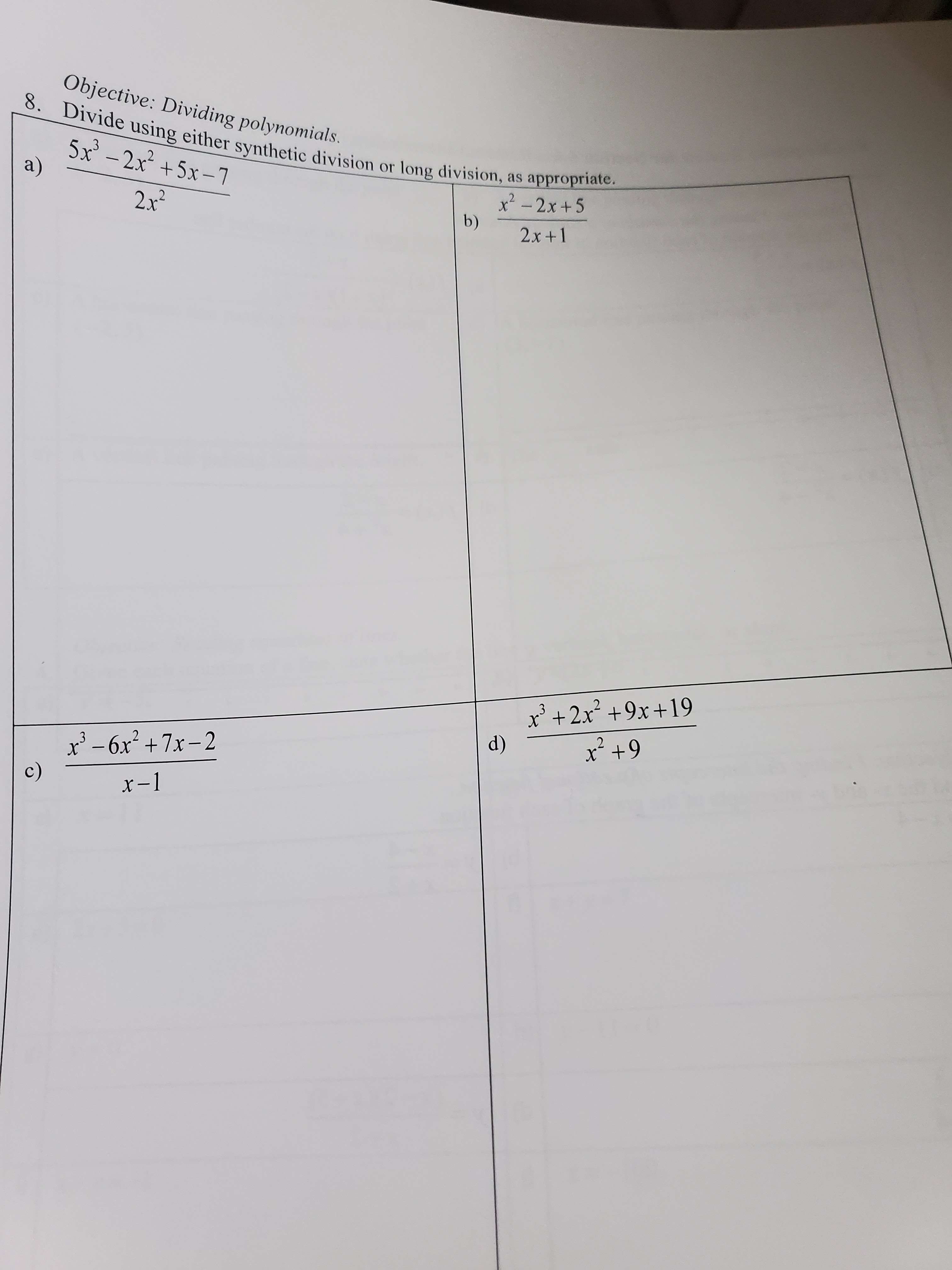
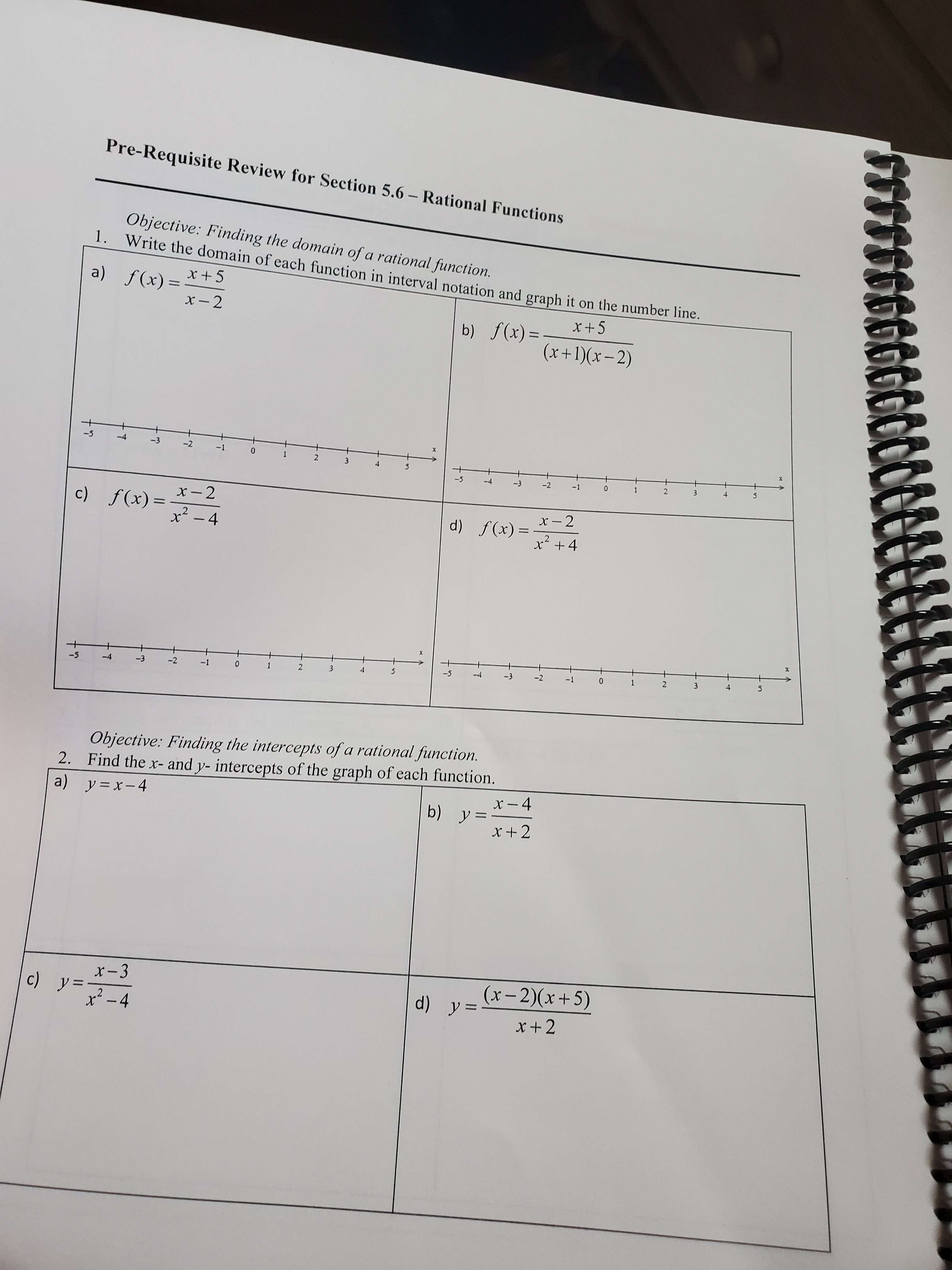
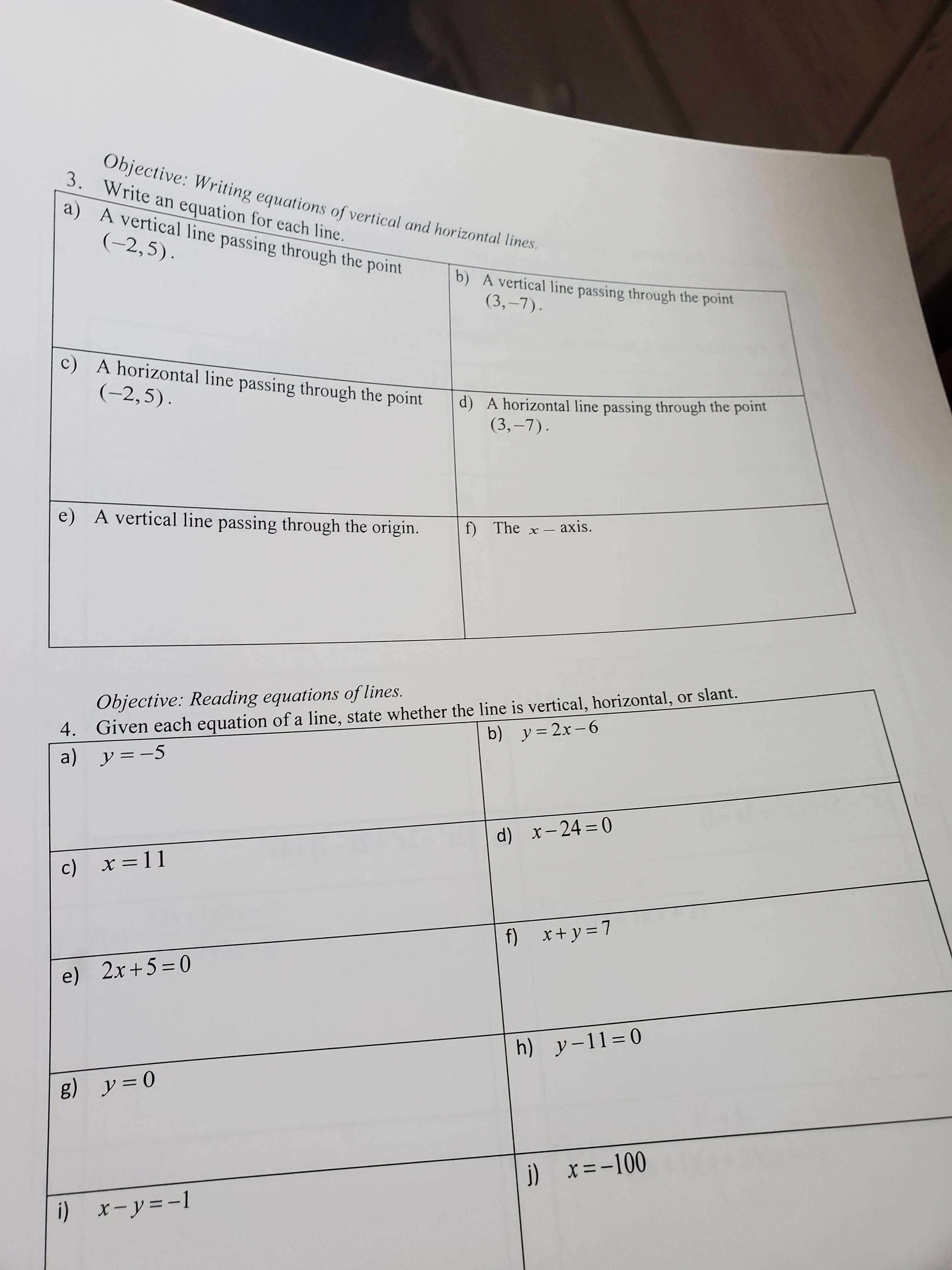
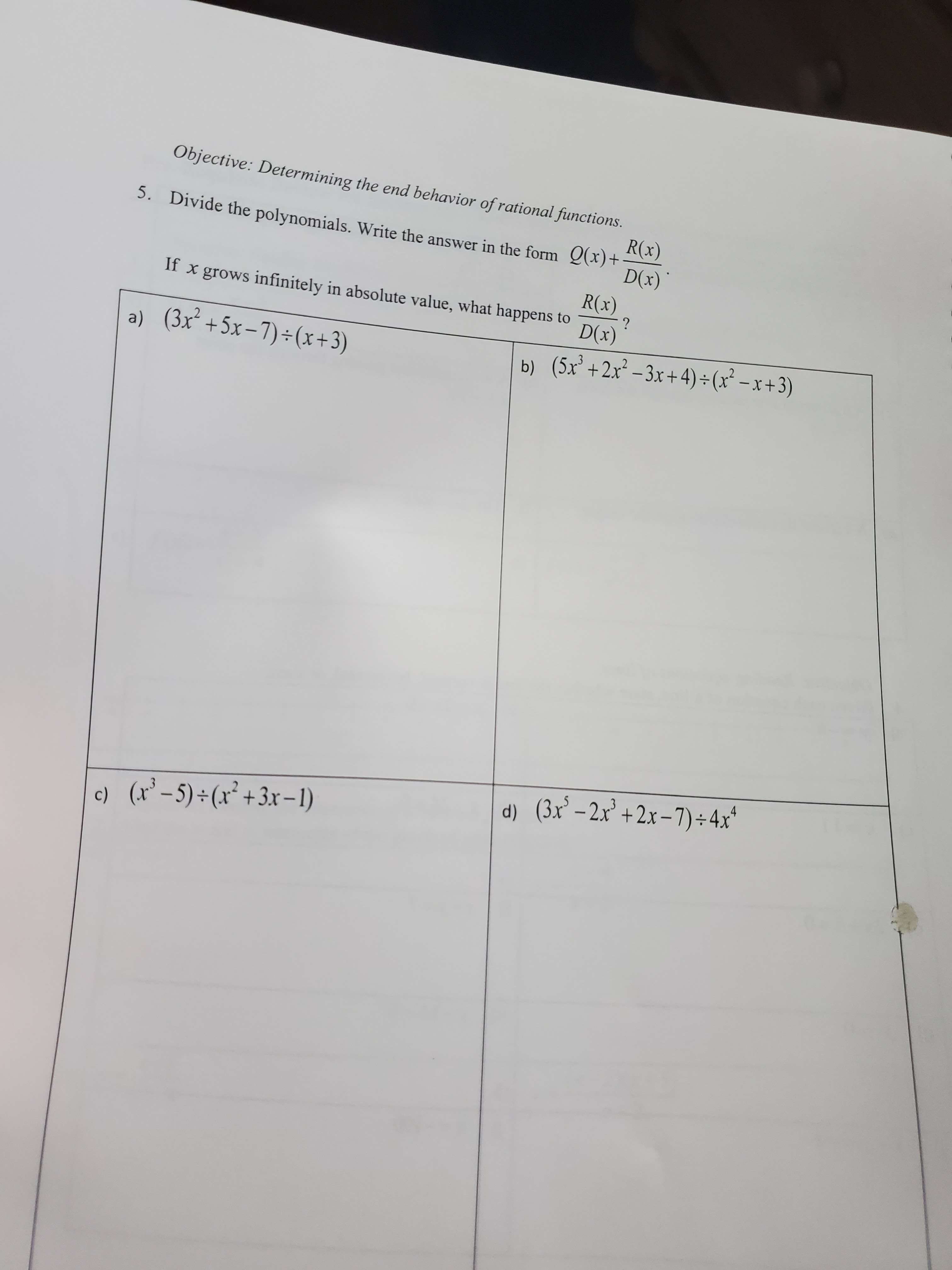
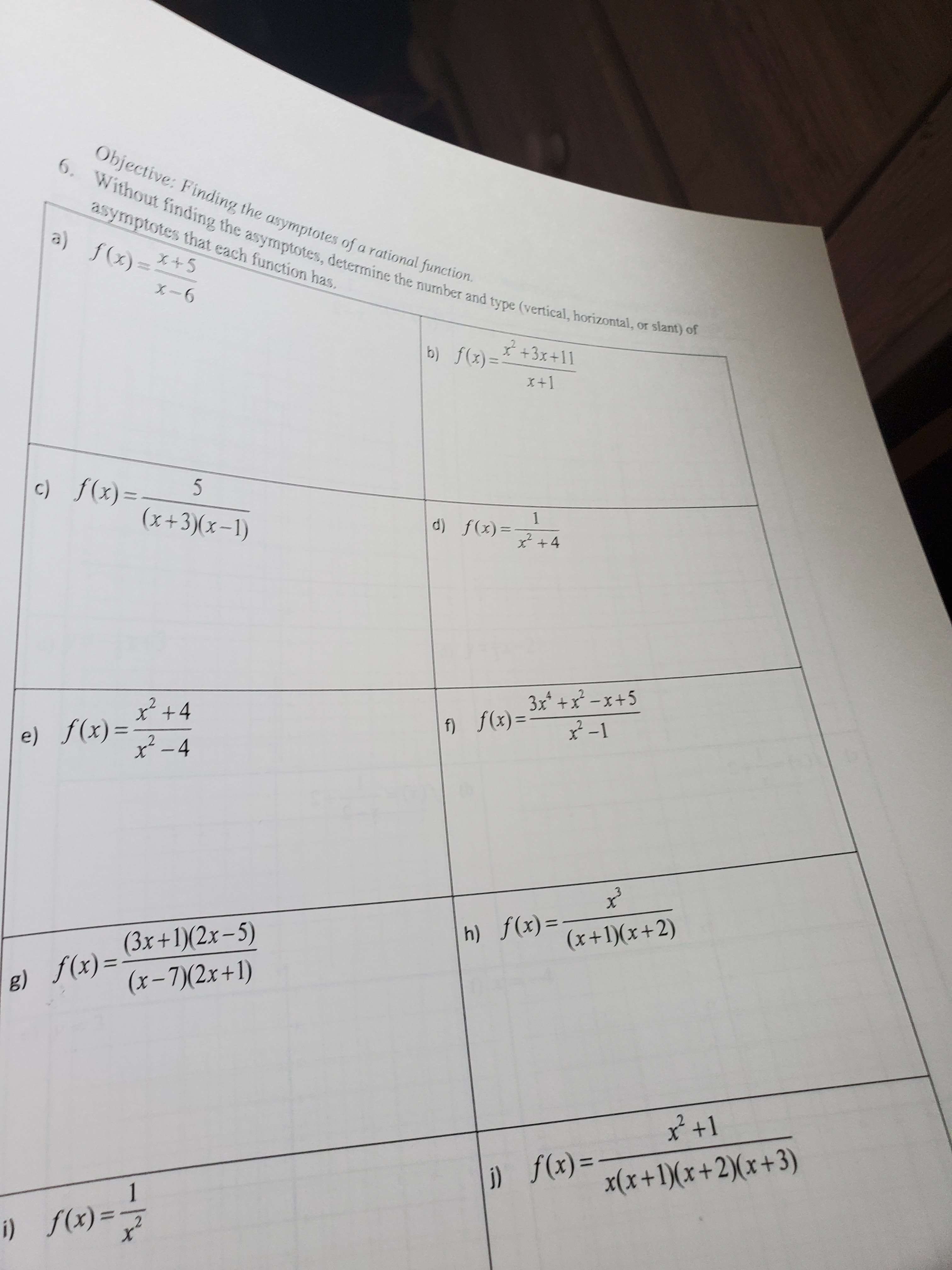
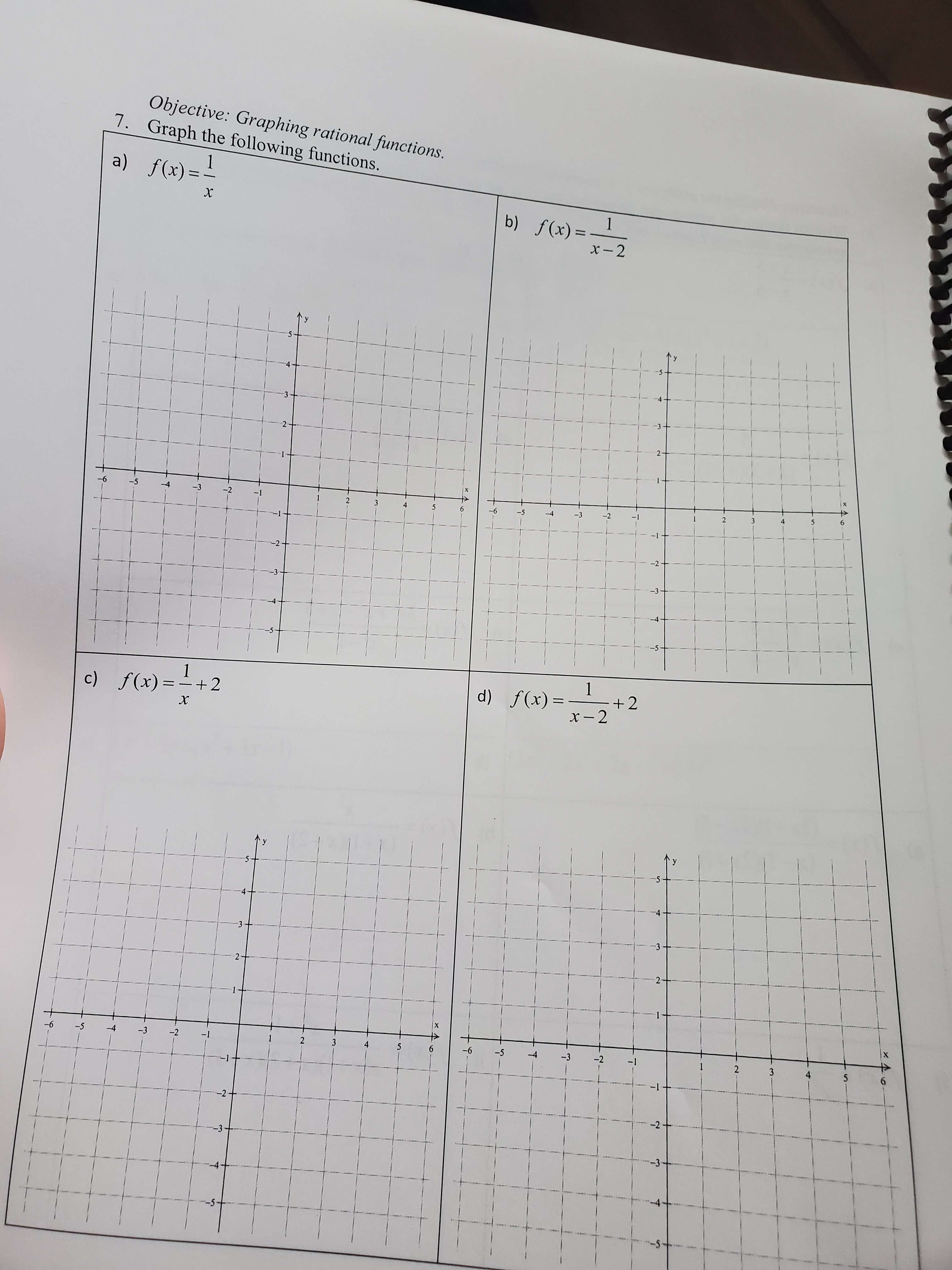
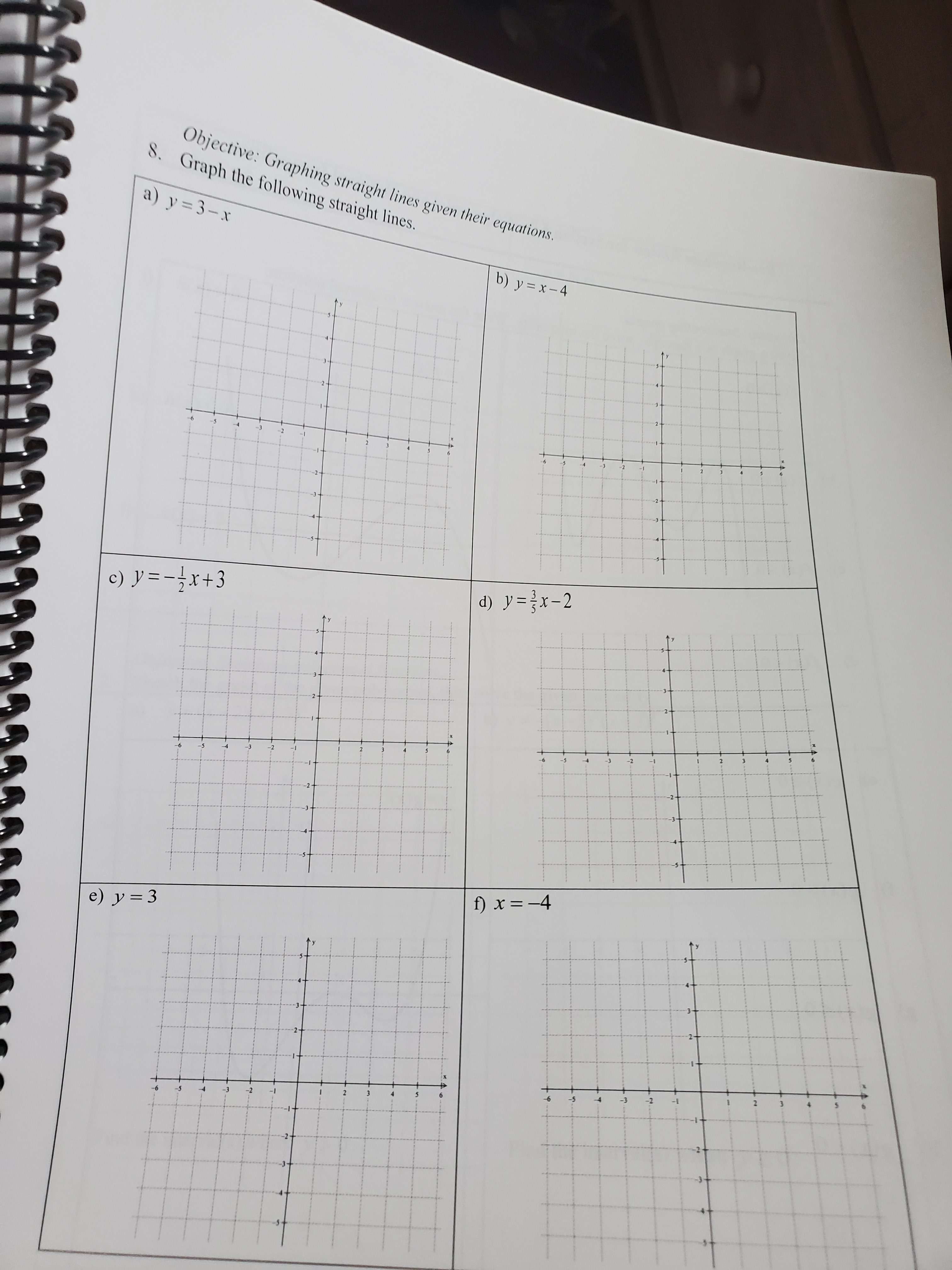
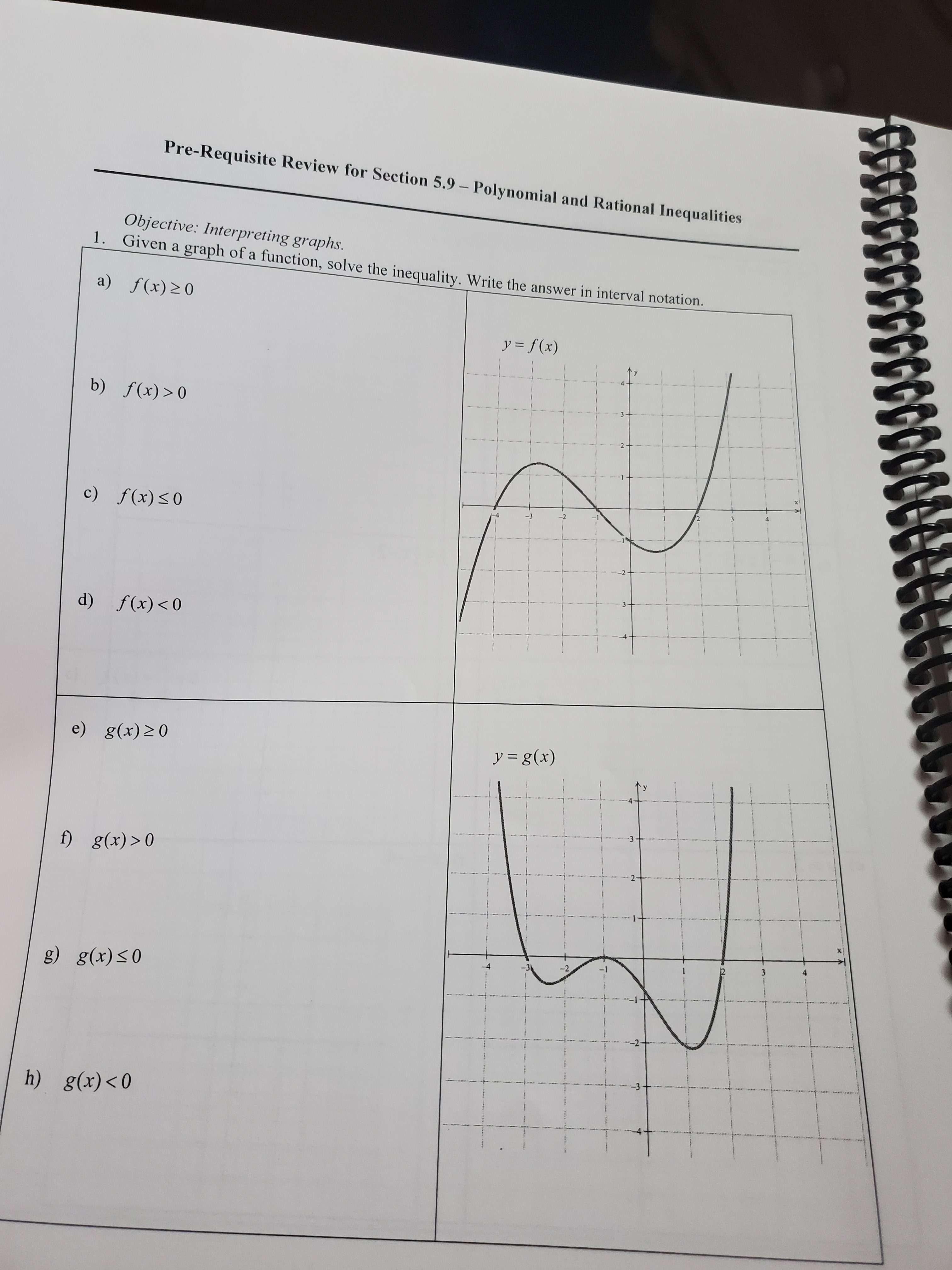
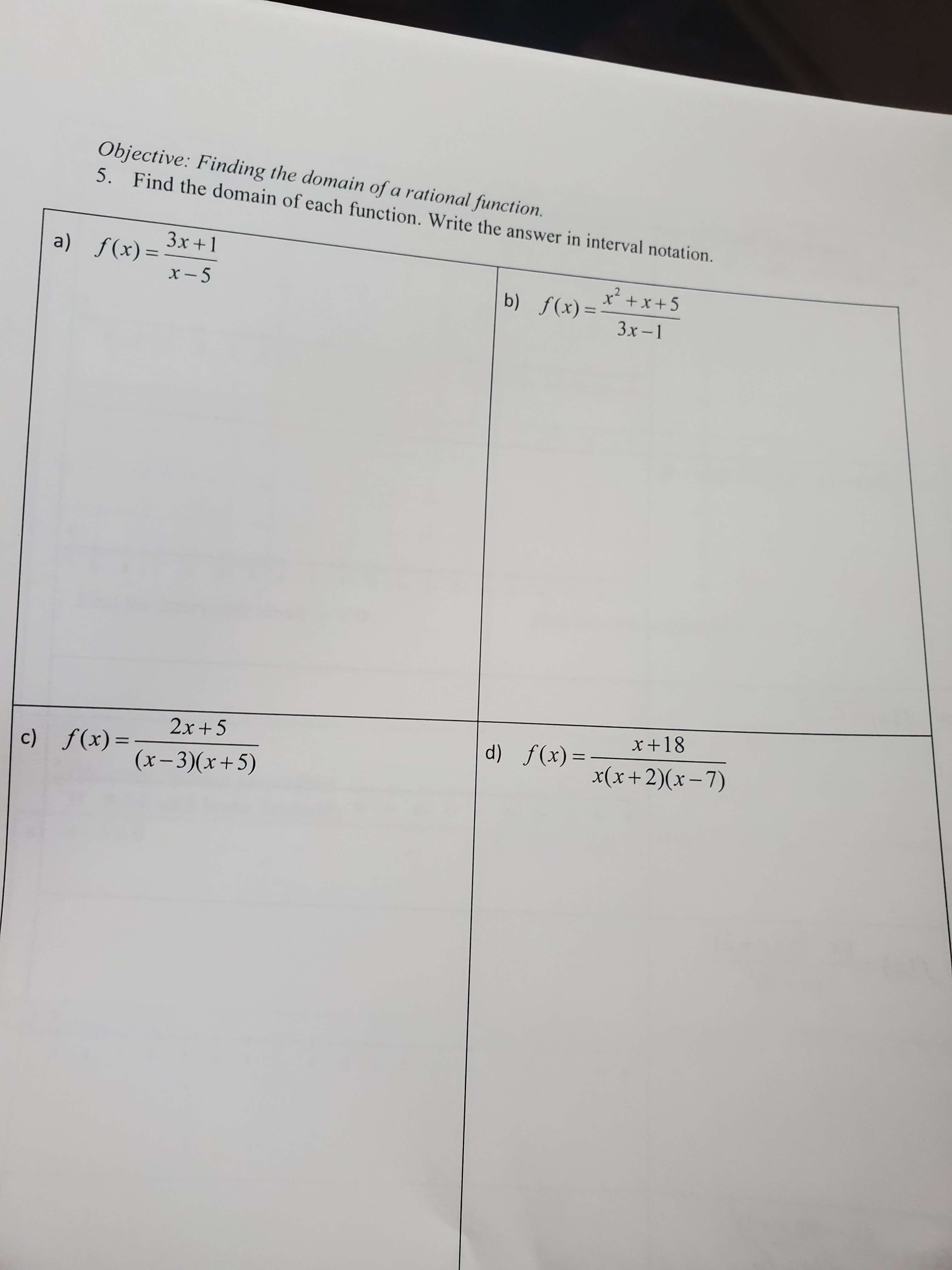
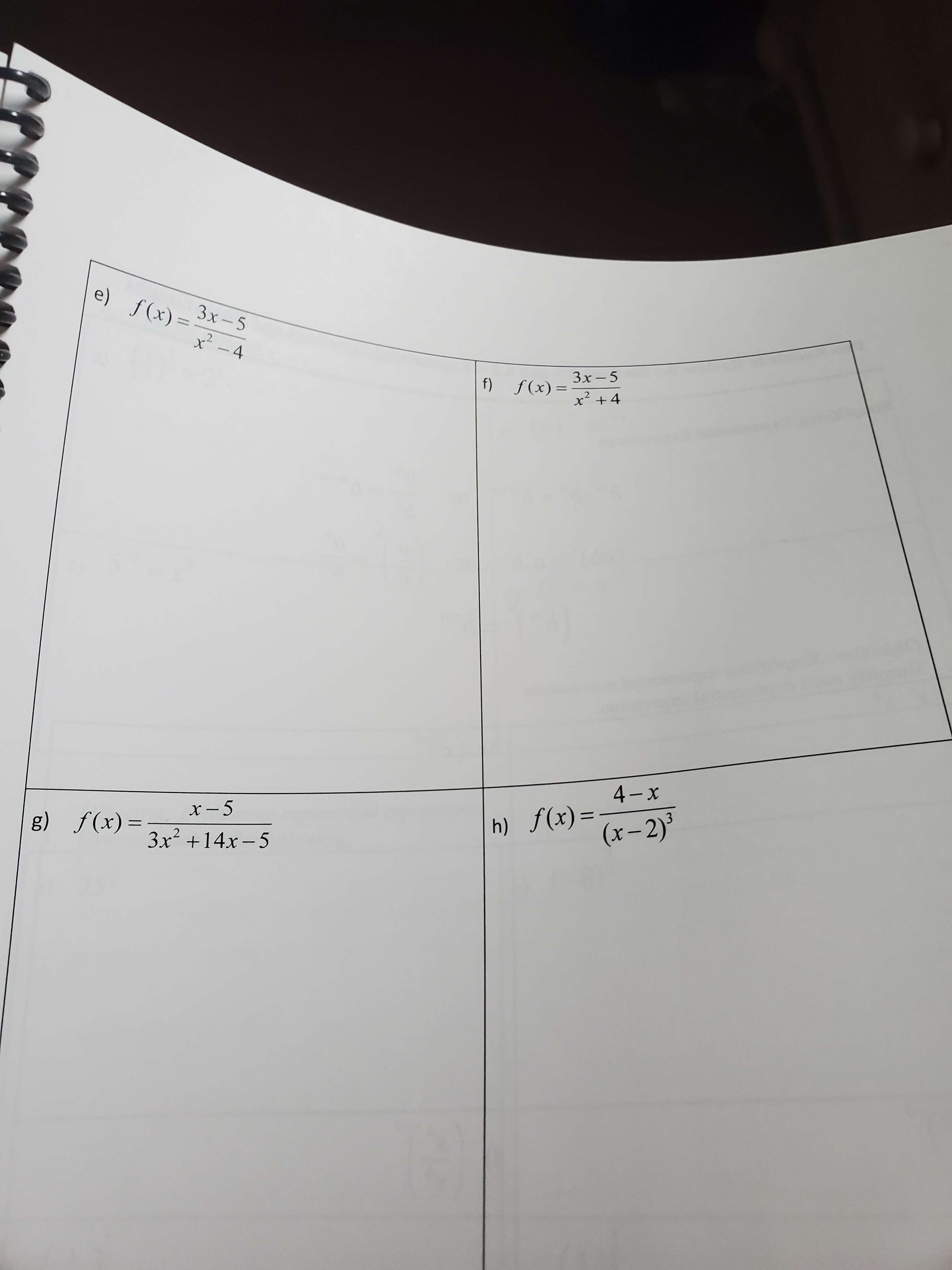
Pre-Requisite Review for Section 5.3 - Graphs of Polynomial Functions The Zero-Product Principle If the product of two algebraic expressions is zero, then at least one of the factors is equal to zero. If Ax B =0, then A = 0 or B = 0 Objective: Solving equations using the zero-product principle. 1. Solve each equation using the zero-product principle. b ) 6(3x - 2) (x+ 4) =0 a) 2x(x+3)(3x -2) = 0 d) x' - 36x =0 c ) ( x - 4) (x2 +5x+ 6)= 0e) 4(x +1)(2x -3)(x -6)=0 f) x3 - 9x2=0 g) 2x' + x2 - 8x - 4=0 h) x' + 3x2 + 2x=0 Objective: Finding the x- and y-intercepts of a function. Given the function, find the x- and y- intercepts. f(x) =(x-3)(x+2) b) f(x) = 4(x-5)(2x+5)2x3 + x2 -8x -4=0 x3+ 3x-+ 2x= 0 Objective: Finding the x- and y-intercepts of a function. 2. Given the function, find the x- and y- intercepts. a) f(x) = (x-3)(x+2) b) f (x) = 4(x-5)(2x+5) 43\f3 . Objective: Finding the end behavior of functions. Find the indicated function values. a) f (x ) =-x3+2x-4 f (-10) = as x - -oo, f (x) - f (10) = as x - 0o, f (x) - b ) f (x ) = x3 + 2x-4 f (-10) = as x - -co, f(x) - f (10) = as x -> co, f(x) -> c) f(x) =x*+2x2-4 f (-10) = as x - -co, f(x)- f (10) = as x -+ 0, f(x) - d) f(x) =-x*+2x-4 f(-10) = as x - -co, f(x ) - f (10) = as x -7 0o, f(x) ->Objective: Identifying the graph of a function. 4. Find the x- and y- intercepts of the functions, and then match each function with its graph. a ) f (x ) = x3+ 2x2 - x-2 b ) f (x ) = x4 - 4x2 c ) f (x ) = x2 - x-2 d) f(x ) =-x3-2x2 II. IV. III.Objective: Sketching quadratic equations. 5. For each quadratic equation, find its vertex, its y-intercept, and sketch a graph of the function. a) f (x ) = -2(x-4)2+4 by 5 ( 8 ) = (8+ 3 ) - 2 - s d) f(x) =-x+4x-1 c) f(x) = 2x2+4x-1 - 2Pre-Requisite Review for Section 5.4 - Dividing Polynomials The Formula for Factoring the Sum and the Difference of Two Cubes: A' + B' = ( A + B) ( A2 - AB + B2 ) A' - B' = ( A-B)( A2 + AB + B2 ) Objective: Factoring sums and differences of cubes. Factor the following expressions. a ) x - 27 b) 8x3 + 27 d) 2x5 -2x2 c) 3x5 + 24x2 f) 8 27 = x' -1 e) * + 00 1\f\f\f5 . Objective: Evaluating functions. a ) Evaluate each function at the given values of x . f ( x ) = x2+3x-6 f (0 ) = b ) f ( x ) = x3 - 7x2+1 f (- 1) = f (1 ) = f ( 2 ) = f ( 2 ) = f ( 5 ) = c) f (x ) = x(x+3)(x-7) d) f (x) = 4(x-2)2(3x+2) f (-3 ) = f ( - 2 ) = f (0 ) = f (0) = f ( 2 ) = f (7 ) = e) f(x) =x4 -5x3 -15x2+25x-6 f ( -3) = f (0) = f (1) =Objective: Finding intercept of a function from its graph. 6. Find the x - and y - intercepts of each function given its graph. a ) x -intercepts: y -intercept: b) x -intercepts: y -intercept: -3Pre-Requisite Review for Section 5.5 - (Real) Zeros of Polynomial Functions Objective: Reading polynomial functions. For each polynomial, find its degree, its leading coefficient, and state its end behavior. a ) f(x) =3x3 -2x+1 b ) f ( x ) = 6 x - 9 c) f(x) =5x2 -x6+3x d) f (x ) = 11-x4 f) 8(x) =5x2+3x+1 e) g(x) =x -2x2 +4x10 -8x4 h ) f (x ) = - 3x g) f(x) = 10x5 54Objective: Solving quadratic equations. a) Solve each quadratic equation. x3 + 6x +9=0 b) x2- 3=0 )x2 - 2x - 4=0 d) 2x2 -12x-4=0 Objective: Dividing polynomials using synthetic division. 3. Divide using synthetic division. * + 4x+3 x - x - 3x+2 a) b ) x+1 x - 2\fObjective: Dividing polynomials using long division. Divide using long division. a) 3x - 2x+ 5 5x2 - 7x+8 x- + 5 b) x - 6 L 3x2- 5x+1 d) c) - 4 2x -4Objective: Finding real zeroes of polynomial functions. 5. Find all real zeroes of the following functions. a ) f (x ) = (x - 2) (x+ 3) ( x+ 4 ) b) f (x) = 2x2 ( x + 7) (xx-2) d) g(x) = (x-4)(x+5) c) f(x) = 4(x-1)?(x+1)\fPre-Requisite Review for Section 5.5 - (Complex) Zeros of Polynomial Functions Objective: Expressing square roots of negative numbers in terms of i. The imaginary unit i: The imaginary unit i is defined as i= V-1, where i? = -1 1. Express each number in terms of ; and simplify, if possible. V- 64 b ) V - 125 c) 5 +V- 36 d) 20- V-5 Objective: Adding and subtracting complex numbers. 2. Add or subtract as indicated. Write the result in the form a + bi. a) (2-31) +(5+7i) b) (9-31 ) - (3-61) Objective: Multiplying complex numbers. 3. Find each product. Write imaginary results in the form a + bi. a) 3i(4+ 5i) b ) (3 - 21) (5 + 7i )c) (4-50) (4+ 5i) d) (2+ 32 )2 e ) ( 5 - 7i )2 1) (2- 175) (4- 175) Objective: Finding complex conjugates. 4. Find the conjugate of the complex number. a) 2+3i b ) 4 - 17 5 c) 12+i d) -Ti Objective: Simplifying powers of i. 5 . Simplify each expression. a) b ) C) 13 d) i18 ;61 e) 142\f8. Objective: Dividing polynomials. Divide using either synthetic division or long division, as appropriate. a 5x -2x2 +5x-7 2x2 x2 -2x +5 b) 2x +1 x' +2x-+9x+19 x' - 6x- + 7x-2 d) x- +9 C ) x-1Pre-Requisite Review for Section 5.6 - Rational Functions Objective: Finding the domain of a rational function. a ) f (x ) = x + 5 Write the domain of each function in interval notation and graph it on the number line. x - 2 b) f (x ) =- * +5 (x + 1)(x-2) 4 - 3 -2 -1 2 c) f(x ) = X - 2 2 - 4 d ) f ( x ) = _ x - 2 x 2 + 4 - 2 -2 Objective: Finding the intercepts of a rational function. 2. Find the x- and y- intercepts of the graph of each function. a) y = x-4 b) y =- x - 4 x +2 c) y= - x- 3 X 2 - 4 d) y=- (x- 2)(x+5) x+23 . a ) Objective: Writing equations of vertical and horizontal lines. Write an equation for each line. A vertical line passing through the point (-2, 5). b) A vertical line passing through the point ( 3 , -7 ) . c) A horizontal line passing through the point (-2, 5). d) A horizontal line passing through the point ( 3 , - 7 ) e) A vertical line passing through the origin. f) The x - axis. Objective: Reading equations of lines. Given each equation of a line, state whether the line is vertical, horizontal, or slant. 4 . b ) y = 2x- 6 a) y =-5 d) x- 24= 0 c) x=11 f) xty=7 e) 2x +5=0 h) y- 11=0 g) y=0 j) x=-100 i) x- y=-1Objective: Determining the end behavior of rational functions. 5. Divide the polynomials. Write the answer in the form Q(x)+- R(x) D(x) R (x ) If x grows infinitely in absolute value, what happens to D(x) a) (3x +5x-7) : (x+3) b ) (5x + 2x2 - 3x+4) : (x2-x+3) d) (3x - 2x +2x-7): 4x c ) (x - 5 ) + (x2+3x-1)Objective: Finding the asymptotes of a rational function. asymptotes that each function has. a) f (x ) =x+5 6. Without finding the asymptotes, determine the number and type (vertical, horizontal, or slant) of 3- 6 b ) f ( x ) = - * + 3x+11 x+1 c) f ( x) =- 5 (x+ 3)(x-1) d) f ( x ) = - x2+ 4 x- + 4 e) f(x) = 1) f ( x) =3x +x- x+5 x 2 - 4 X - 1 x3 (3x+ 1)(2x-5) h ) f (x ) = (x+ 1)(x+2) 8) f (x ) = (x- 7)(2x+1) x + 1 i) f(x) = x(x+1)(x+2)(x+3) - 1) f ( x ) = - 7 2\fObjective: Graphing straight lines given their equations. 8. Graph the following straight lines. a) y= 3 -x b ) y = x - 4 d) y = = x- 2 c ) y = - -x+ 3 f) x = -4 e) y = 3 + :Pre-Requisite Review for Section 5.9 - Polynomial and Rational Inequalities Objective: Interpreting graphs. Given a graph of a function, solve the inequality. Write the answer in interval notation. a ) f (x ) 20 y = f(x) b ) f (x ) > 0 c) f (x )so d) f (x ) 0 8 8 (x) 50 h ) 8(x)
Step by Step Solution
There are 3 Steps involved in it
1 Expert Approved Answer
Step: 1 Unlock
Question Has Been Solved by an Expert!
Get step-by-step solutions from verified subject matter experts
Step: 2 Unlock
Step: 3 Unlock
Students Have Also Explored These Related Mathematics Questions!









 Study Help