







Question: In relation to the case study: Alliance Healthcare Network: Using a Balanced Scorecard to Motivate Change a) . Discuss how a balanced scorecard could be
In relation to the case study: Alliance Healthcare Network: Using a Balanced Scorecard to Motivate Change
a) . Discuss how a balanced scorecard could be used to motivate the physicians to use the computerized physician order entry (CPOE) system.
b) . Explain the process you would use to develop a balanced scorecard for the physician group.
c) . Prepare a sample scorecard for the physician group.
d) . Create a strategy map to show how the learning and growth measure(s) you developed in part c are related to the other three balanced scorecard perspectives (process, customer, and financial).
e) . Discuss in depth how the company strategy, objectives, and measures you developed for the physician group are linked together.
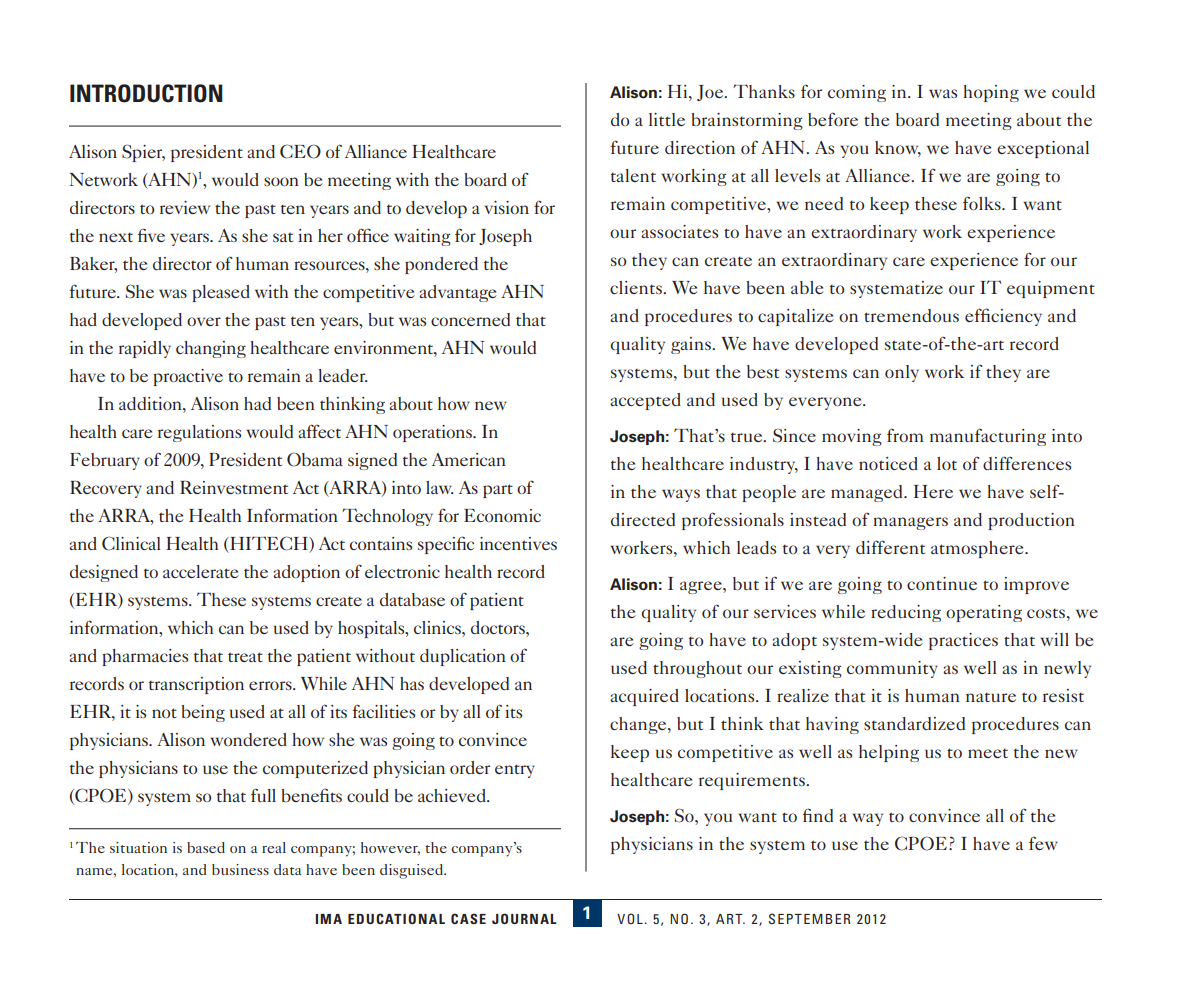
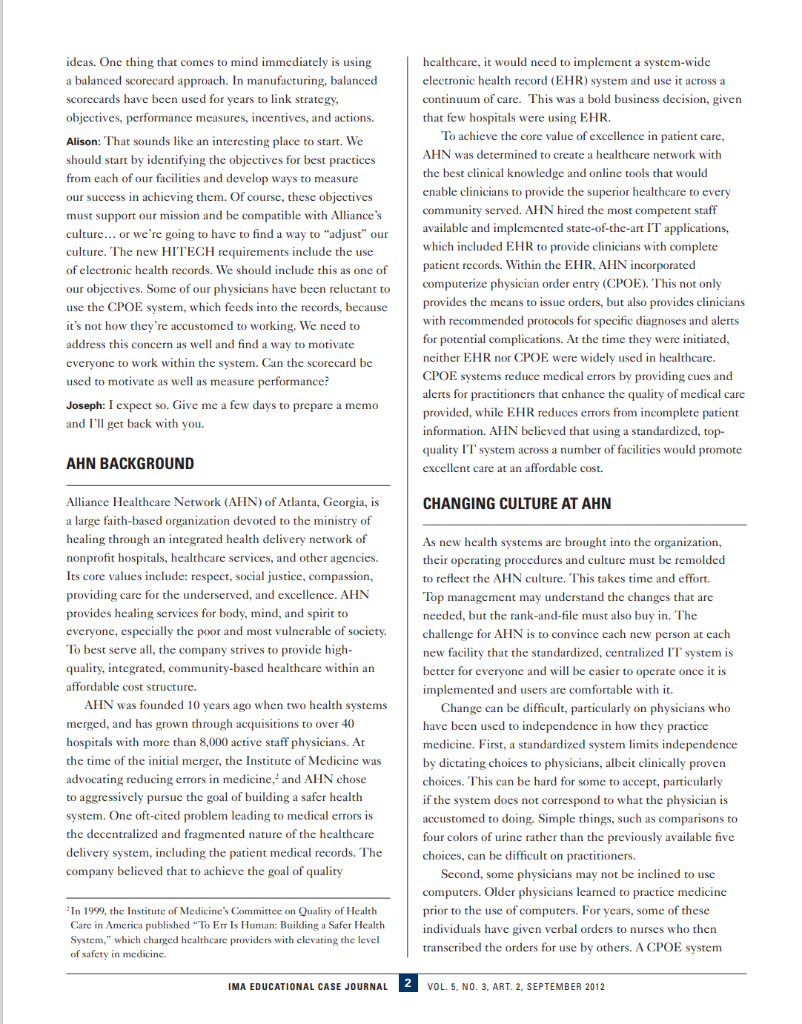
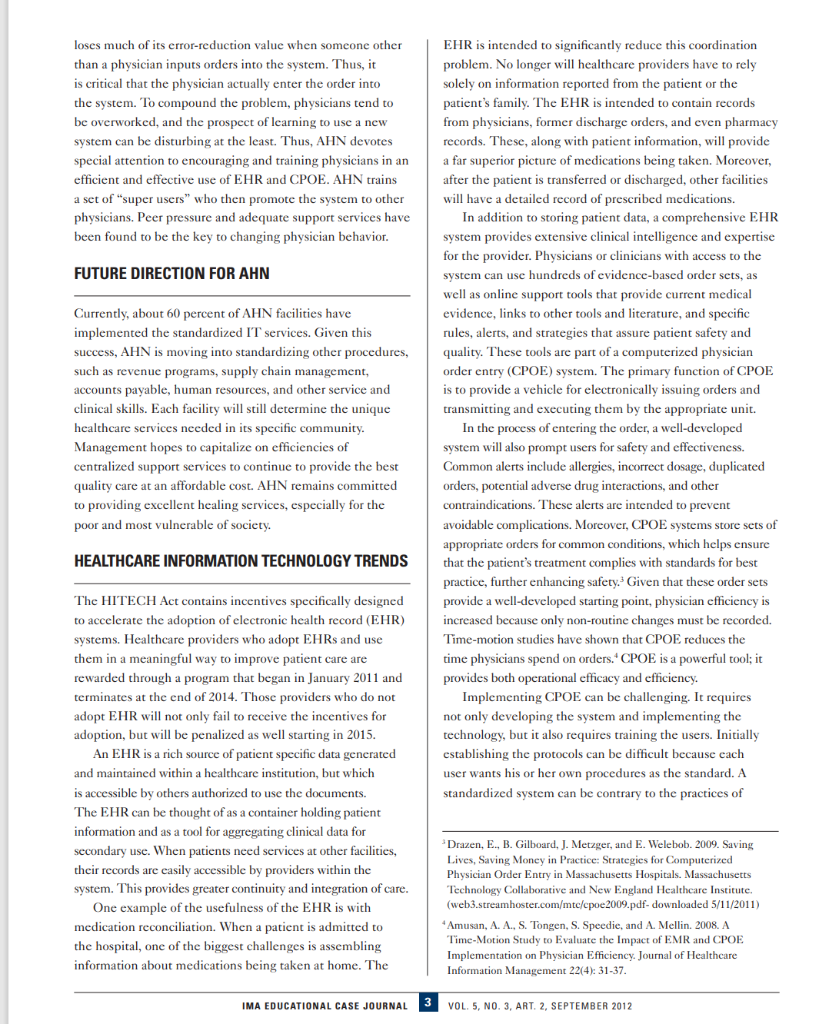
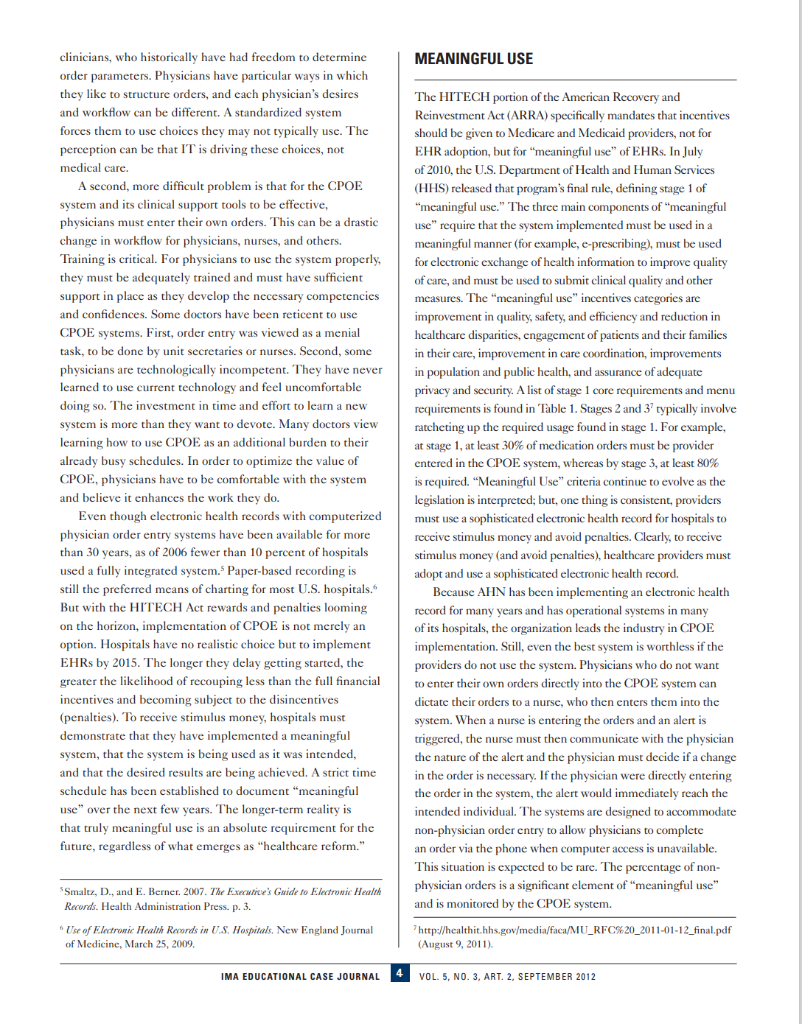
INTRODUCTION Alison Spier, president and CEO of Alliance Healthcare Network (AHN)', would soon be meeting with the board of directors to review the past ten years and to develop a vision for the next five years. As she sat in her office waiting for Joseph Baker, the director of human resources, she pondered the future. She was pleased with the competitive advantage AHN had developed over the past ten years, but was concerned that in the rapidly changing healthcare environment, AHN would have to be proactive to remain a leader. In addition, Alison had been thinking about how new health care regulations would affect AHN operations. In February of 2009, President Obama signed the American Recovery and Reinvestment Act (ARRA) into law. As part of the ARRA, the Health Information Technology for Economic and Clinical Health (HITECH) Act contains specific incentives designed to accelerate the adoption of electronic health record (EHR) systems. These systems create a database of patient information, which can be used by hospitals, clinics, doctors, and pharmacies that treat the patient without duplication of records or transcription errors. While AHN has developed an EHR, it is not being used at all of its facilities or by all of its physicians. Alison wondered how she was going to convince the physicians to use the computerized physician order entry (CPOE) system so that full benefits could be achieved. The situation is based on a real company; however, the company's name, location, and business data have been disguised. IMA EDUCATIONAL CASE JOURNAL Alison: Hi, Joe. Thanks for coming in. I was hoping we could do a little brainstorming before the board meeting about the future direction of AHN. As you know, we have exceptional talent working at all levels at Alliance. If we are going to remain competitive, we need to keep these folks. I want our associates to have an extraordinary work experience so they can create an extraordinary care experience for our clients. We have been able to systematize our IT equipment and procedures to capitalize on tremendous efficiency and quality gains. We have developed state-of-the-art record systems, but the best systems can only work if they are accepted and used by everyone. Joseph: That's true. Since moving from manufacturing into the healthcare industry, I have noticed a lot of differences in the ways that people are managed. Here we have self- directed professionals instead of managers and production workers, which leads to a very different atmosphere. Alison: I agree, but if we are going to continue to improve the quality of our services while reducing operating costs, we are going to have to adopt system-wide practices that will be used throughout our existing community as well as in newly acquired locations. I realize that it is human nature to resist change, but I think that having standardized procedures can keep us competitive as well as helping us to meet the new healthcare requirements. Joseph: So, you want to find a way to convince all of the physicians in the system to use the CPOE? I have a few VOL. 5, NO. 3, ART. 2, SEPTEMBER 2012 ideas. One thing that comes to mind immediately is using a balanced scorecard approach. In manufacturing, balanced scorecards have been used for years to link strategy, objectives, performance measures, incentives, and actions. Alison: That sounds like an interesting place to start. We should start by identifying the objectives for best practices from each of our facilities and develop ways to measure our success in achieving them. Of course, these objectives must support our mission and be compatible with Alliance's culture... or we're going to have to find a way to "adjust" our culture. The new HITECH requirements include the use of electronic health records. We should include this as one of our objectives. Some of our physicians have been reluctant to use the CPOE system, which feeds into the records, because it's not how they're accustomed to working. We need to address this concern as well and find a way to motivate everyone to work within the system. Can the scorecard be used to motivate as well as measure performance? Joseph: I expect so. Give me a few days to prepare a memo and I'll get back with you. AHN BACKGROUND Alliance Healthcare Network (AHN) of Atlanta, Georgia, is a large faith-based organization devoted to the ministry of healing through an integrated health delivery network of nonprofit hospitals, healthcare services, and other agencies. Its core values include: respect, social justice, compassion, providing care for the underserved, and excellence. AHN provides healing services for body, mind, and spirit to everyone, especially the poor and most vulnerable of society. To best serve all, the company strives to provide high- quality, integrated, community-based healthcare within an affordable cost structure. AHN was founded 10 years ago when two health systems merged, and has grown through acquisitions to over 40 hospitals with more than 8,000 active staff physicians. At the time of the initial merger, the Institute of Medicine was advocating reducing errors in medicine, and AHN chose to aggressively pursue the goal of building a safer health system. One oft-cited problem leading to medical errors is the decentralized and fragmented nature of the healthcare delivery system, including the patient medical records. The company believed that to achieve the goal of quality. In 1999, the Institute of Medicine's Committee on Quality of Health Care in America published "To Err Is Human: Building a Safer Health System," which charged healthcare providers with elevating the level of safety in medicine. IMA EDUCATIONAL CASE JOURNAL healthcare, it would need to implement a system-wide electronic health record (EHR) system and use it across a continuum of care. This was a bold business decision, given that few hospitals were using EHR. To achieve the core value of excellence in patient care, AHN was determined to create a healthcare network with the best clinical knowledge and online tools that would enable clinicians to provide the superior healthcare to every community served. AHN hired the most competent staff available and implemented state-of-the-art IT applications, which included EHR to provide clinicians with complete patient records. Within the EHR, AHN incorporated computerize physician order entry (CPOE). This not only provides the means to issue orders, but also provides clinicians with recommended protocols for specific diagnoses and alerts for potential complications. At the time they were initiated, neither EHR nor CPOE were widely used in healthcare. CPOE systems reduce medical errors by providing cues and alerts for practitioners that enhance the quality of medical care provided, while EHR reduces errors from incomplete patient information. AHN believed that using a standardized, top- quality IT system across a number of facilities would promote excellent care at an affordable cost. CHANGING CULTURE AT AHN As new health systems are brought into the organization, their operating procedures and culture must be remolded to reflect the AHN culture. This takes time and effort. Top management may understand the changes that are needed, but the rank-and-file must also buy in. The challenge for AHN is to convince each new person at each new facility that the standardized, centralized IT system is better for everyone and will be easier to operate once it is implemented and users are comfortable with it. Change can be difficult, particularly on physicians who have been used to independence in how they practice medicine. First, a standardized system limits independence by dictating choices to physicians, albeit clinically proven choices. This can be hard for some to accept, particularly if the system does not correspond to what the physician is accustomed to doing. Simple things, such as comparisons to four colors of urine rather than the previously available five choices, can be difficult on practitioners. Second, some physic may not be inclined use computers. Older physicians learned to practice medicine prior to the use of computers. For years, some of these individuals have given verbal orders to nurses who then transcribed the orders for use by others. A CPOE system VOL. 5, NO. 3, ART. 2, SEPTEMBER 2012 loses much of its error-reduction value when someone other than a physician inputs orders into the system. Thus, it is critical that the physician actually enter the order into the system. To compound the problem, physicians tend to be overworked, and the prospect of learning to use a new system can be disturbing at the least. Thus, AHN devotes special attention to encouraging and training physicians in an efficient and effective use of EHR and CPOE. AHN trains a set of "super users" who then promote the system to other physicians. Peer pressure and adequate support services have been found to be the key to changing physician behavior. FUTURE DIRECTION FOR AHN Currently, about 60 percent of AHN facilities have implemented the standardized IT services. Given this success, AHN is moving into standardizing other procedures, such as revenue programs, supply chain management, accounts payable, human resources, and other service and clinical skills. Each facility will still determine the unique healthcare services needed in its specific community. Management hopes to capitalize on efficiencies of centralized support services to continue to provide the best quality care at an affordable cost. AHN remains committed to providing excellent healing services, especially for the poor and most vulnerable of society. HEALTHCARE INFORMATION TECHNOLOGY TRENDS The HITECH Act contains incentives specifically designed to accelerate the adoption of electronic health record (EHR) systems. Healthcare providers who adopt EHRs and use them in a meaningful way to improve patient care are rewarded through a program that began in January 2011 and terminates at the end of 2014. Those providers who do not adopt EHR will not only fail to receive the incentives for adoption, but will be penalized as well starting in 2015. An EHR is a rich source of patient specific data generated and maintained within a healthcare institution, but which is accessible by others authorized to use the documents. The EHR can be thought of as a container holding patient information and as a tool for aggregating clinical data for secondary use. When patients need services at other facilities, their records are easily accessible by providers within the system. This provides greater continuity and integration of care. One example of the usefulness of the EHR is with medication reconciliation. When a patient is admitted to the hospital, one of the biggest challenges is assembling information about medications being taken at home. The IMA EDUCATIONAL CASE JOURNAL EHR is intended to significantly reduce this coordination problem. No longer will healthcare providers have to rely solely on information reported from the patient or the patient's family. The EHR is intended to contain records from physicians, former discharge orders, and even pharmacy records. These, along with patient information, will provide a far superior picture of medications being taken. Moreover, after the patient is transferred or discharged, other facilities will have a detailed record of prescribed medications. In addition to storing patient data, a comprehensive EHR system provides extensive clinical intelligence and expertise for the provider. Physicians or clinicians with access to the system can use hundreds of evidence-based order sets, as well as online support tools that provide current medical evidence, links to other tools and literature, and specific rules, alerts, and strategies that assure patient safety and quality. These tools are part of a computerized physician order entry (CPOE) system. The primary function of CPOE is to provide a vehicle for electronically issuing orders and transmitting and executing them by the appropriate unit. In the process of entering the order, a well-developed system will also prompt users for safety and effectiveness. Common alerts include allergies, incorrect dosage, duplicated orders, potential adverse drug interactions, and other contraindications. These alerts are intended to prevent avoidable complications. Moreover, CPOE systems store sets of appropriate orders for common conditions, which helps ensure that the patient's treatment complies with standards for best practice, further enhancing safety. Given that these order sets provide a well-developed starting point, physician efficiency is increased because only non-routine changes must be recorded. Time-motion studies have shown that CPOE reduces the time physicians spend on orders. CPOE is a powerful tool; it provides both operational efficacy and efficiency. Implementing CPOE can be challenging. It requires not only developing the system and implementing the technology, but it also requires training the users. Initially establishing the protocols can be difficult because each user wants his or her own procedures as the standard. A standardized system can be contrary to the practices of Drazen, E., B. Gilboard, J. Metzger, and E. Welebob. 2009. Saving Lives, Saving Money in Practice: Strategies for Computerized Ent in Massac Hospitals. Mas Technology Collaborative and New England Healthcare Institute. (web3.streamhoster.com/mtc/cpoe2009.pdf-downloaded 5/11/2011) *Amusan, A. A., S. Tongen, S. Speedie, and A. Mellin. 2008. A Time-Motion Study to Evaluate the Impact of EMR and CPOE Implementation on Physician Efficiency. Journal of Healthcare Information Management 22(4): 31-37. 3 VOL. 5, NO. 3, ART. 2, SEPTEMBER 2012 clinicians, who historically have had freedom to determine order parameters. Physicians have particular ways in which they like to structure orders, and each physician's desires and workflow can be different. A standardized system forces them to use choices they may not typically use. The perception can be that IT is driving these choices, not medical care. A second, more difficult problem is that for the CPOE system and its clinical support tools to be effective, physicians must enter their own orders. This can be a drastic change in workflow for physicians, nurses, and others. Training is critical. For physicians to use the system properly, they must be adequately trained and must have sufficient support in place as they develop the necessary competencies and confidences. Some doctors have been reticent to use CPOE systems. First, order entry was viewed as a menial task, to be done by unit secretaries or nurses. Second, some physicians are technologically incompetent. They have never learned to use current technology and feel uncomfortable doing so. The investment in time and effort to learn a new system is more than they want to devote. Many doctors view learning how to use CPOE as an additional burden to their already busy schedules. In order to optimize the value of CPOE, physicians have to be comfortable with the system and believe it enhances the work they do. Even though electronic health records with computerized physician order entry systems have been available for more than 30 years, as of 2006 fewer than 10 percent of hospitals used a fully integrated system.5 Paper-based recording is still the preferred means of charting for most U.S. hospitals. But with the HITECH Act rewards and penalties looming on the horizon, implementation of CPOE is not merely an option. Hospitals have no realistic choice but to implement EHRs by 2015. The longer they delay getting started, the greater the likelihood of recouping less than the full financial incentives and becoming subject to the disincentives (penalties). To receive stimulus money, hospitals must demonstrate that they have implemented a meaningful system, that the system is being used as it was intended, and that the desired results are being achieved. A strict time schedule has been established to document "meaningful use" over the next few years. The longer-term reality is that truly meaningful use is an absolute requirement for the future, regardless of what emerges as "healthcare reform." 5Smaltz, D., and E. Berner. 2007. The Executive's Guide to Electronic Health Records. Health Administration Press. p. 3. Use of Electronic Health Records in U.S. Hospitals. New England Journal of Medicine, March 25, 2009. IMA EDUCATIONAL CASE JOURNAL MEANINGFUL USE The HITECH portion of the American Recovery and Reinvestment Act (ARRA) specifically mandates that incentives should be given to Medicare and Medicaid providers, not for EHR adoption, but for "meaningful use" of EHRs. In July of 2010, the U.S. Department of Health and Human Services (HHS) released that program's final rule, defining stage 1 of "meaningful use." The three main components of "meaningful use" require that the system implemented must be used in a meaningful manner (for example, e-prescribing), must be used for electronic exchange of health information to improve quality of care, and must be used to submit clinical quality and other measures. The "meaningful use" incentives categories are improvement in quality, safety, and efficiency and reduction in healthcare disparities, engagement of patients and their families in their care, improvement in care coordination, improvements in population and public health, and assurance of adequate privacy and security. A list of stage 1 core requirements and menu requirements is found in Table 1. Stages 2 and 37 typically involve ratcheting up the required usage found in stage 1. For example, at stage 1, at least 30% of medication orders must be provider entered in the CPOE system, whereas by stage 3, at least 80% is required. "Meaningful Use" criteria continue to evolve as the legislation is interpreted; but, one thing is consistent, providers must use a sophisticated electronic health record for hospitals to receive stimulus money and avoid penalties. Clearly, to receive stimulus money (and avoid penalties), healthcare providers must adopt and use a sophisticated electronic health record. Because AHN has been implementing an electronic health record for many years and has operational systems in many of its hospitals, the organization leads the industry in CPOE implementation. Still, even the best system is worthless if the providers do not use the system. Physicians who do not want to enter their own orders directly into the CPOE system can dictate their orders to a nurse, who then enters them into the system. When a nurse is entering the orders and an alert is triggered, the nurse must then communicate with the physician the nature of the alert and the physician must decide if a change in the order is necessary. If the physician were directly entering the order in the system, the alert would immediately reach the intended individual. The systems are designed to accommodate non-physician order entry to allow physicians to complete an order via the phone when computer access is unavailable. This situation is expected to be rare. The percentage of non- physician orders is a significant element of "meaningful use" and is monitored by the CPOE system. http://healthit.hhs.gov/media/faca/MU_RFC%20_2011-01-12_final.pdf (August 9, 2011). VOL. 5, NO. 3, ART. 2, SEPTEMBER 2012 INTRODUCTION Alison Spier, president and CEO of Alliance Healthcare Network (AHN)', would soon be meeting with the board of directors to review the past ten years and to develop a vision for the next five years. As she sat in her office waiting for Joseph Baker, the director of human resources, she pondered the future. She was pleased with the competitive advantage AHN had developed over the past ten years, but was concerned that in the rapidly changing healthcare environment, AHN would have to be proactive to remain a leader. In addition, Alison had been thinking about how new health care regulations would affect AHN operations. In February of 2009, President Obama signed the American Recovery and Reinvestment Act (ARRA) into law. As part of the ARRA, the Health Information Technology for Economic and Clinical Health (HITECH) Act contains specific incentives designed to accelerate the adoption of electronic health record (EHR) systems. These systems create a database of patient information, which can be used by hospitals, clinics, doctors, and pharmacies that treat the patient without duplication of records or transcription errors. While AHN has developed an EHR, it is not being used at all of its facilities or by all of its physicians. Alison wondered how she was going to convince the physicians to use the computerized physician order entry (CPOE) system so that full benefits could be achieved. The situation is based on a real company; however, the company's name, location, and business data have been disguised. IMA EDUCATIONAL CASE JOURNAL Alison: Hi, Joe. Thanks for coming in. I was hoping we could do a little brainstorming before the board meeting about the future direction of AHN. As you know, we have exceptional talent working at all levels at Alliance. If we are going to remain competitive, we need to keep these folks. I want our associates to have an extraordinary work experience so they can create an extraordinary care experience for our clients. We have been able to systematize our IT equipment and procedures to capitalize on tremendous efficiency and quality gains. We have developed state-of-the-art record systems, but the best systems can only work if they are accepted and used by everyone. Joseph: That's true. Since moving from manufacturing into the healthcare industry, I have noticed a lot of differences in the ways that people are managed. Here we have self- directed professionals instead of managers and production workers, which leads to a very different atmosphere. Alison: I agree, but if we are going to continue to improve the quality of our services while reducing operating costs, we are going to have to adopt system-wide practices that will be used throughout our existing community as well as in newly acquired locations. I realize that it is human nature to resist change, but I think that having standardized procedures can keep us competitive as well as helping us to meet the new healthcare requirements. Joseph: So, you want to find a way to convince all of the physicians in the system to use the CPOE? I have a few VOL. 5, NO. 3, ART. 2, SEPTEMBER 2012 ideas. One thing that comes to mind immediately is using a balanced scorecard approach. In manufacturing, balanced scorecards have been used for years to link strategy, objectives, performance measures, incentives, and actions. Alison: That sounds like an interesting place to start. We should start by identifying the objectives for best practices from each of our facilities and develop ways to measure our success in achieving them. Of course, these objectives must support our mission and be compatible with Alliance's culture... or we're going to have to find a way to "adjust" our culture. The new HITECH requirements include the use of electronic health records. We should include this as one of our objectives. Some of our physicians have been reluctant to use the CPOE system, which feeds into the records, because it's not how they're accustomed to working. We need to address this concern as well and find a way to motivate everyone to work within the system. Can the scorecard be used to motivate as well as measure performance? Joseph: I expect so. Give me a few days to prepare a memo and I'll get back with you. AHN BACKGROUND Alliance Healthcare Network (AHN) of Atlanta, Georgia, is a large faith-based organization devoted to the ministry of healing through an integrated health delivery network of nonprofit hospitals, healthcare services, and other agencies. Its core values include: respect, social justice, compassion, providing care for the underserved, and excellence. AHN provides healing services for body, mind, and spirit to everyone, especially the poor and most vulnerable of society. To best serve all, the company strives to provide high- quality, integrated, community-based healthcare within an affordable cost structure. AHN was founded 10 years ago when two health systems merged, and has grown through acquisitions to over 40 hospitals with more than 8,000 active staff physicians. At the time of the initial merger, the Institute of Medicine was advocating reducing errors in medicine, and AHN chose to aggressively pursue the goal of building a safer health system. One oft-cited problem leading to medical errors is the decentralized and fragmented nature of the healthcare delivery system, including the patient medical records. The company believed that to achieve the goal of quality. In 1999, the Institute of Medicine's Committee on Quality of Health Care in America published "To Err Is Human: Building a Safer Health System," which charged healthcare providers with elevating the level of safety in medicine. IMA EDUCATIONAL CASE JOURNAL healthcare, it would need to implement a system-wide electronic health record (EHR) system and use it across a continuum of care. This was a bold business decision, given that few hospitals were using EHR. To achieve the core value of excellence in patient care, AHN was determined to create a healthcare network with the best clinical knowledge and online tools that would enable clinicians to provide the superior healthcare to every community served. AHN hired the most competent staff available and implemented state-of-the-art IT applications, which included EHR to provide clinicians with complete patient records. Within the EHR, AHN incorporated computerize physician order entry (CPOE). This not only provides the means to issue orders, but also provides clinicians with recommended protocols for specific diagnoses and alerts for potential complications. At the time they were initiated, neither EHR nor CPOE were widely used in healthcare. CPOE systems reduce medical errors by providing cues and alerts for practitioners that enhance the quality of medical care provided, while EHR reduces errors from incomplete patient information. AHN believed that using a standardized, top- quality IT system across a number of facilities would promote excellent care at an affordable cost. CHANGING CULTURE AT AHN As new health systems are brought into the organization, their operating procedures and culture must be remolded to reflect the AHN culture. This takes time and effort. Top management may understand the changes that are needed, but the rank-and-file must also buy in. The challenge for AHN is to convince each new person at each new facility that the standardized, centralized IT system is better for everyone and will be easier to operate once it is implemented and users are comfortable with it. Change can be difficult, particularly on physicians who have been used to independence in how they practice medicine. First, a standardized system limits independence by dictating choices to physicians, albeit clinically proven choices. This can be hard for some to accept, particularly if the system does not correspond to what the physician is accustomed to doing. Simple things, such as comparisons to four colors of urine rather than the previously available five choices, can be difficult on practitioners. Second, some physic may not be inclined use computers. Older physicians learned to practice medicine prior to the use of computers. For years, some of these individuals have given verbal orders to nurses who then transcribed the orders for use by others. A CPOE system VOL. 5, NO. 3, ART. 2, SEPTEMBER 2012 loses much of its error-reduction value when someone other than a physician inputs orders into the system. Thus, it is critical that the physician actually enter the order into the system. To compound the problem, physicians tend to be overworked, and the prospect of learning to use a new system can be disturbing at the least. Thus, AHN devotes special attention to encouraging and training physicians in an efficient and effective use of EHR and CPOE. AHN trains a set of "super users" who then promote the system to other physicians. Peer pressure and adequate support services have been found to be the key to changing physician behavior. FUTURE DIRECTION FOR AHN Currently, about 60 percent of AHN facilities have implemented the standardized IT services. Given this success, AHN is moving into standardizing other procedures, such as revenue programs, supply chain management, accounts payable, human resources, and other service and clinical skills. Each facility will still determine the unique healthcare services needed in its specific community. Management hopes to capitalize on efficiencies of centralized support services to continue to provide the best quality care at an affordable cost. AHN remains committed to providing excellent healing services, especially for the poor and most vulnerable of society. HEALTHCARE INFORMATION TECHNOLOGY TRENDS The HITECH Act contains incentives specifically designed to accelerate the adoption of electronic health record (EHR) systems. Healthcare providers who adopt EHRs and use them in a meaningful way to improve patient care are rewarded through a program that began in January 2011 and terminates at the end of 2014. Those providers who do not adopt EHR will not only fail to receive the incentives for adoption, but will be penalized as well starting in 2015. An EHR is a rich source of patient specific data generated and maintained within a healthcare institution, but which is accessible by others authorized to use the documents. The EHR can be thought of as a container holding patient information and as a tool for aggregating clinical data for secondary use. When patients need services at other facilities, their records are easily accessible by providers within the system. This provides greater continuity and integration of care. One example of the usefulness of the EHR is with medication reconciliation. When a patient is admitted to the hospital, one of the biggest challenges is assembling information about medications being taken at home. The IMA EDUCATIONAL CASE JOURNAL EHR is intended to significantly reduce this coordination problem. No longer will healthcare providers have to rely solely on information reported from the patient or the patient's family. The EHR is intended to contain records from physicians, former discharge orders, and even pharmacy records. These, along with patient information, will provide a far superior picture of medications being taken. Moreover, after the patient is transferred or discharged, other facilities will have a detailed record of prescribed medications. In addition to storing patient data, a comprehensive EHR system provides extensive clinical intelligence and expertise for the provider. Physicians or clinicians with access to the system can use hundreds of evidence-based order sets, as well as online support tools that provide current medical evidence, links to other tools and literature, and specific rules, alerts, and strategies that assure patient safety and quality. These tools are part of a computerized physician order entry (CPOE) system. The primary function of CPOE is to provide a vehicle for electronically issuing orders and transmitting and executing them by the appropriate unit. In the process of entering the order, a well-developed system will also prompt users for safety and effectiveness. Common alerts include allergies, incorrect dosage, duplicated orders, potential adverse drug interactions, and other contraindications. These alerts are intended to prevent avoidable complications. Moreover, CPOE systems store sets of appropriate orders for common conditions, which helps ensure that the patient's treatment complies with standards for best practice, further enhancing safety. Given that these order sets provide a well-developed starting point, physician efficiency is increased because only non-routine changes must be recorded. Time-motion studies have shown that CPOE reduces the time physicians spend on orders. CPOE is a powerful tool; it provides both operational efficacy and efficiency. Implementing CPOE can be challenging. It requires not only developing the system and implementing the technology, but it also requires training the users. Initially establishing the protocols can be difficult because each user wants his or her own procedures as the standard. A standardized system can be contrary to the practices of Drazen, E., B. Gilboard, J. Metzger, and E. Welebob. 2009. Saving Lives, Saving Money in Practice: Strategies for Computerized Ent in Massac Hospitals. Mas Technology Collaborative and New England Healthcare Institute. (web3.streamhoster.com/mtc/cpoe2009.pdf-downloaded 5/11/2011) *Amusan, A. A., S. Tongen, S. Speedie, and A. Mellin. 2008. A Time-Motion Study to Evaluate the Impact of EMR and CPOE Implementation on Physician Efficiency. Journal of Healthcare Information Management 22(4): 31-37. 3 VOL. 5, NO. 3, ART. 2, SEPTEMBER 2012 clinicians, who historically have had freedom to determine order parameters. Physicians have particular ways in which they like to structure orders, and each physician's desires and workflow can be different. A standardized system forces them to use choices they may not typically use. The perception can be that IT is driving these choices, not medical care. A second, more difficult problem is that for the CPOE system and its clinical support tools to be effective, physicians must enter their own orders. This can be a drastic change in workflow for physicians, nurses, and others. Training is critical. For physicians to use the system properly, they must be adequately trained and must have sufficient support in place as they develop the necessary competencies and confidences. Some doctors have been reticent to use CPOE systems. First, order entry was viewed as a menial task, to be done by unit secretaries or nurses. Second, some physicians are technologically incompetent. They have never learned to use current technology and feel uncomfortable doing so. The investment in time and effort to learn a new system is more than they want to devote. Many doctors view learning how to use CPOE as an additional burden to their already busy schedules. In order to optimize the value of CPOE, physicians have to be comfortable with the system and believe it enhances the work they do. Even though electronic health records with computerized physician order entry systems have been available for more than 30 years, as of 2006 fewer than 10 percent of hospitals used a fully integrated system.5 Paper-based recording is still the preferred means of charting for most U.S. hospitals. But with the HITECH Act rewards and penalties looming on the horizon, implementation of CPOE is not merely an option. Hospitals have no realistic choice but to implement EHRs by 2015. The longer they delay getting started, the greater the likelihood of recouping less than the full financial incentives and becoming subject to the disincentives (penalties). To receive stimulus money, hospitals must demonstrate that they have implemented a meaningful system, that the system is being used as it was intended, and that the desired results are being achieved. A strict time schedule has been established to document "meaningful use" over the next few years. The longer-term reality is that truly meaningful use is an absolute requirement for the future, regardless of what emerges as "healthcare reform." 5Smaltz, D., and E. Berner. 2007. The Executive's Guide to Electronic Health Records. Health Administration Press. p. 3. Use of Electronic Health Records in U.S. Hospitals. New England Journal of Medicine, March 25, 2009. IMA EDUCATIONAL CASE JOURNAL MEANINGFUL USE The HITECH portion of the American Recovery and Reinvestment Act (ARRA) specifically mandates that incentives should be given to Medicare and Medicaid providers, not for EHR adoption, but for "meaningful use" of EHRs. In July of 2010, the U.S. Department of Health and Human Services (HHS) released that program's final rule, defining stage 1 of "meaningful use." The three main components of "meaningful use" require that the system implemented must be used in a meaningful manner (for example, e-prescribing), must be used for electronic exchange of health information to improve quality of care, and must be used to submit clinical quality and other measures. The "meaningful use" incentives categories are improvement in quality, safety, and efficiency and reduction in healthcare disparities, engagement of patients and their families in their care, improvement in care coordination, improvements in population and public health, and assurance of adequate privacy and security. A list of stage 1 core requirements and menu requirements is found in Table 1. Stages 2 and 37 typically involve ratcheting up the required usage found in stage 1. For example, at stage 1, at least 30% of medication orders must be provider entered in the CPOE system, whereas by stage 3, at least 80% is required. "Meaningful Use" criteria continue to evolve as the legislation is interpreted; but, one thing is consistent, providers must use a sophisticated electronic health record for hospitals to receive stimulus money and avoid penalties. Clearly, to receive stimulus money (and avoid penalties), healthcare providers must adopt and use a sophisticated electronic health record. Because AHN has been implementing an electronic health record for many years and has operational systems in many of its hospitals, the organization leads the industry in CPOE implementation. Still, even the best system is worthless if the providers do not use the system. Physicians who do not want to enter their own orders directly into the CPOE system can dictate their orders to a nurse, who then enters them into the system. When a nurse is entering the orders and an alert is triggered, the nurse must then communicate with the physician the nature of the alert and the physician must decide if a change in the order is necessary. If the physician were directly entering the order in the system, the alert would immediately reach the intended individual. The systems are designed to accommodate non-physician order entry to allow physicians to complete an order via the phone when computer access is unavailable. This situation is expected to be rare. The percentage of non- physician orders is a significant element of "meaningful use" and is monitored by the CPOE system. http://healthit.hhs.gov/media/faca/MU_RFC%20_2011-01-12_final.pdf (August 9, 2011). VOL. 5, NO. 3, ART. 2, SEPTEMBER 2012
Step by Step Solution
There are 3 Steps involved in it

Get step-by-step solutions from verified subject matter experts
 Study Help