Question: In this section you should read the case and ask yourself, What's happening here right now? What are the issues that the firm faces within
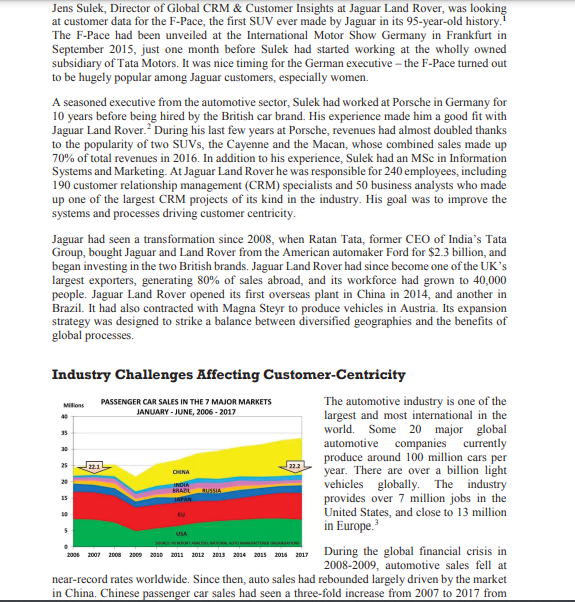
In this section you should read the case and ask yourself, "What's happening here right now?" What are the issues that the firm faces within the context of the case? In many cases there are issues that involve more than one business function. For example, are there marketing issues, management issues, organizational issues, competitive issues, financial issues, etc.? Your executive summary should briefly identify the key issue(s) at hand and describe how you will come up with your solution. Briefly, but specifically, mention your key strategies at the end of this section. This section should be one page maximum-preferably half a page. It might help to write this as your last section. For Parts Il and beyond, remember: You are not writing a "report." You are writing an analysis. You should take the information in the case, think about it, and then report your thoughts. You should be comfortable saying "I think....and be comfortable making bold statements. Think of yourself as a consultant hired by the firm to give them strategic advice. They already know what it's in the case-they want your take on the situation. The use of outside information may be appropriate to support your claims, thoughts, and ideas. Part II. Identify Internal Strengths What is the firm doing well internally? Why is it doing these things well? And, more importantly, how do the strengths of the firm tie to marketing theory and concepts? What lead to the success of the firm in the past (or present)? What strengths of the firm will lead to future value? Part III. Identify Internal Weaknesses What is the firm doing poorly internally? Why is it doing these things poorly? What lead to these poor tactics? How do the weaknesses contradict "good" marketing theory and concepts? Part IV. Identify External Opportunities What is going on the firm's external environment that the firm can use to its advantage? For example, if you are analyzing a case on McDonald's, an external opportunity might be the fact that the Atkins Diet has run its course and people are eating carbs again. These are not strategies here-those will come later (Part VII). In this section, focus on the external variables the firm can take advantage of. Part V. Identify External Threats What is going on in the firm's external environment that the firm needs to defend against? Analyze competitors-competition is certainly one external threat. Maybe government regulation is another. Possibly the taste of the target market is another. For example, if you are analyzing a case on Amtrak, one major threat is the growth of Southwest airlines and cheap, national air travel. Part VI. Other Issues / Metrics What other issues are going on in the case? How does the firm's financial situation look? If financial data is given, what are the trends you see? Does anything you see "jump out" at you? Is there a lot of debt? Any expenses seem odd? Are there any other issues out there that didn't quite fit in Parts 11-V? Discuss them here. Part VII. Strategies Based on all the issues that you identified in Parts II-VI, what do you recommend that the form do now? Be specific as possible. General strategies like "sell more products" are a gimme and add little to your analysis. You have to think deep here. How can the firm use its strengths to take advantage of external issues? How might the firm have to defend itself against threats? How can the firm shore up weaknesses? Again, think of yourself as someone hired to help this firm. What do you tell them and why? What are the risks and short/long term implications of what you suggest? (Please note that this should be your longest section.) Jens Sulek, Director of Global CRM & Customer Insights at Jaguar Land Rover, was looking at customer data for the F-Pace, the first SUV ever made by Jaguar in its 95-year-old history. The F-Pace had been unveiled at the International Motor Show Germany in Frankfurt in September 2015, just one month before Sulek had started working at the wholly owned subsidiary of Tata Motors. It was nice timing for the German executive - the F-Pace turned out to be hugely popular among Jaguar customers, especially women. A seasoned executive from the automotive sector, Sulek had worked at Porsche in Germany for 10 years before being hired by the British car brand. His experience made him a good fit with Jaguar Land Rover. During his last few years at Porsche, revenues had almost doubled thanks to the popularity of two SUVs, the Cayenne and the Macan, whose combined sales made up 70% of total revenues in 2016. In addition to his experience, Sulek had an MSc in Information Systems and Marketing. At Jaguar Land Rover he was responsible for 240 employees, including 190 customer relationship management (CRM) specialists and 50 business analysts who made up one of the largest CRM projects of its kind in the industry. His goal was to improve the systems and processes driving customer centricity. Jaguar had seen a transformation since 2008, when Ratan Tata, former CEO of India's Tata Group, bought Jaguar and Land Rover from the American automaker Ford for $2.3 billion, and began investing in the two British brands. Jaguar Land Rover had since become one of the UK's largest exporters, generating 80% of sales abroad, and its workforce had grown to 40,000 people. Jaguar Land Rover opened its first overseas plant in China in 2014, and another in Brazil. It had also contracted with Magna Steyr to produce vehicles in Austria. Its expansion strategy was designed to strike a balance between diversified geographies and the benefits of global processes Milions 40 PASSENGER CAR SALES IN THE 7 MAJOR MARKETS JANUARY - JUNE, 2006 - 2017 35 30 25 22.2 Industry Challenges Affecting Customer-Centricity The automotive industry is one of the largest and most international in the world. Some 20 major global automotive companies currently produce around 100 million cars per year. There are over a billion light vehicles globally. The industry provides over 7 million jobs in the United States, and close to 13 million in Europe. 2006 2007 2008 2009 2010 2011 2012 2013 2014 2013 2018 2017 During the global financial crisis in 2008-2009, automotive sales fell at near-record rates worldwide. Since then, auto sales had rebounded largely driven by the market in China. Chinese passenger car sales had seen a three-fold increase from 2007 to 2017 from CHINA INDIA BRADL IAPAN 05514 15 USA 3.1 million to 11.3 million Sales in the other top six markets had only recovered to 2007 levels a decade later (see chart). But what if the Chinese market suddenly cooled? Indeed, this appeared to be happening Passenger car sales in China rose by just 2.7% in the first half of 2017, compared with an 11% increase in the first half of 2016. Furthermore, price discounts represented up to 4% in the first half 2017. Meanwhile, the used car market had become more attractive as the quality of vehicles 'made in China" improved. The average life of a Chinese-made car rose from three years in 2012 to 4.5 years in 2017. These figures were a cause for concern among western automakers (like Jaguar Land Rover) which had made China a focus of their growth plans. Sales of traditional cars had also been affected by government policies, as in Norway, where buyers were incentivized to purchase hybrids and electric vehicles (EVS). As a result, Norway was the world leader in sales of energy-saving vehicles: 35% of new cars sold were either hybrids or EVs, and a target date of zero emissions from new cars was set at 2025. Local government was also pushing to bring air quality under control in cities like Paris and Beijing. In the UK and France, there was a ban on new petrol and diesel car sales from 2040. China, India and Norway were considering similar bans that could take effect earlier. Indirectly, the CAFE (Corporate Average Fuel Economy) standards made it more expensive for carmakers to build gas-guzzling cars by introducing penalties. Seven of the world's 11 largest carmakers were on course to miss Co- targets by 2021. vw potentially faced a 1.7 billion fine for exceeding the Co- limit on its cars. According to PA Consulting, only Volvo, Toyota, the Renault-Nissan Alliance and Jaguar Land Rover were on track to meet requirements, and even they might miss the target if there was a shift to petrol cars, which emitted more CO-than diesel. While the global market for pure EVs was still tiny - accounting for less than 1% of sales in 2016-it had grown so quickly that Volvo Cars was the first to announce plans to switch to EV production. Owned by Chinese carmaker Geely since 2010, Volvo said it would stop producing vehicles powered solely by an internal combustion engine in 2019 and equip every model with an electric motor. Others followed suit. Jaguar Land Rover announced that all new models would come with the electrified option from 2020. Tesla, which produced only EVs, had launched its Model 3 with a base price of $35,000, designed for the mass market. With so much hype about hybrids and EVs, many car owners were concerned about the future value of their traditional combustion-engine vehicles. Like a computer on wheels, an EV is simpler and cheaper to produce than an internal combustion engine vehicle because it has far fewer parts. Employees of traditional carmakers were concerned too, as it was estimated that the demise of combustion engine cars could result in the loss of millions of jobs. The consumer's conception of cars and car ownership was changing. Self-driving cars and ride- sharing platforms had begun to capture attention." Driverless' technology promised to reduce energy costs and traffic fatalities. 13 Likewise mobility platforms had opened up new vistas where vehicles could be made available to any driver' who had a smartphone app to locate a platform-owned car, drive it for as long as they wanted, and then leave it parked for the next user. Instead of car brands, drivers could go to their favourite mobility platform. Digital technologies like virtual reality (VR) and its partner augmented reality (AR) were expected to change driving habits. When planning shopping trips or on holidays, these technologies would enable more informed decisions to meet customers' needs, possibly cutting down on time spent behind the wheel. Instead of feeling compelled to attend a graduation ceremony in person, for example, they could "virtually" be in the same place with friends and family. As VR became more sophisticated and easy-to-use, employees could work from home rather than drive to the office, which in turn could reduce car ownership.' More worryingly, in a future where cities were increasingly congested, local authorities might crack down on car ownership. ' Was the two-cars-per-family model sustainable? Given the challenges and trends emerging, it was difficult for Sulek to predict what customers would want. He could only be certain of one thing: disruption. Today's business models and manufacturing portfolios would give way to new norms. Forecasting car sales had always been a challenge, but now it was imperative to move from a product-centric to a customer-centric focus. Background: Jaguar and Land Rover Founded in 1922, Jaguar had a history of producing beautifully engineered cars with a reputation for solid performance and road handling. It took great pride in its sporting heritage, winning major sports car endurance races such as France's 24 Heures du Mans, one of the most prestigious automobile races in the world. Customers who liked its efficient, high-performance vehicles that competed on the racing circuits had always been attracted to the stylish UK brand, However, in 2004, Jaguar's owner Ford restructured its ailing British subsidiary in order to reduce excess capacity and overheads, and withdrew Jaguar from Formula One racing,19 A Customer-Centric Approach While the product-centric approach had served Jaguar well and its reputation for world-class engineering set the brand apart, Sulek knew that it was vital to remain relevant and engaged with its customers, particularly given the changes in the industry. Two years after saying goodbye to Ford, Jaguar Land Rover adopted a new customer-centric approach. Buoyed by Tata's growth strategy, it invested heavily in a single global CRM solution to revolutionize the way the brand interacted with customers. However building the CRM solution was never perceived as a quick fix but rather a labour-intensive, day-to-day process that would take years to implement fully. To take the customer-centric approach to the next level, Sulek built an enterprise management platform to embrace the entire organization and its processes. For this, he needed to feedback from, and knowledge about, its customers. He also had to develop analytical techniques and intelligence methodologies. To do so he put himself in the shoes of a potential Jaguar buyer. By visualizing the customer journey' he could pinpoint and perhaps optimize the touchpoints between the customer and the company. In the pre-purchase phase, for example, the marketing department often played a vital role in answering customer questions. Once the purchase was made, the sales department transferred ownership of the vehicle to the customer. Then, the after-sales department looked after customer needs in maintaining the vehicle. To create a seamless customer experience, the CRM teams had to ensure that each department was part of a whole - a joined-up organization greater than the sum of its parts. By having a holistic approach the organization would also be more responsive to its evolving customer base. A typical customer journey would differ by segment or region, but Sulek was confident that his customer-centric approach could optimize the customer journey at both the brand and product levels, aware that customers would likely take a different road to car ownership in the future. Optimising Touchpoints Keeping in mind the trends in the automotive sector, Sulek developed new touchpoints to keep communications relevant to customers in a fast-changing environment. Currently, customers either leased or owned vehicles, with the vast majority committed to the ownership model. If car-sharing services, for example, were to become more relevant and less risky, future clients might have less incentive to own a car, be it an EV or internal combustion engine (ICE). Likewise if urban congestion and inner city pollution were to become more pronounced, local governments might offer incentives to car owners to share their cars on mobility platforms or simply rent one when needed. For now, Sulek's aim was to optimize the main touchpoints along the customer journey by leveraging customer intelligence to give Jaguar Land Rover a competitive edge, as in the following examples: A customer coming to the end of a leasing contract. As this represented a critical point in the customer journey, the CRM team could help the customer explore the options available. The marketing department could be notified that a direct marketing letter should be sent to the customer (or appropriate retailer) with an invitation to test drive a successor car. The sales department could be informed about a possible renewal of the leasing contract or purchase of a successor car. A customer who had just bought a car and was waiting to take delivery of it. At a local dealership, customers could customize a vehicle according to their preferences the ensuing fabrication process could take up to five months depending on the level of customization. Delays were subject to local market conditions (eg., customers in the United States preferred to buy directly from a dealer and opted for less customization). Since customers could change their minds during the fabrication process, the CRM team would inform sales that they could communicate with the customer as the car was working its way up the line of production (photos of the car could be sent to the customer, or questions answered about the ongoing production process). By so doing, they reassured customers that they had made the right purchase decision. Activating business intelligence allowed the CRM team to convey relevant and timely information at each touchpoint. In addition to customer intelligence, Sulek exploited a number of analytical techniques to understand customer preferences. By embedding the customer in the entire business and/or customer lifecycle, the company could continue to produce cars that outperformed the market even in the most turbulent times. Collecting Data through Customer Intelligence during the Product Lifecycle When launching a new model, Sulek listened to the voice of the customer' during the pre- and post-launch phases so as to consider their suggestions during the launch cycle, be it for minor product changes or brand repositioning Co-creation between customers and engineers began when the idea was still being defined in concept clinics", about four years before the vehicle's actual launch, allowing individual needs to emerge. By listening to customers at "pricing clinics' (held a year before launch), he could forecast volumes and perform price-demand simulations. Indeed the customer's voice continued to be heard up to three years after the launch, during which time surveys were carried out to measure product dependability and to monitor sales and service satisfaction, with the findings amplified by word-of-mouth feedback. With a typical model having a lifecycle of seven years, the customerif engaged throughout-could shape the evolution of a more successful) successor model. Sulek needed to enhance customer profiles for both the Jaguar and Land Rover brands, since target customers could differ and change over time and across geographies. He used a variety of analytical tools in conducting market research. Quantitative research told him who the potential buyers in each region were, i.c., age, gender, income, occupation and what other brand vehicles they owned. He discovered interesting differences in income and age. For example, average household income for buyers of Land Rovers in the United States was $243,000, but in the UK it was half that. The average age of buyers in America was 47, but in Britain it was 57. Did this mean that the British saved the money to fund the purchase or that Americans borrowed more? It required further qualitative research to understand such differences. Qualitative research yielded better profiles of potential customers that were not just based on demographics. Thanks to insights on desires and attitudes, he could sub-divide customer profiles by region. "The data can differ a lot by segment," Sulek said. "One thing we are always careful about is using the right research techniques for the right situation. With so many research techniques, we need to make sure not to use the wrong one." He also deployed ethnographic research to study the particular context and lifestyles of customers, using that information to strengthen the relationship between the target customer and the brand. Vehicles made by Jaguar Land Rover met basic needs for independence, freedom, social status and family harmony, but customers varied in their motivation to buy a particular model according to cultural context and attitudinal influences. By developing ethnographic profiles, Sulek could bring the right customers closer to the brand. First, desk research pinpointed the characteristics of the target customer by uncovering the motivations for purchasing a car and its role in their life. Second, focus groups uncovered lifestyle markers such as leadership qualities, family relationships and social networks. In addition, social media listening was used to deliver forecasting and future insights on consumer behaviour that resonated with Jaguar's marketing department and were aligned with corporate strategy. Popular social media platforms revealed upcoming trends and uncovered developments in the fast-changing automotive sector, such as connected drivers who used a cloud-service provider for news and entertainment. In January 2017, Jaguar Land Rover entered into a long-term partnership with CloudCar, a leading developer of connected driver experiences.2 By taking a $15 million minority stake in the firm, Jaguar Land Rover could use its cloud services platform to keep costs low while improving customer services. With machine learning capabilities linked to dozens of electronic sensors in each car, the platform allowed Jaguar Land Rover to improve voice-activated applications and improve on-board infotainment, while maintaining its brand identity and retaining ownership of data. The new cloud services platform would be rolled out in Jaguar l- Pace , Finally, the team learned to use tools such as virtual reality equipment, asking participants at car clinics to wear VR headgear to assess digital models of new cars-thereby cutting expenses (the production and shipping of full-scale physical models would have cost much more). It was also easier to show participants variations on the digital model using VR equipment than to present versions of physical models, Reflecting on the potential of these traditional and more advanced methodologies, Sulek wondered how best he could leverage the different data sources and with what techniques so as potential buyers in each region were, i.c., age, gender, income, occupation and what other brand vehicles they owned. He discovered interesting differences in income and age. For example, average household income for buyers of Land Rovers in the United States was $243,000, but in the UK it was half that. The average age of buyers in America was 47, but in Britain it was 57. Did this mean that the British saved the money to fund the purchase or that Americans borrowed more? It required further qualitative research to understand such differences. Qualitative research yielded better profiles of potential customers that were not just based on demographics. Thanks to insights on desires and attitudes, he could sub-divide customer profiles by region. "The data can differ a lot by segment," Sulek said. "One thing we are always careful about is using the right research techniques for the right situation. With so many research techniques, we need to make sure not to use the wrong one." He also deployed ethnographic research to study the particular context and lifestyles of customers, using that information to strengthen the relationship between the target customer and the brand. Vehicles made by Jaguar Land Rover met basic needs for independence, freedom, social status and family harmony, but customers varied in their motivation to buy a particular model according to cultural context and attitudinal influences. By developing ethnographic profiles, Sulek could bring the right customers closer to the brand. First, desk research pinpointed the characteristics of the target customer by uncovering the motivations for purchasing a car and its role in their life. Second, focus groups uncovered lifestyle markers such as leadership qualities, family relationships and social networks. In addition, social media listening was used to deliver forecasting and future insights on consumer behaviour that resonated with Jaguar's marketing department and were aligned with corporate strategy. Popular social media platforms revealed upcoming trends and uncovered developments in the fast-changing automotive sector, such as connected drivers who used a cloud-service provider for news and entertainment. In January 2017, Jaguar Land Rover entered into a long-term partnership with CloudCar, a leading developer of connected driver experiences.2 By taking a $15 million minority stake in the firm, Jaguar Land Rover could use its cloud services platform to keep costs low while improving customer services. With machine learning capabilities linked to dozens of electronic sensors in each car, the platform allowed Jaguar Land Rover to improve voice-activated applications and improve on-board infotainment, while maintaining its brand identity and retaining ownership of data. The new cloud services platform would be rolled out in Jaguar l- Pace , Finally, the team learned to use tools such as virtual reality equipment, asking participants at car clinics to wear VR headgear to assess digital models of new cars-thereby cutting expenses (the production and shipping of full-scale physical models would have cost much more). It was also easier to show participants variations on the digital model using VR equipment than to present versions of physical models, Reflecting on the potential of these traditional and more advanced methodologies, Sulek wondered how best he could leverage the different data sources and with what techniques so as Leveraging Data through Smart Data Analytics vs. Big Data Analytics Collecting data was one thing; interpreting it was another. In Sulek's mind, data should help to solve a decision problem, so applying the right analytical techniques to the right data was critical. By increasing the use of electronic systems to improve the performance, safety and passenger comfort of Jaguar cars, e.g., collecting data from sensors installed in connected" cars, he could suggest relevant enhancements - in real-time. Sensors discovered that thousands of Jaguar customers in big urban areas sat in traffic jams more often and for longer periods than customers in rural areas. This information translated into marketing and communication around more comfortable interior designs for urban customers. It sounds simple, but having the facts to back up proposed modifications can represent a needed boost when resources are limited. Companies were also starting to analyse GPS data to understand driving behaviour, and use the data for pro-active maintenance. With GPS data at hand, Sulek could tailor the marketing campaign for a potential new car that matched' specific types of driving behaviour. Sulek also used choice-based conjoint analysis to figure out preferences for particular Jaguar models at different price points in the pre-production phase. This de-compositional simulation tool reduced uncertainty for the marketing department when forecasting the output of new vehicles in particular markets at given price points. By using conjoint analysis, he could define price elasticity by simulating output volumes against a sliding scale of prices and locate the sweet spot Jaguar Land Rover's presence on social media platforms also enabled interaction with customers. Facebook followers of the Jaguar F-Pace, for example, could learn about safety features to be rolled out in the future. Car owners could book a service online. Having fully embraced the digital world, Sulek discovered a host of new possibilities to enhance Jaguar Land Rover's customer-centre approach. He was also curious to see whether Al and statistical models could help him fine-tune buying trends in the car industry. By employing them, he could more accurately forecast consumer behaviour such as an individual customer's propensity to buy a new vehicle at any given time. This allowed Jaguar Land Rover to communicate effectively with customers, sending relevant marketing messages at the right time. The Road Ahead In reflecting on the extraordinary success of the F-Pace, Sulek believed that Jaguar Land Rover had a bright future. It had recently announced it was hiring an additional 5,000 engineers and technical staff to prepare for the development of self-driving cars and EVs. The company's growth projections had never looked more promising. Putting the customer at the core of the business was a sure way of turning that vision into a reality. In this section you should read the case and ask yourself, "What's happening here right now?" What are the issues that the firm faces within the context of the case? In many cases there are issues that involve more than one business function. For example, are there marketing issues, management issues, organizational issues, competitive issues, financial issues, etc.? Your executive summary should briefly identify the key issue(s) at hand and describe how you will come up with your solution. Briefly, but specifically, mention your key strategies at the end of this section. This section should be one page maximum-preferably half a page. It might help to write this as your last section. For Parts Il and beyond, remember: You are not writing a "report." You are writing an analysis. You should take the information in the case, think about it, and then report your thoughts. You should be comfortable saying "I think....and be comfortable making bold statements. Think of yourself as a consultant hired by the firm to give them strategic advice. They already know what it's in the case-they want your take on the situation. The use of outside information may be appropriate to support your claims, thoughts, and ideas. Part II. Identify Internal Strengths What is the firm doing well internally? Why is it doing these things well? And, more importantly, how do the strengths of the firm tie to marketing theory and concepts? What lead to the success of the firm in the past (or present)? What strengths of the firm will lead to future value? Part III. Identify Internal Weaknesses What is the firm doing poorly internally? Why is it doing these things poorly? What lead to these poor tactics? How do the weaknesses contradict "good" marketing theory and concepts? Part IV. Identify External Opportunities What is going on the firm's external environment that the firm can use to its advantage? For example, if you are analyzing a case on McDonald's, an external opportunity might be the fact that the Atkins Diet has run its course and people are eating carbs again. These are not strategies here-those will come later (Part VII). In this section, focus on the external variables the firm can take advantage of. Part V. Identify External Threats What is going on in the firm's external environment that the firm needs to defend against? Analyze competitors-competition is certainly one external threat. Maybe government regulation is another. Possibly the taste of the target market is another. For example, if you are analyzing a case on Amtrak, one major threat is the growth of Southwest airlines and cheap, national air travel. Part VI. Other Issues / Metrics What other issues are going on in the case? How does the firm's financial situation look? If financial data is given, what are the trends you see? Does anything you see "jump out" at you? Is there a lot of debt? Any expenses seem odd? Are there any other issues out there that didn't quite fit in Parts 11-V? Discuss them here. Part VII. Strategies Based on all the issues that you identified in Parts II-VI, what do you recommend that the form do now? Be specific as possible. General strategies like "sell more products" are a gimme and add little to your analysis. You have to think deep here. How can the firm use its strengths to take advantage of external issues? How might the firm have to defend itself against threats? How can the firm shore up weaknesses? Again, think of yourself as someone hired to help this firm. What do you tell them and why? What are the risks and short/long term implications of what you suggest? (Please note that this should be your longest section.) Jens Sulek, Director of Global CRM & Customer Insights at Jaguar Land Rover, was looking at customer data for the F-Pace, the first SUV ever made by Jaguar in its 95-year-old history. The F-Pace had been unveiled at the International Motor Show Germany in Frankfurt in September 2015, just one month before Sulek had started working at the wholly owned subsidiary of Tata Motors. It was nice timing for the German executive - the F-Pace turned out to be hugely popular among Jaguar customers, especially women. A seasoned executive from the automotive sector, Sulek had worked at Porsche in Germany for 10 years before being hired by the British car brand. His experience made him a good fit with Jaguar Land Rover. During his last few years at Porsche, revenues had almost doubled thanks to the popularity of two SUVs, the Cayenne and the Macan, whose combined sales made up 70% of total revenues in 2016. In addition to his experience, Sulek had an MSc in Information Systems and Marketing. At Jaguar Land Rover he was responsible for 240 employees, including 190 customer relationship management (CRM) specialists and 50 business analysts who made up one of the largest CRM projects of its kind in the industry. His goal was to improve the systems and processes driving customer centricity. Jaguar had seen a transformation since 2008, when Ratan Tata, former CEO of India's Tata Group, bought Jaguar and Land Rover from the American automaker Ford for $2.3 billion, and began investing in the two British brands. Jaguar Land Rover had since become one of the UK's largest exporters, generating 80% of sales abroad, and its workforce had grown to 40,000 people. Jaguar Land Rover opened its first overseas plant in China in 2014, and another in Brazil. It had also contracted with Magna Steyr to produce vehicles in Austria. Its expansion strategy was designed to strike a balance between diversified geographies and the benefits of global processes Milions 40 PASSENGER CAR SALES IN THE 7 MAJOR MARKETS JANUARY - JUNE, 2006 - 2017 35 30 25 22.2 Industry Challenges Affecting Customer-Centricity The automotive industry is one of the largest and most international in the world. Some 20 major global automotive companies currently produce around 100 million cars per year. There are over a billion light vehicles globally. The industry provides over 7 million jobs in the United States, and close to 13 million in Europe. 2006 2007 2008 2009 2010 2011 2012 2013 2014 2013 2018 2017 During the global financial crisis in 2008-2009, automotive sales fell at near-record rates worldwide. Since then, auto sales had rebounded largely driven by the market in China. Chinese passenger car sales had seen a three-fold increase from 2007 to 2017 from CHINA INDIA BRADL IAPAN 05514 15 USA 3.1 million to 11.3 million Sales in the other top six markets had only recovered to 2007 levels a decade later (see chart). But what if the Chinese market suddenly cooled? Indeed, this appeared to be happening Passenger car sales in China rose by just 2.7% in the first half of 2017, compared with an 11% increase in the first half of 2016. Furthermore, price discounts represented up to 4% in the first half 2017. Meanwhile, the used car market had become more attractive as the quality of vehicles 'made in China" improved. The average life of a Chinese-made car rose from three years in 2012 to 4.5 years in 2017. These figures were a cause for concern among western automakers (like Jaguar Land Rover) which had made China a focus of their growth plans. Sales of traditional cars had also been affected by government policies, as in Norway, where buyers were incentivized to purchase hybrids and electric vehicles (EVS). As a result, Norway was the world leader in sales of energy-saving vehicles: 35% of new cars sold were either hybrids or EVs, and a target date of zero emissions from new cars was set at 2025. Local government was also pushing to bring air quality under control in cities like Paris and Beijing. In the UK and France, there was a ban on new petrol and diesel car sales from 2040. China, India and Norway were considering similar bans that could take effect earlier. Indirectly, the CAFE (Corporate Average Fuel Economy) standards made it more expensive for carmakers to build gas-guzzling cars by introducing penalties. Seven of the world's 11 largest carmakers were on course to miss Co- targets by 2021. vw potentially faced a 1.7 billion fine for exceeding the Co- limit on its cars. According to PA Consulting, only Volvo, Toyota, the Renault-Nissan Alliance and Jaguar Land Rover were on track to meet requirements, and even they might miss the target if there was a shift to petrol cars, which emitted more CO-than diesel. While the global market for pure EVs was still tiny - accounting for less than 1% of sales in 2016-it had grown so quickly that Volvo Cars was the first to announce plans to switch to EV production. Owned by Chinese carmaker Geely since 2010, Volvo said it would stop producing vehicles powered solely by an internal combustion engine in 2019 and equip every model with an electric motor. Others followed suit. Jaguar Land Rover announced that all new models would come with the electrified option from 2020. Tesla, which produced only EVs, had launched its Model 3 with a base price of $35,000, designed for the mass market. With so much hype about hybrids and EVs, many car owners were concerned about the future value of their traditional combustion-engine vehicles. Like a computer on wheels, an EV is simpler and cheaper to produce than an internal combustion engine vehicle because it has far fewer parts. Employees of traditional carmakers were concerned too, as it was estimated that the demise of combustion engine cars could result in the loss of millions of jobs. The consumer's conception of cars and car ownership was changing. Self-driving cars and ride- sharing platforms had begun to capture attention." Driverless' technology promised to reduce energy costs and traffic fatalities. 13 Likewise mobility platforms had opened up new vistas where vehicles could be made available to any driver' who had a smartphone app to locate a platform-owned car, drive it for as long as they wanted, and then leave it parked for the next user. Instead of car brands, drivers could go to their favourite mobility platform. Digital technologies like virtual reality (VR) and its partner augmented reality (AR) were expected to change driving habits. When planning shopping trips or on holidays, these technologies would enable more informed decisions to meet customers' needs, possibly cutting down on time spent behind the wheel. Instead of feeling compelled to attend a graduation ceremony in person, for example, they could "virtually" be in the same place with friends and family. As VR became more sophisticated and easy-to-use, employees could work from home rather than drive to the office, which in turn could reduce car ownership.' More worryingly, in a future where cities were increasingly congested, local authorities might crack down on car ownership. ' Was the two-cars-per-family model sustainable? Given the challenges and trends emerging, it was difficult for Sulek to predict what customers would want. He could only be certain of one thing: disruption. Today's business models and manufacturing portfolios would give way to new norms. Forecasting car sales had always been a challenge, but now it was imperative to move from a product-centric to a customer-centric focus. Background: Jaguar and Land Rover Founded in 1922, Jaguar had a history of producing beautifully engineered cars with a reputation for solid performance and road handling. It took great pride in its sporting heritage, winning major sports car endurance races such as France's 24 Heures du Mans, one of the most prestigious automobile races in the world. Customers who liked its efficient, high-performance vehicles that competed on the racing circuits had always been attracted to the stylish UK brand, However, in 2004, Jaguar's owner Ford restructured its ailing British subsidiary in order to reduce excess capacity and overheads, and withdrew Jaguar from Formula One racing,19 A Customer-Centric Approach While the product-centric approach had served Jaguar well and its reputation for world-class engineering set the brand apart, Sulek knew that it was vital to remain relevant and engaged with its customers, particularly given the changes in the industry. Two years after saying goodbye to Ford, Jaguar Land Rover adopted a new customer-centric approach. Buoyed by Tata's growth strategy, it invested heavily in a single global CRM solution to revolutionize the way the brand interacted with customers. However building the CRM solution was never perceived as a quick fix but rather a labour-intensive, day-to-day process that would take years to implement fully. To take the customer-centric approach to the next level, Sulek built an enterprise management platform to embrace the entire organization and its processes. For this, he needed to feedback from, and knowledge about, its customers. He also had to develop analytical techniques and intelligence methodologies. To do so he put himself in the shoes of a potential Jaguar buyer. By visualizing the customer journey' he could pinpoint and perhaps optimize the touchpoints between the customer and the company. In the pre-purchase phase, for example, the marketing department often played a vital role in answering customer questions. Once the purchase was made, the sales department transferred ownership of the vehicle to the customer. Then, the after-sales department looked after customer needs in maintaining the vehicle. To create a seamless customer experience, the CRM teams had to ensure that each department was part of a whole - a joined-up organization greater than the sum of its parts. By having a holistic approach the organization would also be more responsive to its evolving customer base. A typical customer journey would differ by segment or region, but Sulek was confident that his customer-centric approach could optimize the customer journey at both the brand and product levels, aware that customers would likely take a different road to car ownership in the future. Optimising Touchpoints Keeping in mind the trends in the automotive sector, Sulek developed new touchpoints to keep communications relevant to customers in a fast-changing environment. Currently, customers either leased or owned vehicles, with the vast majority committed to the ownership model. If car-sharing services, for example, were to become more relevant and less risky, future clients might have less incentive to own a car, be it an EV or internal combustion engine (ICE). Likewise if urban congestion and inner city pollution were to become more pronounced, local governments might offer incentives to car owners to share their cars on mobility platforms or simply rent one when needed. For now, Sulek's aim was to optimize the main touchpoints along the customer journey by leveraging customer intelligence to give Jaguar Land Rover a competitive edge, as in the following examples: A customer coming to the end of a leasing contract. As this represented a critical point in the customer journey, the CRM team could help the customer explore the options available. The marketing department could be notified that a direct marketing letter should be sent to the customer (or appropriate retailer) with an invitation to test drive a successor car. The sales department could be informed about a possible renewal of the leasing contract or purchase of a successor car. A customer who had just bought a car and was waiting to take delivery of it. At a local dealership, customers could customize a vehicle according to their preferences the ensuing fabrication process could take up to five months depending on the level of customization. Delays were subject to local market conditions (eg., customers in the United States preferred to buy directly from a dealer and opted for less customization). Since customers could change their minds during the fabrication process, the CRM team would inform sales that they could communicate with the customer as the car was working its way up the line of production (photos of the car could be sent to the customer, or questions answered about the ongoing production process). By so doing, they reassured customers that they had made the right purchase decision. Activating business intelligence allowed the CRM team to convey relevant and timely information at each touchpoint. In addition to customer intelligence, Sulek exploited a number of analytical techniques to understand customer preferences. By embedding the customer in the entire business and/or customer lifecycle, the company could continue to produce cars that outperformed the market even in the most turbulent times. Collecting Data through Customer Intelligence during the Product Lifecycle When launching a new model, Sulek listened to the voice of the customer' during the pre- and post-launch phases so as to consider their suggestions during the launch cycle, be it for minor product changes or brand repositioning Co-creation between customers and engineers began when the idea was still being defined in concept clinics", about four years before the vehicle's actual launch, allowing individual needs to emerge. By listening to customers at "pricing clinics' (held a year before launch), he could forecast volumes and perform price-demand simulations. Indeed the customer's voice continued to be heard up to three years after the launch, during which time surveys were carried out to measure product dependability and to monitor sales and service satisfaction, with the findings amplified by word-of-mouth feedback. With a typical model having a lifecycle of seven years, the customerif engaged throughout-could shape the evolution of a more successful) successor model. Sulek needed to enhance customer profiles for both the Jaguar and Land Rover brands, since target customers could differ and change over time and across geographies. He used a variety of analytical tools in conducting market research. Quantitative research told him who the potential buyers in each region were, i.c., age, gender, income, occupation and what other brand vehicles they owned. He discovered interesting differences in income and age. For example, average household income for buyers of Land Rovers in the United States was $243,000, but in the UK it was half that. The average age of buyers in America was 47, but in Britain it was 57. Did this mean that the British saved the money to fund the purchase or that Americans borrowed more? It required further qualitative research to understand such differences. Qualitative research yielded better profiles of potential customers that were not just based on demographics. Thanks to insights on desires and attitudes, he could sub-divide customer profiles by region. "The data can differ a lot by segment," Sulek said. "One thing we are always careful about is using the right research techniques for the right situation. With so many research techniques, we need to make sure not to use the wrong one." He also deployed ethnographic research to study the particular context and lifestyles of customers, using that information to strengthen the relationship between the target customer and the brand. Vehicles made by Jaguar Land Rover met basic needs for independence, freedom, social status and family harmony, but customers varied in their motivation to buy a particular model according to cultural context and attitudinal influences. By developing ethnographic profiles, Sulek could bring the right customers closer to the brand. First, desk research pinpointed the characteristics of the target customer by uncovering the motivations for purchasing a car and its role in their life. Second, focus groups uncovered lifestyle markers such as leadership qualities, family relationships and social networks. In addition, social media listening was used to deliver forecasting and future insights on consumer behaviour that resonated with Jaguar's marketing department and were aligned with corporate strategy. Popular social media platforms revealed upcoming trends and uncovered developments in the fast-changing automotive sector, such as connected drivers who used a cloud-service provider for news and entertainment. In January 2017, Jaguar Land Rover entered into a long-term partnership with CloudCar, a leading developer of connected driver experiences.2 By taking a $15 million minority stake in the firm, Jaguar Land Rover could use its cloud services platform to keep costs low while improving customer services. With machine learning capabilities linked to dozens of electronic sensors in each car, the platform allowed Jaguar Land Rover to improve voice-activated applications and improve on-board infotainment, while maintaining its brand identity and retaining ownership of data. The new cloud services platform would be rolled out in Jaguar l- Pace , Finally, the team learned to use tools such as virtual reality equipment, asking participants at car clinics to wear VR headgear to assess digital models of new cars-thereby cutting expenses (the production and shipping of full-scale physical models would have cost much more). It was also easier to show participants variations on the digital model using VR equipment than to present versions of physical models, Reflecting on the potential of these traditional and more advanced methodologies, Sulek wondered how best he could leverage the different data sources and with what techniques so as potential buyers in each region were, i.c., age, gender, income, occupation and what other brand vehicles they owned. He discovered interesting differences in income and age. For example, average household income for buyers of Land Rovers in the United States was $243,000, but in the UK it was half that. The average age of buyers in America was 47, but in Britain it was 57. Did this mean that the British saved the money to fund the purchase or that Americans borrowed more? It required further qualitative research to understand such differences. Qualitative research yielded better profiles of potential customers that were not just based on demographics. Thanks to insights on desires and attitudes, he could sub-divide customer profiles by region. "The data can differ a lot by segment," Sulek said. "One thing we are always careful about is using the right research techniques for the right situation. With so many research techniques, we need to make sure not to use the wrong one." He also deployed ethnographic research to study the particular context and lifestyles of customers, using that information to strengthen the relationship between the target customer and the brand. Vehicles made by Jaguar Land Rover met basic needs for independence, freedom, social status and family harmony, but customers varied in their motivation to buy a particular model according to cultural context and attitudinal influences. By developing ethnographic profiles, Sulek could bring the right customers closer to the brand. First, desk research pinpointed the characteristics of the target customer by uncovering the motivations for purchasing a car and its role in their life. Second, focus groups uncovered lifestyle markers such as leadership qualities, family relationships and social networks. In addition, social media listening was used to deliver forecasting and future insights on consumer behaviour that resonated with Jaguar's marketing department and were aligned with corporate strategy. Popular social media platforms revealed upcoming trends and uncovered developments in the fast-changing automotive sector, such as connected drivers who used a cloud-service provider for news and entertainment. In January 2017, Jaguar Land Rover entered into a long-term partnership with CloudCar, a leading developer of connected driver experiences.2 By taking a $15 million minority stake in the firm, Jaguar Land Rover could use its cloud services platform to keep costs low while improving customer services. With machine learning capabilities linked to dozens of electronic sensors in each car, the platform allowed Jaguar Land Rover to improve voice-activated applications and improve on-board infotainment, while maintaining its brand identity and retaining ownership of data. The new cloud services platform would be rolled out in Jaguar l- Pace , Finally, the team learned to use tools such as virtual reality equipment, asking participants at car clinics to wear VR headgear to assess digital models of new cars-thereby cutting expenses (the production and shipping of full-scale physical models would have cost much more). It was also easier to show participants variations on the digital model using VR equipment than to present versions of physical models, Reflecting on the potential of these traditional and more advanced methodologies, Sulek wondered how best he could leverage the different data sources and with what techniques so as Leveraging Data through Smart Data Analytics vs. Big Data Analytics Collecting data was one thing; interpreting it was another. In Sulek's mind, data should help to solve a decision problem, so applying the right analytical techniques to the right data was critical. By increasing the use of electronic systems to improve the performance, safety and passenger comfort of Jaguar cars, e.g., collecting data from sensors installed in connected" cars, he could suggest relevant enhancements - in real-time. Sensors discovered that thousands of Jaguar customers in big urban areas sat in traffic jams more often and for longer periods than customers in rural areas. This information translated into marketing and communication around more comfortable interior designs for urban customers. It sounds simple, but having the facts to back up proposed modifications can represent a needed boost when resources are limited. Companies were also starting to analyse GPS data to understand driving behaviour, and use the data for pro-active maintenance. With GPS data at hand, Sulek could tailor the marketing campaign for a potential new car that matched' specific types of driving behaviour. Sulek also used choice-based conjoint analysis to figure out preferences for particular Jaguar models at different price points in the pre-production phase. This de-compositional simulation tool reduced uncertainty for the marketing department when forecasting the output of new vehicles in particular markets at given price points. By using conjoint analysis, he could define price elasticity by simulating output volumes against a sliding scale of prices and locate the sweet spot Jaguar Land Rover's presence on social media platforms also enabled interaction with customers. Facebook followers of the Jaguar F-Pace, for example, could learn about safety features to be rolled out in the future. Car owners could book a service online. Having fully embraced the digital world, Sulek discovered a host of new possibilities to enhance Jaguar Land Rover's customer-centre approach. He was also curious to see whether Al and statistical models could help him fine-tune buying trends in the car industry. By employing them, he could more accurately forecast consumer behaviour such as an individual customer's propensity to buy a new vehicle at any given time. This allowed Jaguar Land Rover to communicate effectively with customers, sending relevant marketing messages at the right time. The Road Ahead In reflecting on the extraordinary success of the F-Pace, Sulek believed that Jaguar Land Rover had a bright future. It had recently announced it was hiring an additional 5,000 engineers and technical staff to prepare for the development of self-driving cars and EVs. The company's growth projections had never looked more promising. Putting the customer at the core of the business was a sure way of turning that vision into a reality









 Study Help