







Question: Map the following ER diagram to the most efficient set of tables. PRODUCT(RroductiD, Description, Cost) SUPPLIER(SurplierID, ContactName, PhoneNumber) PRODUCT(ProductID, Description, Cost) SUPPLIER(SurplierlD, ContactName, PhoneNumber, ProductiD)
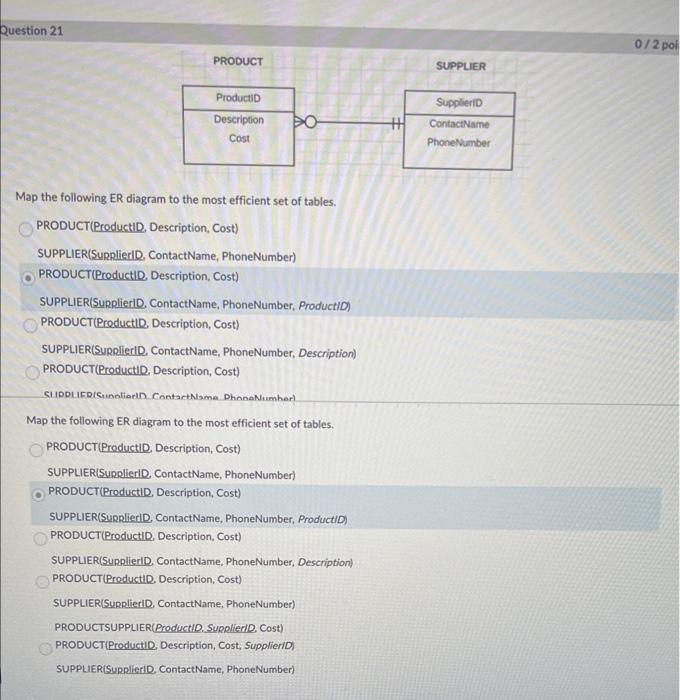
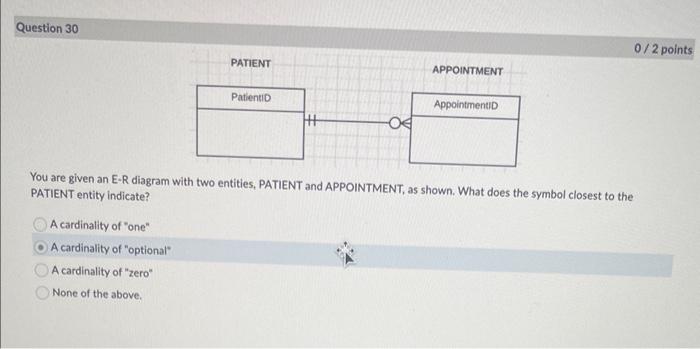
Map the following ER diagram to the most efficient set of tables. PRODUCT(RroductiD, Description, Cost) SUPPLIER(SurplierID, ContactName, PhoneNumber) PRODUCT(ProductID, Description, Cost) SUPPLIER(SurplierlD, ContactName, PhoneNumber, ProductiD) PRODUCT(ProductID, Description, Cost) SUPPLIER(SuRplierID. ContactName, PhoneNumber, Description) PRODUCT(ProductiD, Description, Cost) SHDDUEPISunaliorin. CantartNama DhanoNlumherl Map the following ER diagram to the most efficient set of tables. PRODUCT(ProductiD, Description, Cost) SUPPLIER(SurplierID. ContactName, PhoneNumber) PRODUCT(ProductID, Description, Cost) SUPPLIER(SuRplierlD, ContactName, PhoneNumber, ProductiD) PRODUCT(ProductiD, Description, Cost) SUPPLIER(SupplierID, ContactName, PhoneNumber, Description) PRODUCT(ProductID, Description, Cost) SUPPLIER(SunplieriD, ContactName, PhoneNumber) PRODUCTSUPPLIER(ProductID. SURpllerID, Cost) PRODUCT(ProductiD, Description, Cost, SupplieriD) SUPPLER(SupplierID, ContactName, PhoneNumber) You are given an E-R diagram with two entities, PATIENT and APPOINTMENT, as shown. What does the symbol closest to the PATIENT entity indicate? A cardinality of "one" A cardinality of "optional" A cardinality of "zero" None of the above
Step by Step Solution
There are 3 Steps involved in it

Get step-by-step solutions from verified subject matter experts
 Study Help