







Question: Matt Grant, a part-time MBA student, is developing a free publication that lists a calendar of upcoming athletic events, including road races, walks, triathlons, biathlons,
Matt Grant, a part-time MBA student, is developing a free publication that lists a calendar of upcoming athletic events, including road races, walks, triathlons, biathlons, bicycle tours/races, open track meets, and multisport activities in the greater Boston region. In his spare time, he launched a trial edition, and the response is so encouraging that he is on the verge of giving up a promising career with a big electronics company to pursue his new venture full time. He is wondering how to break the news to his wife, who is pursuing her own career as a lawyer.
You should assume that you are a good friend of Matt's and he seeks your advice on what he should do. Using the information in your reading of the chapters to date, you should carefully craft an argument for the actions that you believe Matt should undertake to make his decision. Climbers recognize that you are also an expert in this field of teamwork, motivation, and team organization. You should evaluate the teamwork decision-making process and environments that affected their organization and decisions.
Consider the questions below and prepare a response to Matt that addresses these questions:
- Should he consider going "full-time" with this venture, or should he continue to stay "part-time" with it and find another job elsewhere until he can get more traction with the publication?
- What are the 3 situations in which it might make more sense for Matt to stay/go part-time as opposed to trying to go "full-time"?
- If you were to encourage Matt to stay part-time, what are the most significant challenges that you believe he must face / address?
- If you were to encourage Matt to outsource some of his small business activities, what would they be? What tasks do you think he should retain and not outsource?
- Of the two ethical problems prevalent to part-time small businesses, which do you think is the biggest problem for Matt? Why?
Written Business Case Reports:
Introduction
What You Think The Real Problem Is
Your Analysis
Your Recommendations
Conclusion
You must read the Babson case:
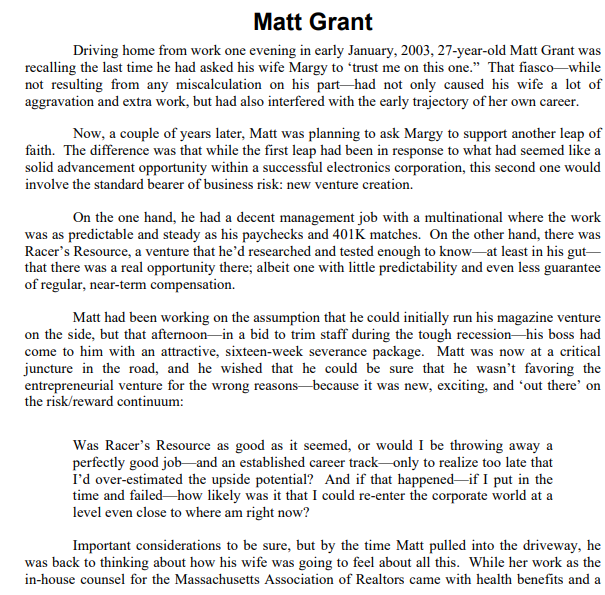
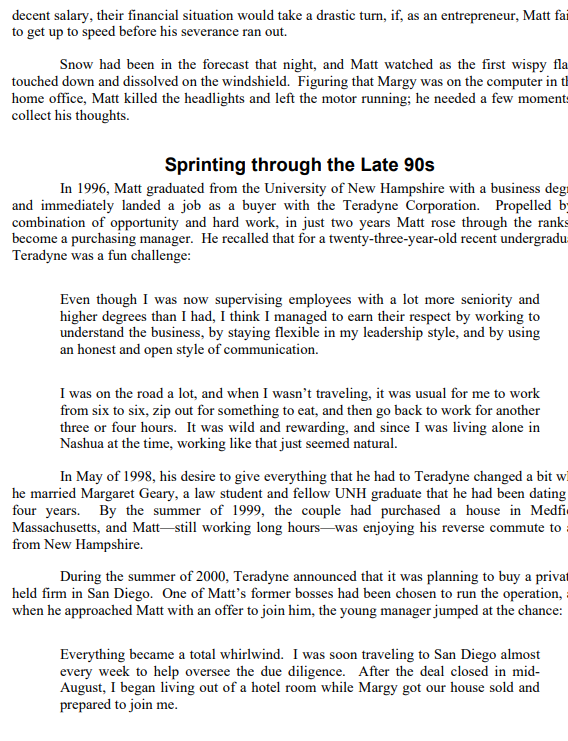

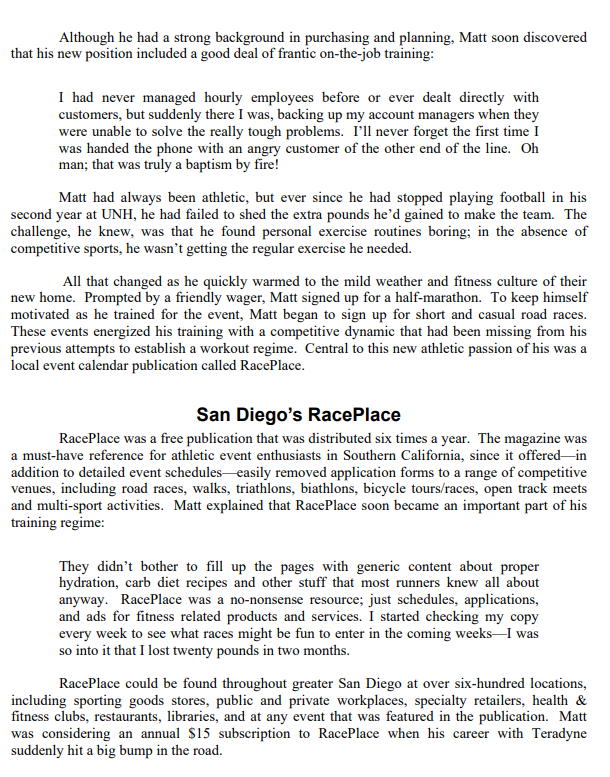
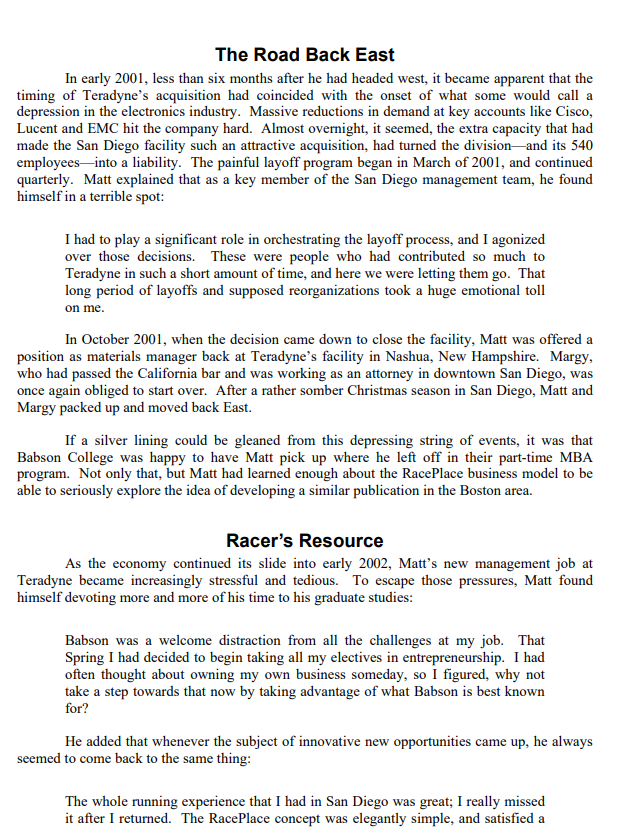
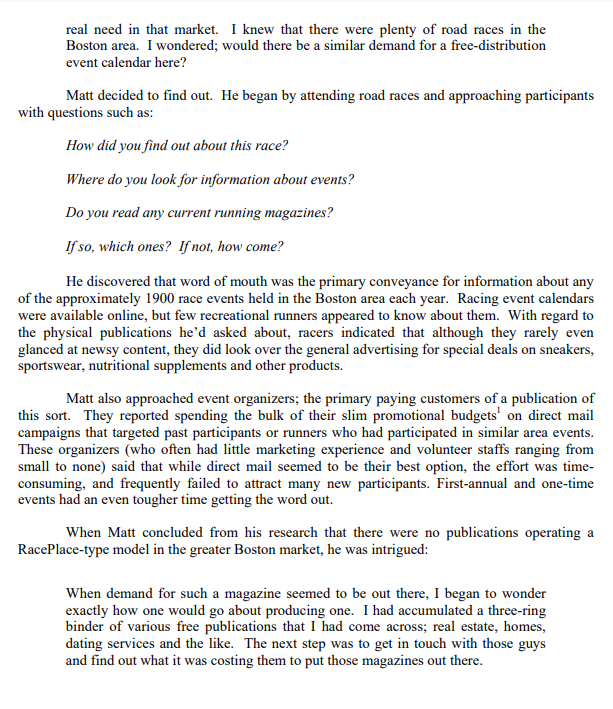
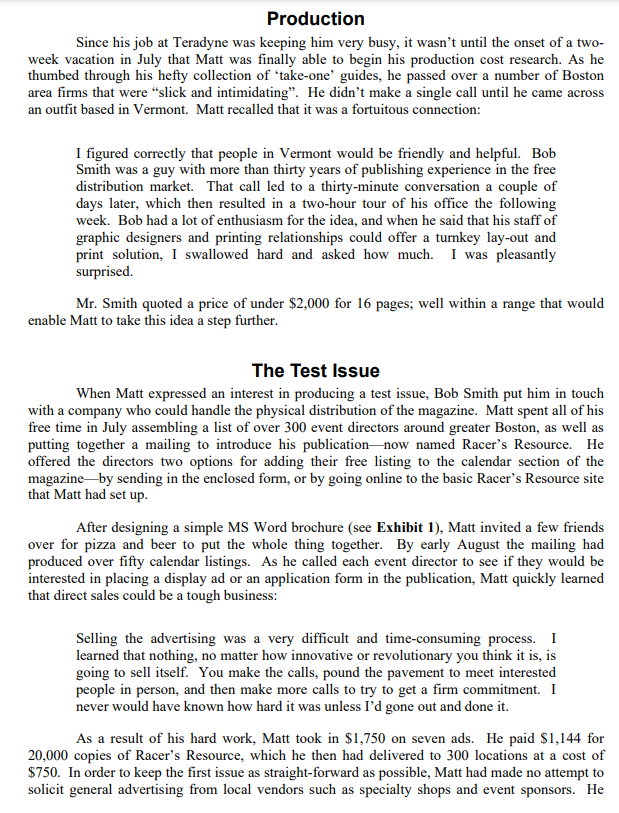
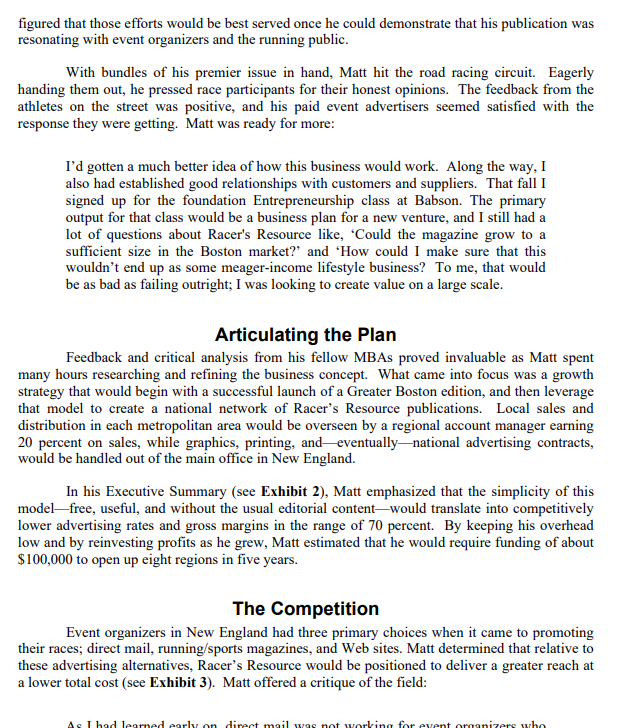

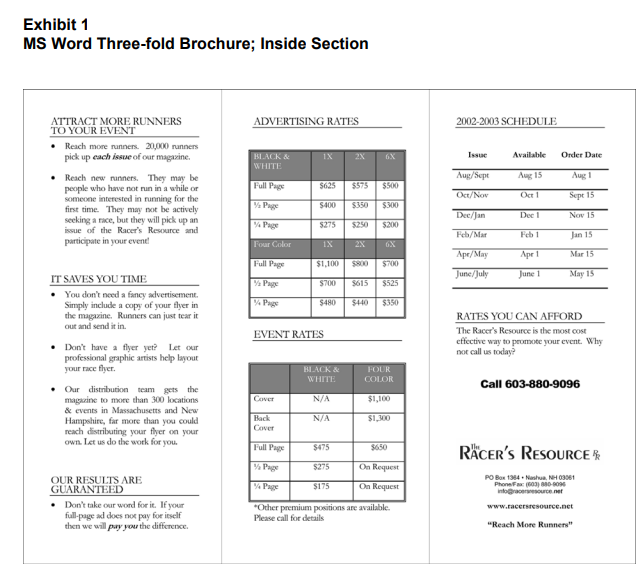
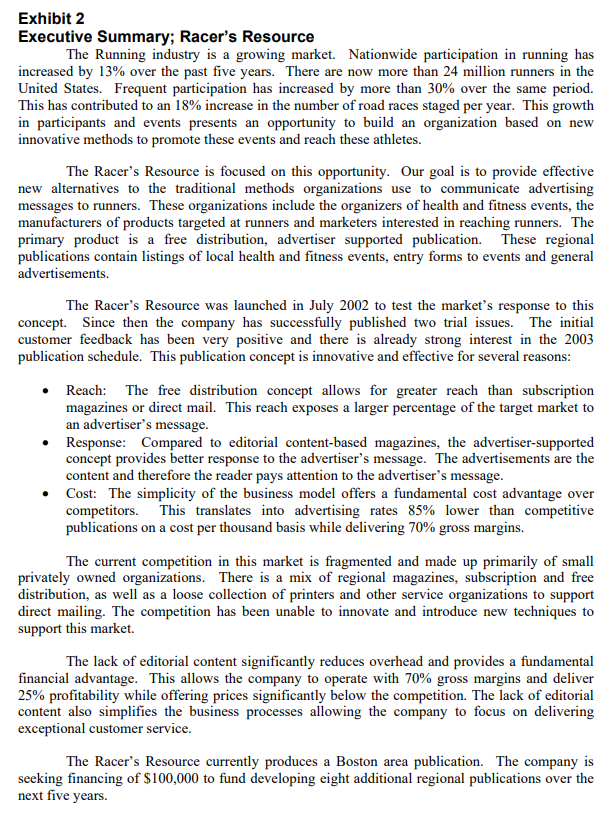
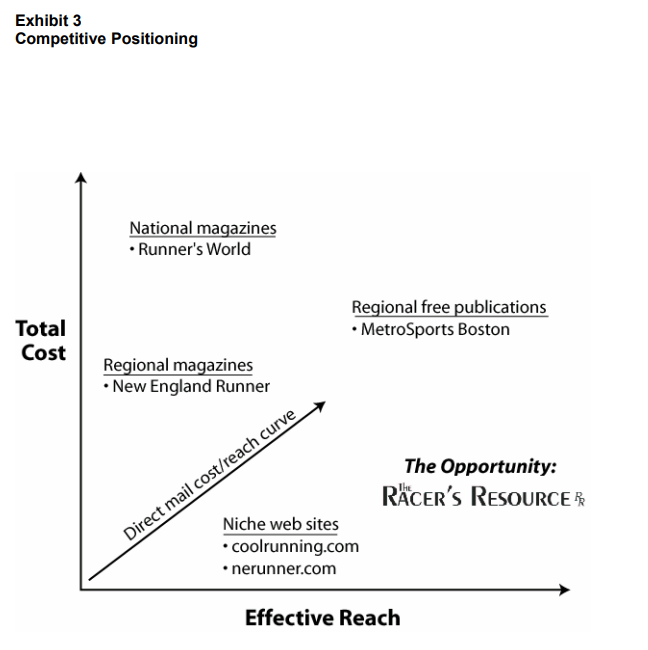
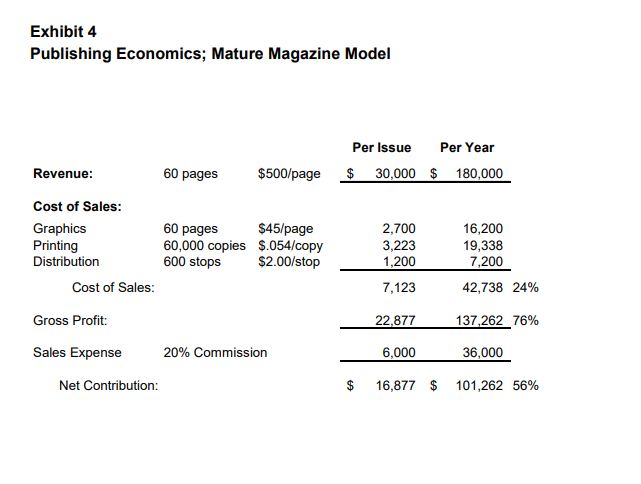
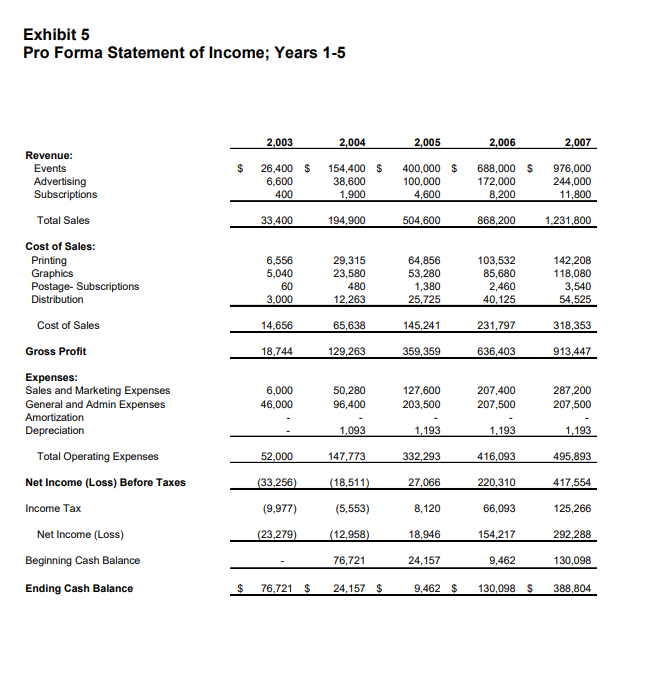
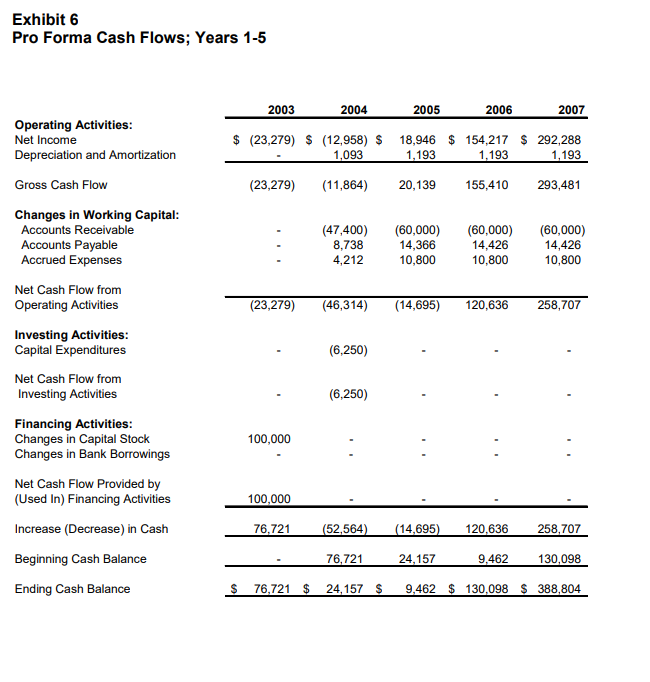
Matt Grant Driving home from work one evening in early January, 2003, 27-year-old Matt Grant was recalling the last time he had asked his wife Margy to "trust me on this one." That fiasco-while not resulting from any miscalculation on his part-had not only caused his wife a lot of aggravation and extra work, but had also interfered with the early trajectory of her own career. Now, a couple of years later, Matt was planning to ask Margy to support another leap of faith. The difference was that while the first leap had been in response to what had seemed like a solid advancement opportunity within a successful electronics corporation, this second one would involve the standard bearer of business risk: new venture creation. On the one hand, he had a decent management job with a multinational where the work was as predictable and steady as his paychecks and 401K matches. On the other hand, there was Racer's Resource, a venture that he'd researched and tested enough to know-at least in his gutthat there was a real opportunity there; albeit one with little predictability and even less guarantee of regular, near-term compensation. Matt had been working on the assumption that he could initially run his magazine venture on the side, but that afternoon-in a bid to trim staff during the tough recession-his boss had come to him with an attractive, sixteen-week severance package. Matt was now at a critical juncture in the road, and he wished that he could be sure that he wasn't favoring the entrepreneurial venture for the wrong reasons - because it was new, exciting, and 'out there' on the risk/reward continuum: Was Racer's Resource as good as it seemed, or would I be throwing away a perfectly good job-and an established career track-only to realize too late that I'd over-estimated the upside potential? And if that happened-if I put in the time and failed-how likely was it that I could re-enter the corporate world at a level even close to where am right now? Important considerations to be sure, but by the time Matt pulled into the driveway, he was back to thinking about how his wife was going to feel about all this. While her work as the in-house counsel for the Massachusetts Association of Realtors came with health benefits and a decent salary, their financial situation would take a drastic turn, if, as an entrepreneur, Matt fai to get up to speed before his severance ran out. Snow had been in the forecast that night, and Matt watched as the first wispy fla touched down and dissolved on the windshield. Figuring that Margy was on the computer in th home office, Matt killed the headlights and left the motor running; he needed a few moment collect his thoughts. Sprinting through the Late 90s In 1996, Matt graduated from the University of New Hampshire with a business deg. and immediately landed a job as a buyer with the Teradyne Corporation. Propelled by combination of opportunity and hard work, in just two years Matt rose through the ranks become a purchasing manager. He recalled that for a twenty-three-year-old recent undergradu Teradyne was a fun challenge: Even though I was now supervising employees with a lot more seniority and higher degrees than I had, I think I managed to earn their respect by working to understand the business, by staying flexible in my leadership style, and by using an honest and open style of communication. I was on the road a lot, and when I wasn't traveling, it was usual for me to work from six to six, zip out for something to eat, and then go back to work for another three or four hours. It was wild and rewarding, and since I was living alone in Nashua at the time, working like that just seemed natural. In May of 1998, his desire to give everything that he had to Teradyne changed a bit w he married Margaret Geary, a law student and fellow UNH graduate that he had been dating four years. By the summer of 1999 , the couple had purchased a house in Medfi Massachusetts, and Matt-still working long hours-was enjoying his reverse commute to from New Hampshire. During the summer of 2000 , Teradyne announced that it was planning to buy a priva held firm in San Diego. One of Matt's former bosses had been chosen to run the operation, when he approached Matt with an offer to join him, the young manager jumped at the chance: Everything became a total whirlwind. I was soon traveling to San Diego almost every week to help oversee the due diligence. After the deal closed in midAugust, I began living out of a hotel room while Margy got our house sold and prepared to join me. My wife had just graduated from law school and had taken the Bar exam in Massachusetts. Now she would have to wait until February to take the California Bar, which was known to be the hardest one in the country. This was a very tough time for her. Although he had a strong background in purchasing and planning, Matt soon discovered that his new position included a good deal of frantic on-the-job training: I had never managed hourly employees before or ever dealt directly with customers, but suddenly there I was, backing up my account managers when they were unable to solve the really tough problems. I'll never forget the first time I was handed the phone with an angry customer of the other end of the line. Oh man; that was truly a baptism by fire! Matt had always been athletic, but ever since he had stopped playing football in his second year at UNH, he had failed to shed the extra pounds he'd gained to make the team. The challenge, he knew, was that he found personal exercise routines boring; in the absence of competitive sports, he wasn't getting the regular exercise he needed. All that changed as he quickly warmed to the mild weather and fitness culture of their new home. Prompted by a friendly wager, Matt signed up for a half-marathon. To keep himself motivated as he trained for the event, Matt began to sign up for short and casual road races. These events energized his training with a competitive dynamic that had been missing from his previous attempts to establish a workout regime. Central to this new athletic passion of his was a local event calendar publication called RacePlace. San Diego's RacePlace RacePlace was a free publication that was distributed six times a year. The magazine was a must-have reference for athletic event enthusiasts in Southern California, since it offered-in addition to detailed event schedules-easily removed application forms to a range of competitive venues, including road races, walks, triathlons, biathlons, bicycle tours/races, open track meets and multi-sport activities. Matt explained that RacePlace soon became an important part of his training regime: They didn't bother to fill up the pages with generic content about proper hydration, carb diet recipes and other stuff that most runners knew all about anyway. RacePlace was a no-nonsense resource; just schedules, applications, and ads for fitness related products and services. I started checking my copy every week to see what races might be fun to enter in the coming weeks-I was so into it that I lost twenty pounds in two months. RacePlace could be found throughout greater San Diego at over six-hundred locations, including sporting goods stores, public and private workplaces, specialty retailers, health \& fitness clubs, restaurants, libraries, and at any event that was featured in the publication. Matt was considering an annual $15 subscription to RacePlace when his career with Teradyne suddenly hit a big bump in the road. The Road Back East In early 2001 , less than six months after he had headed west, it became apparent that the timing of Teradyne's acquisition had coincided with the onset of what some would call a depression in the electronics industry. Massive reductions in demand at key accounts like Cisco, Lucent and EMC hit the company hard. Almost overnight, it seemed, the extra capacity that had made the San Diego facility such an attractive acquisition, had turned the division-and its 540 employees - into a liability. The painful layoff program began in March of 2001, and continued quarterly. Matt explained that as a key member of the San Diego management team, he found himself in a terrible spot: I had to play a significant role in orchestrating the layoff process, and I agonized over those decisions. These were people who had contributed so much to Teradyne in such a short amount of time, and here we were letting them go. That long period of layoffs and supposed reorganizations took a huge emotional toll on me. In October 2001, when the decision came down to close the facility, Matt was offered a position as materials manager back at Teradyne's facility in Nashua, New Hampshire. Margy, who had passed the California bar and was working as an attorney in downtown San Diego, was once again obliged to start over. After a rather somber Christmas season in San Diego, Matt and Margy packed up and moved back East. If a silver lining could be gleaned from this depressing string of events, it was that Babson College was happy to have Matt pick up where he left off in their part-time MBA program. Not only that, but Matt had learned enough about the RacePlace business model to be able to seriously explore the idea of developing a similar publication in the Boston area. Racer's Resource As the economy continued its slide into early 2002, Matt's new management job at Teradyne became increasingly stressful and tedious. To escape those pressures, Matt found himself devoting more and more of his time to his graduate studies: Babson was a welcome distraction from all the challenges at my job. That Spring I had decided to begin taking all my electives in entrepreneurship. I had often thought about owning my own business someday, so I figured, why not take a step towards that now by taking advantage of what Babson is best known for? He added that whenever the subject of innovative new opportunities came up, he always seemed to come back to the same thing: The whole running experience that I had in San Diego was great; I really missed it after I returned. The RacePlace concept was elegantly simple, and satisfied a real need in that market. I knew that there were plenty of road races in the Boston area. I wondered; would there be a similar demand for a free-distribution event calendar here? Matt decided to find out. He began by attending road races and approaching participants with questions such as: How did you find out about this race? Where do you look for information about events? Do you read any current running magazines? If so, which ones? If not, how come? He discovered that word of mouth was the primary conveyance for information about any of the approximately 1900 race events held in the Boston area each year. Racing event calendars were available online, but few recreational runners appeared to know about them. With regard to the physical publications he'd asked about, racers indicated that although they rarely even glanced at newsy content, they did look over the general advertising for special deals on sneakers, sportswear, nutritional supplements and other products. Matt also approached event organizers; the primary paying customers of a publication of this sort. They reported spending the bulk of their slim promotional budgets 1 on direct mail campaigns that targeted past participants or runners who had participated in similar area events. These organizers (who often had little marketing experience and volunteer staffs ranging from small to none) said that while direct mail seemed to be their best option, the effort was timeconsuming, and frequently failed to attract many new participants. First-annual and one-time events had an even tougher time getting the word out. When Matt concluded from his research that there were no publications operating a RacePlace-type model in the greater Boston market, he was intrigued: When demand for such a magazine seemed to be out there, I began to wonder exactly how one would go about producing one. I had accumulated a three-ring binder of various free publications that I had come across; real estate, homes, dating services and the like. The next step was to get in touch with those guys and find out what it was costing them to put those magazines out there. Production Since his job at Teradyne was keeping him very busy, it wasn't until the onset of a twoweek vacation in July that Matt was finally able to begin his production cost research. As he thumbed through his hefty collection of 'take-one' guides, he passed over a number of Boston area firms that were "slick and intimidating". He didn't make a single call until he came across an outfit based in Vermont. Matt recalled that it was a fortuitous connection: I figured correctly that people in Vermont would be friendly and helpful. Bob Smith was a guy with more than thirty years of publishing experience in the free distribution market. That call led to a thirty-minute conversation a couple of days later, which then resulted in a two-hour tour of his office the following week. Bob had a lot of enthusiasm for the idea, and when he said that his staff of graphic designers and printing relationships could offer a turnkey lay-out and print solution, I swallowed hard and asked how much. I was pleasantly surprised. Mr. Smith quoted a price of under $2,000 for 16 pages; well within a range that would enable Matt to take this idea a step further. The Test Issue When Matt expressed an interest in producing a test issue, Bob Smith put him in touch with a company who could handle the physical distribution of the magazine. Matt spent all of his free time in July assembling a list of over 300 event directors around greater Boston, as well as putting together a mailing to introduce his publication-now named Racer's Resource. He offered the directors two options for adding their free listing to the calendar section of the magazine - by sending in the enclosed form, or by going online to the basic Racer's Resource site that Matt had set up. After designing a simple MS Word brochure (see Exhibit 1), Matt invited a few friends over for pizza and beer to put the whole thing together. By early August the mailing had produced over fifty calendar listings. As he called each event director to see if they would be interested in placing a display ad or an application form in the publication, Matt quickly learned that direct sales could be a tough business: Selling the advertising was a very difficult and time-consuming process. I learned that nothing, no matter how innovative or revolutionary you think it is, is going to sell itself. You make the calls, pound the pavement to meet interested people in person, and then make more calls to try to get a firm commitment. I never would have known how hard it was unless I'd gone out and done it. As a result of his hard work, Matt took in $1,750 on seven ads. He paid $1,144 for 20,000 copies of Racer's Resource, which he then had delivered to 300 locations at a cost of $750. In order to keep the first issue as straight-forward as possible, Matt had made no attempt to solicit general advertising from local vendors such as specialty shops and event sponsors. He figured that those efforts would be best served once he could demonstrate that his publication was resonating with event organizers and the running public. With bundles of his premier issue in hand, Matt hit the road racing circuit. Eagerly handing them out, he pressed race participants for their honest opinions. The feedback from the athletes on the street was positive, and his paid event advertisers seemed satisfied with the response they were getting. Matt was ready for more: I'd gotten a much better idea of how this business would work. Along the way, I also had established good relationships with customers and suppliers. That fall I signed up for the foundation Entrepreneurship class at Babson. The primary output for that class would be a business plan for a new venture, and I still had a lot of questions about Racer's Resource like, 'Could the magazine grow to a sufficient size in the Boston market?' and 'How could I make sure that this wouldn't end up as some meager-income lifestyle business? To me, that would be as bad as failing outright; I was looking to create value on a large scale. Articulating the Plan Feedback and critical analysis from his fellow MBAs proved invaluable as Matt spent many hours researching and refining the business concept. What came into focus was a growth strategy that would begin with a successful launch of a Greater Boston edition, and then leverage that model to create a national network of Racer's Resource publications. Local sales and distribution in each metropolitan area would be overseen by a regional account manager earning 20 percent on sales, while graphics, printing, and-eventually-national advertising contracts, would be handled out of the main office in New England. In his Executive Summary (see Exhibit 2), Matt emphasized that the simplicity of this model-free, useful, and without the usual editorial content-would translate into competitively lower advertising rates and gross margins in the range of 70 percent. By keeping his overhead low and by reinvesting profits as he grew, Matt estimated that he would require funding of about $100,000 to open up eight regions in five years. The Competition Event organizers in New England had three primary choices when it came to promoting their races; direct mail, running/sports magazines, and Web sites. Matt determined that relative to these advertising alternatives, Racer's Resource would be positioned to deliver a greater reach at a lower total cost (see Exhibit 3). Matt offered a critique of the field: As I had learned early on, direct mail was not working for event organizers who were on tight budgets - and that were most of them. I was able to find some good race event information online, but because you have to have a computer and know the domain name, those sites are probably not going to be able to reach a broad base of participants. Magazines - especially national ones - are expensive to advertise in, and since they are so filled up with content, modest ads get lost in the shuffle and don't work well. So, with the exception of some niche Web sites, my bi-monthly would be the only free publication in this market specifically designed to give event coordinators a cost-effective way to connect with the running and fitness community. The number one question from Babson students and potential investors seemed to be, "If this business is so easy to set up and cheap to run, how will you stay ahead of new entrants?" Matt's reply: Racer's Resource will move quickly to establish a branded advantage in New England. I am already pursuing exclusive or primacy of position arrangements at key locations that distribute the magazine-including point of sale displays. I am also working on strategic partnerships with companies that have a national reach. One such company was CoolRunning.com, an Internet business with a steadily growing national readership base 2. When Matt determined that this Massachusetts-based business was one of the few players with the visibility and clout to mount and immediate and effective response to Racer's Resource, he gave them a call. Racer's Resource was now in talks with the firm to develop a dual-media advertising package that would give Cool Running event clients a presence on the street as well as online. Matt saw this alliance as an excellent way to pave the way for opening new markets for his company, while simultaneously heading off any interest that Cool Running may have had about developing a magazine of their own. Economics and Projections By keeping costs down by using event, product and service advertisers as the sole source of content for his publication, Matt projected that at maturity, a regional magazine like Racer's Resource could deliver an annual per-market net contribution of just over $100,000 (see Exhibit 4). In each new market, Matt estimated that the ramp-up period to reach this mature phase would be about 10 issues. Sustaining a regional business would require selling around 280 event ads per year. Matt noted that favorable margins would support an aggressive pricing strategy: Racer's Resource would enter each market as a low-cost provider and would therefore be able to attract advertisers quickly while the publication built up and proved its local readership base. With each new area we open, that task will get easier since we'll be able to refer to existing regions as proof of concept. Over time I suspect that we would move to raise our insertion rates to be more comparable with other similar resources in the area. In the first year of operations Matt expected to produce four issues with combined sales of $33,000. He projected his breakeven would come in year three on sales of $504,000, and that he'd reach positive cash flow in the fourth year (see Exhibits 5 \& 6). By 2007, the business was expected to have established eight regional publications with a combined net income of just under $300,000. Funding the Leap Matt calculated that if he took advantage of Teradyne's exit offer-eight weeks salary plus eight weeks of paid vacation time he'd accumulated-his severance would come to approximately $24,000. He also planned to apply for competitively disbursed seed funds available through Babson. If Racer's Resource made the cut, Matt could expect to receive between $3,500 and $7,500. Once incorporated, Matt planned to issue 20,000 shares of stock. By selling 3,500 of those shares to outside investors at $30 each, Matt would retain 55 percent ownership and have a remaining 10 percent equity available to attract key employees and board members. He planned to begin issuing dividends in his first profitable year-paid annually and equal to at least 25 percent of after-tax profits. Decision Time A thin blanket of snow was covering his car by the time Matt headed into the house to make a decision with his wife Margy that would, for better or for worse, change their lives forever; again. Exhibit 1 MS Word Three-fold Brochure; Inside Section ATTRACT MORE RUNNERS TO YOUR EVENT - Reach more ranners. 20,000 runners pick up each issue of our magayine. - Reach new runners. They may be people who have not run in a while or someone interested in running for the first time. They may not be actively seeking a race, but they will pick up an issue of the Racer's Resource and participate in your event? IT SAVES YOU TIME - You don't need a fancy alvertisement. Simply include a copy of your tlyer in the magaxine, Runners can just tear it out and send it in. - Don't have a flyer yet? Let our professional graphic artists help layour your race flyer. - Our distriburion team gets the magacine to more than 300 locations \&. events in Massachusetts and New Hampehire, far more than you could reach distribating your flyer on your owr. Let us do the work for you. OUR RESULTS ARE GUARANTEED - Don't take our word for it. If your full-page ad does nos pay foe isself then we will pary youe the difference. ATVTRTTSINR: RATHS EVENT RATES RATES YOU CAN AFFORD The Racer's Resource is the most cost effective way to promote your event. Why not call us today? Call 603-880-9096 RACHER's RESOURCE Pe Bon 1304 + Nunhwa. Ny 03set intof racernebource net *Other premium positions are available. www,racerstesouree,net Pease call for details "Reach More Runners" Exhibit 2 Executive Summary; Racer's Resource The Running industry is a growing market. Nationwide participation in running has increased by 13% over the past five years. There are now more than 24 million runners in the United States. Frequent participation has increased by more than 30% over the same period. This has contributed to an 18% increase in the number of road races staged per year. This growth in participants and events presents an opportunity to build an organization based on new innovative methods to promote these events and reach these athletes. The Racer's Resource is focused on this opportunity. Our goal is to provide effective new alternatives to the traditional methods organizations use to communicate advertising messages to runners. These organizations include the organizers of health and fitness events, the manufacturers of products targeted at runners and marketers interested in reaching runners. The primary product is a free distribution, advertiser supported publication. These regional publications contain listings of local health and fitness events, entry forms to events and general advertisements. The Racer's Resource was launched in July 2002 to test the market's response to this concept. Since then the company has successfully published two trial issues. The initial customer feedback has been very positive and there is already strong interest in the 2003 publication schedule. This publication concept is innovative and effective for several reasons: - Reach: The free distribution concept allows for greater reach than subscription magazines or direct mail. This reach exposes a larger percentage of the target market to an advertiser's message. - Response: Compared to editorial content-based magazines, the advertiser-supported concept provides better response to the advertiser's message. The advertisements are the content and therefore the reader pays attention to the advertiser's message. - Cost: The simplicity of the business model offers a fundamental cost advantage over competitors. This translates into advertising rates 85% lower than competitive publications on a cost per thousand basis while delivering 70% gross margins. The current competition in this market is fragmented and made up primarily of small privately owned organizations. There is a mix of regional magazines, subscription and free distribution, as well as a loose collection of printers and other service organizations to support direct mailing. The competition has been unable to innovate and introduce new techniques to support this market. The lack of editorial content significantly reduces overhead and provides a fundamental financial advantage. This allows the company to operate with 70% gross margins and deliver 25% profitability while offering prices significantly below the competition. The lack of editorial content also simplifies the business processes allowing the company to focus on delivering exceptional customer service. The Racer's Resource currently produces a Boston area publication. The company is seeking financing of $100,000 to fund developing eight additional regional publications over the next five years. Exhibit 3 Competitive Positioning Exhibit 4 Publishing Economics; Mature Magazine Model Exhibit 5 Pro Forma Statement of Income; Years 1-5 Exhibit 6 Pro Forma Cash Flows; Years 1-5
Step by Step Solution
There are 3 Steps involved in it

Get step-by-step solutions from verified subject matter experts
 Study Help