







Question: PART 1: BEER'S LAW When light passes through a medium (air, water, glass, etc.), some of it is absorbed due to interactions with the atoms
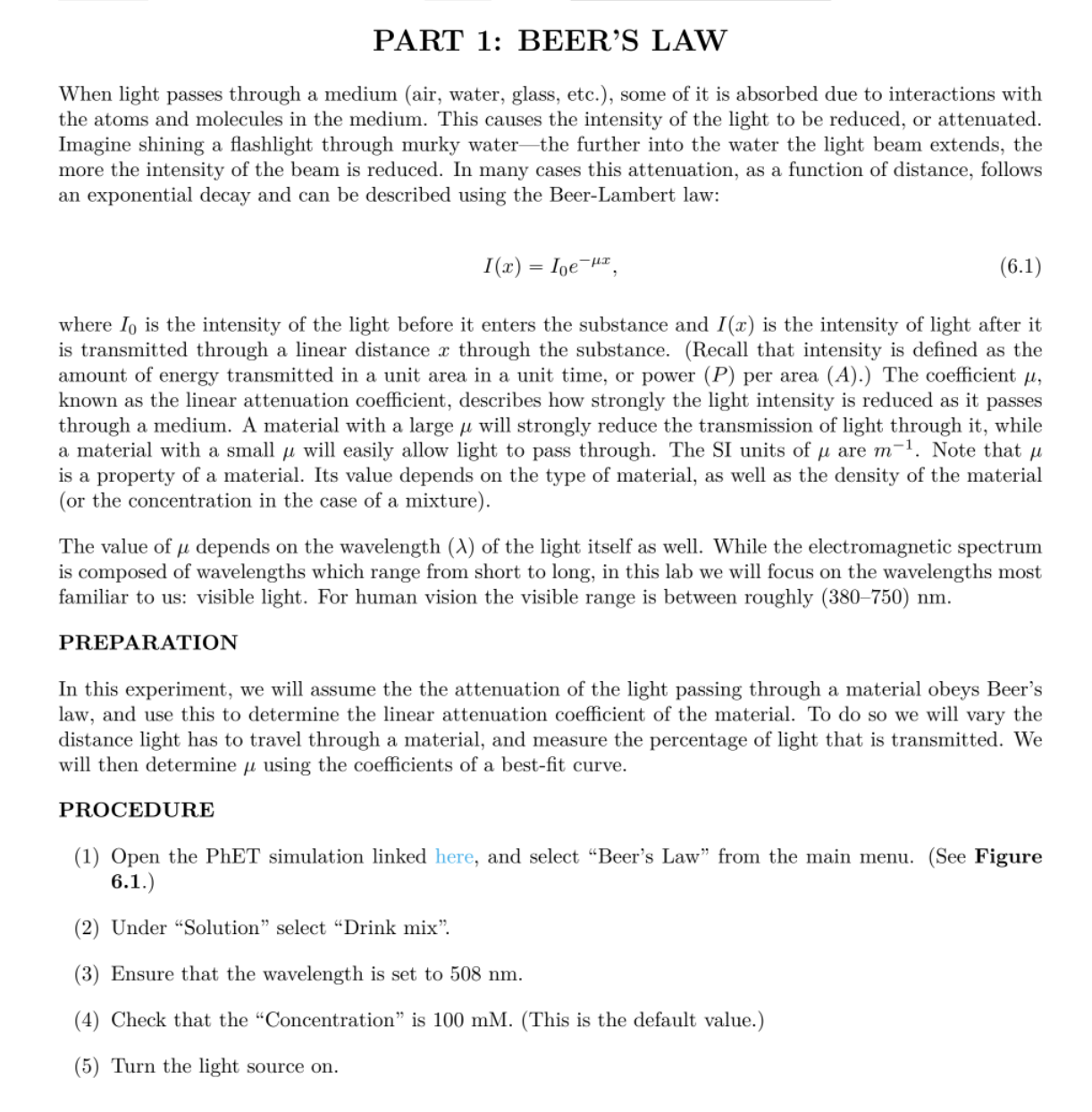
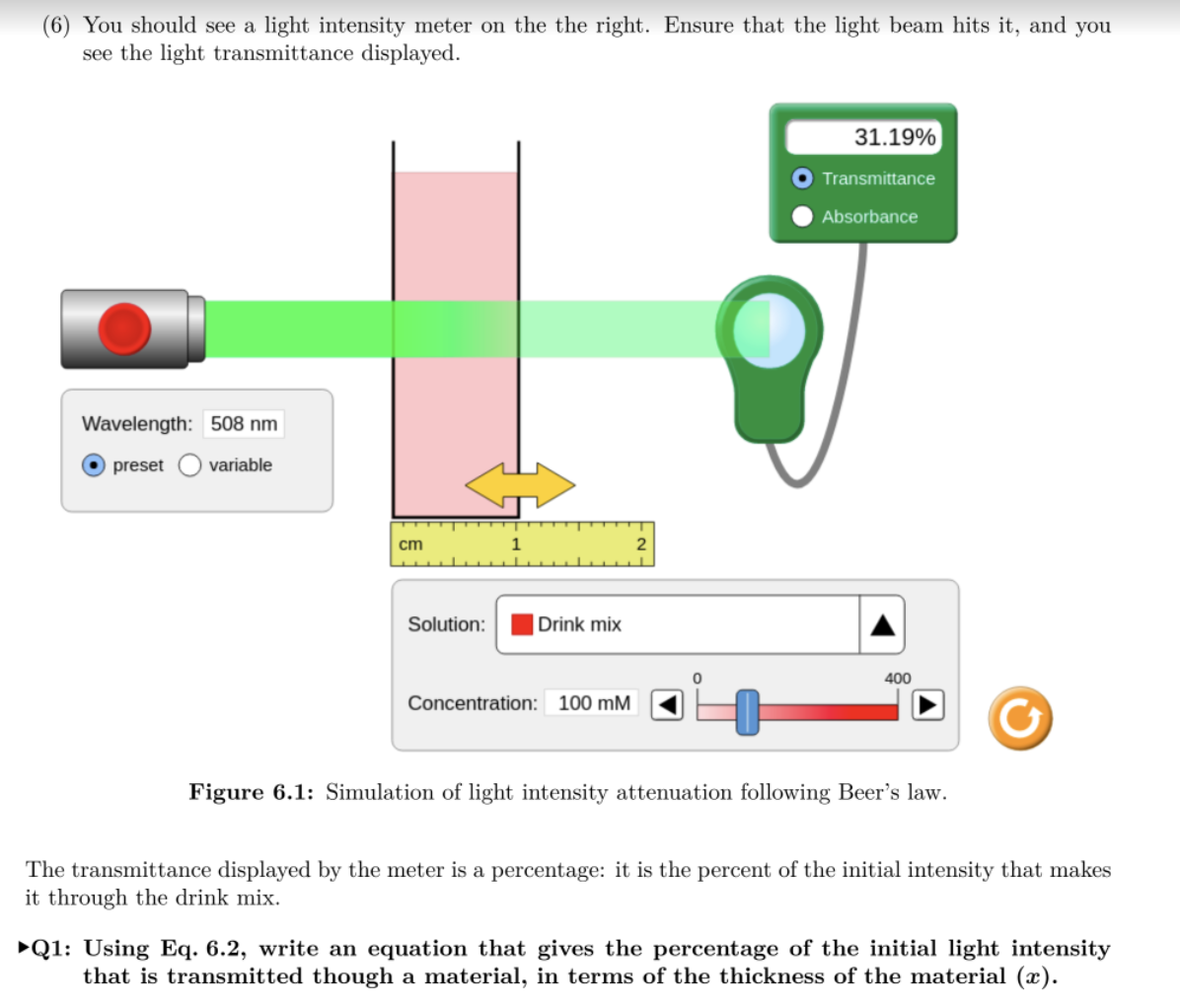
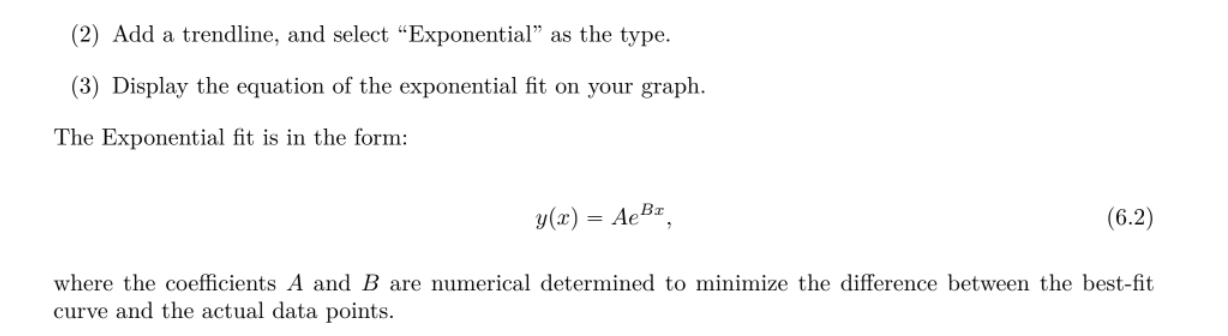
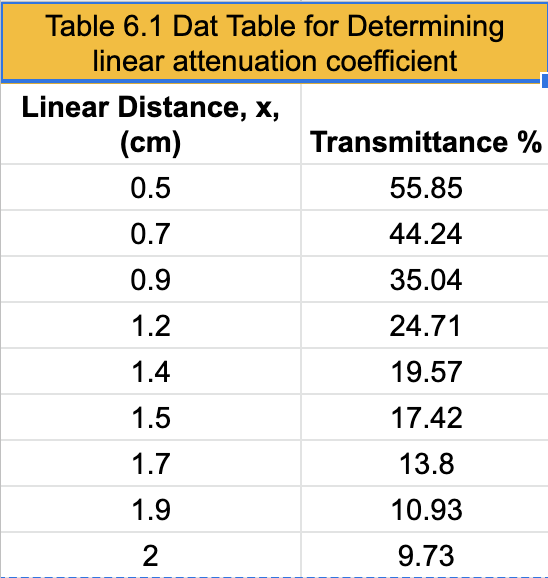
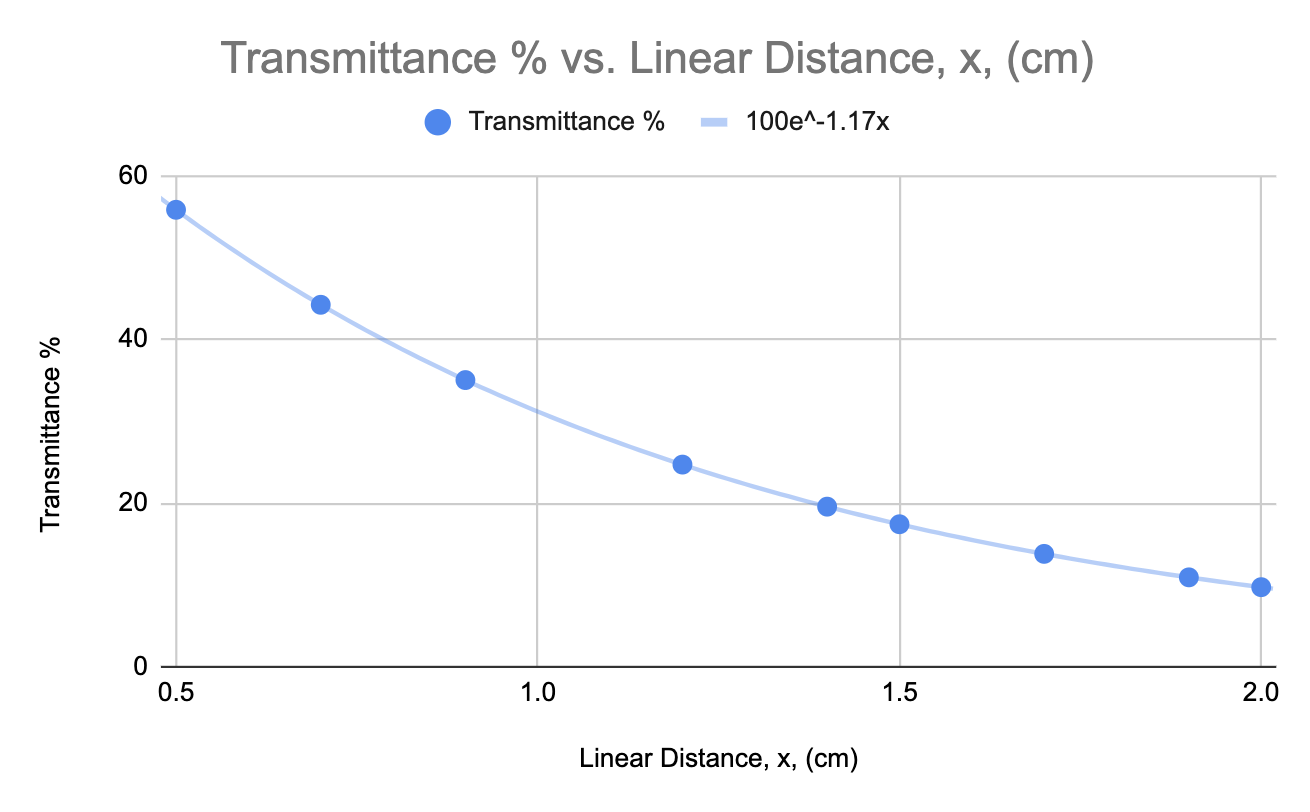
PART 1: BEER'S LAW When light passes through a medium (air, water, glass, etc.), some of it is absorbed due to interactions with the atoms and molecules in the medium. This causes the intensity of the light to be reduced, or attenuated. Imagine shining a ashlight through murky waterthe further into the water the light beam extends, the more the intensity of the beam is reduced. In many cases this attenuation, as a function of distance, follows an exponential decay and can be described using the Beer-Lambert law: K13) = foef\(6} You should see a light intensity meter on the the right. Ensure that the light beam hits it, and you see the light transmittance displayed. common: mom @H'T'El @ Figure 6.1: Simulation of light intensity attenuation following Beer's law. The transmittance displayed by the meter is a. percentage: it is the percent of the initial intensity that makes it through the drink mix. '01: Using Eq. 6.2, write an equation that gives the percentage of the initial light intensity that is transmitted though a material, in terms of the thickness of the material (9;). (2) Add a trendline, and select "Exponential" as the type. (3) Display the equation of the exponential fit on your graph. The Exponential fit is in the form: y(x) = AeBr (6.2) where the coefficients A and B are numerical determined to minimize the difference between the best-fit curve and the actual data points.\f\f
Step by Step Solution
There are 3 Steps involved in it

Get step-by-step solutions from verified subject matter experts
 Study Help