







Question: Please ,Carefully read the case study &Answer the following Discuss the significance of HRM practices in Pharmaceutical companies. How HRM practices helps in improving other
Please ,Carefully read the case study &Answer the following
Discuss the significance of HRM practices in Pharmaceutical companies. How HRM practices helps in improving other industries. Please kindly solve it asap ..
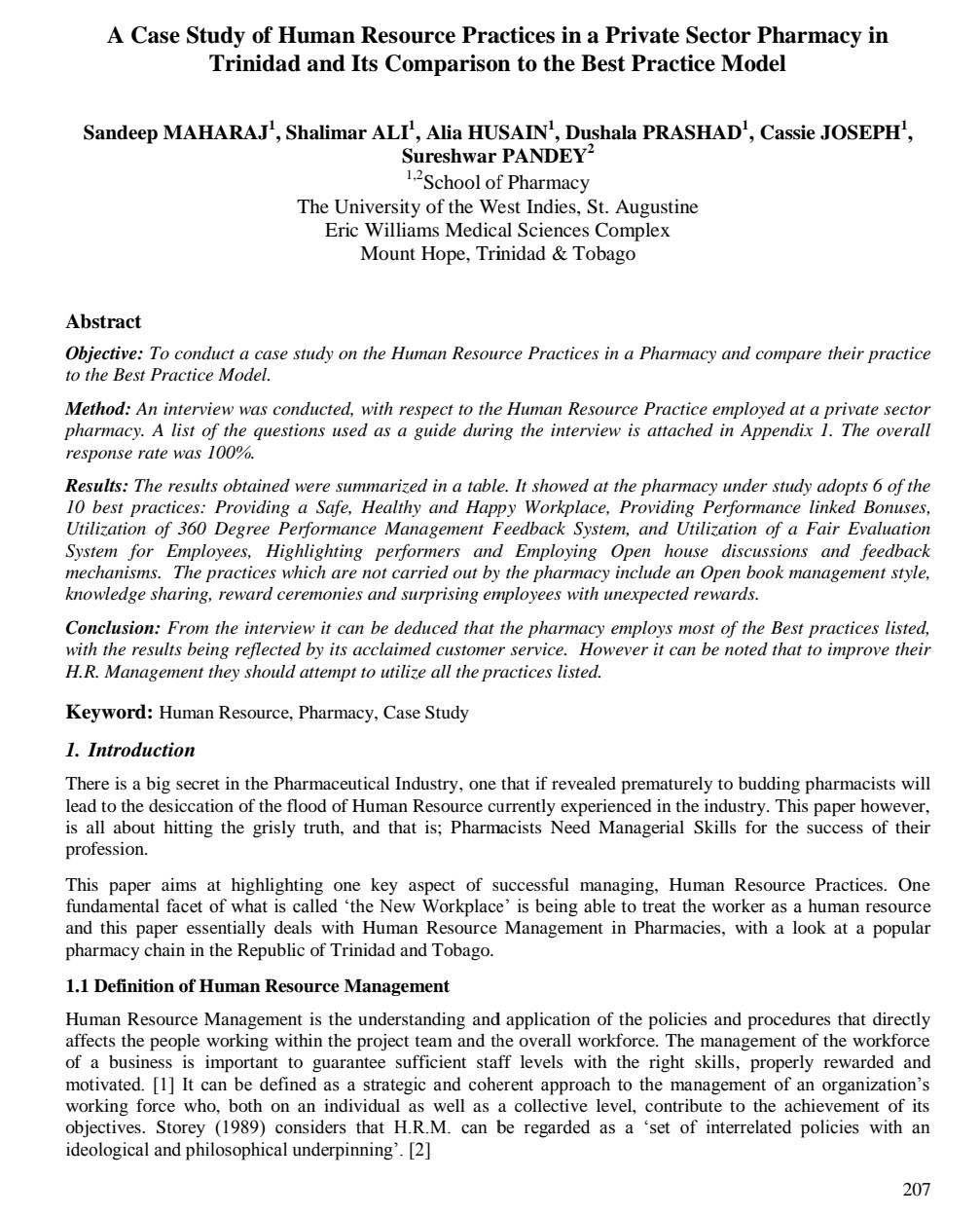
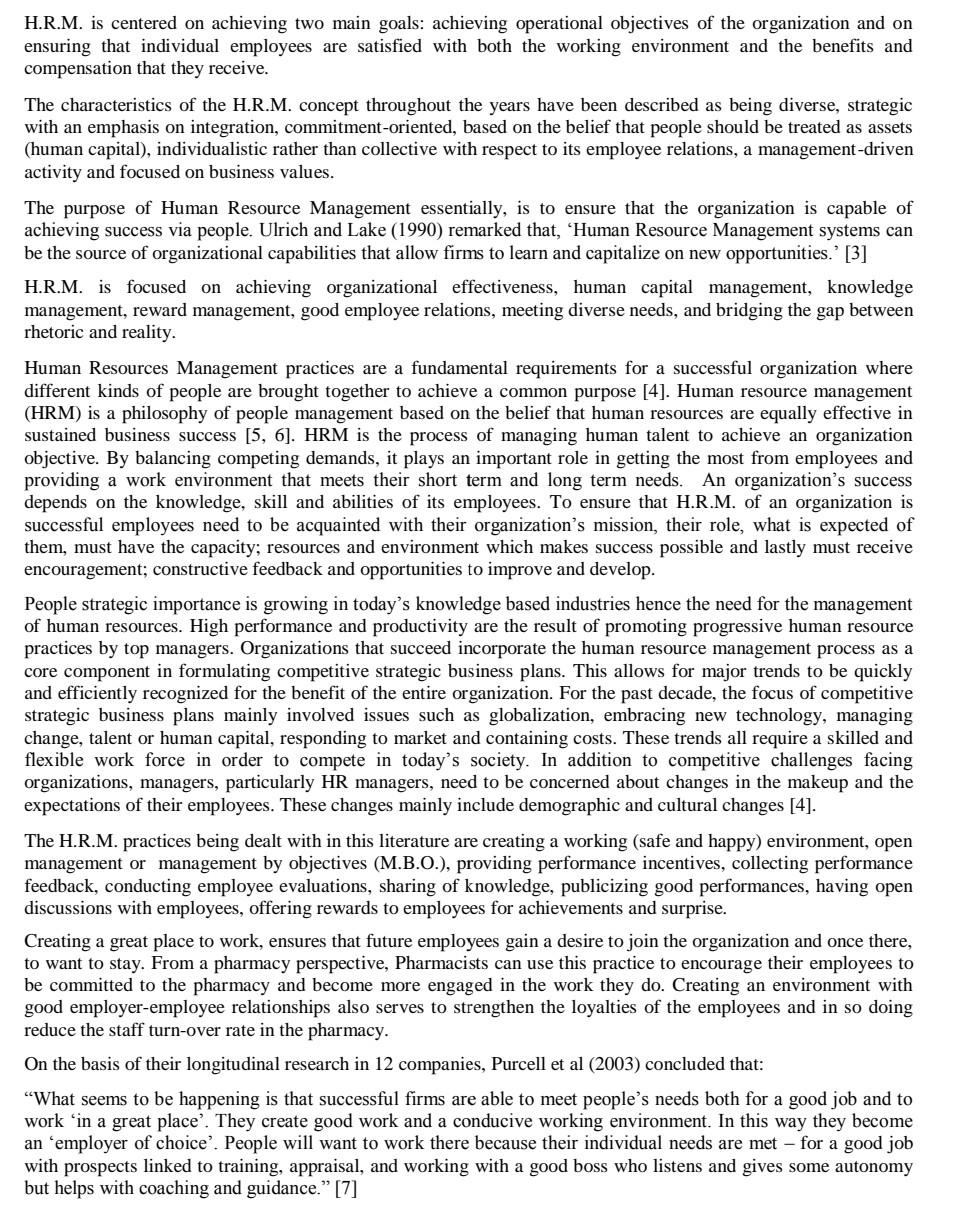
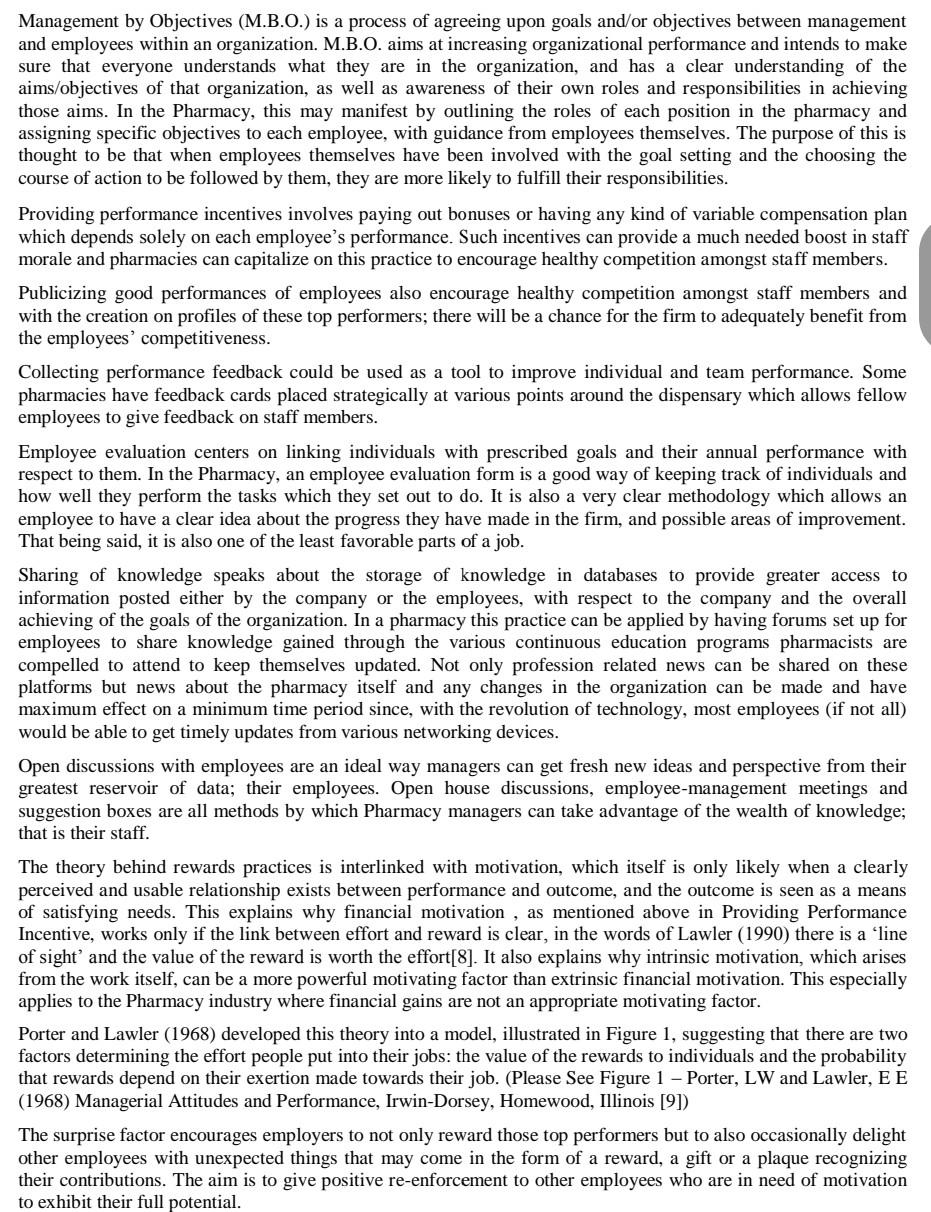
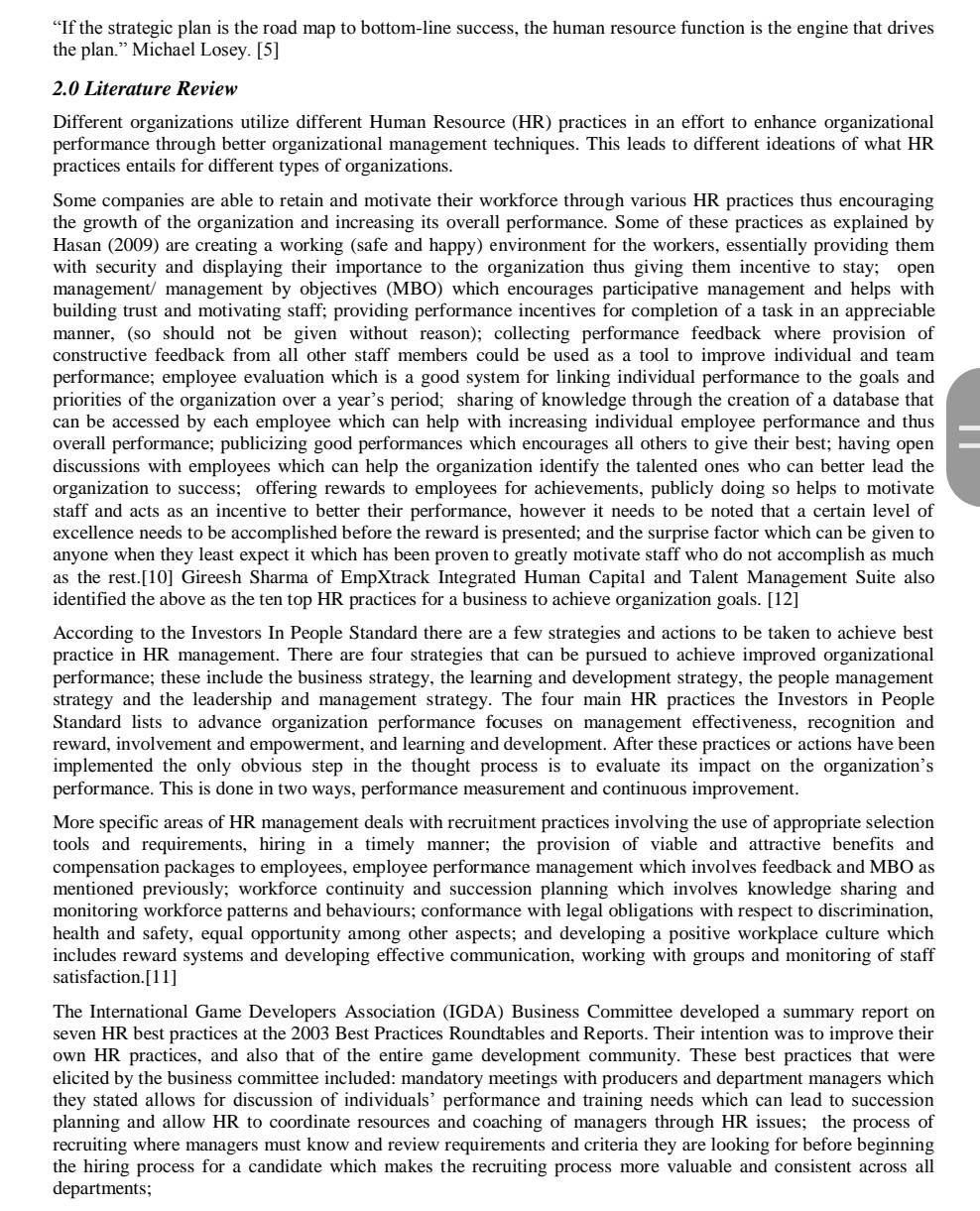
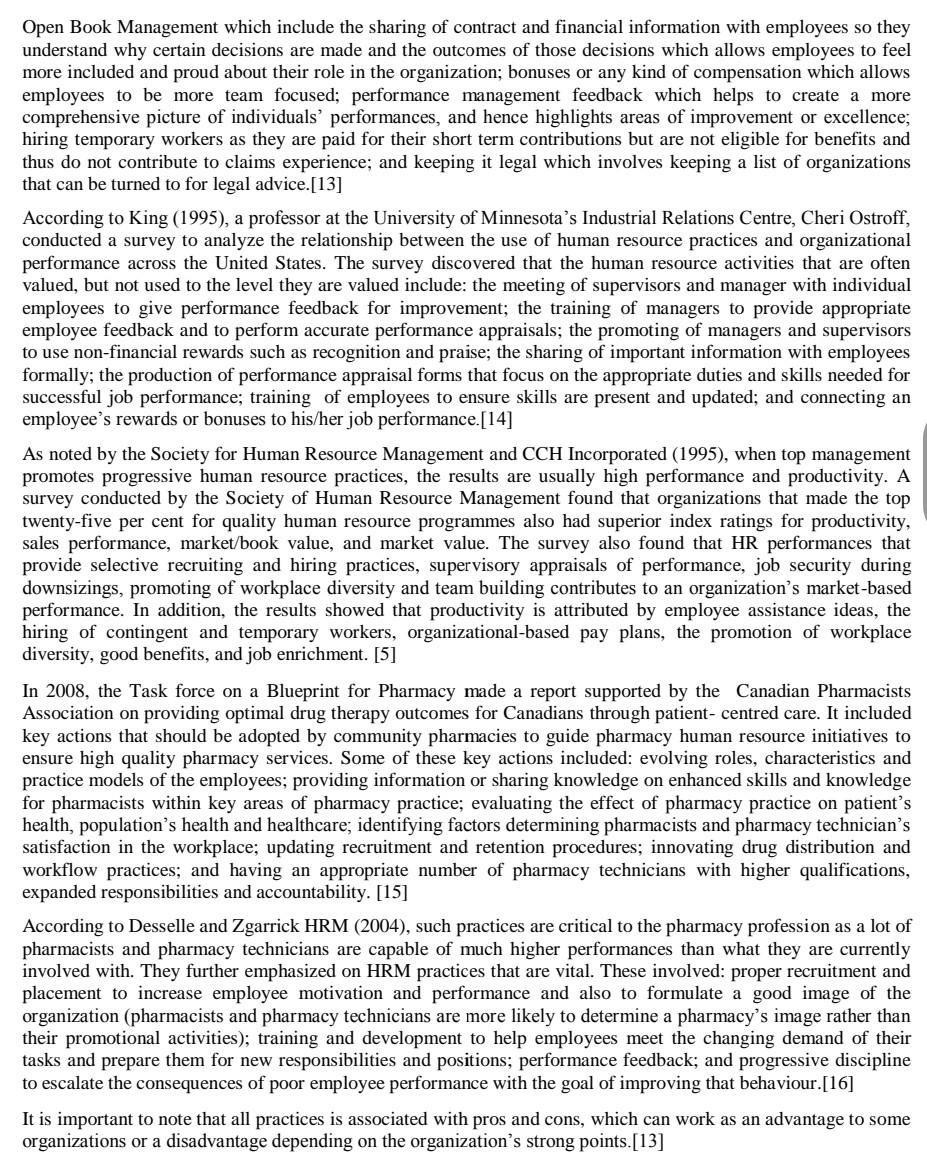
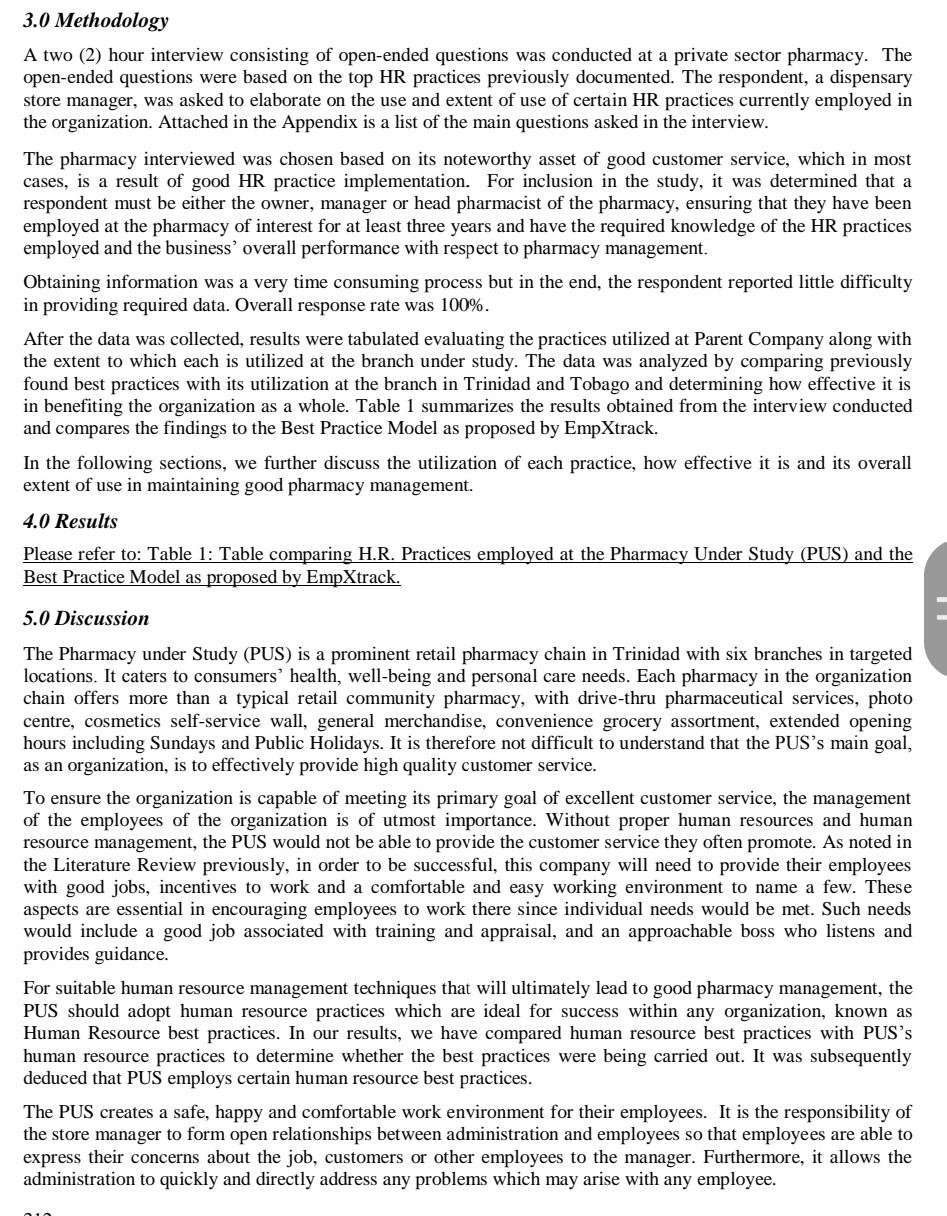
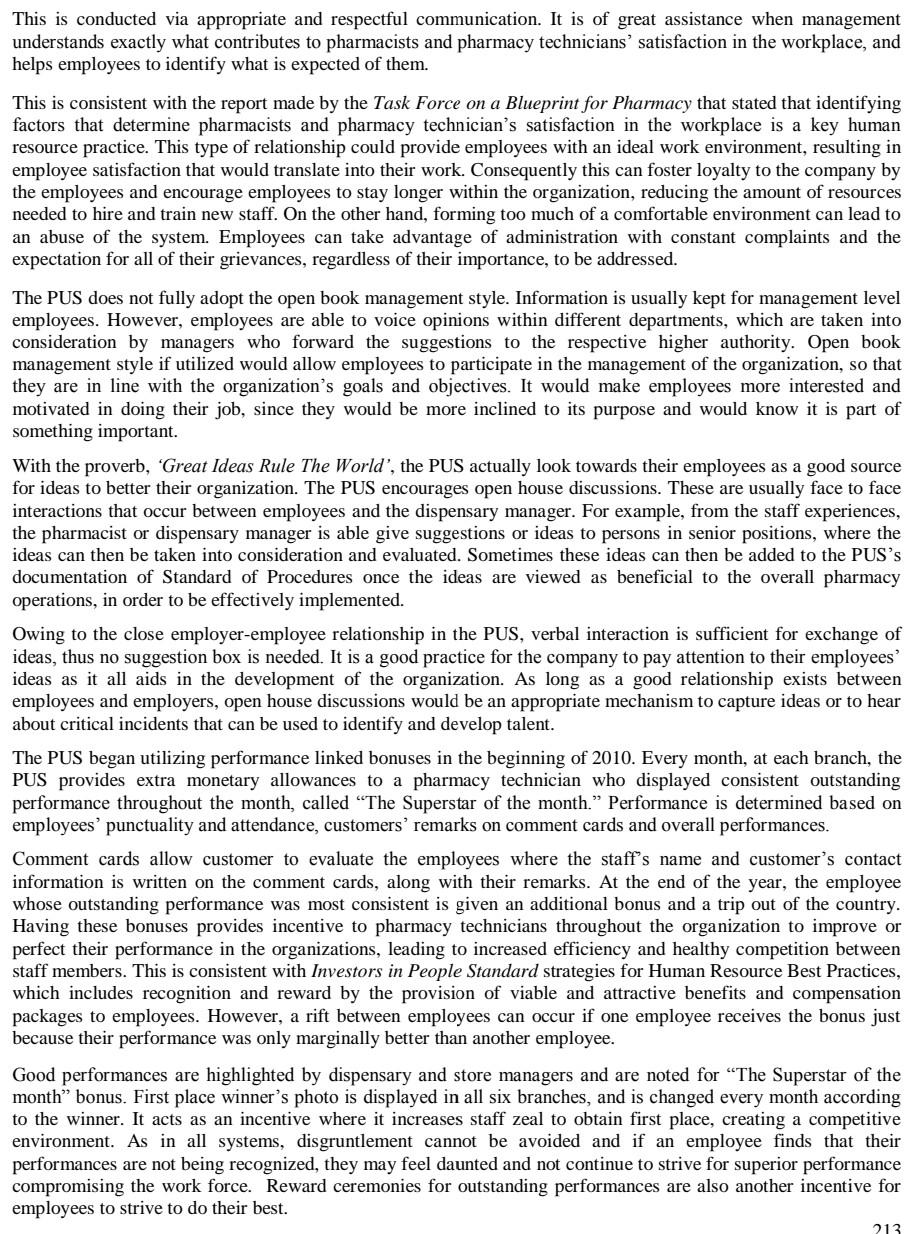
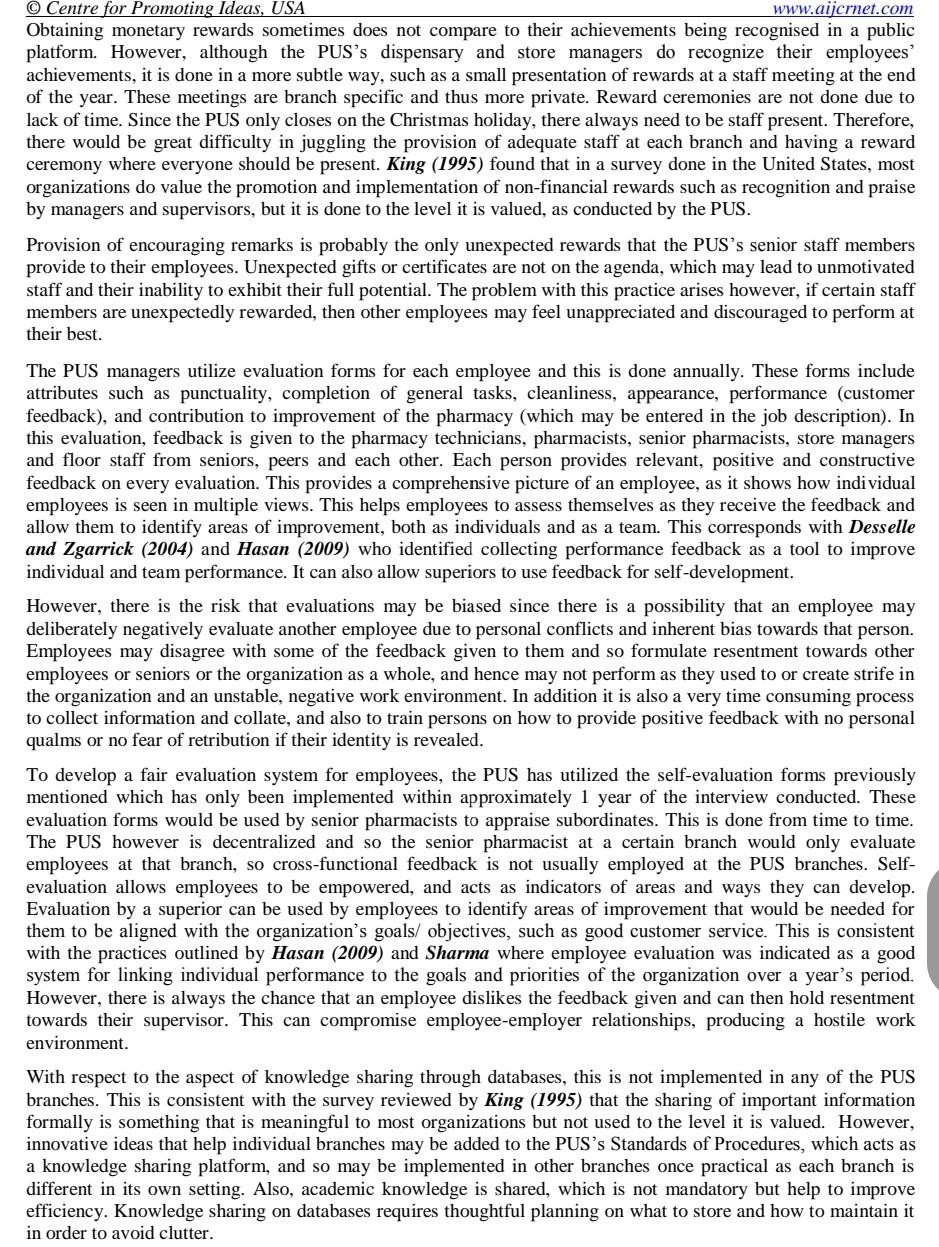
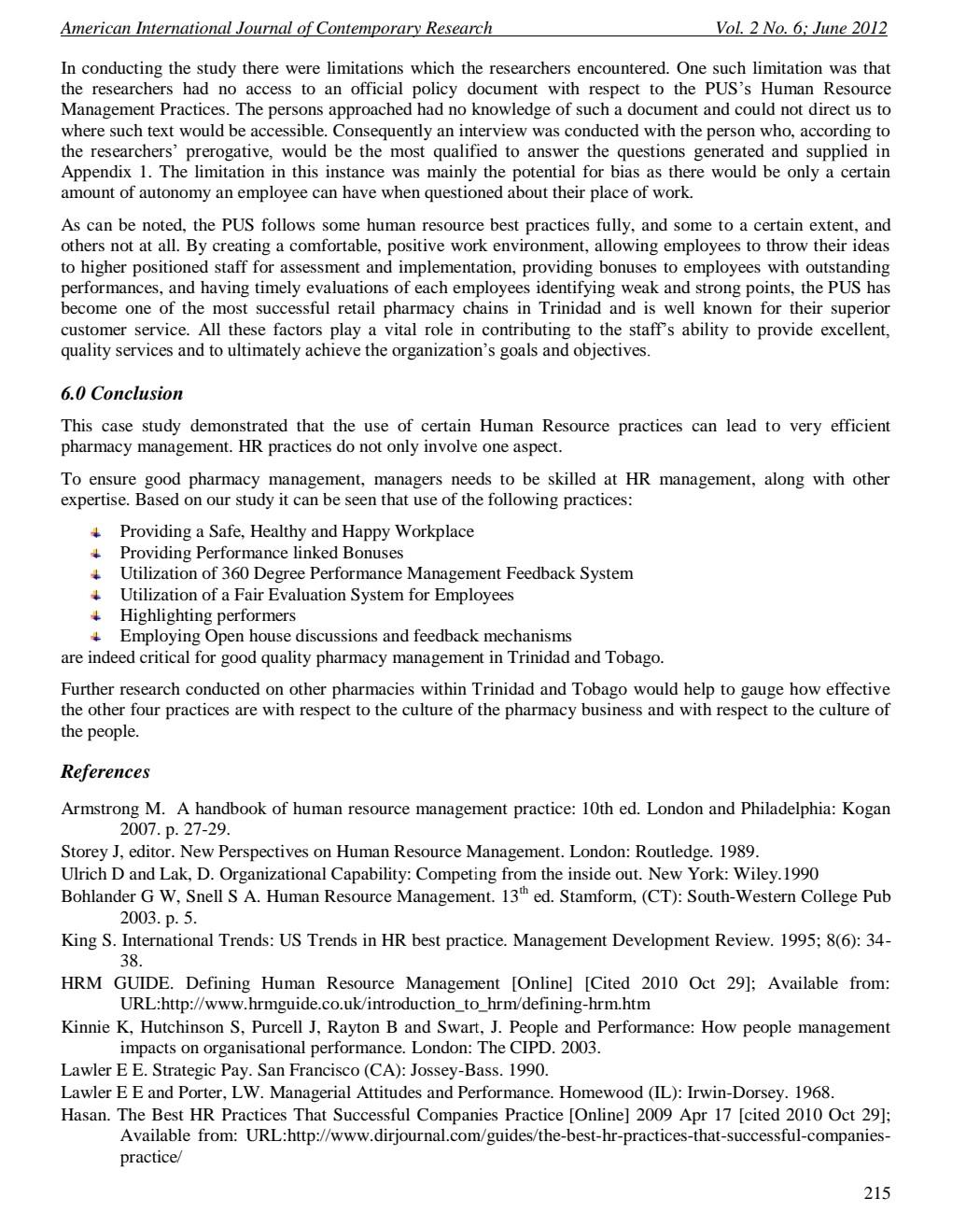
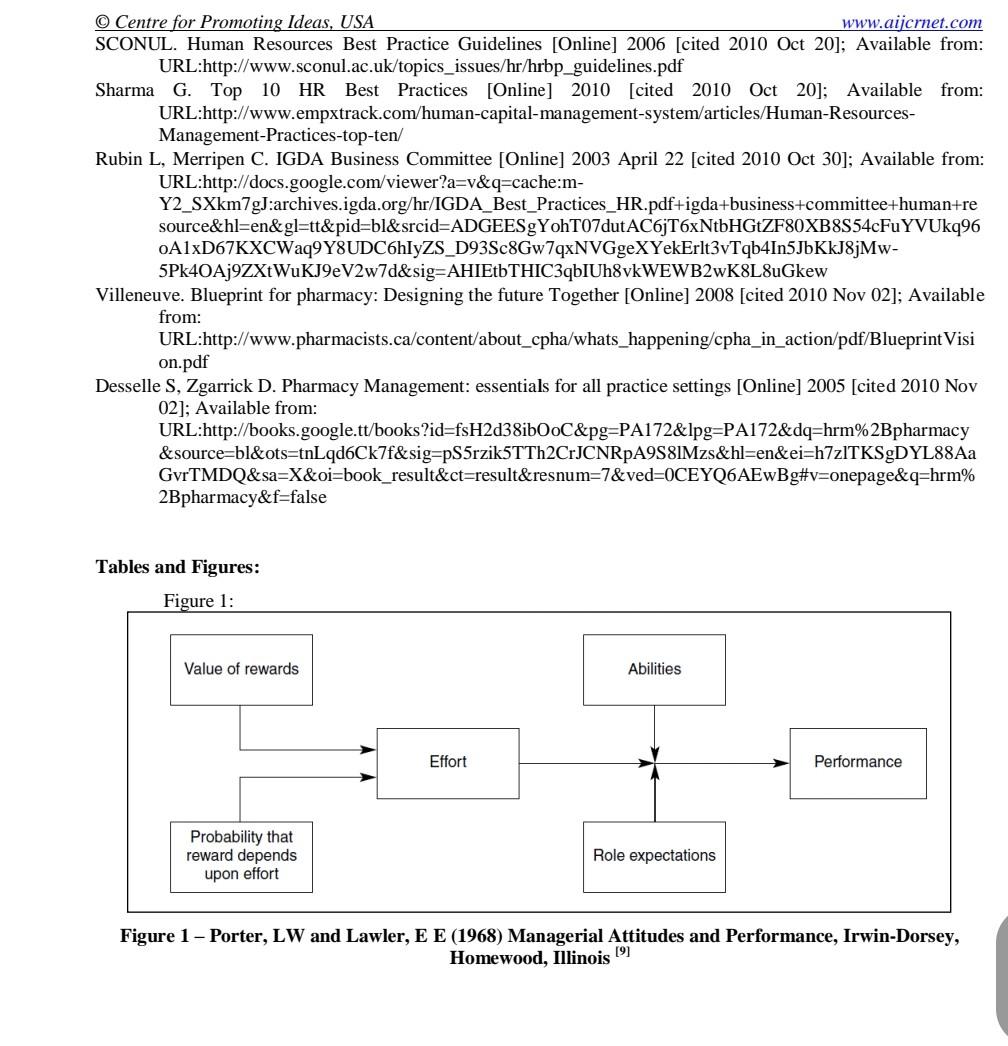
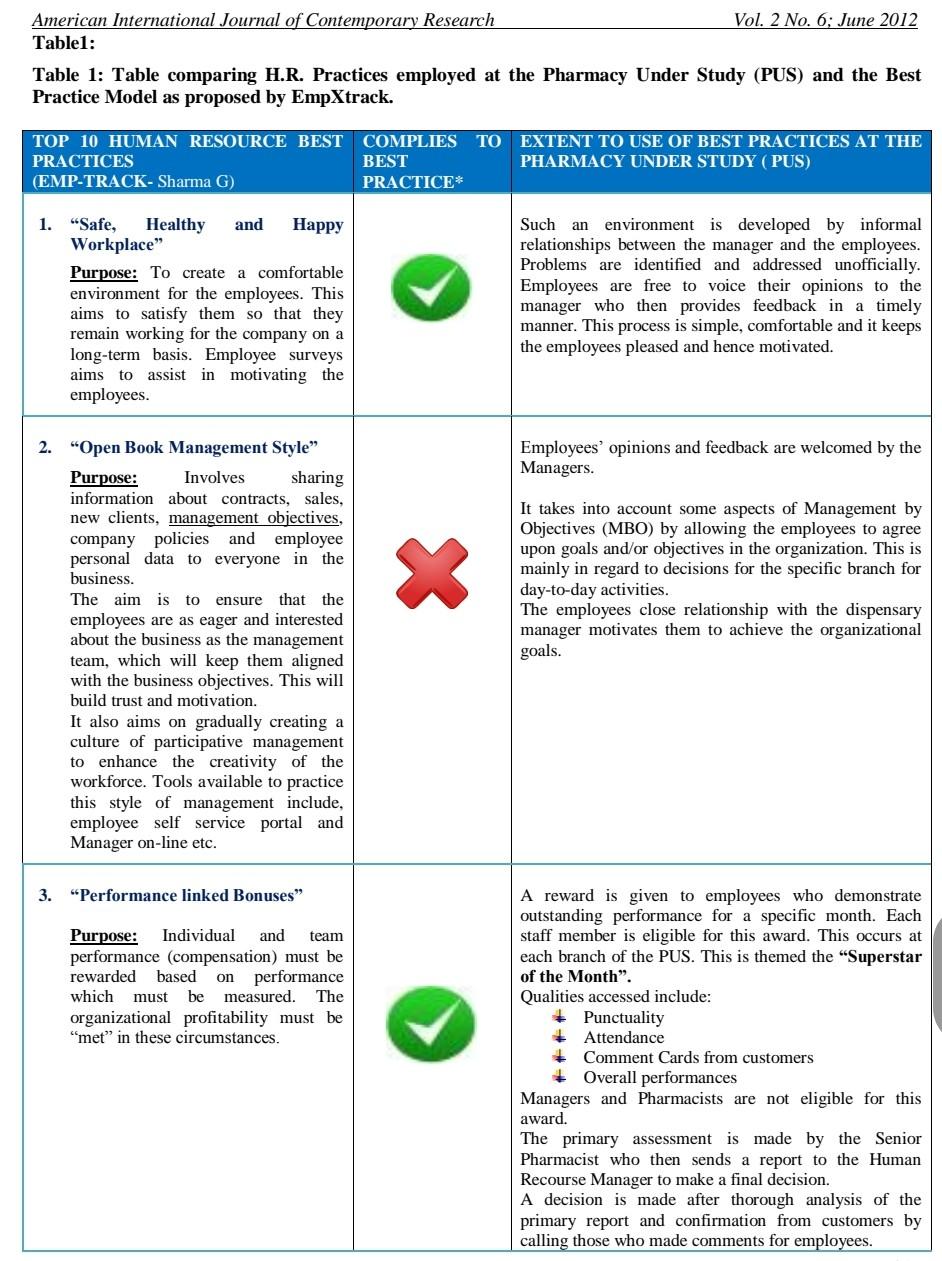
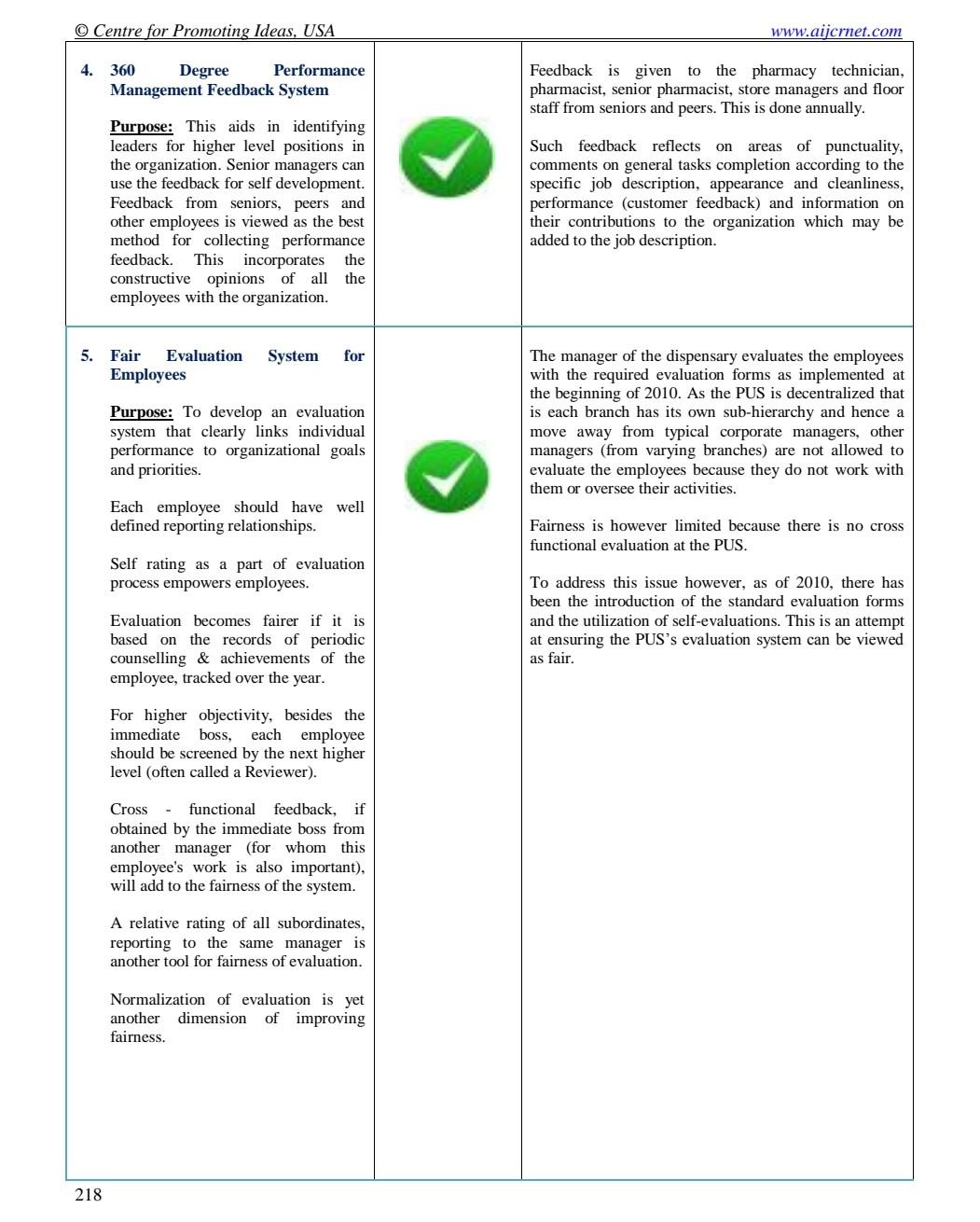
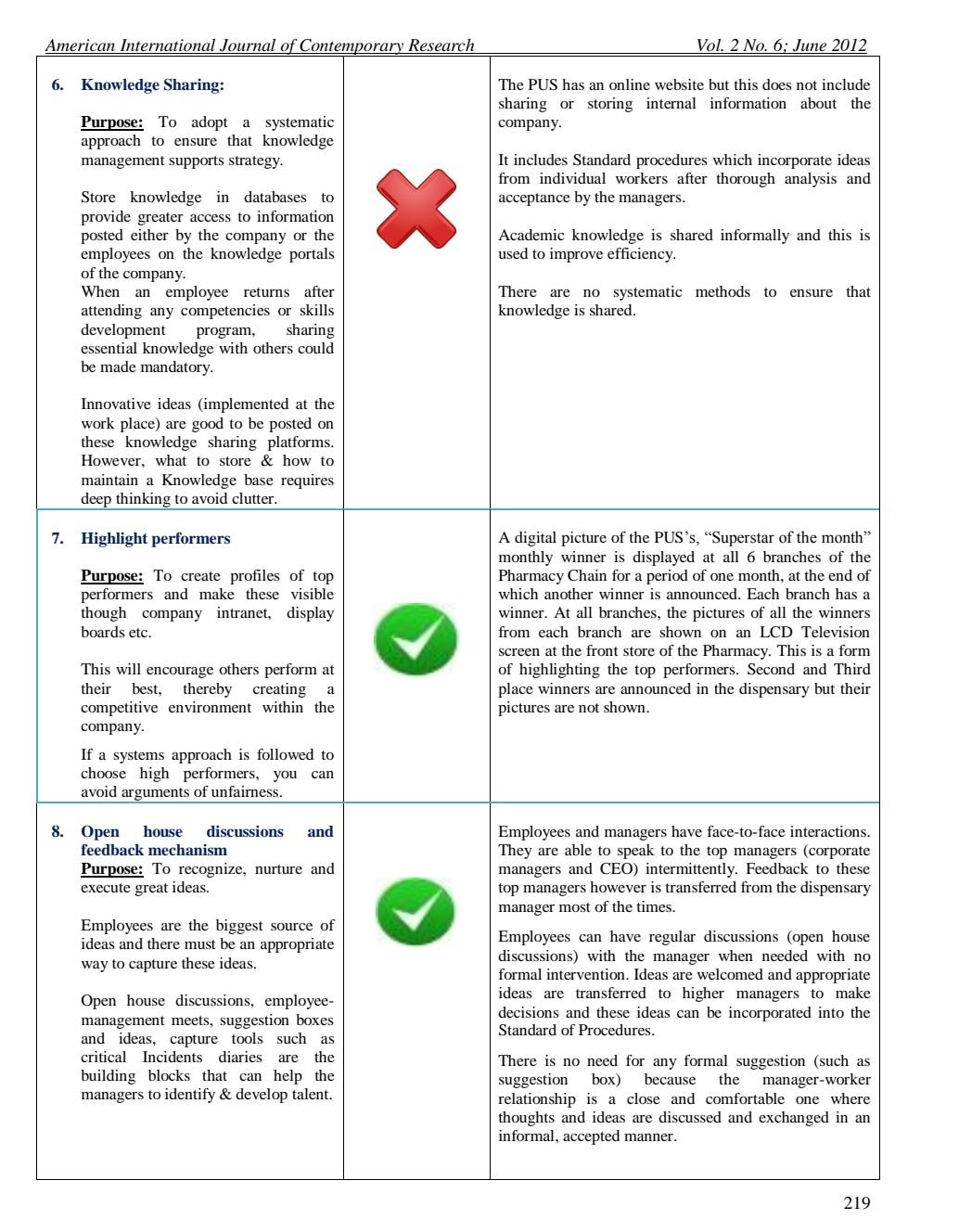
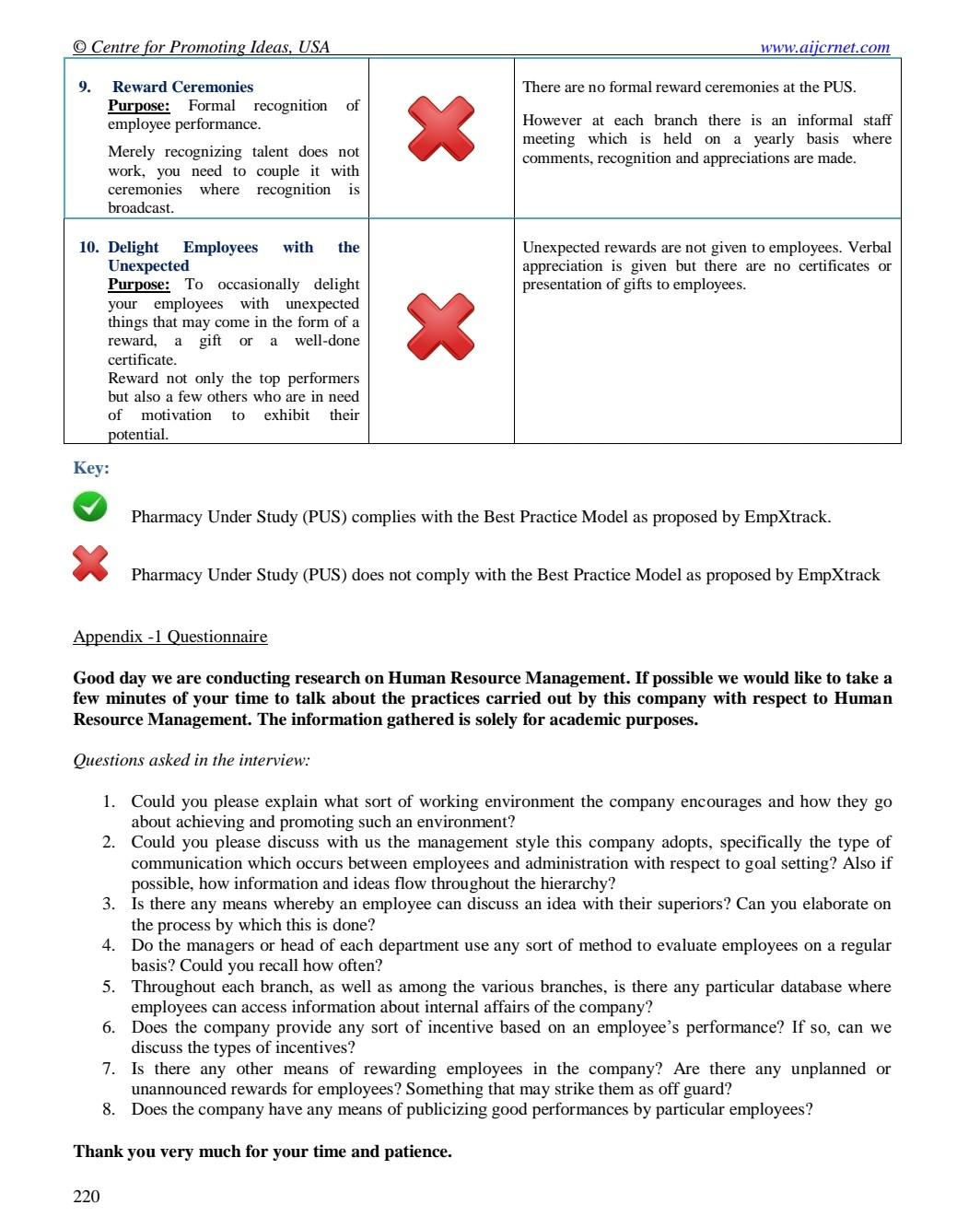
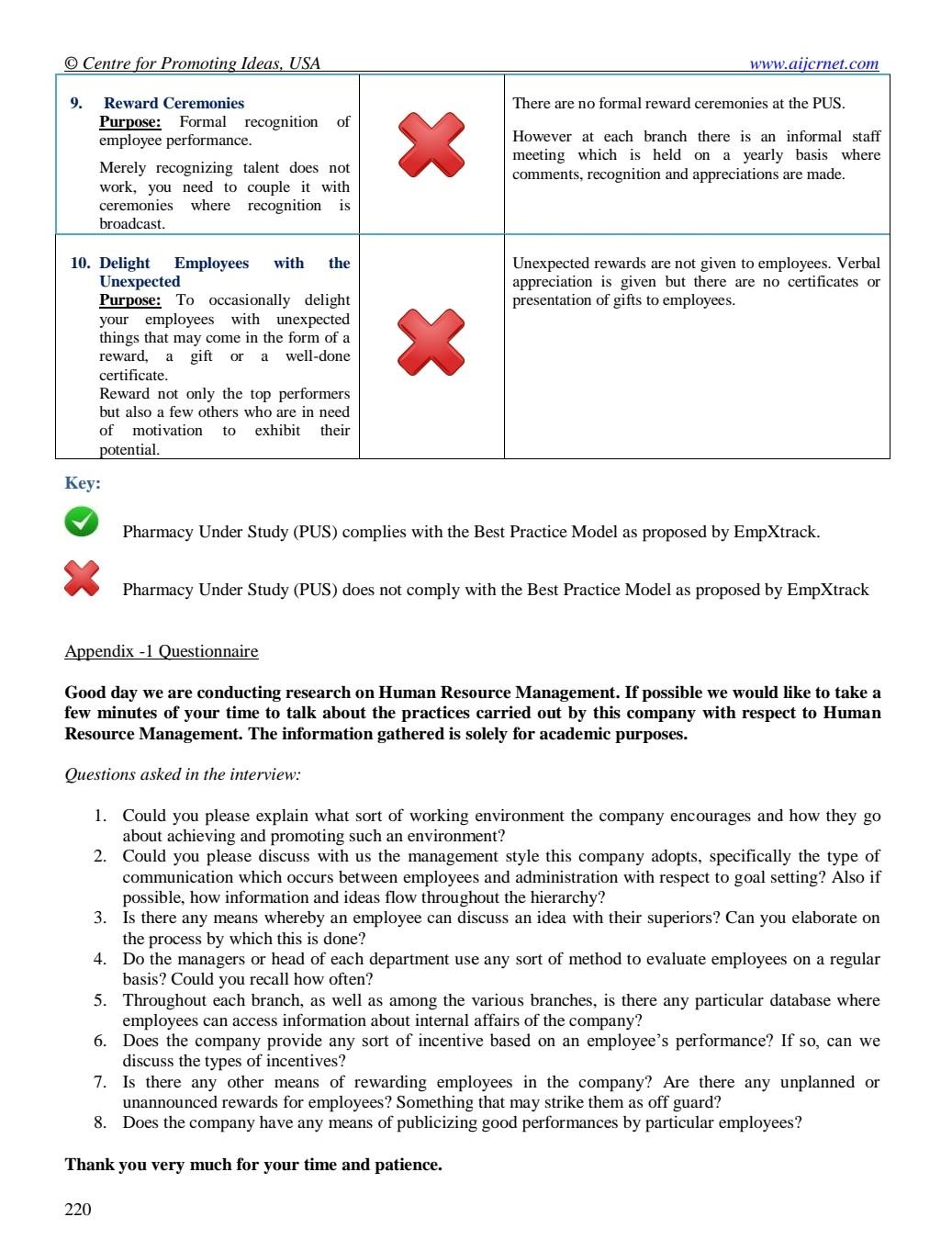
A Case Study of Human Resource Practices in a Private Sector Pharmacy in Trinidad and Its Comparison to the Best Practice Model Sandeep MAHARAJ', Shalimar ALI', Alia HUSAIN', Dushala PRASHAD', Cassie JOSEPH', Sureshwar PANDEY2 1.2 School of Pharmacy The University of the West Indies, St. Augustine Eric Williams Medical Sciences Complex Mount Hope, Trinidad & Tobago Abstract Objective: To conduct a case study on the Human Resource Practices in a Pharmacy and compare their practice to the Best Practice Model. Method: An interview was conducted, with respect to the Human Resource Practice employed at a private sector pharmacy. A list of the questions used as a guide during the interview is attached in Appendix 1. The overall response rate was 100% Results: The results obtained were summarized in a table. It showed at the pharmacy under study adopts 6 of the 10 best practices: Providing a Safe, Healthy and Happy Workplace, Providing Performance linked Bonuses, Utilization of 360 Degree Performance Management Feedback System, and Utilization of a Fair Evaluation System for Employees, Highlighting performers and Employing Open house discussions and feedback mechanisms. The practices which are not carried out by the pharmacy include an Open book management style, knowledge sharing, reward ceremonies and surprising employees with unexpected rewards. Conclusion: From the interview it can be deduced that the pharmacy employs most of the Best practices listed, with the results being reflected by its acclaimed customer service. However it can be noted that to improve their H.R. Management they should attempt to utilize all the practices listed. Keyword: Human Resource, Pharmacy, Case Study 1. Introduction There is a big secret in the Pharmaceutical Industry, one that if revealed prematurely to budding pharmacists will lead to the desiccation of the flood of Human Resource currently experienced in the industry. This paper however, is all about hitting the grisly truth, and that is; Pharmacists Need Managerial Skills for the success of their profession. This paper aims at highlighting one key aspect of successful managing, Human Resource Practices. One fundamental facet of what is called 'the New Workplace' is being able to treat the worker as a human resource and this paper essentially deals with Human Resource Management in Pharmacies, with a look at a popular pharmacy chain in the Republic of Trinidad and Tobago. 1.1 Definition of Human Resource Management Human Resource Management is the understanding and application of the policies and procedures that directly affects the people working within the project team and the overall workforce. The management of the workforce of a business is important to guarantee sufficient staff levels with the right skills, properly rewarded and motivated. [1] It can be defined as a strategic and coherent approach to the management of an organization's working force who, both on an individual as well as a collective level, contribute to the achievement of its objectives. Storey (1989) considers that H.R.M. can be regarded as a 'set of interrelated policies with an ideological and philosophical underpinning'. [2] 207 H.R.M. is centered on achieving two main goals: achieving operational objectives of the organization and on ensuring that individual employees are satisfied with both the working environment and the benefits and compensation that they receive. The characteristics of the H.R.M. concept throughout the years have been described as being diverse, strategic with an emphasis on integration, commitment-oriented, based on the belief that people should be treated as assets (human capital), individualistic rather than collective with respect to its employee relations, a management-driven activity and focused on business values. The purpose of Human Resource Management essentially, is to ensure that the organization is capable of achieving success via people. Ulrich and Lake (1990) remarked that, 'Human Resource Management systems can be the source of organizational capabilities that allow firms to learn and capitalize on new opportunities.' [3] H.R.M. is focused on achieving organizational effectiveness, human capital management, knowledge management, reward management, good employee relations, meeting diverse needs, and bridging the gap between rhetoric and reality. Human Resources Management practices are a fundamental requirements for a successful organization where different kinds of people are brought together to achieve a common purpose [4]. Human resource management (HRM) is a philosophy of people management based on the belief that human resources are equally effective in sustained business success [5, 6]. HRM is the process of managing human talent to achieve an organization objective. By balancing competing demands, it plays an important role in getting the most from employees and providing a work environment that meets their short term and long term needs. An organization's success depends on the knowledge, skill and abilities of its employees. To ensure that H.R.M. of an organization is successful employees need to be acquainted with their organization's mission, their role, what is expected of them, must have the capacity; resources and environment which makes success possible and lastly must receive encouragement; constructive feedback and opportunities to improve and develop. People strategic importance is growing in today's knowledge based industries hence the need for the management of human resources. High performance and productivity are the result of promoting progressive human resource practices by top managers. Organizations that succeed incorporate the human resource management process as a core component in formulating competitive strategic business plans. This allows for major trends to be quickly and efficiently recognized for the benefit of the entire organization. For the past decade, the focus of competitive strategic business plans mainly involved issues such as globalization, embracing new technology, managing change, talent or human capital, responding to market and containing costs. These trends all require a skilled and flexible work force in order to compete in today's society. In addition to competitive challenges facing organizations, managers, particularly HR managers, need to be concerned about changes in the makeup and the expectations of their employees. These changes mainly include demographic and cultural changes [4]. The H.R.M. practices being dealt with in this literature are creating a working (safe and happy) environment, open management or management by objectives (M.B.O.), providing performance incentives, collecting performance feedback, conducting employee evaluations, sharing of knowledge, publicizing good performances, having open discussions with employees, offering rewards to employees for achievements and surprise. Creating a great place to work, ensures that future employees gain a desire to join the organization and once there, to want to stay. From a pharmacy perspective, Pharmacists can use this practice to encourage their employees to be committed to the pharmacy and become more engaged in the work they do. Creating an environment with good employer-employee relationships also serves to strengthen the loyalties of the employees and in so doing reduce the staff turn-over rate in the pharmacy. On the basis of their longitudinal research in 12 companies, Purcell et al (2003) concluded that: "What seems to be happening is that successful firms are able to meet people's needs both for a good job and to work in a great place'. They create good work and a conducive working environment. In this way they become an employer of choice'. People will want to work there because their individual needs are met for a good job with prospects linked to training, appraisal, and working with a good boss who listens and gives some autonomy but helps with coaching and guidance." [7] Management by Objectives (M.B.O.) is a process of agreeing upon goals and/or objectives between management and employees within an organization. M.B.O. aims at increasing organizational performance and intends to make sure that everyone understands what they are in the organization, and has a clear understanding of the aims/objectives of that organization, as well as awareness of their own roles and responsibilities in achieving those aims. In the Pharmacy, this may manifest by outlining the roles of each position in the pharmacy and assigning specific objectives to each employee, with guidance from employees themselves. The purpose of this is thought to be that when employees themselves have been involved with the goal setting and the choosing the course of action to be followed by them, they are more likely to fulfill their responsibilities. Providing performance incentives involves paying out bonuses or having any kind of variable compensation plan which depends solely on each employee's performance. Such incentives can provide a much needed boost in staff morale and pharmacies can capitalize on this practice to encourage healthy competition amongst staff members. Publicizing good performances of employees also encourage healthy competition amongst staff members and with the creation on profiles of these top performers; there will be a chance for the firm to adequately benefit from the employees' competitiveness. Collecting performance feedback could be used as a tool to improve individual and team performance. Some pharmacies have feedback cards placed strategically at various points around the dispensary which allows fellow employees to give feedback on staff members. Employee evaluation centers on linking individuals with prescribed goals and their annual performance with respect to them. In the Pharmacy, an employee evaluation form is a good way of keeping track of individuals and how well they perform the tasks which they set out to do. It is also a very clear methodology which allows an employee to have a clear idea about the progress they have made in the firm, and possible areas of improvement. That being said, it is also one of the least favorable parts of a job. Sharing of knowledge speaks about the storage of knowledge in databases to provide greater access to information posted either by the company or the employees, with respect to the company and the overall achieving of the goals of the organization. In a pharmacy this practice can be applied by having forums set up for employees to share knowledge gained through the various continuous education programs pharmacists are compelled to attend to keep themselves updated. Not only profession related news can be shared on these platforms but news about the pharmacy itself and any changes in the organization can be made and have maximum effect on a minimum time period since, with the revolution of technology, most employees (if not all) would be able to get timely updates from various networking devices. Open discussions with employees are an ideal way managers can get fresh new ideas and perspective from their greatest reservoir of data; their employees. Open house discussions, employee-management meetings and suggestion boxes are all methods by which Pharmacy managers can take advantage of the wealth of knowledge; that is their staff. The theory behind rewards practices is interlinked with motivation, which itself is only likely when a clearly perceived and usable relationship exists between performance and outcome, and the outcome is seen as a means of satisfying needs. This explains why financial motivation, as mentioned above in Providing Performance Incentive, works only if the link between effort and reward is clear, in the words of Lawler (1990) there is a 'line of sight' and the value of the reward is worth the effort[8]. It also explains why intrinsic motivation, which arises from the work itself, can be a more powerful motivating factor than extrinsic financial motivation. This especially applies to the Pharmacy industry where financial gains are not an appropriate motivating factor. Porter and Lawler (1968) developed this theory into a model, illustrated in Figure 1, suggesting that there are two factors determining the effort people put into their jobs: the value of the rewards to individuals and the probability that rewards depend on their exertion made towards their job. (Please See Figure 1 - Porter, LW and Lawler, E E (1968) Managerial Attitudes and Performance, Irwin-Dorsey, Homewood, Illinois [9]) The surprise factor encourages employers to not only reward those top performers but to also occasionally delight other employees with unexpected things that may come in the form of a reward, a gift or a plaque recognizing their contributions. The aim is to give positive re-enforcement to other employees who are in need of motivation to exhibit their full potential. "If the strategic plan is the road map to bottom-line success, the human resource function is the engine that drives the plan. Michael Losey. [5] 2.0 Literature Review Different organizations utilize different Human Resource (HR) practices in an effort to enhance organizational performance through better organizational management techniques. This leads to different ideations of what HR practices entails for different types of organizations. Some companies are able to retain and motivate their workforce through various HR practices thus encouraging the growth of the organization and increasing its overall performance. Some of these practices as explained by Hasan (2009) are creating a working (safe and happy) environment for the workers, essentially providing them with security and displaying their importance to the organization thus giving them incentive to stay; open management/ management by objectives (MBO) which encourages participative management and helps with building trust and motivating staff; providing performance incentives for completion of a task in an appreciable manner, (so should not be given without reason); collecting performance feedback where provision of constructive feedback from all other staff members could be used as a tool to improve individual and team performance; employee evaluation which is a good system for linking individual performance to the goals and priorities of the organization over a year's period; sharing of knowledge through the creation of a database that can be accessed by each employee which can help with increasing individual employee performance and thus overall performance; publicizing good performances which encourages all others to give their best; having open discussions with employees which can help the organization identify the talented ones who can better lead the organization to success; offering rewards to employees for achievements, publicly doing so helps to motivate staff and acts as an incentive to better their performance, however it needs to be noted that a certain level of excellence needs to be accomplished before the reward is presented; and the surprise factor which can be given to anyone when they least expect it which has been proven to greatly motivate staff who do not accomplish as much as the rest.[10] Gireesh Sharma of EmpXtrack Integrated Human Capital and Talent Management Suite also identified the above as the ten top HR practices for a business to achieve organization goals. [12] According to the Investors In People Standard there are a few strategies and actions to be taken to achieve best practice in HR management. There are four strategies that can be pursued to achieve improved organizational performance; these include the business strategy, the learning and development strategy, the people management strategy and the leadership and management strategy. The four main HR practices the Investors in People Standard lists to advance organization performance focuses on management effectiveness, recognition and reward, involvement and empowerment, and learning and development. After these practices or actions have been implemented the only obvious step in the thought process is to evaluate its impact on the organization's performance. This is done in two ways, performance measurement and continuous improvement. More specific areas of HR management deals with recruitment practices involving the use of appropriate selection tools and requirements, hiring in a timely manner; the provision of viable and attractive benefits and compensation packages to employees, employee performance management which involves feedback and MBO as mentioned previously; workforce continuity and succession planning which involves knowledge sharing and monitoring workforce patterns and behaviours, conformance with legal obligations with respect to discrimination, health and safety, equal opportunity among other aspects; and developing a positive workplace culture which includes reward systems and developing effective communication, working with groups and monitoring of staff satisfaction.[11] The International Game Developers Association (IGDA) Business Committee developed a summary report on seven HR best practices at the 2003 Best Practices Roundtables and Reports. Their intention was to improve their own HR practices, and also that of the entire game development community. These best practices that were elicited by the business committee included: mandatory meetings with producers and department managers which they stated allows for discussion of individuals' performance and training needs which can lead to succession planning and allow HR to coordinate resources and coaching of managers through HR issues; the process of recruiting where managers must know and review requirements and criteria they are looking for before beginning the hiring process for a candidate which makes the recruiting process more valuable and consistent across all departments; Open Book Management which include the sharing of contract and financial information with employees so they understand why certain decisions are made and the outcomes of those decisions which allows employees to feel more included and proud about their role in the organization; bonuses or any kind of compensation which allows employees to be more team focused; performance management feedback which helps to create a more comprehensive picture of individuals' performances, and hence highlights areas of improvement or excellence; hiring temporary workers as they are paid for their short term contributions but are not eligible for benefits and thus do not contribute to claims experience; and keeping it legal which involves keeping a list of organizations that can be turned to for legal advice.[13] According to King (1995), a professor at the University of Minnesota's Industrial Relations Centre, Cheri Ostroff, conducted a survey to analyze the relationship between the use of human resource practices and organizational performance across the United States. The survey discovered that the human resource activities that are often valued, but not used to the level they are valued include: the meeting of supervisors and manager with individual employees to give performance feedback for improvement; the training of managers to provide appropriate employee feedback and to perform accurate performance appraisals; the promoting of managers and supervisors to use non-financial rewards such as recognition and praise; the sharing of important information with employees formally; the production of performance appraisal forms that focus on the appropriate duties and skills needed for successful job performance; training of employees to ensure skills are present and updated; and connecting an employee's rewards or bonuses to his/her job performance. [14] As noted by the Society for Human Resource Management and CCH Incorporated (1995), when top management promotes progressive human resource practices, the results are usually high performance and productivity. A survey conducted by the Society of Human Resource Management found that organizations that made the top twenty-five per cent for quality human resource programmes also had superior index ratings for productivity, sales performance, market book value, and market value. The survey also found that HR performances that provide selective recruiting and hiring practices, supervisory appraisals of performance, job security during downsizings, promoting of workplace diversity and team building contributes to an organization's market-based performance. In addition, the results showed that productivity is attributed by employee assistance ideas, the hiring of contingent and temporary workers, organizational-based pay plans, the promotion of workplace diversity, good benefits, and job enrichment. [5] In 2008, the Task force on a Blueprint for Pharmacy made a report supported by the Canadian Pharmacists Association on providing optimal drug therapy outcomes for Canadians through patient-centred care. It included key actions that should be adopted by community pharmacies to guide pharmacy human resource initiatives to ensure high quality pharmacy services. Some of these key actions included: evolving roles, characteristics and practice models of the employees; providing information or sharing knowledge on enhanced skills and knowledge for pharmacists within key areas of pharmacy practice; evaluating the effect of pharmacy practice on patient's health, population's health and healthcare; identifying factors determining pharmacists and pharmacy technician's satisfaction in the workplace; updating recruitment and retention procedures; innovating drug distribution and workflow practices; and having an appropriate number of pharmacy technicians with higher qualifications, expanded responsibilities and accountability. [15] According to Desselle and Zgarrick HRM (2004), such practices are critical to the pharmacy profession as a lot of pharmacists and pharmacy technicians are capable of much higher performances than what they are currently involved with. They further emphasized on HRM practices that are vital. These involved: proper recruitment and placement to increase employee motivation and performance and also to formulate a good image of the organization (pharmacists and pharmacy technicians are more likely to determine a pharmacy's image rather than their promotional activities); training and development to help employees meet the changing demand of their tasks and prepare them for new responsibilities and positions; performance feedback; and progressive discipline to escalate the consequences of poor employee performance with the goal of improving that behaviour.[16] It is important to note that all practices is associated with pros and cons, which can work as an advantage to some organizations or a disadvantage depending on the organization's strong points. [13] 3.0 Methodology A two (2) hour interview consisting of open-ended questions was conducted at a private sector pharmacy. The open-ended questions were based on the top HR practices previously documented. The respondent, a dispensary store manager, was asked to elaborate on the use and extent of use of certain HR practices currently employed in the organization. Attached in the Appendix is a list of the main questions asked in the interview. The pharmacy interviewed was chosen based on its noteworthy asset of good customer service, which in most cases, is a result of good HR practice implementation. For inclusion in the study, it was determined that a respondent must be either the owner, manager or head pharmacist of the pharmacy, ensuring that they have been employed at the pharmacy of interest for at least three years and have the required knowledge of the HR practices employed and the business' overall performance with respect to pharmacy management. Obtaining information was a very time consuming process but in the end, the respondent reported little difficulty in providing required data. Overall response rate was 100%. After the data was collected, results were tabulated evaluating the practices utilized at Parent Company along with the extent to which each is utilized at the branch under study. The data was analyzed by comparing previously found best practices with its utilization at the branch in Trinidad and Tobago and determining how effective it is in benefiting the organization as a whole. Table 1 summarizes the results obtained from the interview conducted and compares the findings to the Best Practice Model as proposed by EmpXtrack. In the following ns, we further dis the ilizati of each practice, how effective it is and overall extent of use in maintaining good pharmacy management. 4.0 Results Please refer to: Table 1: Table comparing H.R. Practices employed at the Pharmacy Under Study (PUS) and the Best Practice Model as proposed by EmpXtrack. 5.0 Discussion The Pharmacy under Study (PUS) is a prominent retail pharmacy chain in Trinidad with six branches in targeted locations. It caters to consumers' health, well-being and personal care needs. Each pharmacy in the organization chain offers more than a typical retail community pharmacy, with drive-thru pharmaceutical services, photo centre, cosmetics self-service wall, general merchandise, convenience grocery assortment, extended opening hours including Sundays and Public Holidays. It is therefore not difficult to understand that the PUS's main goal, as an organization, is to effectively provide high quality customer service. To ensure the organization is capable of meeting its primary goal of excellent customer service, the management of the employees of the organization is of utmost importance. Without proper human resources and human resource management, the PUS would not be able to provide the customer service they often promote. As noted in the Literature Review previously, in order to be successful, this company will need to provide their employees with good jobs, incentives to work and a comfortable and easy working environment to name a few. These aspects are essential in encouraging employees to work there since individual needs would be met. Such needs would include a good job associated with training and appraisal, and an approachable boss who listens and provides guidance. For suitable human resource management techniques that will ultimately lead to good pharmacy management, the PUS should adopt human resource practices which are ideal for success within any organization, known as Human Resource best practices. In our results, we have compared human resource best practices with PUS's human resource practices to determine whether the best practices were being carried out. It was subsequently deduced that PUS employs certain human resource best practices. The PUS creates a safe, happy and comfortable work environment for their employees. It is the responsibility of the store manager to form open relationships between administration and employees so that employees are able to express their concerns about the job, customers or other employees to the manager. Furthermore, it allows the administration to quickly and directly address any problems which may arise with any employee. This is conducted via appropriate and respectful communication. It is of great assistance when management understands exactly what contributes to pharmacists and pharmacy technicians' satisfaction in the workplace, and helps employees to identify what is expected of them. This is consistent with the report made by the Task Force on a Blueprint for Pharmacy that stated that identifying factors that determine pharmacists and pharmacy technician's satisfaction in the workplace is a key human resource practice. This type of relationship could provide employees with an ideal work environment, resulting in employee satisfaction that would translate into their work. Consequently this can foster loyalty to the company by the employees and encourage employees to stay longer within the organization, reducing the amount of resources needed to hire and train new staff. On the other hand, forming too much of a comfortable environment can lead to an abuse of the system. Employees can take advantage of administration with constant complaints and the expectation for all of their grievances, regardless of their importance, to be addressed. The PUS does not fully adopt the open book management style. Information is usually kept for management level employees. However, employees are able to voice opinions within different departments, which are taken into consideration by managers who forward the suggestions to the respective higher authority. Open book management style if utilized would allow employees to participate in the management of the organization, so that they are in line with the organization's goals and objectives. It would make employees more interested and motivated in doing their job, since they would be more inclined to its purpose and would know it is part of something important. With the proverb, "Great Ideas Rule The World', the PUS actually look towards their employees as a good source for ideas to better their organization. The PUS encourages open house discussions. These are usually face to face interactions that occur between employees and the dispensary manager. For example, from the staff experiences, the pharmacist or dispensary manager is able give suggestions or ideas to persons in senior positions, where the ideas can then be taken into consideration and evaluated. Sometimes these ideas can then be added to the PUS's documentation of Standard of Procedures once the ideas are viewed as beneficial to the overall pharmacy operations, in order to be effectively implemented. Owing to the close employer-employee relationship in the PUS, verbal interaction is sufficient for exchange of ideas, thus no suggestion box is needed. It is a good practice for the company to pay attention to their employees' ideas as it all aids in the development of the organization. As long as a good relationship exists between employees and employers, open house discussions would be an appropriate mechanism to capture ideas or to hear about critical incidents that can be used to identify and develop talent. The PUS began utilizing performance linked bonuses in the beginning of 2010. Every month, at each branch, the PUS provides extra monetary allowances to a pharmacy technician who displayed consistent outstanding performance throughout the month, called "The Superstar of the month." Performance is determined based on employees' punctuality and attendance, customers' remarks on comment cards and overall performances. Comment cards allow customer to evaluate the employees where the staff's name and customer's contact information is written on the comment cards, along with their remarks. At the end of the year, the employee whose outstanding performance was most consistent is given an additional bonus and a trip out of the country. Having these bonuses provides incentive to pharmacy technicians throughout the organization to improve or perfect their performance in the organizations, leading to increased efficiency and healthy competition between staff members. This is consistent with Investors in People Standard strategies for Human Resource Best Practices, which includes recognition and reward by the provision of viable and attractive benefits and compensation packages to employees. However, a rift between employees can occur if one employee receives the bonus just because their performance was only marginally better than another employee. Good performances are highlighted by dispensary and store managers and are noted for The Superstar of the month bonus. First place winner's photo is displayed in all six branches, and is changed every month according to the winner. It acts as an incentive where it increases staff zeal to obtain first place, creating a competitive environment. As in all systems, disgruntlement cannot be avoided and if an employee finds that their performances are not being recognized, they may feel daunted and not continue to strive for superior performance compromising the work force. Reward ceremonies for outstanding performances are also another incentive for employees to strive to do their best. 213 Centre for Promoting Ideas, USA www.aijcrnet.com Obtaining monetary rewards sometimes does not compare to their achievements being recognised in a public platform. However, although the PUS's dispensary and store managers do recognize their employees' achievements, it is done in a more subtle way, such as a small presentation of rewards at a staff meeting at the end of the year. These meetings are branch specific and thus more private. Reward ceremonies are not done due to lack of time. Since the PUS only closes on the Christmas holiday, there always need to be staff present. Therefore, there would be great difficulty in juggling the provision of adequate staff at each branch and having a reward ceremony where everyone should be present. King (1995) found that in a survey done in the United States, most organizations do value the promotion and implementation of non-financial rewards such as recognition and praise by managers and supervisors, but it is done to the level it is valued, as conducted by the PUS. Provision of encouraging remarks is probably the only unexpected rewards that the PUS's senior staff members provide to their employees. Unexpected gifts or certificates are not on the agenda, which may lead to unmotivated staff and their inability to exhibit their full potential. The problem with this practice arises however, if certain staff members are unexpectedly rewarded, then other employees may feel unappreciated and discouraged to perform at their best. The PUS managers utilize evaluation forms for each employee and this is done annually. These forms include attributes such as punctuality, completion of general tasks, cleanliness, appearance, performance (customer feedback), and contribution to improvement of the pharmacy (which may be entered in the job description). In this evaluation, feedback is given to the pharmacy technicians, pharmacists, senior pharmacists, store managers and floor staff from seniors, peers and each other. Each person provides relevant, positive and constructive feedback on every evaluation. This provides a comprehensive picture of an employee, as it shows how individual employees is seen in multiple views. This helps employees to assess themselves as they receive the feedback and allow them to identify areas of improvement, both as individuals and as a team. This corresponds with Desselle and Zgarrick (2004) and Hasan (2009) who identified collecting performance feedback as a tool to improve individual and team performance. It can also allow superiors to use feedback for self-development. However, there is the risk that evaluations may be biased since there is a possibility that an employee may deliberately negatively evaluate another employee due to personal conflicts and inherent bias towards that person. Employees may disagree with some of the feedback given to them and so formulate resentment towards other employees or seniors or the organization as a whole, and hence may not perform as they used to or create strife in the organization and an unstable, negative work environment. In addition it is also a very time consuming process to collect information and collate, and also to train persons on how to provide positive feedback with no personal qualms or no fear of retribution if their identity is revealed. To develop a fair evaluation system for employees, the PUS has utilized the self-evaluation forms previously mentioned which has only been implemented within approximately 1 year of the interview conducted. These evaluation forms would be used by senior pharmacists to appraise subordinates. This is done from time to time. The PUS however is decentralized and so the senior pharmacist at a certain branch would only evaluate employees at that branch, so cross-functional feedback is not usually employed at the PUS branches. Self- evaluation allows employees to be empowered, and acts as indicators of areas and ways they can develop. Evaluation by a superior can be used by employees to identify areas of improvement that would be needed for them to be aligned with the organization's goals/ objectives, such as good customer service. This is consistent with the practices outlined by Hasan (2009) and Sharma where employee evaluation was indicated as a good system for linking individual performance to the goals and priorities of the organization over a year's period. However, there is always the chance that an employee dislikes the feedback given and can then hold resentment towards their supervisor. This can compromise employee-employer relationships, producing a hostile work environment. With respect to the aspect of knowledge sharing through databases, this is not implemented in any of the PUS branches. This is consistent with the survey reviewed by King (1995) that the sharing of important information formally is something that is meaningful to most organizations but not used to the level it is valued. However, innovative ideas that help individual branches may be added to the PUS's Standards of Procedures, which acts as a knowledge sharing platform, and so may be implemented in other branches once practical as each branch is different in its own setting. Also, academic knowledge is shared, which is not mandatory but help to improve efficiency. Knowledge sharing on databases requires thoughtful planning on what to store and how to maintain it in order to avoid clutter. American International Journal of Contemporary Research Vol. 2 No. 6; June 2012 In conducting the study there were limitations which the researchers encountered. One such limitation was that the researchers had no access to an official policy document with respect to the PUS's Human Resource Management Practices. The persons approached had no knowledge of such a document and could not direct us to where such text would be accessible. Consequently an interview was conducted with the person who, according to the researchers' prerogative, would be the most qualified to answer the questions generated and supplied in Appendix 1. The limitation in this instance was mainly the potential for bias as there would be only a certain amount of autonomy an employee can have when questioned about their place of work. As can be noted, the PUS follows some human resource best practices fully, and some to a certain extent, and others not at all. By creating a comfortable, positive work environment, allowing employees to throw their ideas to higher positioned staff for assessment and implementation, providing bonuses to employees with outstanding performances, and having timely evaluations of each employees identifying weak and strong points, the PUS has become one of the most successful retail pharmacy chains in Trinidad and is well known for their superior customer service. All these factors play a vital role in contributing to the staff's ability to provide excellent, quality services and to ultimately achieve the organization's goals and objectives. + 6.0 Conclusion This case study demonstrated that the use of certain Human Resource practices can lead to very efficient pharmacy management. HR practices do not only involve one aspect. To ensure good pharmacy management, managers needs to be skilled at HR management, along with other expertise. Based on our study it can be seen that use of the following practices: + Providing a Safe, Healthy and Happy Workplace Providing Performance linked Bonuses Utilization of 360 Degree Performance Management Feedback System Utilization of a Fair Evaluation System for Employees + Highlighting performers + Employing Open house discussions and feedback mechanisms are indeed critical for good quality pharmacy management in Trinidad and Tobago. Further research conducted on other pharmacies within Trinidad and Tobago would help to gauge how effective the other four practices are with respect to the culture of the pharmacy business and with respect to the culture of the people. + + References Armstrong M. A handbook of human resource management practice: 10th ed. London and Philadelphia: Kogan 2007. p. 27-29. Storey J, editor. New Perspectives on Human Resource Management. London: Routledge. 1989. Ulrich D and Lak, D. Organizational Capability: Competing from the inside out. New York: Wiley.1990 Bohlander G W, Snell S A. Human Resource Management. 13th ed. Stamform, (CT): South-Western College Pub 2003. p. 5. King S. International Trends: US Trends in HR best practice. Management Development Review. 1995; 8(6): 34- 38. HRM GUIDE. Defining Human Resource Management [Online] [Cited 2010 Oct 29]; Available from: URL:http://www.hrmguide.co.uk/introduction_to_hrm/defining-hrm.htm Kinnie K, Hutchinson S, Purcell J, Rayton B and Swart, J. People and Performance: How people management impacts on organisational performance. London: The CIPD. 2003. Lawler E E. Strategic Pay. San Francisco (CA): Jossey-Bass. 1990. Lawler EE and Porter, LW. Managerial Attitudes and Performance. Homewood (IL): Irwin-Dorsey. 1968. Hasan. The Best HR Practices That Successful Companies Practice [Online] 2009 Apr 17 [cited 2010 Oct 29]; Available from: URL:http://www.dirjournal.com/guides/the-best-hr-practices-that-successful-companies- practice 215 Centre for Promoting Ideas, USA www.aijcrnet.com SCONUL. Human Resources Best Practice Guidelines [Online] 2006 [cited 2010 Oct 20]; Available from: URL:http://www.sconul.ac.uk/topics_issues/hr/hrbp_guidelines.pdf Sharma G. Top 10 HR Best Practices [Online] 2010 [cited 2010 Oct 20]; Available from: URL:http://www.empxtrack.com/human-capital-management-system/articles/Human Resources- Management-Practices-top-ten/ Rubin L, Merripen C. IGDA Business Committee [Online] 2003 April 22 [cited 2010 Oct 30]; Available from: URL:http://docs.google.com/viewer?a=v&q=cache:m- Y2_SXkm7gJ:archives.igda.org/hr/IGDA_Best_Practices_HR.pdf+igda+business+committee+human+re source&hl=en&gl=tt&pid=bl&srcid=ADGEESgYohT07dut AC6jT6xNtbHGtZF80XB8S54cFuYVUkq96 OA1xD67KXCWaq9Y8UDC6hlyZS_D93Sc8Gw7qxNVGgeXYekErlt3vTqb4In5JbKkJ8jMw- 5Pk40Aj9ZXtWuKJ9eV2w7d&sig=AHIEBTHIC3qbIUh8vkWEWB2wK8L8uGkew Villeneuve. Blueprint for pharmacy: Designing the future Together [Online] 2008 [cited 2010 Nov 02]; Available from: URL:http://www.pharmacists.ca/content/about_cpha/whats_happening/cpha_in_action/pdf/Blueprint Visi on.pdf Desselle S, Zgarrick D. Pharmacy Management: essentials for all practice settings [Online] 2005 [cited 2010 Nov 02]; Available from: URL:http://books.google.tt/books?id=fsH2d38ib0oC&pg=PA172&lpg=PA172&dq=hrm%2Bpharmacy &source=bl&ots=tnLqd6Ck7f&sig=pS5rzik5TTh2CrJCNRPA9S8IMzs&hl=en&ei=h7z1TKSgDYL88Aa GvrTMDQ&sa=X&oi=book_result&ct=result&resnum=7&ved=0CEYQ6AEwBg#v=onepage&q=hrm% 2Bpharmacy&f=false Tables and Figures: Figure 1: Value of rewards Abilities Effort Performance Probability that reward depends upon effort Role expectations Figure 1 - Porter, LW and Lawler, E E (1968) Managerial Attitudes and Performance, Irwin-Dorsey, Homewood, Illinois (9) American International Journal of Contemporary Research Vol. 2 No. 6: June 2012 Tablel: Table 1: Table comparing H.R. Practices employed at the Pharmacy Under Study (PUS) and the Best Practice Model as proposed by EmpXtrack. TOP 10 HUMAN RESOURCE BEST PRACTICES (EMP-TRACK-Sharma G) COMPLIES TO EXTENT TO USE OF BEST PRACTICES AT THE BEST PHARMACY UNDER STUDY (PUS) PRACTICE* 1. "Safe, Healthy and Happy Workplace" Purpose: To create a comfortable environment for the employees. This aims to satisfy them so that they remain working for the company on a long-term basis. Employee surveys aims to assist in motivating the employees. Such an environment is developed by informal relationships between the manager and the employees. Problems are identified and addressed unofficially. Employees are free to voice their opinions to the manager who then provides feedback in a timely manner. This process is simple, comfortable and it keeps the employees pleased and hence motivated. Employees' opinions and feedback are welcomed by the Managers. 2. "Open Book Management Style" Purpose: Involves sharing information about contracts, sales, new clients, management objectives, company policies and employee personal data to everyone in the business. The aim is to ensure that the employees are as eager and interested about the business as the management team, which will keep them aligned with the business objectives. This will build trust and motivation. It also aims on gradually creating a culture of participative management to enhance the creativity of the workforce. Tools available to practice this style of management include, employee self service portal and Manager on-line etc. It takes into account some aspects of Management by Objectives (MBO) by allowing the employees to agree upon goals and/or objectives in the organization. This is mainly in regard to decisions for the specific branch for day-to-day activities. The employees close relationship with the dispensary manager motivates them to achieve the organizational goals. 3. "Performance linked Bonuses" Purpose: Individual and team performance (compensation) must be rewarded based on performance which must be measured. The organizational profitability must be "met" in these circumstances. A reward is given to employees who demonstrate outstanding performance for a specific month. Each staff member is eligible for this award. This occurs at each branch of the PUS. This is themed the "Superstar of the Month". Qualities accessed include: Punctuality Attendance Comment Cards from customers + Overall performances Managers and Pharmacists are not eligible for this award. The primary assessment is made by the Senior Pharmacist who then sends a report to the Human Recourse Manager to make a final decision. A decision is made after thorough analysis of the primary report and confirmation from customers by calling those who made comments for employees. Centre for Promoting Ideas, USA www.aijcrnet.com 4. 360 Degree Performance Management Feedback System Feedback is given to the pharmacy technician, pharmacist, senior pharmacist, store managers and floor staff from seniors and peers. This is done annually. on Purpose: This aids in identifying leaders for higher level positions in the organization. Senior managers can use the feedback for self development. Feedback from seniors, peers and other employees is viewed as the best method for collecting performance feedback This incorporates the constructive opinions of all the employees with the organization. Such feedback reflects areas of punctuality, comments on general tasks completion according to the specific job description, appearance and cleanliness, performance (customer feedback) and information on their contributions to the organization which may be added to the job description. System for 5. Fair Evaluation Employees Purpose: To develop an evaluation system that clearly links individual performance to organizational goals and priorities. The manager of the dispensary evaluates the employees with the required evaluation forms as implemented at the beginning of 2010. As the PUS is decentralized that is each branch has its own sub-hierarchy and hence a move away from typical corporate managers, othe managers (from varying branches) are not allowed to evaluate the employees because they do not work with them or oversee their activities. Each employee should have well defined reporting relationships. Fairness is however limited because there is no cross functional evaluation at the PUS. Self rating as a part of evaluation process empowers employees. Evaluation becomes fairer if it is based on the records of periodic counselling & achievements of the employee, tracked over the year. To address this issue however, as of 2010, there has been the introduction of the standard evaluation forms and the utilization of self-evaluations. This is an attempt at ensuring the PUS's evaluation system can be viewed as fair. For higher objectivity, besides the immediate boss, each employee should be screened by the next higher level (often called a Reviewer). Cross - functional feedback, if obtained by the immediate boss from another manager (for whom this employee's work is also important), will add to the fairness of the system. A relative rating of all subordinates, reporting to the same manager is another tool for fairness of evaluation. Normalization of evaluation is yet another dimension of improving fairness. 218 American International Journal of Contemporary Research Vol. 2 No. 6, June 2012 6. Knowledge Sharing: The PUS has an online website but this does not include sharing or storing internal information about the company. Purpose: To adopt a systematic approach to ensure that knowledge management supports strategy. It includes Standard procedures which incorporate ideas from individual workers after thorough analysis and acceptance by the managers. X Academic knowledge is shared informally and this is used to improve efficiency. Store knowledge in databases to provide greater access to information posted either by the company or the employees on the knowledge portals of the company. When an employee returns after attending any competencies or skills development program, sharing essential knowledge with others could be made mandatory. There are no systematic methods to ensure that knowledge is shared. Innovative ideas implemented at the work place) are good to be posted on these knowledge sharing platforms. However, what to store & how to maintain a Knowledge base requires deep thinking to avoid clutter. 7. Highlight performers Purpose: To create profiles of top performers and make these visible though company intranet, display boards etc. A digital picture of the PUS's, Superstar of the month monthly winner is displayed at all 6 branches of the Pharmacy Chain for a period of one month, at the end of which another winner is announced. Each branch has a winner. At all branches, the pictures of all the winners from each branch are shown on an LCD Television screen at the front store of the Pharmacy. This is a form of highlighting the top performers. Second and Third place winners are announced in the dispensary but their pictures are not shown. This will encourage others perform at their best, thereby creating a competitive environment within the company. If a systems approach is followed to choose high performers, you can avoid arguments of unfairness. 8. Open house discussions and feedback mechanism Purpose: To recognize, nurture and execute great ideas. Employees are the biggest source of ideas and there must be an appropriate way to capture these ideas. Employees and managers have face-to-face interactions. They are able to speak to the top managers (corporate managers and CEO) intermittently. Feedback to these top managers however is transferred from the dispensary manager most of the times. Employees can have regular discussions (open house discussions) with the manager when needed with no formal intervention. Ideas are welcomed and appropriate ideas are transferred to higher managers to make decisions and these ideas can be incorporated into the Standard of Procedures. Open house discussions, employee- management meets, suggestion boxes and ideas, capture tools such as critical Incidents diaries are the building blocks that can help the managers to identify & develop talent. There is no need for any formal suggestion (such as suggestion box) because the manager-worker relationship is a close and comfortable one where thoughts and ideas are discussed and exchanged in an informal, accepted manner. 219 Centre for Promoting Ideas, USA www.aijcrnet.com 9. There are no formal reward ceremonies at the PUS. Reward Ceremonies Purpose: Formal recognition of employee performance. Merely recognizing talent does not work, you need to couple it with ceremonies where recognition is broadcast. X However at each branch there is an informal staff meeting which is held on a yearly basis where comments, recognition and appreciations are made. Unexpected rewards are not given to employees. Verbal appreciation is given but there are no certificates or presentation of gifts to employees. 10. Delight Employees with the Unexpected Purpose: To occasionally delight your employees with unexpected things that may come in the form of a reward, a gift a well-done certificate. Reward not only the top performers but also a few others who are in need of motivation to exhibit their potential. or Key: Pharmacy Under Study (PUS) complies with the Best Practice Model as proposed by EmpXtrack. Pharmacy Under Study (PUS) does not comply with the Best Practice Model as proposed by EmpXtrack Appendix -1 Questionnaire Good day we are conducting research on Human Resource Management. If possible we would like to take a few minutes of your time to talk about the practices carried out by this company with respect to Human Resource Management. The information gathered is solely for academic purposes. Questions asked in the interview: 1. Could you please explain what sort of working environment the company encourages and how they go about achieving and promoting such an environment? 2. Could you please discuss with us the management style this company adopts, specifically the type of communication which occurs between employees and administration with respect to goal setting? Also if possible, how information and ideas flow throughout the hierarchy? 3. Is there any means whereby an employee can discuss an idea with their superiors? Can you elaborate on the process by which this is done? 4. Do the managers or head of each department use any sort of method to evaluate employees on a regular basis? Could you recall how often? 5. Throughout each branch, as well as among the various branches, is there any particular database where employees can access information about internal affairs of the company? Does the company provide any sort of incentive based on an employee's performance? If so, can we discuss the types of incentives? 7. Is there any other means of rewarding employees in the company? Are there any unplanned or unannounced rewards for employees? Something that may strike them as off guard? 8. Does the company have any means of publicizing good performances by particular employees? 6. Thank you very much for your time and patience. 220 Centre for Promoting Ideas, USA www.aijcrnet.com 9. There are no formal reward ceremonies at the PUS. Reward Ceremonies Purpose: Formal recognition of employee performance. Merely recognizing talent does not work, you need to couple it with ceremonies where recognition is broadcast. However at each branch there is an informal staff meeting which is held on a yearly basis where comments, recognition and appreciations are made. Unexpected rewards are not given to employees. Verbal appreciation is given but there are no certificates or presentation of gifts to employees. 10. Delight Employees with the Unexpected Purpose: To occasionally delight your employees with unexpected things that may come in the form of a reward, gift or a well-done certificate. Reward not only the top performers but also a few others who are in need of motivation to exhibit their potential. a Key: Pharmacy Under Study (PUS) complies with the Best Practice Model as proposed by EmpXtrack. Pharmacy Under Study (PUS) does not comply with the Best Practice Model as proposed by EmpXtrack Appendix -1 Questionnaire Good day we are conducting research on Human Resource Management. If possible we would like to take a few minutes of your time to talk about the practices carried out by this company with respect to Human Resource Management. The information gathered is solely for academic purposes. Questions asked in the interview: 1. Could you please explain what sort of working environment the company encourages and how they go about achieving and promoting such an environment? 2. Could you please discuss with us the management style this company adopts, specifically the type of communication which occurs between employees and administration with respect to goal setting? Also if possible, how information and ideas flow throughout the hierarchy? 3. Is there any means whereby an employee can discuss an idea with their superiors? Can you elaborate on the process by which this is done? 4. Do the managers or head of each department use any sort of method to evaluate employees on a regular basis? Could you recall how often? 5. Throughout each branch, as well as among the various branches, is there any particular database where employees can access information about internal affairs of the company? 6. Does the company provide any sort of incentive based on an employee's performance? If so, can we discuss the types of incentives? 7. Is there any other means of rewarding employees in the company? Are there any unplanned or unannounced rewards for employees? Something that may strike them as off guard? 8. Does the company have any means of publicizing good performances by particular employees? Thank you very much for your time and patience. 220Step by Step Solution
There are 3 Steps involved in it
Significance of HRM Practices in Pharmaceutical Companies Enhancing Employee Performance Pharmaceutical companies rely heavily on skilled professionals HRM practices such as performancelinked bonuses and fair evaluation systems ensure employees are motivated and their performance aligns with organizational goals Creating a Positive Workplace Environment A safe healthy and happy workplace enhances employee satisfaction reducing turnover and fostering loyalty This is crucial in industries like pharmaceuticals where expertise and continuity are vital Facilitating Knowledge Sharing Knowledge sharing through HRM practices aids in continuous professional ... View full answer

Get step-by-step solutions from verified subject matter experts
 Study Help