







Question: Please i need 8 slide power point presentation on this article please . Required: Question: Make 8 slide presentation of powerpoint Leading With Next-Generation Key
Please i need 8 slide power point presentation on this article please
. Required: Question: Make 8 slide presentation of powerpoint
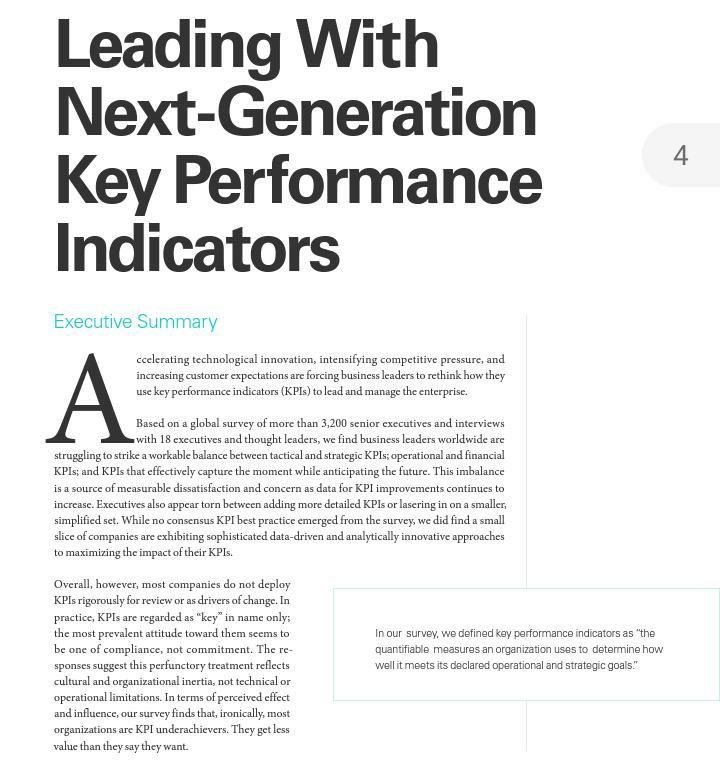
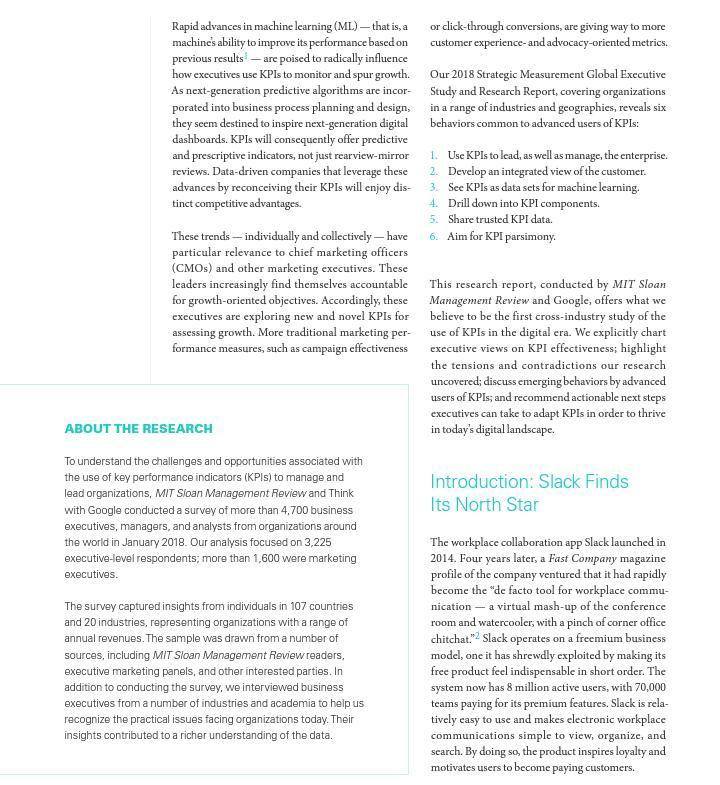
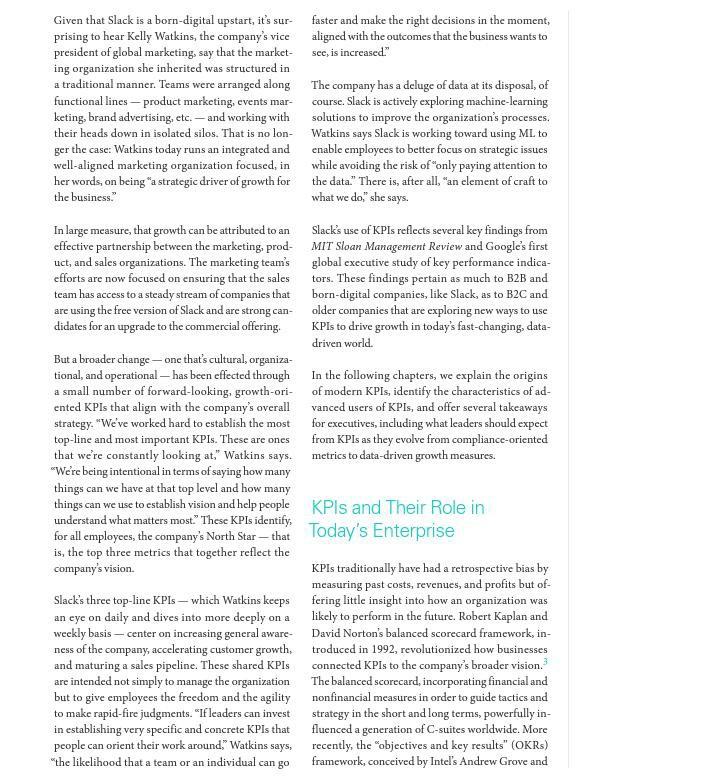
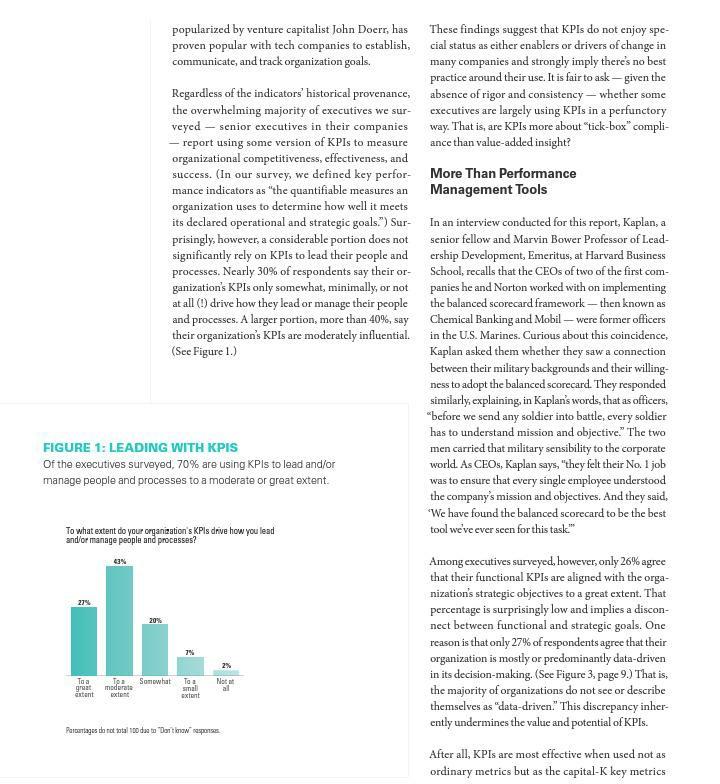
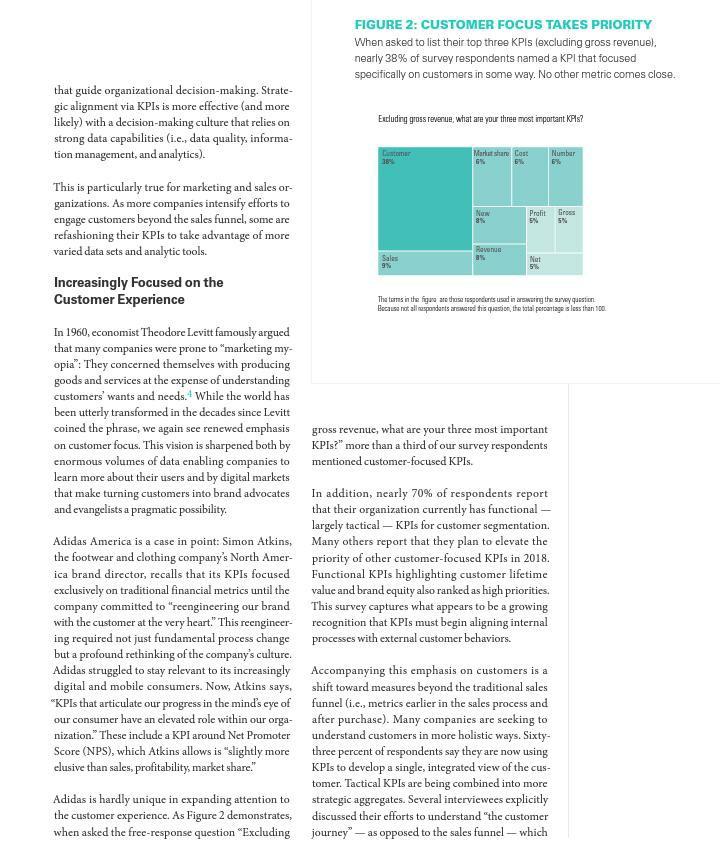
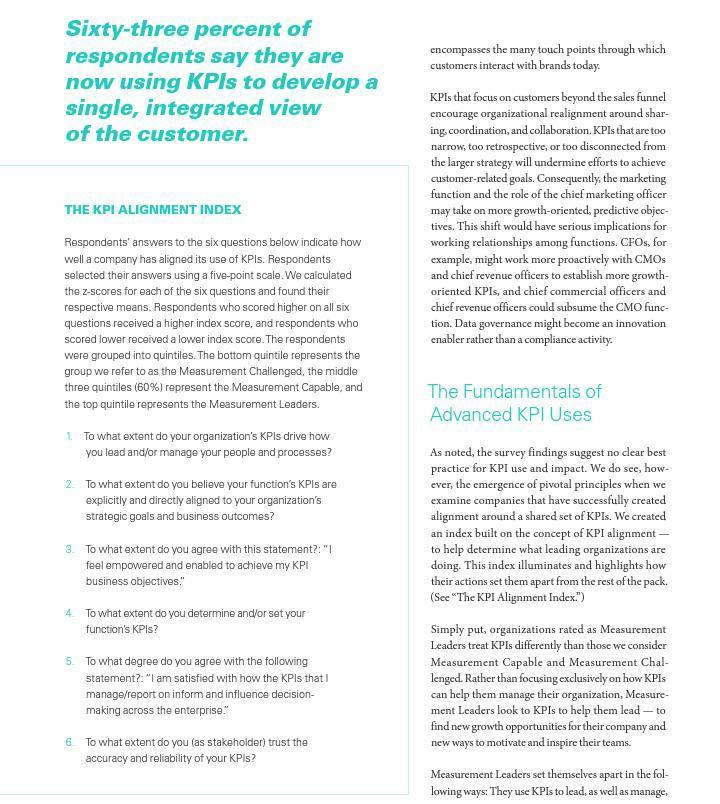
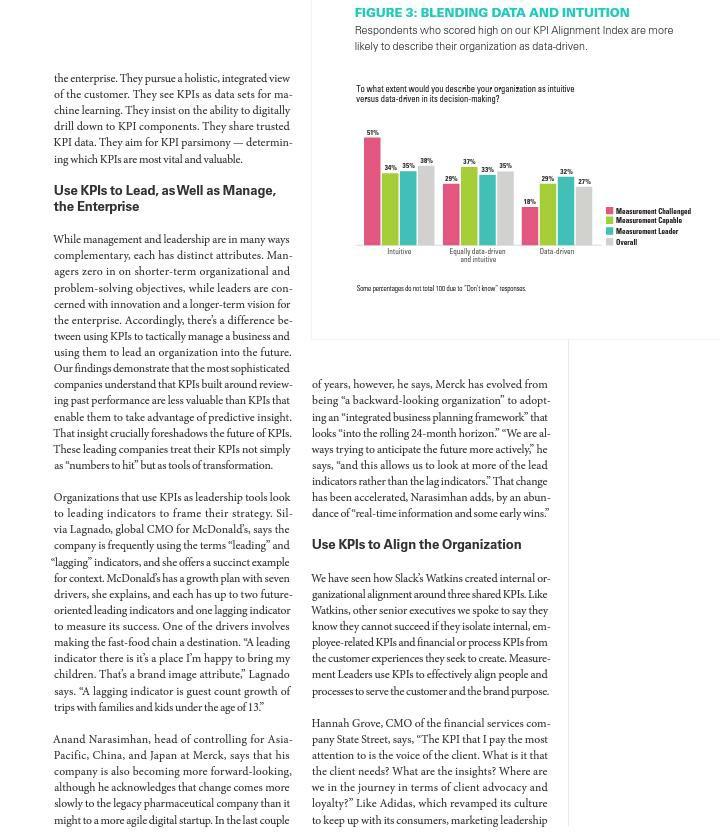
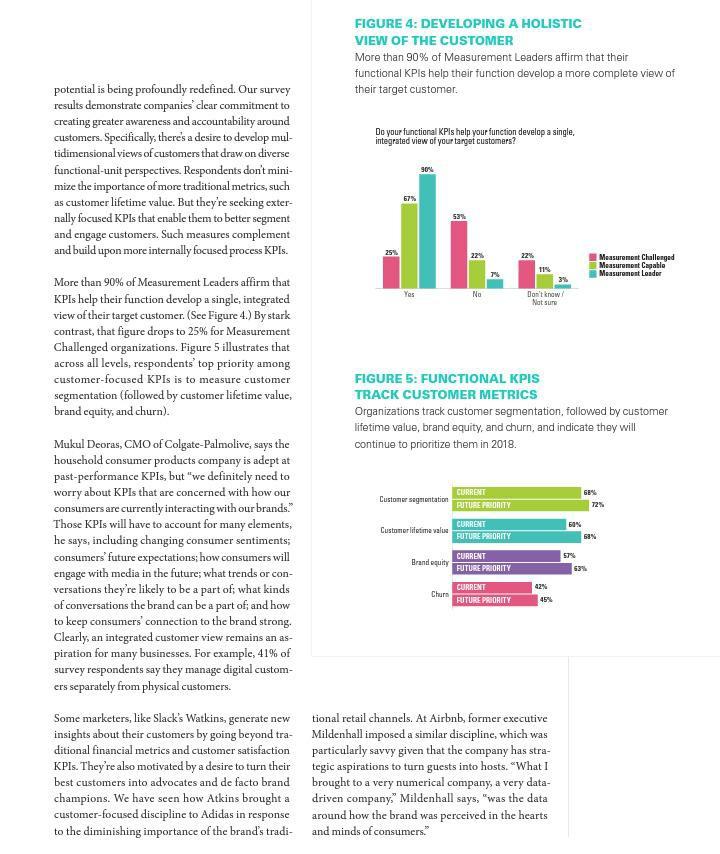
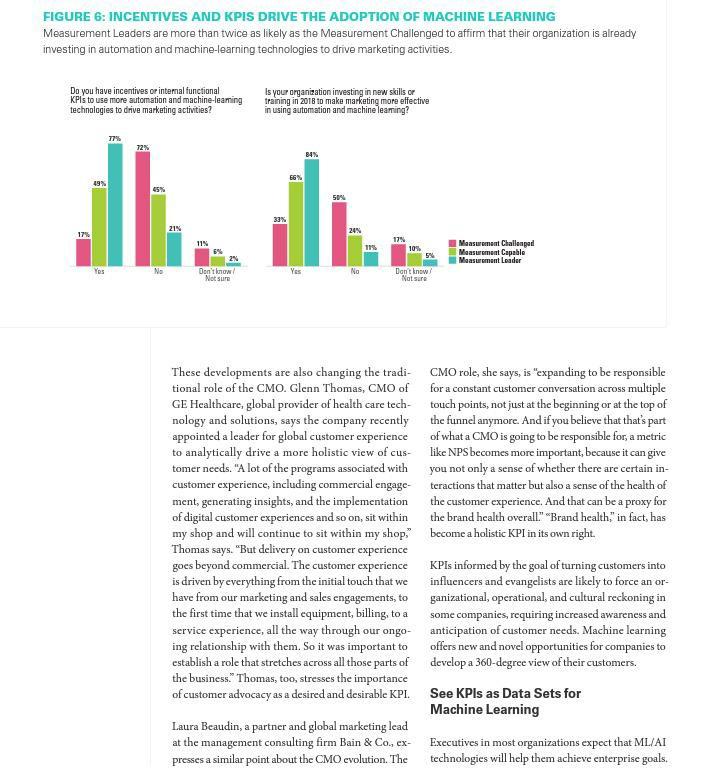
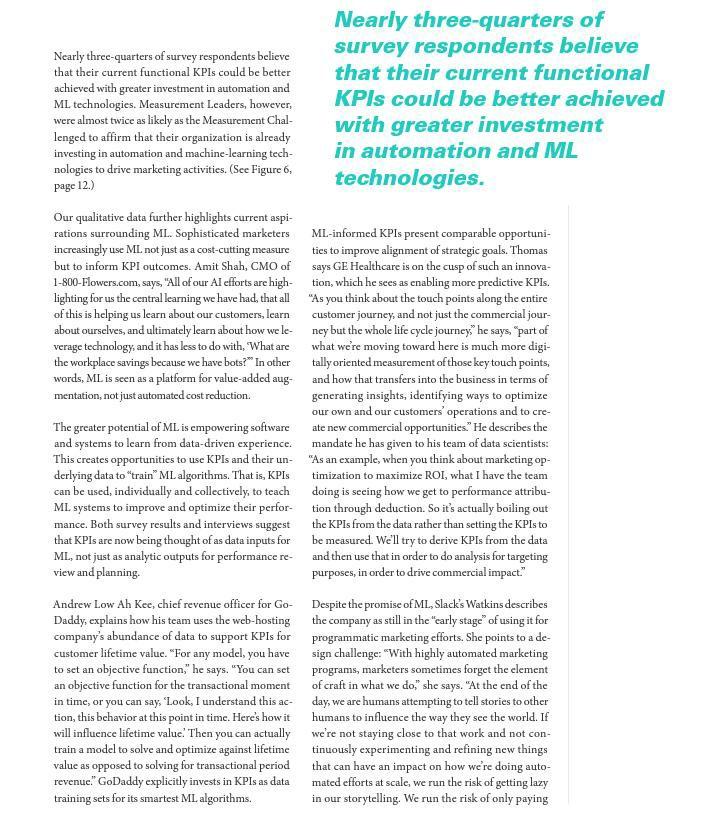
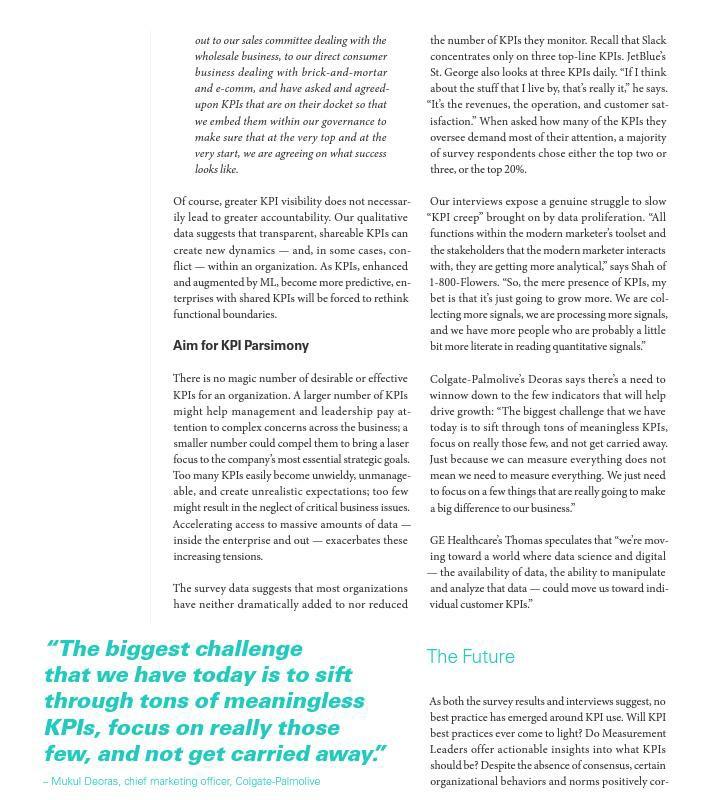
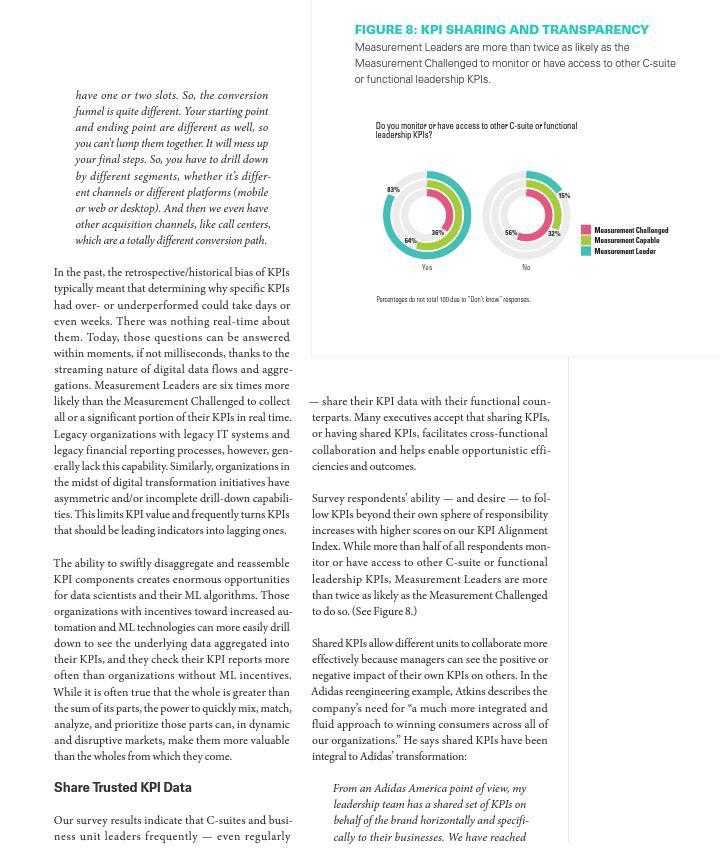
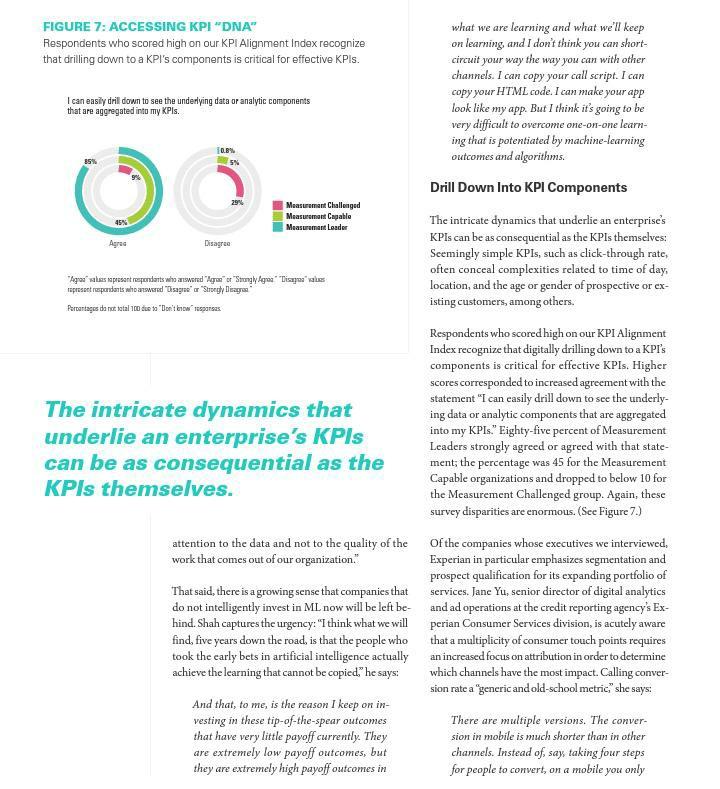
Leading With Next-Generation Key Performance Indicators 4 Executive Summary ccelerating technological innovation, intensifying competitive pressure, and increasing customer expectations are forcing business leaders to rethink how they use key performance indicators (KPIs) to lead and manage the enterprise. Based on a global survey of more than 3,200 senior executives and interviews with 18 executives and thought leaders, we find business leaders worldwide are struggling to strike a workable balance between tactical and strategic KPIs; operational and financial KPIs; and KPIs that effectively capture the moment while anticipating the future. This imbalance is a source of measurable dissatisfaction and concern as data for KPI improvements continues to increase. Executives also appear torn between adding more detailed KPIs or lasering in on a smaller, simplified set. While no consensus KPI best practice emerged from the survey, we did find a small slice of companies are exhibiting sophisticated data-driven and analytically innovative approaches to maximizing the impact of their KPIs. Overall, however, most companies do not deploy KPIs rigorously for review or as drivers of change. In practice, KPIs are regarded as "key" in name only: the most prevalent attitude toward them seems to In our survey, we defined key performance indicators as "the be one of compliance, not commitment. The re- quantifiable measures an organization uses to determine how sponses suggest this perfunctory treatment reflects well it meets its declared operational and strategic goals." cultural and organizational inertia, not technical or operational limitations. In terms of perceived effect and influence, our survey finds that, ironically, most organizations are KPI underachievers. They get less value than they say they want. Rapid advances in machine learning (ML) that is a or click-through conversions are giving way to more machine's ability to improve its performance based on customer experience and advocacy-oriented metrics. previous results are poised to radically influence how executives use KPIs to monitor and spur growth. Our 2018 Strategic Measurement Global Executive As next-generation predictive algorithms are incor- Study and Research Report, covering organizations porated into business process planning and design, in a range of industries and geographies, reveals six they seem destined to inspire next-generation digital behaviors common to advanced users of KPIs: dashboards. KPIs will consequently offer predictive and prescriptive indicators, not just rearview-mirror 1. Use KPIs to lead, as well as manage the enterprise. reviews. Data-driven companies that leverage these 2. Develop an integrated view of the customer. advances by reconceiving their KPIs will enjoy dis 3. See KPIs as data sets for machine learning tinct competitive advantages. 4. Drill down into KPI components. 5. Share trusted KPI data. These trends - individually and collectively have 6. Aim for KPI parsimony particular relevance to chief marketing officers (CMOs) and other marketing executives. These leaders increasingly find themselves accountable This research report, conducted by MIT Sloan for growth-oriented objectives. Accordingly, these Management Review and Google, offers what we executives are exploring new and novel KPIs for believe to be the first cross-industry study of the assessing growth. More traditional marketing per-use of KPIs in the digital era. We explicitly chart formance measures, such as campaign effectiveness executive views on KPI effectiveness; highlight the tensions and contradictions our research uncovered; discuss emerging behaviors by advanced users of KPIs, and recommend actionable next steps executives can take to adapt KPIs in order to thrive ABOUT THE RESEARCH in today's digital landscape Introduction: Slack Finds Its North Star To understand the challenges and opportunities associated with the use of key performance indicators (KPIs) to manage and lead organizations, MIT Sloan Management Review and Think with Google conducted a survey of more than 4,700 business executives, managers, and analysts from organizations around the world in January 2018. Our analysis focused on 3,225 executive-level respondents, more than 1,600 were marketing executives. The survey captured insights from individuals in 107 countries and 20 industries, representing organizations with a range of annual revenues. The sample was drawn from a number of sources, including MIT Sloan Management Review readers, executive marketing panels, and other interested parties. In addition to conducting the survey, we interviewed business executives from a number of industries and academia to help us recognize the practical issues facing organizations today. Their insights contributed to a richer understanding of the data. The workplace collaboration app Slack launched in 2014. Four years later, a Fast Company magazine profile of the company ventured that it had rapidly become the "de facto tool for workplace commu- nication - a virtual mash-up of the conference room and watercooler, with a pinch of corner office chitchat."2 Slack operates on a freemium business model, one it has shrewdly exploited by making its free product feel indispensable in short order. The system now has 8 million active users, with 70,000 teams paying for its premium features. Slack is rela- tively easy to use and makes electronic workplace communications simple to view, organize, and search. By doing so, the product inspires loyalty and motivates users to become paying customers. Given that Slack is a born-digital upstart, it's sur- faster and make the right decisions in the moment, prising to hear Kelly Watkins, the company's vice aligned with the outcomes that the business wants to president of global marketing, say that the market- see, is increased." ing organization she inherited was structured in a traditional manner. Teams were arranged along the company has a deluge of data at its disposal, of functional lines - product marketing, events mar course. Slack is actively exploring machine learning keting, brand advertising, etc. -- and working with solutions to improve the organization's processes, their heads down in isolated silos. That is no lon- Watkins says Slack is working toward using ML to ger the case: Watkins today runs an integrated and enable employees to better focus on strategic issues well-aligned marketing organization focused, in while avoiding the risk of "only paying attention to her words, on being a strategic driver of growth for the data." There is, after all, "an element of craft to the business." what we do," she says. In large measure that growth can be attributed to an Slacks use of KPIs reflects several key findings from effective partnership between the marketing, prod- MIT Sloan Management Review and Google's first uct, and sales organizations. The marketing team's global executive study of key performance indica- efforts are now focused on ensuring that the sales tors. These findings pertain as much to B2B and team has access to a steady stream of companies that born-digital companies, like Slack, as to B2C and are using the free version of Slack and are strong can- older companies that are exploring new ways to use didates for an upgrade to the commercial offering. KPIs to drive growth in today's fast-changing, data- driven world. But a broader change - one that's cultural, organiza- tional, and operational has been effected through in the following chapters, we explain the origins a small number of forward-looking, growth-ori- of modern KPIs, identify the characteristics of ad- ented KPIs that align with the company's overall vanced users of KPIs, and offer several takeaways strategy. "We've worked hard to establish the most for executives, including what leaders should expect top-line and most important KPIs. These are ones from KPIs as they evolve from compliance-oriented that we're constantly looking at," Watkins says. metrics to data-driven growth measures. "We're being intentional in terms of saying how many things can we have at that top level and how many things can we use to establish vision and help people KPIs and Their Role in for all employees , the company's North Star that Today's Enterprise is, the top three metrics that together reflect the company's vision. KPIs traditionally have had a retrospective bias by measuring past costs, revenues, and profits but of- Slacks three top-line KPIs - which Watkins keeps fering little insight into how an organization was an eye on daily and dives into more deeply on a likely to perform in the future. Robert Kaplan and weekly basis - center on increasing general aware David Norton's balanced Scorecard framework, in- ness of the company, accelerating customer growth.troduced in 1992, revolutionized how businesses and maturing a sales pipeline. These shared KPIs connected KPIs to the company's broader vision. are intended not simply to manage the organization The balanced Scorecard, incorporating financial and but to give employees the freedom and the agility nonfinancial measures in order to guide tactics and to make rapid-fire judgments. "If leaders can invest strategy in the short and long terms, powerfully in- in establishing very specific and concrete KPIs that fluenced a generation of C-suites worldwide. More people can orient their work around." Watkins says, recently, the "objectives and key results" (OKRs) "the likelihood that a team or an individual can go framework, conceived by Intel's Andrew Grove and popularized by venture capitalist John Doerr, has These findings suggest that KPIs do not enjoy spe- proven popular with tech companies to establish, cial status as either enablers or drivers of change in communicate, and track organization goals. many companies and strongly imply there's no best practice around their use. It is fair to ask - given the Regardless of the indicators' historical provenance, absence of rigor and consistency - whether some the overwhelming majority of executives we sur executives are largely using KPIs in a perfunctory veyed - senior executives in their companies way. That is, are KPIs more about "tick-box" compli- - report using some version of KPIs to measure ance than value-added insight? organizational competitiveness, effectiveness, and success. (In our survey, we defined key perfor- More Than Performance mance indicators as "the quantifiable measures an Management Tools organization uses to determine how well it meets its declared operational and strategic goals.") Sur- In an interview conducted for this report, Kaplan, a prisingly, however, a considerable portion does not senior fellow and Marvin Bower Professor of Lead- significantly rely on KPIs to lead their people and ership Development, Emeritus, at Harvard Business processes. Nearly 30% of respondents say their or School, recalls that the CEOs of two of the first com- ganization's KPIs only somewhat, minimally, or not panies he and Norton worked with on implementing at all (1) drive how they lead or manage their people the balanced scorecard framework - then known as and processes. A larger portion, more than 40%, sayChemical Banking and Mobil were former officers their organization's KPIs are moderately influential. in the U.S. Marines. Curious about this coincidence, (See Figure 1.) Kaplan asked them whether they saw a connection between their military backgrounds and their willing- ness to adopt the balanced scorecard. They responded similarly, explaining, in Kaplan's words, that as officers, "before we send any soldier into battle, every soldier has to understand mission and objective. The two FIGURE 1: LEADING WITH KPIS men carried that military sensibility to the corporate Of the executives surveyed, 70% are using KPIs to lead and/or world. As CEOs, Kaplan says, "they felt their No 1 job manage people and processes to a moderate or great extent. was to ensure that every single employee understood the company's mission and objectives. And they said, "We have found the balanced Scorecard to be the best To what extent do your organization's KPIs drive how you lead tool we've ever seen for this task.*** and/or manage people and processes? Among executives surveyed, however, only 26% agree that their functional KPIs are aligned with the orga- nization's strategic objectives to a great extent. That percentage is surprisingly low and implies a discon- nect between functional and strategic goals. One reason is that only 27% of respondents agree that their organization is mostly or predominantly data-driven in its decision-making. (See Figure 3, page 9.) That is, the majority of organizations do not see or describe themselves as "data-driven." This discrepancy inher- ently undermines the value and potential of KPIs. Parduiages dont total 100 dag to Dantiman responses After all, KPIs are most effective when used not as ordinary metrics but as the capital-K key metrics 23% 27% 20% 7% 2% Somowhat Not great extant Toa moderate extent To smal extent al FIGURE 2: CUSTOMER FOCUS TAKES PRIORITY When asked to list their top three KPIs (excluding gross revenue). nearly 38% of survey respondents named a KPI that focused specifically on customers in some way. No other metric comes close. that guide organizational decision-making. Strate- gic alignment via KPIs is more effective (and more likely) with a decision-making culture that relies on strong data capabilities (i.e., data quality, informa- tion management, and analytics). Excluding gross revenue, what are your three most important KPts? comer 18 Market share on GX 5% Number 6% New 8 Pralit 5% Gross 5 This is particularly true for marketing and sales or ganizations. As more companies intensify efforts to engage customers beyond the sales funnel, some are refashioning their KPIs to take advantage of more varied data sets and analytic tools. Increasingly Focused on the Customer Experience Ravens % Sales 9% Net 5% Tha terms in the figure are those spordis used in arwaing the survey question Because not all respondants and this question the total percentage is less than 100 In 1960, economist Theodore Levitt famously argued that many companies were prone to "marketing my- opia": They concerned themselves with producing goods and services at the expense of understanding customers' wants and needs. While the world has been utterly transformed in the decades since Levitt coined the phrase, we again see renewed emphasis on customer focus. This vision is sharpened both by enormous volumes of data enabling companies to learn more about their users and by digital markets that make turning customers into brand advocates and evangelists a pragmatic possibility. Adidas America is a case in point: Simon Atkins, the footwear and clothing company's North Amer- ica brand director, recalls that its KPIs focused exclusively on traditional financial metrics until the company committed to "reengineering our brand with the customer at the very heart" This reengineer- ing required not just fundamental process change but a profound rethinking of the company's culture. Adidas struggled to stay relevant to its increasingly digital and mobile consumers. Now, Atkins says, "KPIs that articulate our progress in the mind's eye of our consumer have an elevated role within our orga- nization. These include a KPI around Net Promoter Score (NPS), which Atkins allows is "slightly more elusive than sales, profitability, market share." gross revenue, what are your three most important KPIs" more than a third of our survey respondents mentioned customer-focused KPIs. In addition, nearly 70% of respondents report that their organization currently has functional - largely tactical KPIs for customer segmentation. Many others report that they plan to elevate the priority of other customer-focused KPIs in 2018. Functional KPIs highlighting customer lifetime value and brand equity also ranked as high priorities. This survey captures what appears to be a growing recognition that KPIs must begin aligning internal processes with external customer behaviors. Accompanying this emphasis on customers is a shift toward measures beyond the traditional sales funnel (i.e., metrics earlier in the sales process and after purchase). Many companies are seeking to understand customers in more holistic ways. Sixty- three percent of respondents say they are now using KPIs to develop a single, integrated view of the cus- tomer. Tactical KPIs are being combined into more strategic aggregates. Several interviewees explicitly discussed their efforts to understand the customer journey" -- as opposed to the sales funnel - which Adidas is hardly unique in expanding attention to the customer experience. As Figure 2 demonstrates, when asked the free-response question "Excluding cncompasses the many touch points through which customers interact with brands today. Sixty-three percent of respondents say they are now using KPIs to develop a single, integrated view of the customer. THE KPI ALIGNMENT INDEX KPIs that focus on customers beyond the sales funnel encourage organizational realignment around shar- ing, coordination, and collaboration. KPIs that are too narrow, too retrospective, or too disconnected from the larger strategy will undermine efforts to achieve customer-related goals. Consequently, the marketing function and the role of the chief marketing officer may take on more growth-oriented, predictive objec- tives. This shift would have serious implications for working relationships among functions. CFOs, for example, might work more proactively with CMOS and chief revenue officers to establish more growth- oriented KPIs, and chief commercial officers and chief revenue officers could subsume the CMO func- tion. Data governance might become an innovation enabler rather than a compliance activity. Respondents' answers to the six questions below indicate how well a company has aligned its use of KPIs. Respondents selected their answers using a five-point scale. We calculated the z-scores for each of the six questions and found their respective means. Respondents who scored higher on all six questions received a higher index score, and respondents who scored lower received a lower index score. The respondents were grouped into quintiles. The bottom quintile represents the group we refer to as the Measurement Challenged, the middle three quintiles (60%) represent the Measurement Capable, and the top quintile represents the Measurement Leaders. The Fundamentals of Advanced KPI Uses 1. To what extent do your organization's KPIs drive how you lead and/or manage your people and processes? 2. To what extent do you believe your function's KPIs are explicitly and directly aligned to your organization's strategic goals and business outcomes? As noted, the survey findings suggest no clear best practice for KPI use and impact. We do sec, how- ever, the emergence of pivotal principles when we examine companies that have successfully created alignment around a shared set of KPIs. We created an index built on the concept of KPI alignment to help determine what leading organizations are doing. This index illuminates and highlights how their actions set them apart from the rest of the pack. (See "The KPI Alignment Index.") 3. To what extent do you agree with this statement?: "I feel empowered and enabled to achieve my KPI business objectives." 4. To what extent do you determine and/or set your function's KPIs? 5. To what degree do you agree with the following statement?: "I am satisfied with how the KPIs that I manage/report on inform and influence decision- making across the enterprise." Simply put, organizations rated as Measurement Leaders treat KPIs differently than those we consider Measurement Capable and Measurement Chal- lenged. Rather than focusing exclusively on how KPIs can help them manage their organization, Measure- ment Leaders look to KPIs to help them lead - to find new growth opportunities for their company and new ways to motivate and inspire their teams. 6. To what extent do you (as stakeholder) trust the accuracy and reliability of your KPIs? Measurement Leaders set themselves apart in the fol- lowing ways: They use KPIs to lead, as well as manage, FIGURE 3: BLENDING DATA AND INTUITION Respondents who scored high on our KPI Alignment Index are more likely to describe their organization as data-driven. To what extent would you describe your organization as intuitive versus data-driven in its decision-making? the enterprise. They pursue a holistic, integrated view of the customer. They see KPIs as data sets for ma- chine learning. They insist on the ability to digitally drill down to KPI components. They share trusted KPI data. They aim for KPI parsimony - determin- ing which KPIs are most vital and valuable 51% 30% 37% 359 35% 33% 32% 294 Use KPIs to Lead, as well as Manage, the Enterprise 18% Measurement Challenged Measurement Capable Measurem tLeader Overall Intuitive and intuitive While management and leadership are in many ways complementary, cach has distinct attributes. Man- Equally data-driven Data-driven agers zero in on shorter-term organizational and problem-solving objectives, while leaders are con- Samse percentages de not total 10 de la Con't low responses cerned with innovation and a longer-term vision for the enterprise. Accordingly, there's a difference be- tween using KPIs to tactically manage a business and using them to lead an organization into the future. Our findings demonstrate that the most sophisticated companies understand that KPIs built around review- of years, however, he says, Merck has evolved from ing past performance are less valuable than KPIs that being a backward-looking organization" to adopt- enable them to take advantage of predictive insighting an "integrated business planning framework that That insight crucially foreshadows the future of KPIs. looks "into the rolling 24-month horizon." "We are al- These leading companies treat their KPIs not simply ways trying to anticipate the future more actively," he as "numbers to hit" but as tools of transformation says, "and this allows us to look at more of the lead indicators rather than the lag indicators." That change Organizations that use KPIs as leadership tools look has been accelerated. Narasimhan adds, by an abun- to leading indicators to frame their strategy. Sil dance of real-time information and some early wins." via Lagnado, global CMO for McDonald's, says the company is frequently using the terms "leading and Use KPIs to Align the Organization "lagging indicators, and she offers a succinct example for context. McDonald's has a growth plan with seven We have seen how Slack's Watkins created internal or- drivers, she explains, and each has up to two future-ganizational alignment around three shared KPIs. Like oriented leading indicators and one lagging indicator Watkins, other senior executives we spoke to say they to measure its success. One of the drivers involves know they cannot succeed if they isolate internal, em- making the fast-food chain a destination. "A leading ployee-related KPIs and financial or process KPIs from indicator there is it's a place I'm happy to bring my the customer experiences they seek to create. Measure- children. That's a brand image attribute." Lagnado ment Leaders use KPIs to effectively align people and says. "A lagging indicator is guest count growth of processes to serve the customer and the brand purpose. trips with families and kids under the age of 13" Hannah Grove, CMO of the financial services com- Anand Narasimhan, head of controlling for Asia- pany State Street, says, "The KPI that I pay the most Pacific, China, and Japan at Merck, says that his attention to is the voice of the client. What is it that company is also becoming more forward-looking the client needs? What are the insights? Where are although he acknowledges that change comes more we in the journey in terms of client advocacy and slowly to the legacy pharmaceutical company than it loyalty?" Like Adidas, which revamped its culture might to a more agile digital startup. In the last couple to keep up with its consumers, marketing leadership seizing strategic opportunities, it's not optimal for As customer-centric measuring and driving teams to outperform in the KPIs assume increased short run. "When I think about holding someone accountable, their ability to predict what's going to importance in a mobile/digital happen in nine or 12 months is pretty low. So by nature, marketplace, their potential is can't see that far into the future; she says. "Whereas being profoundly redefined. I've found that people can really light the path and set more aggressive targets for 90 days out. Then you get information and signal in that 90 days, and then you set the next target." For OpenTable, this is as much a for Grove means going beyond customer retention cultural as operational decision. The lines between to turning customers into brand advocates. She has strategic and tactical KPIs are deliberately blurred. KPIs in place (also like Adidas, she uses Net Pro- moter Score) to keep the company aligned with that Jonathan Mildenhall, former CMO of Airbnb and vision. She sees this as an evolving "shift to really now cofounder and CEO of marketing consultancy understanding putting clients at the center of the or- TwentyFirstCenturyBrand, notes that "there were ganization and measuring our efficacy around their more people managing data and data science at Airbnb advocacy." Her KPIs are used to help manage State than there were managing data and data science at one Street's cultural transformation. multinational consumer product company where he worked previously. At the significantly smaller Airbnb, Respondents scoring high on our index are more he says, "product marketing and product development likely than respondents in the Measurement Chal- and engineering drive an awful lot of growth, and they lenged category to describe their organization as use data in a very, very scientific way." mostly data-driven" or "predominantly data-driven." On the whole, more than one-third of respondents Mildenhall continues, "If you're working at a blend intuition and data when making decisions. 20th-century company, then you have to dismantle (See Figure 3, page 9.) the received wisdom and try and get data that can give you a real-time assessment of the engagement If an organization is going to use KPIs to lead, and that your audiences have with the marketing effort KPIs are quantifiable measures, then it would by ne- and how that engagement drives either conversation cessity be data-driven in order to lead with KPIs. or purchase." He adds that legacy companies are re- Marty St. George, executive vice president for com- luctant to do so because the predominant mindset mercial and planning at JetBlue Airways, says his is one of fear: We must not lose what we already have "bible, every single day" is a daily revenue report list as we go out to grow." ing how much revenue was collected the day before and how that figure tracks against the airline's forecast. Many legacy companies understand this challenge. Platform brands like online hospitality service Airbnb Lagnado says McDonald's has "unbelievably power- and reservation service OpenTable eschew long-term ful data opportunities. If we don't put an analytics (measured in years) strategic plans in favor of adaptive layer on top, we're missing a big opportunity. Its my responsive, and anticipatory KPIs that are data-driven top priority for this year." and aligned with mission. They prize agility and speed. Develop an Integrated View Christa Quarles, OpenTable's CEO, favors flexible, of the Customer purpose-driven, 90-day targets over longer-term, an- nual OKRs oriented around strategic planning. While As customer-centric KPIs assume increased im- long-term planning is critical for identifying and portance in a mobile/digital marketplace, their FIGURE 4: DEVELOPING A HOLISTIC VIEW OF THE CUSTOMER More than 90% of Measurement Leaders affirm that their functional KPIs help their function develop a more complete view of their target customer. Do your functional KPIs help your function develop a single, integrated view of your target customers? potential is being profoundly redefined. Our survey results demonstrate companies clear commitment to creating greater awareness and accountability around customers. Specifically, there's a desire to develop mul- tidimensional views of customers that draw on diverse functional-unit perspectives. Respondents don't mini- mize the importance of more traditional metrics, such as customer lifetime value. But they're seeking exter- nally focused KPIs that enable them to better segment and engage customers. Such measures complement and build upon more internally focused process KPIs. 90% 67% 531 255 225 11% Measurement Challenged Measurement Capable Measurement Leader 3% Yes No Don't know Not sure More than 90% of Measurement Leaders affirm that KPIs help their function develop a single, integrated view of their target customer. (See Figure 4.) By stark contrast, that figure drops to 25% for Measurement Challenged organizations. Figure 5 illustrates that across all levels, respondents' top priority among customer-focused KPIs is to measure customer segmentation (followed by customer lifetime value, brand equity, and churn). FIGURE 5: FUNCTIONAL KPIS TRACK CUSTOMER METRICS Organizations track customer segmentation, followed by customer lifetime value, brand equity, and churn, and indicate they will continue to prioritize them in 2018. Customer segmentation CURRENT PITURE PRONTY 68% 72 Customer lifetime value CURRENT RUTURE PRIORITY 50% 58% Mukul Deoras, CMO of Colgate-Palmolive, says the household consumer products company is adept at past-performance KPIs, but "we definitely need to worry about KPIs that are concerned with how our consumers are currently interacting with our brands." Those KPIs will have to account for many elements, he says, including changing consumer sentiments; consumers' future expectations; how consumers will engage with media in the future; what trends or con- versations they're likely to be a part of what kinds of conversations the brand can be a part of; and how to keep consumers connection to the brand strong Clearly, an integrated customer view remains an as- piration for many businesses. For example, 41% of survey respondents say they manage digital custom- ers separately from physical customers. Brand equity 57% 639 CURRENT FUTURE PRIORITY CURRENT RITURE PRIORITY Chura 45% Some marketers, like Slack's Watkins, generate new insights about their customers by going beyond tra- ditional financial metrics and customer satisfaction KPIs. They're also motivated by a desire to turn their best customers into advocates and de facto brand champions. We have seen how Atkins brought a customer-focused discipline to Adidas in response to the diminishing importance of the brand's tradi- tional retail channels. At Airbnb, former executive Mildenhall imposed a similar discipline, which was particularly savvy given that the company has stra- tegic aspirations to turn guests into hosts. "What I brought to a very numerical company, a very data- driven company," Mildenhall says, "was the data around how the brand was perceived in the hearts and minds of consumers." FIGURE 6: INCENTIVES AND KPIS DRIVE THE ADOPTION OF MACHINE LEARNING Measurement Leaders are more than twice as likely as the Measurement Challenged to affirm that their organization is already investing in automation and machine-learning technologies to drive marketing activities. Do you have incentives or internal functional KPIs to use more automation and machine-leaming technologies to drive marketing activities? Is your organization investing in new skills or training in 2018 to make marketing more effective in using automation and machine leaming? 72% 84% 66% 49% 45% 514 33% 21% 24% 17% 115 17% 10% 11% 2% Don't know Not sure Measurement Challenged Measurement Capable Measurement Leader Yes No Yes No Don't know Not sure These developments are also changing the tradi CMO role, she says, is "expanding to be responsible tional role of the CMO. Glenn Thomas, CMO of for a constant customer conversation across multiple GE Healthcare, global provider of health care tech-touch points, not just at the beginning or at the top of nology and solutions, says the company recently the funnel anymore. And if you believe that that's part appointed a leader for global customer experience of what a CMO is going to be responsible for a metric to analytically drive a more holistic view of cus like NPS becomes more important, because it can give tomer needs. "A lot of the programs associated with you not only a sense of whether there are certain in- customer experience, including commercial engage teractions that matter but also a sense of the health of ment, generating insights, and the implementation the customer experience. And that can be a proxy for of digital customer experiences and so on, sit within the brand health overall" "Brand health" in fact, has my shop and will continue to sit within my shop," become a holistic KPI in its own right. Thomas says. "But delivery on customer experience goes beyond commercial. The customer experience KPIs informed by the goal of turning customers into is driven by everything from the initial touch that we influencers and evangelists are likely to force an or- have from our marketing and sales engagements, to ganizational, operational, and cultural reckoning in the first time that we install equipment, billing, to a some companies, requiring increased awareness and service experience, all the way through our ongo anticipation of customer needs. Machine learning ing relationship with them. So it was important to offers new and novel opportunities for companies to establish a role that stretches across all those parts of develop a 360-degree view of their customers. the business." Thomas, too, stresses the importance of customer advocacy as a desired and desirable KPI. See KPIs as Data Sets for Machine Learning Laura Beaudin, a partner and global marketing lead at the management consulting firm Bain & Co, ex Executives in most organizations expect that ML/AI presses a similar point about the CMO evolution. The technologies will help them achieve enterprise goals. Nearly three-quarters of Nearly three-quarters of survey respondents believe survey respondents believe that their current functional KPIs could be better that their current functional achieved with greater investment in automation and ML technologies. Measurement Leaders, however, KPIs could be better achieved were almost twice as likely as the Measurement Chal- with greater investment lenged to affirm that their organization is already investing in automation and machine learning tech in automation and ML nologies to drive marketing activities. (See Figure 6. technologies. page 12.) Our qualitative data further highlights current aspi- rations surrounding ML. Sophisticated marketers ML-informed KPIs present comparable opportuni- increasingly use ML not just as a cost-cutting measure ties to improve alignment of strategic goals. Thomas but to inform KPI outcomes. Amit Shah, CMO of says GE Healthcare is on the cusp of such an innova- 1-800-Flowers.com, says, "All of our Al efforts are high- tion, which he sees as enabling more predictive KPIs. lighting for us the central learning we have had that all "As you think about the touch points along the entire of this is helping us learn about our customers, learn customer journey, and not just the commercial jour- about ourselves, and ultimately learn about how we le- ney but the whole life cycle journey," he says, "part of verage technology, and it has less to do with, What are what we're moving toward here is much more digi- the workplace savings because we have bots? In other tally oriented measurement of those key touch points, words, ML is seen as a platform for value-added aug- and how that transfers into the business in terms of mentation, not just automated cost reduction. generating insights, identifying ways to optimize our own and our customers' operations and to cre- The greater potential of ML is empowering software ate new commercial opportunities." He describes the and systems to learn from data-driven experience. mandate he has given to his team of data scientists: This creates opportunities to use KPIs and their un- "As an example, when you think about marketing op derlying data to "train" ML algorithms. That is, KPIs timization to maximize ROI, what I have the team can be used individually and collectively, to teach doing is seeing how we get to performance attribu- ML systems to improve and optimize their perfor- tion through deduction. So it's actually boiling out mance. Both survey results and interviews suggest the KPIs from the data rather than setting the KPIsto that KPIs are now being thought of as data inputs for be measured. We'll try to derive KPIs from the data ML, not just as analytic outputs for performance re and then use that in order to do analysis for targeting view and planning purposes, in order to drive commercial impact." Andrew Low Ah Kee, chief revenue officer for Go- Despite the promise of ML, Slack's Watkins describes Daddy, explains how his team uses the web-hosting the company as still in the "carly stage of using it for company's abundance of data to support KPIs for programmatic marketing efforts. She points to a de- customer lifetime value. "For any model, you have sign challenge: "With highly automated marketing to set an objective function," he says. "You can set programs, marketers sometimes forget the element an objective function for the transactional moment of craft in what we do." she says. "At the end of the in time, or you can say, "Look, I understand this ac- day, we are humans attempting to tell stories to other tion, this behavior at this point in time. Here's how it humans to influence the way they see the world. If will influence lifetime value. Then you can actually we're not staying close to that work and not con- train a model to solve and optimize against lifetime tinuously experimenting and refining new things value as opposed to solving for transactional period that can have an impact on how we're doing auto- revenue" GoDaddy explicitly invests in KPIs as data mated efforts at scale, we run the risk of getting lazy training sets for its smartest MI. algorithms. in our storytelling. We run the risk of only paying out to our sales committee dealing with the the number of KPIs they monitor. Recall that Slack wholesale business, to our direct consumer concentrates only on three top-line KPIs. JetBlue's business dealing with brick-and-mortar St. George also looks at three KPIs daily. "If I think and e-comm, and have asked and agreed about the stuff that I live by, that's really it," he says. upon KPIs that are on their docket so that "It's the revenues, the operation, and customer sat- we embed them within our governance to isfaction." When asked how many of the KPIs they make sure that at the very top and at the oversee demand most of their attention, a majority very start, we are agreeing on what success of survey respondents chose either the top two or looks like three, or the top 20%. Of course, greater KPI visibility does not necessar- Our interviews expose a genuine struggle to slow ily lead to greater accountability. Our qualitative KPI creep" brought on by data proliferation. "All data suggests that transparent, shareable KPIs can functions within the modern marketer's toolset and create new dynamics and, in some cases, con the stakeholders that the modern marketer interacts flict - within an organization. As KPIs, enhanced with, they are getting more analytical" says Shah of and augmented by ML, become more predictive, en- 1-800-Flowers. "So, the mere presence of KPIs, my terprises with shared KPIs will be forced to rethink bet is that it's just going to grow more. We are col- functional boundaries. lecting more signals, we are processing more signals, and we have more people who are probably a little Aim for KPI Parsimony bit more literate in reading quantitative signals." There is no magic number of desirable or effective Colgate-Palmolive's Deoras says there's a need to KPIs for an organization. A larger number of KPIs winnow down to the few indicators that will help might help management and leadership pay at drive growth: "The biggest challenge that we have tention to complex concerns across the business; a today is to sift through tons of meaningless KPIs, smaller number could compel them to bring a laser focus on really those few, and not get carried away. focus to the company's most essential strategic goals. Just because we can measure everything does not Too many KPIs easily become unwieldy, unmanage mean we need to measure everything. We just need able, and create unrealistic expectations; too few to focus on a few things that are really going to make might result in the neglect of critical business issues. a big difference to our business." Accelerating access to massive amounts of data- inside the enterprise and out - exacerbates these GE Healthcare's Thomas speculates that "we're mov- increasing tensions ing toward a world where data science and digital -- the availability of data, the ability to manipulate The survey data suggests that most organizations and analyze that data - could move us toward indi- have neither dramatically added to nor reduced vidual customer KPIS." The Future "The biggest challenge that we have today is to sift through tons of meaningless KPIs, focus on really those few, and not get carried away." - Mukul Digoras, chief marketing officer, Colgate-Palmolive As both the survey results and interviews suggest, no best practice has emerged around KPI use. Will KPI best practices ever come to light? Do Measurement Leaders offer actionable insights into what KPIs should be? Despite the absence of consensus, certain organizational behaviors and norms positively cor- 83% 15% 56% 32" LE Measurement Challenged Measurement Capable Measurement Leader Yes Na FIGURE 8: KPI SHARING AND TRANSPARENCY Measurement Leaders are more than twice as likely as the Measurement Challenged to monitor or have access to other C-suite or functional leadership KPIs. have one or two slots. So, the conversion funnel is quite different. Your starting point and ending point are different as well, so Do you monitor or have access to other C-suite or functional leadership KPIs? you can't lump them together. It will mess up your final steps. So, you have to drill down by different segments, whether it's differ- ent channels or different platforms (mobile or web or desktop). And then we even have other acquisition channels, like call centers, which are a totally different conversion path. In the past, the retrospective/historical bias of KPIs typically meant that determining why specific KPIs Pertantages to ret sotal 100de to "lan' borow" na pansas had over- or underperformed could take days or even weeks. There was nothing real-time about them. Today, those questions can be answered within moments, if not milliseconds, thanks to the streaming nature of digital data flows and aggre- gations. Measurement Leaders are six times more likely than the Measurement Challenged to collect - share their KPI data with their functional coun- all or a significant portion of their KPIs in real time. terparts. Many executives accept that sharing KPIs, Legacy organizations with legacy IT systems and or having shared KPIs, facilitates cross-functional legacy financial reporting processes, however, gen collaboration and helps enable opportunistic effi- erally lack this capability. Similarly, organizations in ciencies and outcomes. the midst of digital transformation initiatives have asymmetric and/or incomplete drill-down capabili Survey respondents' ability - and desire to fol- ties. This limits KPI value and frequently turns KPIs low KPIs beyond their own sphere of responsibility that should be leading indicators into lagging ones. increases with higher scores on our KPI Alignment Index. While more than half of all respondents mon- The ability to swiftly disaggregate and reassemble itor or have access to other C-suite or functional KPI components creates enormous opportunities leadership KPIs, Measurement Leaders are more for data scientists and their ML algorithms. Those than twice as likely as the Measurement Challenged organizations with incentives toward increased au to do so. (See Figure 8.) tomation and ML technologies can more easily drill down to see the underlying data aggregated into Shared KPIs allow different units to collaborate more their KPIs, and they check their KPI reports more effectively because managers can see the positive or often than organizations without ML incentives. negative impact of their own KPIs on others. In the While it is often true that the whole is greater than Adidas reengineering example, Atkins describes the the sum of its parts, the power to quickly mix, match, company's need for a much more integrated and analyze, and prioritize those parts can, in dynamic fluid approach to winning consumers across all of and disruptive markets, make them more valuable our organizations." He says shared KPIs have been than the wholes from which they come. integral to Adidas transformation: Share Trusted KPI Data From an Adidas America point of view, my leadership team has a shared set of KPIs on Our survey results indicate that C-suites and busi behalf of the brand horizontally and specifi- ness unit leaders frequently - even regularly cally to their businesses. We have reached FIGURE 7: ACCESSING KPI "DNA" Respondents who scored high on our KPI Alignment Index recognize that drilling down to a KPI's components is critical for effective KPIs. I can easily drill down to see the underlying data or analytic components that are aggregated into my KPIs. 0.8% 5% 85% what we are learning and what we'll keep on learning, and I don't think you can short- circuit your way the way you can with other channels. I can copy your call script. I can copy your HTML code. I can make your app look like my app. But I think it's going to be very difficult to overcome one-on-one learn- ing that is potentiated by machine-learning outcomes and algorithms. Drill Down Into KPI Components The intricate dynamics that underlie an enterprise's KPIs can be as consequential as the KPIs themselves: Seemingly simple KPIs, such as click-through rate, often conceal complexities related to time of day, location, and the age or gender of prospective or ex- isting customers, among others. 29% 45% Measurement Challenged Measurement Capable Measurement Loader Agrad Disagree Agron las present respondents who were gramer Strongly Agra Cisar's represent respondents who answered "Disagree or "Streghy Disagree Parpartage da net sotal 100 dte 13 "Don't knowparsas The intricate dynamics that underlie an enterprise's KPIs can be as consequential as the KPIs themselves. Respondents who scored high on our KPI Alignment Index recognize that digitally drilling down to a KPI's components is critical for effective KPIs. Higher scores corresponded to increased agreement with the statement "I can easily drill down to see the underly- ing data or analytic components that are aggregated into my KPIs." Eighty-five percent of Measurement Leaders strongly agreed or agreed with that state- ment; the percentage was 45 for the Measurement Capable organizations and dropped to below 10 for the Measurement Challenged group. Again, these survey disparities are enormous. (See Figure 7.) attention to the data and not to the quality of the of the companies whose executives we interviewed, work that comes out of our organization." Experian in particular emphasizes segmentation and prospect qualification for its expanding portfolio of That said, there is a growing sense that companies that services. Jane Yu, senior director of digital analytics do not intelligently invest in ML now will be left be- and ad operations at the credit reporting agency's Ex- hind. Shah captures the urgency: "I think what we will perian Consumer Services division, is acutely aware find, five years down the road, is that the people who that a multiplicity of consumer touch points requires took the early bets in artificial intelligence actually an increased focus on attribution in order to determine achieve the learning that cannot be copied," he says: which channels have the most impact. Calling conver- sion rate a "generic and old-school metric" she says: And that, to me, is the reason I keep on in- vesting in these tip-of-the-spear outcomes There are multiple versions. The conver- that have very little payoff currently. They sion in mobile is much shorter than in other are extremely low payoff outcomes, but channels. Instead of, say, taking four steps they are extremely high payoff outcomes in for people to convert, on a mobile only you relate to constructive KPI outcomes. For instance, support strategy? Are enterprise KPIs primarily fi- clear, and clearly measurable - differences exist nancial? Or do customer metrics play an equivalent between organizations that use KPIs to monitor and role? Who owns those metrics and their underlying assess performance and those that use KPIs to guide dynamics? Perhaps even more importantly, how and drive performance improvements. well do the functional and enterprise KPIs align? Are the functional KPIs largely decoupled from the We see data-driven and customer-oriented leaders enterprise KPI outcomes? How directly do the func- use KPIs to transform their organization, while those tional KPIs contribute to enterprise success? more concerned with "hitting their numbers remain focused on efficiencies. Who is better positioned Create a Process for Ongoing, to adapt, evolve, and compete? Similarly, more so Enterprise-wide Discussion of KPIs phisticated managers explicitly use KPIs to promote cross-functional - not just vertical-alignment. For Enterprise-wide discussion is intended to affirm them, KPIs are the means and methods for rigorously commitment, not compliance, and to demonstrate defining and measuring the fundamentals that matter. that the organization holds itself accountable for get- ting the maximum possible value from its KPIs. At To be effective, KPIs must truly be "key" perfor- GoDaddy, for example, each management meeting mance indicators, not ordinary metrics or measures, is explicitly linked to a KPI. Says Low Ah Kee "Best that reflect and illuminate the strategic priorities of practice in our business reviews is to start with a the enterprise. An organization's strategy and culture scorecard or a dashboard that says, 'How are you ought to be easily discernible based on its KPI port doing on the metrics that matter?" If a conversation folio, and its KPIs should clearly communicate how it doesn't begin with that, we haven't actually aligned tracks value creation and delivers value for its stake on how we're measuring and defining success." At holders - customers, employees, and investors alike. 1-800-Flowers and Colgate-Palmolive, KPIs guide discussions of how the organizations will manage Our findings suggest actionable next steps for orga innovation and change. At State Street, KPIs, and nizations seeking to become Measurement Leaders Net Promoter Scores in particular, are explicitly and to obtain greater value and returns from their used to reinforce the company's cultural and opera- KPI investments tional focus on clients. Identify Your Company's Top Three In cach case, KPIs are central to leadership con- Enterprise and Top Three versations around driving organizational behavior Functional KPIs and change, not merely assessment tools. If KPIs are not front and center at a management meeting As we have seen, many organizations struggle to something may be wrong with the meeting, the identify the appropriate number of KPIs to prioritize. management or the KPIs. Profusion has created confusion. Leaders should step up and push their top managers to identify, in writing. Treat KPIs as a Special Class the three enterprise KPIs and the three functional of Data Asset KPIs they regard as most important. The number three is a proxy; the point is to encourage focus and Data and analytics are the raw ingredients of KPIs. prioritization, and to agree on the vital handful of Surges in data volume and velocity and ongoing al- metrics that truly account for business success. gorithmic innovation will require organizations to continually revisit the fundamental elements and at- But that's just a first cut. It is imperative that lead-tributes of their KPIs. Leaders should be asking: How ership understands how these KPIs interrelate and will access to new data alter expectations around align. Is there consensus on how KPIs affirm and enterprise KPIs? How will mobile customer touch points affect how marketing measures engagement that draw heavily from financial reporting or com- and experience? How will data governance change pliance-oriented traditions. These enterprises may as real-time access to data and analytics evolves? have strategic KPIs, but their metrics cultures tend to be contextually rooted in performance defini- KPIs special class as a data asset will become even tions and aspirations of the past. Our survey results more important as they become an input to ML al-suggest that they will face intensifying challenges gorithms and process automation. Call it "the great from growth-oriented organizations using transfor- KPI inversion." Tomorrow's top managers may ask mation-oriented KPIs. These challenges will likely whether they are better off using KPIs to inform and leave legacy companies vulnerable to Goodhart's law manage their people or to train their machines and au - the empirical insight that when a measure in this tomate their processes. In either case, data capabilities case, a KPI) becomes a target, it ceases to be a good that support more complex KPIs will likely become a measure. For these companies, KPIs may lead to source of competitive advantage in the years to come. perverse outcomes. One of the more intriguing, and potentially disrup- Conclusion tive, shifts we've observed concerns the ongoing "flip of KPIs from outputs for humans to inputs for algorithms. KPIs are increasingly used to both KPIs are strategically, culturally, and operationally train ML algorithms and source or suggest new entwined with how leaders of data-driven organiza KPIs. KPIs are not just analytics that inform and in- tions define success. This appears especially true for fluence decision-makers, they also provide data for organizations intent on being measurably customer training ML systems. This provocative inversion focused or customer-centric. They are committed has profound implications for how organizations to quantification. As companies hone their data and transform themselves. analytics capabilities, KPIs will become even more powerful and persuasive mechanisms for defining Tomorrow's most important KPI arguments and de- economic value and organizational accountabil bates will focus on how and what performances ity. By contrast, managers who remain ambivalent are truly key to the organization's future success. about data-driven analytics and algorithmic innova- What KPI ensembles will inspire -- or incite -- new tion will continue to treat KPIs more as obligations value creation initiatives for the enterprise and its cli- than as opportunities for learning. ents? For the serious data-driven/analytics-oriented enterprise, KPI definition, development, and deploy- A greater volume and variety of KPIs scem inevita- ment will command the lion's share of leadership ble. For instance, the emergence of people analytics time and focus. Leadership will increasingly decide and the quantified self (self-tracking data, such as which KPIs will inform human behavior and which daily steps, caloric intake, or hours of sleep) invites will inform machine learning. Those decisions will new KPIs for individuals, teams, processes, net increasingly determine enterprise success. works, and customer experience. Consequently, KPI parsimony may become a new leadership art and science, with implications for organizational design Reprint 60180. and behavior. What transcendent KPIs should busi Copyright Massachusetts Institute of Technology, 2018 ness units collaborate and align around? Who owns All rights reserved the customer in these shared KPI contexts? Embracing next-generation KPIs that emphasize customers, growth, and the future is clearly a chal- lenge for many legacy companies with KPI practices Leading With Next-Generation Key Performance Indicators 4 Executive Summary ccelerating technological innovation, intensifying competitive pressure, and increasing customer expectations are forcing business leaders to rethink how they use key performance indicators (KPIs) to lead and manage the enterprise. Based on a global survey of more than 3,200 senior executives and interviews with 18 executives and thought leaders, we find business leaders worldwide are struggling to strike a workable balance between tactical and strategic KPIs; operational and financial KPIs; and KPIs that effectively capture the moment while anticipating the future. This imbalance is a source of measurable dissatisfaction and concern as data for KPI improvements continues to increase. Executives also appear torn between adding more detailed KPIs or lasering in on a smaller, simplified set. While no consensus KPI best practice emerged from the survey, we did find a small slice of companies are exhibiting sophisticated data-driven and analytically innovative approaches to maximizing the impact of their KPIs. Overall, however, most companies do not deploy KPIs rigorously for review or as drivers of change. In practice, KPIs are regarded as "key" in name only: the most prevalent attitude toward them seems to In our survey, we defined key performance indicators as "the be one of compliance, not commitment. The re- quantifiable measures an organization uses to determine how sponses suggest this perfunctory treatment reflects well it meets its declared operational and strategic goals." cultural and organizational inertia, not technical or operational limitations. In terms of perceived effect and influence, our survey finds that, ironically, most organizations are KPI underachievers. They get less value than they say they want. Rapid advances in machine learning (ML) that is a or click-through conversions are giving way to more machine's ability to improve its performance based on customer experience and advocacy-oriented metrics. previous results are poised to radically influence how executives use KPIs to monitor and spur growth. Our 2018 Strategic Measurement Global Executive As next-generation predictive algorithms are incor- Study and Research Report, covering organizations porated into business process planning and design, in a range of industries and geographies, reveals six they seem destined to inspire next-generation digital behaviors common to advanced users of KPIs: dashboards. KPIs will consequently offer predictive and prescriptive indicators, not just rearview-mirror 1. Use KPIs to lead, as well as manage the enterprise. reviews. Data-driven companies that leverage these 2. Develop an integrated view of the customer. advances by reconceiving their KPIs will enjoy dis 3. See KPIs as data sets for machine learning tinct competitive advantages. 4. Drill down into KPI components. 5. Share trusted KPI data. These trends - individually and collectively have 6. Aim for KPI parsimony particular relevance to chief marketing officers (CMOs) and other marketing executives. These leaders increasingly find themselves accountable This research report, conducted by MIT Sloan for growth-oriented objectives. Accordingly, these Management Review and Google, offers what we executives are exploring new and novel KPIs for believe to be the first cross-industry study of the assessing growth. More traditional marketing per-use of KPIs in the digital era. We explicitly chart formance measures, such as campaign effectiveness executive views on KPI effectiveness; highlight the tensions and contradictions our research uncovered; discuss emerging behaviors by advanced users of KPIs, and recommend actionable next steps executives can take to adapt KPIs in order to thrive ABOUT THE RESEARCH in today's digital landscape Introduction: Slack Finds Its North Star To understand the challenges and opportunities associated with the use of key peStep by Step Solution
There are 3 Steps involved in it
1 Expert Approved Answer
Step: 1 Unlock

Question Has Been Solved by an Expert!
Get step-by-step solutions from verified subject matter experts
Step: 2 Unlock
Step: 3 Unlock
 Study Help