







Question: PLEASE ONLY WRITE REPORT ON THESE 2 PARTS FOR 1 PAGES, THANK YOU. Definition of Requirements [Identify detail requirement of key stakeholders] Statement of Work
PLEASE ONLY WRITE REPORT ON THESE 2 PARTS FOR 1 PAGES,
THANK YOU.
| [Identify detail requirement of key stakeholders] |
| [A Scope Statement, reflecting stakeholders needs] |
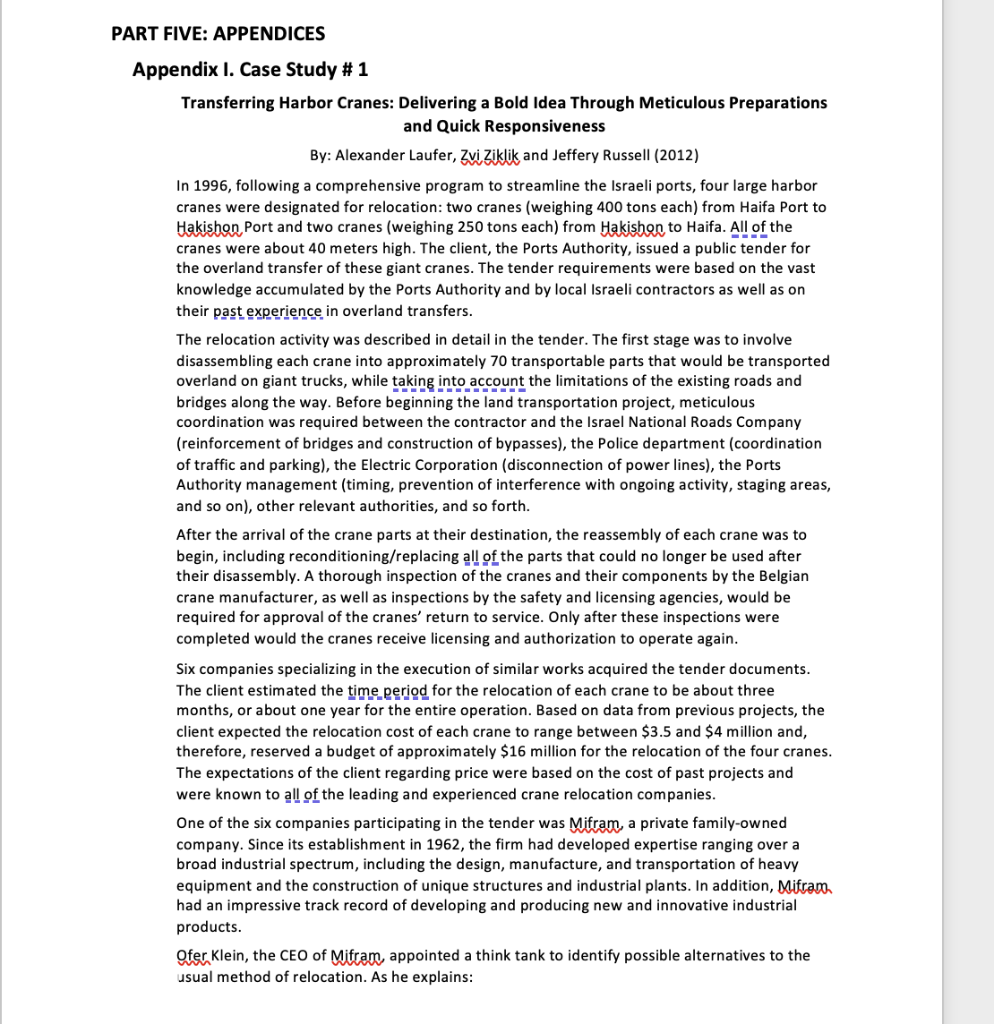
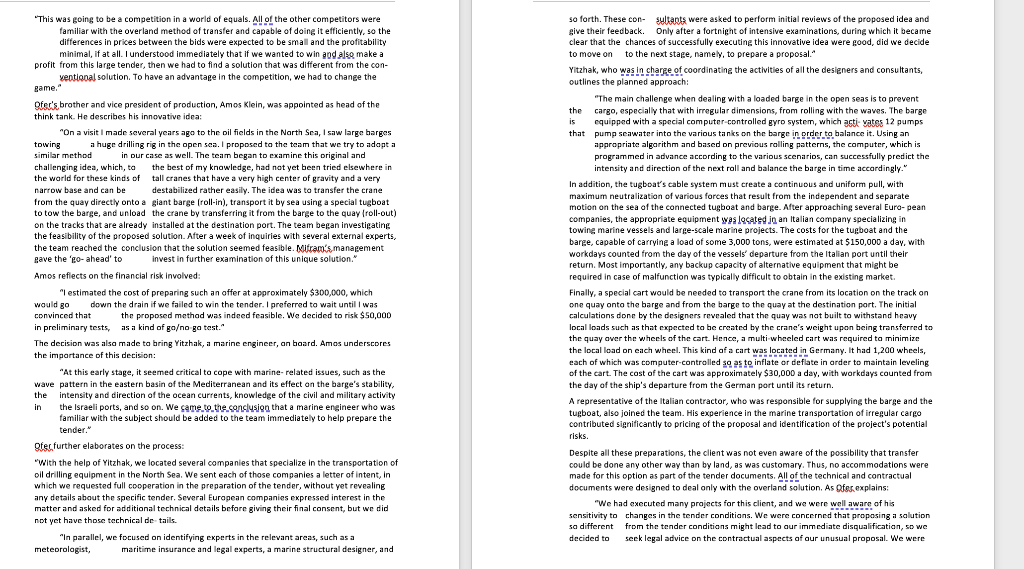
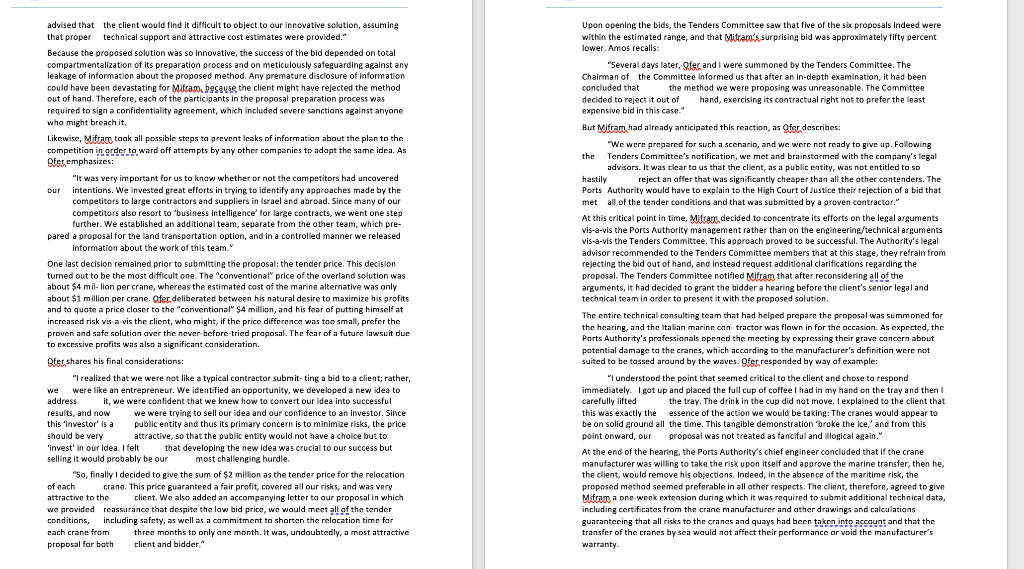
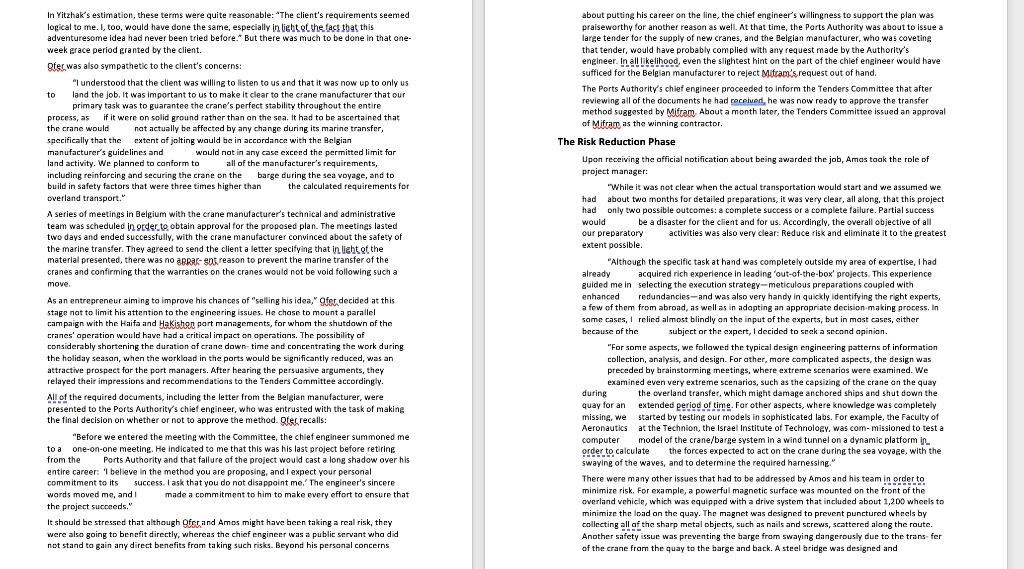
PART FIVE: APPENDICES Appendix I. Case Study # 1 Transferring Harbor Cranes: Delivering a Bold Idea Through Meticulous Preparations and Quick Responsiveness By: Alexander Laufer, Zvi Ziklik and Jeffery Russell (2012) In 1996, following a comprehensive program to streamline the Israeli ports, four large harbor cranes were designated for relocation: two cranes (weighing 400 tons each) from Haifa Port to Hakishon Port and two cranes (weighing 250 tons each) from Hakishan to Haifa. All of the cranes were about 40 meters high. The client, the Ports Authority, issued a public tender for the overland transfer of these giant cranes. The tender requirements were based on the vast knowledge accumulated by the Ports Authority and by local Israeli contractors as well as on their past experience in overland transfers. The relocation activity was described in detail in the tender. The first stage was to involve disassembling each crane into approximately 70 transportable parts that would be transported overland on giant trucks, while taking into account the limitations of the existing roads and bridges along the way. Before beginning the land transportation project, meticulous coordination was required between the contractor and the Israel National Roads Company (reinforcement of bridges and construction of bypasses), the Police department (coordination of traffic and parking), the Electric Corporation (disconnection of power lines), the Ports Authority management (timing, prevention of interference with ongoing activity, staging areas, and so on), other relevant authorities, and so forth. After the arrival of the crane parts at their destination, the reassembly of each crane was to begin, including reconditioning/replacing all of the parts that could no longer be used after their disassembly. A thorough inspection of the cranes and their components by the Belgian crane manufacturer, as well as inspections by the safety and licensing agencies, would be required for approval of the cranes' return to service. Only after these inspections were completed would the cranes receive licensing and authorization to operate again. Six companies specializing in the execution of similar works acquired the tender documents. The client estimated the time period for the relocation of each crane to be about three months, or about one year for the entire operation. Based on data from previous projects, the client expected the relocation cost of each crane to range between $3.5 and $4 million and, therefore, reserved a budget of approximately $16 million for the relocation of the four cranes. The expectations of the client regarding price were based on the cost of past projects and were known to all of the leading and experienced crane relocation companies. One of the six companies participating in the tender was Mifram, a private family-owned company. Since its establishment in 1962, the firm had developed expertise ranging over a broad industrial spectrum, including the design, manufacture, and transportation of heavy equipment and the construction of unique structures and industrial plants. In addition, Mifram had an impressive track record of developing and producing new and innovative industrial products. Ofer Klein, the CEO of Mitram appointed a think tank to identify possible alternatives to the usual method of relocation. As he explains: "This was going to be a competition in a world of equals. All of the other competitors were familiar with the overland method of transfer and capable of doing it efficiently, so the differences in prices between the bids were expected to be small and the profitability minimal, if at all. I understood immediately that if we wanted to win aod also make a profit from this large tender, then we had to find a solution that was different from the con- ventional solution. To have an advantage in the competition, we had to change the game." Ofer's brother and vice president of production, Amos Klein, was appointed as head of the think tank. He describes his innovative idea: "On a visit I made several years ago to the oil fields in the North Sea, I saw large barges a towing a huge drilling rig in the open sea. I proposed to the team that we try to adapta similar method in our case as well. The team began to examine this original and challenging idea, which, ta the best of my knowledge, had not yet been tried elsewhere in the world for these kinds of tall cranes that have a very high center of gravity and a very narrow base and can be destabilized rather easily. The idea was to transfer the crane from the quay directly onto a giant barge (roll-in), transport it by sea using a special tugboat to tow the barge, and unload the crane by transferring it from the barge to the quay froll-out) on the tracks that are already installed at the destination port. The team began investigating the feasibility of the proposed solution. After a week of inquiries with several external experts, the team reached the conclusion that the solution seemed feasible. Mitram's management gave the 'go-ahead to invest in further examination of this unique solution." Amos reflects on the financial risk involved: "I estimated the cost of preparing such an offer at approximately $300,000, which would go down the drain if we failed to win the tender. I preferred to wait until I was convinced that the proposed method was indeed feasible. We decided to risk $50,000 in preliminary tests, as a kind of goo ga test." The decision was also made to bring Yitzhak, a marine engineer, on board. Amos underscores the importance of this decision: "At this early stage, it seemed critical to cope with marine-related issues, such as the wave pattern in the eastern basin of the Mediterranean and its effect on the barge's stability, the intensity and direction of the ocean currents, knowledge of the civil and military activity the Israeli ports, and so on. We came to the conclusion that a marine engineer who was familiar with the subject should be added to the team immediately to help prepare the tender. Qter further elaborates on the process "With the help of Yitzhak, we located several companies that specialize in the transportation of oil drilling equipment in the North Sea. We sent each of those companies a letter of intent, in which we requested full cooperation in the preparation of the tender, without yet revealing any details about the specific tender. Several European companies expressed interest in the matter and asked for additional technical details before giving their final consent, but we did not yet have those technical de tails. "In parallel, we focused on identifying experts in the relevant areas, such as a meteorologist, maritime insurance and legal experts, a marine structural designer, and so forth. These consultants were asked to perform initial reviews of the proposed idea and give their feedback. Only after a fortnight of intensive examinations, during which it became clear that the chances of successfully executing this innovative idea were good, did we decide to move on to the next stage, namely, to prepare a proposal." Yitzhak, who was in charge of coordinating the activities of all the designers and consultants, outlines the planned approach: "The main challenge when dealing with a loaded barge in the open seas is to prevent the cargo, especially that with irregular dimensions, from rolling with the waves. The barge is equipped with a special computer-controlled gyro system, which activates 12 pumps that pump seawater into the various tanks on the barge in order to balance it. Using an appropriate algarithm and based on previous rolling patterns, the computer, which is programmed in advance according to the various scenarios, can successfully predict the intensity and direction of the next roll and balance the barge in time accordingly." In addition, the tugboat's cable system must create a continuous and uniform pull, with maximum neutralization of various forces that result from the independent and separate motion on the sea of the connected tugboat and barge. After approaching several Euro-pean companies, the appropriate equipment vos located in an Italian company specializing in towing marine vessels and large-scale marine projects. The costs for the tugboat and the barge, capable of carrying a load of some 3,000 tons, were estimated at $150,000 a day, with workdays counted from the day of the vessels' departure from the Italian port until their return. Most importantly, any backup capacity of alternative equipment that might be required in case of malfunction was typically difficult to obtain in the existing market. Finally, a special cart would be needed to transport the crane from its location on the track on one quay onto the barge and from the barge to the quay at the destination port. The initial calculations done by the designers revealed that the quay was not built to withstand heavy local loads such as that expected to be created by the crane's weight upon being transferred to the quay over the wheels of the cart. Hence, a multi-wheeled cart was required to minimize the local load on cach wheel. This kind of a cart was located in Germany. It had 1,200 wheels, each of of which was computer-controlled so as to inflate or deflate in order to maintain leveling of the cart. The cost of the cart was approximately $30,000 a day, with workdays counted from the day of the ship's departure from the German port until its return. A representative of the Italian contractor, who was responsible for supplying the barge and the tugboat, also joined the team. His experience in the marine transportation of irregular cargo contributed significantly to pricing of the proposal and identification of the project's potential risks. Despite all these preparations, the client was not even aware of the possibility that transfer could be done any other way than by land, as was customary. Thus, no accommodations were made for this option as part of the tender documents. All of the technical and contractual documents were designed to deal only with the overland solution. As Ofes explains: "We had executed many projects for this client, and we were well aware of his sensitivity to changes in the tender conditions. We were concerned that proposing a solution sa different from the tender conditions might lead to aur immediate disqualification, so we decided to seek legal advice on the contractual aspects of aur unusual proposal. We were our advised that the client would find it difficult to object to our innovative solution, assuming that proper technical support and attractive cost estimates were provided." Because the proposed solution was so innovative, the success of the bid depended on total compartmentalization of its preparation process and on meticulously safeguarding against any leakage of information about the proposed method. Any premature disclosure of information could have been devastating for Mifras, because the client might have rejected the method out of hand. Therefore, each of the participants in the proposal preparation process was required to sign a confidentiality agreement, which included severe sanctions against anyone who might breach it. Likewise, Mifran taak all possible steps to prevent leaks of information about the plan to the competition in order to ward off attempts by any other companies to adapt the same idea. As Ofer emphasizes: "It was very important for us to know whether or not the competitors had uncovered intentions. We invested great efforts in trying to identify any approaches made by the competitors to large contractors and suppliers in Israel and abroad. Since many of our competitors also resort to business intelligence for large contracts, we went one step further. We established an additional team, separate from the other team, which pre- pared a proposal for the land transportation option, and in a controlled manner we released information about the work of this team." One last decision remained prior to submitting the proposal: the tender price. This decision turned out to be the most difficult one. The "conventional price of the overland solution was about $4 million per crane, whereas the estimated cost of the marine alternative was only about $1 million per crane. Ofer.deliberated between his natural desire to maximize his profits and to quote a price closer to the conventional" $4 million, and his fear of putting himself at increased risk vis-avis the client, who might, if the price difference was too small, prefer the proven and safe solution aver the never before tried proposal. The fear of a future lawsuit due to excessive profits was also a significant consideration. Ofer shares his final considerations: "I realized that we were not like a typical contractor submitting a bid to a client; rather, we were like an entrepreneur. We identified an opportunity, we developed a new idea to address it, we were confident that we knew how to convert our idea into successful results, and now we were trying to sell our idea and our confidence to an investor. Since this 'investor' is a public entity and thus its primary concern is to minimize risks, the price should be very attractive, so that the public entity would not have a choice but to 'invest' in our idea. I felt that developing the new idea was crucial to our success but selling it would probably be our most challenging hurdle. "So, finally I decided to give the sum of $2 million as the tender price for the relocation of each crane. This price guaranteed a fair profit, covered all our risks, and was very attractive to the client. We also added an accompanying letter to our proposal in which we provided reassurance that despite the law hid price, we would meet all of the tender conditions, including safety, as well as a commitment to shorten the relacation time for cach crane from three months to only anc month. It was, undoubtedly, a most attractive proposal for both client and bidder." Upon opening the bids, the Tenders Committee saw that five of the six proposals indeed were within the estimated range, and that Mitram's surprising bid was approximately fifty percent lower. Amos recalls: "Several days later, Ofer and I were summoned by the Tenders Committee. The Chairman of the Committee informed us that after an in-depth examination, it had been concluded that the method we were proposing was unreasonable. The Committee decided to reject it out of hand, exercising its contractual right not to prefer the least expensive bid in this case." But Mifran had already anticipated this reaction, as Ofer describes: "We were prepared for such a scenario, and we were not ready to give up. Following the Tenders Committee's notification, we met and brainstormed with the company's legal advisors. It was clear to us that the client, as a public entity, was not entitled to so hastily reject an offer that was significantly cheaper than all the other contenders. The Ports Authority would have to explain to the High Court of Justice their rejection of a bid that met all of the tender conditions and that was submitted by a proven contractor." At this critical point in time, Mitram decided to concentrate its efforts on the legal arguments vis-a-vis the Ports Authority management rather than on the engineering/technical arguments vis-a-vis the Tenders Committee. This approach proved to be successful. The Authority's legal advisor recommended to the Tenders Committee members that at this stage, they refrain from rejecting the bid out of hand, and instead request additional clarifications regarding the proposal. The Tenders Committee notified Mifram that after reconsidering all of the arguments, it had decided to grant the bidder a hearing before the client's senior legal and technical team in order to present it with the proposed solution. The entire technical consulting team that had helped prepare the proposal was summoned for the hearing, and the Italian marine contractor was flown in for the accasion. As expected, the Parts Authority's professionals opened the meeting by expressing their grave concern about potential damage to the cranes, which according to the manufacturer's definition were not suited to be tassed around by the waves. Ofer responded by way of example: "understood the point that seemed critical to the client and chose to respond immediately. I got up and placed the full cup of coffee l had in my hand on the tray and then carefully lifted the tray. The drink in the cup did not move. I explained to the client that this was exactly the essence of the action we would be taking: The cranes would appear to be on solid ground all the time. This tangible demonstration 'broke the ice,' and from this point onward, our proposal was not treated as fanciful and illogical again." At the end of the hearing the Ports Authority's chief engineer concluded that if the crane manufacturer was willing to take the risk upon itself and approve the marine transfer, then he the client, would remove his objections. Indeed, in the absence of the maritime risk, the proposed method seemed preferable in all other respects. The client, therefore, agreed to give Mitran a one-week extension during which it was required to submit additional technical data, including certificates from the crane manufacturer and other drawings and calculations guaranteeing that all risks to the cranes and quays had been taken into account and that the transfer of the cranes by sea wauld nat affect their performance or void the manufacturer's warranty In Yitzhak's estimation, these terms were quite reasonable: "The client's requirements seemed logical to me. I, too, would have done the same, especially in light of the fact that this adventuresome idea had never been tried before. But there was much to be done in that one- week erace period granted by the client. Otec was also sympathetic to the client's concerns: "I understood that the client was willing to listen to us and that it was now up to only us to land the job. It was important to us to make it clear to the crane manufacturer that our primary task was to guarantee the crane's perfect stability throughout the entire process, as if it were on solid ground rather than on the sea. It had to be ascertained that the crane would nat actually be affected by any change during its marine transfer, specifically that the extent of jolting wauld be in accordance with the Belgian manufacturer's guidelines and would not in any case exceed the permitted limit for land activity. We planned to conform to all of the manufacturer's requirements, including reinforcing and securing the crane on the barge during the sea voyage, and to build in safety factors that were three times higher than the calculated requirements for overland transport. A series of meetings in Belgium with the crane manufacturer's technical and administrative team was scheduled in order to obtain approval for the proposed plan. The meetings lasted two days and ended successfully, with the crane manufacturer convinced about the safety of the marine transfer. They agreed to send the client a letter specifying that in liebt of the material presented, there was no arrar-ent reason to prevent the marine transfer of the cranes and confirming that the warranties on the cranes would not be vold following such a move. As an entrepreneur aiming to improve his chances of "selling his idea,"Ofer decided at this stage not to limit his attention to the engineering issues. He chose to mount a parallel campaign with the Haifa and Hakishor part managements, for whom the shutdown of the cranes' aperation would have had a critical impact on operations. The possibility of considerably shortening the duration of crane down-time and concentrating the work during the holiday season, when the workload in the ports would be significantly reduced, was an attractive prospect for the port managers. After hearing the persuasive arguments, they relayed their impressions and recommendations to the Tenders Committee accordingly. All of the required documents, including the letter from the Belgian manufacturer, were presented to the Ports Authority's chief engineer, who was entrusted with the task of making the final decision on whether or not to approve the method. Otec recalls: "Before we entered the meeting with the Committee, the chief engineer summoned me to a one-on-one meeting. He indicated to me that this was his last project before retiring from the Ports Authority and that failure of the project would cast a long shadow over his entire career: 'I believe in the method you are proposing, and I expect your personal commitment to its success. I ask that you do not disappoint me.' The engineer's sincere I words moved me, and I made a commitment to him to make every effort to ensure that the project succeeds." It should be stressed that although Ofsrand Amos might have been taking a real risk, they were also going to benefit directly, whereas the chief engineer was a public servant wha did not stand to gain any direct benefits from taking such risks. Beyond his personal concerns about putting his career on the line, the chief engineer's willingness to support the plan was praiseworthy for another reason as well. At that time, the Ports Authority was about to issue a large tender for the supply of new cranes, and the Belgian manufacturer, who was coveting that tender, would have probably complied with any request made by the Authority's engineer. In all likelihood, even the slightest hint on the part of the chief engineer would have sufficed for the Belgian manufacturer to reject Mitram's request out of hand. The Ports Authority's chief engineer proceeded to inform the Tenders Committee that after reviewing all of the documents he had cecelued, he was now ready to approve the transfer method suggested by Miframe About a month later, the Tenders Committee issued an approval of Mifram as the winning contractor , The Risk Reduction Phase Upon receiving the official notification about being awarded the job, Amas taak the role of project manager: "While it was not clear when the actual transportation would start and we assumed we had about two months for detailed preparations, it was very clear, all along, that this project had only two possible outcomes: a complete success or a complete failure. Partial success would be a disaster for the client and for us. Accordingly, the overall objective of all our preparatory activities was also very clear: Reduce risk and eliminate it to the greatest extent possible. "Although the specific task at hand was completely outside my area of expertise, I had already acquired rich experience in leading 'out-of-the-box' projects. This experience guided me in selecting the execution strategy-meticulous preparations coupled with enhanced redundancies-and was also very handy in quickly identifying the right experts, a few of them from abroad, as well as in adapting an appropriate decision-making process. In some cases, I relied almost blindly on the input of the experts, but in most cases, either because of the subject or the expert, I decided to seek a second opinion. "For some aspects, we followed the typical design engineering patterns of information collection, analysis, and design. For ather, more complicated aspects, the design was preceded by brainstorming meetings, where extreme scenarios were examined. We examined even very extreme scenarios, such as the capsizing of the crane on the quay during the overland transfer, which might damage anchored ships and shut down the , quay for an extended period of time. For other aspects, where knowledge was completely missing, we started by testing our models in sophisticated labs. For example, the Faculty of Aeronautics at the Technion, the Israel Institute of Technology, was com-missioned to test a computer model of the crane/barge system in a wind tunnel on a dynamic platform in order to calculate the forces expected to act on the crane during the sea voyage, with the swaying of the waves, and to determine the required harnessing." There were many other issues that had to be addressed by Amos and his team in order to minimize risk. For example, a powerful magnetic surface was mounted on the front of the overland vehicle, which was equipped with a drive system that included about 1,200 wheels to minimize the load on the quay. The magnet was designed to prevent punctured wheels by collecting all of the sharp metal objects, such as nails and screws, scattered along the route. Another safety issue was preventing the barge from swaying dangerously due to the transfer of the crane from the quay to the barge and back. A steel bridge was designed and manufactured to connect the quay to the center of the barge to stabilize it and keep the crane's load uniformly distributed over the barge surface when loading or unloading it. Finally, the thickness of the tension cables had to be two and a half times that required by the calculations in arder to satisfy Lloyd's, the maritime insurance company, whose job it was to approve the harnessing of the crane to the barge before each departure from part. In order to provide immediate solutions for any mishap related to the critical issue of . harnessing the crane to the barge during the sea voyage, Amos decided to triple the amount of designated equipment (such as welding apparatuses, generators, cranes, cables, and so on). Indeed, for all critical systems, including the number of wheels (1,200) and the capacity of the barge (3,000 tons), the safety requirements embraced were much higher than those dictated by the direct calculations. Extremely rigorous tests were also conducted as Amos illustrated: I decided to invite an expert in ship building and asked him to examine the tugboat and the barge very thoroughly, as if I was about to purchase this equipment. Moreover, work crews were reinforced, and an additional backup crew was added to each shift. While still refining the "hardware" side of the mission, Amos started focusing on the people side of it as well. A project manager was specially appointed to take care of all the administrative issues on site, including hot meals, lavatories and showers on the barge, , transportation, fueling, and daily changes of work clothes. Amos even decided to purchase new toals and clothing labeled with the name of the project so as to enhance the identification of the workers with the project. The project workforce included 190 workers, comprised of 120 Mitran employees, 40 foreign workers (tugboat and barge operational crews), and 30 employees of local subcontractors Theavy equipment operators, welders, and maintenance crews). Strong emphasis was placed on selecting the right people for key positions, such as foremen, team leaders, and equipment operators. In more than a few cases, the best available people in the market were hired at a premium cost. Special attention was given to the development of an accelerated, but comprehensive, training , program for the different trades. Accurate, reduced-size models of the crane, the barge, and the cart, including electrical motors, were built to train the workers and drill them on the loading and unloading processes, with an emphasis on safety. An extremely detailed plan, with about 300 specific activities, was prepared for each sea voyage. Important procedures were not only described in words, but were also drawn on large sheets of paper in order to ensure that all concerned would understand them and adhere to them. Various safety checklists were also prepared and played a central part in the training sessions, later being distributed to all key functionaries While Amos was leading the preparatory activities, his brother, Qier, had developed better ties with the Ports Authority's chief engineer. As fer explained: "From the moment we received the notice to proceed, I took it upon myself to gain and maintain the trust of the chief engineer. Therefore, all relevant information that was available to us was forwarded freely and transparently to the chief engineer. I felt that this went a long way toward strengthening the trust between the two of us. I really don't believe that the first surprise we encountered in this project had anything to do with the trust that had developed, but at the same time it definitely did not hurt." That first surprise was an out-of-the-blue request from the Ports Authority to deliver two very large cranes-this time from Haifa to Ashdod. Both cranes weighed 1,100 tons each and stood about 85 meters high. Only a few minar changes were necessary to accommadate these two additional cranes. The most significant change was to prepare alternative maaring places along the way, because the distance between Haifa and Ashdod is about 130 kilometers, as opposed to the 7-kilometer distance between Haifa and Hakishao. This change would have only a marginal cost and time impact, and the formal contractual agreement with the Ports Authority was arranged quickly-a big boon for Mitram, The Constant Vigilance Phase The first sea voyage with one of the big cranes went flawlessly according to plan until the tugboat and the barge were about to enter the port of Ashdod. Without any advance warning to the captain, the tugboat was not allowed to enter the port, and it was left waiting at the end of the line. Because the barge must be constantly on the move to minimize oscillations, this delay was risky. Following a series of urgent phone calls to the Ashdod Port management, which took about thirty minutes, the tugboat was finally given permission to enter the port, It turned out that the very recent addition of the two cranes from Haifa to Ashdod in the scope of the work had not been coordinated with the workers in Ashdod. A couple of hours later, representatives of the Ashdad Part's union and management were meeting to discuss the long term development plans for the part. In the wake of the incident that had just accurred, they also made one short-term decision to allow the tugboat to enter the port without any delay the next time it arrives. By the time the crane was unloaded safely and placed in its new location in Ashdod, everybody was extremely pleased, both on the side of the client and the contractor. That is, except for Oler: "The full success of the first relocation actually worried me a lot. I was afraid of the driver with one arm hanging out the window syndrome. Over-complacency on the part of the work- ers might impair their alertness and readiness to cope with mis-haps. collected all of the workers and commended them on a job well done, while reiterating and warning about the high risk inherent in each relocation: 'Each delivery is a new task that depends to a great extent on factors over which we have limited control, and so we must not delude ourselves that the success of one relocation necessarily means success of the next." One of the brothers, Amos or QC was constantly with the work force throughout the entire operation. They were closely invalved in this 24/7 operation and worked on it in shifts, including weekends and holidays, staying together with the warkers and even eating with them. As Qter underscored: "This was our norm for all the special projects we carried out, and our people expected it. We believed that this way we can learn quickly about changes and react in a timely manner, and not less importantly, we can naturally infect the entire work-force with our passion and energy. We promised large bonuses to the workers, but we believed that the role model approach is a more effective motivator. Our work philosophy was that the workers should stay focused on their task, religiously adhering to their procedures, while they were expected to raise a flag if they observed a change in their surroundings. It was the tailor their decisions to the context, for example, to hire a consultant and, if needed, to pay him twice the gaing rate. Amos adds to this list boldness and systematic planning, while Ofer adds building trust and leadership, in particular leading the client. Finally, both Amos and Ofer agree that the most crucial weapon they brought to a dynamic environment was the fact that they complemented each other and created a dynamic harmony. cash payment prior to the transport. This was contrary to the agreement, which stipulated that payment would be made after each relacation via bank transfer to the Italians' bank account. Ofe was stunned by their request: "The Italians' demand astanished me. We had already completed two successful marine transfers and had paid the Italians what they were duc without any problem. Even if I had wanted to pay, I could not have done it at that moment because all the banks are closed at night, and it was impossible to raise the required amount of money in cash." The Italians decided to stage a "strike and deliberately slowed down the execution process, giving "work safety as the reason. This time, transporting the crane using the overland vehicle took about 5 hours instead of only 45 minutes, as in previous cases. Only after harsh talks between Ofer, and the tugboat captain did the latter agree to instruct the crew to return to normal work pace. But the standoff was not over yet: "After this relocation was completed, the tugboat captain hap-bazardly informed me that he had received orders from the mother company in Italy 'to drop everything and set sail that same night' for Africa, where his urgent presence was required in order to extricate a ship. an offer that apparently presented an excellent business opportunity for the Italians. The captain was instructed by his employer to explain the termination of work with Mitram by saying that towing of the barge was dangerous and that according to maritime law, he could not be forced to take the risk. The captain seemed embarrassed in light of the special relationship that had developed between himself and Ofer, but he felt abliged to obey the instructions of his superiors in the company. The captain suggested that Ofer speak directly with the CEO of the Italian company and inform him that he intended to involve the Italian embassy in Israel and the Haifa Port management in order to prevent the tugboat from leaving the country. Otec asked the Haifa Port authorities not to approve the tugboat's exit from the port. At the same time, he instructed his workers to take possession of all the tuhoat's and barge's loading and mooring equipment, without which the tugboat could not execute its task in Africa. The threats and actions taken were effective, and eventually a different tugboat was sent from Italy to Africa to execute the other mission The crane relocation project was successfully completed. The entire project took only about four weeks and was cause for celebration by all parties. The client saved about 50 percent of his budget (direct cost) and additional sums due to the shorter shutdown time of the cranes and the quays. The contractor made a higher profit than he had originally planned because of the significant expansion of the work at a relatively low marginal cost. Last, but not least, the workers received high premiums for their outstanding performance. Both Ofer and Amos agree that their rich experiences with "out-of-the-box' projects, their company's flat organizational structure, the quality of the people they recruited and developed throughout the years, and the norm of working closely with their staff in the field contributed to the success of the project. Regarding the flat organizational structure, they pointed out that when the heads of the organization are also the heads of the project, their ability to make decisions and quickly implement them is enhanced. Even more importantly, it enables them to PART FIVE: APPENDICES Appendix I. Case Study # 1 Transferring Harbor Cranes: Delivering a Bold Idea Through Meticulous Preparations and Quick Responsiveness By: Alexander Laufer, Zvi Ziklik and Jeffery Russell (2012) In 1996, following a comprehensive program to streamline the Israeli ports, four large harbor cranes were designated for relocation: two cranes (weighing 400 tons each) from Haifa Port to Hakishon Port and two cranes (weighing 250 tons each) from Hakishan to Haifa. All of the cranes were about 40 meters high. The client, the Ports Authority, issued a public tender for the overland transfer of these giant cranes. The tender requirements were based on the vast knowledge accumulated by the Ports Authority and by local Israeli contractors as well as on their past experience in overland transfers. The relocation activity was described in detail in the tender. The first stage was to involve disassembling each crane into approximately 70 transportable parts that would be transported overland on giant trucks, while taking into account the limitations of the existing roads and bridges along the way. Before beginning the land transportation project, meticulous coordination was required between the contractor and the Israel National Roads Company (reinforcement of bridges and construction of bypasses), the Police department (coordination of traffic and parking), the Electric Corporation (disconnection of power lines), the Ports Authority management (timing, prevention of interference with ongoing activity, staging areas, and so on), other relevant authorities, and so forth. After the arrival of the crane parts at their destination, the reassembly of each crane was to begin, including reconditioning/replacing all of the parts that could no longer be used after their disassembly. A thorough inspection of the cranes and their components by the Belgian crane manufacturer, as well as inspections by the safety and licensing agencies, would be required for approval of the cranes' return to service. Only after these inspections were completed would the cranes receive licensing and authorization to operate again. Six companies specializing in the execution of similar works acquired the tender documents. The client estimated the time period for the relocation of each crane to be about three months, or about one year for the entire operation. Based on data from previous projects, the client expected the relocation cost of each crane to range between $3.5 and $4 million and, therefore, reserved a budget of approximately $16 million for the relocation of the four cranes. The expectations of the client regarding price were based on the cost of past projects and were known to all of the leading and experienced crane relocation companies. One of the six companies participating in the tender was Mifram, a private family-owned company. Since its establishment in 1962, the firm had developed expertise ranging over a broad industrial spectrum, including the design, manufacture, and transportation of heavy equipment and the construction of unique structures and industrial plants. In addition, Mifram had an impressive track record of developing and producing new and innovative industrial products. Ofer Klein, the CEO of Mitram appointed a think tank to identify possible alternatives to the usual method of relocation. As he explains: "This was going to be a competition in a world of equals. All of the other competitors were familiar with the overland method of transfer and capable of doing it efficiently, so the differences in prices between the bids were expected to be small and the profitability minimal, if at all. I understood immediately that if we wanted to win aod also make a profit from this large tender, then we had to find a solution that was different from the con- ventional solution. To have an advantage in the competition, we had to change the game." Ofer's brother and vice president of production, Amos Klein, was appointed as head of the think tank. He describes his innovative idea: "On a visit I made several years ago to the oil fields in the North Sea, I saw large barges a towing a huge drilling rig in the open sea. I proposed to the team that we try to adapta similar method in our case as well. The team began to examine this original and challenging idea, which, ta the best of my knowledge, had not yet been tried elsewhere in the world for these kinds of tall cranes that have a very high center of gravity and a very narrow base and can be destabilized rather easily. The idea was to transfer the crane from the quay directly onto a giant barge (roll-in), transport it by sea using a special tugboat to tow the barge, and unload the crane by transferring it from the barge to the quay froll-out) on the tracks that are already installed at the destination port. The team began investigating the feasibility of the proposed solution. After a week of inquiries with several external experts, the team reached the conclusion that the solution seemed feasible. Mitram's management gave the 'go-ahead to invest in further examination of this unique solution." Amos reflects on the financial risk involved: "I estimated the cost of preparing such an offer at approximately $300,000, which would go down the drain if we failed to win the tender. I preferred to wait until I was convinced that the proposed method was indeed feasible. We decided to risk $50,000 in preliminary tests, as a kind of goo ga test." The decision was also made to bring Yitzhak, a marine engineer, on board. Amos underscores the importance of this decision: "At this early stage, it seemed critical to cope with marine-related issues, such as the wave pattern in the eastern basin of the Mediterranean and its effect on the barge's stability, the intensity and direction of the ocean currents, knowledge of the civil and military activity the Israeli ports, and so on. We came to the conclusion that a marine engineer who was familiar with the subject should be added to the team immediately to help prepare the tender. Qter further elaborates on the process "With the help of Yitzhak, we located several companies that specialize in the transportation of oil drilling equipment in the North Sea. We sent each of those companies a letter of intent, in which we requested full cooperation in the preparation of the tender, without yet revealing any details about the specific tender. Several European companies expressed interest in the matter and asked for additional technical details before giving their final consent, but we did not yet have those technical de tails. "In parallel, we focused on identifying experts in the relevant areas, such as a meteorologist, maritime insurance and legal experts, a marine structural designer, and so forth. These consultants were asked to perform initial reviews of the proposed idea and give their feedback. Only after a fortnight of intensive examinations, during which it became clear that the chances of successfully executing this innovative idea were good, did we decide to move on to the next stage, namely, to prepare a proposal." Yitzhak, who was in charge of coordinating the activities of all the designers and consultants, outlines the planned approach: "The main challenge when dealing with a loaded barge in the open seas is to prevent the cargo, especially that with irregular dimensions, from rolling with the waves. The barge is equipped with a special computer-controlled gyro system, which activates 12 pumps that pump seawater into the various tanks on the barge in order to balance it. Using an appropriate algarithm and based on previous rolling patterns, the computer, which is programmed in advance according to the various scenarios, can successfully predict the intensity and direction of the next roll and balance the barge in time accordingly." In addition, the tugboat's cable system must create a continuous and uniform pull, with maximum neutralization of various forces that result from the independent and separate motion on the sea of the connected tugboat and barge. After approaching several Euro-pean companies, the appropriate equipment vos located in an Italian company specializing in towing marine vessels and large-scale marine projects. The costs for the tugboat and the barge, capable of carrying a load of some 3,000 tons, were estimated at $150,000 a day, with workdays counted from the day of the vessels' departure from the Italian port until their return. Most importantly, any backup capacity of alternative equipment that might be required in case of malfunction was typically difficult to obtain in the existing market. Finally, a special cart would be needed to transport the crane from its location on the track on one quay onto the barge and from the barge to the quay at the destination port. The initial calculations done by the designers revealed that the quay was not built to withstand heavy local loads such as that expected to be created by the crane's weight upon being transferred to the quay over the wheels of the cart. Hence, a multi-wheeled cart was required to minimize the local load on cach wheel. This kind of a cart was located in Germany. It had 1,200 wheels, each of of which was computer-controlled so as to inflate or deflate in order to maintain leveling of the cart. The cost of the cart was approximately $30,000 a day, with workdays counted from the day of the ship's departure from the German port until its return. A representative of the Italian contractor, who was responsible for supplying the barge and the tugboat, also joined the team. His experience in the marine transportation of irregular cargo contributed significantly to pricing of the proposal and identification of the project's potential risks. Despite all these preparations, the client was not even aware of the possibility that transfer could be done any other way than by land, as was customary. Thus, no accommodations were made for this option as part of the tender documents. All of the technical and contractual documents were designed to deal only with the overland solution. As Ofes explains: "We had executed many projects for this client, and we were well aware of his sensitivity to changes in the tender conditions. We were concerned that proposing a solution sa different from the tender conditions might lead to aur immediate disqualification, so we decided to seek legal advice on the contractual aspects of aur unusual proposal. We were our advised that the client would find it difficult to object to our innovative solution, assuming that proper technical support and attractive cost estimates were provided." Because the proposed solution was so innovative, the success of the bid depended on total compartmentalization of its preparation process and on meticulously safeguarding against any leakage of information about the proposed method. Any premature disclosure of information could have been devastating for Mifras, because the client might have rejected the method out of hand. Therefore, each of the participants in the proposal preparation process was required to sign a confidentiality agreement, which included severe sanctions against anyone who might breach it. Likewise, Mifran taak all possible steps to prevent leaks of information about the plan to the competition in order to ward off attempts by any other companies to adapt the same idea. As Ofer emphasizes: "It was very important for us to know whether or not the competitors had uncovered intentions. We invested great efforts in trying to identify any approaches made by the competitors to large contractors and suppliers in Israel and abroad. Since many of our competitors also resort to business intelligence for large contracts, we went one step further. We established an additional team, separate from the other team, which pre- pared a proposal for the land transportation option, and in a controlled manner we released information about the work of this team." One last decision remained prior to submitting the proposal: the tender price. This decision turned out to be the most difficult one. The "conventional price of the overland solution was about $4 million per crane, whereas the estimated cost of the marine alternative was only about $1 million per crane. Ofer.deliberated between his natural desire to maximize his profits and to quote a price closer to the conventional" $4 million, and his fear of putting himself at increased risk vis-avis the client, who might, if the price difference was too small, prefer the proven and safe solution aver the never before tried proposal. The fear of a future lawsuit due to excessive profits was also a significant consideration. Ofer shares his final considerations: "I realized that we were not like a typical contractor submitting a bid to a client; rather, we were like an entrepreneur. We identified an opportunity, we developed a new idea to address it, we were confident that we knew how to convert our idea into successful results, and now we were trying to sell our idea and our confidence to an investor. Since this 'investor' is a public entity and thus its primary concern is to minimize risks, the price should be very attractive, so that the public entity would not have a choice but to 'invest' in our idea. I felt that developing the new idea was crucial to our success but selling it would probably be our most challenging hurdle. "So, finally I decided to give the sum of $2 million as the tender price for the relocation of each crane. This price guaranteed a fair profit, covered all our risks, and was very attractive to the client. We also added an accompanying letter to our proposal in which we provided reassurance that despite the law hid price, we would meet all of the tender conditions, including safety, as well as a commitment to shorten the relacation time for cach crane from three months to only anc month. It was, undoubtedly, a most attractive proposal for both client and bidder." Upon opening the bids, the Tenders Committee saw that five of the six proposals indeed were within the estimated range, and that Mitram's surprising bid was approximately fifty percent lower. Amos recalls: "Several days later, Ofer and I were summoned by the Tenders Committee. The Chairman of the Committee informed us that after an in-depth examination, it had been concluded that the method we were proposing was unreasonable. The Committee decided to reject it out of hand, exercising its contractual right not to prefer the least expensive bid in this case." But Mifran had already anticipated this reaction, as Ofer describes: "We were prepared for such a scenario, and we were not ready to give up. Following the Tenders Committee's notification, we met and brainstormed with the company's legal advisors. It was clear to us that the client, as a public entity, was not entitled to so hastily reject an offer that was significantly cheaper than all the other contenders. The Ports Authority would have to explain to the High Court of Justice their rejection of a bid that met all of the tender conditions and that was submitted by a proven contractor." At this critical point in time, Mitram decided to concentrate its efforts on the legal arguments vis-a-vis the Ports Authority management rather than on the engineering/technical arguments vis-a-vis the Tenders Committee. This approach proved to be successful. The Authority's legal advisor recommended to the Tenders Committee members that at this stage, they refrain from rejecting the bid out of hand, and instead request additional clarifications regarding the proposal. The Tenders Committee notified Mifram that after reconsidering all of the arguments, it had decided to grant the bidder a hearing before the client's senior legal and technical team in order to present it with the proposed solution. The entire technical consulting team that had helped prepare the proposal was summoned for the hearing, and the Italian marine contractor was flown in for the accasion. As expected, the Parts Authority's professionals opened the meeting by expressing their grave concern about potential damage to the cranes, which according to the manufacturer's definition were not suited to be tassed around by the waves. Ofer responded by way of example: "understood the point that seemed critical to the client and chose to respond immediately. I got up and placed the full cup of coffee l had in my hand on the tray and then carefully lifted the tray. The drink in the cup did not move. I explained to the client that this was exactly the essence of the action we would be taking: The cranes would appear to be on solid ground all the time. This tangible demonstration 'broke the ice,' and from this point onward, our proposal was not treated as fanciful and illogical again." At the end of the hearing the Ports Authority's chief engineer concluded that if the crane manufacturer was willing to take the risk upon itself and approve the marine transfer, then he the client, would remove his objections. Indeed, in the absence of the maritime risk, the proposed method seemed preferable in all other respects. The client, therefore, agreed to give Mitran a one-week extension during which it was required to submit additional technical data, including certificates from the crane manufacturer and other drawings and calculations guaranteeing that all risks to the cranes and quays had been taken into account and that the transfer of the cranes by sea wauld nat affect their performance or void the manufacturer's warranty In Yitzhak's estimation, these terms were quite reasonable: "The client's requirements seemed logical to me. I, too, would have done the same, especially in light of the fact that this adventuresome idea had never been tried before. But there was much to be done in that one- week erace period granted by the client. Otec was also sympathetic to the client's concerns: "I understood that the client was willing to listen to us and that it was now up to only us to land the job. It was important to us to make it clear to the crane manufacturer that our primary task was to guarantee the crane's perfect stability throughout the entire process, as if it were on solid ground rather than on the sea. It had to be ascertained that the crane would nat actually be affected by any change during its marine transfer, specifically that the extent of jolting wauld be in accordance with the Belgian manufacturer's guidelines and would not in any case exceed the permitted limit for land activity. We planned to conform to all of the manufacturer's requirements, including reinforcing and securing the crane on the barge during the sea voyage, and to build in safety factors that were three times higher than the calculated requirements for overland transport. A series of meetings in Belgium with the crane manufacturer's technical and administrative team was scheduled in order to obtain approval for the proposed plan. The meetings lasted two days and ended successfully, with the crane manufacturer convinced about the safety of the marine transfer. They agreed to send the client a letter specifying that in liebt of the material presented, there was no arrar-ent reason to prevent the marine transfer of the cranes and confirming that the warranties on the cranes would not be vold following such a move. As an entrepreneur aiming to improve his chances of "selling his idea,"Ofer decided at this stage not to limit his attention to the engineering issues. He chose to mount a parallel campaign with the Haifa and Hakishor part managements, for whom the shutdown of the cranes' aperation would have had a critical impact on operations. The possibility of considerably shortening the duration of crane down-time and concentrating the work during the holiday season, when the workload in the ports would be significantly reduced, was an attractive prospect for the port managers. After hearing the persuasive arguments, they relayed their impressions and recommendations to the Tenders Committee accordingly. All of the required documents, including the letter from the Belgian manufacturer, were presented to the Ports Authority's chief engineer, who was entrusted with the task of making the final decision on whether or not to approve the method. Otec recalls: "Before we entered the meeting with the Committee, the chief engineer summoned me to a one-on-one meeting. He indicated to me that this was his last project before retiring from the Ports Authority and that failure of the project would cast a long shadow over his entire career: 'I believe in the method you are proposing, and I expect your personal commitment to its success. I ask that you do not disappoint me.' The engineer's sincere I words moved me, and I made a commitment to him to make every effort to ensure that the project succeeds." It should be stressed that although Ofsrand Amos might have been taking a real risk, they were also going to benefit directly, whereas the chief engineer was a public servant wha did not stand to gain any direct benefits from taking such risks. Beyond his personal concerns about putting his career on the line, the chief engineer's willingness to support the plan was praiseworthy for another reason as well. At that time, the Ports Authority was about to issue a large tender for the supply of new cranes, and the Belgian manufacturer, who was coveting that tender, would have probably complied with any request made by the Authority's engineer. In all likelihood, even the slightest hint on the part of the chief engineer would have sufficed for the Belgian manufacturer to reject Mitram's request out of hand. The Ports Authority's chief engineer proceeded to inform the Tenders Committee that after reviewing all of the documents he had cecelued, he was now ready to approve the transfer method suggested by Miframe About a month later, the Tenders Committee issued an approval of Mifram as the winning contractor , The Risk Reduction Phase Upon receiving the official notification about being awarded the job, Amas taak the role of project manager: "While it was not clear when the actual transportation would start and we assumed we had about two months for detailed preparations, it was very clear, all along, that this project had only two possible outcomes: a complete success or a complete failure. Partial success would be a disaster for the client and for us. Accordingly, the overall objective of all our preparatory activities was also very clear: Reduce risk and eliminate it to the greatest extent possible. "Although the specific task at hand was completely outside my area of expertise, I had already acquired rich experience in leading 'out-of-the-box' projects. This experience guided me in selecting the execution strategy-meticulous preparations coupled with enhanced redundancies-and was also very handy in quickly identifying the right experts, a few of them from abroad, as well as in adapting an appropriate decision-making process. In some cases, I relied almost blindly on the input of the experts, but in most cases, either because of the subject or the expert, I decided to seek a second opinion. "For some aspects, we followed the typical design engineering patterns of information collection, analysis, and design. For ather, more complicated aspects, the design was preceded by brainstorming meetings, where extreme scenarios were examined. We examined even very extreme scenarios, such as the capsizing of the crane on the quay during the overland transfer, which might damage anchored ships and shut down the , quay for an extended period of time. For other aspects, where knowledge was completely missing, we started by testing our models in sophisticated labs. For example, the Faculty of Aeronautics at the Technion, the Israel Institute of Technology, was com-missioned to test a computer model of the crane/barge system in a wind tunnel on a dynamic platform in order to calculate the forces expected to act on the crane during the sea voyage, with the swaying of the waves, and to determine the required harnessing." There were many other issues that had to be addressed by Amos and his team in order to minimize risk. For example, a powerful magnetic surface was mounted on the front of the overland vehicle, which was equipped with a drive system that included about 1,200 wheels to minimize the load on the quay. The magnet was designed to prevent punctured wheels by collecting all of the sharp metal objects, such as nails and screws, scattered along the route. Another safety issue was preventing the barge from swaying dangerously due to the transfer of the crane from the quay to the barge and back. A steel bridge was designed and manufactured to connect the quay to the center of the barge to stabilize it and keep the crane's load uniformly distributed over the barge surface when loading or unloading it. Finally, the thickness of the tension cables had to be two and a half times that required by the calculations in arder to satisfy Lloyd's, the maritime insurance company, whose job it was to approve the harnessing of the crane to the barge before each departure from part. In order to provide immediate solutions for any mishap related to the critical issue of . harnessing the crane to the barge during the sea voyage, Amos decided to triple the amount of designated equipment (such as welding apparatuses, generators, cranes, cables, and so on). Indeed, for all critical systems, including the number of wheels (1,200) and the capacity of the barge (3,000 tons), the safety requirements embraced were much higher than those dictated by the direct calculations. Extremely rigorous tests were also conducted as Amos illustrated: I decided to invite an expert in ship building and asked him to examine the tugboat and the barge very thoroughly, as if I was about to purchase this equipment. Moreover, work crews were reinforced, and an additional backup crew was added to each shift. While still refining the "hardware" side of the mission, Amos started focusing on the people side of it as well. A project manager was specially appointed to take care of all the administrative issues on site, including hot meals, lavatories and showers on the barge, , transportation, fueling, and daily changes of work clothes. Amos even decided to purchase new toals and clothing labeled with the name of the project so as to enhance the identification of the workers with the project. The project workforce included 190 workers, comprised of 120 Mitran employees, 40 foreign workers (tugboat and barge operational crews), and 30 employees of local subcontractors Theavy equipment operators, welders, and maintenance crews). Strong emphasis was placed on selecting the right people for key positions, such as foremen, team leaders, and equipment operators. In more than a few cases, the best available people in the market were hired at a premium cost. Special attention was given to the development of an accelerated, but comprehensive, training , program for the different trades. Accurate, reduced-size models of the crane, the barge, and the cart, including electrical motors, were built to train the workers and drill them on the loading and unloading processes, with an emphasis on safety. An extremely detailed plan, with about 300 specific activities, was prepared for each sea voyage. Important procedures were not only described in words, but were also drawn on large sheets of paper in order to ensure that all concerned would understand them and adhere to them. Various safety checklists were also prepared and played a central part in the training sessions, later being distributed to all key function
Step by Step Solution
There are 3 Steps involved in it
1 Expert Approved Answer
Step: 1 Unlock

Question Has Been Solved by an Expert!
Get step-by-step solutions from verified subject matter experts
Step: 2 Unlock
Step: 3 Unlock
 Study Help