







Question: Problem 1 Consider a simple network that is composed of two computers (A & B) and a router X in the middle. Computer A is
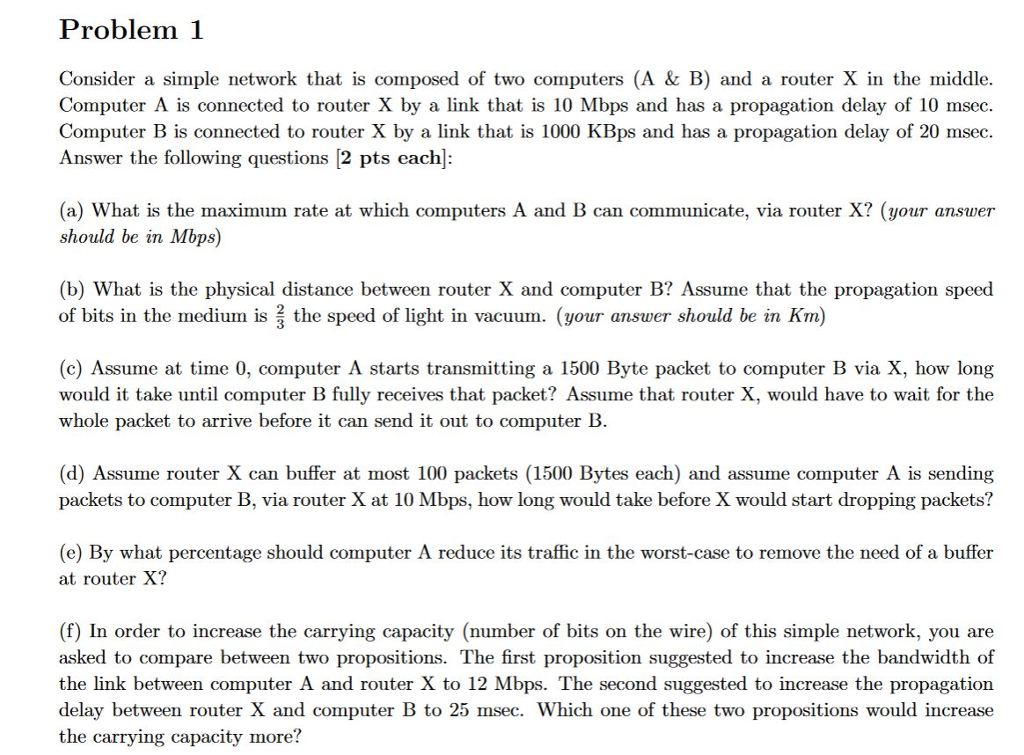
Problem 1 Consider a simple network that is composed of two computers (A & B) and a router X in the middle. Computer A is connected to router X by a link that is 10 Mbps and has a propagation delay of 10 msec Computer B is connected to router X by a link that is 1000 KBps and has a propagation delay of 20 msec Answer the following questions 12 pts each: (a) What is the maximum rate at which computers A and B can communicate, via router X? (your answer should be in Mbps) (b) What is the physical distance between router X and computer B? Assume that the propagation speed of bits in the mediurn is the speed of light in vacuum. (your answer should be in Km) (c) Assume at time 0, computer A starts transmitting a 1500 Byte packet to computer B via X, how long would it take until computer B fully receives that packet? Assume that router X, would have to wait for the whole packet to arrive before it can send it out to computer B (d) Assume router X can buffer at most 100 packets (1500 Bytes each) and assume computer A is sending packets to computer B, via router X at 10 Mbps, how long would take before X would start dropping packets? (e) By what percentage should computer A reduce its traffic in the worst-case to remove the need of a buffer at router X? (f) In order to increase the carrying capacity (number of bits on the wire) of this simple network, you are asked to compare between two propositions. The first proposition suggested to increase the bandwidth of the link between computer A and router X to 12 Mbps. The second suggested to increase the propagation delay between router X and computer B to 25 msec. Which one of these two propositions would increase the carrying capacity more
Step by Step Solution
There are 3 Steps involved in it

Get step-by-step solutions from verified subject matter experts
 Study Help