







Question: Row Canonical Form 2 4 5.) 2 4 5 6.) 1 2 -5 13 5 6 3Consider the pulse-transfer-function system won z '(1 + 2-1)
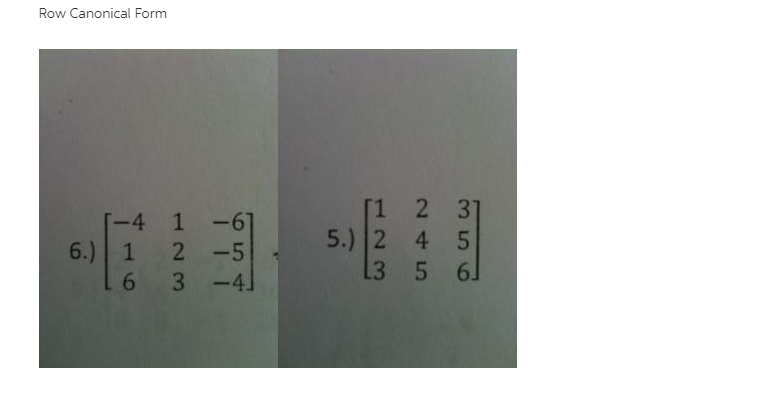
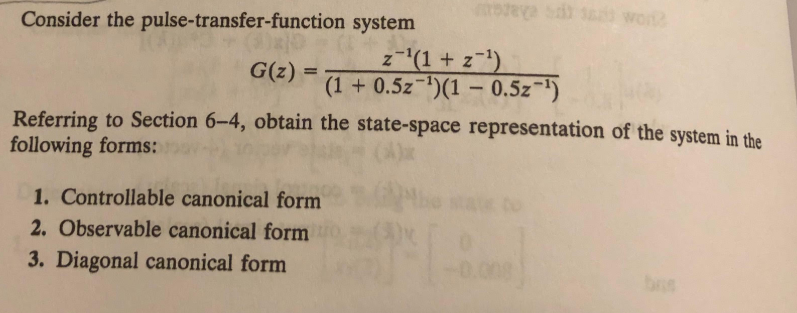

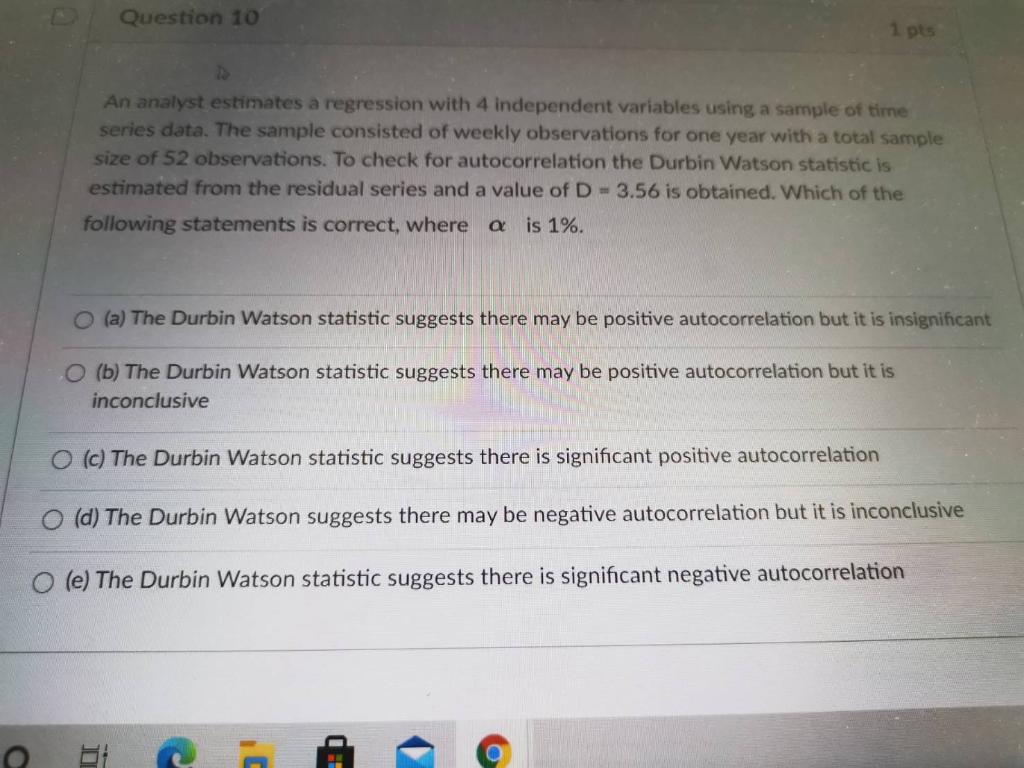
Row Canonical Form 2 4 5.) 2 4 5 6.) 1 2 -5 13 5 6 3Consider the pulse-transfer-function system won z '(1 + 2-1) G(z) = (1 + 0.5z-1)(1 - 0.5z-1) Referring to Section 6-4, obtain the state-space representation of the system in the following forms: 1. Controllable canonical form 2. Observable canonical form tro 3. Diagonal canonical form4 pts Question 7 If you know the values of a quantitative Y and five quantitative X's, then in an attempt to predict Y you can use if you have a linear model and if you do not. Repression Trees Logistic Regression Regression Neural Networks Exponential Smoothing Moving Averages Classification Trees Regression Trees 4ntsQuestion 10 1 pts An analyst estimates a regression with 4 independent variables using a sample of time series data. The sample consisted of weekly observations for one year with a total sample size of 52 observations. To check for autocorrelation the Durbin Watson statistic is estimated from the residual series and a value of D = 3.56 is obtained. Which of the following statements is correct, where a is 1%. (a) The Durbin Watson statistic suggests there may be positive autocorrelation but it is insignificant (b) The Durbin Watson statistic suggests there may be positive autocorrelation but it is inconclusive (c) The Durbin Watson statistic suggests there is significant positive autocorrelation O (d) The Durbin Watson suggests there may be negative autocorrelation but it is inconclusive (e) The Durbin Watson statistic suggests there is significant negative autocorrelation O
Step by Step Solution
There are 3 Steps involved in it

Get step-by-step solutions from verified subject matter experts
 Study Help