Question: Supply Chain Planning Supply Chain Planning (SOP) is a forward-looking inventory management mechanism designed to automate supply distribution by suppliers to consumers, to align supply
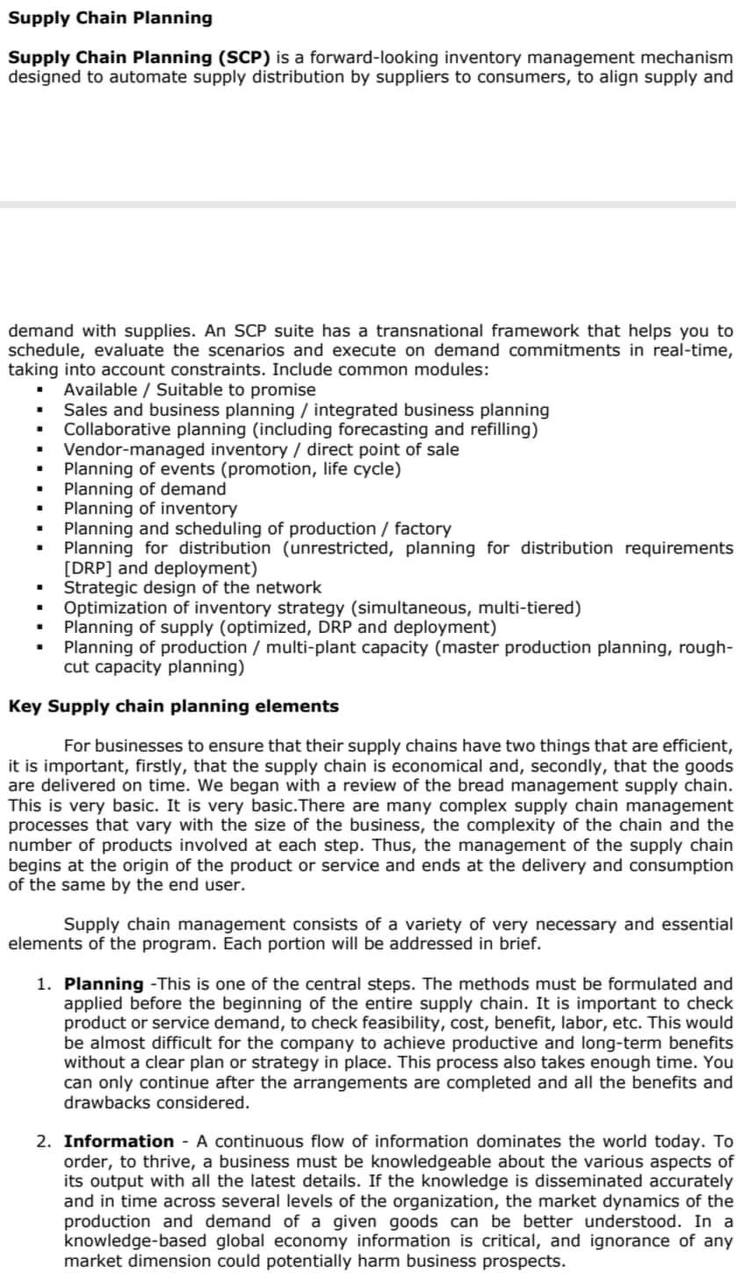
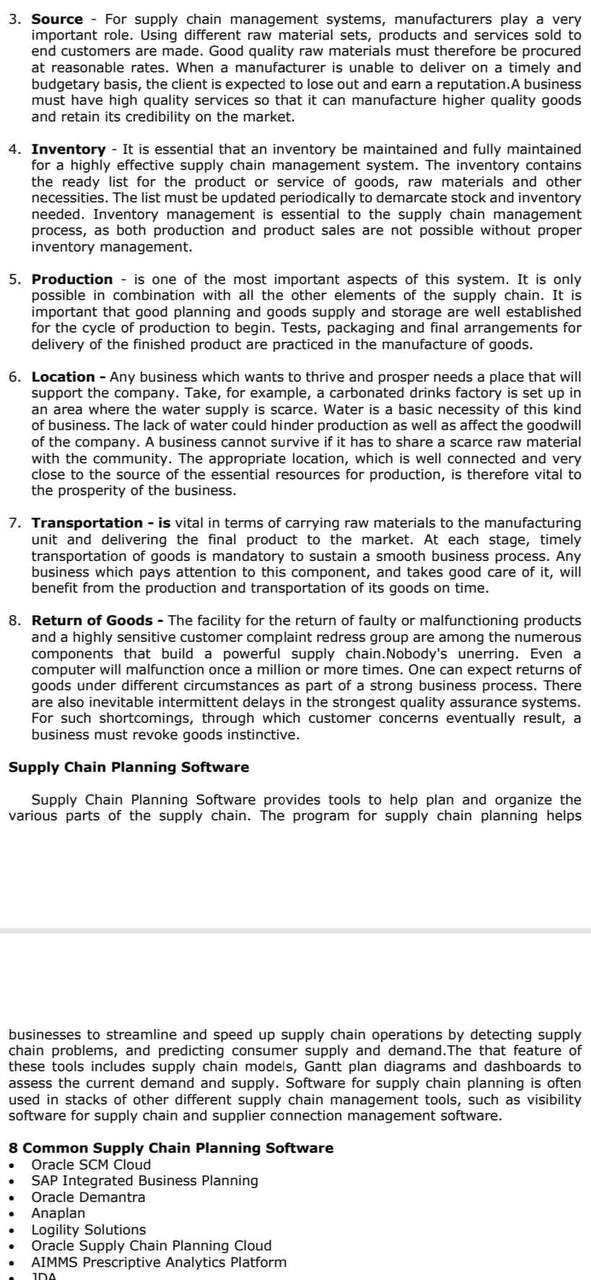
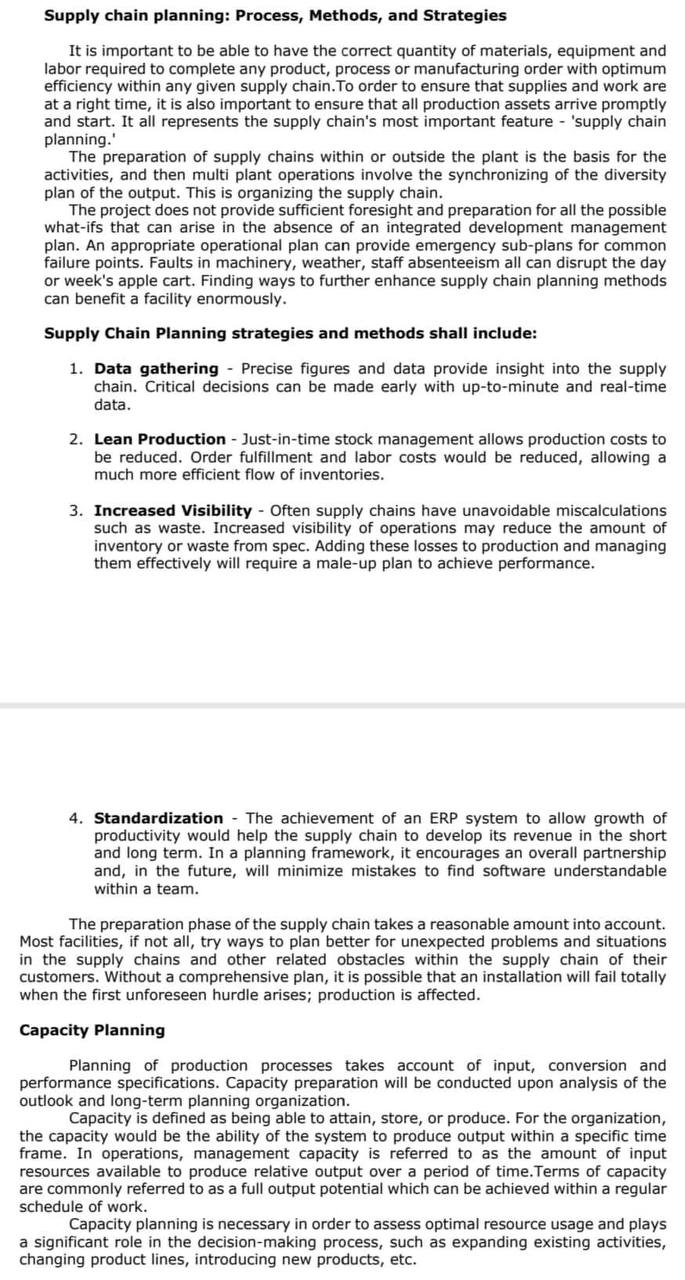
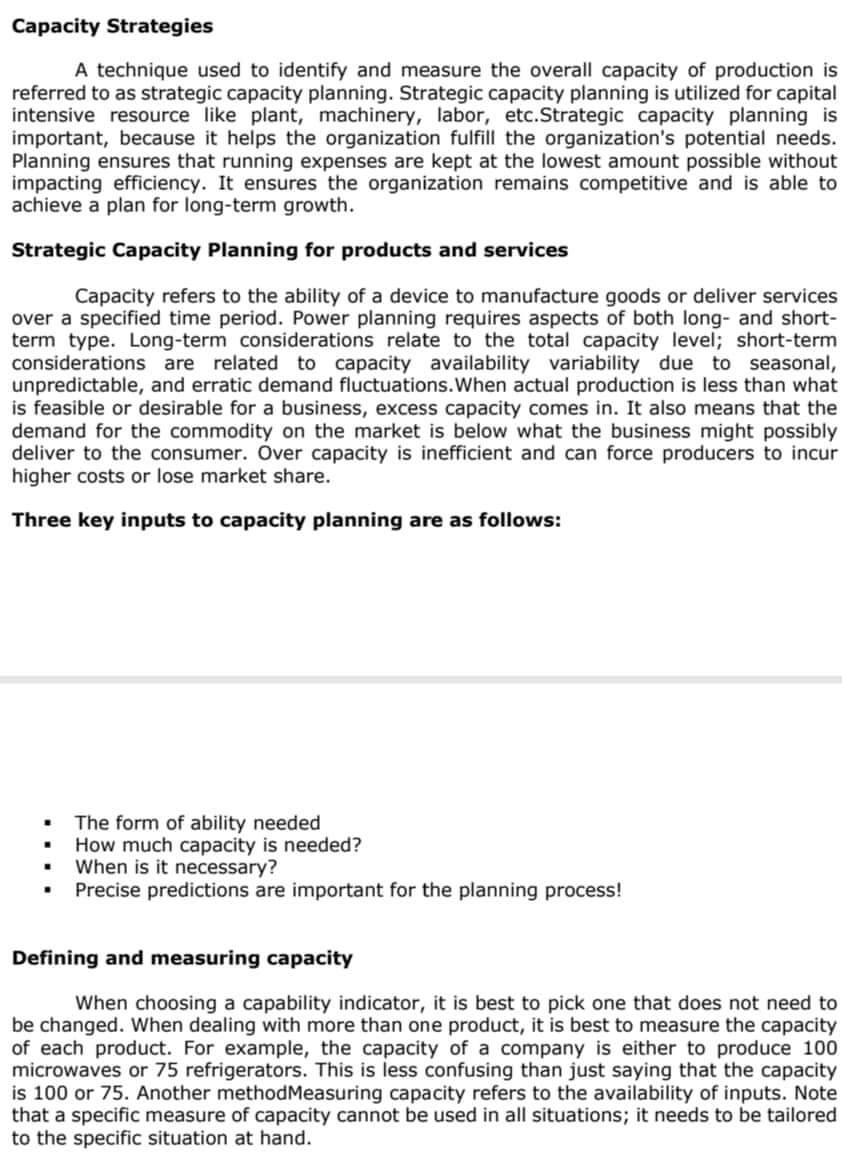
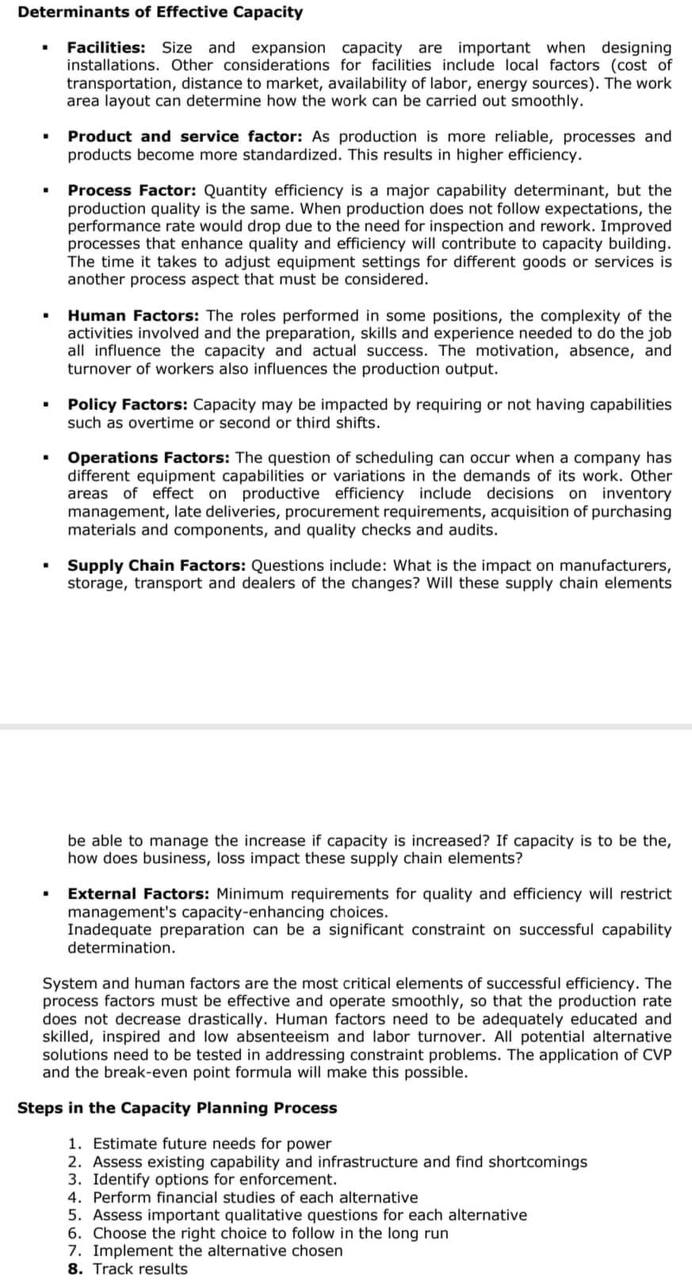
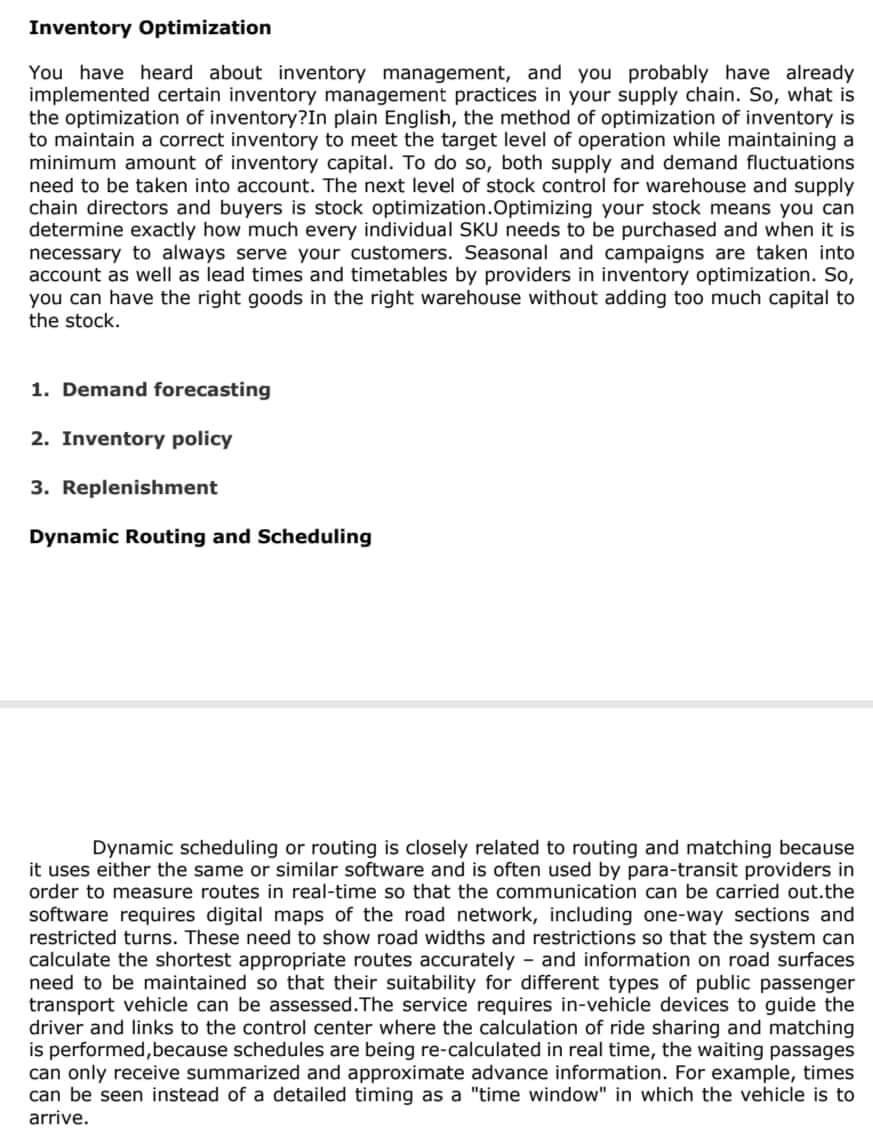
Supply Chain Planning Supply Chain Planning (SOP) is a forward-looking inventory management mechanism designed to automate supply distribution by suppliers to consumers, to align supply and demand with supplies. An SCP suite has a transnational framework that helps you to schedule, evaluate the scenarios and execute on demand commitments in real-time, taking into account constraints. Include common modules: I Available I Suitable to promise Sales and business planning 1 integrated business planning Collaborative planning (including forecasting and relling} Vendor-managed inventory I direct point of sale Planning of events (promotion, life cycle) Planning of demand Planning of inventory Planning and scheduling of production ,I factory Planning for distribution (unrestricted, planning for distribution requirements [DRP] and deployment) Strategic design of the network Optimization of inventory strategy (simultaneous, multi-tiered) Planning of supply (optimized, DRP and deployment) Planning of production I multiplant capacity (master production planning, rough- cut capacity planning) Key Suppiy drain planning elements For businesses to ensure that their supply chains have two things that are efficient, it is important, rstly, that the supply chain is economical and, secondly, that the goods are delivered on time. We began with a review of the bread management supply chain. This is very basic. It is very basic.There are many complex supply chain management processes that vary with the size of the business, the complexity of the chain and the number of products involved at each step. Thus, the management of the supply chain begins at the origin of the product or service and ends at the delivery and consumption of the same by the and User. Supply chain management consists of a variety of very necessary and essential elements of the program. Each portion will be addressad In brief. 1. Planning -This is one of the central steps. The methods must be formulated and applied before the beginning of the entire supply chain. it is important to check product or service demand, to check feasibility, cost, benet, labor, etc. 111is would be almost difcult for the company to achieve productive and long-term benets without a clear plan or strategy in place. This process also takes enough time. You can only continue after the anangements are completed and all the benets and drawbacks considered. 2. Information - A continuous flow of information dominates the world today. To order, to thrive, a business must be knowledgeable about the various asoects of its output with all the latest details. If the knowledge is disseminated accurately and in time across several levels of the organization, the market dynamics of the production and demand of a given goods can be better understood. In a knowledge-based global economy information is critical, and ignorance of any market dimension could potentially harm business prospects. 3. Source - For supply chain management systems, manufacturers play a very important role. Using different raw material sets, products and services sold to end customers are made. Good quality raw materials must therefore be procured at reasonable rates. When a manufacturer is unable to deliver on a timely and budgetary basis, the client is expected to lose out and earn a reputation.A business must have high quality services so that it can manufacture higher quality goods and retain its credibility on the market. 4. Inventory - It is essential that an inventory be maintained and fully maintained for a highly effective supply chain management system. The inventory contains the ready list for the product or service of goods, raw materials and other necessities. The list must be updated periodically to demarcate stock and inventory needed. Inventory management is essential to the supply chain management process, as both production and product sales are not possible without proper inventory management. 5. Production - is one of the most important aspects of this system. It is only possible in combination with all the other elements of the supply chain. It is important that good planning and goods supply and storage are well established for the cycle of production to begin. Tests, packaging and final arrangements for delivery of the finished product are practiced in the manufacture of goods. 6. Location - Any business which wants to thrive and prosper needs a place that will support the company. Take, for example, a carbonated drinks factory is set up in an area where the water supply is scarce. Water is a basic necessity of this kind of business. The lack of water could hinder production as well as affect the goodwill of the company. A business cannot survive if it has to share a scarce raw material with the community. The appropriate location, which is well connected and very close to the source of the essential resources for production, is therefore vital to the prosperity of the business. 7. Transportation - is vital in terms of carrying raw materials to the manufacturing unit and delivering the final product to the market. At each stage, timely transportation of goods is mandatory to sustain a smooth business process. Any business which pays attention to this component, and takes good care of it, will benefit from the production and transportation of its goods on time. 8. Return of Goods - The facility for the return of faulty or malfunctioning products and a highly sensitive customer complaint redress group are among the numerous components that build a powerful supply chain.Nobody's unerring. Even a computer will malfunction once a million or more times. One can expect returns of goods under different circumstances as part of a strong business process. There are also inevitable intermittent delays in the strongest quality assurance systems. For such shortcomings, through which customer concerns eventually result, a business must revoke goods instinctive. Supply Chain Planning Software Supply Chain Planning Software provides tools to help plan and organize the various parts of the supply chain. The program for supply chain planning helps businesses to streamline and speed up supply chain operations by detecting supply chain problems, and predicting consumer supply and demand. The that feature of these tools includes supply chain models, Gantt plan diagrams and dashboards to assess the current demand and supply. Software for supply chain planning is often used in stacks of other different supply chain management tools, such as visibility software for supply chain and supplier connection management software. 8 Common Supply Chain Planning Software Oracle SCM Cloud SAP Integrated Business Planning Oracle Demantra Anaplan Logility Solutions Oracle Supply Chain Planning Cloud AIMMS Prescriptive Analytics PlatformSupply chain planning: Process, Methods, and Strategies It is important to be able to have the correct quantity of materials, equipment and labor required to complete any product, process or manufacturing order with optimum efficiency within any given supply chain.To order to ensure that supplies and work are at a right time, it is also important to ensure that all production assets arrive promptly and start. It all represents the supply chain's most important feature - 'supply chain planning.' The preparation of supply chains within or outside the plant is the basis for the activities, and then multi plant operations involve the synchronizing of the diversity plan of the output. This is organizing the supply chain. The project does not provide sufficient foresight and preparation for all the possible what-ifs that can arise in the absence of an integrated development management plan. An appropriate operational plan can provide emergency sub-plans for common failure points. Faults in machinery, weather, staff absenteeism all can disrupt the day or week's apple cart. Finding ways to further enhance supply chain planning methods can benefit a facility enormously. Supply Chain Planning strategies and methods shall include: 1. Data gathering - Precise figures and data provide insight into the supply chain. Critical decisions can be made early with up-to-minute and real-time data. 2. Lean Production - Just-in-time stock management allows production costs to be reduced. Order fulfillment and labor costs would be reduced, allowing a much more efficient flow of inventories. 3. Increased Visibility - Often supply chains have unavoidable miscalculations such as waste. Increased visibility of operations may reduce the amount of inventory or waste from spec. Adding these losses to production and managing them effectively will require a male-up plan to achieve performance. 4. Standardization - The achievement of an ERP system to allow growth of productivity would help the supply chain to develop its revenue in the short and long term. In a planning framework, it encourages an overall partnership and, in the future, will minimize mistakes to find software understandable within a team. The preparation phase of the supply chain takes a reasonable amount into account. Most facilities, if not all, try ways to plan better for unexpected problems and situations in the supply chains and other related obstacles within the supply chain of their customers. Without a comprehensive plan, it is possible that an installation will fail totally when the first unforeseen hurdle arises; production is affected. Capacity Planning Planning of production processes takes account of input, conversion and performance specifications. Capacity preparation will be conducted upon analysis of the outlook and long-term planning organization. Capacity is defined as being able to attain, store, or produce. For the organization, the capacity would be the ability of the system to produce output within a specific time frame. In operations, management capacity is referred to as the amount of input resources available to produce relative output over a period of time. Terms of capacity are commonly referred to as a full output potential which can be achieved within a regular schedule of work. Capacity planning is necessary in order to assess optimal resource usage and plays a significant role in the decision-making process, such as expanding existing activities, changing product lines, introducing new products, etc.Capacity Strategies A technique used to identify and measure the overall capacity of production is referred to as strategic capacity planning. Strategic capacity planning is utilized for capital intensive resource like plant, machinery, labor, etc.5trategic capacity planning is Important, because it helps the organization fulll the organization's potential needs. Planning ensures that running expenses are kept at the lowest amount possible without Impacting effiCIency. It ensures the organization remains competitive and is able to achieve a plan for long-tenn growth. Strategic Capacity Planning for products and services Capacity refers to the ability of a device to manufacture goods or deliver services over a specied time period. Power planning requires aspects of both long- and short- ten'n type. Long-term considerations relate to the total capacity level; short-term considerations are related to capacity availability variability due to seasonal. unpredictable, and erratic demand fluctuations.When actual production is less than what is feasible or desirable for a business, excess capacity comes in. It also means that the demand for the commodity on the market is below what the business might possibly deliver to the consumer. Over capacity is inefcient and can force producers to incur higher costs or lose market share. Three key inputs to capacity planning are as follows: The form of ability needed How much capacity is needed? When is it necessary? Precise predictions are important for the planning process! Defining and measuring capacity When choosing a capability indicator, it is best to pick one that does not need to be changed. When dealing with more than one product. it is best to measure the capacity of each product. For example, the capacity of a company is either to produce 100 microwaves or 75 refrigerators. This is less confusing than just saying that the capacity is 100 or 7'5. Another methodMeasuring capacity refers to the availability of inputs. Note that a specific measure of capacity cannot be used in all situations; it needs to be tailored to the specic situation at hand. Determinants of Effective Capacity . Facilities: Size and expansion capacity are important when designing installations. Other considerations for facilities include local factors (cost of transportation, distance to market, availability of labor, energy sources). The work area layout can determine how the work can be carried out smoothly. Product and service factor: As production is more reliable, processes and products become more standardized. This results in higher efficiency. Process Factor: Quantity efficiency is a major capability determinant, but the production quality is the same. When production does not follow expectations, the performance rate would drop due to the need for inspection and rework. Improved processes that enhance quality and efficiency will contribute to capacity building. The time it takes to adjust equipment settings for different goods or services is another process aspect that must be considered. Human Factors: The roles performed in some positions, the complexity of the activities involved and the preparation, skills and experience needed to do the job all influence the capacity and actual success. The motivation, absence, and turnover of workers also influences the production output. . Policy Factors: Capacity may be impacted by requiring or not having capabilities such as overtime or second or third shifts. Operations Factors: The question of scheduling can occur when a company has different equipment capabilities or variations in the demands of its work. Other areas of effect on productive efficiency include decisions on inventory management, late deliveries, procurement requirements, acquisition of purchasing materials and components, and quality checks and audits. . Supply Chain Factors: Questions include: What is the impact on manufacturers, storage, transport and dealers of the changes? Will these supply chain elements be able to manage the increase if capacity is increased? If capacity is to be the, how does business, loss impact these supply chain elements? External Factors: Minimum requirements for quality and efficiency will restrict management's capacity-enhancing choices. Inadequate preparation can be a significant constraint on successful capability determination. System and human factors are the most critical elements of successful efficiency. The process factors must be effective and operate smoothly, so that the production rate does not decrease drastically. Human factors need to be adequately educated and skilled, inspired and low absenteeism and labor turnover. All potential alternative solutions need to be tested in addressing constraint problems. The application of CVP and the break-even point formula will make this possible. Steps in the Capacity Planning Process 1. Estimate future needs for power Assess existing capability and infrastructure and find shortcomings 3. Identify options for enforcement. 4. Perform financial studies of each alternative 5. Assess important qualitative questions for each alternative 6. Choose the right choice to follow in the long run 7. Implement the alternative chosen 8. Track resultsInventory Optimization You have heard about inventory management, and you probany have already implemented certain inventory management practices in your supply chain. So, what is the optimization of inventory?In plain English, the method of optimization of inventory is to maintain a correct inventory to meet the target level of operation while maintaining a minimum amount of inventory capital. To do so, both supply and demand uctuations need to be taken into account. The next level of stock control for warehouse and supply chain directors and buyers ls stock optimizationptimlzing your stock means you can determine exactly how much every individual SKU needs to be purchased and when it is necessary to always serve your customers. Seasonal and campaigns are taken into account as well as lead times and timetables by providers in inventory optimization. So, you can have the right goods in the right warehouse without adding too much capital to the stock. 1. Demand forecasting 2. Inventory policy 3. Replenishment Dynamic Routing and Scheduling Dynamic scheduling or routing is closely related to routing and matching because it uses either the same or similar software and is often used by para-transit providers in order to measure routes in realtime so that the communication can be carried out.the software requires digital maps of the road network, including oneway sections and restricted turns. These need to show road widths and restrictions so that the system can calculate the shortest appropriate routes accurater - and Information on road surfaces need to be maintained so that their suitability for different types of public passenger transport vehide can be assessed.The service requires in-vehicle devices to guide the driver and links to the control center where the calculation of ride sharing and matching is perfon'ned,because schedules are being re-calcuiated in real time, the waiting passages can only receive summarized and approximate advance information. For example, times can be seen instead of a detailed timing as a "time window" in which the vehicle is to arnve
Step by Step Solution
There are 3 Steps involved in it
1 Expert Approved Answer
Step: 1 Unlock
Question Has Been Solved by an Expert!
Get step-by-step solutions from verified subject matter experts
Step: 2 Unlock
Step: 3 Unlock
Students Have Also Explored These Related General Management Questions!









 Study Help