







Question: Suppose there is a scheduling algorithm (at the level of short-term CPU scheduling) favors those processes that have used the least CPU time in the
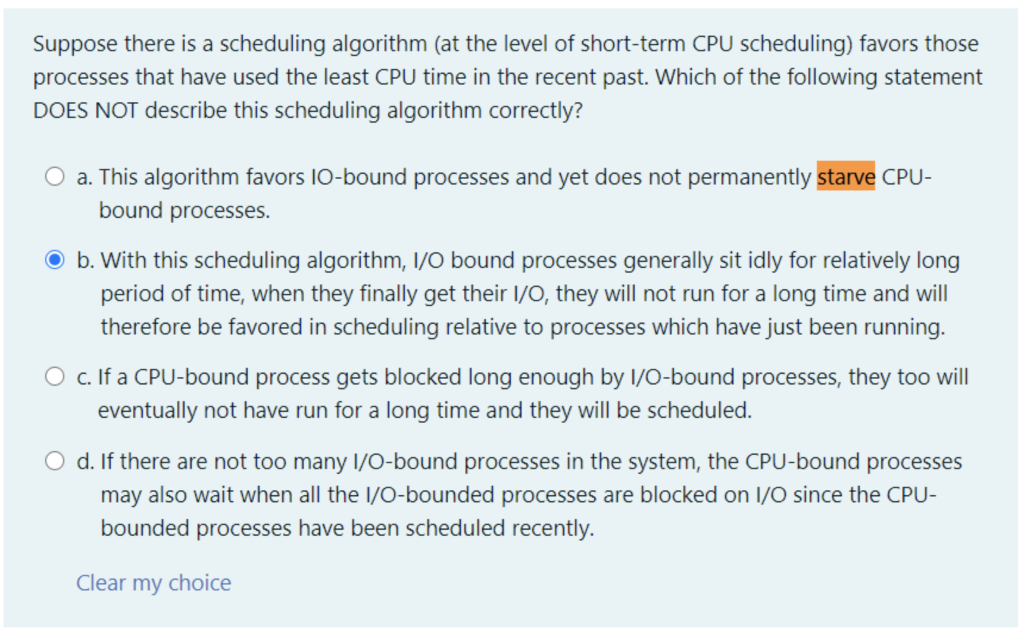
Suppose there is a scheduling algorithm (at the level of short-term CPU scheduling) favors those processes that have used the least CPU time in the recent past. Which of the following statement DOES NOT describe this scheduling algorithm correctly? a. This algorithm favors 10-bound processes and yet does not permanently starve CPU- bound processes. O b. With this scheduling algorithm, 1/0 bound processes generally sit idly for relatively long period of time, when they finally get their I/O, they will not run for a long time and will therefore be favored in scheduling relative to processes which have just been running. O c. If a CPU-bound process gets blocked long enough by I/O-bound processes, they too will eventually not have run for a long time and they will be scheduled. O d. If there are not too many I/O-bound processes in the system, the CPU-bound processes may also wait when all the I/O-bounded processes are blocked on I/O since the CPU- bounded processes have been scheduled recently. Clear my choice
Step by Step Solution
There are 3 Steps involved in it

Get step-by-step solutions from verified subject matter experts
 Study Help