Question: Surveys, Polls and Focus Groups from the census means that there are significant delays before the ate. Researchers may need permission to use specialized samp
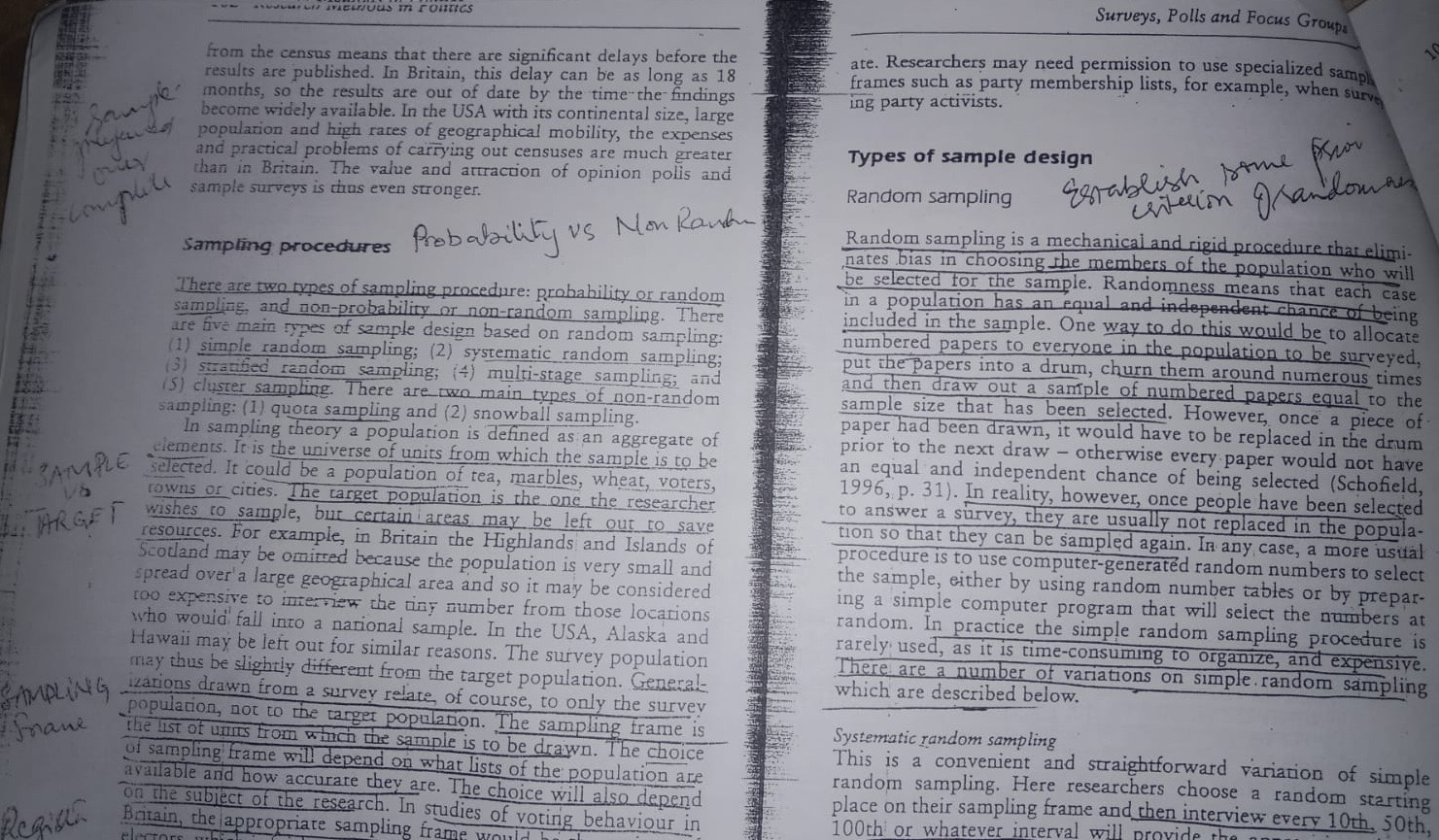
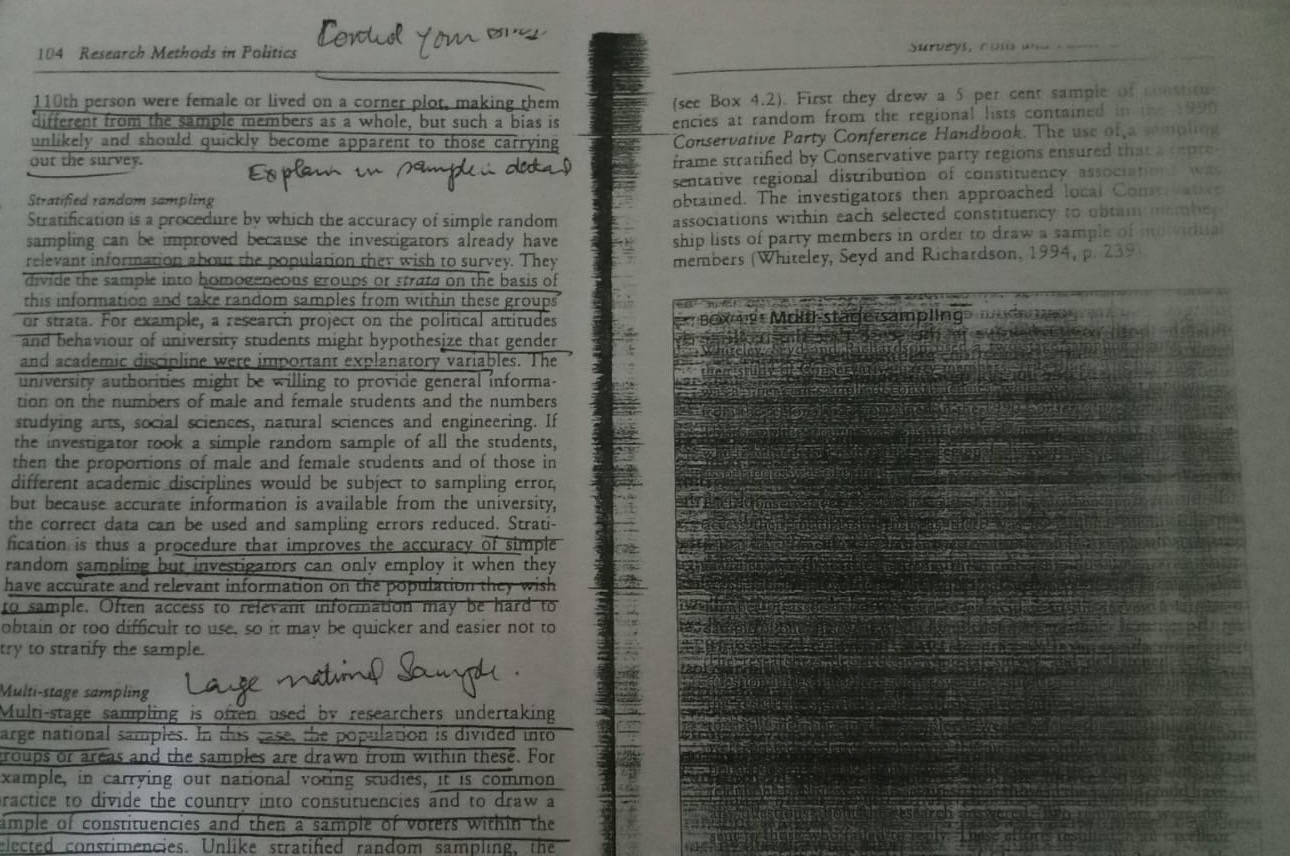
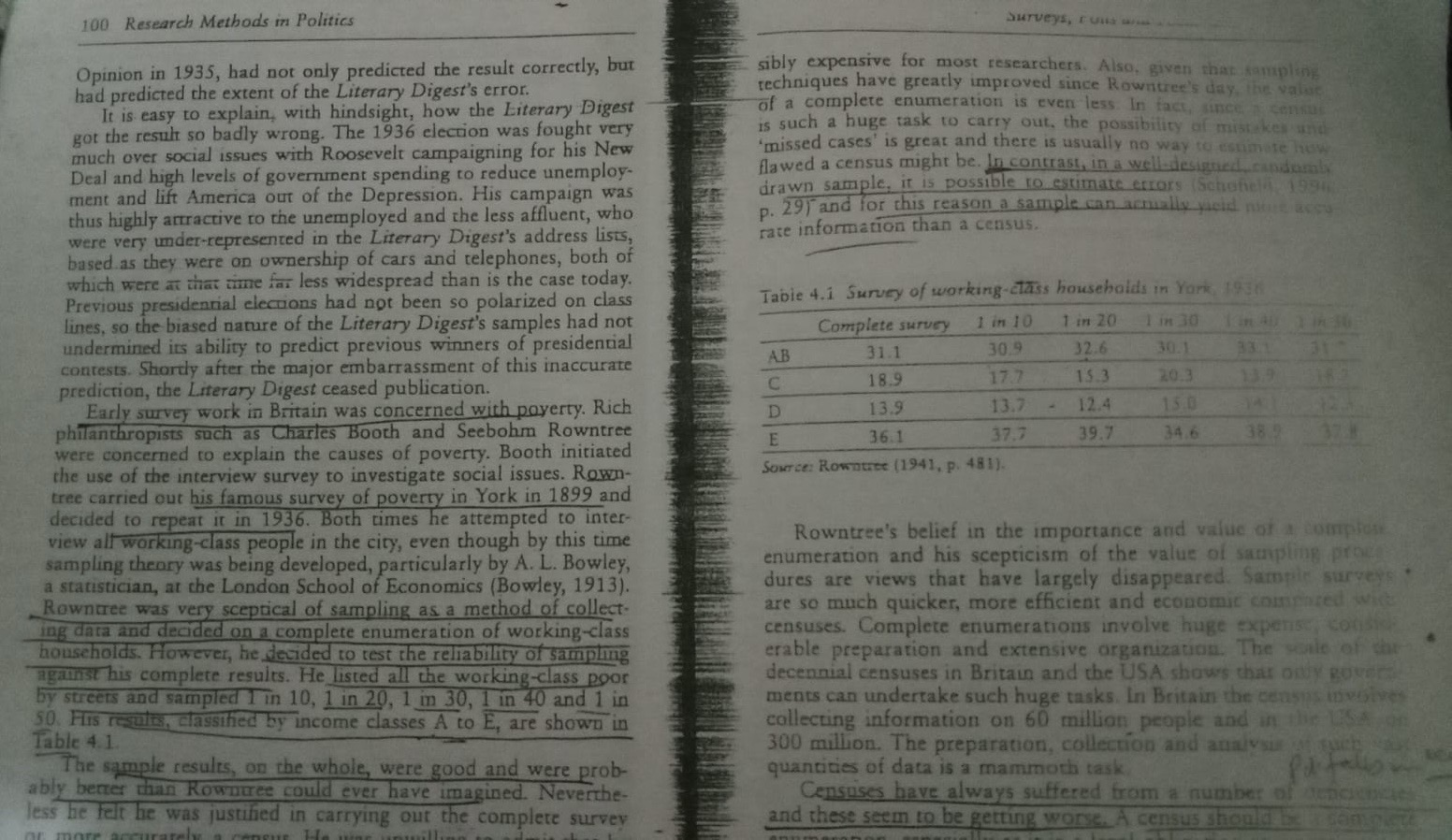
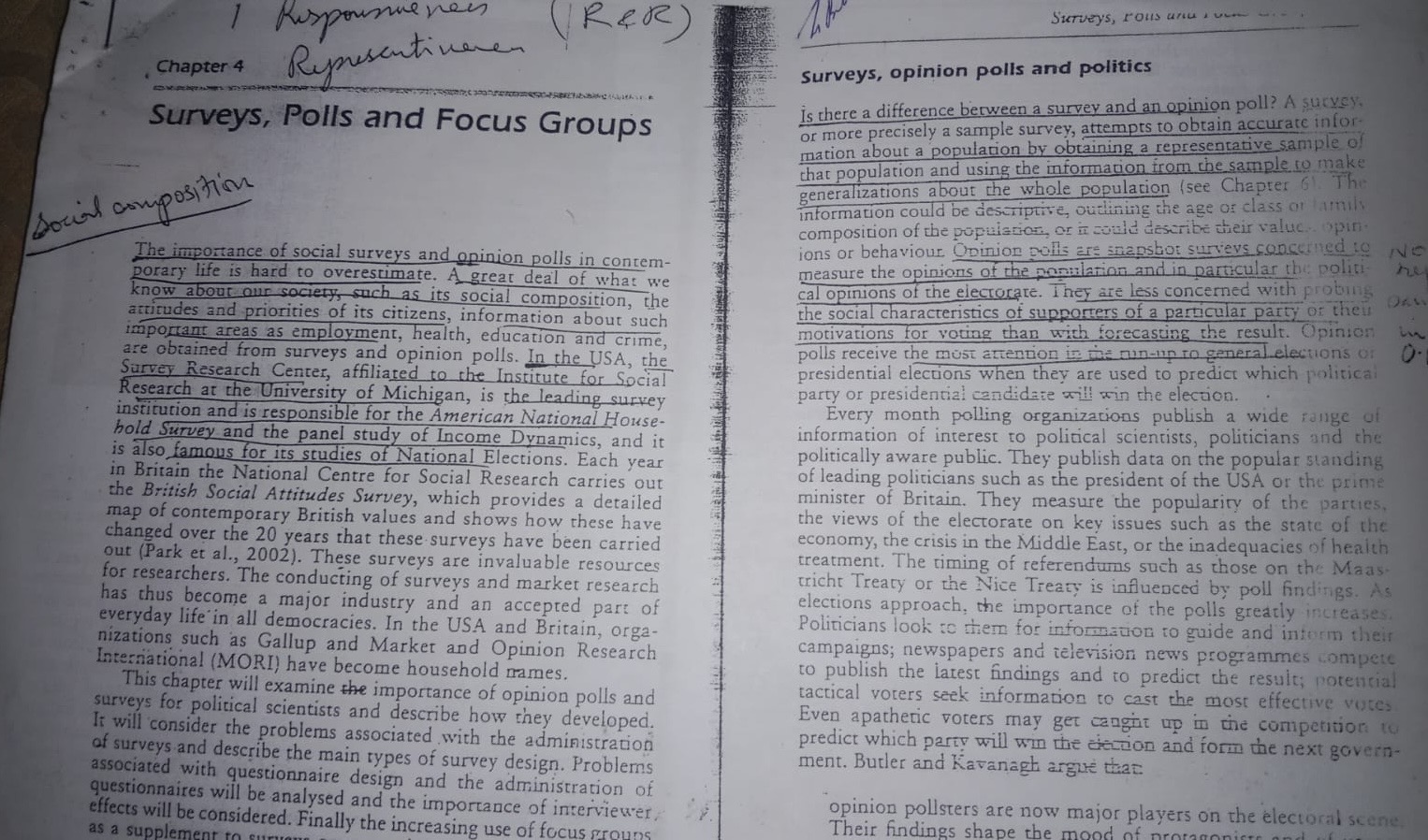
Surveys, Polls and Focus Groups from the census means that there are significant delays before the ate. Researchers may need permission to use specialized samp results are published. In Britain, this delay can be as long as 18 frames such as party membership lists, for example, when surve months, so the results are out of date by the time the findings ing party activists. Sample become widely available. In the USA with its continental size, large population and high rates of geographical mobility, the expenses and practical problems of carrying out censuses are much greater Types of sample design Establish some Ascor than in Britain. The value and attraction of opinion polls and sample surveys is thus even stronger. Random sampling Sampling procedures Probability us Mon Rank Random sampling is a mechanical and rigid procedure that elimi- nates bias in choosing the members of the population who will be selected for the sample. Randomness means that each case There are two types of sampling procedure: probability or random in a population has an equal and independent chance of being sampling, and non-probability or non-random sampling. There included in the sample. One way to do this would be to allocate are five main types of sample design based on random sampling: numbered papers to everyone in the population to be surveyed, (1) simple random sampling; (2) systematic random sampling; put the papers into a drum, churn them around numerous times (3) stratified random sampling; (4) multi-stage sampling; and and then draw out a sample of numbered papers equal to the (5) cluster sampling. There are two main types of non-random sample size that has been selected. However, once a piece of sampling: (1) quota sampling and (2) snowball sampling. paper had been drawn, it would have to be replaced in the drum In sampling theory a population is defined as an aggregate of prior to the next draw - otherwise every paper would not have clements. It is the universe of units from which the sample is to be an equal and independent chance of being selected (Schofield, PAMPLE selected. It could be a population of tea, marbles, wheat, voters, 1996, p. 31). In reality, however, once people have been selected towns or cities. The target population is the one the researcher to answer a survey, they are usually not replaced in the popula- TARGET wishes to sample, bur certain areas may be left out to save tion so that they can be sampled again. In any case, a more usual resources. For example, in Britain the Highlands and Islands of procedure is to use computer-generated random numbers to select Scotland may be omitted because the population is very small and the sample, either by using random number tables or by prepar- spread over a large geographical area and so it may be considered ing a simple computer program that will select the numbers at too expensive to interview the tiny number from those locations random. In practice the simple random sampling procedure is who would fall into a national sample. In the USA, Alaska and rarely used, as it is time-consuming to organize, and expensive. Hawaii may be left out for similar reasons. The survey population There are a number of variations on simple random sampling may thus be slightly different from the target population. General- which are described below. SAMPLING izarions drawn from a survey relate, of course, to only the survey population, not to the target population. The sampling frame is frame Systematic random sampling the list of units from which the sample is to be drawn. The choice This is a convenient and straightforward variation of simple of sampling frame will depend on what lists of the population are available and how accurate they are. The choice will also depend random sampling. Here researchers choose a random starting place on their sampling frame and then interview every 10th, 50th, on the subject of the research. In studies of voting behaviour in 100th or whatever interval will provid Britain, the appropriate sampling frame104 Research Methods in Politics Control your Bins Surveys, RUNS an- 110th person were female or lived on a corner plot, making them (see Box 4.2). First they drew a 5 per cent sample of cuestitle different from the sample members as a whole, but such a bias is encies at random from the regional lists contained in the 1990 unlikely and should quickly become apparent to those carrying Conservative Party Conference Handbook. The use of, a sampling out the survey. Explain in sample dated frame stratified by Conservative party regions ensured that a repre sentative regional distribution of constituency associations was Stratified random sampling obtained. The investigators then approached local Conservative Stratification is a procedure by which the accuracy of simple random associations within each selected constituency to obtain member sampling can be improved because the investigators already have ship lists of party members in order to draw a sample of in didua relevant information about the population they wish to survey. They members (Whiteley, Seyd and Richardson, 1994, p. 239. divide the sample into homogeneous groups or strata on the basis of this information and take random samples from within these groups or strata. For example, a research project on the political attitudes and behaviour of university students might hypothesize that gender and academic discipline were important explanatory variables. The university authorities might be willing to provide general informa- tion on the numbers of male and female students and the numbers studying arts, social sciences, natural sciences and engineering. If the investigator rook a simple random sample of all the students, then the proportions of male and female students and of those in different academic disciplines would be subject to sampling error, but because accurate information is available from the university, the correct data can be used and sampling errors reduced, Strati- fication is thus a procedure that improves the accuracy of simple random sampling but investigators can only employ it when they have accurate and relevant information on the population they wish to sample. Often access to relevant information may be hard to obtain or too difficult to use, so it may be quicker and easier not to try to stratify the sample. Multi-stage sampling Large matimel Samyde. Multi-stage sampling is often used by researchers undertaking urge national samples. In thus ease, the population is divided into roups or areas and the samples are drawn from within these. For xample, in carrying out national voting studies, it is common ractice to divide the country into constituencies and to draw a imple of constituencies and then a sample of voters within the ected consumencies. Unlike stratified random sampling, the100 Research Methods in Politics Surveys, FUN and Opinion in 1935, had not only predicted the result correctly, but sibly expensive for most researchers. Also, given that sampling had predicted the extent of the Literary Digest's error. techniques have greatly improved since Rowntree's day, the value It is easy to explain, with hindsight, how the Literary Digest of a complete enumeration is even less. In fact, since a census got the result so badly wrong. The 1936 election was fought very is such a huge task to carry out, the possibility of mistakes and much over social issues with Roosevelt campaigning for his New 'missed cases' is great and there is usually no way to estimate how Deal and high levels of government spending to reduce unemploy- flawed a census might be. In contrast, in a well-designed, randomly ment and lift America out of the Depression. His campaign was drawn sample, it is possible to estimate errors (Schofield) 1994 thus highly arrractive to the unemployed and the less affluent, who p. 29/ and for this reason a sample can actually yield none accu were very under-represented in the Literary Digest's address lists, rate information than a census. based as they were on ownership of cars and telephones, both of which were at that time far less widespread than is the case today. Previous presidential elections had not been so polarized on class Table 4.1 Survey of working-class households in York, 1936 lines, so the biased nature of the Literary Digest's samples had not Complete survey 1 in 10 1 in 20 1 in 30 undermined its ability to predict previous winners of presidential AB 31.1 30.9 32.6 30.1 contests. Shortly after the major embarrassment of this inaccurate prediction, the Literary Digest ceased publication. C 18.9 17 7 15.3 20.3 Early survey work in Britain was concerned with poyerty. Rich 13.9 13.7 - 12.4 150 philanthropists such as Charles Booth and Seebohm Rowntree E 36. 1 37.7 39.7 34.6 38 9 374 were concerned to explain the causes of poverty. Booth initiated the use of the interview survey to investigate social issues. Rown- Source: Rowntree (194], p. 481). tree carried out his famous survey of poverty in York in 1899 and decided to repeat it in 1936. Both times he attempted to inter- view all working-class people in the city, even though by this time Rowntree's belief in the importance and value of a compics sampling theory was being developed, particularly by A. L. Bowley, enumeration and his scepticism of the value of sampling proc a statistician, at the London School of Economics (Bowley, 1913). dures are views that have largely disappeared. Sampit surveys * Rowntree was very sceptical of sampling as a method of collect- are so much quicker, more efficient and economic compared with ing data and decided on a complete enumeration of working-class censuses. Complete enumerations involve huge expense, cousfor households. However, he decided to test the reliability of sampling crable preparation and extensive organization. The scale of the against his complete results. He listed all the working-class poor decennial censuses in Britain and the USA shows that only pover by streets and sampled lin 10, 1 in 20, 1 in 30, 1 in 40 and 1 in ments can undertake such huge tasks. In Britain the census involves 50. His results, classified by income classes A to E, are shown in Table 4.1. collecting information on 60 million people and in the USA on 300 million. The preparation, collection and analysis got The sample results, on the whole, were good and were prob- quantities of data is a mammoth task ably better than Rowntree could ever have imagined. Neverthe- Censuses have always suffered from a number of denounces less he felt he was justified in carrying out the complete survey and these seem to be getting worse. A census should belle sony piece.1 Responseren (RER ) SITVeyS , rOUS UNH I VIN . . Chapter 4 Rynesentivene Surveys, opinion polls and politics is there a difference between a survey and an opinion poll? A survey. Surveys, Polls and Focus Groups or more precisely a sample survey, attempts to obtain accurate infor mation about a population by obtaining a representative sample of that population and using the information from the sample to make generalizations about the whole population (see Chapter 6). The Social composition information could be descriptive, outlining the age or class of family composition of the population, or in could describe their valuc.. opin ions or behaviour Opinion polls are snapshot surveys concerned to The importance of social surveys and opinion polls in contem- measure the opinions of the population and in paracular the politi porary life is hard to overestimate. A great deal of what we cal opinions of the electorate. They are less concerned with probing know about our society, such as its social composition, the the social characteristics of supporters of a particular party or their attitudes and priorities of its citizens, information about such motivations for voting than with forecasting the result. Opinion in important areas as employment, health, education and crime, polls receive the most attention in me run-up to general elections or O . are obtained from surveys and opinion polls. In the USA, the Survey Research Center, affiliated to the Institute for Social presidential elections when they are used to predict which political Research at the University of Michigan, is the leading survey party or presidential candidate will win the election. institution and is responsible for the American National House- Every month polling organizations publish a wide range of hold Survey and the panel study of Income Dynamics, and it information of interest to political scientists, politicians and the is also famous for its studies of National Elections. Each year politically aware public. They publish data on the popular standing in Britain the National Centre for Social Research carries out of leading politicians such as the president of the USA or the prime the British Social Attitudes Survey, which provides a detailed minister of Britain. They measure the popularity of the parties, map of contemporary British values and shows how these have the views of the electorate on key issues such as the state of the changed over the 20 years that these surveys have been carried economy, the crisis in the Middle East, or the inadequacyes of health out (Park et al., 2002). These surveys are invaluable resources treatment. The timing of referendums such as those on the Maas for researchers. The conducting of surveys and market research tricht Treaty or the Nice Treaty is influenced by poll findings. As has thus become a major industry and an accepted part of elections approach, the importance of the polls greatly increases. everyday life in all democracies. In the USA and Britain, orga- Politicians look to them for information to guide and inform their nizations such as Gallup and Market and Opinion Research campaigns; newspapers and television news programmes compete International (MORI) have become household names. to publish the latest findings and to predict the result; potential This chapter will examine the importance of opinion polls and tactical voters seek information to cast the most effective votes surveys for political scientists and describe how they developed. Even apathetic voters may get caught up in the competition to It will consider the problems associated with the administration predict which party will win the election and form the next govern- of surveys and describe the main types of survey design. Problems ment. Butler and Kavanagh argue that. associated with questionnaire design and the administration of questionnaires will be analysed and the importance of interviewer, opinion pollsters are now major players on the electoral scene. effects will be considered. Finally the increasing use of focus groups Their findings shape the mo as a supplementRecent election campaigns in Britain, hardly a day has gone by Opin without the publication of a national opinion poll (Moon, 1999). had Despite the fact that polling organizations have occasionally de major mistakes in predicting the results of elections, as in British general election of 1992, they are widely regarded as able and accurate sources of information on public opinion. Moreover, those experts who can provide evidence to back their assertions are in a strong position to convince others of the value of their analysis, particularly if their audience lacks the skills to chal- lenge the basis of the data that is presented to them. Moon cites Foggy Newman, a speechwriter_for Presidents Reagan and Bush, saying, In every political meeting I have ever been to, if there was a pollster there, his words carried the most weight because he was the only one with hard data ... I felt that polls were driving more than politics. They were driving history' (Moon, 1999, p. 183). Political scientists have been avid users of surveys and opinion cells in their research into voting behaviour, political participation, aspects of multi-party democracies. They are, of course, more interested in explaining relationships between variables, than in the distribution of the vote between parties or the standing of candidates in the polls. They want to discover, for example, the reasons for the rise and fall of the Lijst Pim Fortuyn in the Nether- History of opinion polls and surveys ands, or to know why popular interest in participating in elections and political parties has been diminishing in some liberal democrat Political opinion polling began in the USA (Teer and Spence, 1973, cies while participation in demonstrations and single issue groups has been growing in importance. Considerable research has been p. 13). Journalists often took soundings to try to forecast who lone on, for example, the health of democracy and public attitudes would win presidential elections and this activity developed into towards, and confidence in. their politicians. A good example of more systematic efforts by newspapers to predict election results this is research on the ethical conduct voters expect from Austra- By 1916 the Literary Digest was sending out huge numbers of Ay han politicians (McAllister, 2000), (see Box 4.1). postal ballots to voters in an effort to predict presidential election results accurately, names and addresses being obtained from lists of telephone subscribers and from state records of car registra- tions (Moon, 1999, p. 8). This was the first systematic effort to use opinion polls to predict election results. By the presidential elections of 1936 the Literary Digest was sending postal ballou to 10 million people and receiving 2 million completed ballots back. By this time the Literary Digest had a string of successes behind it, having correctly predicted the results of the four press dential elections between 1920 and 1932, However, it failed badly in 1936 when it predicted a large majority for the RepublicanCluster sampling but also for more academic research into voting behaviou This is similar to multi-stage sampling except that the last stage example when quick results are required. A company may In the sampling procedure is a group of individuals (that is, a designed a new product, for example a perfume, and commission cluster) rather than a single person. The reason for this procedure a market research organization to interview a sample of potents is to reduce costs by bunching the interviews. Thus the researcher tial customers to assess their reactions to the product, 'especially might take a sample of administrative regions and within each of its price, quality and packaging. They can thus assess its market them select a sample of villages and then interview every person viability. The market research organization may decide to inter- in the selected villages. This saves on transport costs but increases view a sample of women of varying ages, backgrounds and locali- sampling error as people living in the same village are likely to ties. The interviewers are given quotas of people to interview, such have some characteristics in common such as employment and as x number of working-class/middle-class women within various Sample housing, and thay Hot be representative of people living in other age groups. The aim is to include the key characteristics of the villages. The key point about cluster sampling is that the clusters population-in the quotas so as to obtain a representative sample of must be both comprehensive in the sense that they collectively potential customers must cover the entire population, and mutually exclusive so that The major difference between quota sampling and random all cases belong to one but not more than one cluster. sampling is that in random sampling an objective procedure is followed in choosing the sample and members of the sample Panel study design. cannot be replaced. The representativeness of the sample can then A major limitation of surveys is that they provide investigators be calculated. In quota sampling key variables such as age, gender, with a snapshot of opinions and other data at a single point in occupation and ethnicity can be specified, but the interviewer is free time. In order to discover information about changes over time to choose any person who fits the criteria and if he or she refuses it is possible, resources permitting, to reinterview a sample of the to be interviewed replacements are allowed. It is thus impossible population at a later date. This sample procedure is known as a to calculate how representative the final quota sample is, and the panel study design. The classic example of panel study design is the problem of non-response is circumvented. at a study of voting behaviour by Butler and Stokes, Political Change It is clear that the time of day and place where the quota in Britain. They interviewed a random sample of the British elec- sample interviews are carried out will affect their representative- torate in the summer of 1963, reinterviewed them again follow- ness. Thus interviews during the day in a public place will result ing the general election of October 1964, and reinterviewed them in the under-representation of full-time workers and especially again after the general election of 1966 (Butler and Stokes, 1974, factory workers. Home workers and public service workers will p. 14). The limitations of panel studies are that people may be lost be over-represented. The interviewers may have more success with to the panel because they move, become ill or refuse to be rein- people similar to themselves in terms of gender, ethnicity, age and terviewed. Second, the panel may become less representative over perceived social class, and thus bias the results unconsciously. time as those most interested in the subject of the survey remain However, market researchers claim that quota sampling can be in the panel. However, this study did throw considerable light on nearly as reliable as random sampling, provided that the quotas are British voting behaviour od one finding thrown up by the panel carefully chosen and implemented. Quota samples have the great design was the high degree of volatility of the electorate which was advantage of being quicker, less expensive and more efficient than concealed by the overall figures. random samples, but the non-random nature of quota samples means that drawing inferences from quota samples is questionable (see Chapter 6). Non-random sample designs Quota sampling Snowball samples Quota sampling is widely used by market research organizat Snowball sampling is another very popular form of non-random ons
Step by Step Solution
There are 3 Steps involved in it
1 Expert Approved Answer
Step: 1 Unlock
Question Has Been Solved by an Expert!
Get step-by-step solutions from verified subject matter experts
Step: 2 Unlock
Step: 3 Unlock
Students Have Also Explored These Related Mathematics Questions!









 Study Help