Question: To solve a rational inequality, we factor the numerator and the denominator into irreducible factors. The cut points are the real ---Select-- V| of the
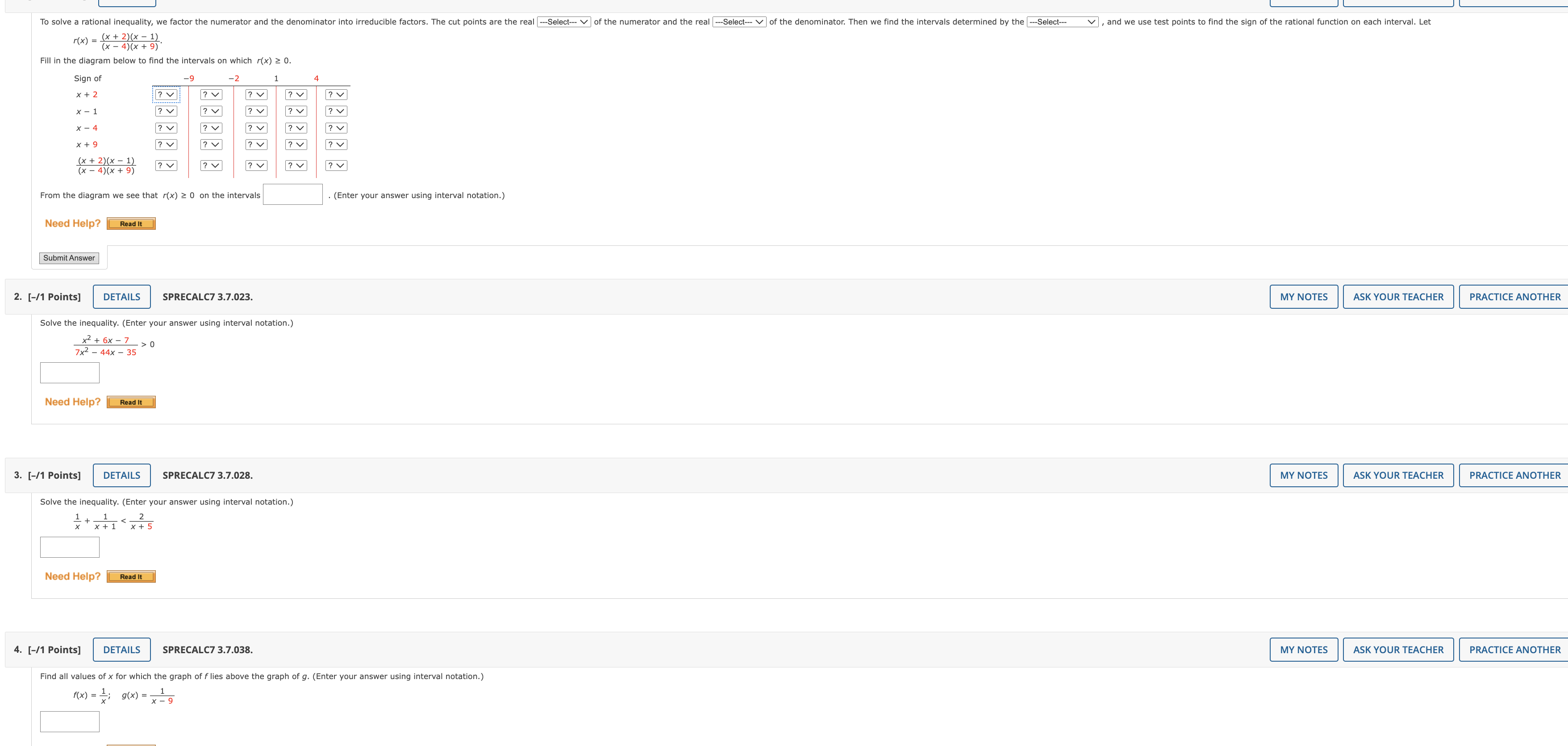
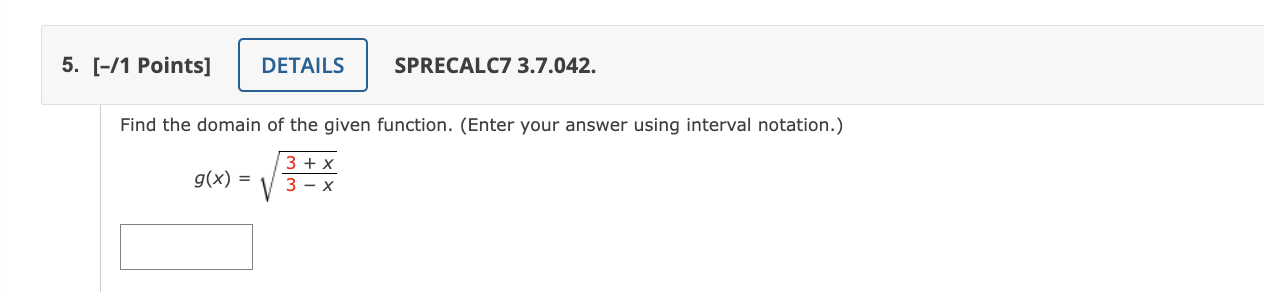
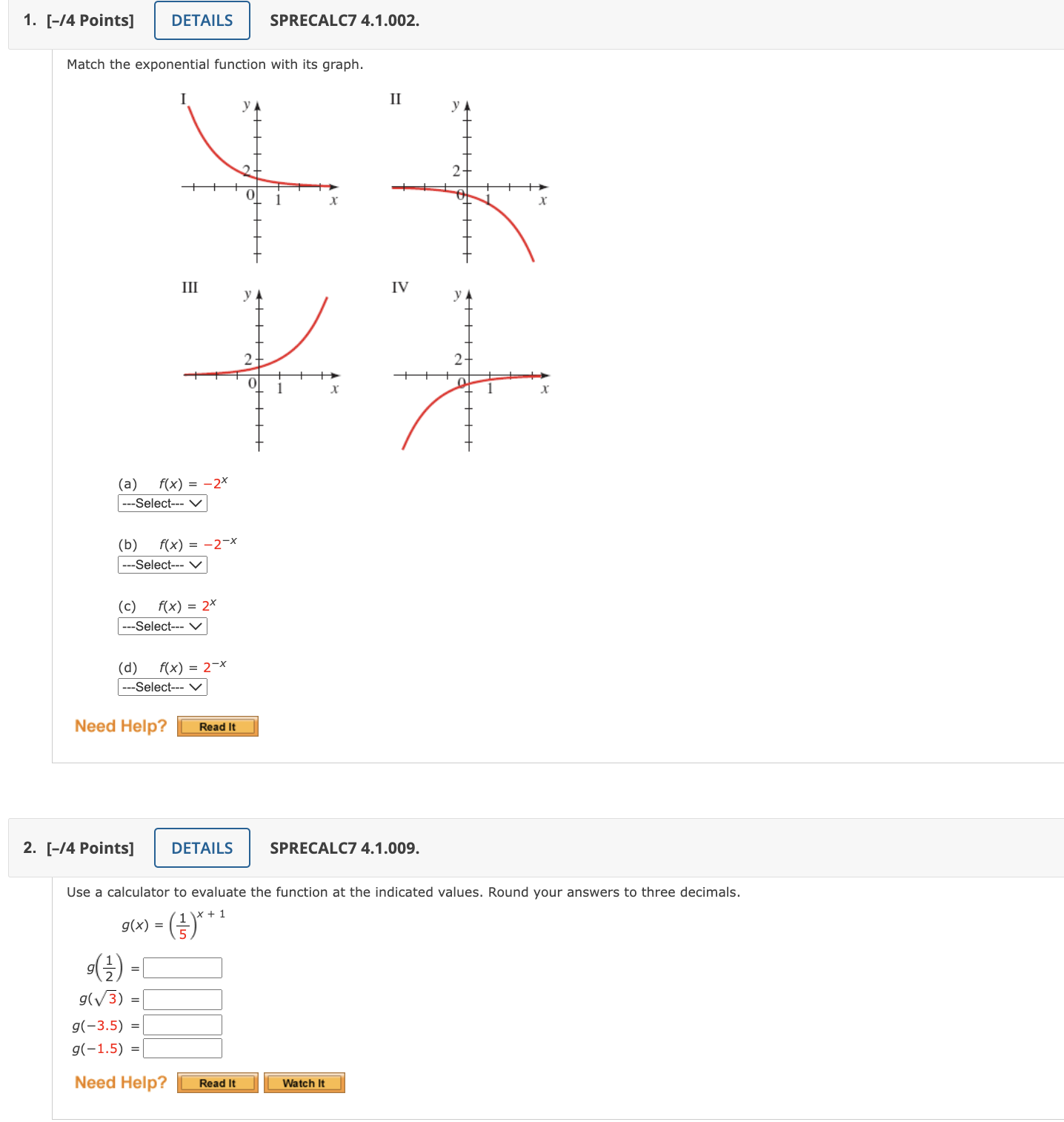
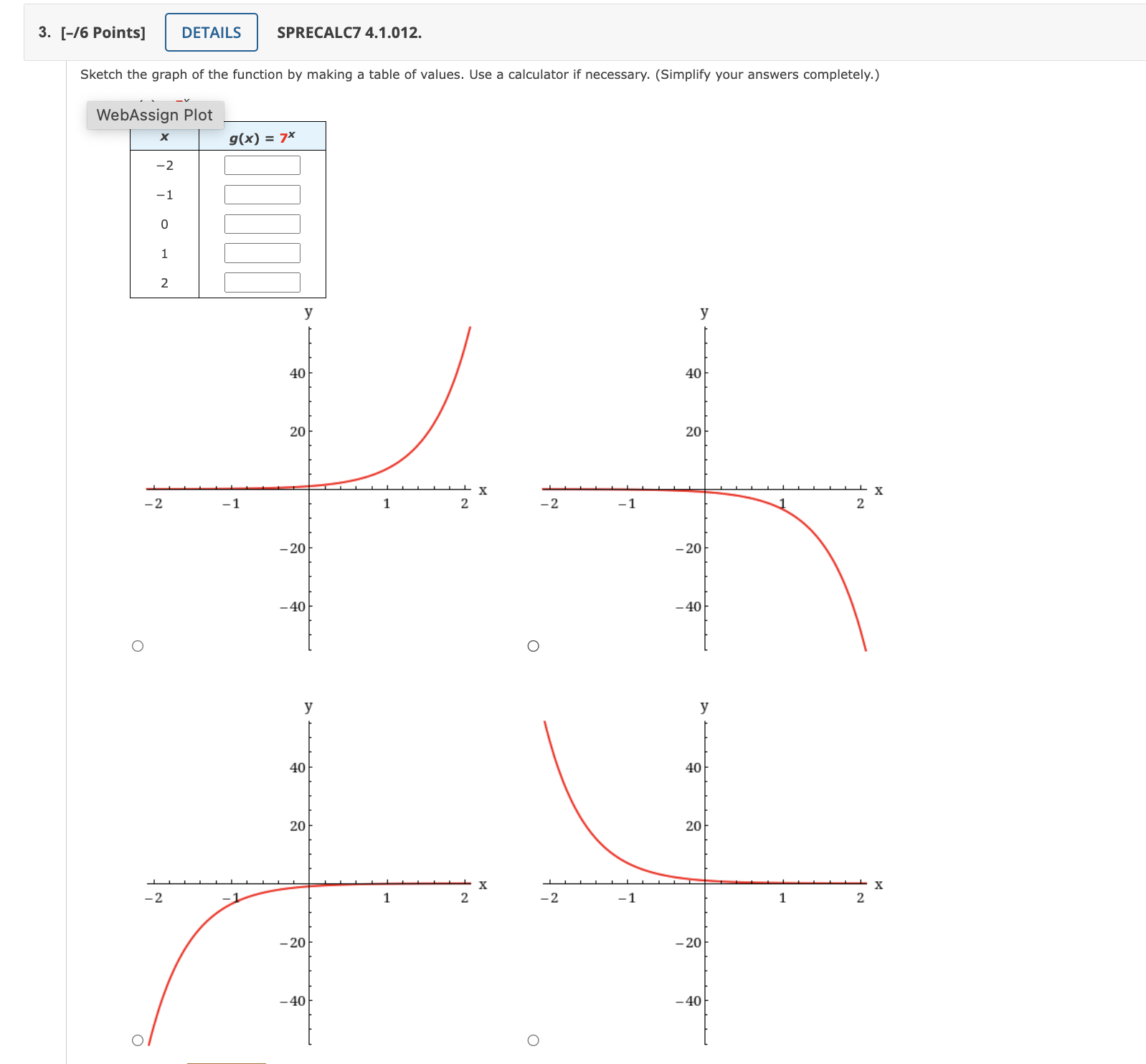
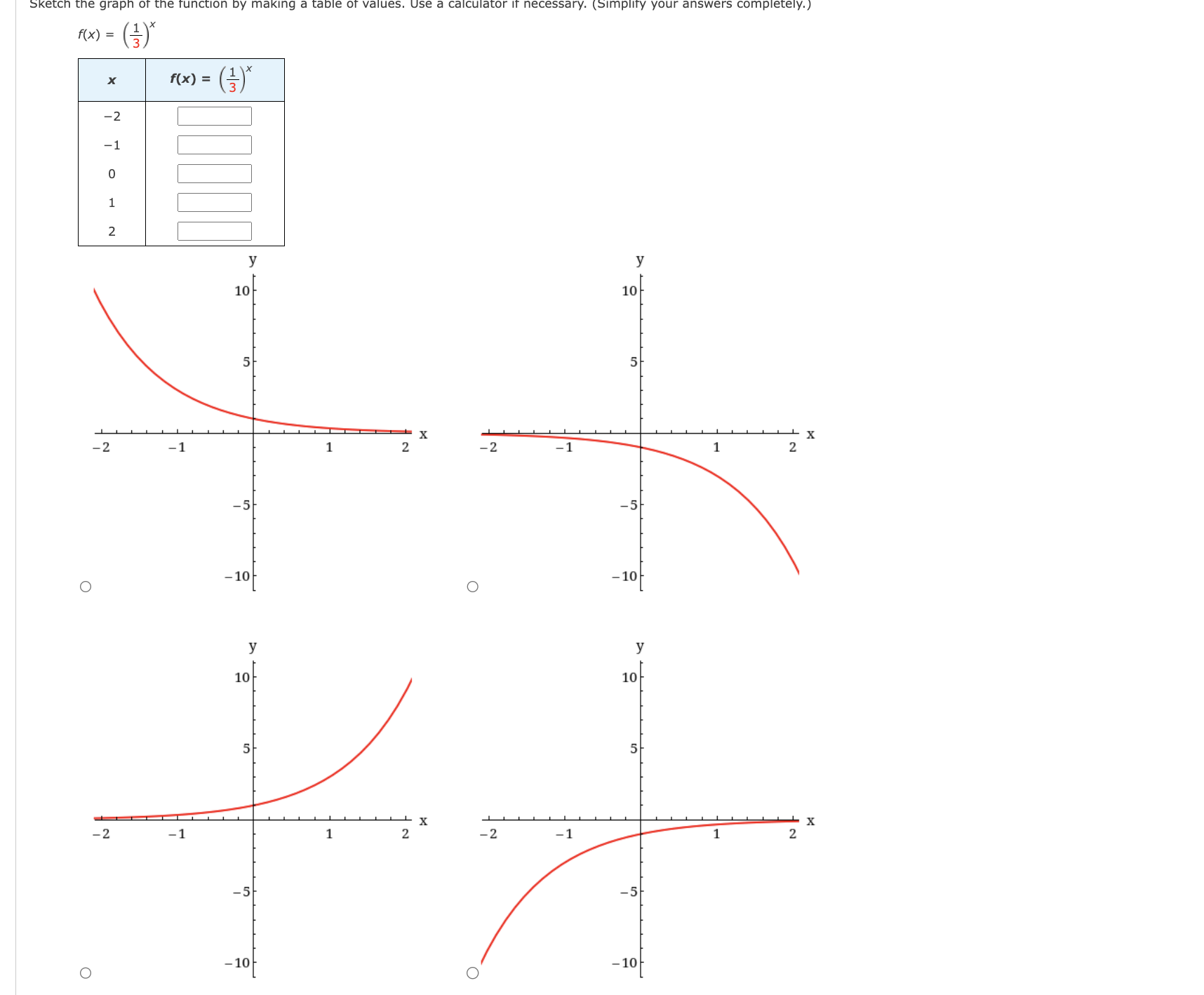
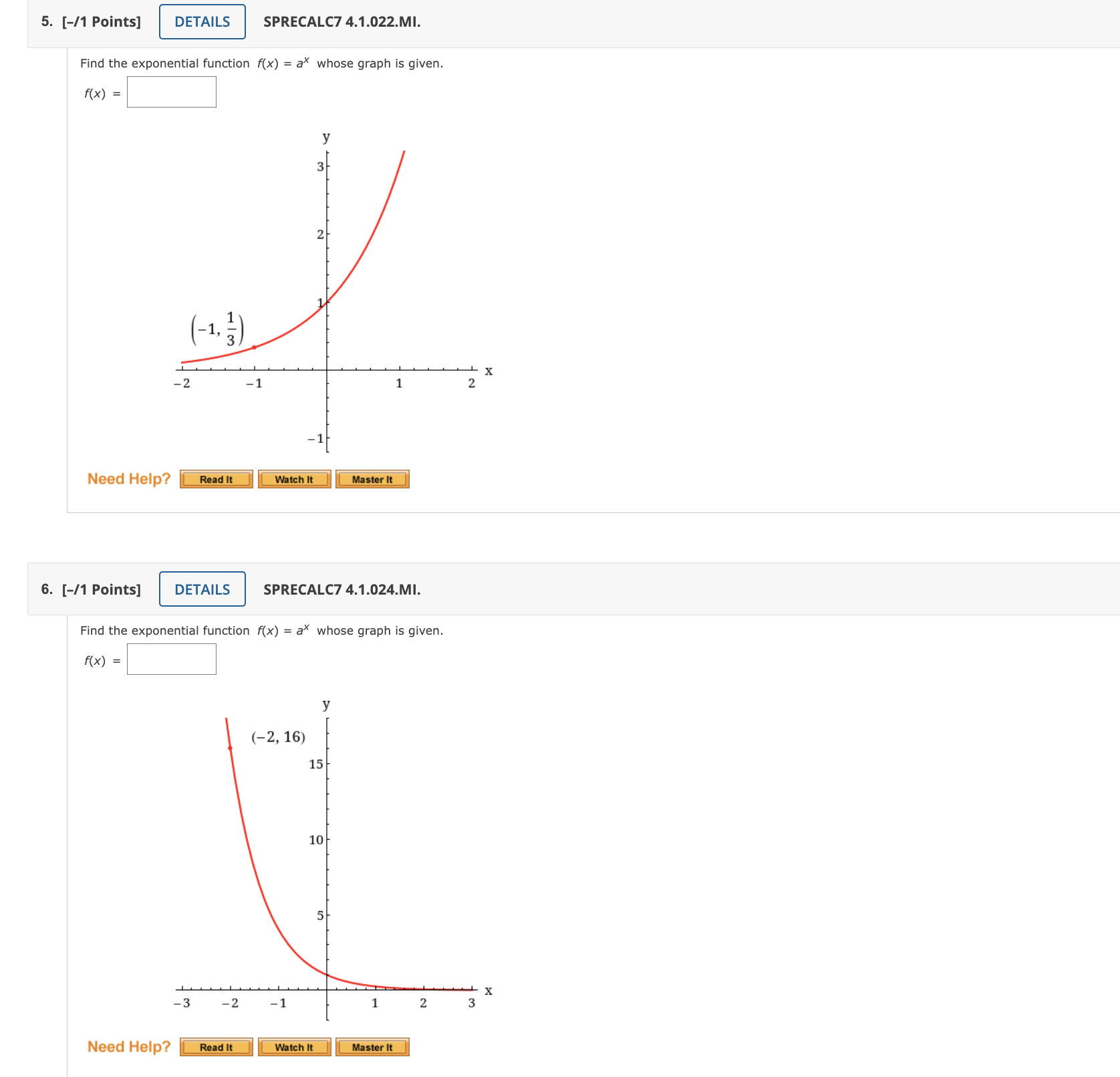
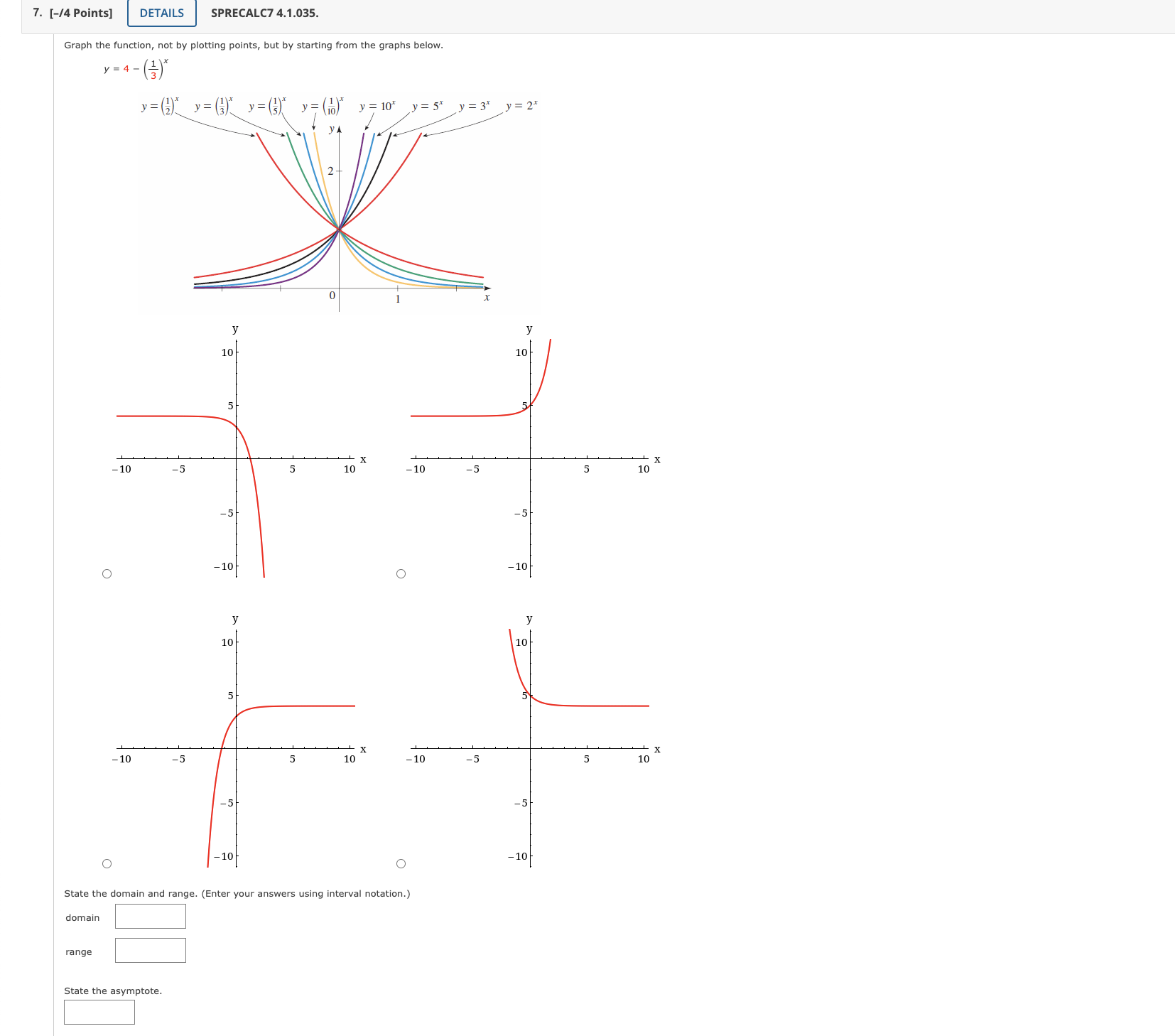
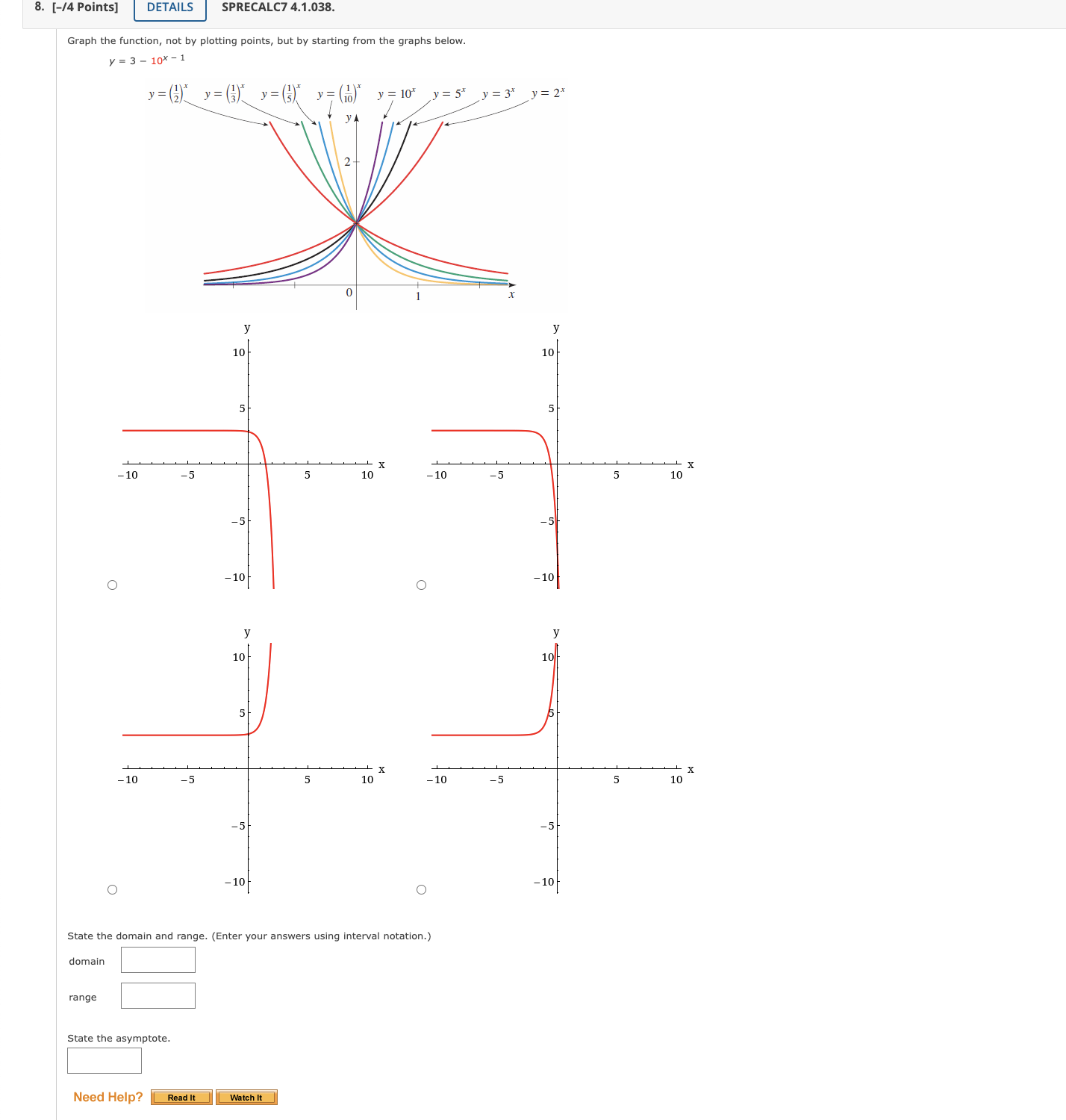
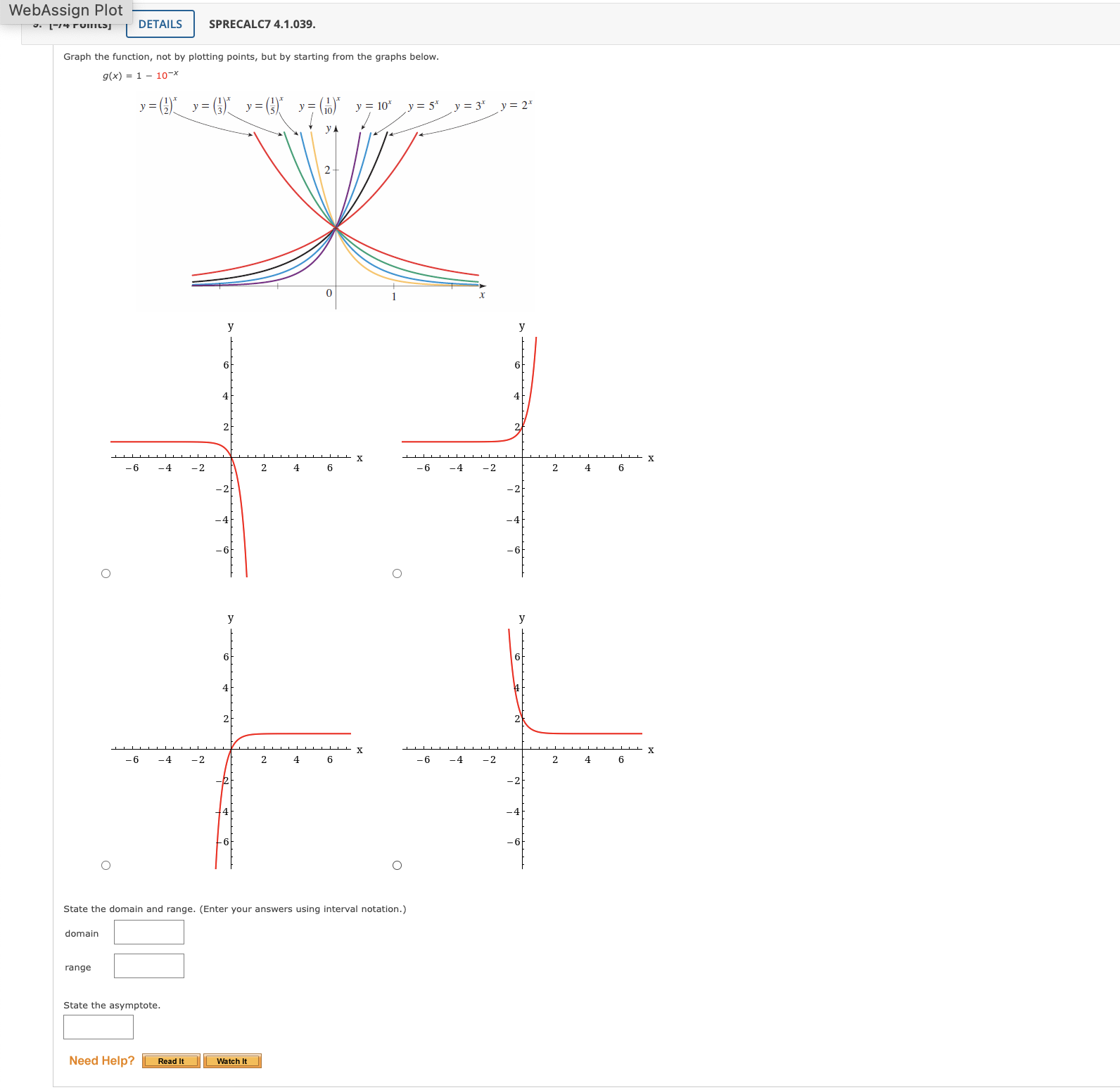
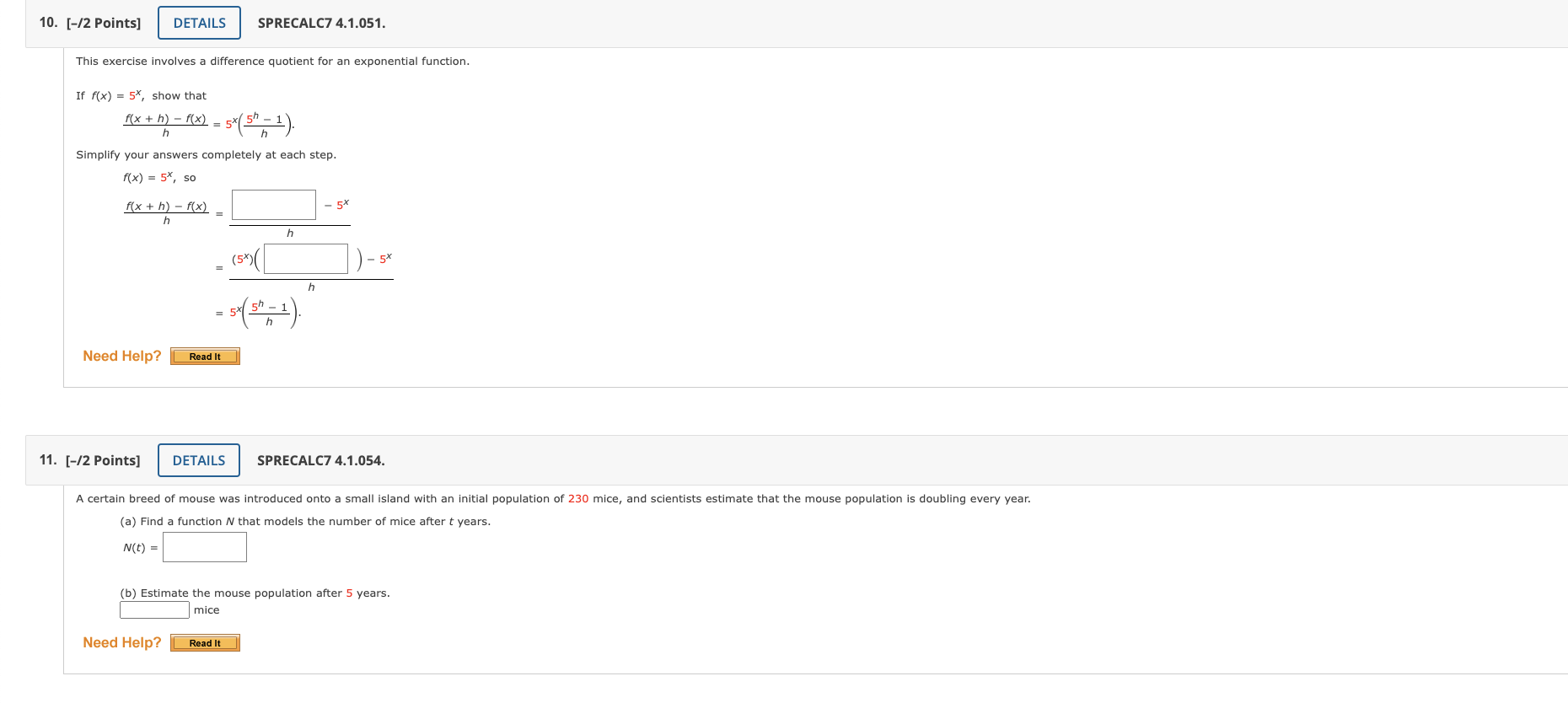
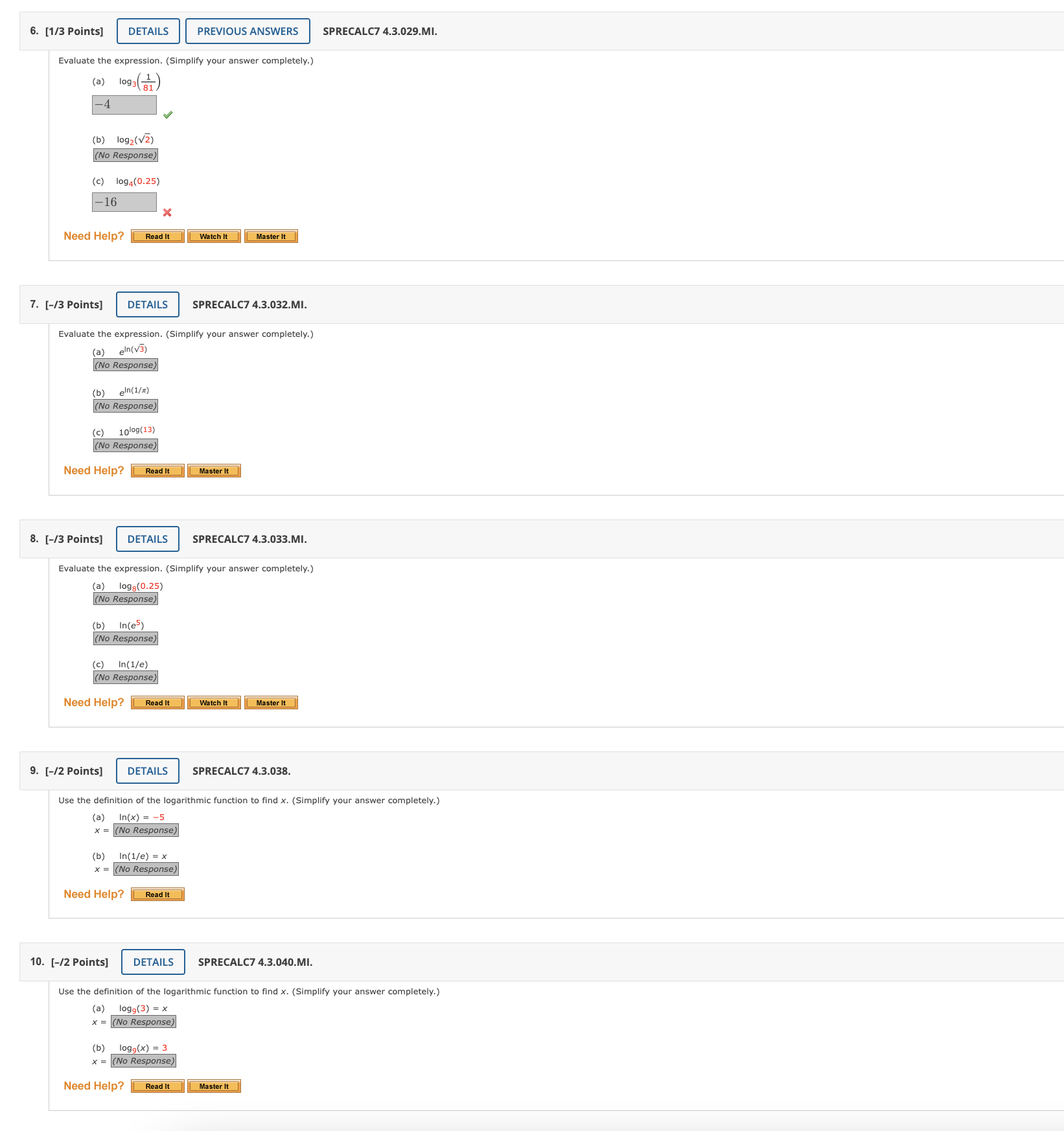
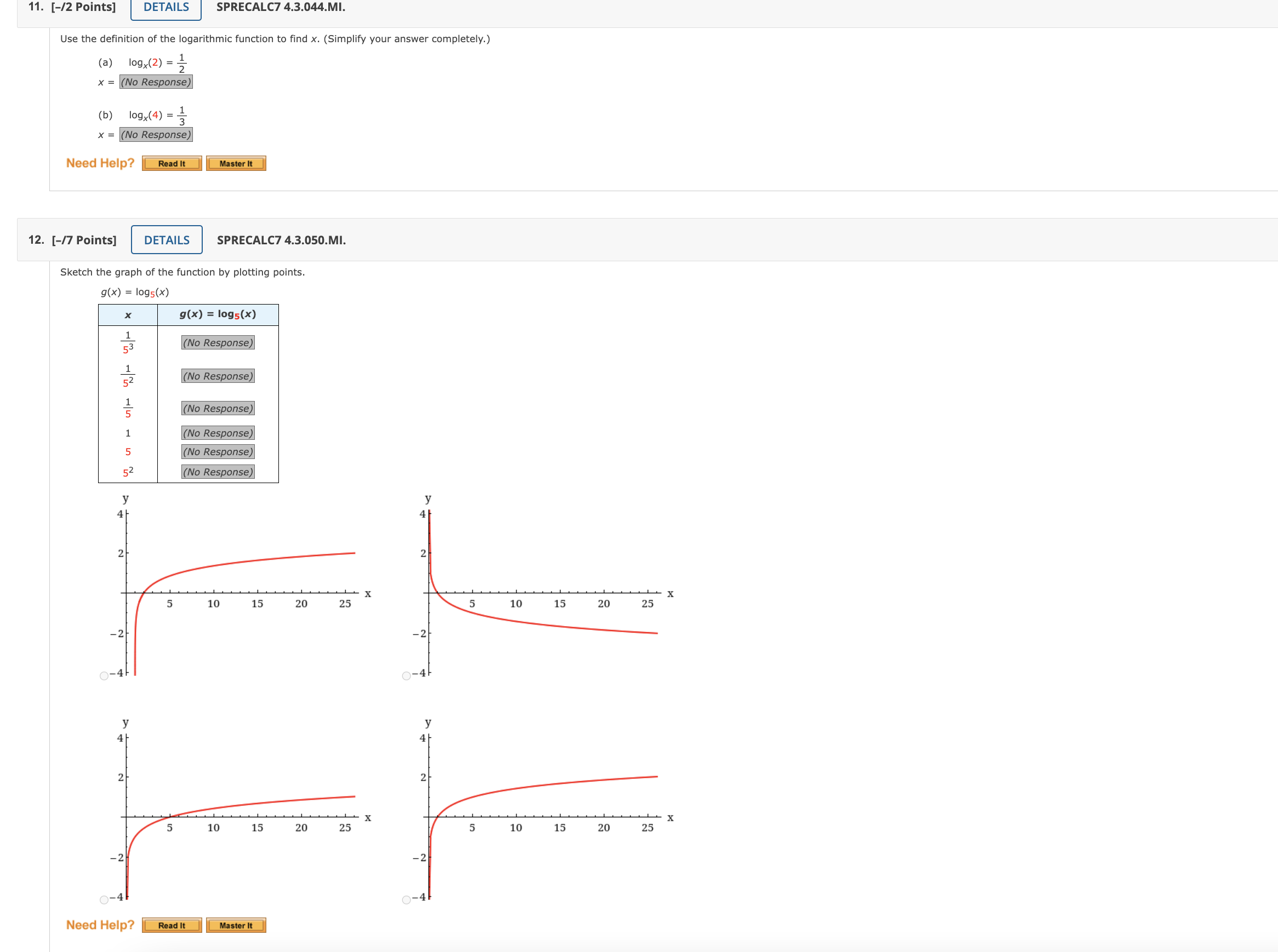
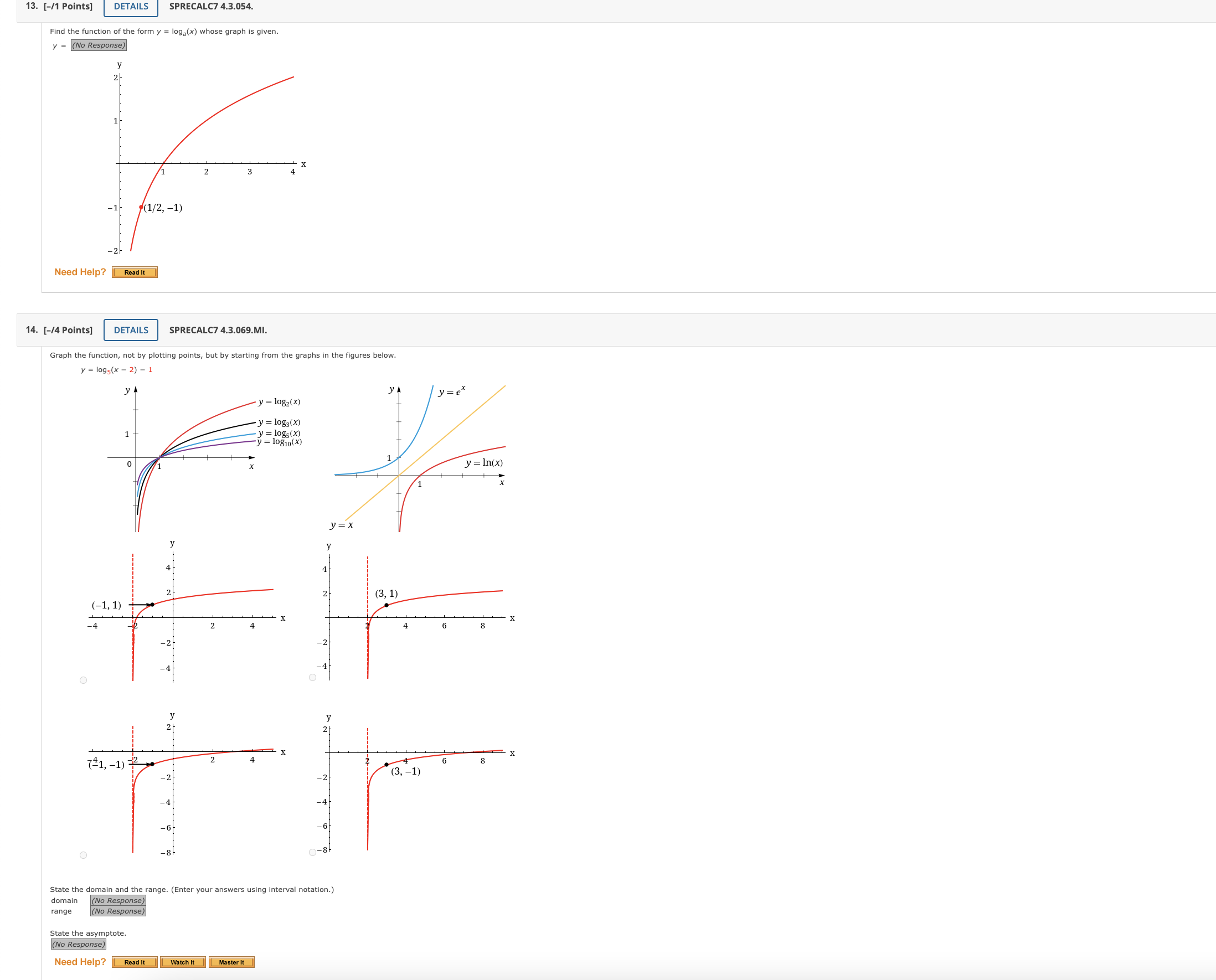
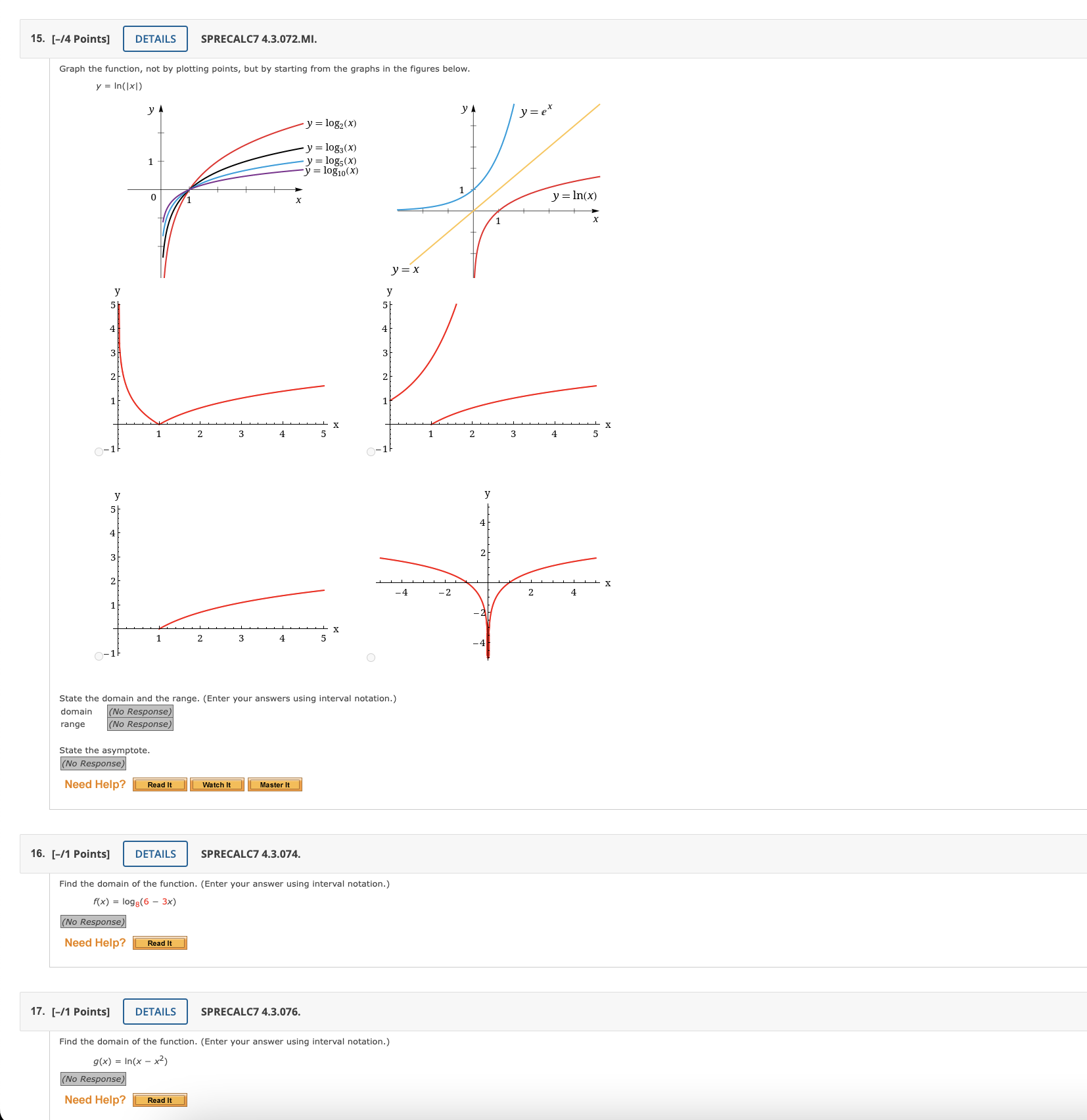
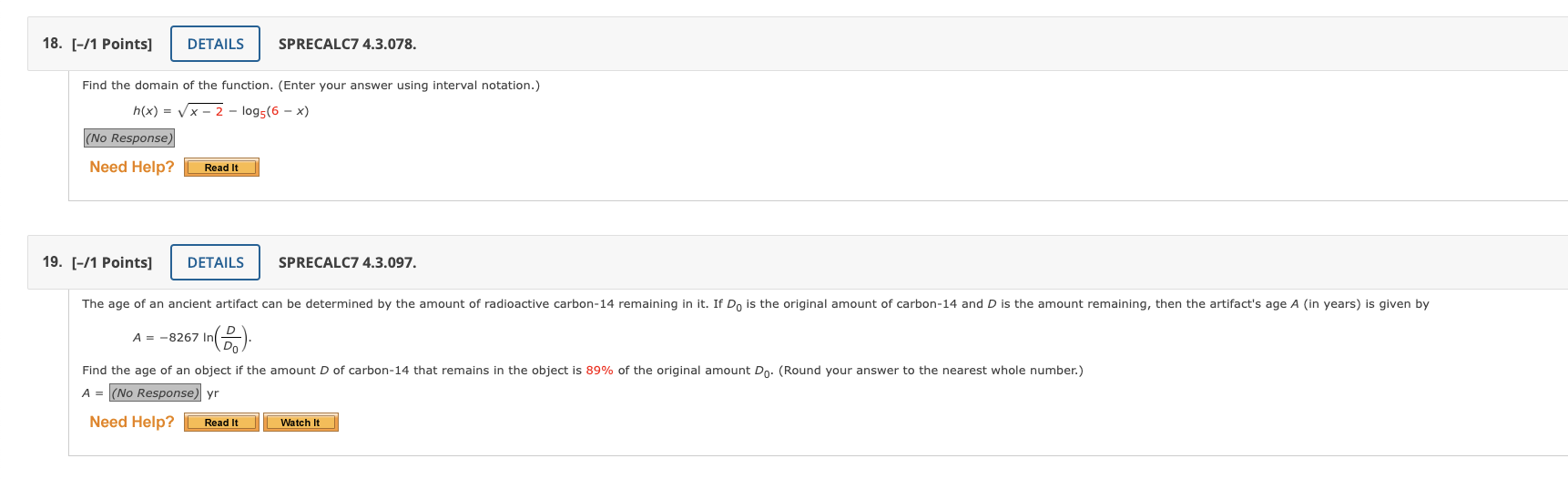
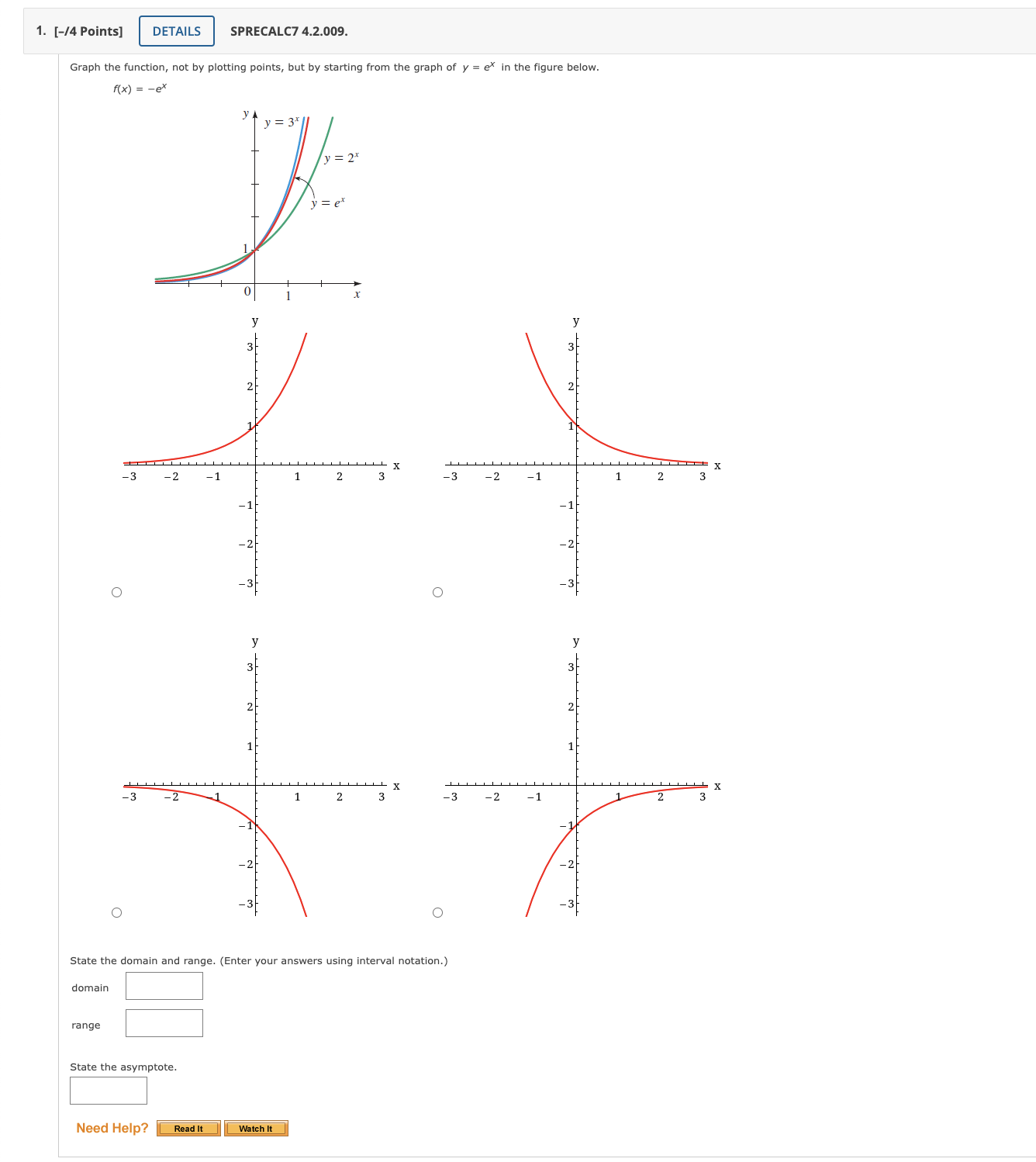
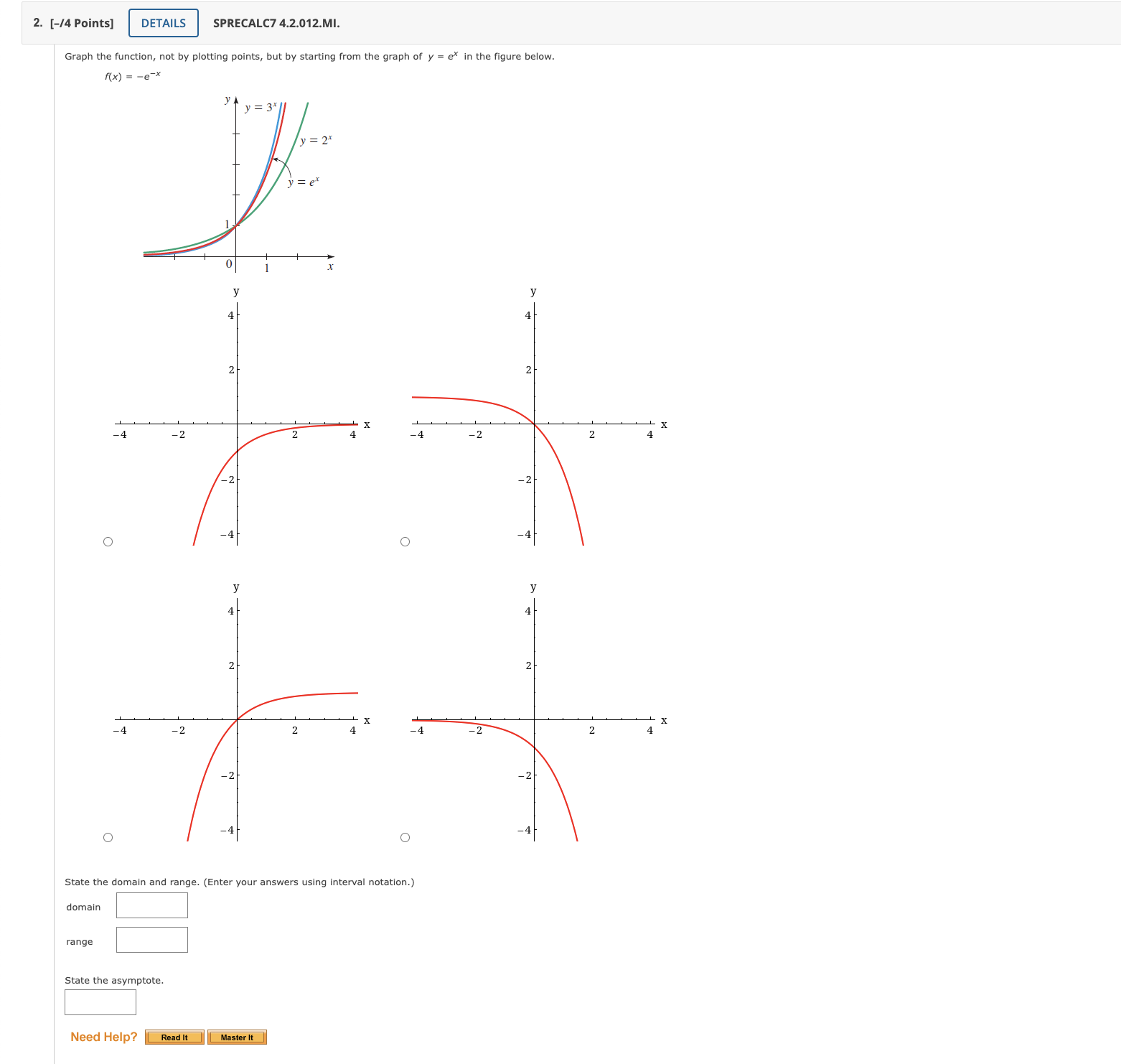
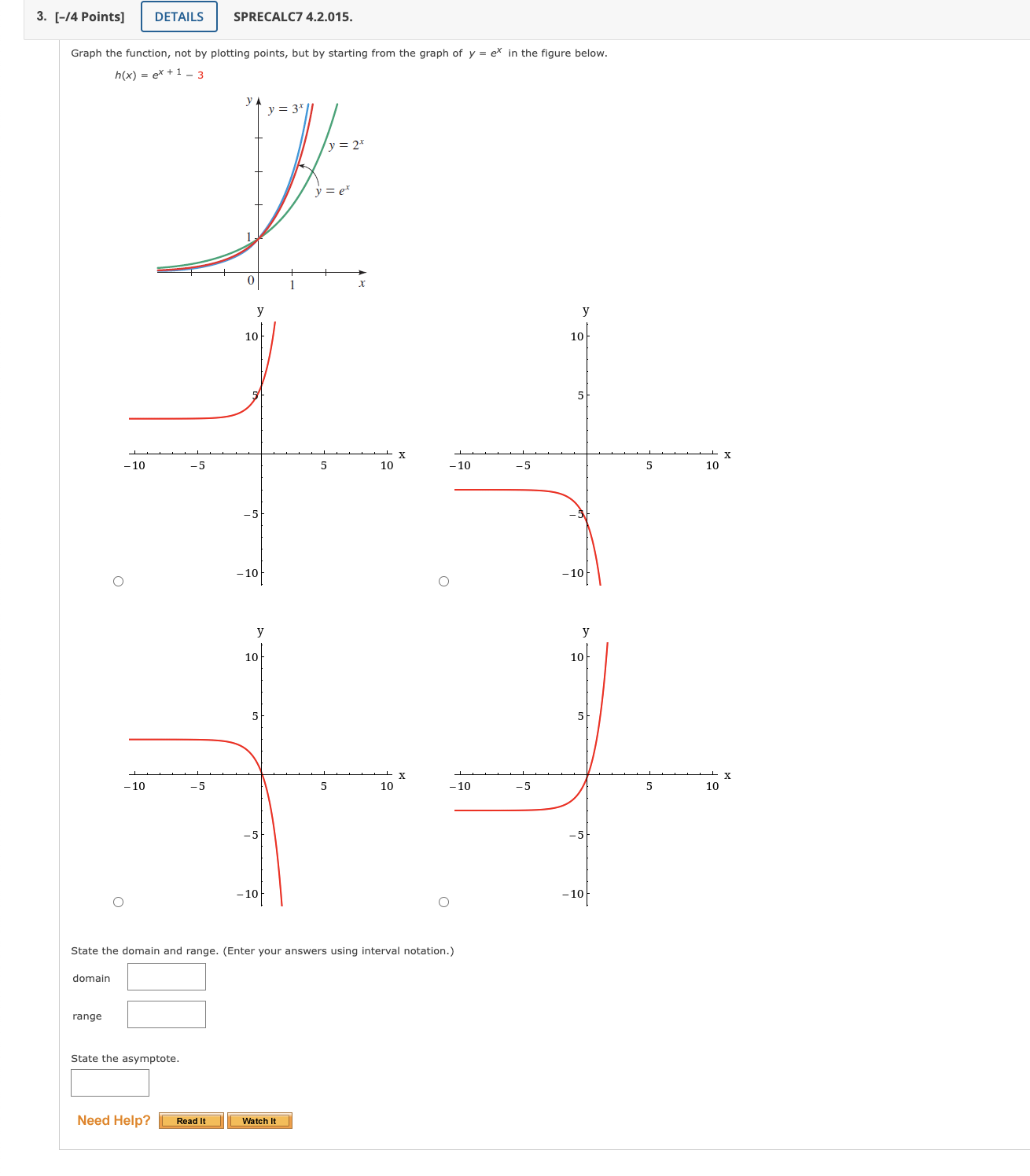
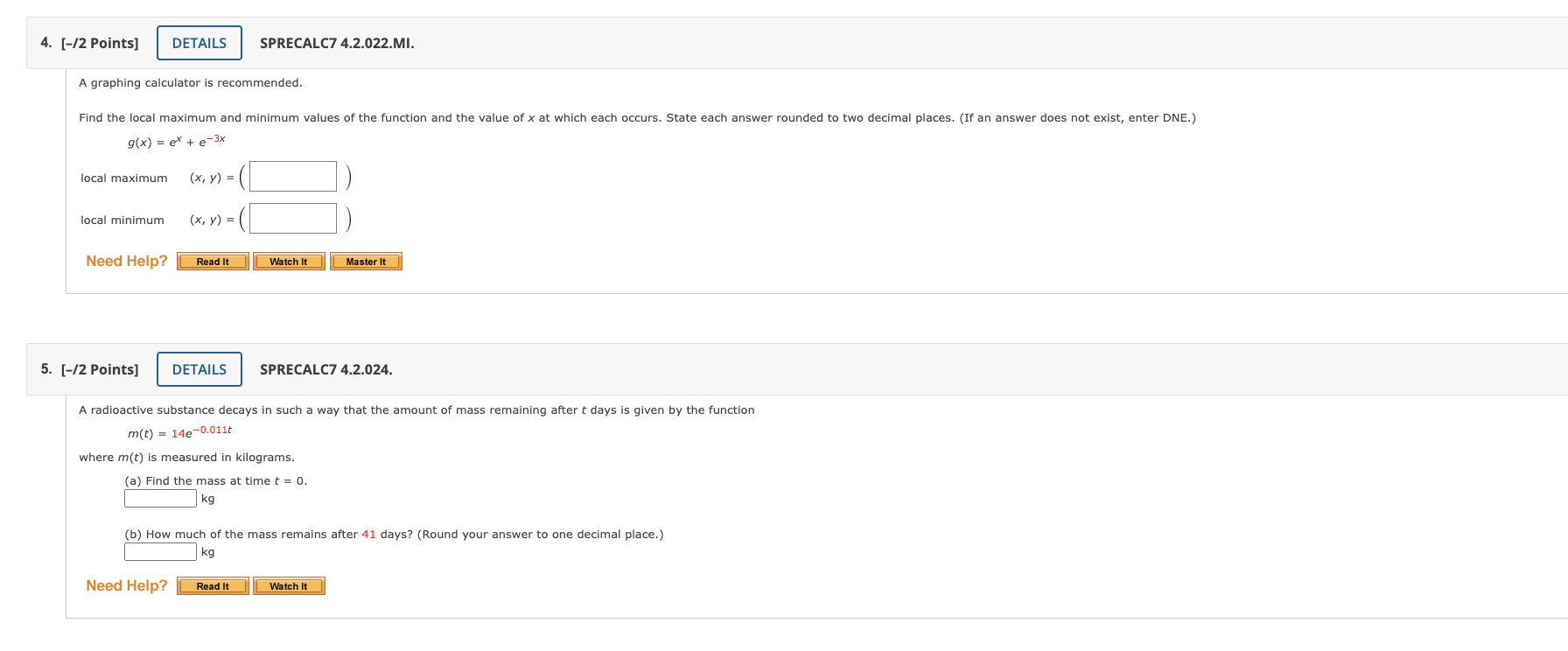
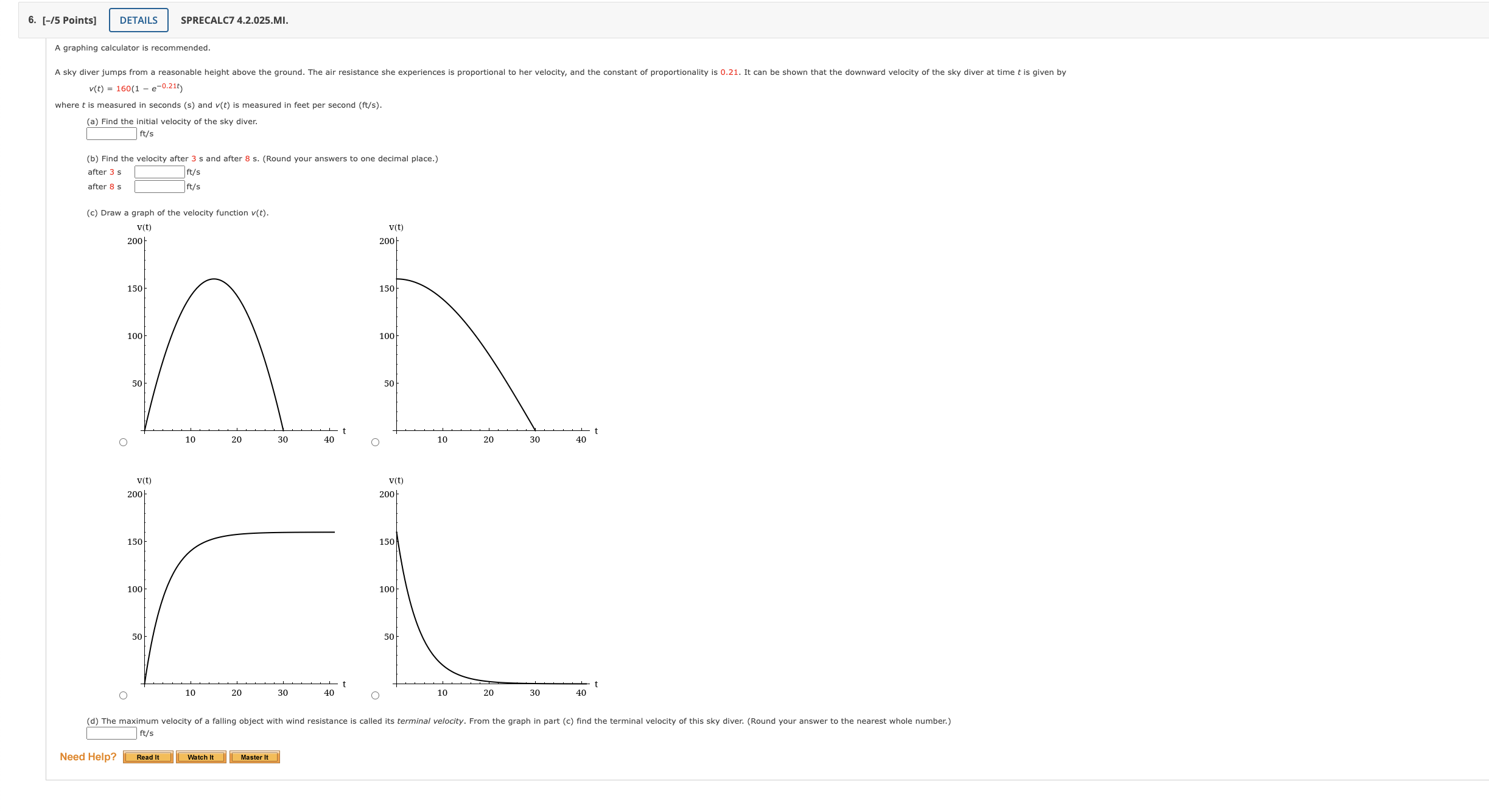
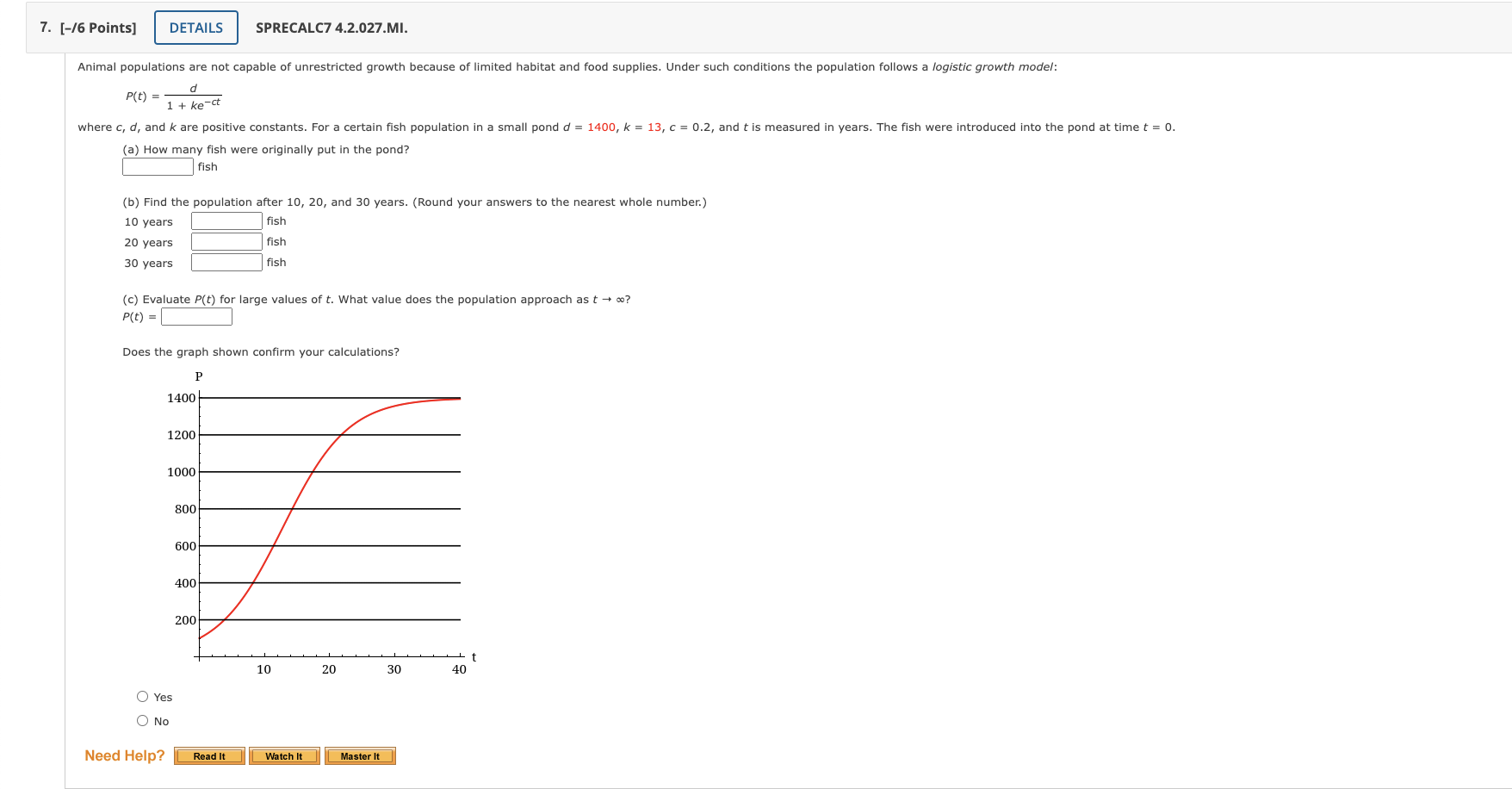
To solve a rational inequality, we factor the numerator and the denominator into irreducible factors. The cut points are the real ---Select-- V| of the numerator and the real ---Select--- V of the denominator. Then we find the intervals determined by the [-Select- v , and we use test points to find the sign of the rational function on each interval. Let r ( x ) = ( x + 2 ) ( x - 1) (x - 4)( x+ 9) Fill in the diagram below to find the intervals on which r(x) 2 0. Sign of x + 2 ? V ? V ? ? V ? V x - 1 1? V ? V ? V 2 V - 4 ? V ? V ? V x+ 9 3 V ? V 3 V (x + 2)(x - 1) (x - 4)(x+ 9) ? V ? V ? V ? V ? V From the diagram we see that r(x) 2 0 on the intervals . (Enter your answer using interval notation.) Need Help? Read It Submit Answer 2. [-/1 Points] DETAILS SPRECALC7 3.7.023. MY NOTES ASK YOUR TEACHER PRACTICE ANOTHER Solve the inequality. (Enter your answer using interval notation.) x2 + 6x - 7 7x2 - 44x - 35 -> 0 Need Help? Read It 3. [-/1 Points] DETAILS SPRECALC7 3.7.028. MY NOTES ASK YOUR TEACHER PRACTICE ANOTHER Solve the inequality. (Enter your answer using interval notation.) 1 + +1 = (o) y= 10' y=5' y = 3* y = 2" 10 o -10 -5 5 10 -10 5 10 - 5 -10 C -10 O - 4 10 -10 -5 10 10 -51 -10 O State the domain and range. (Enter your answers using interval notation.) domain range State the asymptote.8. [-/4 Points] DETAILS SPRECALC7 4.1.038. Graph the function, not by plotting points, but by starting from the graphs below. y = 3 - 10* - 1 y = (2 y=(3) y=(3) y= (10) y = 2* 0 10/ 10 10 10 10' O 10 O 10 6 4 10 -10 -5 5 10 -10 -5 10 -5- -5 -10 -10 O O State the domain and range. (Enter your answers using interval notation.) domain range State the asymptote. Need Help? Read It Watch ItWebAssign Plot DETAILS SPRECALC7 4.1.039. Graph the function, not by plotting points, but by starting from the graphs below. g (x) = 1 - 10 - x y = ( y= (3) >= (3 y= 10) = 10' y = 5* y = 3* = 2 -6 -4 -2 2 6 -6 -2 2 4 6 O O 6 6 4 4 6 -2 -6 O O State the domain and range. (Enter your answers using interval notation.) domain range State the asymptote. Need Help? Read it Watch It10. [-/2 Points] DETAILS SPRECALC7 4.1.051. This exercise involves a difference quotient for an exponential function. If f(x) = 5*, show that f( x + h) - f(x ) = 5x( 56 - 1). h Simplify your answers completely at each step. f(x) = 5*, so f ( x + h ) - f( x ). 5 X h h (5*) 5 X 5h - 1) Need Help? Read It 11. [-/2 Points] DETAILS SPRECALC7 4.1.054. A certain breed of mouse was introduced onto a small island with an initial population of 230 mice, and scientists estimate that the mouse population is doubling every year. (a) Find a function / that models the number of mice after t years. N(t) = (b) Estimate the mouse population after 5 years. mice Need Help? Read It6. [1/3 Points] DETAILS PREVIOUS ANSWERS SPRECALC7 4.3.029.MI. Evaluate the expression. (Simplify your answer completely.) (a) 1093 81 (b) 1092(V/2) (No Response) (c) 1094(0.25) -16 X Need Help? Read it Watch It Master It 7. [-/3 Points] DETAILS SPRECALC7 4.3.032.MI. Evaluate the expression. (Simplify your answer completely.) eln(v/3) (No Response) (b) eln(1/x) (No Response) (c) 10 09(13) (No Response) Need Help? Read it Master It 8. [-/3 Points] DETAILS SPRECALC7 4.3.033.MI. Evaluate the expression. (Simplify your answer completely.) (a) logs(0.25) (No Response) (b) In(es) (No Response ) (c) In(1/e) (No Response) Need Help? Read it Watch It Master It 9. [-/2 Points] DETAILS SPRECALC7 4.3.038. Use the definition of the logarithmic function to find x. (Simplify your answer completely.) (a) In(x) = -5 x = (No Response) (b) In(1/e) = x X = (No Response) Need Help? Read It 10. [-/2 Points] DETAILS SPRECALC7 4.3.040.MI. Use the definition of the logarithmic function to find x. (Simplify your answer completely.) (a) logg(3) = x x = (No Response) (b) logg(x) = 3 x = (No Response) Need Help? Read it Master It11. [-/2 Points] DETAILS SPRECALC7 4.3.044.MI. Use the definition of the logarithmic function to find x. (Simplify your answer completely.) (a) logx(2) = = x = (No Response) (b) logx ( 4 ) = = x = (No Response) Need Help? Read it Master It 12. [-/7 Points] DETAILS SPRECALC7 4.3.050.MI. Sketch the graph of the function by plotting points. g(x) = 10g5(x g(x) = log5(x) (No Response) (No Response) (No Response) (No Response) (No Response) (No Response) N 2 - X X 5 10 15 20 25 5 10 15 20 25 -2- -2 N - X 10 15 20 25 10 15 20 25 -2 -2 Need Help? Read It Master It13. [-/1 Points] DETAILS SPRECALC7 4.3.054. Find the function of the form y = loga(x) whose graph is given. y = (No Response) (1/2, -1) Need Help? Read It 14. [-/4 Points] DETAILS SPRECALC7 4.3.069.MI. Graph the function, not by plotting points, but by starting from the graphs in the figures below. y = log5(x - 2) - 1 y =ex - y = 10g2(X) y = 10g3(X) = 10g5(X) = 10g10(X) y = In(x) y = x N+ (3, 1) (-1, 1) A 8 is O N (41, -1) 7 (3 , -1 ) is O State the domain and the range. (Enter your answers using interval notation.) domain (No Response) range (No Response) State the asymptote. (No Response) Need Help? Read it Watch It Master It15. [-/4 Points] DETAILS SPRECALC7 4.3.072.MI. Graph the function, not by plotting points, but by starting from the graphs in the figures below. y = In(1x1) y=e y = log2(X) y = log3(X) = 1085 (X) y = 10810 (X) = In(x) y= O State the domain and the range. (Enter your answers using interval notation.) domain (No Response) range ( No Response ) State the asymptote. (No Response) Need Help? Read it Watch It Master It 16. [-/1 Points] DETAILS SPRECALC7 4.3.074. Find the domain of the function. (Enter your answer using interval notation.) f(x) = 1098(6 - 3x) (No Response) Need Help? Read It 17. [-/1 Points] DETAILS SPRECALC7 4.3.076. Find the domain of the function. (Enter your answer using interval notation.) g (x) = In(x -x2) (No Response) Need Help? Read It18. [-/1 Points] DETAILS SPRECALC7 4.3.078. Find the domain of the function. (Enter your answer using interval notation.) h(x) = vx - 2 - log5(6 - x) (No Response) Need Help? Read It 19. [-/1 Points] DETAILS SPRECALC7 4.3.097. The age of an ancient artifact can be determined by the amount of radioactive carbon-14 remaining in it. If Do is the original amount of carbon-14 and D is the amount remaining, then the artifact's age A (in years) is given by A = -8267 In(D) Find the age of an object if the amount D of carbon-14 that remains in the object is 89% of the original amount Do. (Round your answer to the nearest whole number.) A = (No Response) yr Need Help? Read It Watch It1. [-/4 Points] DETAILS SPRECALC7 4.2.009. Graph the function, not by plotting points, but by starting from the graph of y = ex in the figure below. f(x ) = -ex - 3 - 2 2 3 3 - 2 2 - 26 N O O N N - 3 2 -3 -2 -1 O O State the domain and range. (Enter your answers using interval notation.) domain range State the asymptote. Need Help? Read It Watch It2. [-/4 Points] DETAILS SPRECALC7 4.2.012.MI. Graph the function, not by plotting points, but by starting from the graph of y = ex in the figure below. f ( x ) = -ex 2 - -2 2 - 2 -2 O O O O State the domain and range. (Enter your answers using interval notation.) lomain range State the asymptote. Need Help? Read it Master It3. [-/4 Points] DETAILS SPRECALC7 4.2.015. Graph the function, not by plotting points, but by starting from the graph of y = ex in the figure below. h(x) = ex+ 1 - 3 -4 -4 10 - 10 X -10 -5 5 LO - 10 -5 5 10 -51 10 10 O O - 4 -4 10- 10 - X X - 10 -5 5 10 - 10 -5 5 10 -5 -10 -10 C O State the domain and range. (Enter your answers using interval notation.) domain range State the asymptote. Need Help? Read It Watch It4. [-/2 Points] DETAILS SPRECALC7 4.2.022.MI. A graphing calculator is recommended. Find the local maximum and minimum values of the function and the value of x at which each occurs. State each answer rounded to two decimal places. (If an answer does not exist, enter DNE.) g(x) = ex + e-3x local maximum ( x, y ) = local minimum (x, y) = ( Need Help? Read It Watch It Master It 5. [-/2 Points] DETAILS SPRECALC7 4.2.024. A radioactive substance decays in such a way that the amount of mass remaining after t days is given by the function m(t) = 14e-0.01it where m(t) is measured in kilograms. (a) Find the mass at time t = 0. kg (b) How much of the mass remains after 41 days? (Round your answer to one decimal place.) kg Need Help? Read It Watch It6. [-/5 Points] DETAILS SPRECALC7 4.2.025.MI. A graphing calculator is recommended A sky diver jumps from a reasonable height above the ground. The air resistance she experiences is proportional to her velocity, and the constant of proportionality is 0.21. It can be shown that the downward velocity of the sky diver at time t is given by v(t) = 160(1 - e-0.21t) where t is measured in seconds (s) and v(t) is measured in feet per second (ft/s). (a) Find the initial velocity of the sky diver. ft/s (b) Find the velocity after 3 s and after 8 s. (Round your answers to one decimal place.) after 3 s ft/s after 8 s ft/s (c) Draw a graph of the velocity function v(t). vit v(t) 200 200 150 150 100 100- 50 50 t O 10 20 30 40 O 10 20 30 40 v(t) v(t) 200 200 150 150 100 100 50 O 10 20 30 40 O 10 20 30 40 (d) The maximum velocity of a falling object with wind resistance is called its terminal velocity. From the graph in part (c) find the terminal velocity of this sky diver. (Round your answer to the nearest whole number.) ft/s Need Help? Read it Watch It Master It7. [-/6 Points] DETAILS SPRECALC7 4.2.027.MI. Animal populations are not capable of unrestricted growth because of limited habitat and food supplies. Under such conditions the population follows a logistic growth model: d P(t) = - 1 + ke-ct where c, d, and k are positive constants. For a certain fish population in a small pond d = 1400, k = 13, c = 0.2, and t is measured in years. The fish were introduced into the pond at time t = 0. (a) How many fish were originally put in the pond? fish (b) Find the population after 10, 20, and 30 years. (Round your answers to the nearest whole number.) 10 years fish 20 years fish 30 years fish (c) Evaluate P(t) for large values of t. What value does the population approach as t - co? P(t) = Does the graph shown confirm your calculations? P 1400 120 1000 800 600 400 200 10 20 30 40 O Yes O No Need Help? Read It Watch It Master It
Step by Step Solution
There are 3 Steps involved in it
1 Expert Approved Answer
Step: 1 Unlock
Question Has Been Solved by an Expert!
Get step-by-step solutions from verified subject matter experts
Step: 2 Unlock
Step: 3 Unlock
Students Have Also Explored These Related Mathematics Questions!









 Study Help