







Question: Write a reflective summary of the case study, demonstrating understanding of the case and its implications on the tourism sector. Support your discussion with statistics
Write a reflective summary of the case study, demonstrating understanding of the case and its implications on the tourism sector. Support your discussion with statistics and additional information. word count between 800-1000. 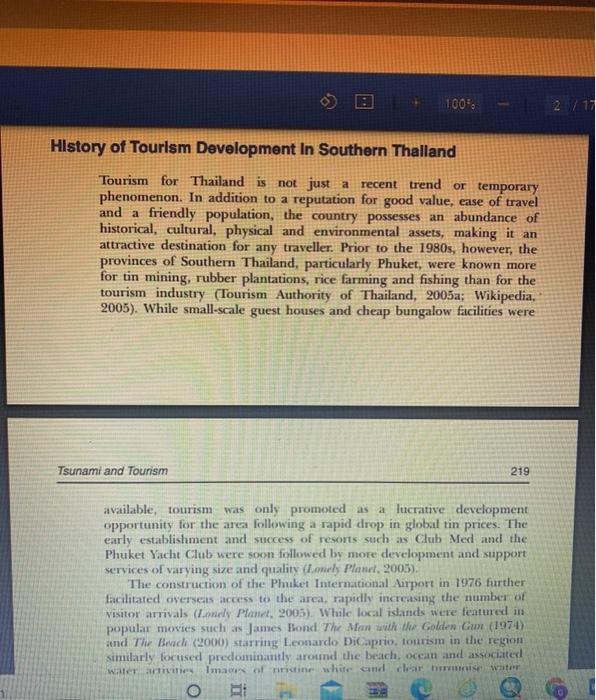
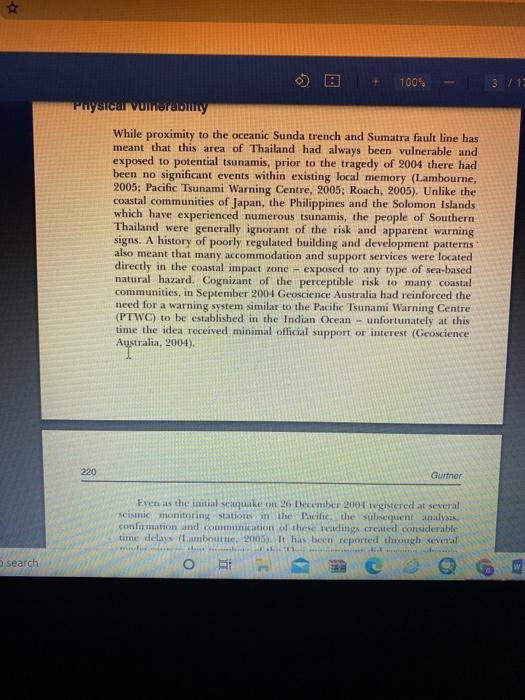
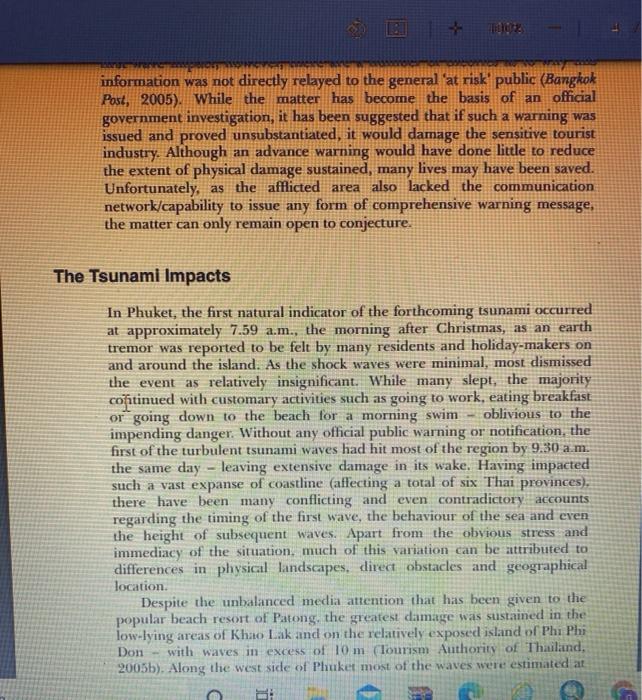
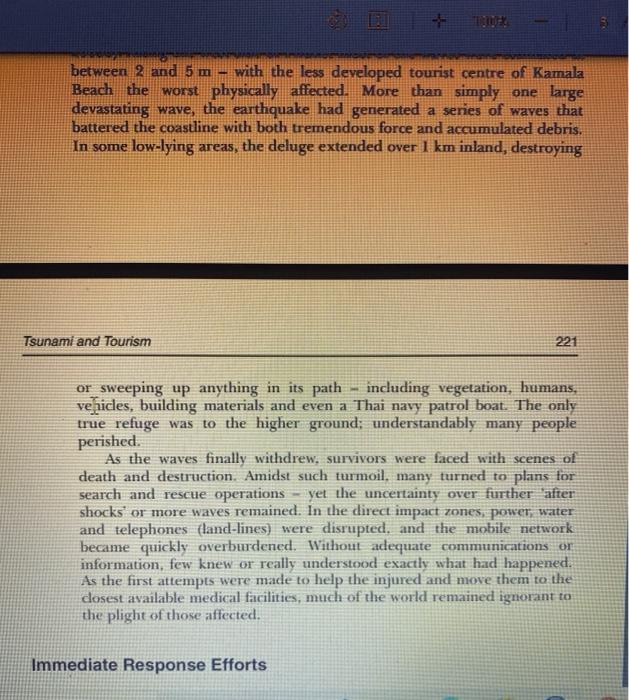
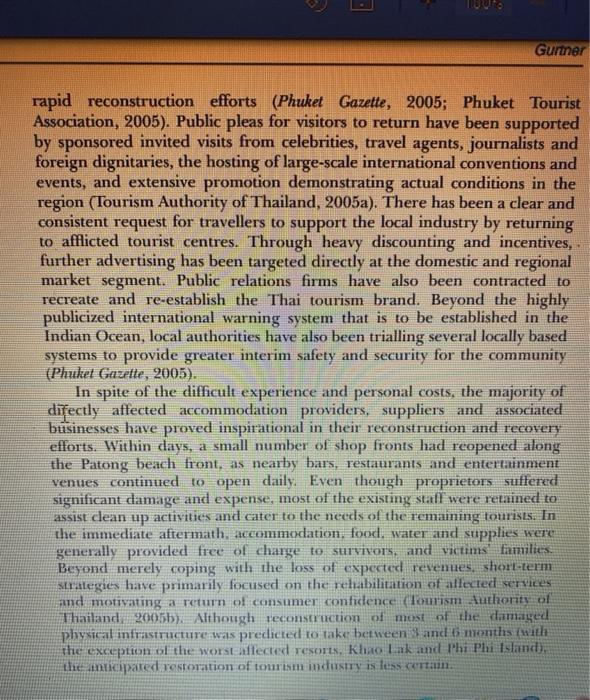
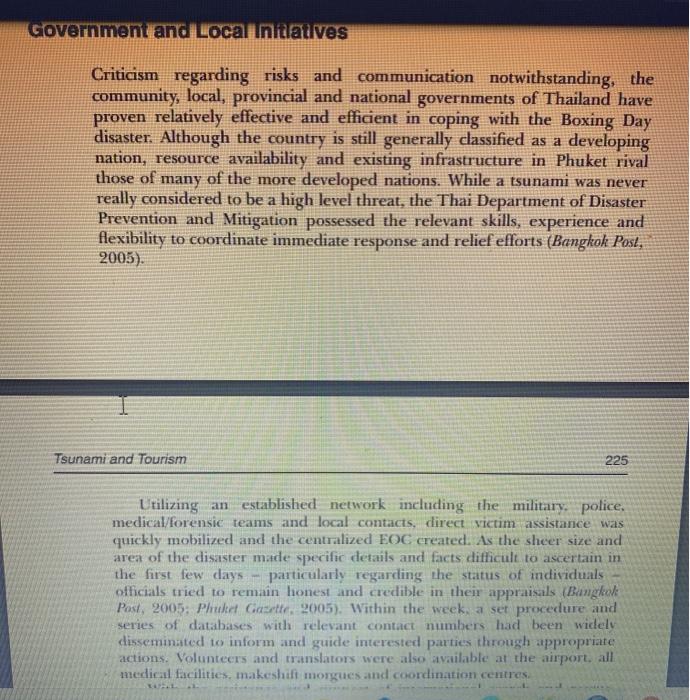
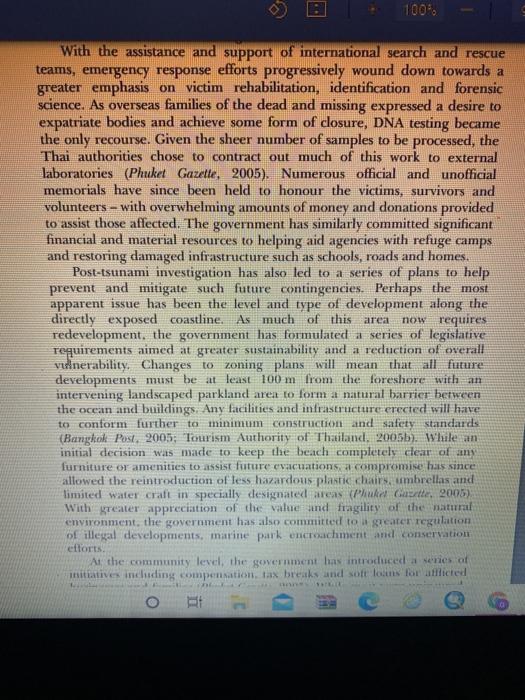
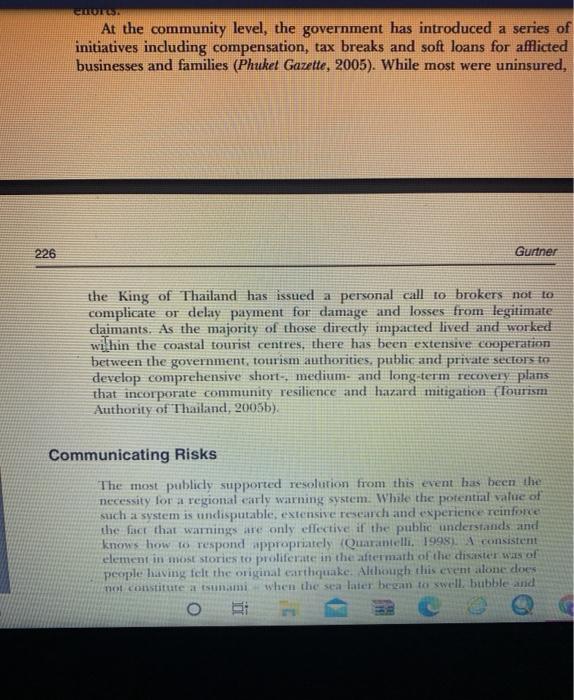
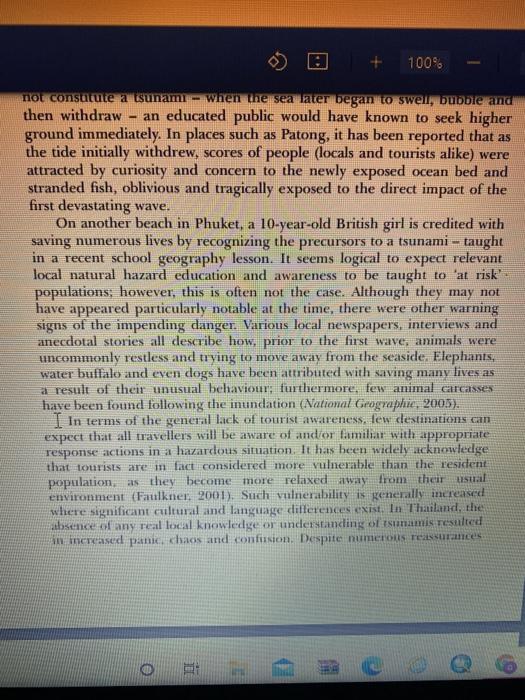
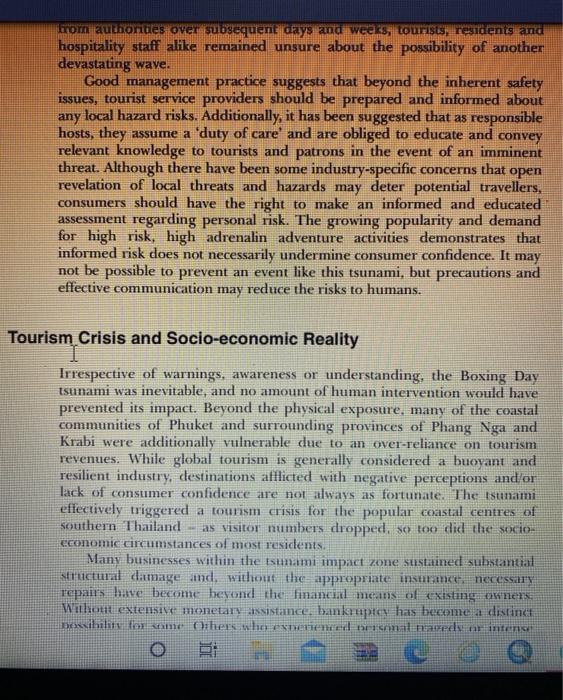
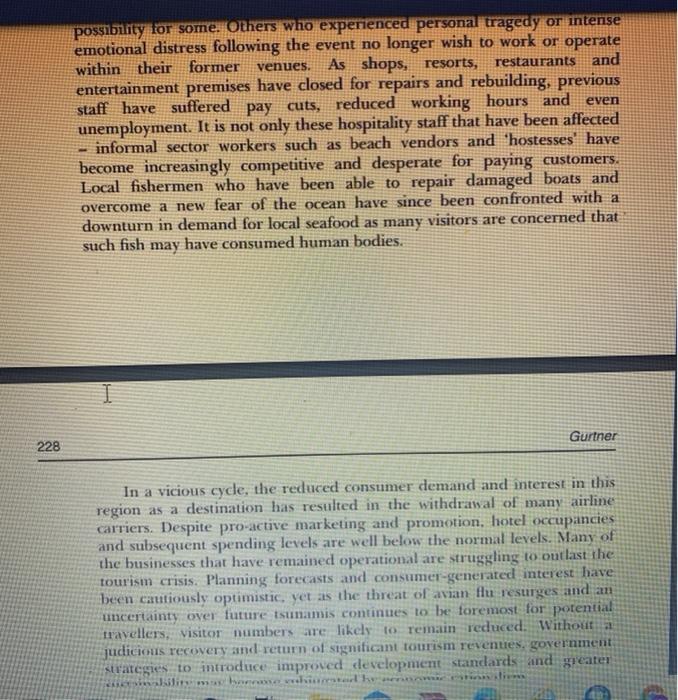
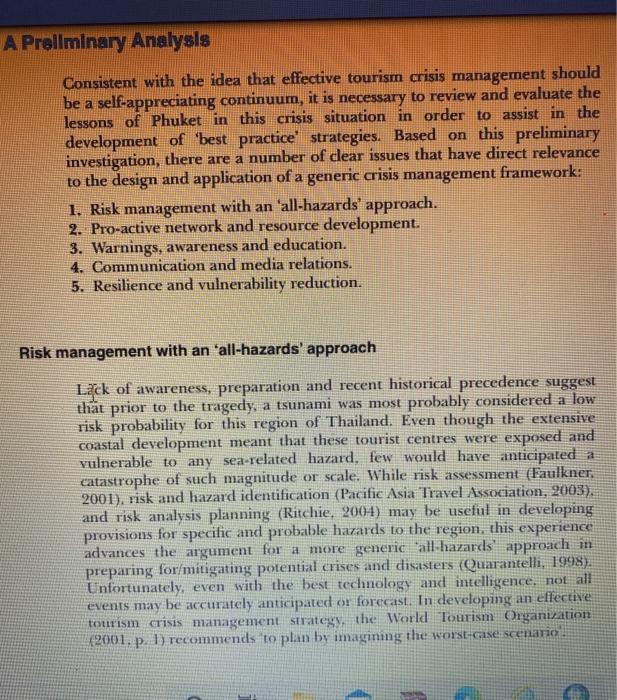
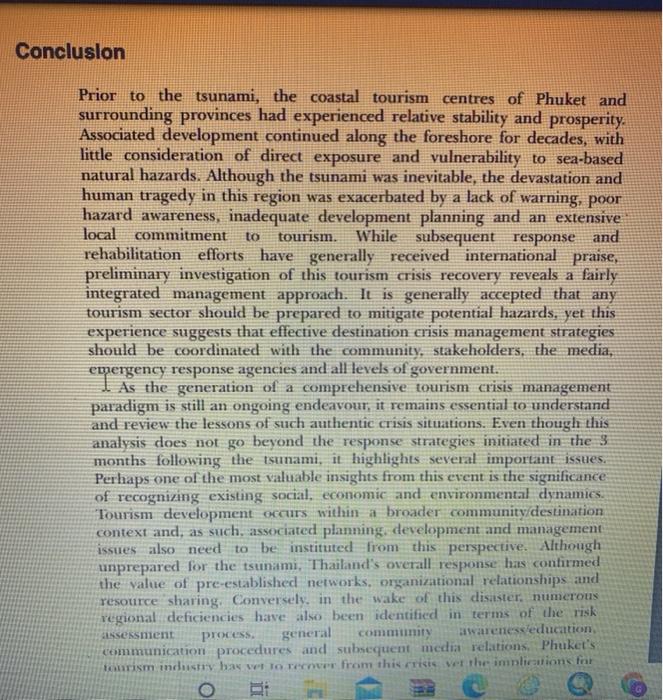
100%. and History of Tourism Development In Southern Thalland Tourism for Thailand is not just a recent trend or temporary phenomenon. In addition to a reputation for good value, ease of travel a friendly population, the country possesses an abundance of historical, cultural, physical and environmental assets, making it an attractive destination for any traveller. Prior to the 1980s, however, the provinces of Southern Thailand, particularly Phuket, were known more for tin mining, rubber plantations, rice farming and fishing than for the tourism industry (Tourism Authority of Thailand, 2005a: Wikipedia, 2005). While small-scale guest houses and cheap bungalow facilities were Tsunami and Tourism 219 available, tourism was only promoted as a lucrative development opportunity for the area following a rapid drop in global tin prices. The early establishment and success of resorts such as Club Med and the Phuket Yacht Club were soon followed by more development and support services of varying size and quality (Lonely Planel. 2005). The construction of the Phuket International Airport in 1976 further facilitated overseas access to the area, rapidly increasing the number of Visitor arrivals (Lonely Planet, 2005). While local islands were featured in popular movies such as James Bond The Man with the Golden Gun (1974) and The Beach (2000) starring Leonardo DiCaprio, tourism in the region similarly focused predominantly around the beach, ocean and associated water activities Images of ristine white and clear in water o 100% 3 Physical vulnerably While proximity to the oceanic Sunda trench and Sumatra fault line has meant that this area of Thailand had always been vulnerable and exposed to potential tsunamis, prior to the tragedy of 2004 there had been no significant events within existing local memory (Lambourne, 2005: Pacific Tsunami Warning Centre, 2005; Roach, 2005). Unlike the coastal communities of Japan, the Philippines and the Solomon Islands which have experienced numerous tsunamis, the people of Southern Thailand were generally ignorant of the risk and apparent warning signs. A history of poorly regulated building and development patterns also meant that many accommodation and support services were located directly in the coastal impact zone - exposed to any type of sea-based natural hazard. Cognizant of the perceptible risk to many coastal communities, in September 2004 Geoscience Australia had reinforced the need for a warning system similar to the Pacific Tsunami Warning Centre (PTWC) to be established in the Indian Ocean - unfortunately at this time the idea received minimal official support or interest (Geoscience Australia, 2004) 220 Gurtner Exet is the initial scaquake on 26 December 200 registered at several seismic monitoring station in the Pacific, the subsequent analysis confirmation and communication of these readings created considerable time delays (Imbrute. 2005). It has been reported through several search w TE information was not directly relayed to the general at risk public (Bangkok Post, 2005). While the matter has become the basis of an official government investigation, it has been suggested that if such a warning was issued and proved unsubstantiated, it would damage the sensitive tourist industry. Although an advance warning would have done little to reduce the extent of physical damage sustained, many lives may have been saved. Unfortunately, as the afflicted area also lacked the communication network/capability to issue any form of comprehensive warning message, the matter can only remain open to conjecture. The Tsunami Impacts In Phuket, the first natural indicator of the forthcoming tsunami occurred at approximately 7.59 a.m., the morning after Christmas, as an earth tremor was reported to be felt by many residents and holiday-makers on and around the island. As the shock waves were minimal, most dismissed the event as relatively insignificant. While many slept, the majority cofitinued with customary activities such as going to work, eating breakfast or going down to the beach for a morning swim oblivious to the impending danger. Without any official public warning or notification, the first of the turbulent tsunami waves had hit most of the region by 9.30 a.m. the same day leaving extensive damage in its wake. Having impacted such a vast expanse of coastline (affecting a total of six Thai provinces), there have been many conflicting and even contradictory accounts regarding the timing of the first wave, the behaviour of the sea and even the height of subsequent waves. Apart from the obvious stress and immediacy of the situation, much of this variation can be attributed to differences in physical landscapes, direct obstacles and geographical location. Despite the unbalanced media attention that has been given to the popular beach resort of Patong, the greatest damage was sustained in the low-lying areas of Khao Lak and on the relatively exposed island of Phi Phi Don with waves in excess of 10 m (lourism Authority of Thailand, 2005b). Along the west side of Phuket most of the waves were estimated at between 2 and 5 m - with the less developed tourist centre of Kamala Beach the worst physically affected. More than simply one large devastating wave, the earthquake had generated a series of waves that battered the coastline with both tremendous force and accumulated debris. In some low-lying areas, the deluge extended over 1 km inland, destroying Tsunami and Tourism 221 or sweeping up anything in its path including vegetation, humans, vehicles, building materials and even a Thai navy patrol boat. The only true refuge was to the higher ground; understandably many people perished. As the waves finally withdrew, survivors were faced with scenes of death and destruction. Amidst such turmoil, many turned to plans for search and rescue operations yet the uncertainty over further after shocks or more waves remained. In the direct impact zones, power, water and telephones (land-lines) were disrupted, and the mobile network became quickly overburdened. Without adequate communications or information, few knew or really understood exactly what had happened. As the first attempts were made to help the injured and move them to the dosest available medical facilities, much of the world remained ignorant to the plight of those affected. Immediate Response Efforts Immediate Response Efforts Although few could have anticipated the scale and magnitude of such a tragedy, the Thai government has had extensive experience in dealing with human disasters. Within hours, official operations were underway to help assist in the local search and rescue efforts. Much of the early progress was limited by blocked access and the substantial build-up of debris. As victims were extracted from the ocean, collapsed buildings and piles of wreckage, the medical facilities quickly became overwhelmed. While most of the hospitals re reasonably well established and resourced, medicine, trained personnel and adequate sterile space soon proved in short supply. Volunteers from all sectors of society, including tourists, rushed to provide assistance in any way possible. In the unaffected provincial capital of Phuket City, an emergency operations centre (EOC) was established to centralize and coordinate the official response efforts. Victims, volunteers, businesses, residents, foreign aid workers and the media were all directed to this location. Temporary acommodation and basic first-aid was quickly provided for those who had been displaced. As many victims had lost all personal possessions and even family/friends, over subsequent days and weeks the Provincial Hall became the focus of foreign embassies (to assist search efforts and issue temporary identification), communication facilities offering free Internet access and international phone calls). interpreters, food, water and donation tents. travel/flight assistance offering free flights to Bangkok) and an unofficial notice area for the dead and missing. Smaller operation centres were established in other provinces to direct the rescue efforts and assist victims to the larger facilities! In the immediate aftermath, most of the tourists who were not searching for lost friends and relatives expressed a desire to leave the region as as possible. As the international Airport remained operational, extra flights were established to assist their evacuation, as soon incoming flights brought much-needed supplies and personnel. Prior to the tsunami, the hotels and businesses of the region had been experiencing the pinnacle of the peak tourist season. Even though the majority of such establishments on the island of Phuket had been unaffected by the waves (>80%), in many places occupancy rates quickly dropped to single figures. Beyond the extensive physical, emotional and psychological damage, the tsunami created an imposing tourism crisis for the tourist centres of Phuket and Southern Thailand. Medla Distortion While this region was not the only area in the Indian Ocean to be affected by the tsunami or even the most severely impacted - it appears to have received a disproportionate amount of media attention. In addition to the relative accessibility of the area, a high percentage of the immediate victims were international tourists with the dead and injured representing over 35 different countries (Tourism Authority of Thailand, 2005b). As the massive extent of damage was quickly realized, and the death toll grew, foreign media from around the world sought to bring relevant news and images to their own populations. Through many of the travellers that were able to escape the damage, amateur videos and photographs of the event soon became widely and publicly available. Of the estimated 6000 plus people in Southern Thailand that have since been officially declared dead or missing, only about 250 were lost from Phuket yet it has become perhaps one of the most renowned areas. With the emergence of new footage or personal stories of loss and survival, the media continued to reinforce the sheer scale, chaos and tragedy of the event. While reality revealed that only a small proportion of the island of Phuket had been affected rarely extending beyond three blocks from the beach front - headlines around the world proclaimed that the tropical island paradise of Phuket had been completely devastated and/or destroyed (Phukel Gazette. 2005). Although there was an extensive build-up of debris and many structures sustained heavy damage, clean Dulcrup O QEDie many Satures sustame neavy wamiages Cream water, food and access to basic amenities were never a serious issue. Away from the direct impact zone, electricity, communications and daily life remained relatively normal. Looting, scavenging, harassment, stand-over tactics and corruption had become evident (blamed on outside elements such as Burmese migrants and the Russian mafia), yet were far less prominent than the altruism of survivors. As victims and travellers continued to depart Thailand, most foreign governments issued blanket advisories to defer all travel to the affected region. While search efforts continued, there also seemed to be a growing international concern regarding health conditions, the availability of antibiotics and the potential for disease outbreak and epidemics. As additional medical supplies soon became available, a pro-active provincial and national government took the immediate initiative of distributing Tsunami and Tourism 223 bottled water to aflected communities and spraying all stagnant water areas to prevent mosquito breeding. To date, no increased incidences of cholera, dysentery, malaria or dengue have been reported (Phuket Gate 2005). With existing morgue lacilities inadequate to handle the growing number of corpses, adverse media reports served to raise a public fear of contracting diseases from the dead bodies. Given the tropical conditions: the increasingly desperate medical requests for dry ice, formaldehvele and relrigeration facilities were primarily to prevent putrefaction and assist Mietim identification rather than any real risk of disease Mersunut arkiruher White Media coverage of the tsunami did achieve a number of objectives, including informing and increasing global awareness of the event, helping to contact and locate many missing persons and raising the profile of global tsunami appeals; however, a large proportion of the reporting has proven far from comprehensive, accurate or even consistent in the provision of facts and information. A media centre was created at the EOC in Phuket City - with regular official media releases - yet many journalists preferred to pursue dramatic images and personal stories. While the suspected kidnapping of a Norwegian boy survivor received international media attention and generated general concern and outrage, the subsequent discovery that this was simply a case of mistaken identity remained relatively unheralded (Phuket Gazelle, 2005). Within Thailand, numerous credible statements and reassurances were issued by public spokesmen - including the King who had actually lost his own grandson in the tragedy - vet most of these seemed to receive little attention overseas. Restoring Tourism In southern Thailand and Phuket, it has perhaps been the tourism sector that has experienced the most damage from this tsunami in terms of infrastructure. reputationloss of patrons, staff and economic repercussions yet the provincial and national tourism authority have remained efficient and productive throughout the ordeal. Contrary to the impressions of complete destruction. Within 48 hours the local hotel association had produced in print and on the Internet) a comprehensive operational status report of all accommodation providers in the afflicted region (Phuket Gazette, 2005). Working closely with businesses, government. private contractors and volunteers, heavy equipment was brought in to clean up the beaches and debris as soon as feasibly possible. Within days. most of the major beaches of Phuket had been cleared, with tourists, Jet Ski operators and umbrella sun loungers once again evident (although in far reduced numbers). Extensive investigations were also prompted to verify that minimal damage had been suffered by surrounding coral reels, islands and associated resources (Phuket Gazette, 2005) With the roliferation of Internet websites dienvinderimas Gurtner rapid reconstruction efforts (Phuket Gazette, 2005; Phuket Tourist Association, 2005). Public pleas for visitors to return have been supported by sponsored invited visits from celebrities, travel agents, journalists and foreign dignitaries, the hosting of large-scale international conventions and events, and extensive promotion demonstrating actual conditions in the region (Tourism Authority of Thailand, 2005a). There has been a clear and consistent request for travellers to support the local industry by returning to afflicted tourist centres. Through heavy discounting and incentives, further advertising has been targeted directly at the domestic and regional market segment. Public relations firms have also been contracted to recreate and re-establish the Thai tourism brand. Beyond the highly publicized international warning system that is to be established in the Indian Ocean, local authorities have also been trialling several locally based systems to provide greater interim safety and security for the community (Phuket Gazette, 2005). In spite of the difficult experience and personal costs, the majority of difectly affected accommodation providers, suppliers and associated businesses have proved inspirational in their reconstruction and recovery efforts. Within days, a small number of shop fronts had reopened along the Patong beach front, as nearby bars, restaurants and entertainment venues continued to open daily. Even though proprietors suffered significant damage and expense, most of the existing staff were retained to assist clean up activities and cater to the needs of the remaining tourists. In the immediate aftermath, accommodation, food, water and supplies were generally provided free of charge to survivors, and victims families. Beyond merely coping with the loss of expected revenues, short-term strategies have primarily focused on the rehabilitation of allected services and motivating a return of consumer confidence Tourism Authenty of Thailand 2005b). Although reconstruction of most of the damaged physical infrastructure was predicted to take between 3 and 6 months (with the exception of the worst affected resort, Khao Lak and Phi Phi Island), the anticipated restoration of tourism industry is lessern. Government and Locarnitlauves Criticism regarding risks and communication notwithstanding, the community, local, provincial and national governments of Thailand have proven relatively effective and efficient in coping with the Boxing Day disaster. Although the country is still generally classified as a developing nation, resource availability and existing infrastructure in Phuket rival those of many of the more developed nations. While a tsunami was never really considered to be a high level threat, the Thai Department of Disaster Prevention and Mitigation possessed the relevant skills, experience and flexibility to coordinate immediate response and relief efforts (Bangkok Post, 2005). Tsunami and Tourism 225 Utilizing an established network including the military, police. medical/forensic teams and local contacts, direct victim assistance was quickly mobilized and the centralized EOC created. As the sheer size and area of the disaster made specific details and facts difficult to ascertain in the first few days particularly regarding the status of individuals officials tried to remain honest and credible in their appraisals (Bangkok Post, 2005: Phuket Gazette. 2005). Within the week, a set procedure and series of databases with relevant contact numbers had been widely disseminated to inform and guide interested parties through appropriate actions. Volunteers and translators were also available at the airport, all medical facilities, makeshift morgues and coordination centres EL With the assistance and support of international search and rescue teams, emergency response efforts progressively wound down towards a greater emphasis on victim rehabilitation, identification and forensic science. As overseas families of the dead and missing expressed a desire to expatriate bodies and achieve some form of closure, DNA testing became the only recourse. Given the sheer number of samples to be processed, the Thai authorities chose to contract out much of this work to external laboratories (Phuket Gazette, 2005). Numerous official and unofficial memorials have since been held to honour the victims, survivors and volunteers - with overwhelming amounts of money and donations provided to assist those affected. The government has similarly committed significant financial and material resources to helping aid agencies with refuge camps and restoring damaged infrastructure such as schools, roads and homes. Post-tsunami investigation has also led to a series of plans to help prevent and mitigate such future contingencies. Perhaps the most apparent issue has been the level and type of development along the directly exposed coastline. As much of this area now requires redevelopment, the government has formulated a series of legislative requirements aimed at greater sustainability and a reduction of overall vulnerability. Changes to zoning plans will mean that all future developments must be at least 100 m from the foreshore with an intervening landscaped parkland area to form a natural barrier between the ocean and buildings. Any facilities and infrastructure erected will have to conform further to minimum construction and safety standards (Bangkok Post. 2005; Tourism Authority of Thailand. 2005b). While an initial decision was made to keep the beach completely clear of any furniture or amenities to assist future evacuations, a compromise has since allowed the reintroduction of less hazardous plastic chairs, umbrellas and limited water craft in specially designated areas (Phuka Garate2005) With greater appreciation of the value and fragility of the natural environment, the government has also committed to a greater regulation of illegal developments, marine park encroachment and conservation efforts All the community level, the government has introduced a series of initiatives including compensation tax breaks and soft loans for atticted LOTUS At the community level, the government has introduced a series of initiatives including compensation, tax breaks and soft loans for afflicted businesses and families (Phuket Gazette, 2005). While most were uninsured, 226 Gurtner the King of Thailand has issued a personal call to brokers not to complicate or delay payment for damage and losses from legitimate claimants. As the majority of those directly impacted lived and worked within the coastal tourist centres, there has been extensive cooperation between the government, tourism authorities, public and private sectors to develop comprehensive short-, medium- and long-term recovery plans that incorporate community resilience and hazard mitigation Tourism Authority of Thailand, 2005b). Communicating Risks The most publicly supported resolution from this event has been the necessity for a regional early warning system. While the potential value of such a system is undisputable, extensive research and experience reinforce the fact that warnings are only effective if the public understands and knows how to respond appropriately (Quarantelli, 1998). consistent element in most stories to proliferate in the aftermath of the disaster was of people having felt the original carthquake. Although this event alone does not constitute atsunami when the sea later began to swell, bubble and + 100% not consatute a tsunami when the sea later began to swell, bubble and then withdraw an educated public would have known to seek higher ground immediately. In places such as Patong, it has been reported that as the tide initially withdrew, scores of people (locals and tourists alike) were attracted by curiosity and concern to the newly exposed ocean bed and stranded fish, oblivious and tragically exposed to the direct impact of the first devastating wave. On another beach in Phuket, a 10-year-old British girl is credited with saving numerous lives by recognizing the precursors to a tsunami - taught in a recent school geography lesson. It seems logical to expect relevant local natural hazard education and awareness to be taught to 'at risk populations; however, this is often not the case. Although they may not have appeared particularly notable at the time, there were other warning signs of the impending danger. Various local newspapers, interviews and anecdotal stories all describe how, prior to the first wave, animals were uncommonly restless and trying to move away from the seaside. Elephants, water buffalo and even dogs have been attributed with saving many lives as result of their unusual behaviour; furthermore, few animal carcasses have been found following the inundation (National Geographie, 2005). I In terms of the general lack of tourist awareness, few destinations can expect that all travellers will be aware of and/or familiar with appropriate response actions in a hazardous situation. It has been widely acknowledge that tourists are in fact considered more vulnerable than the resident population as they become more relaxed away from their usual environment (Faulkner. 2001). Such vulnerability is generally increased where significant cultural and language differences exist. In Thailand, the absence of any real local knowledge or understanding of tsunamis resulted in mereased panic chaos and confusion. Despite numerous reassurances e mom authorities over subsequent clays and weeks, Lourists, residents and hospitality staff alike remained unsure about the possibility of another devastating wave. Good management practice suggests that beyond the inherent safety issues, tourist service providers should be prepared and informed about any local hazard risks. Additionally, it has been suggested that as responsible hosts, they assume a duty of care and are obliged to educate and convey relevant knowledge to tourists and patrons in the event of an imminent threat. Although there have been some industry-specific concerns that open revelation of local threats and hazards may deter potential travellers, consumers should have the right to make an informed and educated assessment regarding personal risk. The growing popularity and demand for high risk, high adrenalin adventure activities demonstrates that informed risk does not necessarily undermine consumer confidence. It may not be possible to prevent an event like this tsunami, but precautions and effective communication may reduce the risks to humans. Tourism Crisis and Socio-economic Reality Irrespective of warnings, awareness or understanding, the Boxing Day tsunami was inevitable, and no amount of human intervention would have prevented its impact. Beyond the physical exposure, many of the coastal communities of Phuket and surrounding provinces of Phang Nga and Krabi were additionally vulnerable due to an over-reliance on tourism revenues. While global tourism is generally considered a buoyant and resilient industry, destinations afflicted with negative perceptions and/or lack of consumer confidence are not always as fortunate. The tsunami effectively triggered a tourism crisis for the popular coastal centres of southern Thailand as visitor numbers dropped, so too died the socio- economic circumstances of most residents. Many businesses within the tsunami impact zone sustained substantial structural damage and, without the appropriate insurance, necessary repairs have become beyond the financial means of existing owners Without extensive monetary assistance, bankruptcy has become a distinct Bibility for an Others who entenced triennal naved intens venues. possibility for some others who experienced personal tragedy or intense emotional distress following the event no longer wish to work or operate within their former As shops, resorts, restaurants and entertainment premises have closed for repairs and rebuilding, previous staff have suffered pay cuts, reduced working hours and even unemployment. It is not only these hospitality staff that have been affected informal sector workers such as beach vendors and 'hostesses' have become increasingly competitive and desperate for paying customers. Local fishermen who have been able to repair damaged boats and overcome a new fear of the ocean have since been confronted with a downturn in demand for local seafood as many visitors are concerned that such fish may have consumed human bodies. Gurtner 228 In a vicious cycle, the reduced consumer demand and interest in this region as a destination has resulted in the withdrawal of many airline carriers. Despite pro-active marketing and promotion, hotel occupancies and subsequent spending levels are well below the normal levels. Many of the businesses that have remained operational are struggling to outlast the tourism crisis. Planning forecasts and consumer-generated interest have been cautiously optimistic, yet as the threat of avian flu resurges and an uncertainty over future tsunamis continues to be foremost for potential travellers. Visitor numbers are likely to remain reduced. Without a judicious recovery and return of significant tourism revenues, government strategies to introduce improved development standards and greater that charter A Prellminary Analysis Consistent with the idea that effective tourism crisis management should be a self-appreciating continuum, it is necessary to review and evaluate the lessons of Phuket in this crisis situation in order to assist in the development of 'best practice' strategies. Based on this preliminary investigation, there are a number of dear issues that have direct relevance to the design and application of a generic crisis management framework: 1. Risk management with an 'all-hazards' approach. 2. Pro-active network and resource development. 3. Warnings, awareness and education. 4. Communication and media relations. 5. Resilience and vulnerability reduction. Risk management with an 'all-hazards' approach Lack of awareness, preparation and recent historical precedence suggest tht prior to the tragedy, a tsunami was most probably considered a low risk probability for this region of Thailand. Even though the extensive coastal development meant that these tourist centres were exposed and vulnerable to any sea-related hazard, few would have anticipated a catastrophe of such magnitude or scale. While risk assessment (Faulkner. 2001), risk and hazard identification (Pacific Asia Travel Association, 2003). and risk analysis planning (Ritchie, 2004) may be useful in developing provisions for specific and probable hazards to the region, this experience advances the argument for a more generic all-hazards approach in preparing for/mitigating potential crises and diststers (Quarantelli, 1998). Unfortunately, even with the best technology and intelligence, not all events may be accurately anticipated or forecast. In developing an effective tourism crisis management strategy, the World Tourism Organization (2001, p. 1) recommends to plan by imagining the worst-case scenarie Pro-active network and resource development In preparing for tourism crises, another vital component identified by the majority of the management models is coordination with other agencies/organizations/stakeholders and resource management. The response/recovery process in Phuket demonstrates that even without a tsunami-specific crisis management plan, pro-active networking prior to an event can facilitate greater participation, collaboration and resource sharing. As a consequence of recent threats such as regional terrorism, SARS and bird flu, the Tourism Association of Thailand (TAT), the Association of Thai Travel Agents (ATTA), the Thai Hotel Association (THA) and numerous airways had already established a reasonably cooperative marketing and promotional relationship prior to the tsunami disaster (Tourism Authority of Thailand. 2005b). Similarly, all levels of government had made a significant contribution to this tourism campaign in supporting and implementing the associated health, safety and security initiatives. While the rapid Thai government response on 26 December 2004 is testament to the experience and flexibility of the Department of Disaster Prevention and Mitigation, emergency response teams and other agencies, the establishment of the central EOC assisted and promoted the inclusion of greater tourism and community interests. Although confusion and inconsistencies were evident in the first few days, networks established prior to the disaster facilitated the identification and coordination of limited resources. Personnel, equipment administration and tourist support services were quickly and effectively ascertained to direct initial evacuations, aid and inquiries. Even as the tourism industry was in damage control mode, it further assisted in the provision of food, accommodation, flights for survivors and additional resources Warnings, awareness and education Perhaps Phuket's most obvious lesson for the rest of this world is to be better informed and organized. While Indian Ocean early warning DECOTEC organized. When walance any warming system is a certain outcome, greater community education and awareness may have significantly reduced the human toll. Natural hazard awareness should be integral to any community education, as all business and organizations including tourism service providers should be prepared and attentive to any potential threat to patrons, property and/or the destination. Where warning systems or alerts exist, it is vital for everyone to know how to respond appropriately. It is also necessary to note that not all crisis situations - particularly in the case of rapid-onset, sudden impact hazards (e.g. a terrorist attack) have an obvious prodromal stage (Faulkner, 2001; Ritchie, 2004) in which to initiate warnings, mobilization or evacuations, and all destinations should be prepared for this predicament. 230 Gurtner Communication and media relations Communication and effective public relations is a central tenet in tourism crisis management, particularly in minimizing negative perceptions and images generated by adversity. Although not entirely within the control of the Thai authority, there were several areas of this situation that may have been improved through better planning. The first apparent mistake was not publicly communicating the tenuutise tsunami warning issued by the seismologists. In the chaos and confusion in the immediate aftermath of the tsunami, there was still no openly available information or facts regarding the cause of the incident or even the chance of reoccurrence. O 100 were regarding the cause of the incident or even the chance or reoccurrence. Such lapses undermined the credibility of many later statements issued by the Thais. Utilizing the widely accessible and available resource of the Internet, the regional tourism association in Phuket was extremely timely and efficient in conveying details of the actual damage sustained by hotels impacted by the tsunami. Despite such efforts, it took the industry more than a week to get the wider media - particularly internationally - to convey the fact that not all of Southern Thailand and Phuket were destroyed by the tsunami and that most services and amenities were unaffected. Even with a designated media centre, official press releases and recognizable spokespeople inaccuracies, misinformation and sensationalism prevalent. Given the global interest generated by the number of foreign victims, it was impossible to prevent the continued images of death and destruction; however, such stories should have been placed in the broader geographical context and balanced with positive stories such as survivor altruism and family reunions. Even though Thai authorities avoided censorship and tried to remain both honest and transparent, the communication and media handling seemed to lack sufficient command and control. Effective public relations and communications tactics should be integral to pro-active crisis planning In adopting many of the specific strategies recommended by the World Tourism Organization (2001) and Pacific Asia Travel Association (2003) guidelines, it may have been possible to reduce the misinformation and damaging perceptions of total destruction. Resilience and vulnerability reduction Although generally considered outside the scope of most tourism managers and planners, the holistic conception and ultimate aim of good tourism crisis management is sustainability. The crisis in Phuket was clearly exacerbated by poor development prachce and an over-reliance on tourism. While it is important to understand vulnerability, exposure and risks. greater efforts should be made to increase destination resistance and Tesilience, On the industry level this implies Ureater Resilience and vulnerability reduction Although generally considered outside the scope of most tourism managers and planners, the holistic conception and ultimate aim of good tourism crisis management is sustainability. The crisis in Phuket was clearly exacerbated by poor development practice and an over-reliance on tourism. While it is important to understand vulnerability, exposure and risks, greater efforts should be made to increase destination resistance and resilience. On the industry level, this implies greater community understanding, support and management integration. Education, Tsunami and Tourism 231 legislation, insurance, alternative employment incentives, environmental protection and economic diversification are all tangible options. In the quest for enhanced recovery, Phuket and the other afflicted areas of Southern Thailand have already begun to implement some of these strategies. A more pro-active approach to destination crisis management would be to pursue greater sustainability before a crisis happens. Conclusion Pro to the tsunami, the coastal tourism centres of Phuket and SAVETOding winers harlenerienced wlative stability and nrnsen Conclusion to Prior to the tsunami, the coastal tourism centres of Phuket and surrounding provinces had experienced relative stability and prosperity. Associated development continued along the foreshore for decades, with little consideration of direct exposure and vulnerability to sea-based natural hazards. Although the tsunami was inevitable, the devastation and human tragedy in this region was exacerbated by a lack of warning, poor hazard awareness, inadequate development planning and an extensive local commitment tourism. While subsequent response and rehabilitation efforts have generally received international praise, preliminary investigation of this tourism crisis recovery reveals a fairly integrated management approach. It is generally accepted that any tourism sector should be prepared to mitigate potential hazards, yet this experience suggests that effective destination crisis management strategies should be coordinated with the community, stakeholders, the media, emergency response agencies and all levels of government. As the generation of a comprehensive tourism crisis management paradigm is still an ongoing endeavour, it remains essential to understand and review the lessons of such authentic crisis situations. Even though this analysis does not go beyond the response strategies initiated in the 3 months following the tsunami, it highlights several important issues. Perhaps one of the most valuable insights from this event is the significance of recognizing existing social, economic and environmental dynamics. Tourism development occurs within a broader community/destination context and, as such, associated planning, development and management issues also need to be instituted from this perspective. Although unprepared for the tsunami, Thailand's overall response has contirmed the value of pre-established networks, organizational relationships and resource sharing. Conversely, in the wake of this disaster, numerous regional deficiencies have also been identified in terms of the risk general community awareness education, communication procedures and subsequent media relations Phuket's tourism industry has w To reener from this crisis ver the implications for Sessment process
Step by Step Solution
There are 3 Steps involved in it
1 Expert Approved Answer
Step: 1 Unlock

Question Has Been Solved by an Expert!
Get step-by-step solutions from verified subject matter experts
Step: 2 Unlock
Step: 3 Unlock
 Study Help