







Question: Assume that the following classes have been defined: What output is produced by the following code fragment? 1 public class Bay extends Lake { public
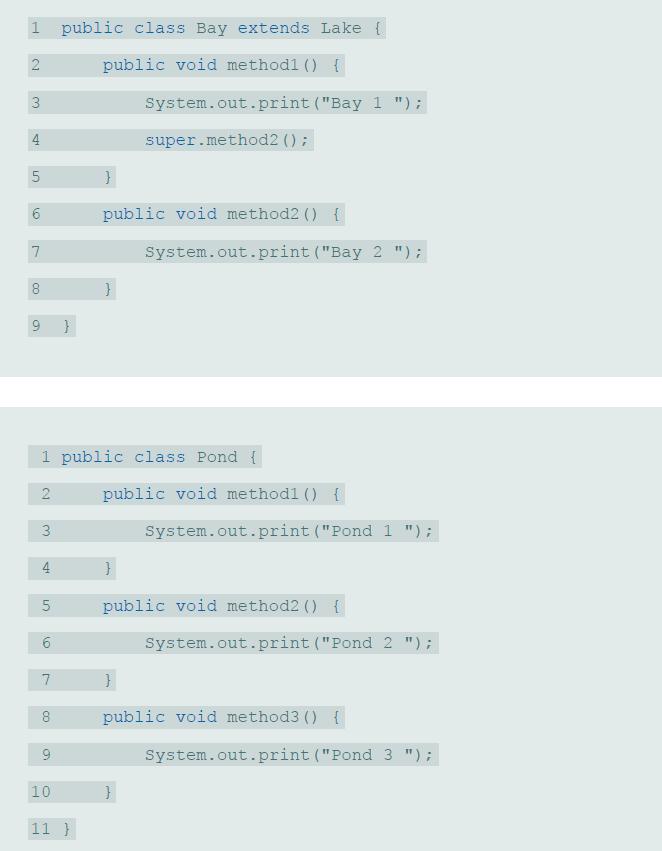
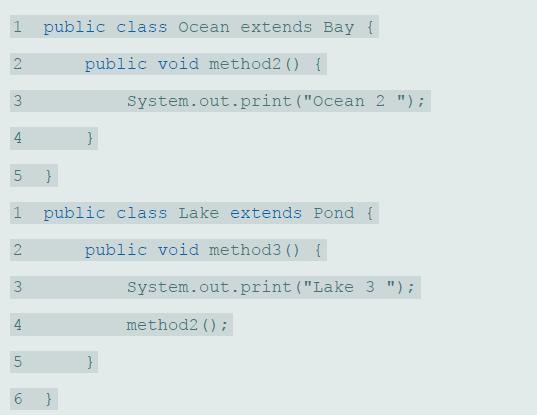
Assume that the following classes have been defined:
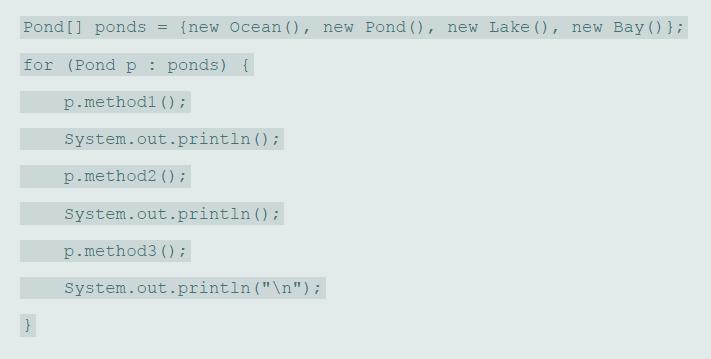
What output is produced by the following code fragment?
1 public class Bay extends Lake { public void method1 () { 3 System.out.print ("Bay 1 "); 4 super.method2 (); public void method2 () { 7 System.out.print ("Bay 2 "); } 1 public class Pond { public void methodl () { 3. System.out.print ("Pond 1 "); 4 public void method2 () { System.out.print ("Pond 2 "); 8 public void method3 () { 9 System.out.print ("Pond 3 "); 10 11 } 6. 9.
Step by Step Solution
3.49 Rating (179 Votes )
There are 3 Steps involved in it
Output from BayPondOceanLake pol... View full answer

Get step-by-step solutions from verified subject matter experts
 Study Help