







Question: Suppose Ethernet physical addresses are chosen at random (using true random bits). (a) What is the probability that on a 1024-host network, two addresses will
Suppose Ethernet physical addresses are chosen at random (using true random bits).
(a) What is the probability that on a 1024-host network, two addresses will be the same?
(b) What is the probability that the above event will occur on some one or more of 220 networks?
(c) What is the probability that of the 230 hosts in all the networks of (b), some pair has the same address?
Hint: The calculation for
(a) and
(c) is a variant of that used in solving the so-called birthday problem: given N people, what is the probability that two of their birthdays (addresses) will be the same? The second person has probability 1 − 1 365 of having a different birthday from the first, the third has probability 1 − 2 365 of having a different birthday from the first two, and so on. The probability all birthdays are different is thus
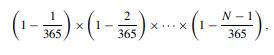
which for smallish N is about
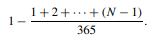
(1 s) ( s) (13%), - 365 365
Step by Step Solution
3.51 Rating (154 Votes )
There are 3 Steps involved in it
To solve these problems we will use the principles of the birthday problem a classical problem in probability theory The Ethernet physical addresses also known as MAC addresses are 48bits long meaning ... View full answer

Get step-by-step solutions from verified subject matter experts
 Study Help