



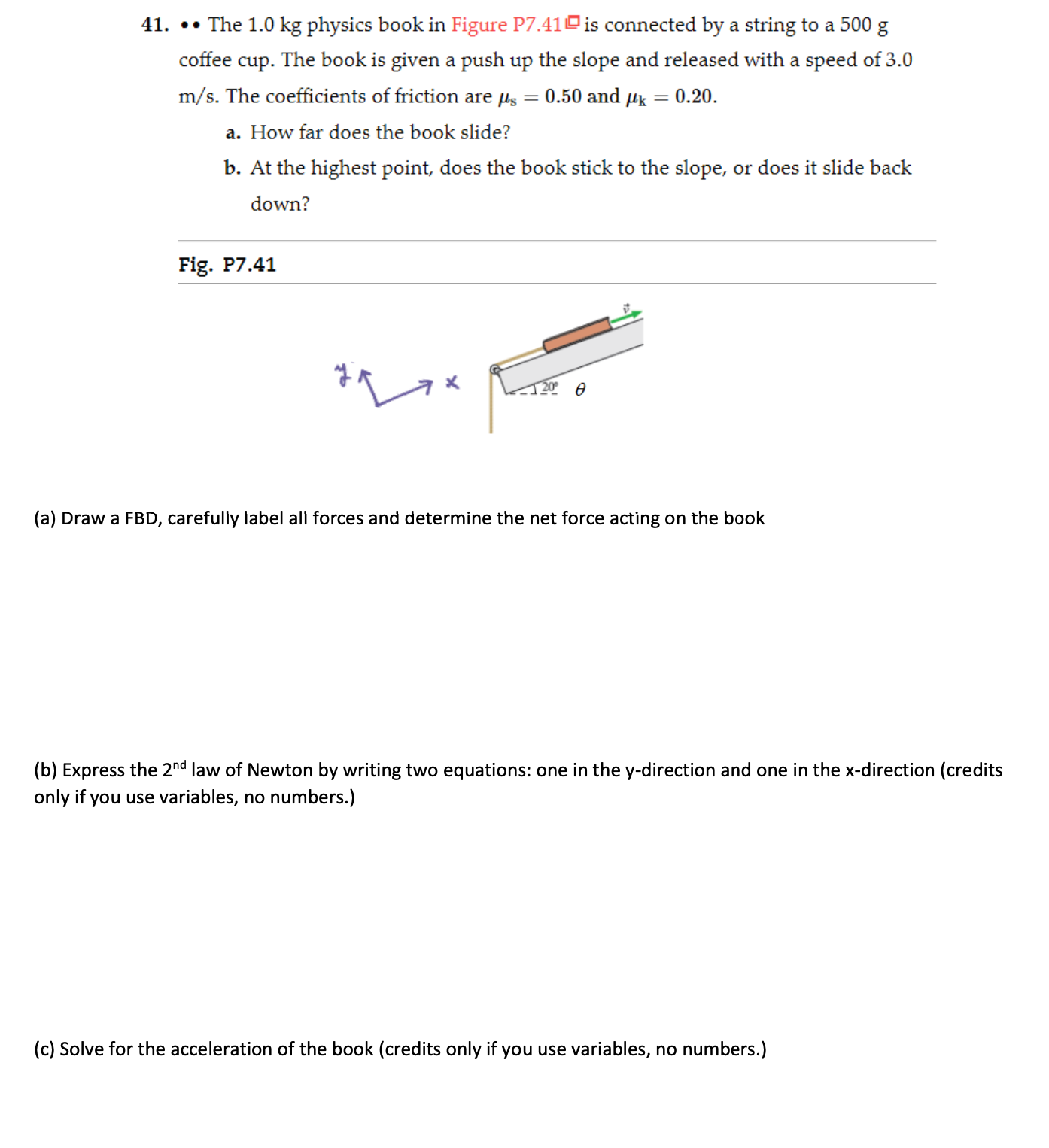
Question: 41. 0 - The 1.0 kg physics book in Figure 137.411 IE' is connected by a string to a 500 g coffee cup. The book
![pts] You can swing a ball on a string in a vertical](https://s3.amazonaws.com/si.experts.images/answers/2024/06/667bed2a73c99_674667bed2a52f0a.jpg)
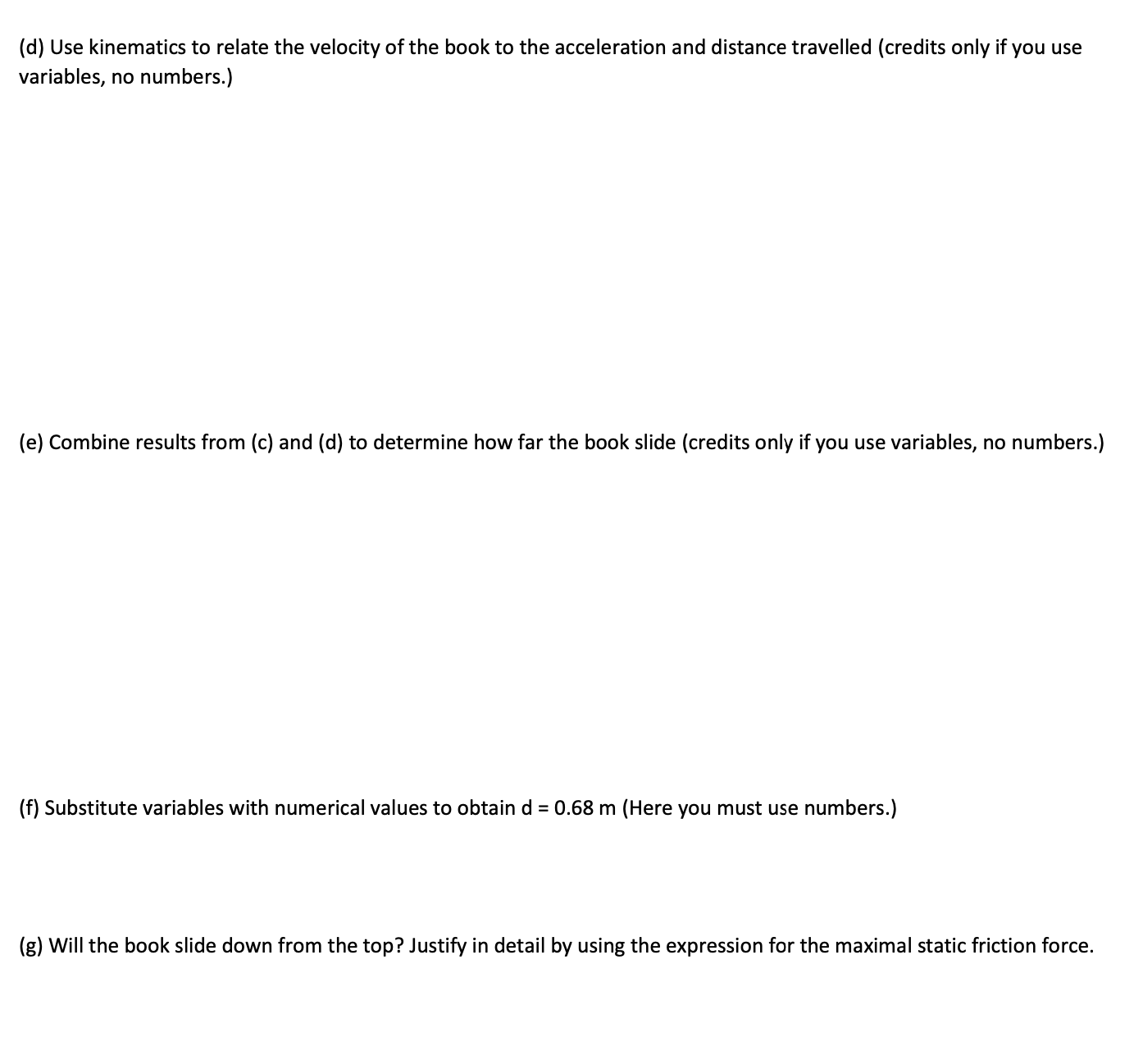
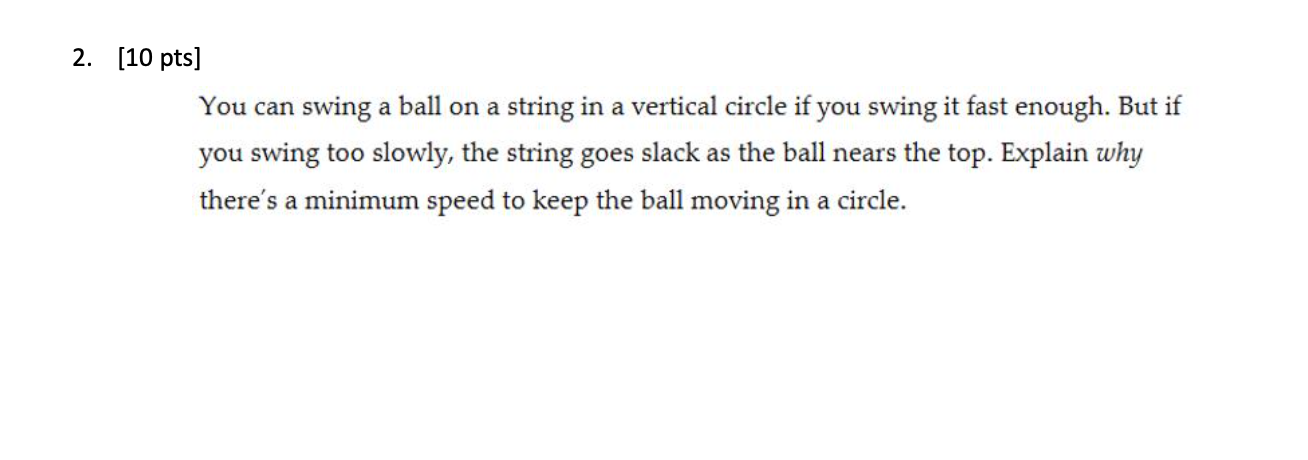
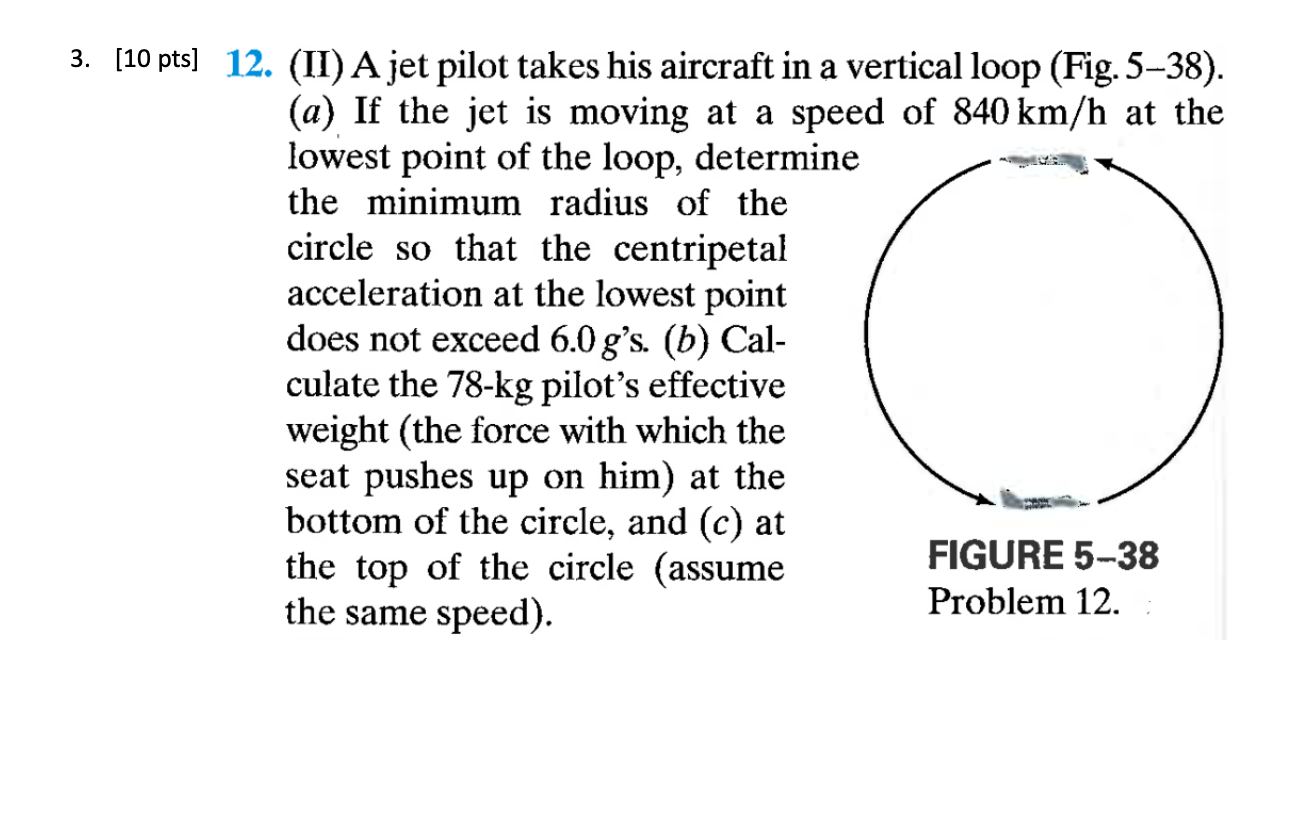
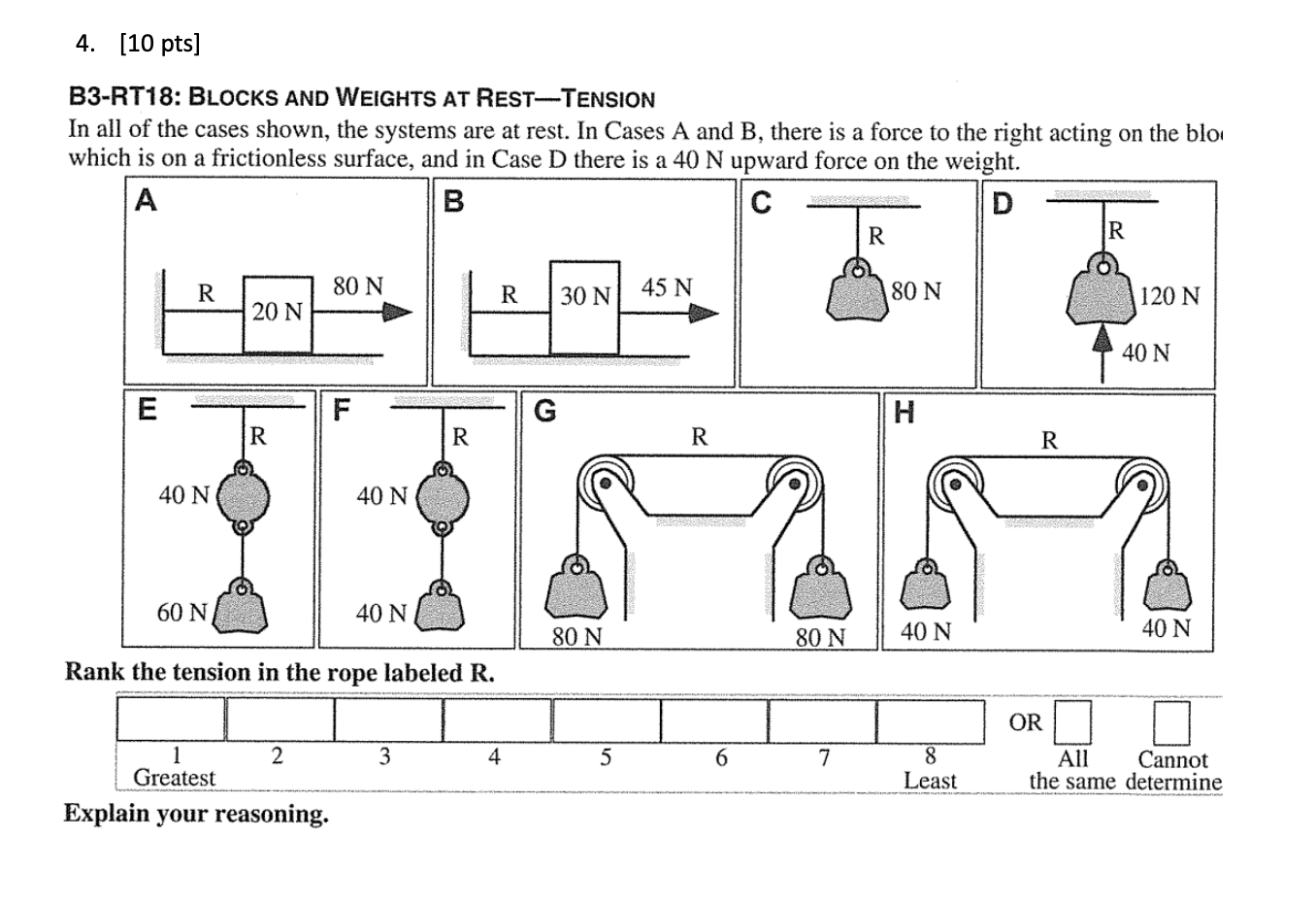
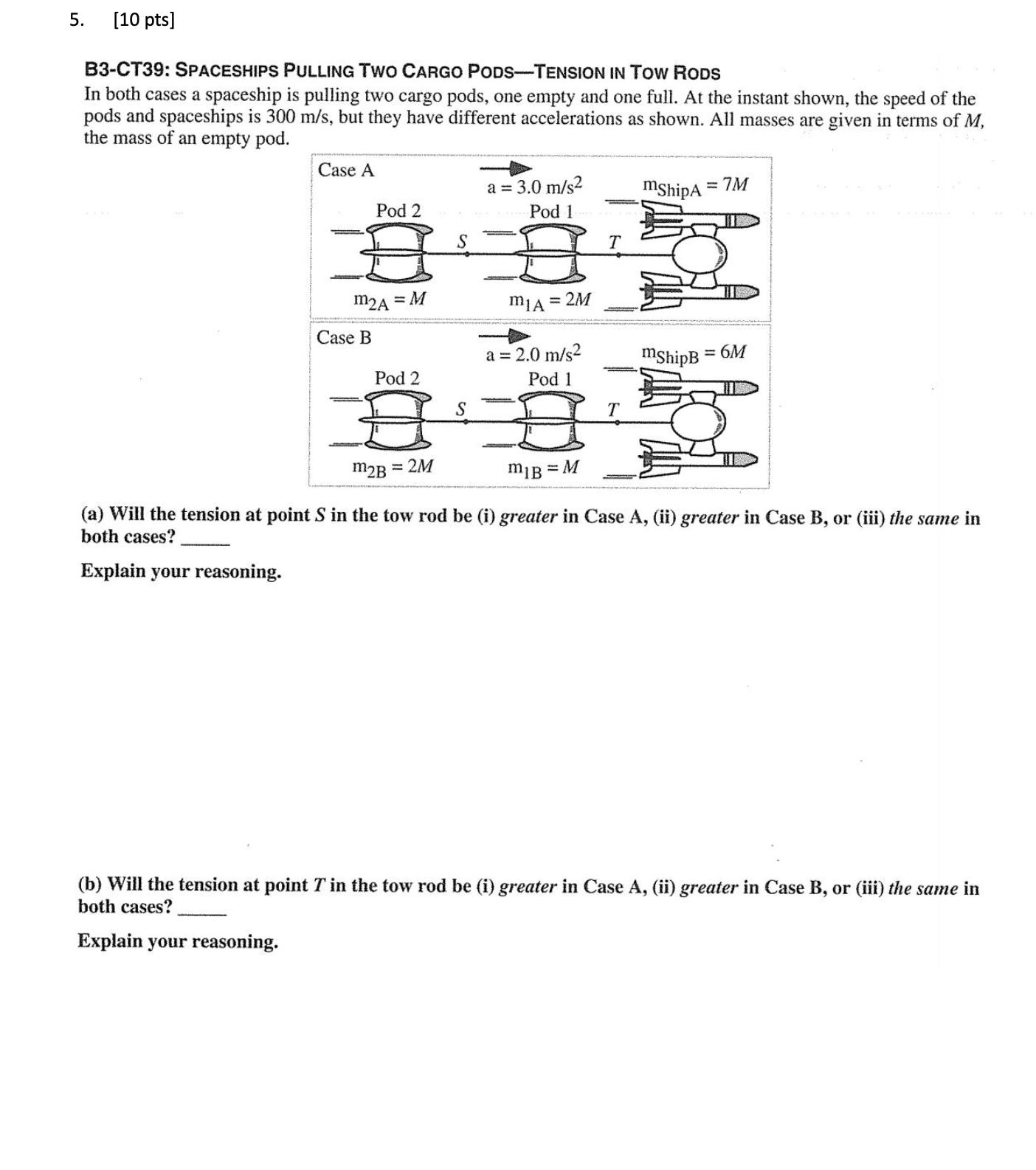
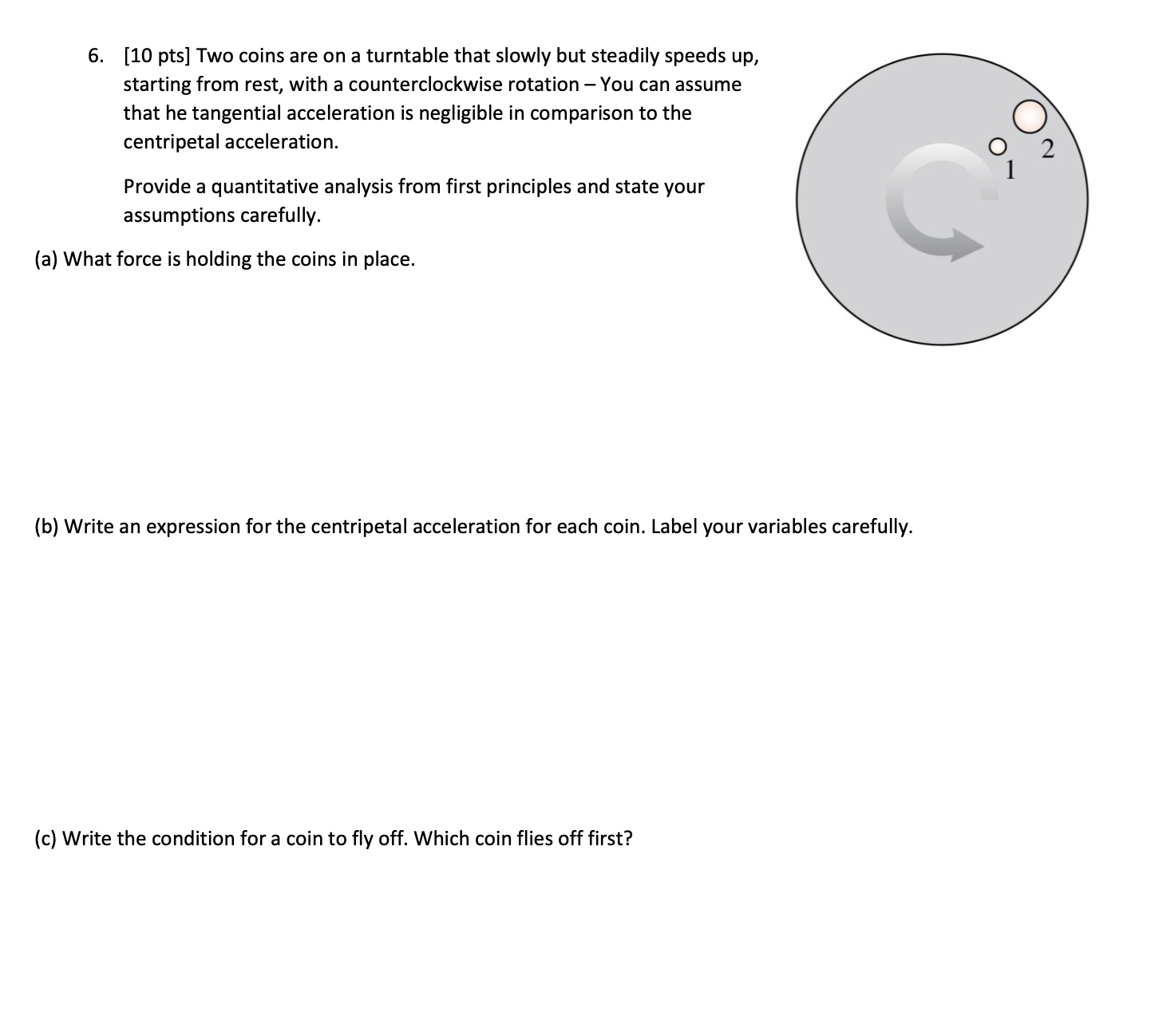
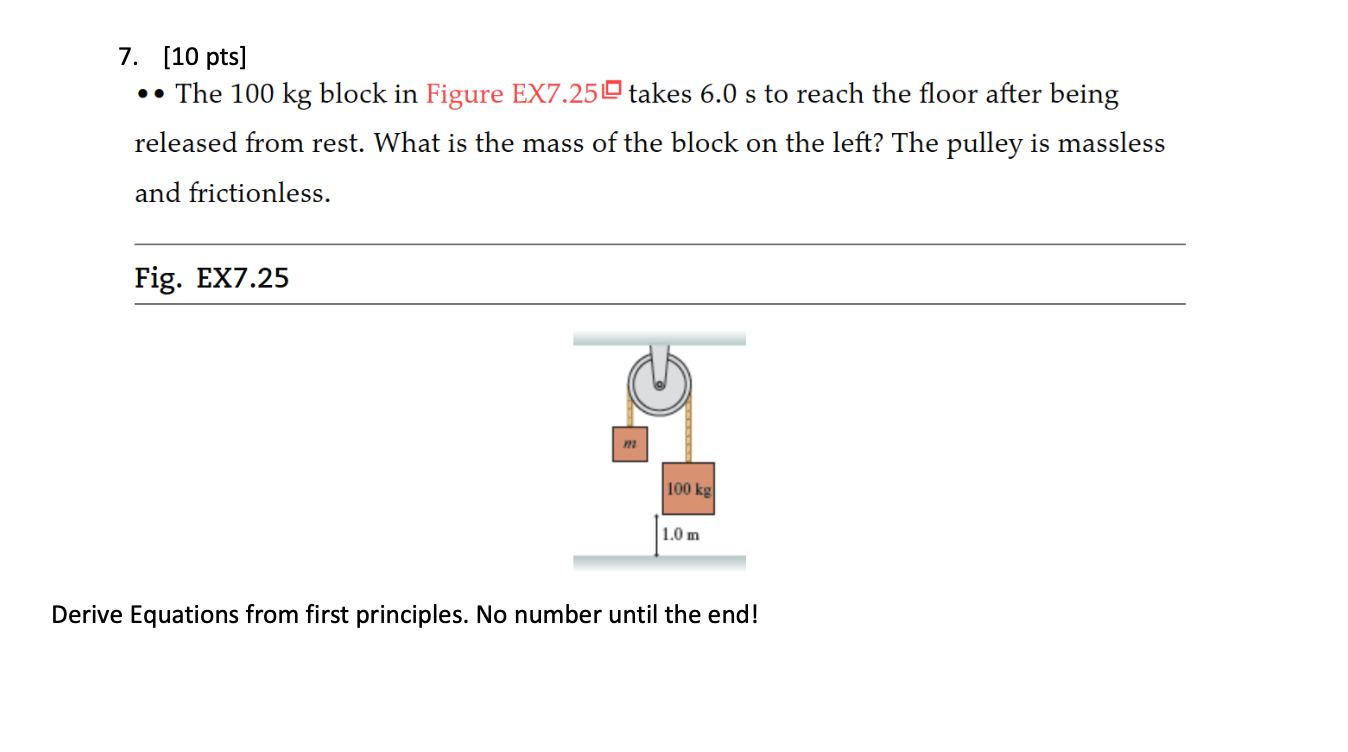
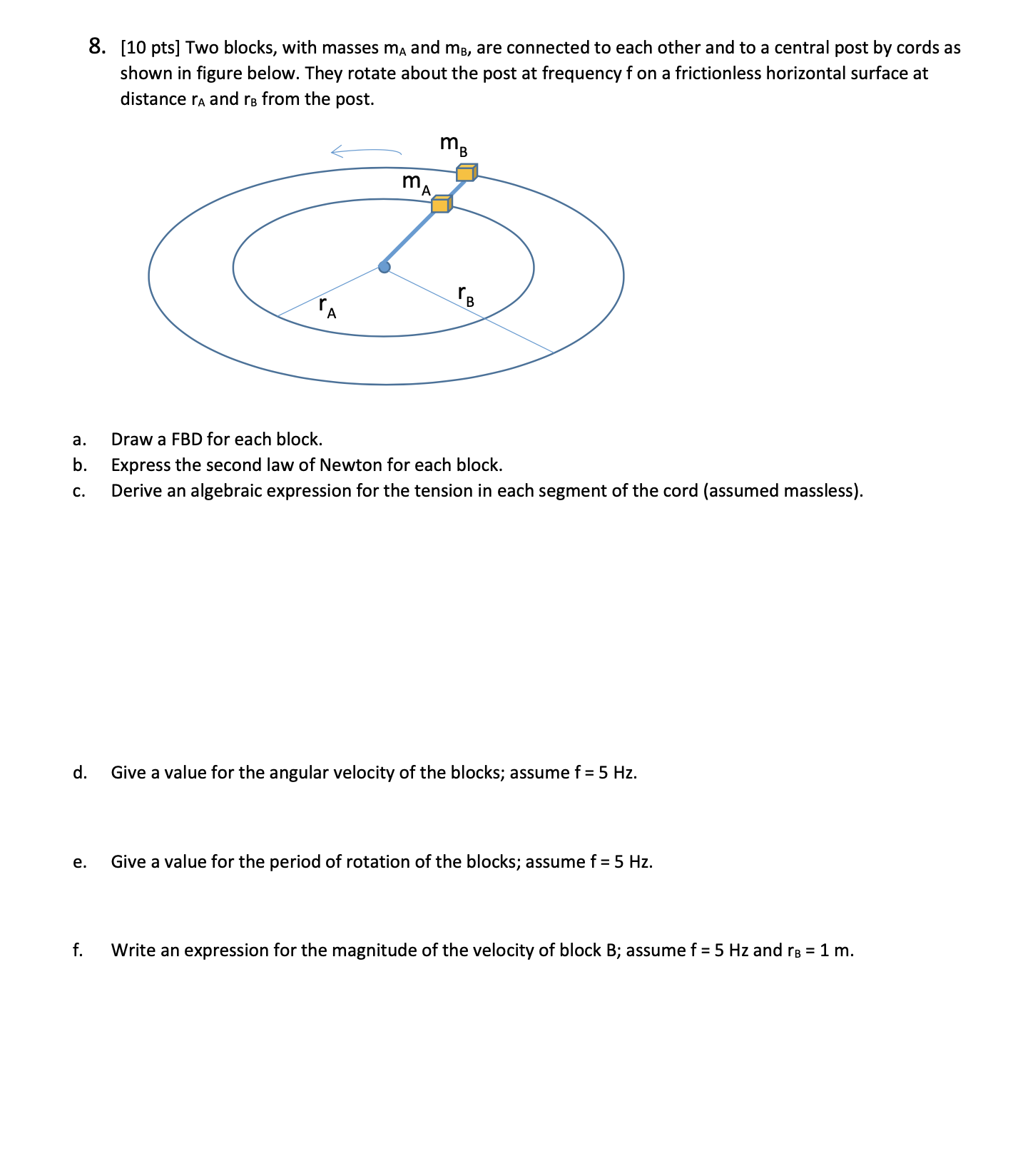
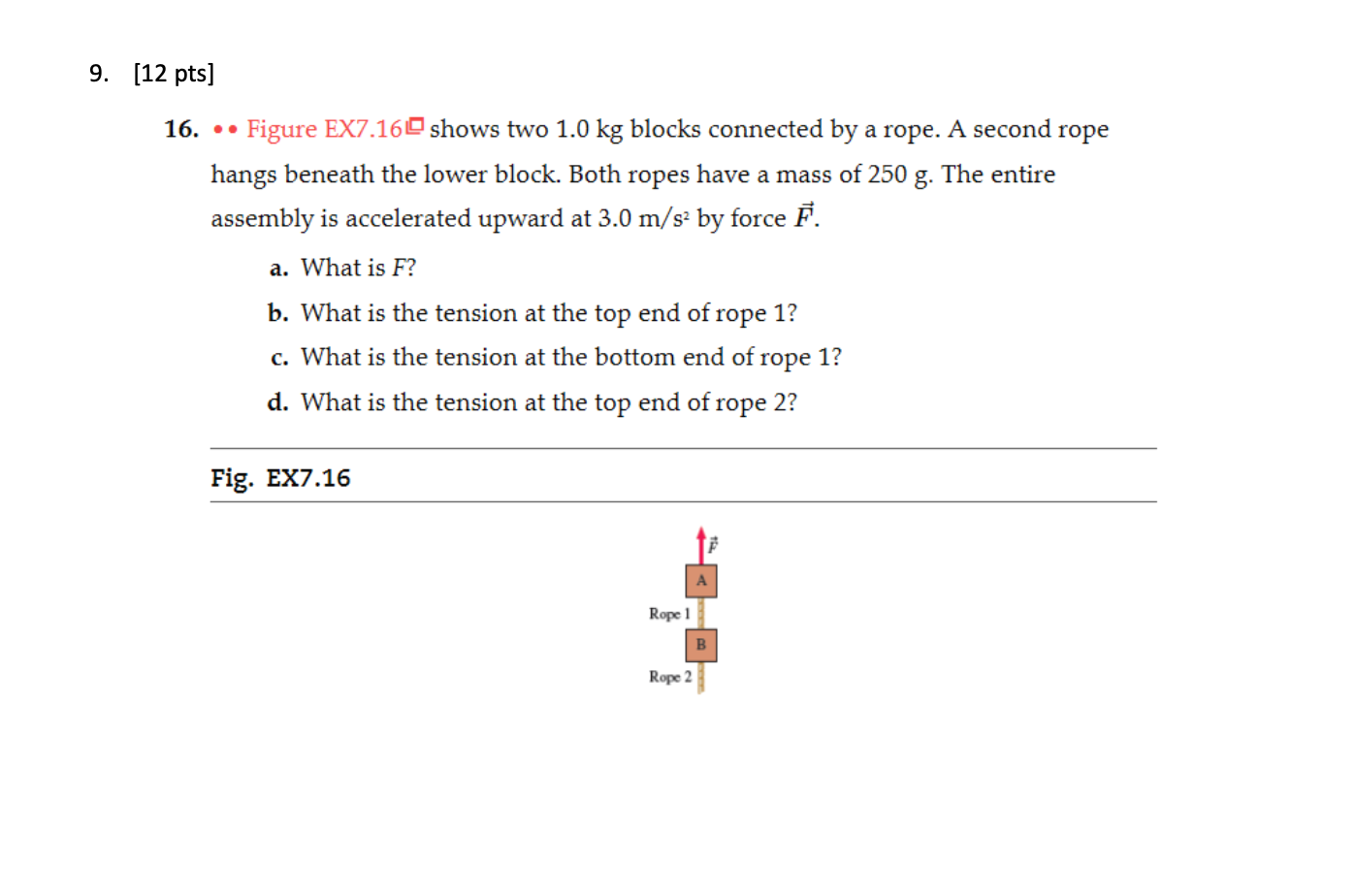
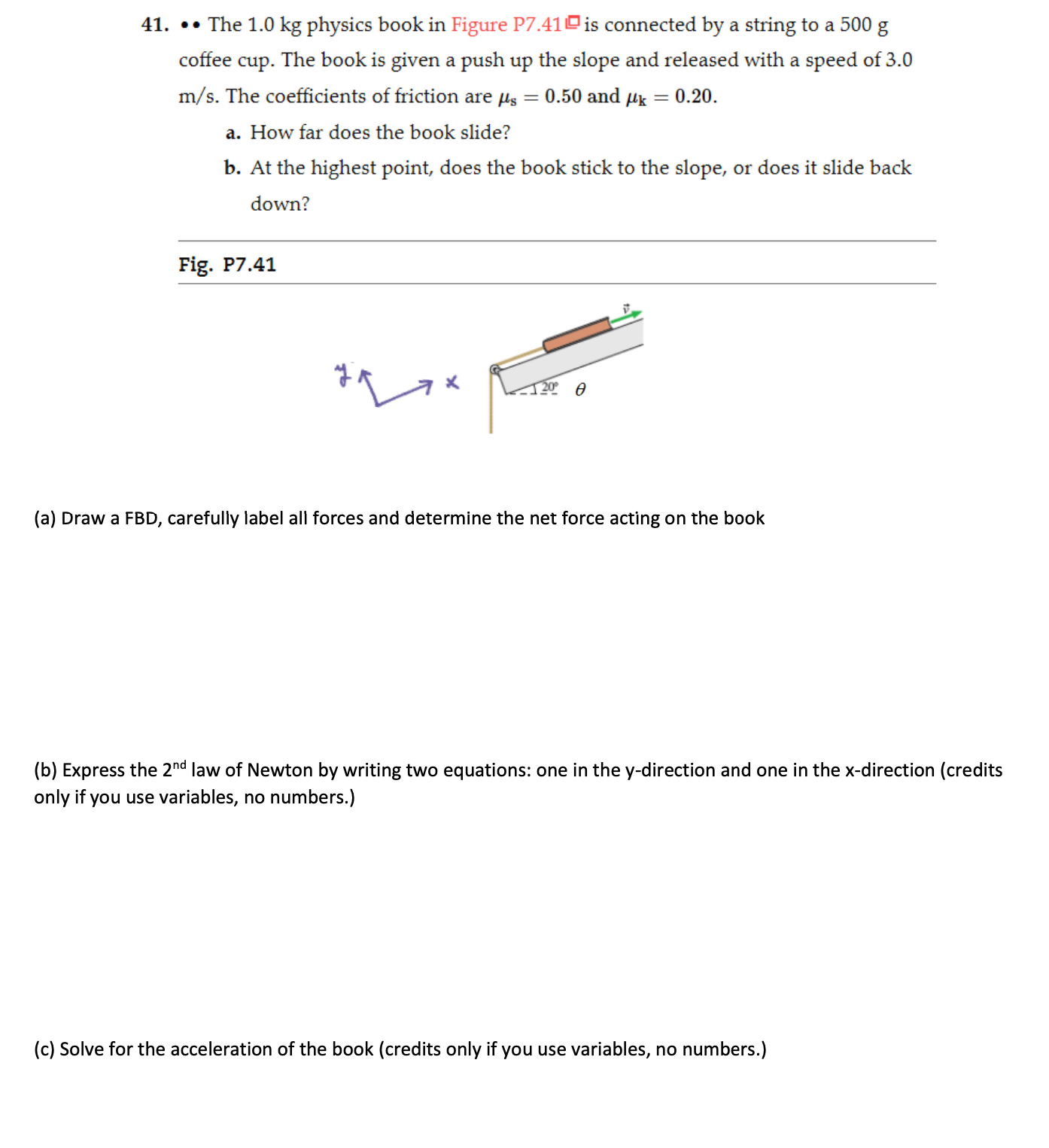
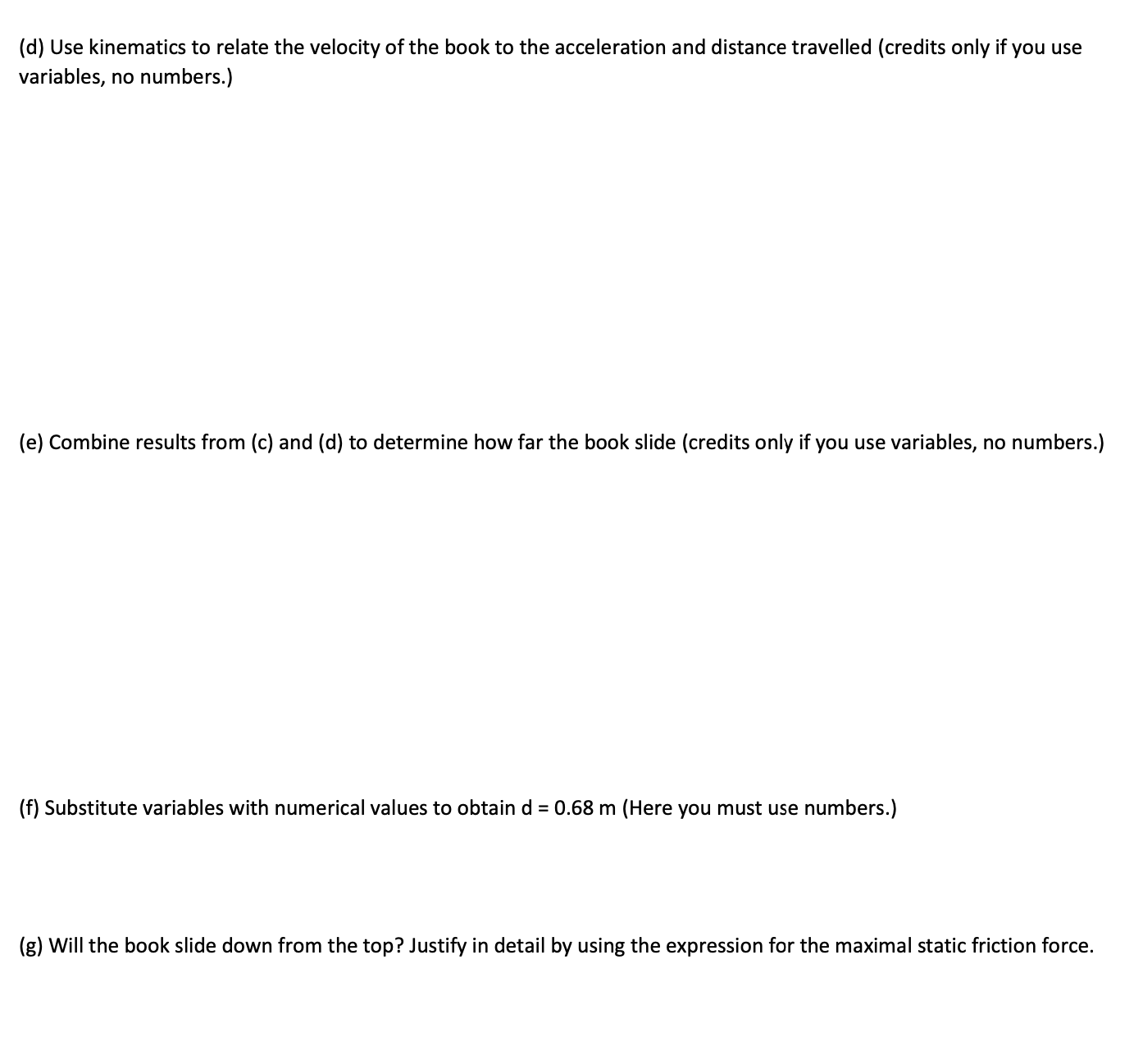
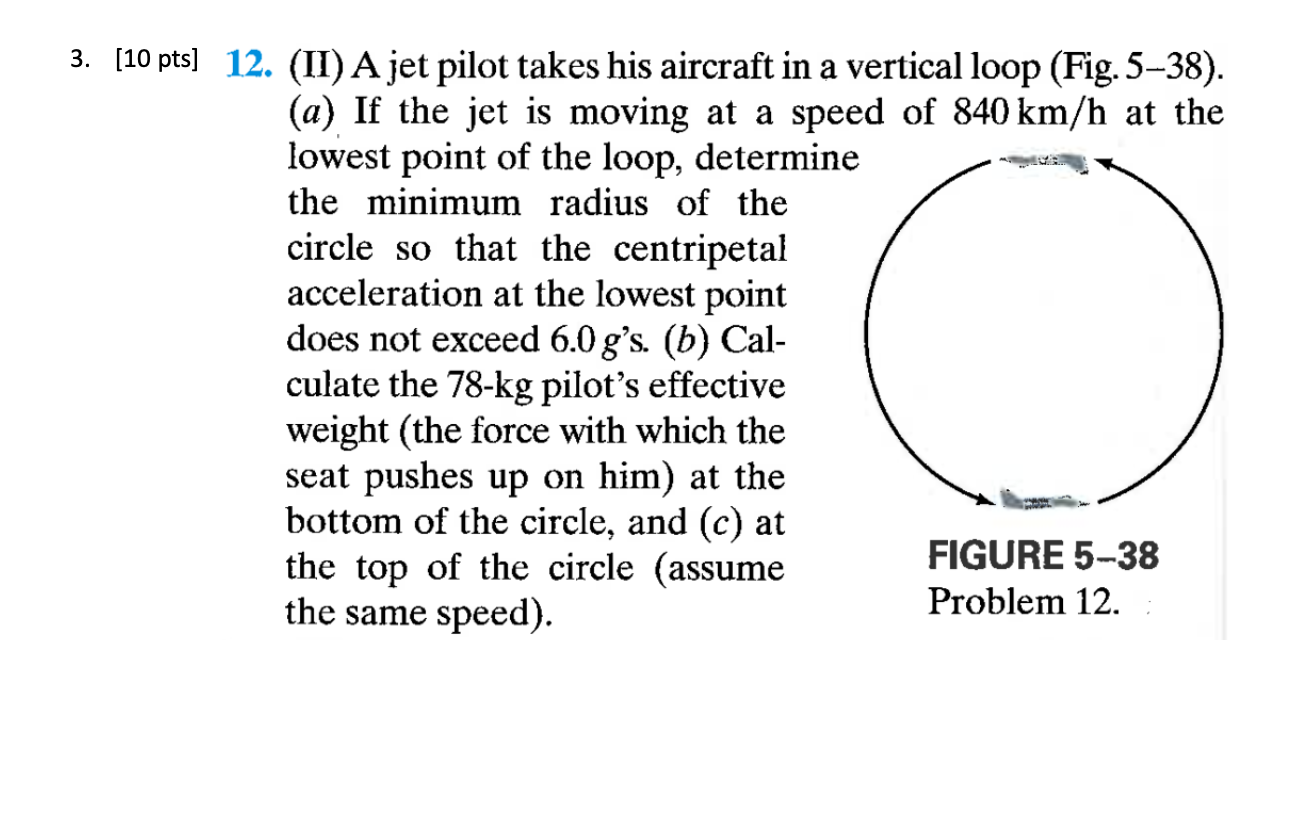
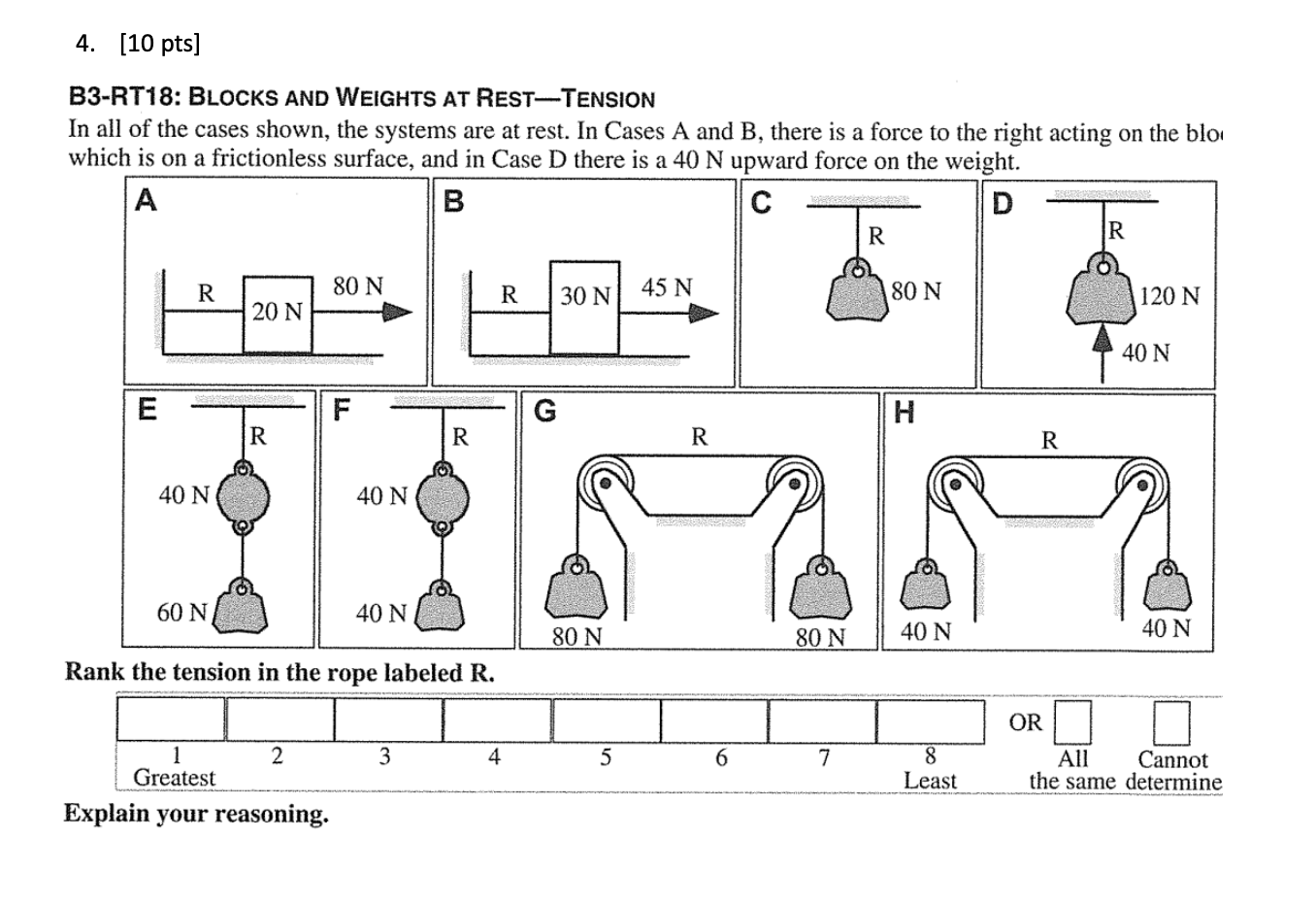
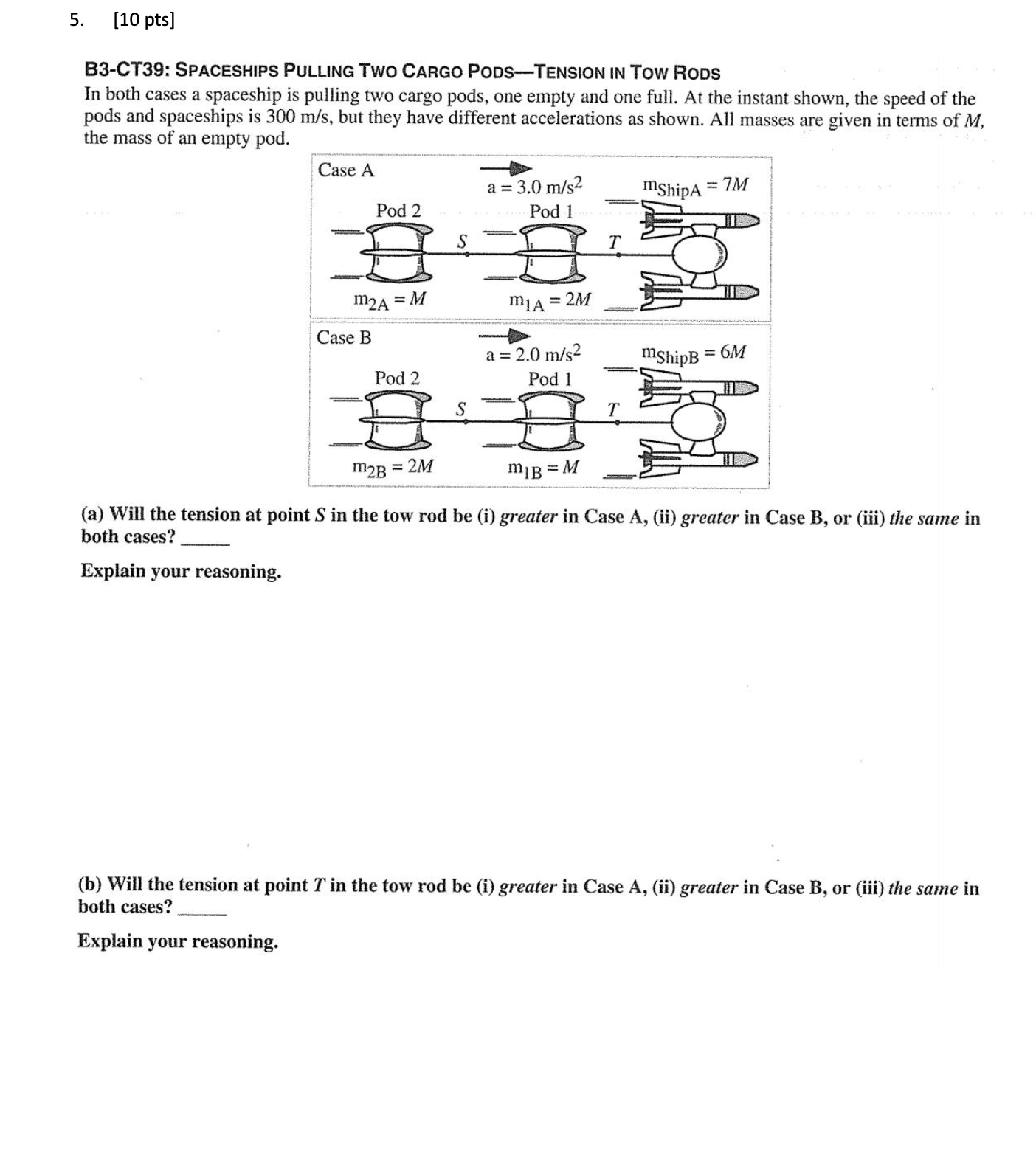
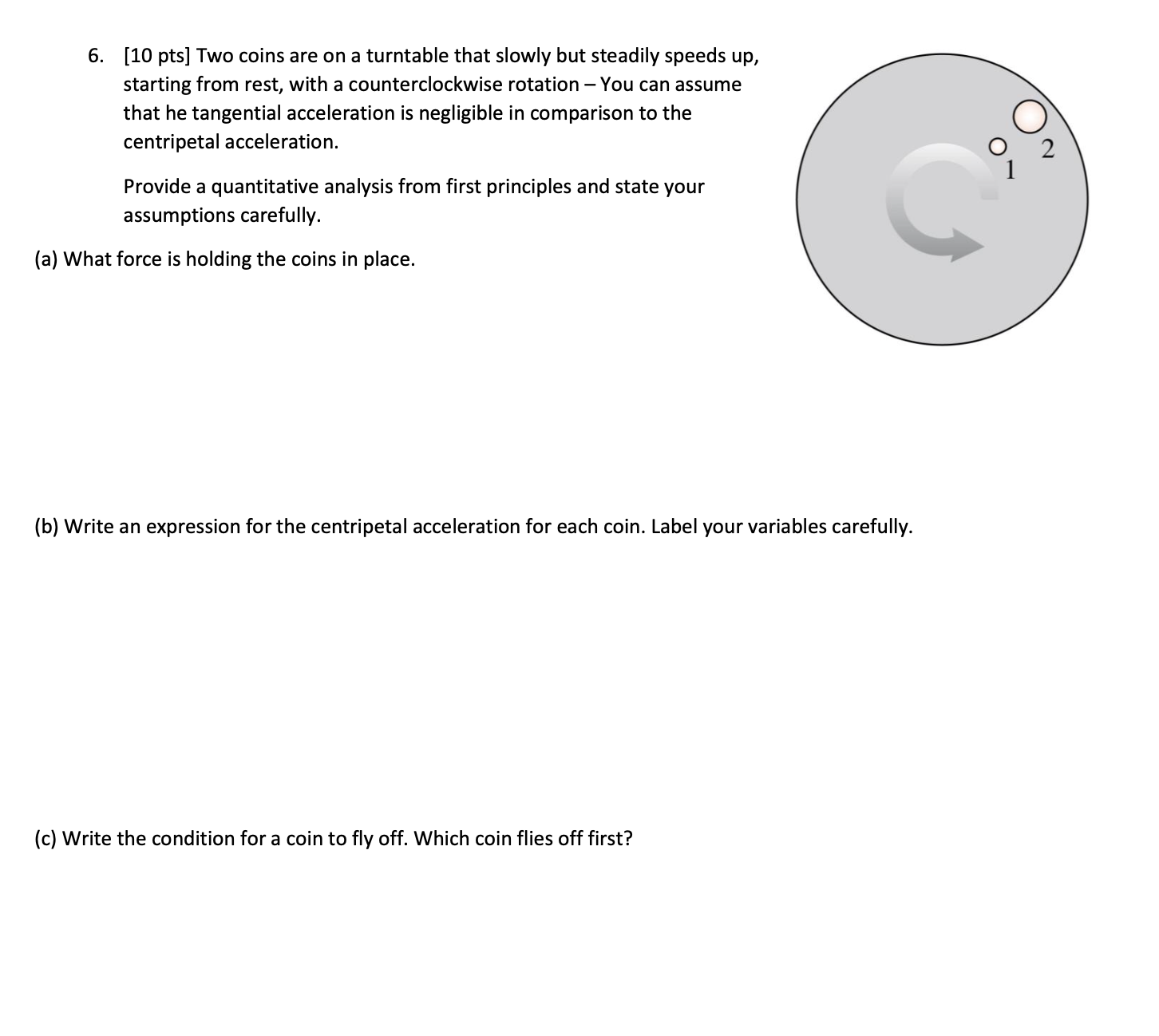
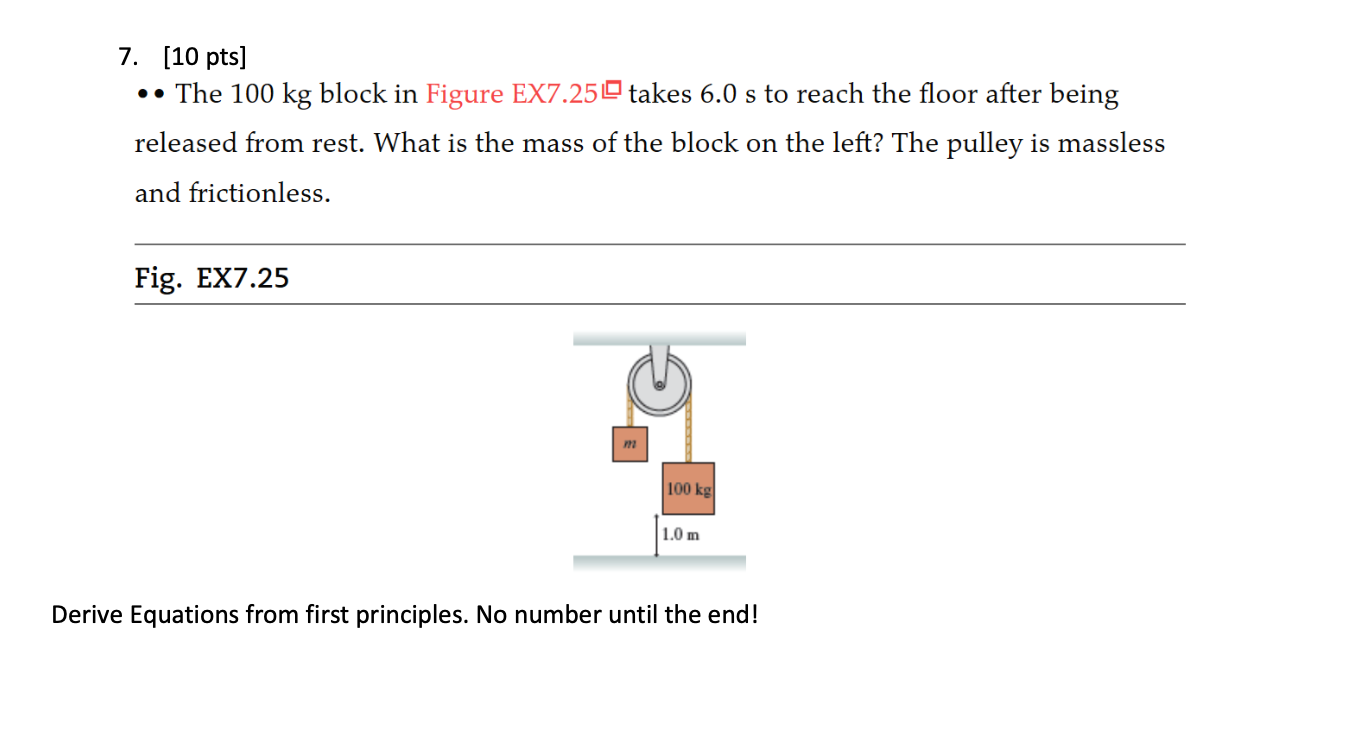
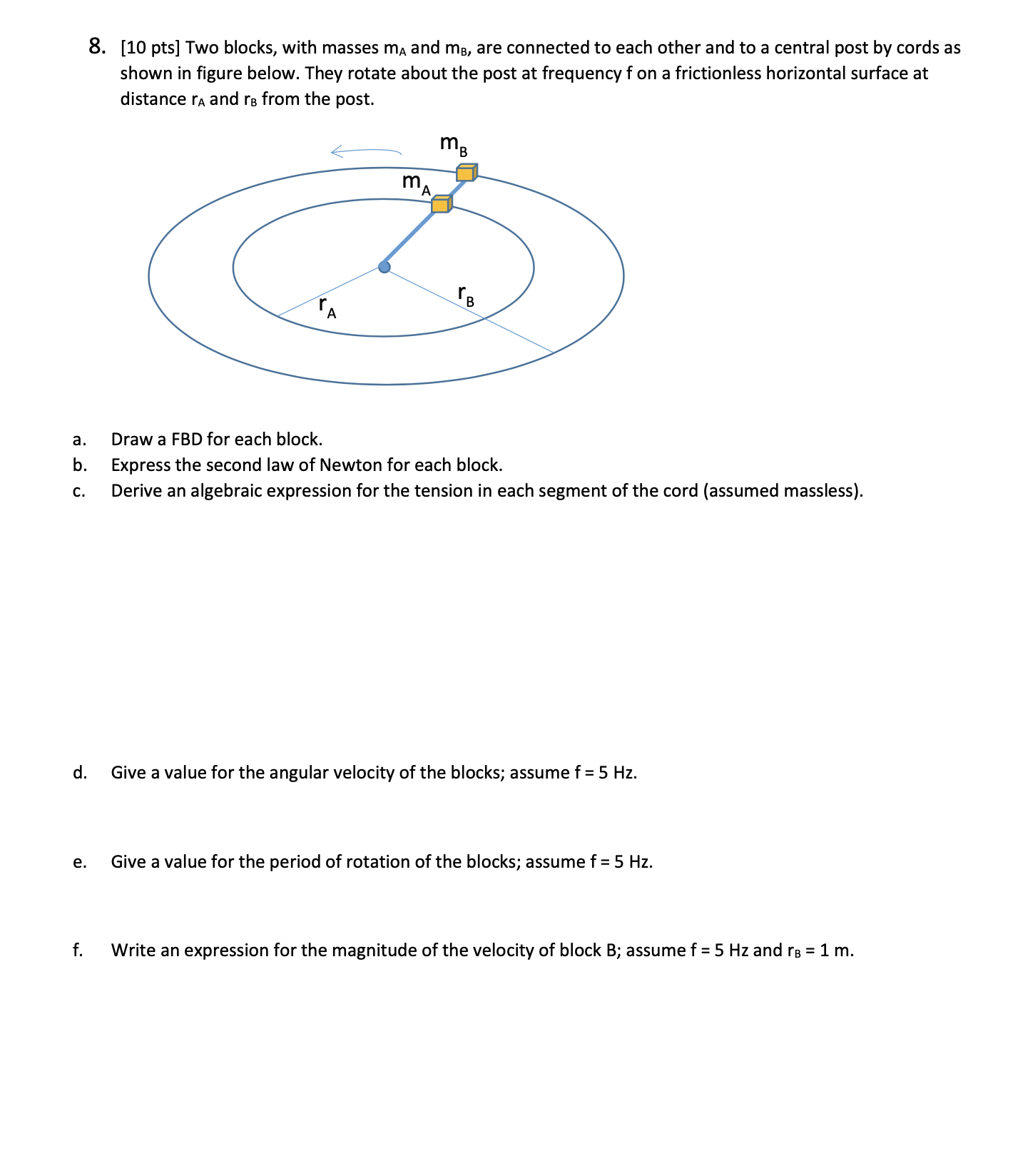
41. 0 - The 1.0 kg physics book in Figure 137.411 IE' is connected by a string to a 500 g coffee cup. The book is given a push up the slope and released with a speed of 3.0 m/s. The coefcients of friction are p... = 0.50 and pk = 0.20. a. How far does the book slide? b. At the highest point, does the book stick to the slope, or does it slide back down? Pig. 97.41 (a) Draw a FBD, carefully label all forces and determine the net force acting on the book (b) Express the 2"d law of Newton by writing two equations: one in the ydirection and one in the xdirection (credits only if you use variables, no numbers.) (c) Solve for the acceleration of the book {credits only if you use variables, no numbers.) (d) Use kinematics to relate the velocity of the book to the acceleration and distance travelled (credits only if you use variables, no numbers.) (e) Combine results from (c) and (cl) to determine how far the book slide (credits only if you use variables, no numbers.) (f) Substitute variables with numerical values to obtain d = 0.68 m (Here you must use numbers.) (g) Will the book slide down from the top? Justify in detail by using the expression for the maximal static friction force. 2. [10 pts] You can swing a ball on a string in a vertical circle if you swing it fast enough. But if you swing too slowly, the string goes slack as the ball nears the top. Explain why there's a minimum speed to keep the ball moving in a circle. 3- [10 Pts] 12. (II)Ajet pilot takes his aircraft inavertical loop (Fig.548). (a) If the jet is moving at a speed of 840 km/h at the loWest point of the loop, determine zeta; the minimum radius of the circle so that the centripetal acceleration at the lowest point does not exceed 6.0 g's (b) Cal- culate the 78-kg pilot's effective weight (the force With which the seat pushes up on him) at the bottom of the circle, and (c) at 'w the top of the circle (assume FIGURE 5-38 Problem 12. - the same speed). 4. [10 pts] B3-RT18: BLOCKS AND WEIGHTS AT REST-TENSION In all of the cases shown, the systems are at rest. In Cases A and B, there is a force to the right acting on the blow which is on a frictionless surface, and in Case D there is a 40 N upward force on the weight. A B C D R R R 80 N R 30 N 45 N 80 N 120 N 20 N 40 N E F G H R R R R 40 N 40 N 60 N 40 N 80 N 80 N 40 N 40 N Rank the tension in the rope labeled R. OR 2 3 4 5 6 7 8 All Cannot Greatest Least the same determine Explain your reasoning.5. [10 pts] Ba-CTSQ: SPACESHIPS PULLING Two CARGO PODSTENSION m Tow Roos In both cases a spaceship is pulling two cargo pods, one empty and one full. At the instant shown, the speed of the pods and spaceships is 300 m/s, but they have different accelerations as shown. All masses are given in terms of M, the mass of an empty pod. (a) Will the tension at point S in the tow rod be (i) greater in Case A, (ii) greater in Case B, or (iii) the same in both cases? Explain your reasoning. (b) Will the tension at point T in the tow rod be (i) greater in Case A, (ii) greater in Case B, or (iii) the same in both cases? Explain your reasoning. 6. [10 pts] Two coins are on a turntable that slowly but steadily speeds up, starting from rest, with a counterclockwise rotation You can assume that he tangential acceleration is negligible in comparison to the centripetal acceleration. Provide a quantitative analysis from first principles and state your assumptions carefully. (a) What force is holding the coins in place. (b) Write an expression forthe centripetal acceleration for each coin. Label your variables carefully. (c) Write the condition for a coin to fly off. Which coin flies off first? 7. [10 pts] 0 0 The 100 kg block in Figure EX7.25|' takes 6.0 s to reach the oor after being released from rest. Mat is the mass of the block on the left? The pulley is massless and frictionless. Fig. EX7.25 1.0m Derive Equations from first principles. No number until the end! 8. [10 pts] Two blocks, with masses mA and ma, are connected to each other and to a central post by cords as shown in figure below. They rotate about the post at frequency f on a frictionless horizontal surface at distance r. and n; from the post. B i Draw a FBD for each block. Express the second law of Newton for each block. Derive an algebraic expression for the tension in each segment of the cord (assumed massless). Give a value for the angular velocity of the blocks; assume f = 5 Hz. Give a value for the period of rotation of the blocks; assume f = 5 Hz. Write an expression for the magnitude of the velocity of block B; assume f = 5 Hz and r3 = 1 m. [12 pts] '16. o - Figure E)(7'.16IEI shows two 1.0 kg blocks connected by a rope. A second rope hangs beneath the lower block. Both ropes have a mass of 250 g. The entire assembly is accelerated upward at 3.0 m/s2 by force F. a. What is F? b. What is the tension at the top end of rope 1? c. What is the tension at the bottom end of rope 1? d. What is the tension at the top end of rope 2? Fig. EX7.16
Step by Step Solution
There are 3 Steps involved in it

Get step-by-step solutions from verified subject matter experts