







Question: Bayesian Inference and Diagnosis ( For Type 1 only ) 2 . 1 . Perform Bayesian inference on your network. Given that a patient exhibits
Bayesian Inference and Diagnosis For Type only
Perform Bayesian inference on your network.
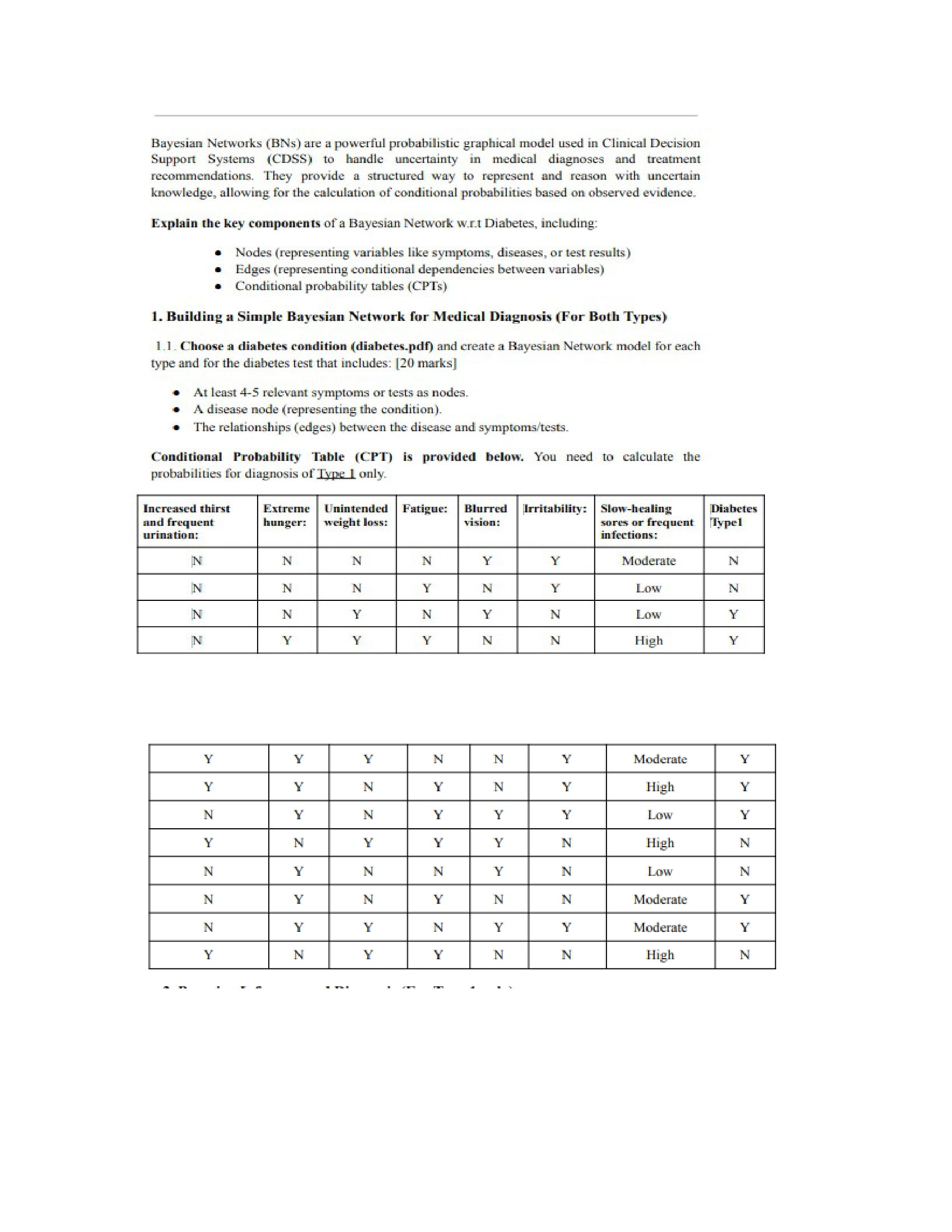
Given that a patient exhibits certain symptoms eg blurred vision, extreme hunger calculate the updated probability of the patient having the disease eg Type diabetes using Bayes' theorem. marks
You will consider if the patient is diagnosed with Type Diabetes if Yes then a test will be recommended.
tabletableIncreased thirstand frequenturination:tableExtremehunger:tableUnintendedweight loss:Fatigue:,tableBlurredvision:Irritability:,tableSlowhealingsores or frequentinfections:tableType DiabetesYNYYNNHigh,?NYNYYYLow,?YYYNNYModerate,?NYNNYNLow,?
Show the steps involved in calculating these probabilities. marks
Interpret the results of your Bayesian inference: For Type only
How does the presence of one or more symptoms evidence affect the likelihood of the disease? marks
Discuss how a CDSS can use these probabilistic results to assist healthcare professionals in making diagnoses Explain in LINES marks
Step by Step Solution
There are 3 Steps involved in it
1 Expert Approved Answer
Step: 1 Unlock

Question Has Been Solved by an Expert!
Get step-by-step solutions from verified subject matter experts
Step: 2 Unlock
Step: 3 Unlock
 Study Help