







Question: Case 9 The conclusion is the question. Please be as elaborate as possible, this is a Strategic Management university paper. Please give a complete analysis
Case 9
The conclusion is the question. Please be as elaborate as possible, this is a Strategic Management university paper.
Please give a complete analysis of the case. Identify the problems and give solutions. Give a complete SWOT and PESTEL analysis of the Case study (SWOT and PESTEL). What is their competitive advantage over the market? What are your recommendations?
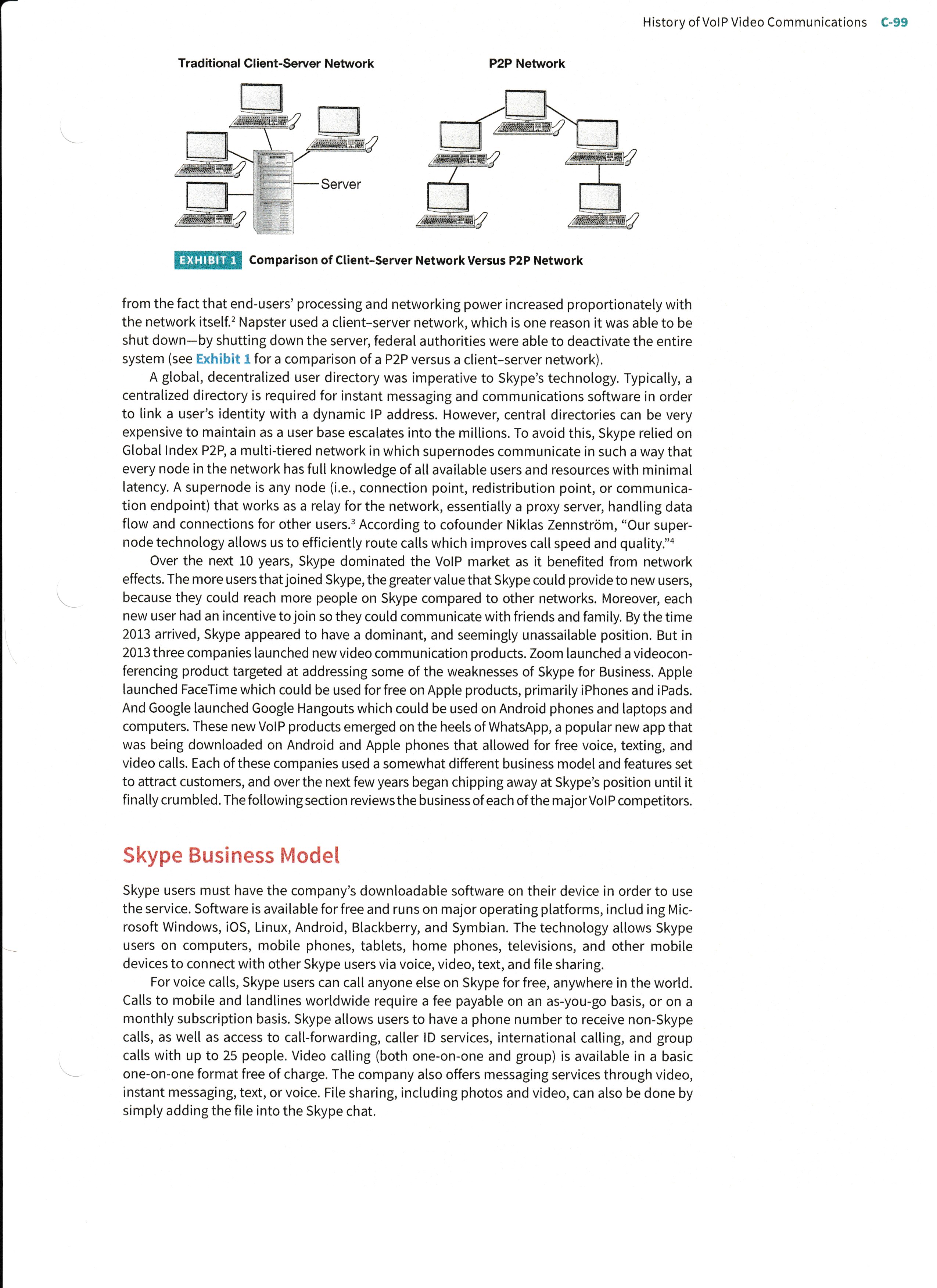
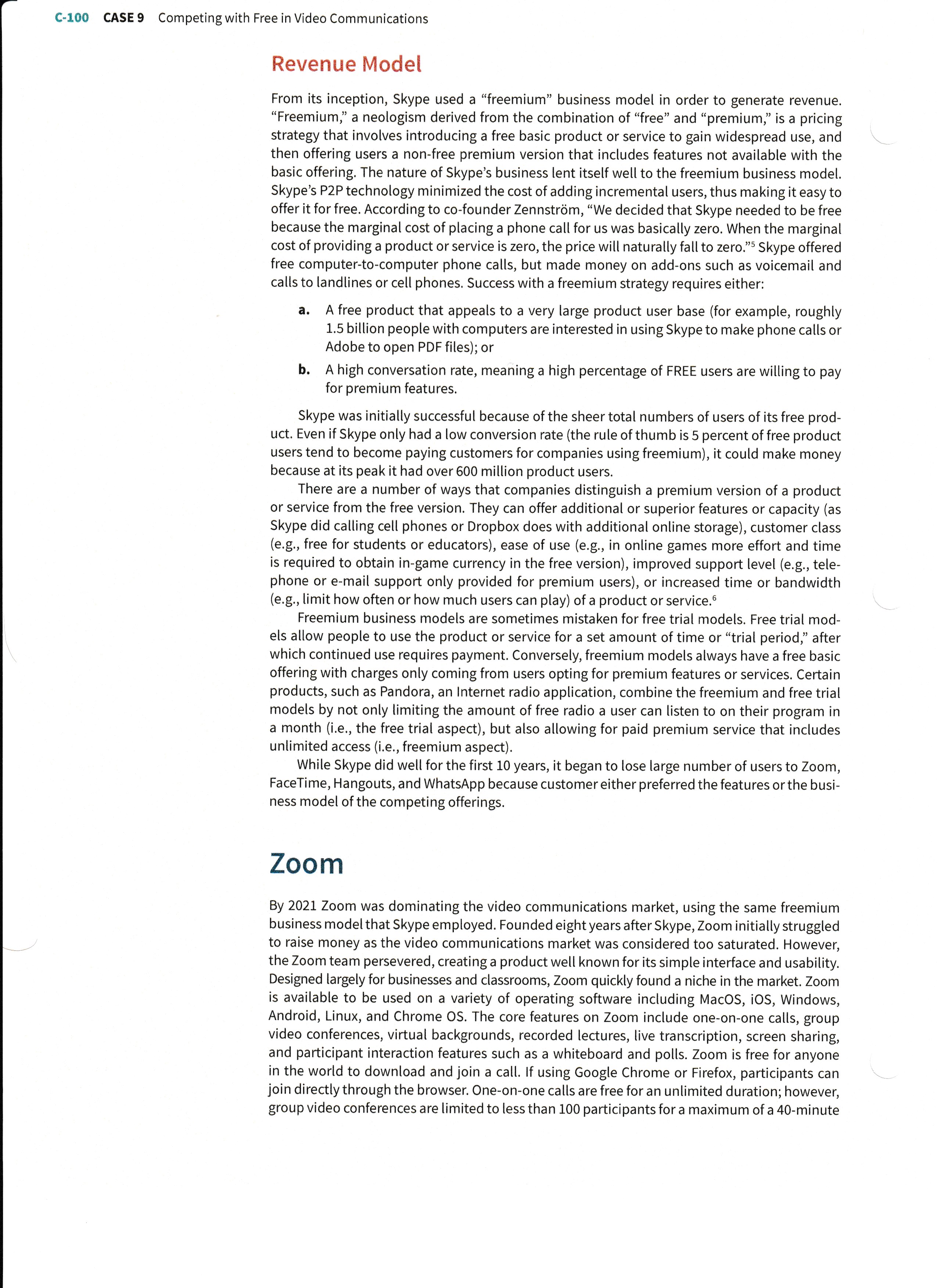
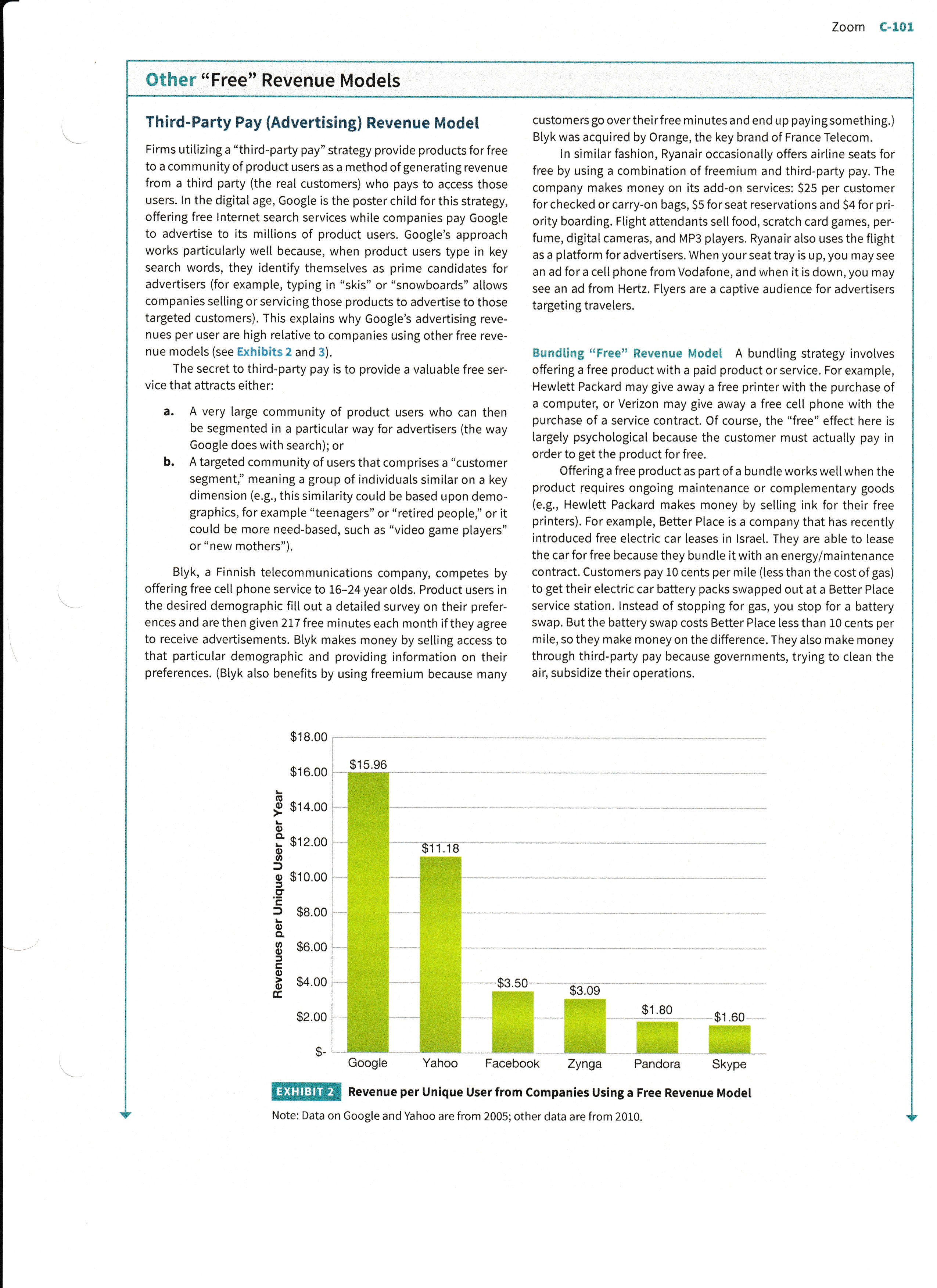
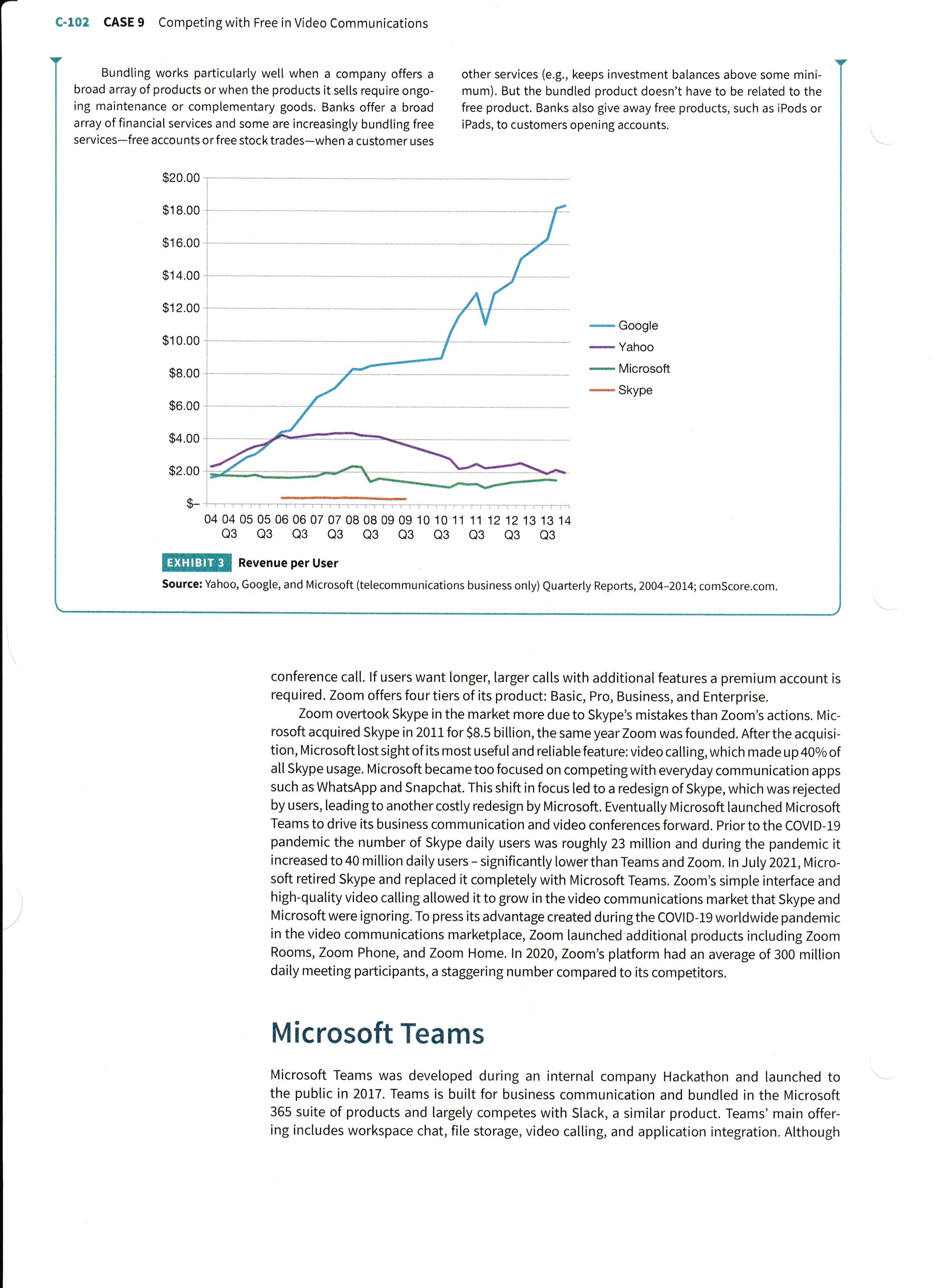
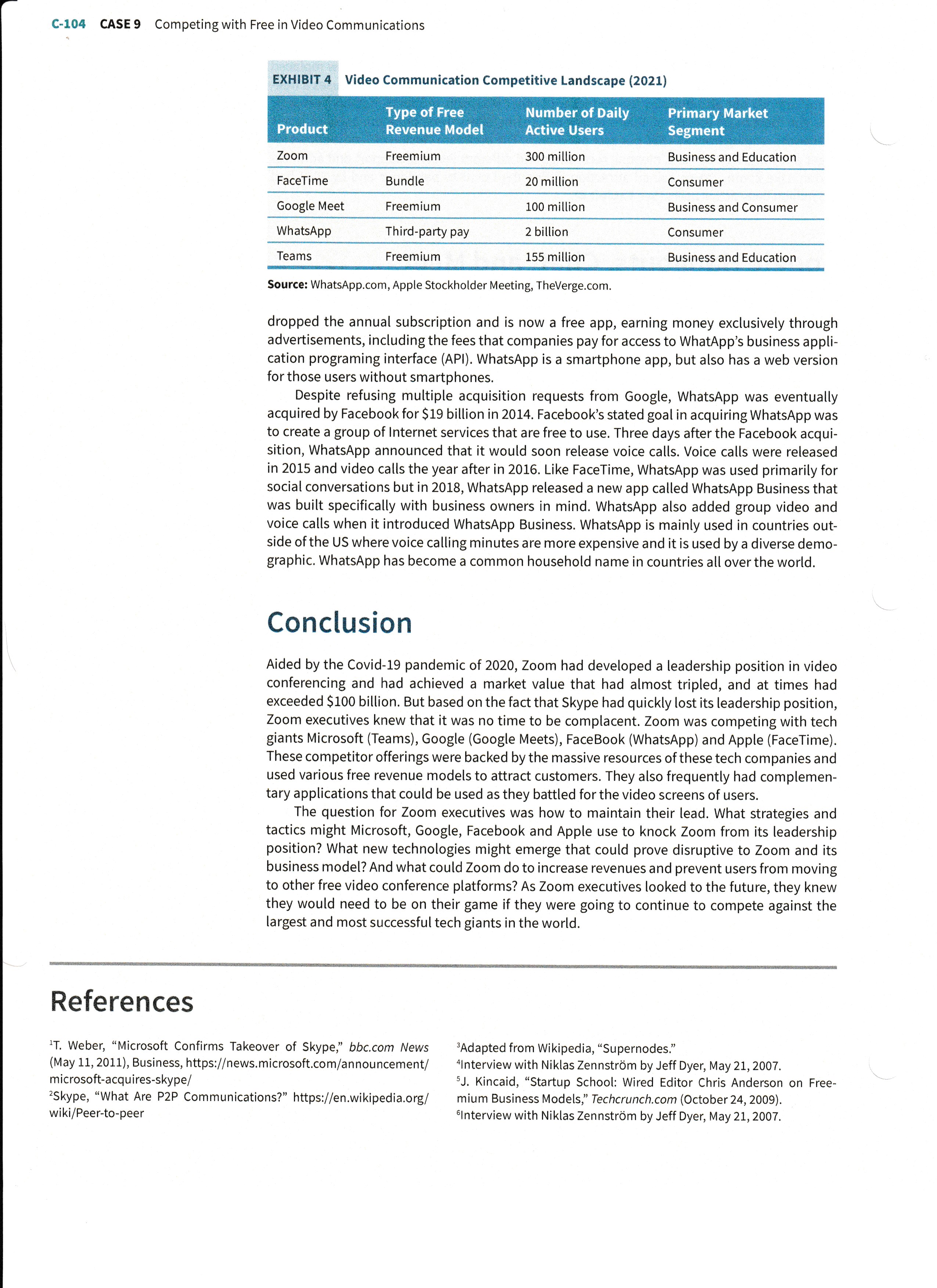
Competing with Free in Video Communications: Zoom vs the tech giants-Microsoft Teams, Google Meets, Apple FaceTime, and WhatsApp (Facebook) Introduction History of VoIP Video Communications History of VolP Video Communications C99 EXHIBIT 1 Comparison of Client-Server Network Versus P2P Network from the fact that end-users' processing and networking power increased proportionately with the network itself.. 2 Napster used a client-server network, which is one reason it was able to be shut down-by shutting down the server, federal authorities were able to deactivate the entire system (see Exhibit 1 for a comparison of a P2P versus a client-server network). A global, decentralized user directory was imperative to Skype's technology. Typically, a centralized directory is required for instant messaging and communications software in order to link a user's identity with a dynamic IP address. However, central directories can be very expensive to maintain as a user base escalates into the millions. To avoid this, Skype relied on Global Index P2P, a multi-tiered network in which supernodes communicate in such a way that every node in the network has full knowledge of all available users and resources with minimal latency. A supernode is any node (i.e., connection point, redistribution point, or communication endpoint) that works as a relay for the network, essentially a proxy server, handling data flow and connections for other users. 3 According to cofounder Niklas Zennstrm, "Our supernode technology allows us to efficiently route calls which improves call speed and quality." t Over the next 10 years, Skype dominated the VoIP market as it benefited from network effects. The more users that joined Skype, the greater value that Skype could provide to new users, because they could reach more people on Skype compared to other networks. Moreover, each new user had an incentive to join so they could communicate with friends and family. By the time 2013 arrived, Skype appeared to have a dominant, and seemingly unassailable position. But in 2013 three companies launched new video communication products. Zoom launched a videoconferencing product targeted at addressing some of the weaknesses of Skype for Business. Apple launched FaceTime which could be used for free on Apple products, primarily iPhones and iPads. And Google launched Google Hangouts which could be used on Android phones and laptops and computers. These new VoIP products emerged on the heels of WhatsApp, a popular new app that was being downloaded on Android and Apple phones that allowed for free voice, texting, and video calls. Each of these companies used a somewhat different business model and features set to attract customers, and over the next few years began chipping away at Skype's position until it finally crumbled. The following section reviews the business of each of the major VoIP competitors. Skype Business Model Skype users must have the company's downloadable software on their device in order to use the service. Software is available for free and runs on major operating platforms, includ ing Microsoft Windows, iOS, Linux, Android, Blackberry, and Symbian. The technology allows Skype users on computers, mobile phones, tablets, home phones, televisions, and other mobile devices to connect with other Skype users via voice, video, text, and file sharing. For voice calls, Skype users can call anyone else on Skype for free, anywhere in the world. Calls to mobile and landlines worldwide require a fee payable on an as-you-go basis, or on a monthly subscription basis. Skype allows users to have a phone number to receive non-Skype calls, as well as access to call-forwarding, caller ID services, international calling, and group calls with up to 25 people. Video calling (both one-on-one and group) is available in a basic one-on-one format free of charge. The company also offers messaging services through video, instant messaging, text, or voice. File sharing, including photos and video, can also be done by simply adding the file into the Skype chat. Revenue Model From its inception, Skype used a "freemium" business model in order to generate revenue. "Freemium," a neologism derived from the combination of "free" and "premium," is a pricing strategy that involves introducing a free basic product or service to gain widespread use, and then offering users a non-free premium version that includes features not available with the basic offering. The nature of Skype's business lent itself well to the freemium business model. Skype's P2P technology minimized the cost of adding incremental users, thus making it easy to offer it for free. According to co-founder Zennstrm, "We decided that Skype needed to be free because the marginal cost of placing a phone call for us was basically zero. When the marginal cost of providing a product or service is zero, the price will naturally fall to zero." 5 Skype offered free computer-to-computer phone calls, but made money on add-ons such as voicemail and calls to landlines or cell phones. Success with a freemium strategy requires either: a. A free product that appeals to a very large product user base (for example, roughly 1.5 billion people with computers are interested in using Skype to make phone calls or Adobe to open PDF files); or b. A high conversation rate, meaning a high percentage of FREE users are willing to pay for premium features. Skype was initially successful because of the sheer total numbers of users of its free product. Even if Skype only had a low conversion rate (the rule of thumb is 5 percent of free product users tend to become paying customers for companies using freemium), it could make money because at its peak it had over 600 million product users. There are a number of ways that companies distinguish a premium version of a product or service from the free version. They can offer additional or superior features or capacity (as Skype did calling cell phones or Dropbox does with additional online storage), customer class (e.g., free for students or educators), ease of use (e.g., in online games more effort and time is required to obtain in-game currency in the free version), improved support level (e.g., telephone or e-mail support only provided for premium users), or increased time or bandwidth (e.g., limit how often or how much users can play) of a product or service. 6 Freemium business models are sometimes mistaken for free trial models. Free trial models allow people to use the product or service for a set amount of time or "trial period," after which continued use requires payment. Conversely, freemium models always have a free basic offering with charges only coming from users opting for premium features or services. Certain products, such as Pandora, an Internet radio application, combine the freemium and free trial models by not only limiting the amount of free radio a user can listen to on their program in a month (i.e., the free trial aspect), but also allowing for paid premium service that includes unlimited access (i.e., freemium aspect). While Skype did well for the first 10 years, it began to lose large number of users to Zoom, FaceTime, Hangouts, and WhatsApp because customer either preferred the features or the business model of the competing offerings. Zoom By 2021 Zoom was dominating the video communications market, using the same freemium business model that Skype employed. Founded eight years after Skype, Zoom initially struggled to raise money as the video communications market was considered too saturated. However, the Zoom team persevered, creating a product well known for its simple interface and usability. Designed largely for businesses and classrooms, Zoom quickly found a niche in the market. Zoom is available to be used on a variety of operating software including MacOS, iOS, Windows, Android, Linux, and Chrome OS. The core features on Zoom include one-on-one calls, group video conferences, virtual backgrounds, recorded lectures, live transcription, screen sharing, and participant interaction features such as a whiteboard and polls. Zoom is free for anyone in the world to download and join a call. If using Google Chrome or Firefox, participants can join directly through the browser. One-on-one calls are free for an unlimited duration; however, group video conferences are limited to less than 100 participants for a maximum of a 40-minute Other "Free" Revenue Models Third-Party Pay (Advertising) Revenue Model Firms utilizing a "third-party pay" strategy provide products for free to a community of product users as a method of generating revenue from a third party (the real customers) who pays to access those users. In the digital age, Google is the poster child for this strategy, offering free Internet search services while companies pay Google to advertise to its millions of product users. Google's approach works particularly well because, when product users type in key search words, they identify themselves as prime candidates for advertisers (for example, typing in "skis" or "snowboards" allows companies selling or servicing those products to advertise to those targeted customers). This explains why Google's advertising revenues per user are high relative to companies using other free revenue models (see Exhibits 2 and 3 ). The secret to third-party pay is to provide a valuable free service that attracts either: a. A very large community of product users who can then be segmented in a particular way for advertisers (the way Google does with search); or b. A targeted community of users that comprises a "customer segment," meaning a group of individuals similar on a key dimension (e.g., this similarity could be based upon demographics, for example "teenagers" or "retired people," or it could be more need-based, such as "video game players" or "new mothers"). Blyk, a Finnish telecommunications company, competes by offering free cell phone service to 16-24 year olds. Product users in the desired demographic fill out a detailed survey on their preferences and are then given 217 free minutes each month if they agree to receive advertisements. Blyk makes money by selling access to that particular demographic and providing information on their preferences. (Blyk also benefits by using freemium because many customers go over their free minutes and end up paying something.) Blyk was acquired by Orange, the key brand of France Telecom. In similar fashion, Ryanair occasionally offers airline seats for free by using a combination of freemium and third-party pay. The company makes money on its add-on services: \$25 per customer for checked or carry-on bags, $5 for seat reservations and $4 for priority boarding. Flight attendants sell food, scratch card games, perfume, digital cameras, and MP3 players. Ryanair also uses the flight as a platform for advertisers. When your seat tray is up, you may see an ad for a cell phone from Vodafone, and when it is down, you may see an ad from Hertz. Flyers are a captive audience for advertisers targeting travelers. Bundling "Free" Revenue Model A bundling strategy involves offering a free product with a paid product or service. For example, Hewlett Packard may give away a free printer with the purchase of a computer, or Verizon may give away a free cell phone with the purchase of a service contract. Of course, the "free" effect here is largely psychological because the customer must actually pay in order to get the product for free. Offering a free product as part of a bundle works well when the product requires ongoing maintenance or complementary goods (e.g., Hewlett Packard makes money by selling ink for their free printers). For example, Better Place is a company that has recently introduced free electric car leases in Israel. They are able to lease the car for free because they bundle it with an energy/maintenance contract. Customers pay 10 cents per mile (less than the cost of gas) to get their electric car battery packs swapped out at a Better Place service station. Instead of stopping for gas, you stop for a battery swap. But the battery swap costs Better Place less than 10 cents per mile, so they make money on the difference. They also make money through third-party pay because governments, trying to clean the air, subsidize their operations. EXHIBIT 2 Revenue per Unique User from Companies Using a Free Revenue Model Note: Data on Google and Yahoo are from 2005; other data are from 2010. Bundling works particularly well when a company offers a broad array of products or when the products it sells require ongoing maintenance or complementary goods. Banks offer a broad array of financial services and some are increasingly bundling free services-free accounts or free stock trades-when a customer uses other services (e.g., keeps investment balances above some minimum). But the bundled product doesn't have to be related to the free product. Banks also give away free products, such as iPods or iPads, to customers opening accounts. zomScore.com. conference call. If users want longer, larger calls with additional features a premium account is required. Zoom offers four tiers of its product: Basic, Pro, Business, and Enterprise. Zoom overtook Skype in the market more due to Skype's mistakes than Zoom's actions. Microsoft acquired Skype in 2011 for $8.5 billion, the same year Zoom was founded. After the acquisition, Microsoft lost sight of its most useful and reliable feature: video calling, which made up 40% of all Skype usage. Microsoft became too focused on competing with everyday communication apps such as WhatsApp and Snapchat. This shift in focus led to a redesign of Skype, which was rejected by users, leading to another costly redesign by Microsoft. Eventually Microsoft launched Microsoft Teams to drive its business communication and video conferences forward. Prior to the COVID-19 pandemic the number of Skype daily users was roughly 23 million and during the pandemic it increased to 40 million daily users - significantly lower than Teams and Zoom. In July 2021, Microsoft retired Skype and replaced it completely with Microsoft Teams. Zoom's simple interface and high-quality video calling allowed it to grow in the video communications market that Skype and Microsoft were ignoring. To press its advantage created during the COVID-19 worldwide pandemic in the video communications marketplace, Zoom launched additional products including Zoom Rooms, Zoom Phone, and Zoom Home. In 2020, Zoom's platform had an average of 300 million daily meeting participants, a staggering number compared to its competitors. Microsoft Teams Microsoft Teams was developed during an internal company Hackathon and launched to the public in 2017. Teams is built for business communication and bundled in the Microsoft 365 suite of products and largely competes with Slack, a similar product. Teams' main offering includes workspace chat, file storage, video calling, and application integration. Although initially built alongside Microsoft Classroom and Skype for Business, Teams has now replaced Microsoft Classroom and Skype for Business in 2018 and 2021 respectively. Teams uses a freemium strategy but also bundles its product with other Microsoft products, notably Microsoft 365. The most basic version of Teams is free but Teams offers three premium account levels with prices ranging from $5$20 per user per month. The premium version of Teams allows for larger and longer video calls, meeting recordings and different levels of support and administration. Like Zoom, Teams gained attraction during the Covid-19 pandemic and by 2021had 155 million daily active users (See Exhibit 4). Google Hangouts, Chat, and Meet To enter the video communications market, Google released Google Hangouts in 2013. Google Hangouts included chats and video calls with other Google account owners. In 2017, Google announced that it would begin focusing on enterprise communication by splitting Google Hangouts into two products: Google Chat and Google Meet. Google Chat is similar to Slack, a team communication tool that allows teams to communicate in various virtual rooms. Google Chats also integrates with Google's other products such as Google Flights and Google Calendar, making it simple for Google Chat users to schedule meetings or book flights. Google Meet offers group video calls and simply integrates with Google Calendar. With the splitting of Google Hangouts into two new Google products, Google also announced that Google Chat and Google Meet would be free for consumers. Google utilizes a freemium and bundle strategy with Google Meet and Google Chat, with subscription services and with its Google Workspace product bundle. Google also uses its products to collect data which it then sells to third parties, thereby allowing for more targeted advertisements. The excellent integration between Google's various business and communication products has allowed it to grow quickly. As of 2021, Google Meets had over 100 million daily users (See Exhibit 4). FaceTime Apple entered the video communications market in 2010 by including FaceTime pre-installed on its iPhones, iPods, iPads, and Mac computers. FaceTime enables users to easily video call other Apple device owners using the FaceTime app. The FaceTime functionality is free and bundled with Apple's other products. FaceTime was one of the first smartphone video calling apps, largely targeting users with limited data usage. FaceTime became a key selling point for Apple after its release and it quickly gained traction with the large network of Apple users who saw this as a free benefit that came with using Apple devices. It also encouraged Apple users to recruit non-Apple users to Apple devices so that they could easily video chat. One parent commented on the power of the Apple network, "My son had to switch from an Android phone to an iPhone because his girlfriend had an iPhone and it was the way she wanted to video chat." In 2018, Apple improved its FaceTime offering to include group video and audio calls up to 32 people instead of exclusively one-on-one calls. However, even with that change FaceTime was really only designed for social conversations and not designed to support work or classroom conversations like Zoom or Microsoft Teams. By 2021 FaceTime had over 20 million daily users. WhatsApp In 2021, WhatsApp had 2 billion active users from all over the world despite starting from humble beginnings. WhatsApp was developed in 2009 by two former Yahoo employees. In early 2009, WhatsApp was mainly used to view who was active online, but it constantly crashed for users and the company was almost dissolved. However, in June 2009 Apple released push notifications, enabling WhatsApp to add a messaging component to the app, incorporating push notifications. WhatsApp quickly reached 250 thousand users once messaging was added to the app. Initially WhatsApp charged \$1 for an annual subscription to its platform. However, it soon C-104 CASE 9 Competing with Free in Video Communications EXHIBIT 4 Video Communication Competitive Landscape (2021) Source: WhatsApp.com, Apple Stockholder Meeting, TheVerge.com. dropped the annual subscription and is now a free app, earning money exclusively through advertisements, including the fees that companies pay for access to WhatApp's business application programing interface (API). WhatsApp is a smartphone app, but also has a web version for those users without smartphones. Despite refusing multiple acquisition requests from Google, WhatsApp was eventually acquired by Facebook for $19 billion in 2014. Facebook's stated goal in acquiring WhatsApp was to create a group of Internet services that are free to use. Three days after the Facebook acquisition, WhatsApp announced that it would soon release voice calls. Voice calls were released in 2015 and video calls the year after in 2016. Like FaceTime, WhatsApp was used primarily for social conversations but in 2018, WhatsApp released a new app called WhatsApp Business that was built specifically with business owners in mind. WhatsApp also added group video and voice calls when it introduced WhatsApp Business. WhatsApp is mainly used in countries outside of the US where voice calling minutes are more expensive and it is used by a diverse demographic. WhatsApp has become a common household name in countries all over the world. Conclusion Aided by the Covid-19 pandemic of 2020, Zoom had developed a leadership position in video conferencing and had achieved a market value that had almost tripled, and at times had exceeded $100 billion. But based on the fact that Skype had quickly lost its leadership position, Zoom executives knew that it was no time to be complacent. Zoom was competing with tech giants Microsoft (Teams), Google (Google Meets), FaceBook (WhatsApp) and Apple (FaceTime). These competitor offerings were backed by the massive resources of these tech companies and used various free revenue models to attract customers. They also frequently had complementary applications that could be used as they battled for the video screens of users. The question for Zoom executives was how to maintain their lead. What strategies and tactics might Microsoft, Google, Facebook and Apple use to knock Zoom from its leadership position? What new technologies might emerge that could prove disruptive to Zoom and its business model? And what could Zoom do to increase revenues and prevent users from moving to other free video conference platforms? As Zoom executives looked to the future, they knew they would need to be on their game if they were going to continue to compete against the largest and most successful tech giants in the world. References 1 T. Weber, "Microsoft Confirms Takeover of Skype," bbc.com News (May 11, 2011), Business, https:/ews.microsoft.com/announcement/ microsoft-acquires-skype/ 'Skype, "What Are P2P Communications?" https://en.wikipedia.org/ wiki/Peer-to-peer 3 Adapted from Wikipedia, "Supernodes." "Interview with Niklas Zennstrm by Jeff Dyer, May 21, 2007. 5J. Kincaid, "Startup School: Wired Editor Chris Anderson on Freemium Business Models," Techcrunch.com (October 24, 2009). 'Interview with Niklas Zennstrm by Jeff Dyer, May 21, 2007
Step by Step Solution
There are 3 Steps involved in it

Get step-by-step solutions from verified subject matter experts
 Study Help