







Question: Consider the evaluation of the expression: (x >= y && n == m) Which of the following is true? x >= y is evaluated and
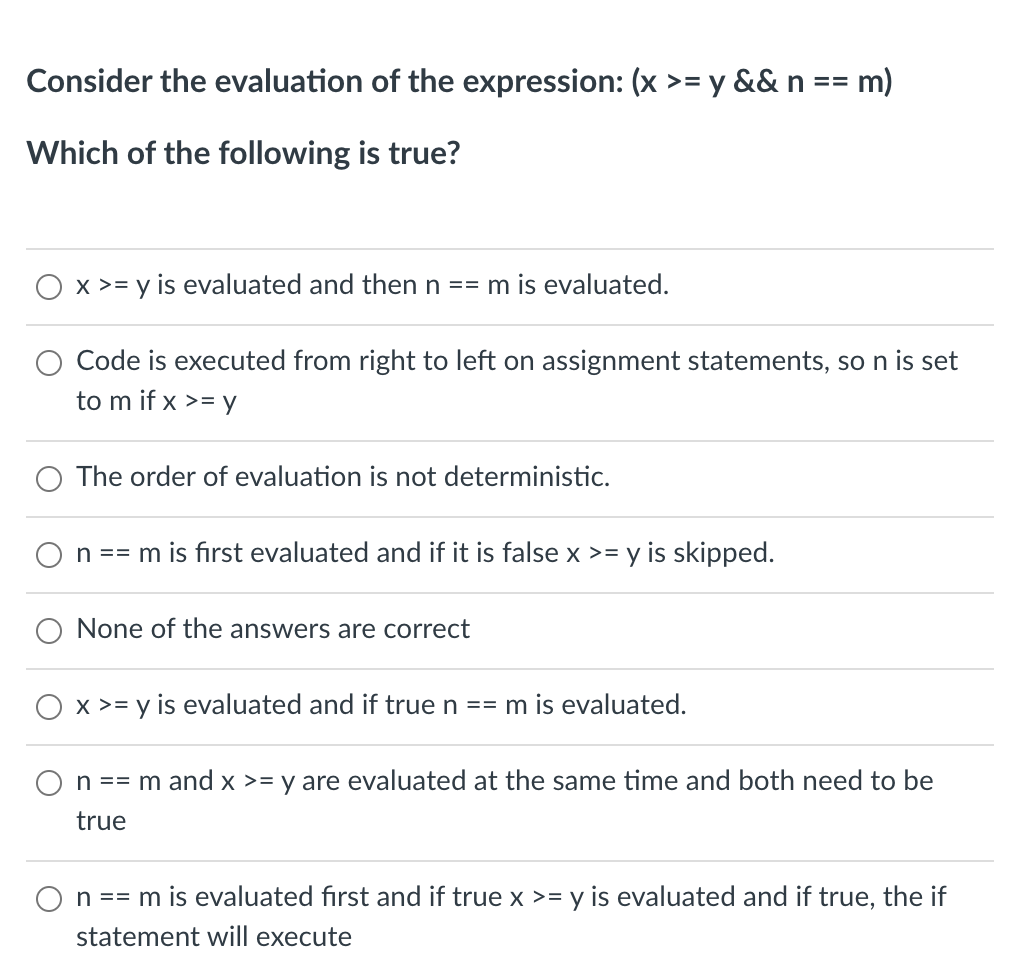
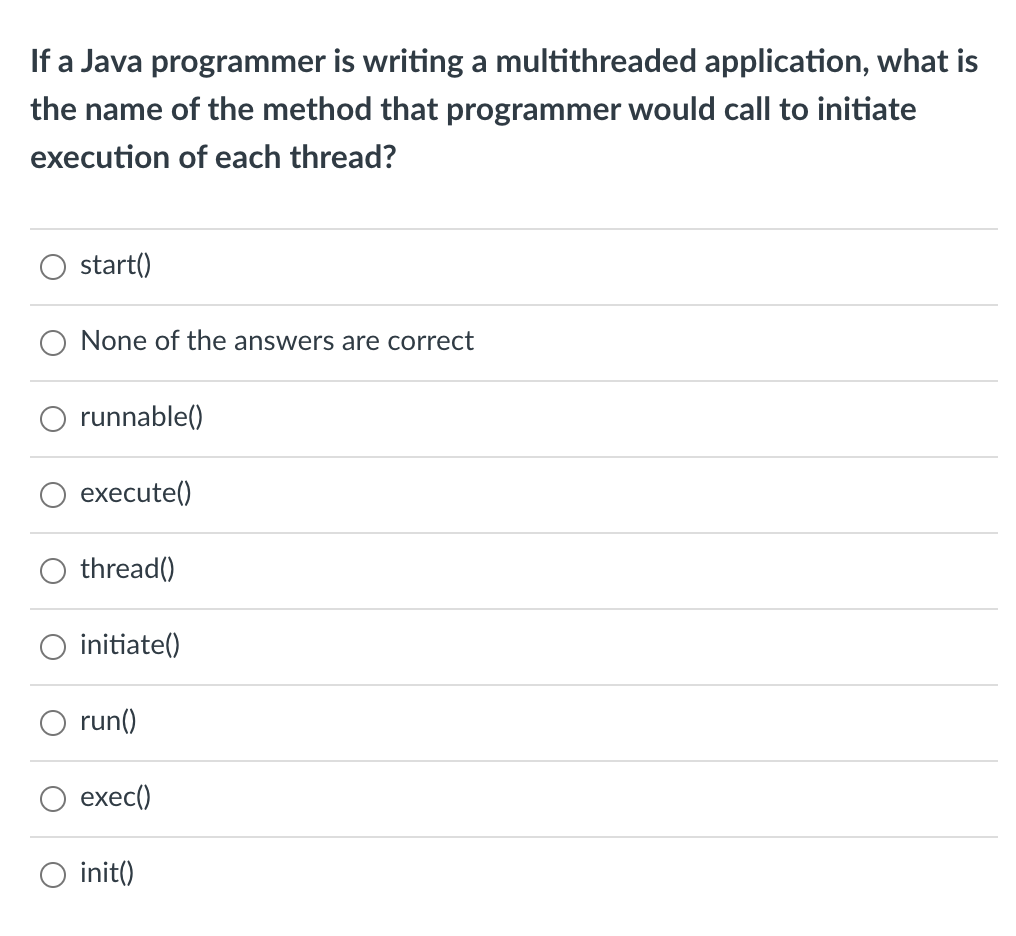
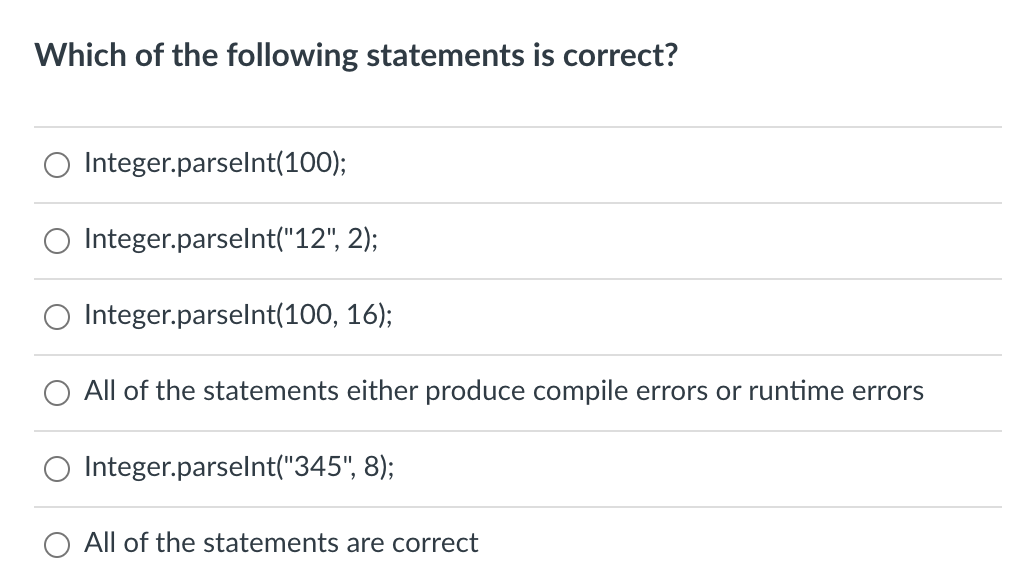
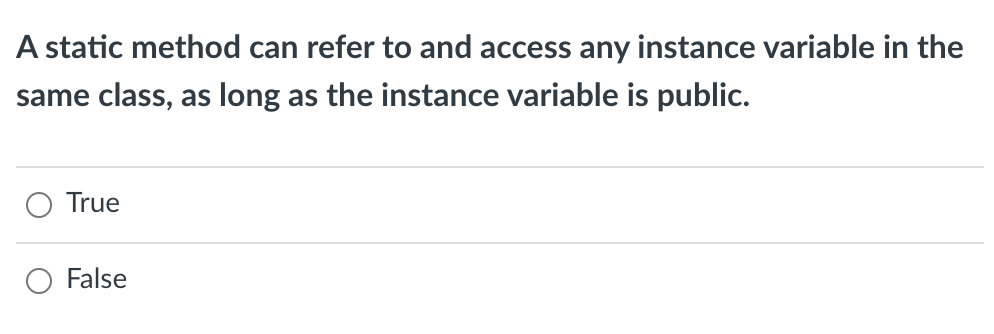
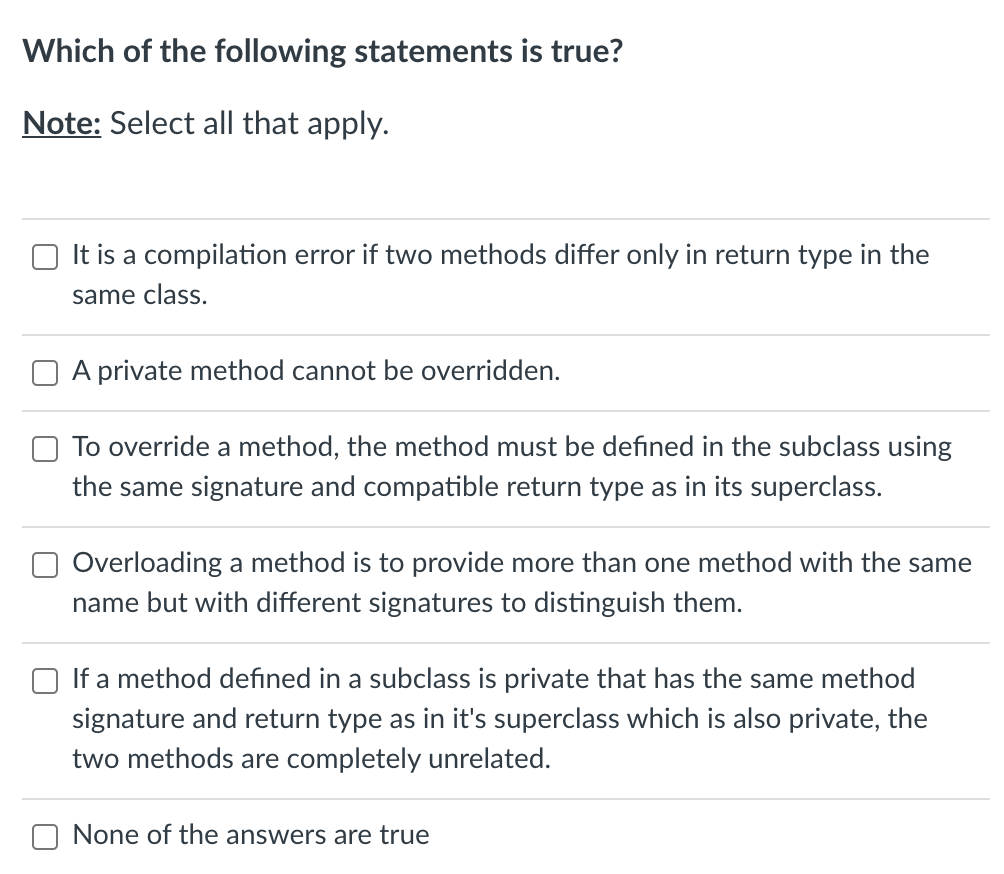
Consider the evaluation of the expression: (x >= y && n == m) Which of the following is true? x >= y is evaluated and then n == m is evaluated. Code is executed from right to left on assignment statements, so n is set to m if x >= y The order of evaluation is not deterministic. n == m is first evaluated and if it is false x >= y is skipped. None of the answers are correct O x >= y is evaluated and if true n == m is evaluated. n == m and x >= y are evaluated at the same time and both need to be true n == m is evaluated first and if true x >= y is evaluated and if true, the if statement will execute If a Java programmer is writing a multithreaded application, what is the name of the method that programmer would call to initiate execution of each thread? start() None of the answers are correct runnable() execute() thread() initiate() run() exec() O init() Which of the following statements is correct? Integer.parseInt(100); Integer.parseInt("12", 2); Integer.parseInt(100, 16); All of the statements either produce compile errors or runtime errors Integer.parseInt("345", 8); All of the statements are correct A static method can refer to and access any instance variable in the same class, as long as the instance variable is public. O True False Which of the following statements is true? Note: Select all that apply. It is a compilation error if two methods differ only in return type in the same class. O A private method cannot be overridden. To override a method, the method must be defined in the subclass using the same signature and compatible return type as in its superclass. Overloading a method is to provide more than one method with the same name but with different signatures to distinguish them. If a method defined in a subclass is private that has the same method signature and return type as in it's superclass which is also private, the two methods are completely unrelated. None of the answers are true
Step by Step Solution
There are 3 Steps involved in it

Get step-by-step solutions from verified subject matter experts
 Study Help