







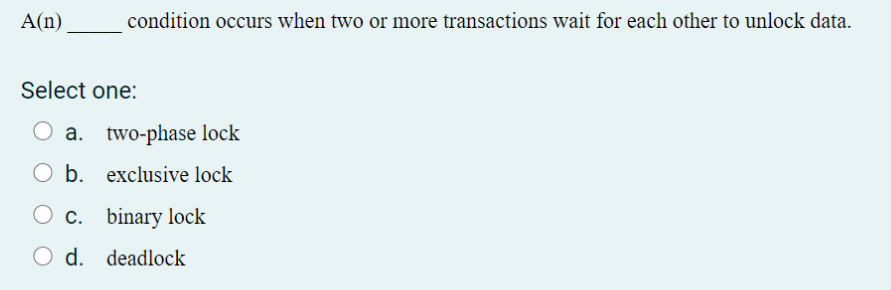
Question: database: 1. 2. 3. 4. 5. A(n) condition occurs when two or more transactions wait for each other to unlock data. Select one: a. two-phase
database:
1.
2.
3.
4.
5.

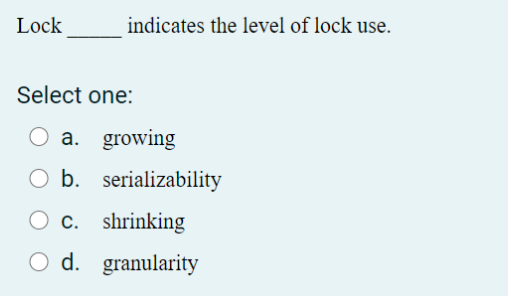
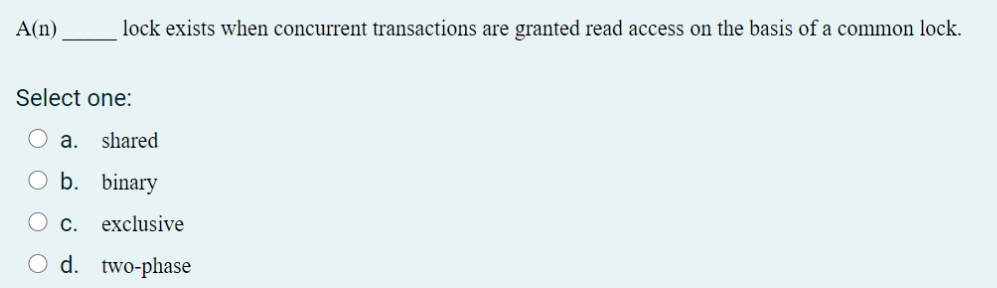
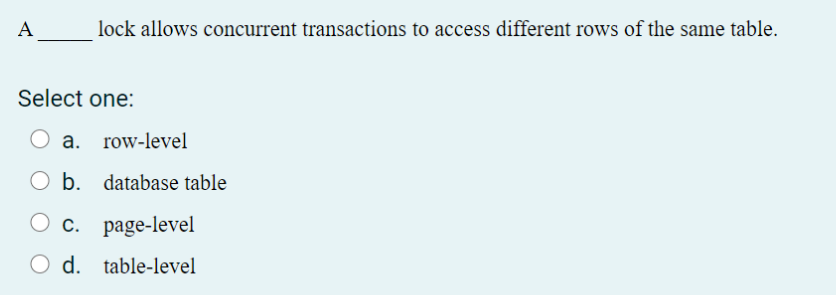
A(n) condition occurs when two or more transactions wait for each other to unlock data. Select one: a. two-phase lock O b. exclusive lock O c. binary lock O d. deadlock Lock indicates the level of lock use. Select one: a. growing b. serializability c. shrinking d. granularity A(n) lock exists when concurrent transactions are granted read access on the basis of a common lock. Select one: a. shared b. binary O c. exclusive d. two-phase A lock allows concurrent transactions to access different rows of the same table. Select one: a. row-level b. database table c. page-level O d. table-level You cannot have an invalid entry in the foreign key column; at the same time, you cannot delete a vendor row as long as a product row references that vendor. This is known as Select one: a. referential integrity O b. batch updating O c. cross joining O d. authentication
Step by Step Solution
There are 3 Steps involved in it

Get step-by-step solutions from verified subject matter experts
 Study Help