Question: Explain this chapter and some main points. Reference: In this chapter we will explain about the function of each part of the final text of
Explain this chapter and some main points.
Reference:
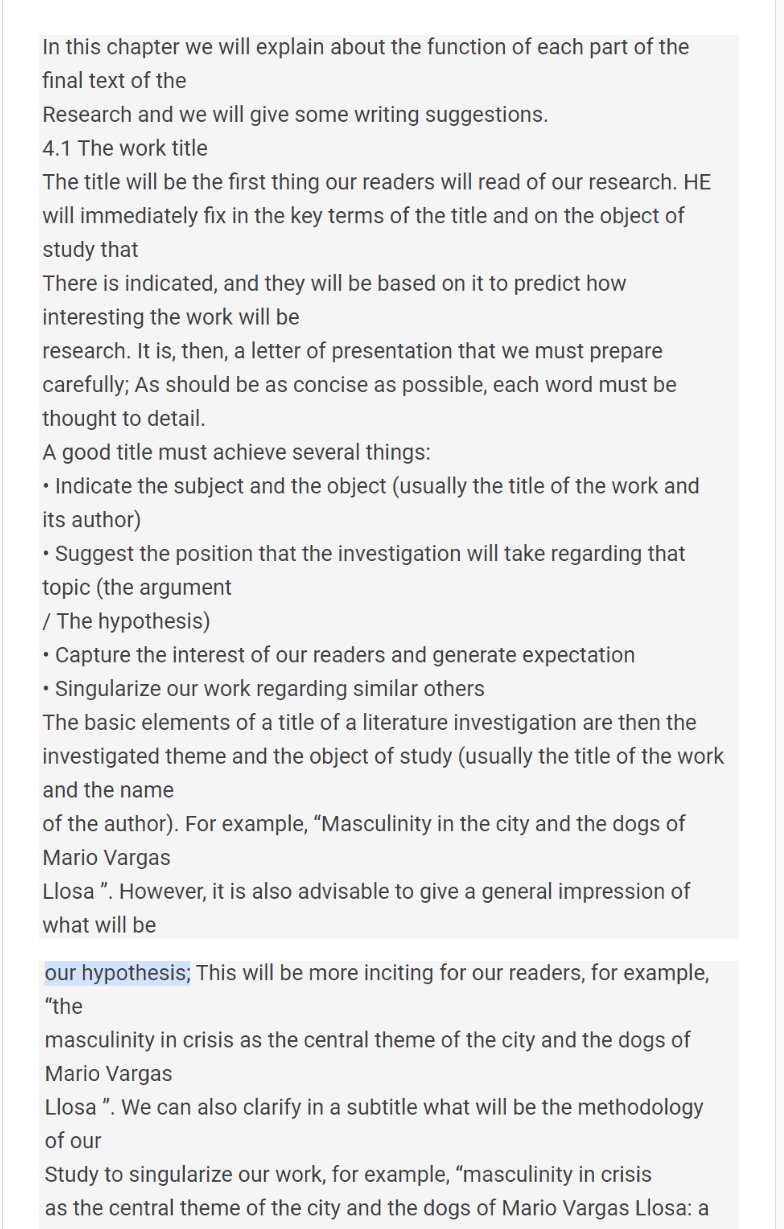
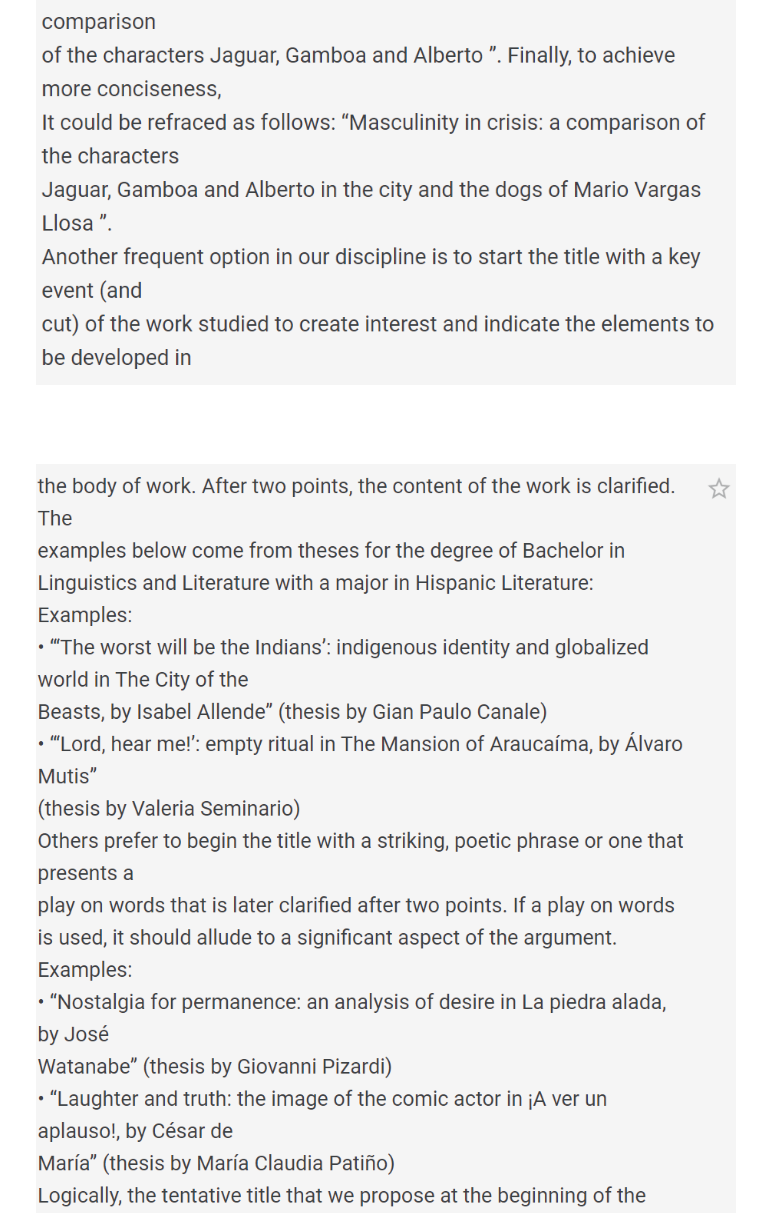
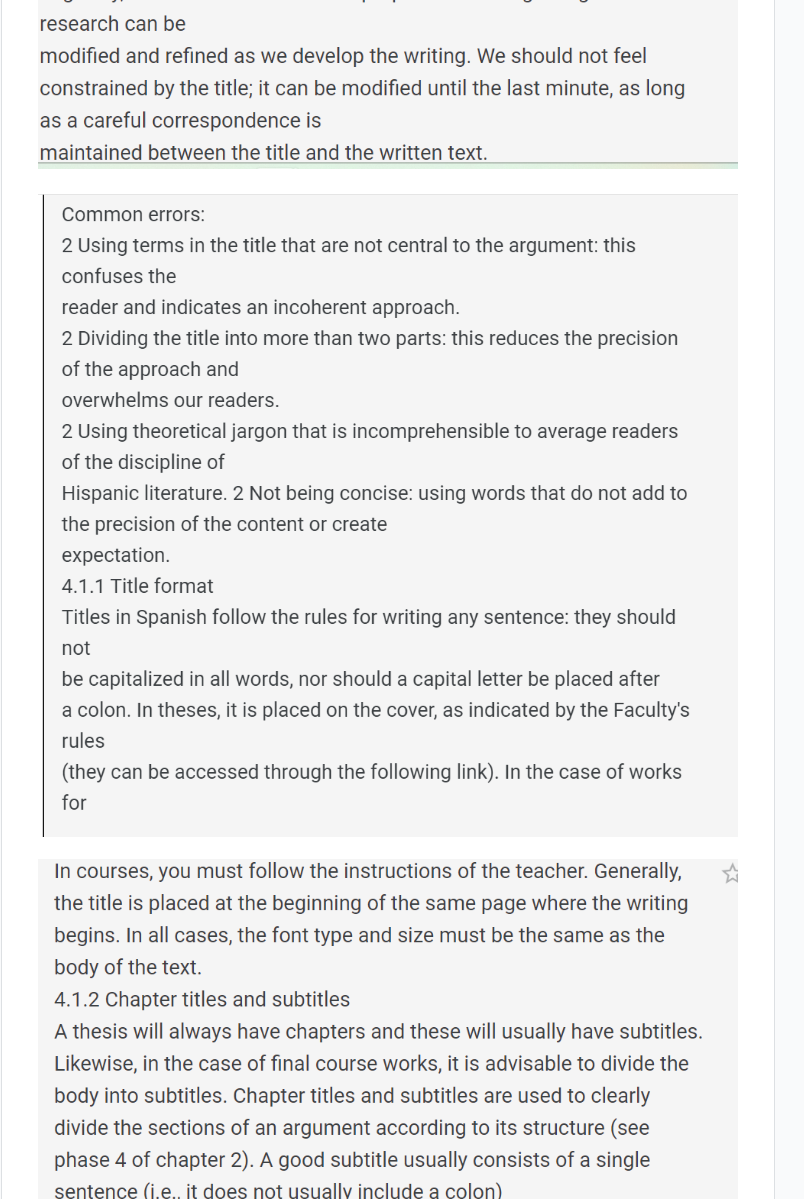
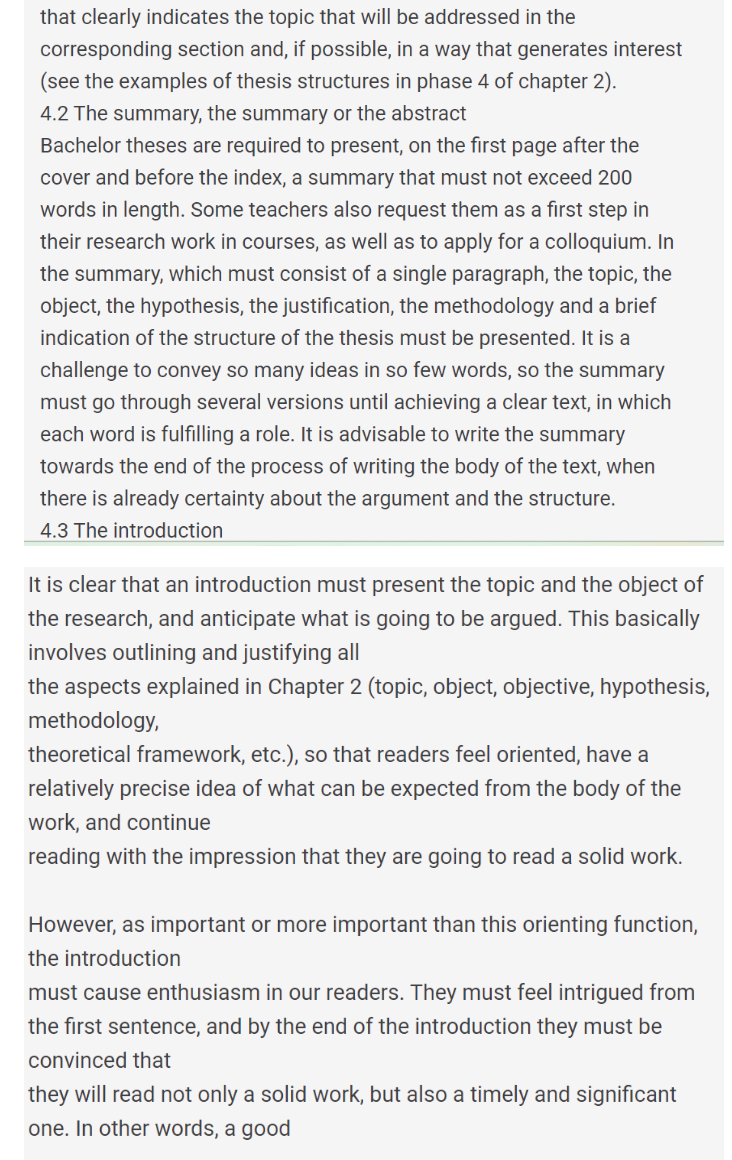
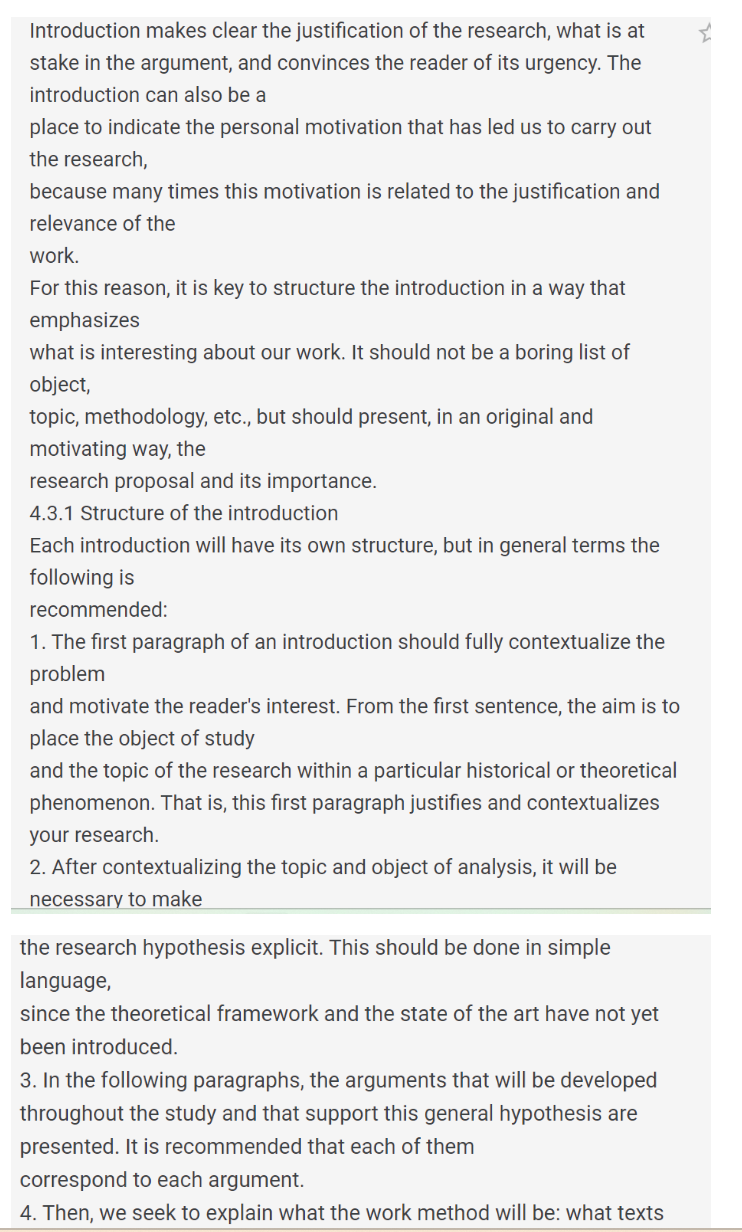
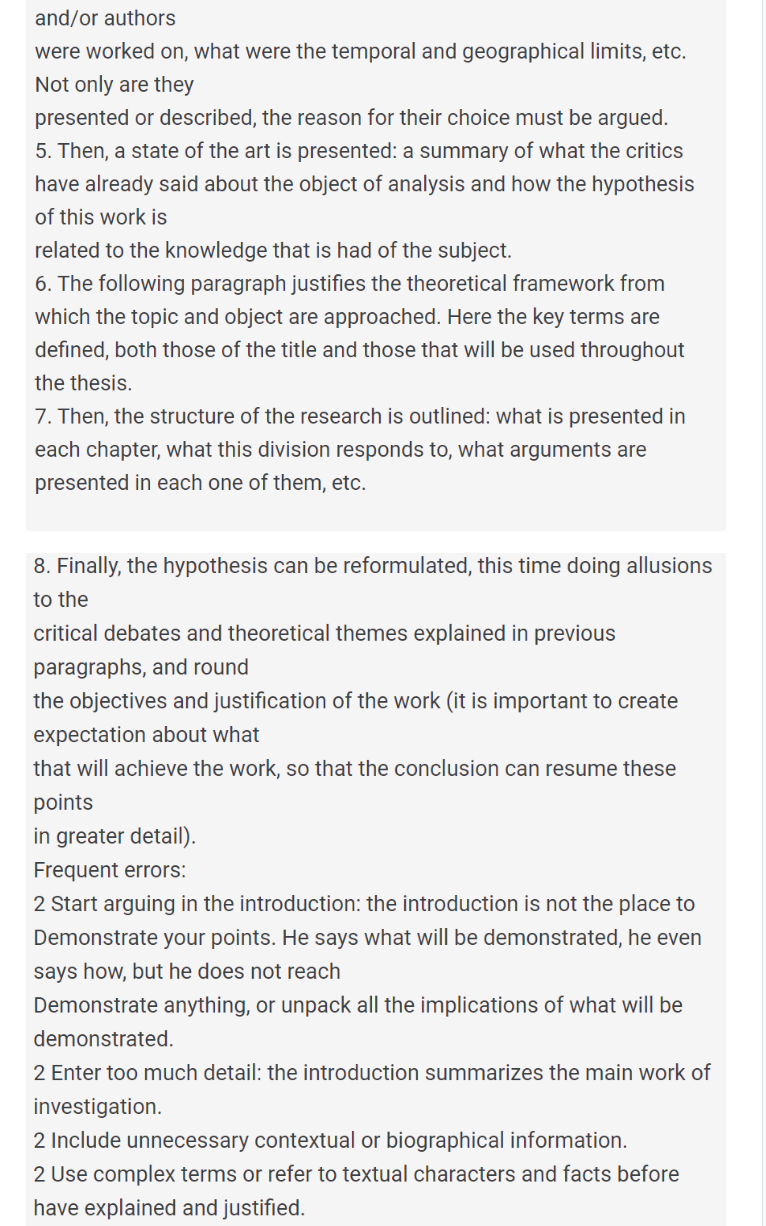
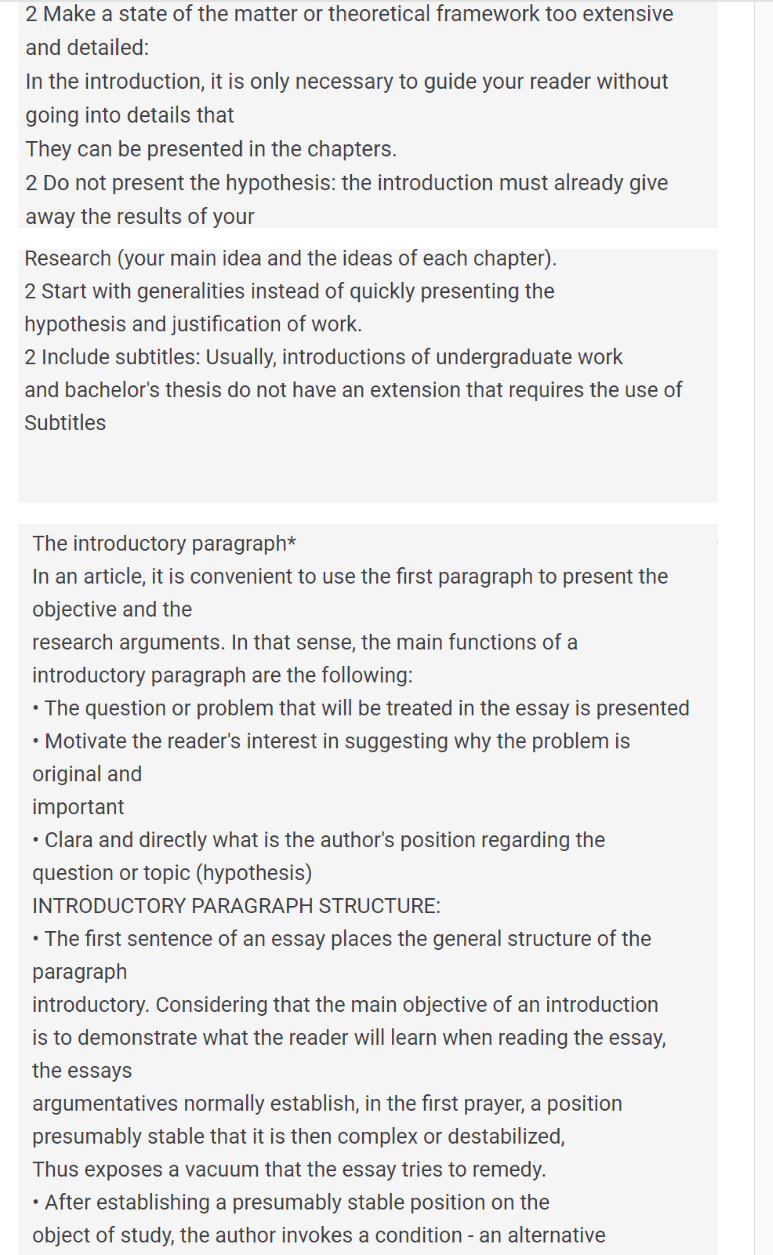
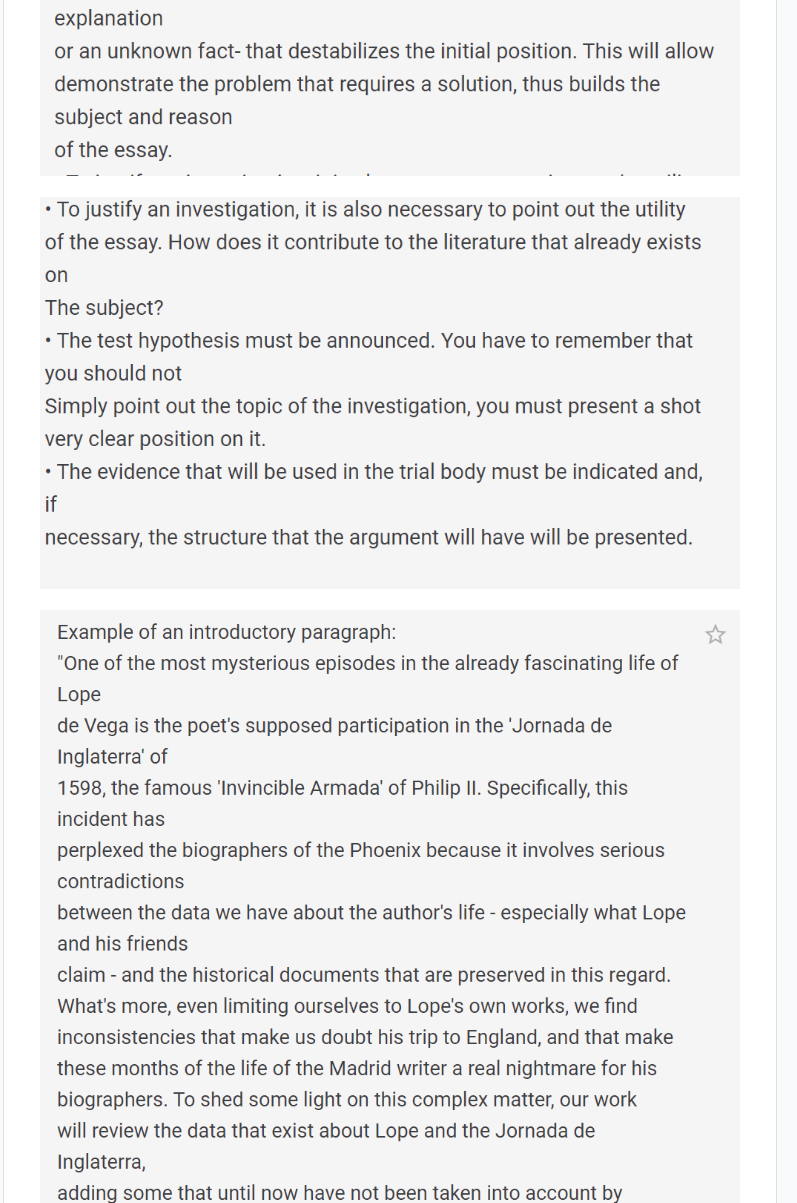
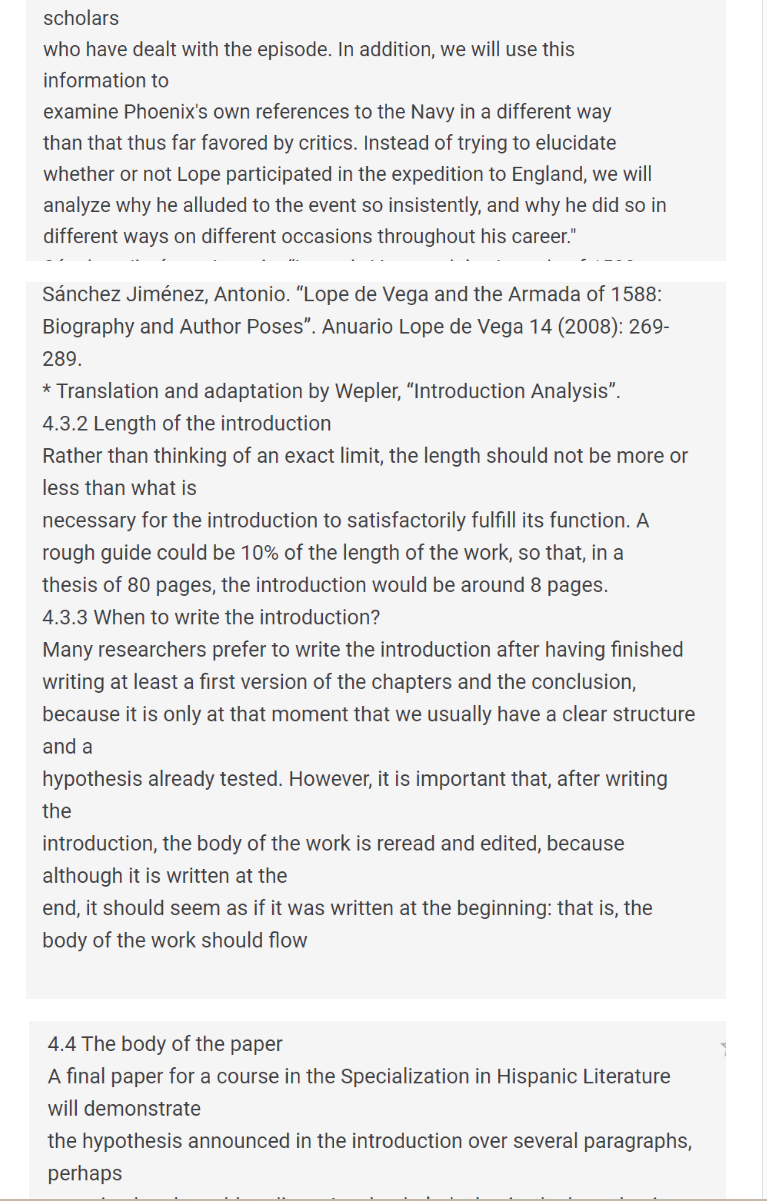
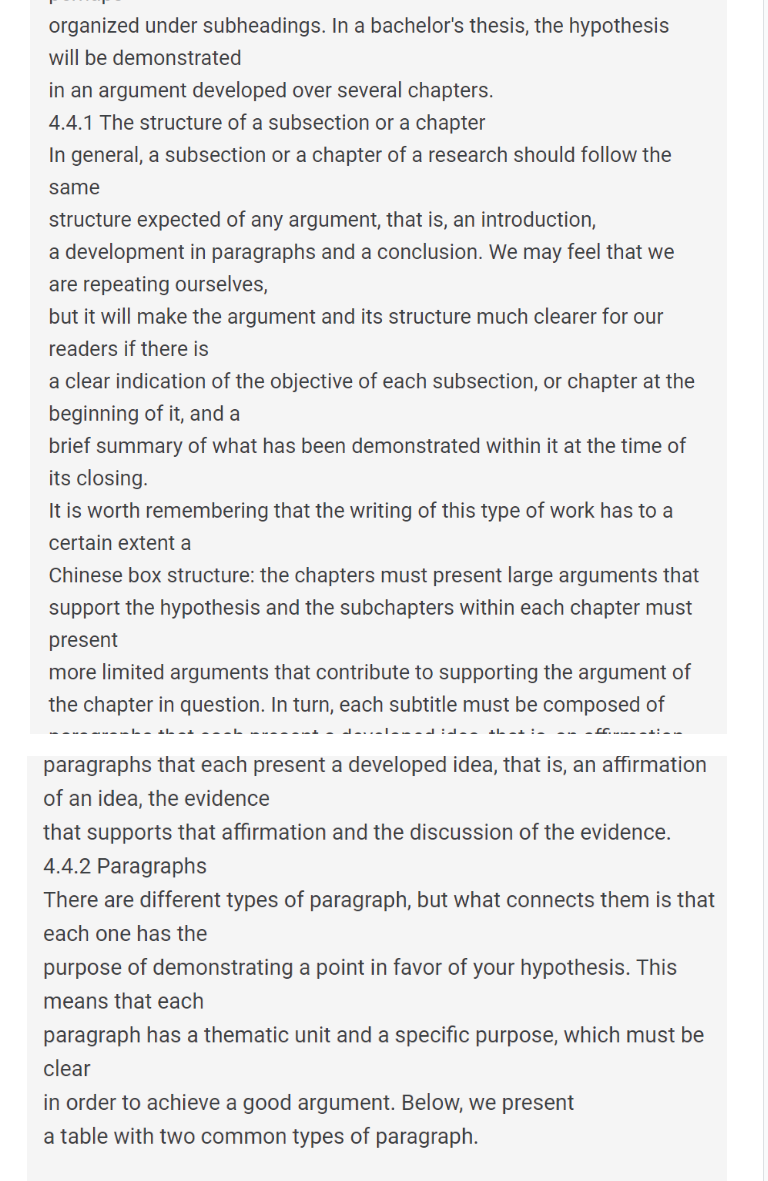
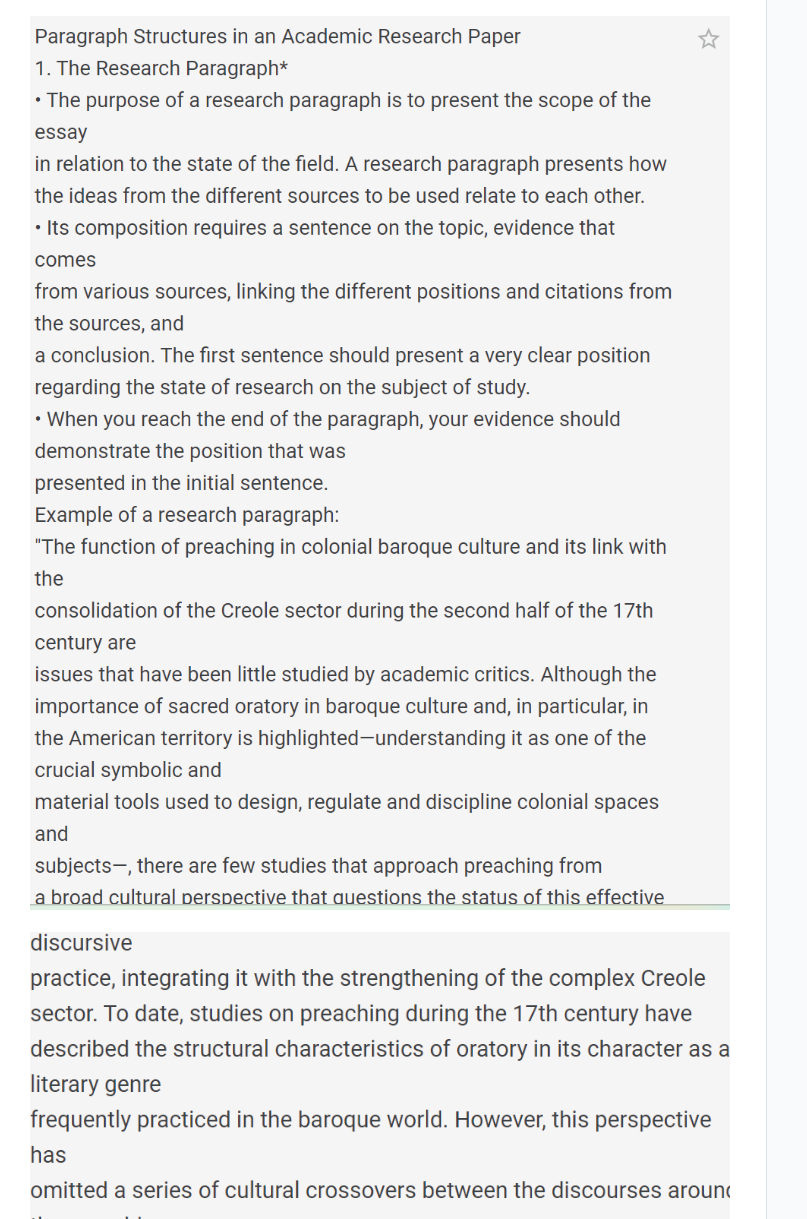
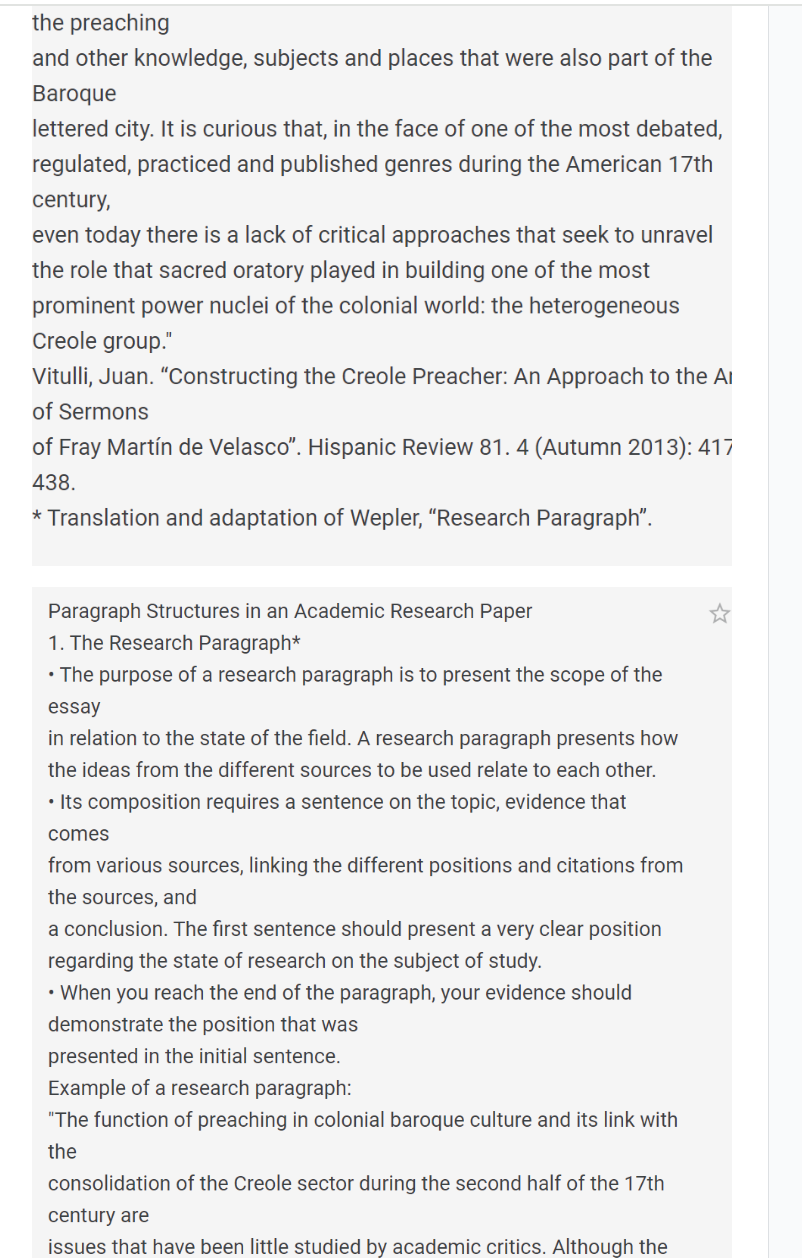
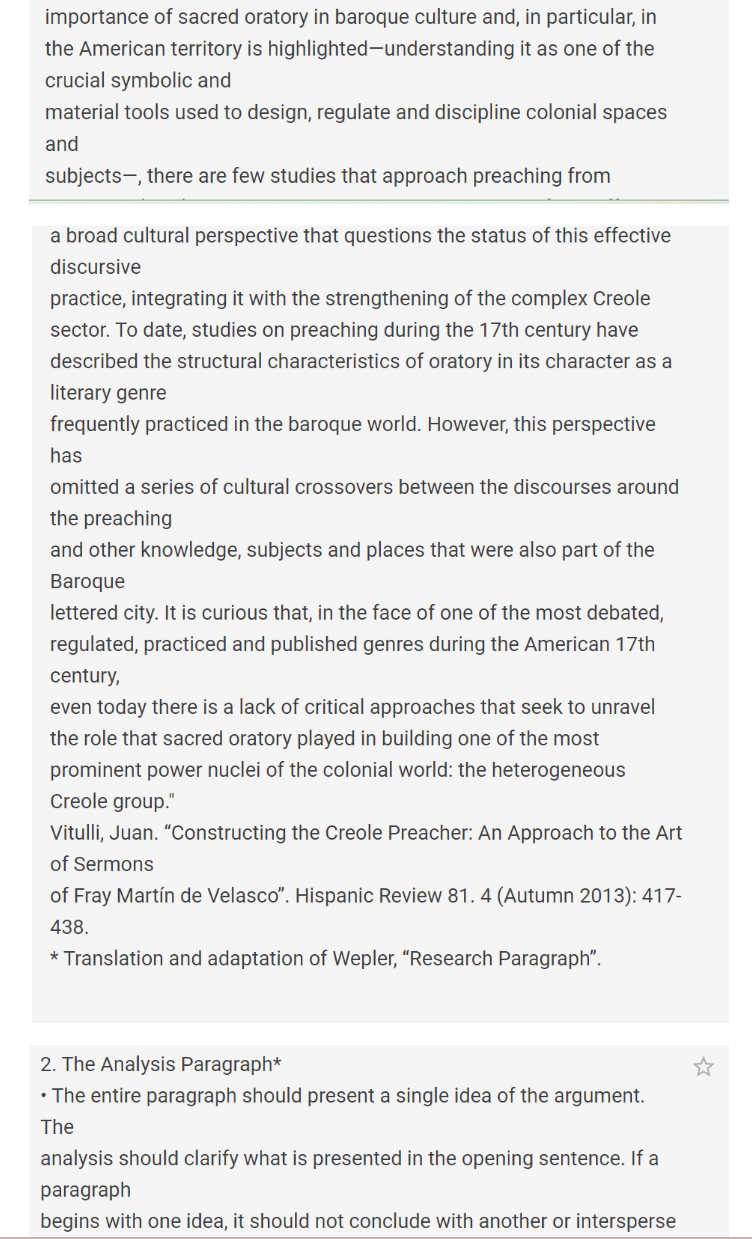
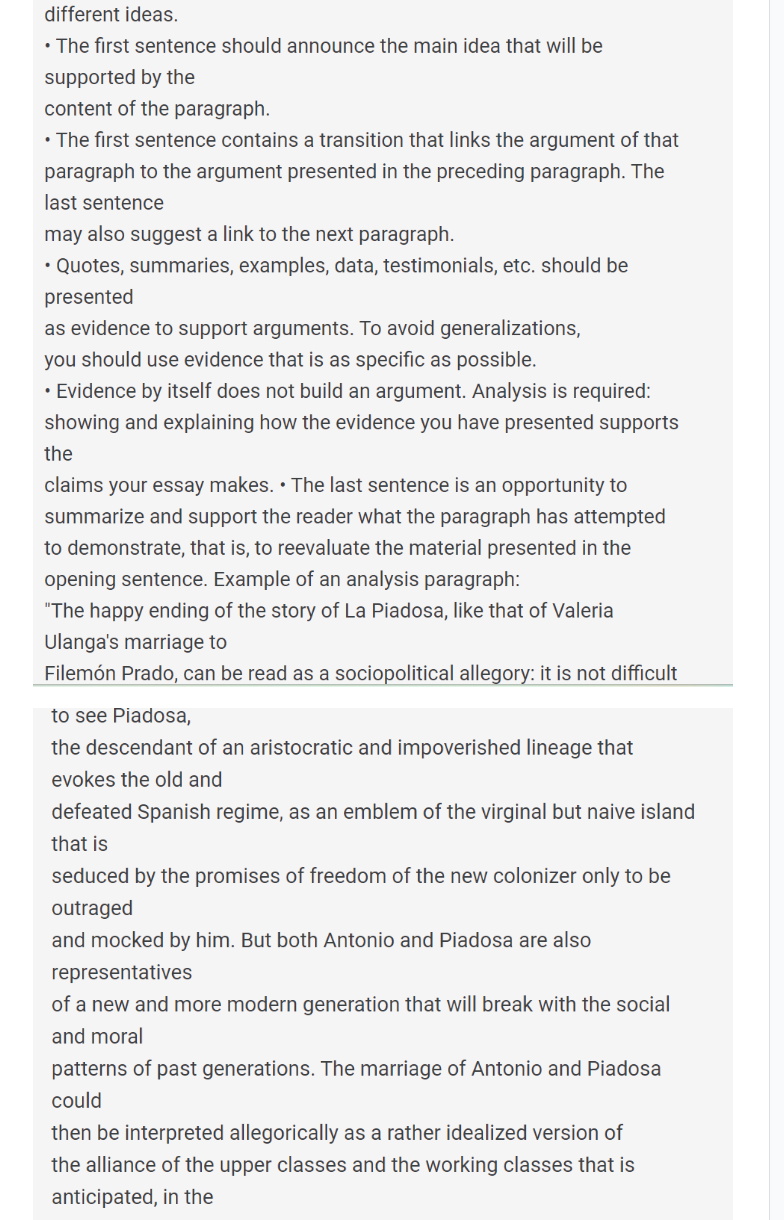
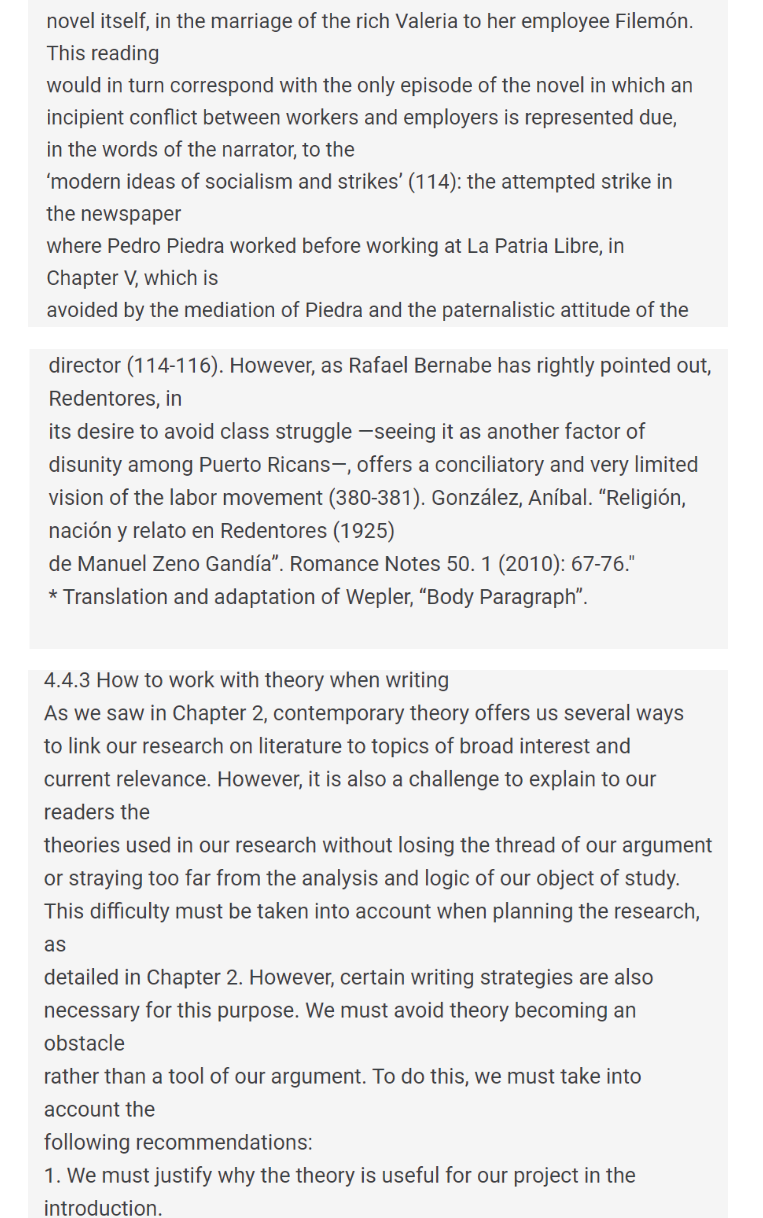
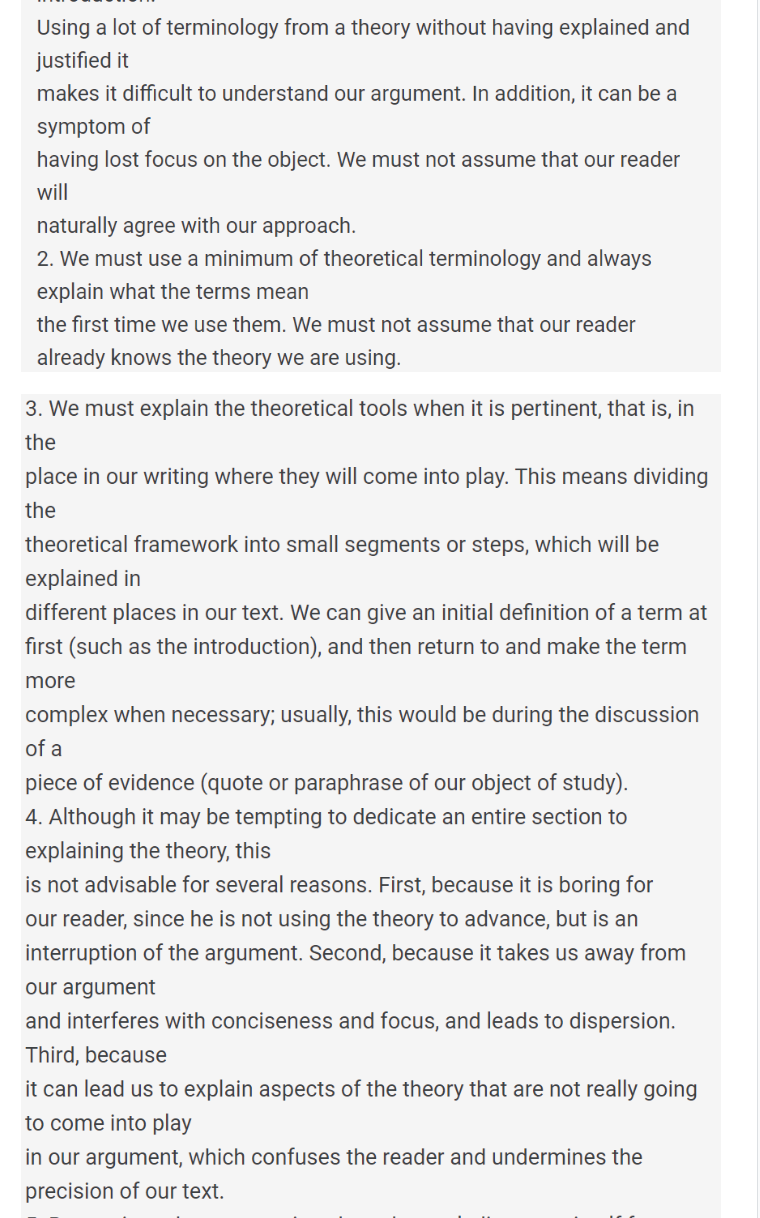
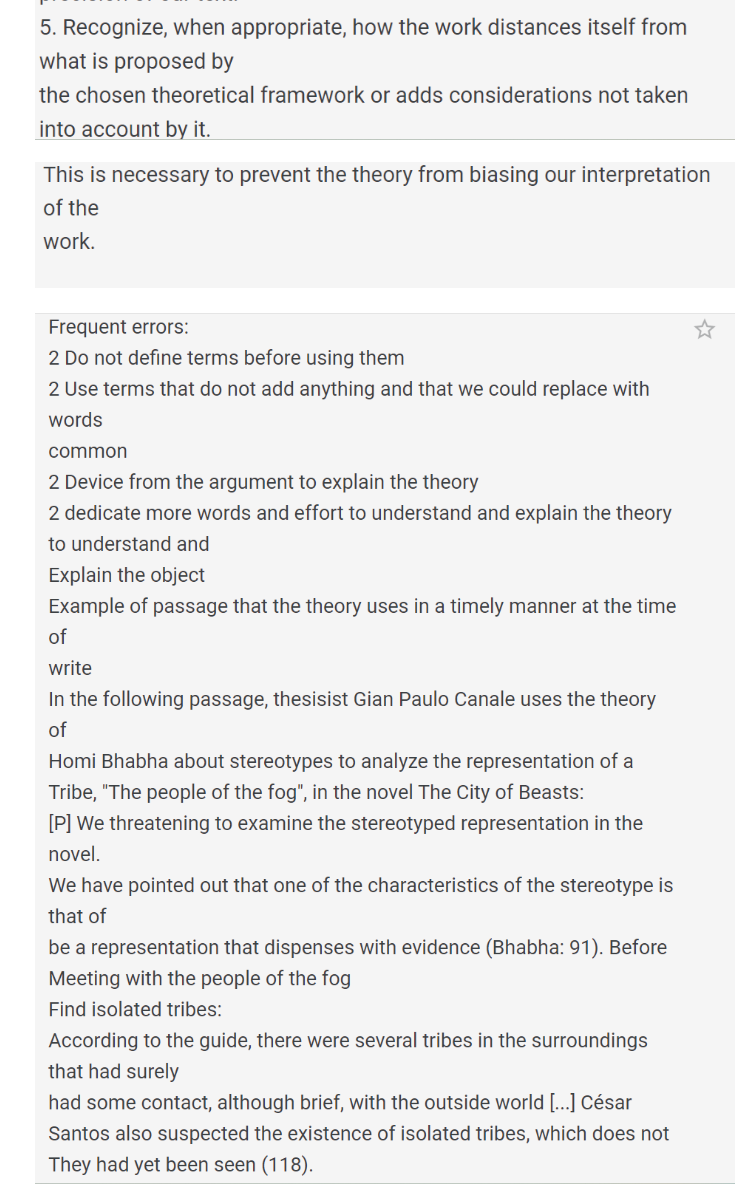
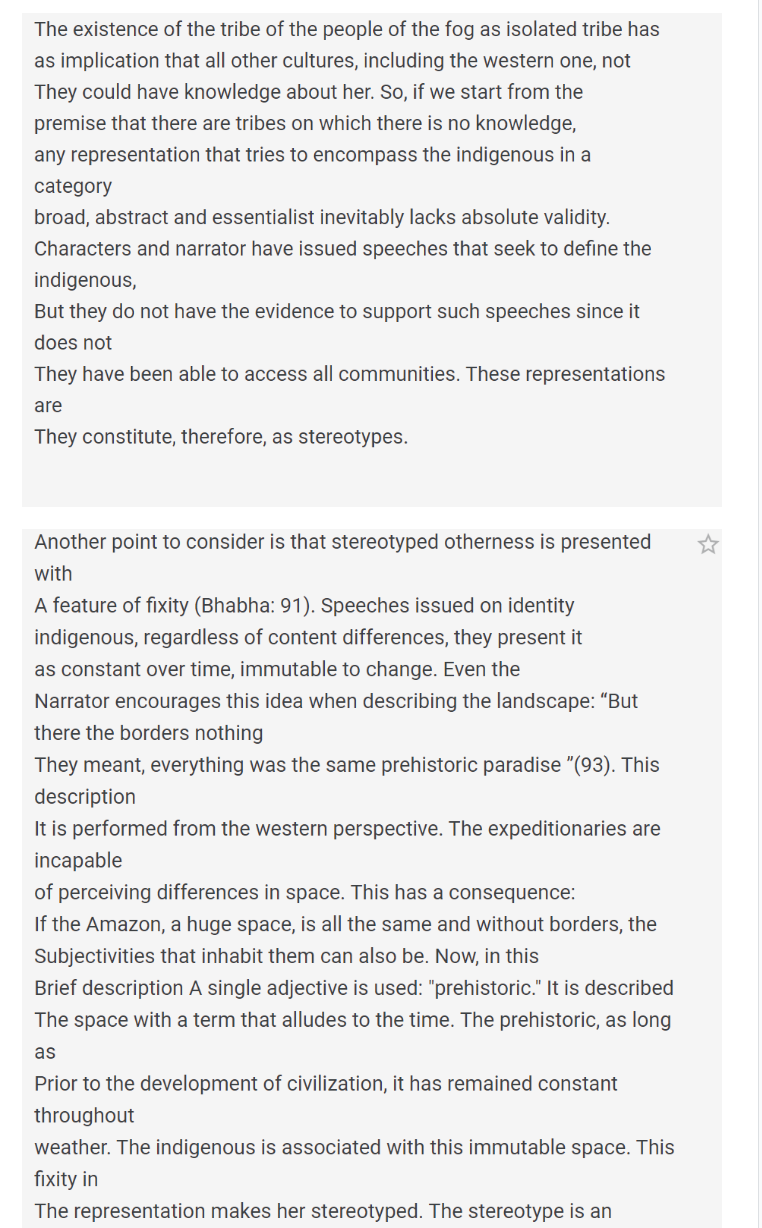
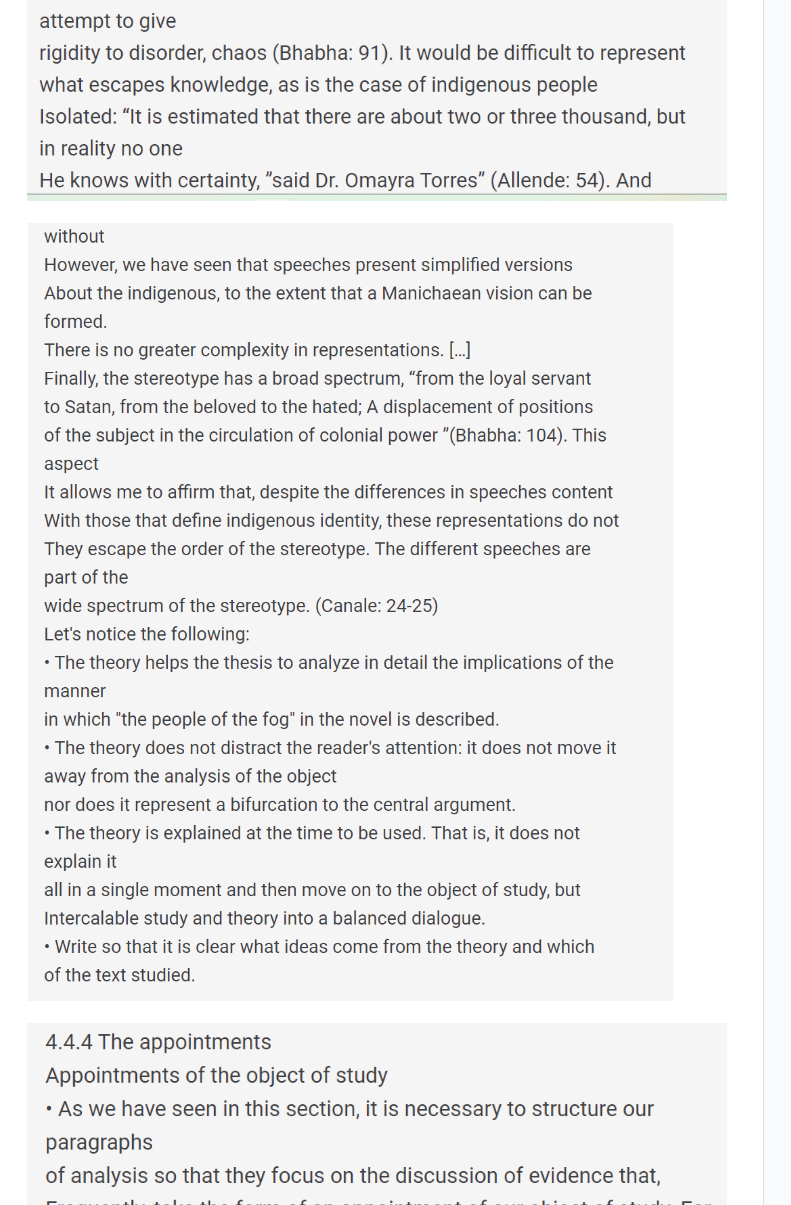
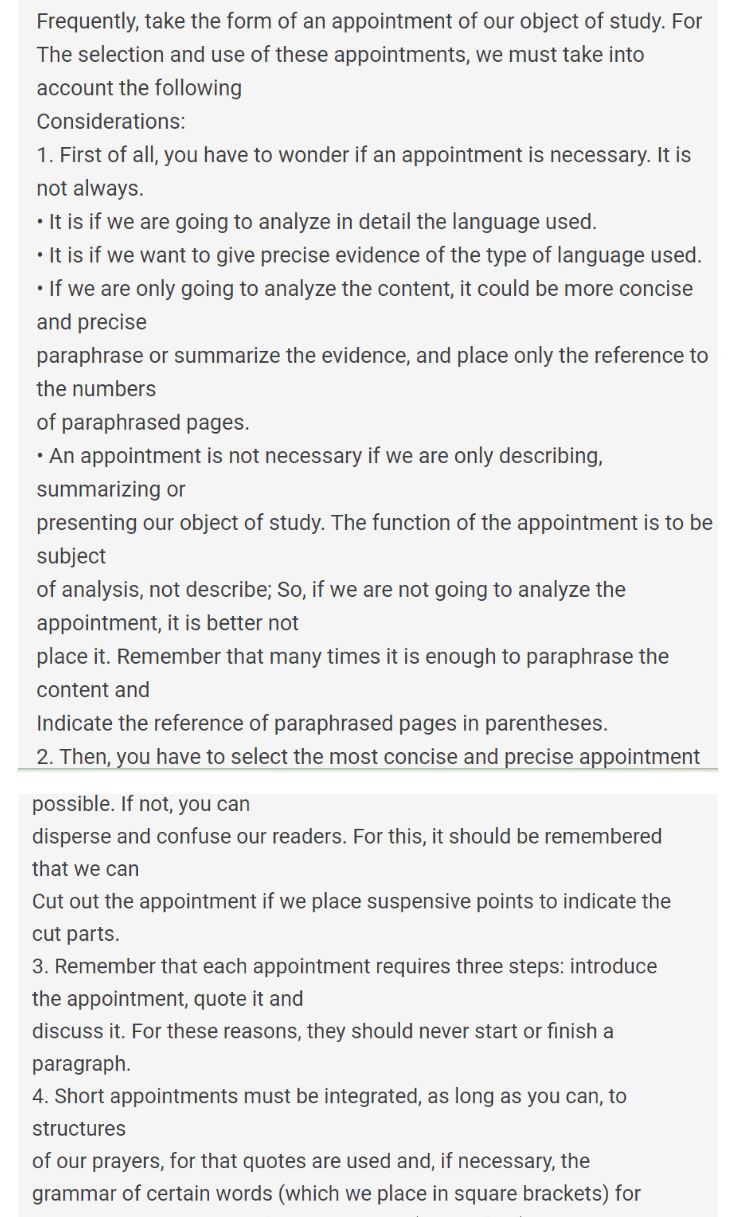
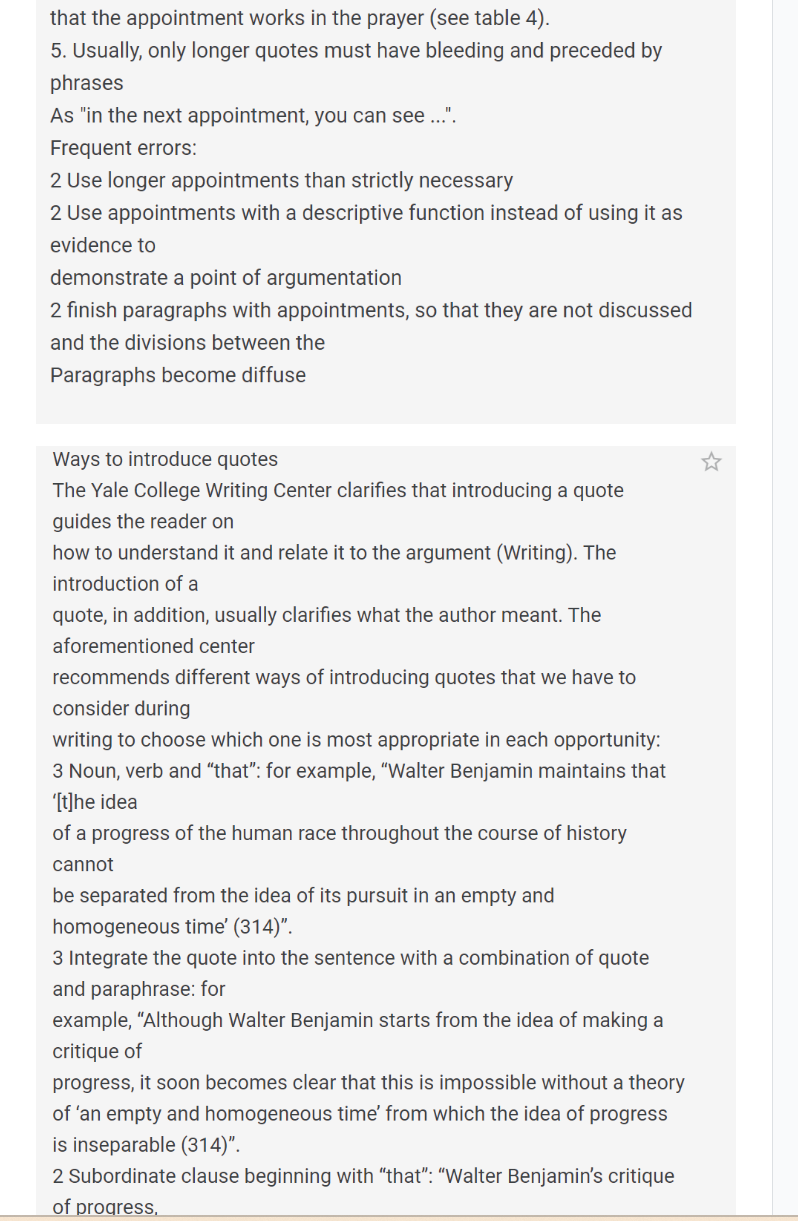
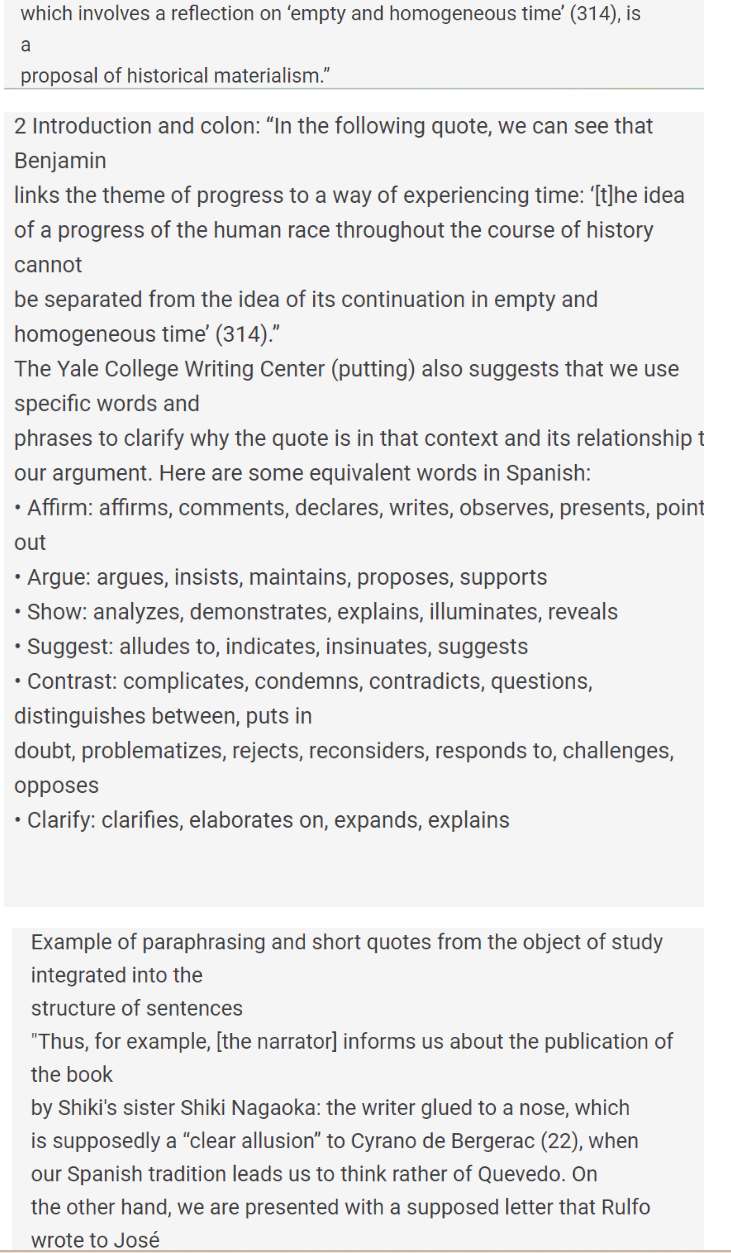
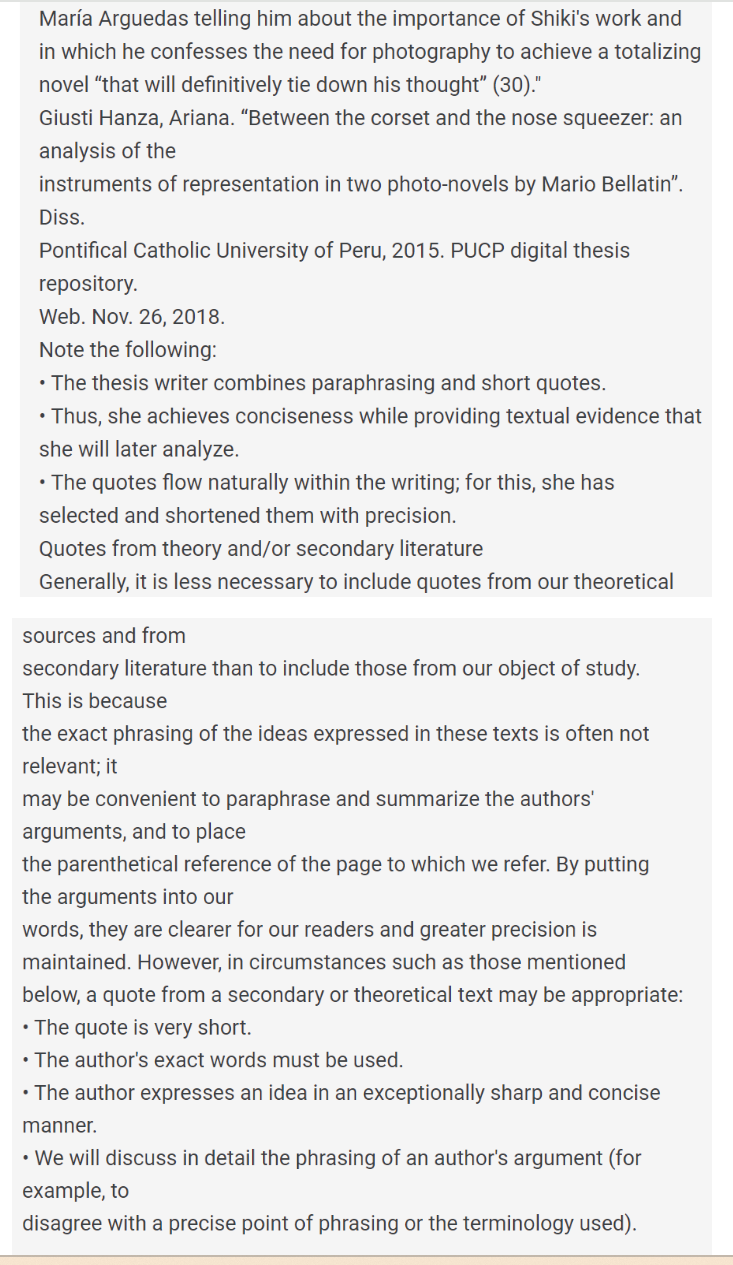
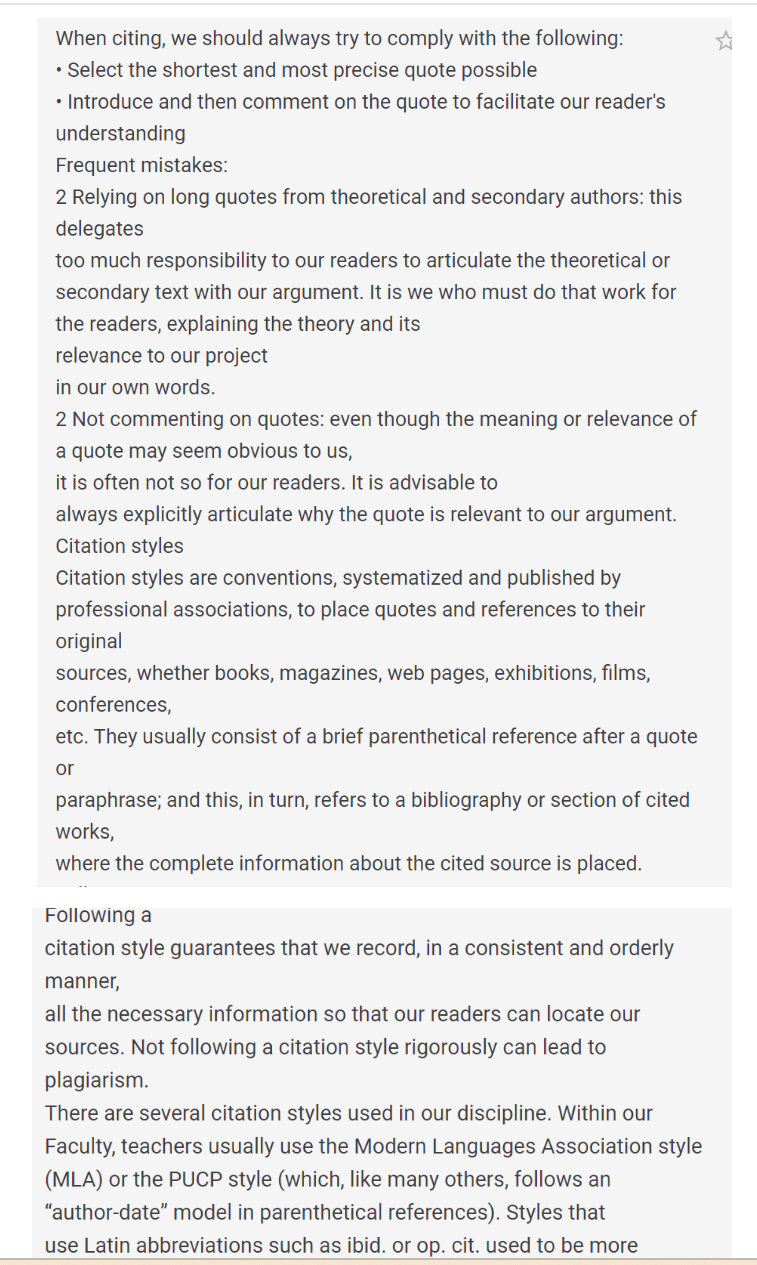
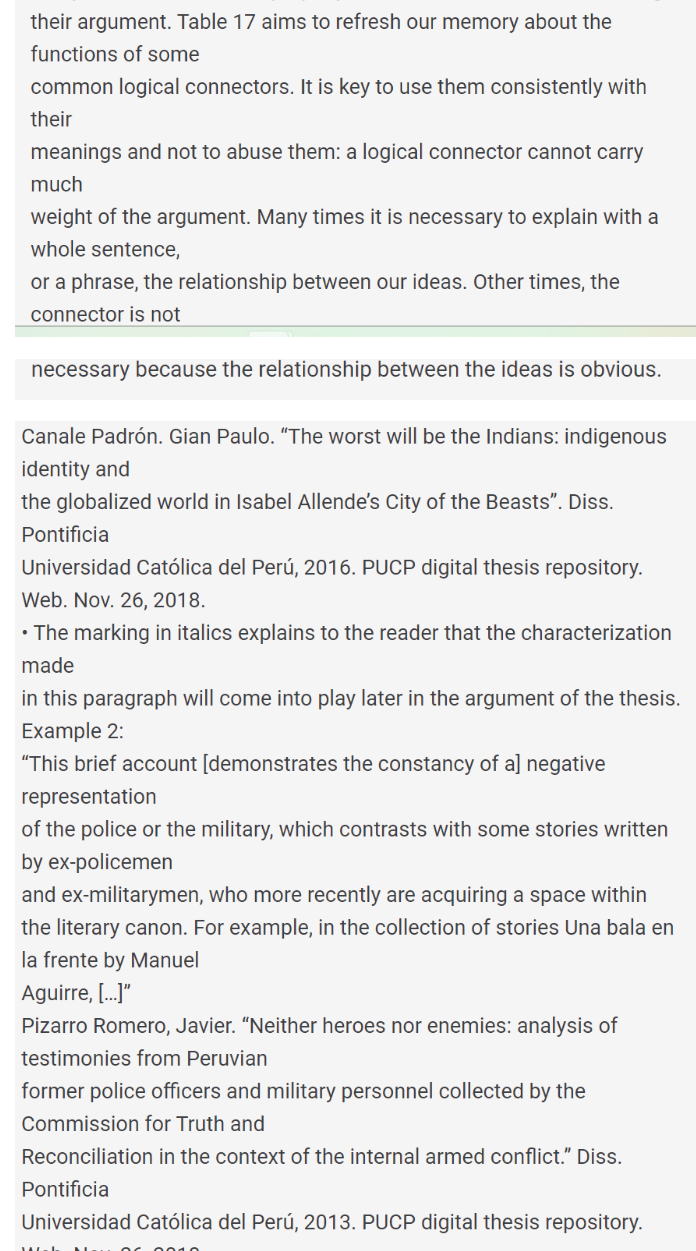
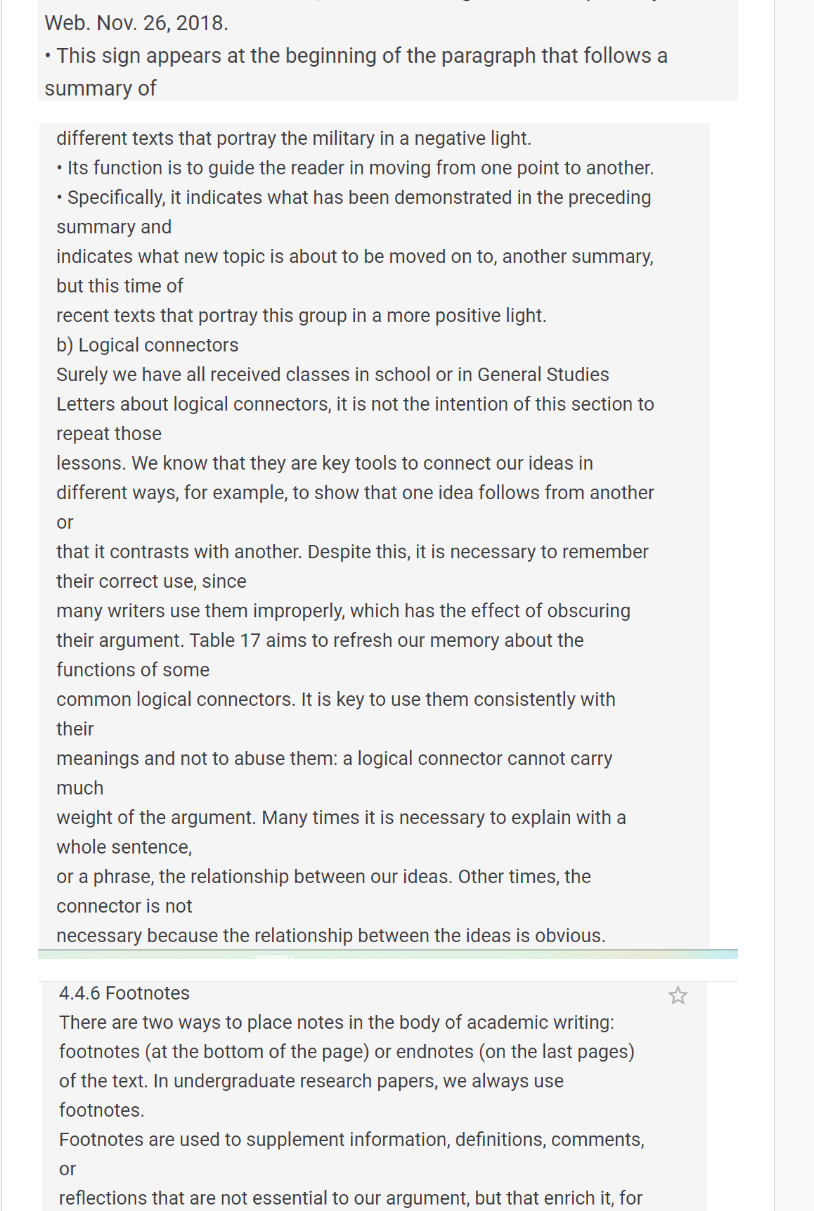
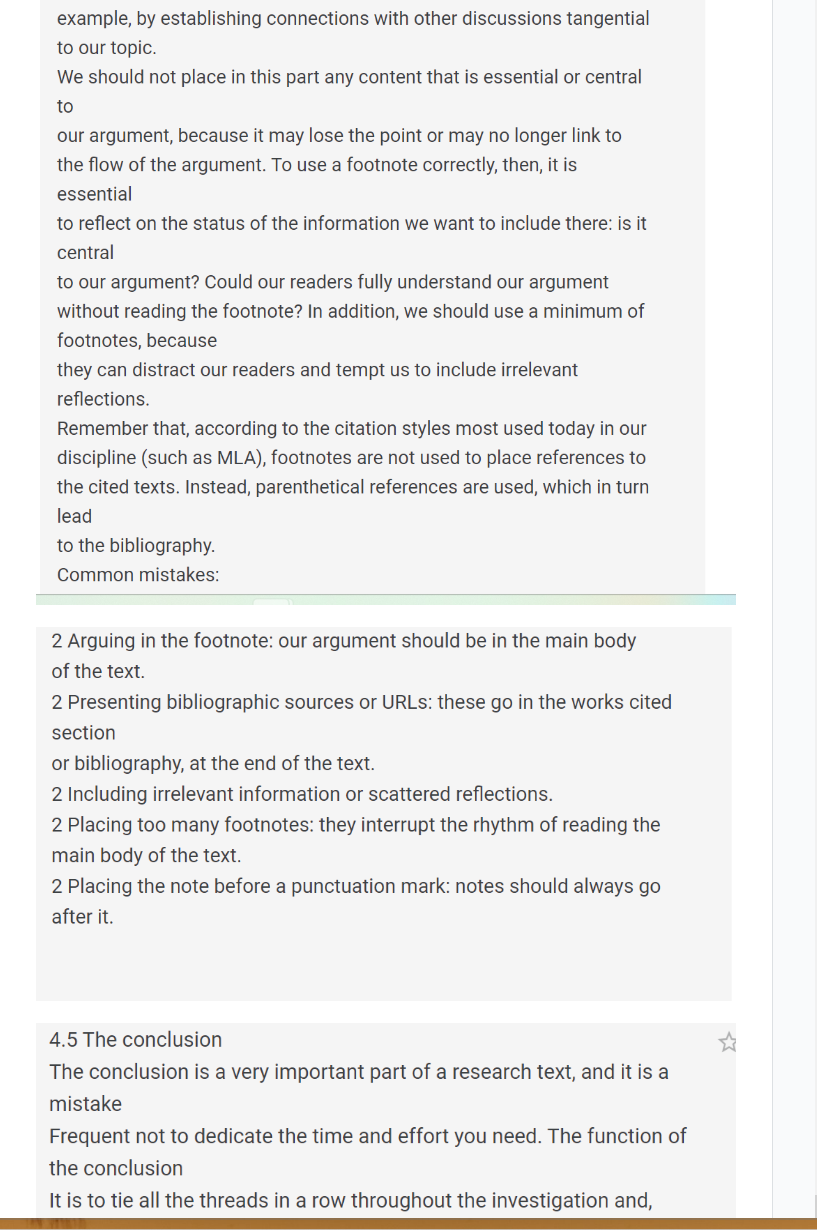
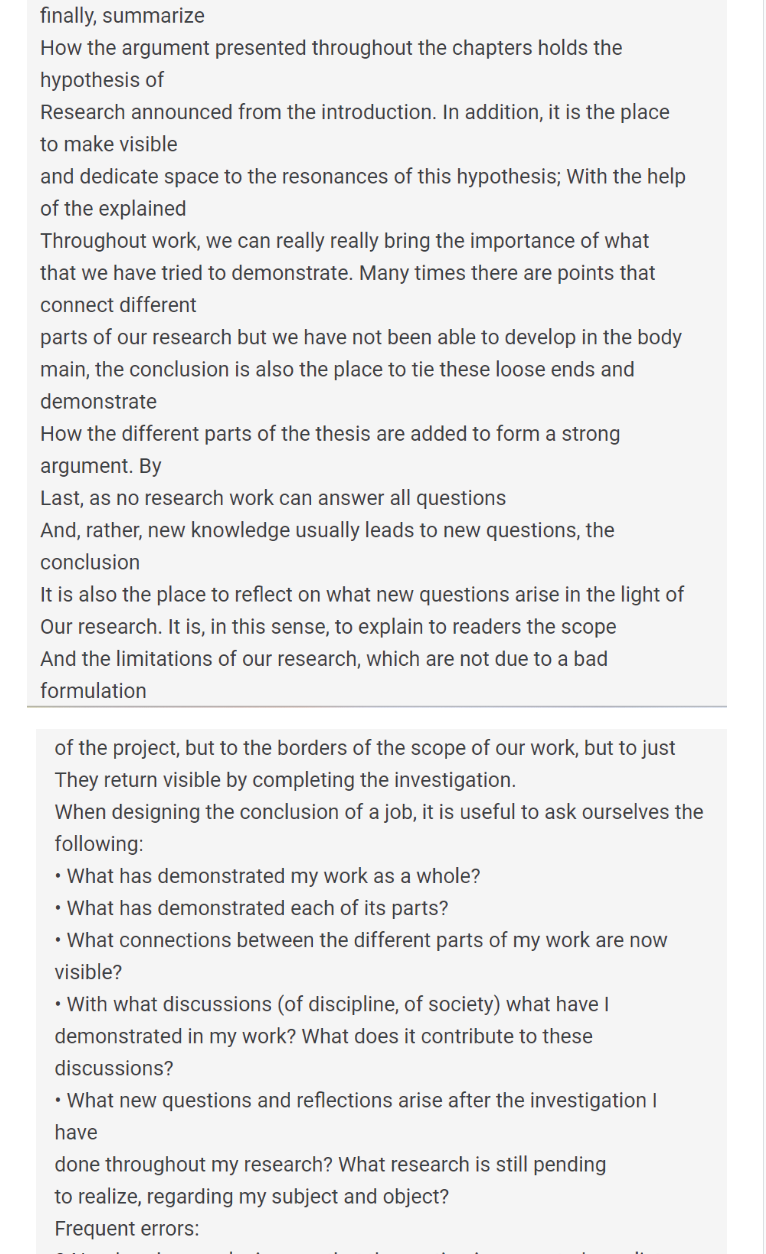
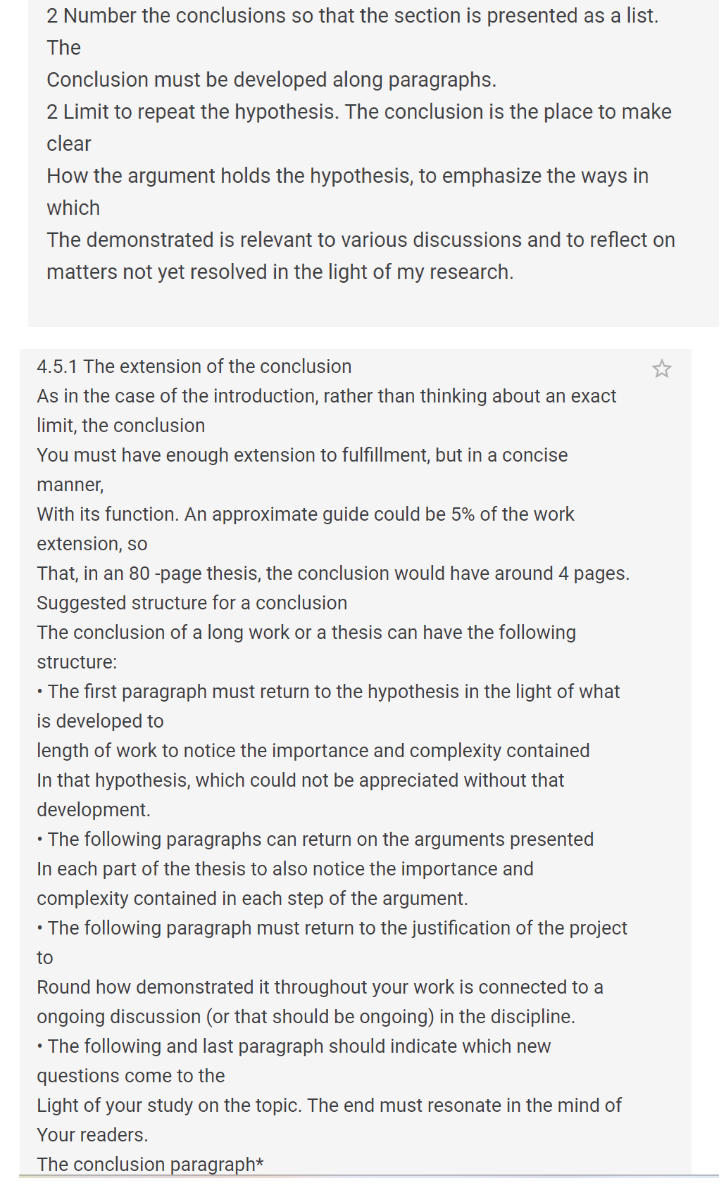
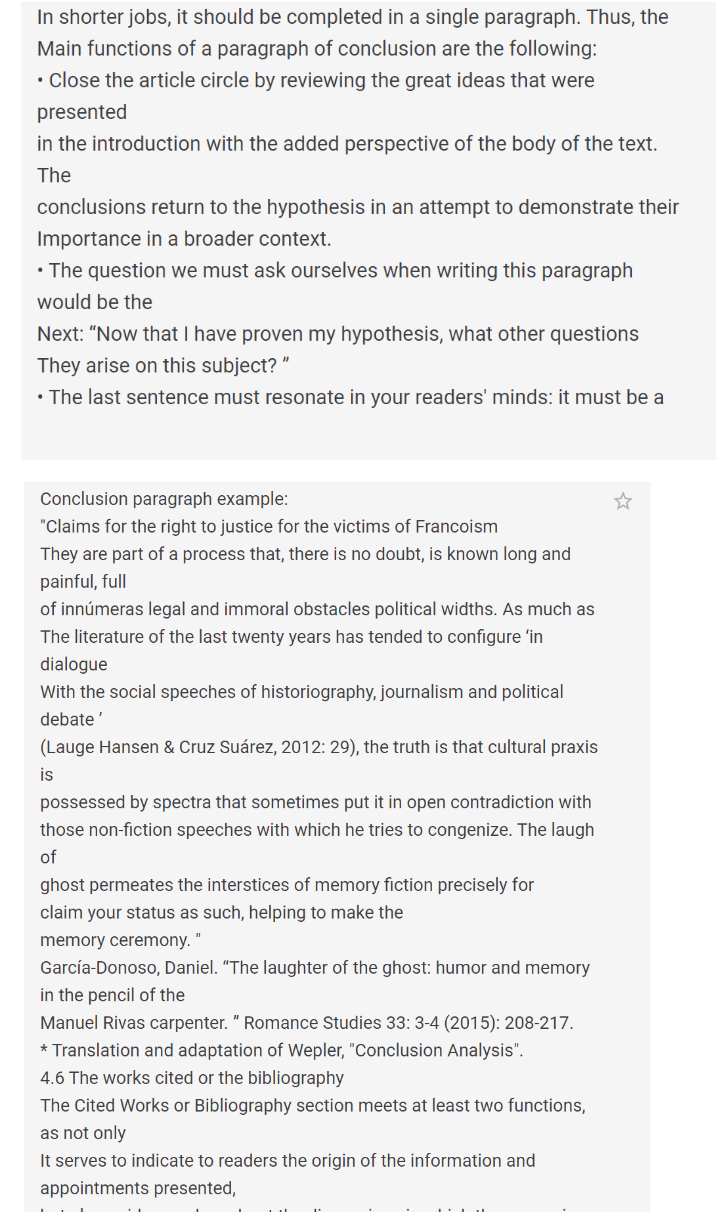
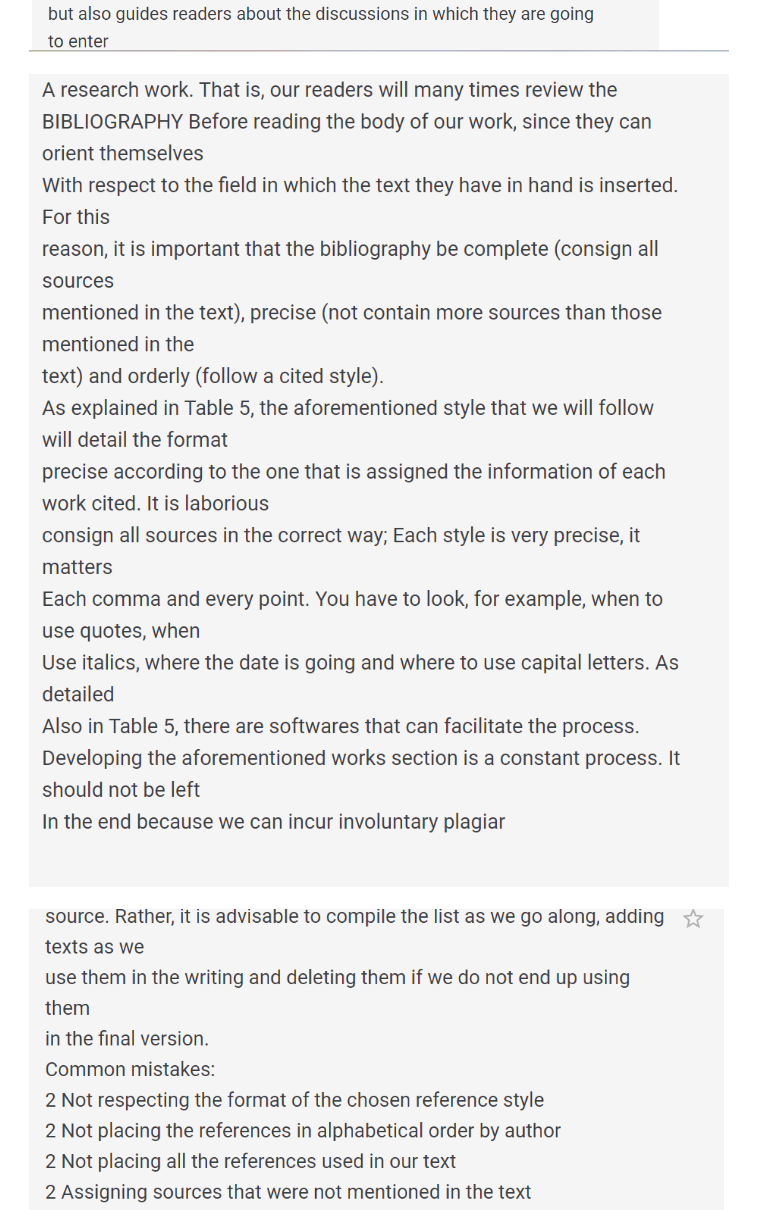
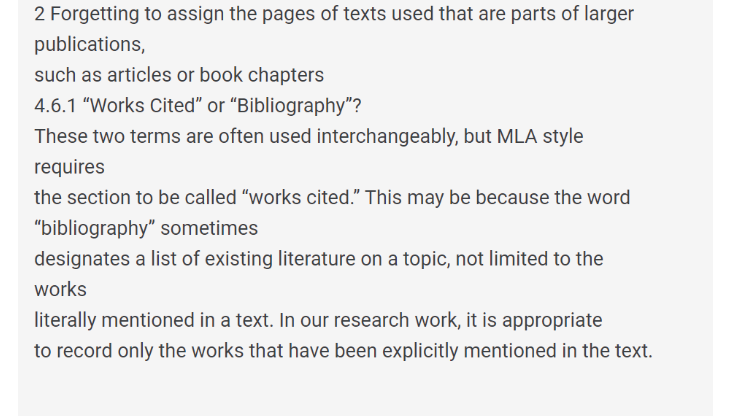
In this chapter we will explain about the function of each part of the final text of the Research and we will give some writing suggestions. 4.1 The work title The title will be the first thing our readers will read of our research. HE will immmediately fix in the key terms of the title and on the object of study that There is indicated, and they will be based on it to predict how interesting the work will be research. Itis, then, a letter of presentation that we must prepare carefully; As should be as concise as possible, each word must be thought to detail. A good title must achieve several things: Indicate the subject and the object (usually the title of the work and its author) - Suggest the position that the investigation will take regarding that topic (the argument / The hypothesis) Capture the interest of our readers and generate expectation * Singularize our work regarding similar others The basic elements of a title of a literature investigation are then the investigated theme and the object of study (usually the title of the work and the name of the author). For example, \"Masculinity in the city and the dogs of Mario Vargas Llosa ". However, it is also advisable to give a general impression of what will be our hypothesis; This will be more inciting for our readers, for example, \"the masculinity in crisis as the central theme of the city and the dogs of Mario Vargas Llosa ". We can also clarify in a subtitle what will be the methodology of our Study to singularize our work, for example, \"masculinity in crisis as the central theme of the city and the dogs of Mario Vargas Llosa: a comparison of the characters Jaguar, Gamboa and Alberto ". Finally, to achieve more conciseness, It could be refraced as follows: "Masculinity in crisis: a comparison of the characters Jaguar, Gamboa and Alberto in the city and the dogs of Mario Vargas Llosa". Another frequent option in our discipline is to start the title with a key event (and cut) of the work studied to create interest and indicate the elements to be developed in the body of work. After two points, the content of the work is clarified. The examples below come from theses for the degree of Bachelor in Linguistics and Literature with a major in Hispanic Literature: Examples: . "The worst will be the Indians': indigenous identity and globalized world in The City of the Beasts, by Isabel Allende" (thesis by Gian Paulo Canale) . "Lord, hear me!': empty ritual in The Mansion of Araucaima, by Alvaro Mutis" (thesis by Valeria Seminario) Others prefer to begin the title with a striking, poetic phrase or one that presents a play on words that is later clarified after two points. If a play on words is used, it should allude to a significant aspect of the argument. Examples: . "Nostalgia for permanence: an analysis of desire in La piedra alada, by Jose Watanabe" (thesis by Giovanni Pizardi) . "Laughter and truth: the image of the comic actor in jA ver un aplauso!, by Cesar de Maria" (thesis by Maria Claudia Patino) Logically, the tentative title that we propose at the beginning of ther . . - research can be modified and refined as we develop the writing. We should not feel constrained by the title; it can be modified until the last minute, as long as a careful correspondence is maintained between the title and the written text. Common errors: 2 Using terms in the title that are not central to the argument: this confuses the reader and indicates an incoherent approach. 2 Dividing the title into more than two parts: this reduces the precision of the approach and overwhelms our readers. 2 Using theoretical jargon that is incomprehensible to average readers of the discipline of Hispanic literature. 2 Not being concise: using words that do not add to the precision of the content or create expectation. 4.1.1 Title format Titles in Spanish follow the rules for writing any sentence: they should not be capitalized in all words, nor should a capital letter be placed after a colon. In theses, it is placed on the cover, as indicated by the Faculty's rules (they can be accessed through the following link). In the case of works for In courses, you must follow the instructions of the teacher. Generally, the title is placed at the beginning of the same page where the writing begins. In all cases, the font type and size must be the same as the body of the text. 4.1.2 Chapter titles and subtitles A thesis will always have chapters and these will usually have subtitles. Likewise, in the case of final course works, it is advisable to divide the body into subtitles. Chapter titles and subtitles are used to clearly divide the sections of an argument according to its structure (see phase 4 of chapter 2). A good subtitle usually consists of a single sentence (i.e.. it does not usuallv include a colon) that clearly indicates the topic that will be addressed in the corresponding section and, if possible, in a way that generates interest (see the examples of thesis structures in phase 4 of chapter 2). 4.2 The summary, the summary or the abstract Bachelor theses are required to present, on the first page after the cover and before the index, a summary that must not exceed 200 words in length. Some teachers also request them as a first step in their research work in courses, as well as to apply for a colloguium. In the summary, which must consist of a single paragraph, the topic, the object, the hypothesis, the justification, the methodology and a brief indication of the structure of the thesis must be presented. It is a challenge to convey so many ideas in so few words, so the summary must go through several versions until achieving a clear text, in which each word is fulfilling a role. It is advisable to write the summary towards the end of the process of writing the body of the text, when there is already certainty about the argument and the structure. 4.3 The introduction It is clear that an introduction must present the topic and the object of the research, and anticipate what is going to be argued. This basically involves outlining and justifying all the aspects explained in Chapter 2 (topic, object, objective, hypothesis, methodology, theoretical framework, etc.), so that readers feel oriented, have a relatively precise idea of what can be expected from the body of the work, and continue reading with the impression that they are going to read a solid work. However, as important or more important than this orienting function, the introduction must cause enthusiasm in our readers. They must feel intrigued from the first sentence, and by the end of the introduction they must be convinced that they will read not only a solid work, but also a timely and significant one. In other words, a good Introduction makes clear the justification of the research, what is at stake in the argument, and convinces the reader of its urgency. The introduction can also be a place to indicate the personal motivation that has led us to carry out the research, because many times this motivation is related to the justification and relevance of the work. For this reason, it is key to structure the introduction in a way that emphasizes what is interesting about our work. It should not be a boring list of object, topic, methodology, etc., but should present, in an original and motivating way, the research proposal and its importance. 4.3.1 Structure of the introduction Each introduction will have its own structure, but in general terms the following is recommended: 1. The first paragraph of an introduction should fully contextualize the problem and motivate the reader's interest. From the first sentence, the aim is to place the object of study and the topic of the research within a particular historical or theoretical phenomenon. That is, this first paragraph justifies and contextualizes your research. 2. After contextualizing the topic and object of analysis, it will be necessary to make the research hypothesis explicit. This should be done in simple language, since the theoretical framework and the state of the art have not yet been introduced. 3. In the following paragraphs, the arguments that will be developed throughout the study and that support this general hypothesis are presented. It is recommended that each of them correspond to each argument. 4. Then, we seek to explain what the work method will be: what texts and/or authors were worked on, what were the temporal and geographical limits, etc. Not only are they presented or described, the reason for their choice must be argued. 5. Then, a state of the art is presented: a summary of what the critics have already said about the object of analysis and how the hypothesis of this work is related to the knowledge that is had of the subject. 6. The following paragraph justifies the theoretical framework from which the topic and object are approached. Here the key terms are defined, both those of the title and those that will be used throughout the thesis. 7. Then, the structure of the research is outlined: what is presented in each chapter, what this division responds to, what arguments are presented in each one of them, etc. 8. Finally, the hypothesis can be reformulated, this time doing allusions to the critical debates and theoretical themes explained in previous paragraphs, and round the objectives and justification of the work (it is important to create expectation about what that will achieve the work, so that the conclusion can resume these points in greater detail). Frequent errors: 2 Start arguing in the introduction: the introduction is not the place to Demonstrate your points. He says what will be demonstrated, he even says how, but he does not reach Demonstrate anything, or unpack all the implications of what will be demonstrated. 2 Enter too much detail: the introduction summarizes the main work of investigation. 2 Include unnecessary contextual or biographical information. 2 Use complex terms or refer to textual characters and facts before have explained and justified. 2 Make a state of the matter or theoretical framework too extensive and detailed: In the introduction, it is only necessary to guide your reader without going into details that They can be presented in the chapters. 2 Do not present the hypothesis: the introduction must already give away the results of your Research (your main idea and the ideas of each chapter). 2 Start with generalities instead of quickly presenting the hypothesis and justification of work. 2 Include subtitles: Usually, introductions of undergraduate work and bachelor's thesis do not have an extension that requires the use of Subtitles The introductory paragraph* In an article, it is convenient to use the first paragraph to present the objective and the research arguments. In that sense, the main functions of a introductory paragraph are the following: * The question or problem that will be treated in the essay is presented Motivate the reader's interest in suggesting why the problem is original and important Clara and directly what is the author's position regarding the question or topic (hypothesis) INTRODUCTORY PARAGRAPH STRUCTURE: - The first sentence of an essay places the general structure of the paragraph introductory. Considering that the main objective of an introduction is to demonstrate what the reader will learn when reading the essay, the essays argumentatives normally establish, in the first prayer, a position presumably stable that it is then complex or destabilized, Thus exposes a vacuum that the essay tries to remedy. - After establishing a presumably stable position on the object of study, the author invokes a condition - an alternative explanation or an unknown fact- that destabilizes the initial position. This will allow demonstrate the problem that requires a solution, thus builds the subject and reason of the essay. * To justify an investigation, it is also necessary to point out the utility of the essay. How does it contribute to the literature that already exists on The subject? * The test hypothesis must be announced. You have to remember that you should not Simply point out the topic of the investigation, you must present a shot very clear position on it. * The evidence that will be used in the trial body must be indicated and, if necessary, the structure that the argument will have will be presented. Example of an introductory paragraph: "One of the most mysterious episodes in the already fascinating life of Lope de Vega is the poet's supposed participation in the 'Jornada de Inglaterra' of 1598, the famous 'Invincible Armada' of Philip Il. Specifically, this incident has perplexed the biographers of the Phoenix because it involves serious contradictions between the data we have about the author's life - especially what Lope and his friends claim - and the historical documents that are preserved in this regard. What's more, even limiting ourselves to Lope's own works, we find inconsistencies that make us doubt his trip to England, and that make these months of the life of the Madrid writer a real nightmare for his biographers. To shed some light on this complex matter, our work will review the data that exist about Lope and the Jornada de Inglaterra, adding some that until now have not been taken into account by scholars who have dealt with the episode. In addition, we will use this information to examine Phoenix's own references to the Navy in a different way than that thus far favored by critics. Instead of trying to elucidate whether or not Lope participated in the expedition to England, we will analyze why he alluded to the event so insistently, and why he did so in different ways on different occasions throughout his career.\" Sanchez Jimnez, Antonio. \"Lope de Vega and the Armada of 1588: Biography and Author Poses\". Anuario Lope de Vega 14 (2008): 269- 289. * Translation and adaptation by Wepler, \"Introduction Analysis\". 4.3.2 Length of the introduction Rather than thinking of an exact limit, the length should not be more or less than what is necessary for the introduction to satisfactorily fulfill its function. A rough guide could be 10% of the length of the work, so that, in a thesis of 80 pages, the introduction would be around 8 pages. 4.3.3 When to write the introduction? Many researchers prefer to write the introduction after having finished writing at least a first version of the chapters and the conclusion, because it is only at that moment that we usually have a clear structure and a hypothesis already tested. However, it is important that, after writing the introduction, the body of the work is reread and edited, because although it is written at the end, it should seem as if it was written at the beginning: that is, the body of the work should flow 4.4 The body of the paper A final paper for a course in the Specialization in Hispanic Literature will demonstrate the hypothesis announced in the introduction over several paragraphs, perhaps organized under subheadings. In a bachelor's thesis, the hypothesis will be demonstrated in an argument developed over several chapters. 4.4.1 The structure of a subsection or a chapter In general, a subsection or a chapter of a research should follow the same structure expected of any argument, that is, an introduction, a development in paragraphs and a conclusion. We may feel that we are repeating ourselves, but it will make the argument and its structure much clearer for our readers if there is a clear indication of the objective of each subsection, or chapter at the beginning of it, and a brief summary of what has been demonstrated within it at the time of its closing. It is worth remembering that the writing of this type of work has to a certain extent a Chinese box structure: the chapters must present large arguments that support the hypothesis and the subchapters within each chapter must present more limited arguments that contribute to supporting the argument of the chapter in question. In turn, each subtitle must be composed of - Ir . ... paragraphs that each present a developed idea, that is, an affirmation of an idea, the evidence that supports that affirmation and the discussion of the evidence. 4.4.2 Paragraphs There are different types of paragraph, but what connects them is that each one has the purpose of demonstrating a point in favor of your hypothesis. This means that each paragraph has a thematic unit and a specific purpose, which must be clear in order to achieve a good argument. Below, we present a table with two common types of paragraph.Paragraph Structures in an Academic Research Paper 1. The Research Paragraph* + The purpose of a research paragraph is to present the scope of the essay in relation to the state of the field. A research paragraph presents how the ideas from the different sources to be used relate to each other. * Its composition requires a sentence on the topic, evidence that comes from various sources, linking the different positions and citations from the sources, and a conclusion. The first sentence should present a very clear position regarding the state of research on the subject of study. When you reach the end of the paragraph, your evidence should demonstrate the position that was presented in the initial sentence. Example of a research paragraph: \"The function of preaching in colonial baroque culture and its link with the consolidation of the Creole sector during the second half of the 17th century are issues that have been little studied by academic critics. Although the importance of sacred oratory in baroque culture and, in particular, in the American territory is highlightedunderstanding it as one of the crucial symbolic and material tools used to design, regulate and discipline colonial spaces and subjects, there are few studies that approach preaching from a broad cultural perspective that auestions the status of this effective discursive practice, integrating it with the strengthening of the complex Creole sector. To date, studies on preaching during the 17th century have described the structural characteristics of oratory in its character as a literary genre frequently practiced in the baroque world. However, this perspective has omitted a series of cultural crossovers between the discourses arount the preaching and other knowledge, subjects and places that were also part of the Baroque lettered city. It is curious that, in the face of one of the most debated, regulated, practiced and published genres during the American 17th century, even today there is a lack of critical approaches that seek to unravel the role that sacred oratory played in building one of the most prominent power nuclei of the colonial world: the heterogeneous Creole group.\" Vitulli, Juan. \"Constructing the Creole Preacher: An Approach to the Al of Sermons of Fray Martin de Velasco\". Hispanic Review 81. 4 (Autumn 2013): 417 438. * Translation and adaptation of Wepler, \"Research Paragraph\". Paragraph Structures in an Academic Research Paper 1. The Research Paragraph* * The purpose of a research paragraph is to present the scope of the essay in relation to the state of the field. A research paragraph presents how the ideas from the different sources to be used relate to each other. * Its composition requires a sentence on the topic, evidence that comes from various sources, linking the different positions and citations from the sources, and a conclusion. The first sentence should present a very clear position regarding the state of research on the subject of study. * When you reach the end of the paragraph, your evidence should demonstrate the position that was presented in the initial sentence. Example of a research paragraph: "The function of preaching in colonial baroque culture and its link with the consolidation of the Creole sector during the second half of the 17th century are issues that have been little studied by academic critics. Although the importance of sacred oratory in baroque culture and, in particular, in the American territory is highlightedunderstanding it as one of the crucial symbolic and material tools used to design, regulate and discipline colonial spaces and subjects, there are few studies that approach preaching from a broad cultural perspective that questions the status of this effective discursive practice, integrating it with the strengthening of the complex Creole sector. To date, studies on preaching during the 17th century have described the structural characteristics of oratory in its character as a literary genre frequently practiced in the baroque world. However, this perspective has omitted a series of cultural crossovers between the discourses around the preaching and other knowledge, subjects and places that were also part of the Baroque lettered city. It is curious that, in the face of one of the most debated, regulated, practiced and published genres during the American 17th century, even today there is a lack of critical approaches that seek to unravel the role that sacred oratory played in building one of the most prominent power nuclei of the colonial world: the heterogeneous Creole group.\" Vitulli, Juan. \"Constructing the Creole Preacher: An Approach to the Art of Sermons of Fray Martin de Velasco". Hispanic Review 81. 4 (Autumn 2013): 417- 438. * Translation and adaptation of Wepler, \"Research Paragraph\". 2. The Analysis Paragraph* * The entire paragraph should present a single idea of the argument. The analysis should clarify what is presented in the opening sentence. If a paragraph begins with one idea, it should not conclude with another or intersperse different ideas. * The first sentence should announce the main idea that will be supported by the content of the paragraph. The first sentence contains a transition that links the argument of that paragraph to the argument presented in the preceding paragraph. The last sentence may also suggest a link to the next paragraph. * Quotes, summaries, examples, data, testimonials, etc. should be presented as evidence to support arguments. To avoid generalizations, you should use evidence that is as specific as possible. Evidence by itself does not build an argument. Analysis is required: showing and explaining how the evidence you have presented supports the claims your essay makes. * The last sentence is an opportunity to summarize and support the reader what the paragraph has attempted to demonstrate, that is, to reevaluate the material presented in the opening sentence. Example of an analysis paragraph: \"The happy ending of the story of La Piadosa, like that of Valeria Ulanga's marriage to Filemon Prado, can be read as a sociopolitical allegory: it is not difficult to see Piadosa, the descendant of an aristocratic and impoverished lineage that evokes the old and defeated Spanish regime, as an emblem of the virginal but naive island that is seduced by the promises of freedom of the new colonizer only to be outraged and mocked by him. But both Antonio and Piadosa are also representatives of a new and more modern generation that will break with the social and moral patterns of past generations. The marriage of Antonio and Piadosa could then be interpreted allegorically as a rather idealized version of the alliance of the upper classes and the working classes that is anticipated, in the novel itself, in the marriage of the rich Valeria to her employee Filemon. This reading would in turn correspond with the only episode of the novel in which an incipient conflict between workers and employers is represented due, in the words of the narrator, to the 'modern ideas of socialism and strikes' (114): the attempted strike in the newspaper where Pedro Piedra worked before working at La Patria Libre, in Chapter V, which is avoided by the mediation of Piedra and the paternalistic attitude of the director (114-116). However, as Rafael Bernabe has rightly pointed out, Redentores, in its desire to avoid class struggle seeing it as another factor of disunity among Puerto Ricans, offers a conciliatory and very limited vision of the labor movement (380-381). Gonzalez, Anibal. \"Religion, nacin y relato en Redentores (1925) de Manuel Zeno Gandia\". Romance Notes 50. 1 (2010): 67-76." * Translation and adaptation of Wepler, \"Body Paragraph\". 4.4.3 How to work with theory when writing As we saw in Chapter 2, contemporary theory offers us several ways to link our research on literature to topics of broad interest and current relevance. However, it is also a challenge to explain to our readers the theories used in our research without losing the thread of our argument or straying too far from the analysis and logic of our object of study. This difficulty must be taken into account when planning the research, as detailed in Chapter 2. However, certain writing strategies are also necessary for this purpose. We must avoid theory becoming an obstacle rather than a tool of our argument. To do this, we must take into account the following recommendations: 1. We must justify why the theory is useful for our project in the introduction. Using a lot of terminology from a theory without having explained and justified it makes it difficult to understand our argument. In addition, it can be a symptom of having lost focus on the object. We must not assume that our reader will naturally agree with our approach. 2. We must use a minimum of theoretical terminology and always explain what the terms mean the first time we use them. We must not assume that our reader already knows the theory we are using. 3. We must explain the theoretical tools when it is pertinent, that is, in the place in our writing where they will come into play. This means dividing the theoretical framework into small segments or steps, which will be explained in different places in our text. We can give an initial definition of a term at first (such as the introduction), and then return to and make the term more complex when necessary; usually, this would be during the discussion of a piece of evidence (quote or paraphrase of our object of study). 4. Although it may be tempting to dedicate an entire section to explaining the theory, this is not advisable for several reasons. First, because it is boring for our reader, since he is not using the theory to advance, but is an interruption of the argument. Second, because it takes us away from our argument and interferes with conciseness and focus, and leads to dispersion. Third, because it can lead us to explain aspects of the theory that are not really going to come into play in our argument, which confuses the reader and undermines the precision of our text. 5. Recognize, when appropriate, how the work distances itself from what is proposed by the chosen theoretical framework or adds considerations not taken into account by it. This is necessary to prevent the theory from biasing our interpretation of the work. Frequent errors: 2 Do not define terms before using them 2 Use terms that do not add anything and that we could replace with words common 2 Device from the argument to explain the theory 2 dedicate more words and effort to understand and explain the theory to understand and Explain the object Example of passage that the theory uses in a timely manner at the time of write In the following passage, thesisist Gian Paulo Canale uses the theory of Homi Bhabha about stereotypes to analyze the representation of a Tribe, "The people of the fog", in the novel The City of Beasts: [P] We threatening to examine the stereotyped representation in the novel. We have pointed out that one of the characteristics of the stereotype is that of be a representation that dispenses with evidence (Bhabha: 91). Before Meeting with the people of the fog Find isolated tribes: According to the guide, there were several tribes in the surroundings that had surely had some contact, although brief, with the outside world [...] Csar Santos also suspected the existence of isolated tribes, which does not They had yet been seen (118). The existence of the tribe of the people of the fog as isolated tribe has as implication that all other cultures, including the western one, not They could have knowledge about her. So, if we start from the premise that there are tribes on which there is no knowledge, any representation that tries to encompass the indigenous in a category broad, abstract and essentialist inevitably lacks absolute validity. Characters and narrator have issued speeches that seek to define the indigenous, But they do not have the evidence to support such speeches since it does not They have been able to access all communities. These representations are They constitute, therefore, as stereotypes. Another point to consider is that stereotyped otherness is presented with A feature of fixity (Bhabha: 91). Speeches issued on identity indigenous, regardless of content differences, they present it as constant over time, immutable to change. Even the Narrator encourages this idea when describing the landscape: \"But there the borders nothing They meant, everything was the same prehistoric paradise "(93). This description It is performed from the western perspective. The expeditionaries are incapable of perceiving differences in space. This has a consequence: If the Amazon, a huge space, is all the same and without borders, the Subijectivities that inhabit them can also be. Now, in this Brief description A single adjective is used: "prehistoric." It is described The space with a term that alludes to the time. The prehistoric, as long as Prior to the development of civilization, it has remained constant throughout weather. The indigenous is associated with this immutable space. This fixity in The representation makes her stereotyped. The stereotype is an attempt to give rigidity to disorder, chaos (Bhabha: 91). It would be difficult to represent what escapes knowledge, as is the case of indigenous people Isolated: \"It is estimated that there are about two or three thousand, but in reality no one He knows with certainty, "said Dr. Omayra Torres\" (Allende: 54). And without However, we have seen that speeches present simplified versions About the indigenous, to the extent that a Manichaean vision can be formed. There is no greater complexity in representations. [...] Finally, the stereotype has a broad spectrum, \"from the loyal servant to Satan, from the beloved to the hated; A displacement of positions of the subject in the circulation of colonial power \"(Bhabha: 104). This aspect It allows me to affirm that, despite the differences in speeches content With those that define indigenous identity, these representations do not They escape the order of the stereotype. The different speeches are part of the wide spectrum of the stereotype. (Canale: 24-25) Let's notice the following: * The theory helps the thesis to analyze in detail the implications of the manner in which "the people of the fog" in the novel is described. * The theory does not distract the reader's attention: it does not move it away from the analysis of the object nor does it represent a bifurcation to the central argument. * The theory is explained at the time to be used. That is, it does not explain it all in a single moment and then move on to the object of study, but Intercalable study and theory into a balanced dialogue. Write so that it is clear what ideas come from the theory and which of the text studied. 4.4.4 The appointments Appointments of the object of study + As we have seen in this section, it is necessary to structure our paragraphs of analysis so that they focus on the discussion of evidence that, I e i e B i e e e ST e e o L e e Frequently, take the form of an appointment of our object of study. For The selection and use of these appointments, we must take into account the following Considerations: 1. First of all, you have to wonder if an appointment is necessary. It is not always. - It is if we are going to analyze in detail the language used. + It is if we want to give precise evidence of the type of language used. - If we are only going to analyze the content, it could be more concise and precise paraphrase or summarize the evidence, and place only the reference to the numbers of paraphrased pages. An appointment is not necessary if we are only describing, summarizing or presenting our object of study. The function of the appointment is to be subject of analysis, not describe; So, if we are not going to analyze the appointment, it is better not place it. Remember that many times it is enough to paraphrase the content and Indicate the reference of paraphrased pages in parentheses. 2. Then, you have to select the most concise and precise appointment possible. If not, you can disperse and confuse our readers. For this, it should be remembered that we can Cut out the appointment if we place suspensive points to indicate the cut parts. 3. Remember that each appointment requires three steps: introduce the appointment, quote it and discuss it. For these reasons, they should never start or finish a paragraph. 4. Short appointments must be integrated, as long as you can, to structures of our prayers, for that quotes are used and, if necessary, the grammar of certain words (which we place in square brackets) for that the appointment works in the prayer (see table 4). 5. Usually, only longer quotes must have bleeding and preceded by phrases As "in the next appointment, you can see ...". Frequent errors: 2 Use longer appointments than strictly necessary 2 Use appointments with a descriptive function instead of using it as evidence to demonstrate a point of argumentation 2 finish paragraphs with appointments, so that they are not discussed and the divisions between the Paragraphs become diffuse Ways to introduce quotes The Yale College Writing Center clarifies that introducing a quote guides the reader on how to understand it and relate it to the argument (Writing). The introduction of a quote, in addition, usually clarifies what the author meant. The aforementioned center recommends different ways of introducing quotes that we have to consider during writing to choose which one is most appropriate in each opportunity: 3 Noun, verb and \"that\": for example, \"Walter Benjamin maintains that '[tlhe idea of a progress of the human race throughout the course of history cannot be separated from the idea of its pursuit in an empty and homogeneous time' (314)". 3 Integrate the quote into the sentence with a combination of quote and paraphrase; for example, \"Although Walter Benjamin starts from the idea of making a critique of progress, it soon becomes clear that this is impossible without a theory of 'an empty and homogeneous time' from which the idea of progress is inseparable (314)". 2 Subordinate clause beginning with \"that\": \"Walter Benjamin's critique of progress, which involves a reflection on 'empty and homogeneous time' (314), is a proposal of historical materialism.\" 2 Introduction and colon: \"In the following quote, we can see that Benjamin links the theme of progress to a way of experiencing time: '[tlhe idea of a progress of the human race throughout the course of history cannot be separated from the idea of its continuation in empty and homogeneous time'' (314).\" The Yale College Writing Center (putting) also suggests that we use specific words and phrases to clarify why the quote is in that context and its relationship t our argument. Here are some equivalent words in Spanish: Affirm: affirms, comments, declares, writes, observes, presents, point out = Argue: argues, insists, maintains, proposes, supports + Show: analyzes, demonstrates, explains, illuminates, reveals + Suggest: alludes to, indicates, insinuates, suggests * Contrast: complicates, condemns, contradicts, questions, distinguishes between, puts in doubt, problematizes, rejects, reconsiders, responds to, challenges, opposes - Clarify: clarifies, elaborates on, expands, explains Example of paraphrasing and short quotes from the object of study integrated into the structure of sentences "Thus, for example, [the narrator] informs us about the publication of the book by Shiki's sister Shiki Nagaoka: the writer glued to a nose, which is supposedly a \"clear allusion\" to Cyrano de Bergerac (22), when our Spanish tradition leads us to think rather of Quevedo. On the other hand, we are presented with a supposed letter that Rulfo wrote to Jos Maria Arguedas telling him about the importance of Shiki's work and in which he confesses the need for photography to achieve a totalizing novel \"that will definitively tie down his thought\" (30)." Giusti Hanza, Ariana. \"Between the corset and the nose squeezer: an analysis of the instruments of representation in two photo-novels by Mario Bellatin\". Diss. Pontifical Catholic University of Peru, 2015. PUCP digital thesis repository. Web. Nov. 26, 2018. Note the following: * The thesis writer combines paraphrasing and short quotes. *+ Thus, she achieves conciseness while providing textual evidence that she will later analyze. * The quotes flow naturally within the writing; for this, she has selected and shortened them with precision. Quotes from theory and/or secondary literature Generally, it is less necessary to include quotes from our theoretical sources and from secondary literature than to include those from our object of study. This is because the exact phrasing of the ideas expressed in these texts is often not relevant; it may be convenient to paraphrase and summarize the authors' arguments, and to place the parenthetical reference of the page to which we refer. By putting the arguments into our words, they are clearer for our readers and greater precision is maintained. However, in circumstances such as those mentioned below, a quote from a secondary or theoretical text may be appropriate: * The quote is very short. * The author's exact words must be used. - The author expresses an idea in an exceptionally sharp and concise manner. + We will discuss in detail the phrasing of an author's argument (for example, to disagree with a precise point of phrasing or the terminology used). When citing, we should always try to comply with the following: Select the shortest and most precise quote possible Introduce and then comment on the quote to facilitate our reader's understanding Frequent mistakes: 2 Relying on long quotes from theoretical and secondary authors: this delegates too much responsibility to our readers to articulate the theoretical or secondary text with our argument. It is we who must do that work for the readers, explaining the theory and its relevance to our project in our own words. 2 Not commenting on quotes: even though the meaning or relevance of a quote may seem obvious to us, it is often not so for our readers. It is advisable to always explicitly articulate why the quote is relevant to our argument. Citation styles Citation styles are conventions, systematized and published by professional associations, to place quotes and references to their original sources, whether books, magazines, web pages, exhibitions, films, conferences, etc. They usually consist of a brief parenthetical reference after a quote or paraphrase; and this, in turn, refers to a bibliography or section of cited works, where the complete information about the cited source is placed. Following a citation style guarantees that we record, in a consistent and orderly manner, all the necessary information so that our readers can locate our sources. Not following a citation style rigorously can lead to plagiarism. There are several citation styles used in our discipline. Within our Faculty, teachers usually use the Modern Languages Association style (MLA) or the PUCP style (which, like many others, follows an \"author-date\" model in parenthetical references). Styles that use Latin abbreviations such as ibid. or op. cit. used to be more common, but these, because they are complex, are used less and less. When listing our sources, the most important thing is to record all the information and be consistent in the style. If the teacher does not indicate which system to work with, it is advisable to follow the PUCP style, as it has an online manual that is easy to follow (see Carneiro et. al. 2015) There are several software programs that many academic writers use to simplify the correct placement of references in their texts. Some have free versions (such as Zotero, Mendeley, CiteULike, BibMe and Citation Machine), others have a fee (such as End Note and RefWorks). Several allow you to import, from Google Books, the information from the cited text and then the program places the reference according to the style that the user selects. One benefit is that it allows you to switch between one style and another immediately. You can also create a file of the sources you use, so that the next time you cite the same source, the information is already available. It is worth noting that the PUCP style is not contemplated by these programs, but there are other similar ones (such as Harvard or APA). 4.4.5 A Matter of Style Good academic writing is also a matter of style, so it is worth taking into account the following considerations: Conciseness, conciseness, conciseness One of the most common mistakes in writing is not being concise. Good academic writing (perhaps even good writing in general) does not use extra words. You have to be concise on several levels: at the chapter or subsection level, there should be no extra paragraphs; at the paragraph level, there should be no extra sentences; and at the sentence level, there should be no extra words and phrasing. * Who is the reader? We always have a reader in mind when we write. We may only have a vague notion of who our readers would be, but even that vague impression will have a lot of effect on how we write. So it is important to reflect and be aware of who our readers are, both real and ideal. Most likely, the first and most important real reader of our work will be a professor in our Faculty, either as a course teacher, advisor, or member of the undergraduate jury. That is, competent readers who will pay attention, primarily, to the extent to which your text demonstrates the competencies of an undergraduate research paper. A common mistake, however, is to assume that our readers will complete steps in the argument or fill in gaps in the information we present. Even if our readers are experts in the subject, we cannot ask them to complete our work. This means that we must write Always act as if your reader were uninformed: each step of the argument must be explicit, each term must be defined from the first use, and each piece of information that supports your ideas must be presented and explained in a timely manner. To do this, it is often useful to show your writing to a reader who is inexperienced in the subject; it could be a classmate, a friend, or a family member. If that person is able to understand your argument, then we are on the right track. It is then a delicate balance between considering that your reader is competent and that at the same time he or she needs to be informed of each step of your research. It helps to remember that, ultimately, the goal is to write in such a way that your mind and those of your readers are in tune. - Connections between ideas Throughout our text, it is vitally important to make the connections between our ideas explicit. That is, always explain why we move from one point to another, how our ideas connect to form a thread or an argument, or why a point is important within the context of our work. To do this, we have two basic strategies: signposting and logical connectors. a) Signposting This term (translated from English signposting) refers to those phrases and sentences whose function is to explain why we are going to explain a point, indicate that it will be taken up again later or is connected to another point made before, advance where our argument will go next, or recap where we have arrived. It is about giving clear signs that, like those on paths, guide our readers to prevent them from feeling lost. It is better to have these signs in excess than to have them missing, especially in the first versions of our texts, because they will also force us to order our ideas precisely when writing. If they hinder the flow of the text too much, some signs can be removed from the final version. Examples of signaling Example 1: \"Professor Leblanc understands the indigenous people as very violent beings [ .. .]. Compared to other cultures, the Indo-Americans would stand out for their savagery, a fact that arouses concern in the other characters. As we will see later, the novel ridicules and dismisses this character's position, but it also plays with the possibility that it turns out to be true\" Canale Padron. Gian Paulo. \"The worst will be the Indians: indigenous identity and the globalized world in Isabel Allende's City of the Beasts\". Diss. Pontificia Universidad Catolica del Peru, 2016. PUCP digital thesis repository. Web. Nov. 26, 2018. The marking in italics explains to the reader that the characterization made in this paragraph will come into play later in the argument of the thesis Example 2: \"This brief account [demonstrates the constancy of a] negative representation of the police or the military, which contrasts with some stories written by ex-policemen and ex-militarymen, who more recently are acquiring a space within the literary canon. For example, in the collection of stories Una bala en la frente by Manuel Aguirre, [..]" Pizarro Romero, Javier. \"Neither heroes nor enemies: analysis of testimonies from Peruvian former police officers and military personnel collected by the Commission for Truth and Reconciliation in the context of the internal armed conflict.\" Diss. Pontificia Universidad Catdlica del Peru, 2013. PUCP digital thesis repository. Web. Nov. 26, 2018. This sign appears at the beginning of the paragraph that follows a summary of different texts that portray the military in a negative light. * Its function is to guide the reader in moving from one point to another. Specifically, it indicates what has been demonstrated in the preceding summary and indicates what new topic is about to be moved on to, another summary, but this time of recent texts that portray this group in a more positive light. b) Logical connectors Surely we have all received classes in school or in General Studies Letters about logical connectors, it is not the intention of this section to repeat those lessons. We know that they are key tools to connect our ideas in different ways, for example, to show that one idea follows from another or that it contrasts with another. Despite this, it is necessary to remember their correct use, since many writers use them imEroeerl which has the effect of obscuring | their argument. Table 17 aims to refresh our memory about the functions of some common logical connectors. It is key to use them consistently with their meanings and not to abuse them: a logical connector cannot carry much weight of the argument. Many times it is necessary to explain with a whole sentence, or a phrase, the relationship between our ideas. Other times, the connector is not necessary because the relationship between the ideas is obvious. Canale Padron. Gian Paulo. "The worst will be the Indians: indigenous identity and the globalized world in Isabel Allende's City of the Beasts". Diss. Pontificia Universidad Catolica del Peru, 2016. PUCP digital thesis repository. Web. Nov. 26, 2018. . The marking in italics explains to the reader that the characterization made in this paragraph will come into play later in the argument of the thesis. Example 2: "This brief account [demonstrates the constancy of a] negative representation of the police or the military, which contrasts with some stories written by ex-policemen and ex-militarymen, who more recently are acquiring a space within the literary canon. For example, in the collection of stories Una bala en la frente by Manuel Aguirre, [..]" Pizarro Romero, Javier. "Neither heroes nor enemies: analysis of testimonies from Peruvian former police officers and military personnel collected by the Commission for Truth and Reconciliation in the context of the internal armed conflict." Diss. Pontificia Universidad Catolica del Peru, 2013. PUCP digital thesis repository.Web. Nov. 26, 2018. - This sign appears at the beginning of the paragraph that follows a summary of different texts that portray the military in a negative light. * Its function is to guide the reader in moving from one point to another. Specifically, it indicates what has been demonstrated in the preceding summary and indicates what new topic is about to be moved on to, another summary, but this time of recent texts that portray this group in a more positive light. b) Logical connectors Surely we have all received classes in school or in General Studies Letters about logical connectors, it is not the intention of this section to repeat those lessons. We know that they are key tools to connect our ideas in different ways, for example, to show that one idea follows from another or that it contrasts with another. Despite this, it is necessary to remember their correct use, since many writers use them improperly, which has the effect of obscuring their argument. Table 17 aims to refresh our memory about the functions of some common logical connectors. It is key to use them consistently with their meanings and not to abuse them: a logical connector cannot carry much weight of the argument. Many times it is necessary to explain with a whole sentence, or a phrase, the relationship between our ideas. Other times, the connector is not necessary because the relationship between the ideas is obvious. 4.4.6 Footnotes There are two ways to place notes in the body of academic writing: footnotes (at the bottom of the page) or endnotes (on the last pages) of the text. In undergraduate research papers, we always use footnotes. Footnotes are used to supplement information, definitions, comments, or reflections that are not essential to our argument, but that enrich it, for example, by establishing connections with other discussions tangential to our topic. We should not place in this part any content that is essential or central fo our argument, because it may lose the point or may no longer link to the flow of the argument. To use a footnote correctly, then, it is essential to reflect on the status of the information we want to include there: is it central to our argument? Could our readers fully understand our argument without reading the footnote? In addition, we should use a minimum of footnotes, because they can distract our readers and tempt us to include irrelevant reflections. Remember that, according to the citation styles most used today in our discipline (such as MLA), footnotes are not used to place references to the cited texts. Instead, parenthetical references are used, which in turn lead to the bibliography. Common mistakes: 2 Arguing in the footnote: our argument should be in the main body of the text. 2 Presenting bibliographic sources or URLs: these go in the works cited section or bibliography, at the end of the text. 2 Including irrelevant information or scattered reflections. 2 Placing too many footnotes: they interrupt the rhythm of reading the main body of the text. 2 Placing the note before a punctuation mark: notes should always go after it. 4.5 The conclusion The conclusion is a very important part of a research text, and itis a mistake Frequent not to dedicate the time and effort you need. The function of the conclusion It is to tie all the threads in a row throughout the investigation and, T e e e e ) finally, summarize How the argument presented throughout the chapters holds the hypothesis of Research announced from the introduction. In addition, it is the place to make visible and dedicate space to the resonances of this hypothesis; With the help of the explained Throughout work, we can really really bring the importance of what that we have tried to demonstrate. Many times there are points that connect different parts of our research but we have not been able to develop in the body main, the conclusion is also the place to tie these loose ends and demonstrate How the different parts of the thesis are added to form a strong argument. By Last, as no research work can answer all questions And, rather, new knowledge usually leads to new questions, the conclusion It is also the place to reflect on what new questions arise in the light of Our research. It is, in this sense, to explain to readers the scope And the limitations of our research, which are not due to a bad formulation of the project, but to the borders of the scope of our work, but to just They return visible by completing the investigation. When designing the conclusion of a job, it is useful to ask ourselves the following: What has demonstrated my work as a whole? What has demonstrated each of its parts? What connections between the different parts of my work are now visible? + With what discussions (of discipline, of society) what have | demonstrated in my work? What does it contribute to these discussions? - What new questions and reflections arise after the investigation | have done throughout my research? What research is still pending to realize, regarding my subject and object? Frequent errors: 2 Number the conclusions so that the section is presented as a list. The Conclusion must be developed along paragraphs. 2 Limit to repeat the hypothesis. The conclusion is the place to make Clear How the argument holds the hypothesis, to emphasize the ways in which The demonstrated is relevant to various discussions and to reflect on matters not yet resolved in the light of my research. 4.5.1 The extension of the conclusion As in the case of the introduction, rather than thinking about an exact limit, the conclusion You must have enough extension to fulfillment, but in a concise manner, With its function. An approximate guide could be 5% of the work extension, so That, in an 80 -page thesis, the conclusion would have around 4 pages. Suggested structure for a conclusion The conclusion of a long work or a thesis can have the following structure: - The first paragraph must return to the hypothesis in the light of what is developed to length of work to notice the importance and complexity contained In that hypothesis, which could not be appreciated without that development. The following paragraphs can return on the arguments presented In each part of the thesis to also notice the importance and complexity contained in each step of the argument. * The following paragraph must return to the justification of the project to Round how demonstrated it throughout your work is connected to a ongoing discussion (or that should be ongoing) in the discipline. + The following and last paragraph should indicate which new questions come to the Light of your study on the topic. The end must resonate in the mind of Your readers. The conclusion paragraph* In shorter jobs, it should be completed in a single paragraph. Thus, the Main functions of a paragraph of conclusion are the following: * Close the article circle by reviewing the great ideas that were presented in the introduction with the added perspective of the body of the text. The conclusions return to the hypothesis in an attempt to demonstrate their Importance in a broader context. + The question we must ask ourselves when writing this paragraph would be the Next: \"Now that | have proven my hypothesis, what other questions They arise on this subject? * + The last sentence must resonate in your readers' minds: it must be a Conclusion paragraph example: "Claims for the right to justice for the victims of Francoism They are part of a process that, there is no doubt, is known long and painful, full of inndmeras legal and immoral obstacles political widths. As much as The literature of the last twenty years has tended to configure 'in dialogue With the social speeches of historiography, journalism and political debate' (Lauge Hansen & Cruz Sudrez, 2012: 29), the truth is that cultural praxis is possessed by spectra that sometimes put it in open contradiction with those non-fiction speeches with which he tries to congenize. The laugh of ghost permeates the interstices of memory fiction precisely for claim your status as such, helping to make the memaory ceremony. " Garcia-Donoso, Danie in the pencil of the Manuel Rivas carpenter. " Romance Studies 33: 3-4 (2015); 208-217. * Translation and adaptation of Wepler, "Conclusion Analysis". 4.6 The works cited or the bibliography | L The laughter of the ghost; humor and memory The Cited Works or Bibliography section meets at least two functions, as not only It serves to indicate to readers the origin of the information and appointments presented, but also guides readers about the discussions in which they are going to enter A research work. That is, our readers will many times review the BIBLIOGRAPHY Before reading the body of our work, since they can orient themselves With respect to the field in which the text they have in hand is inserted. For this reason, it is important that the bibliography be complete (consign all sources mentioned in the text), precise (not contain more sources than those mentioned in the text) and orderly (follow a cited style). As explained in Table 5, the aforementioned style that we will follow will detail the format precise according to the one that is assigned the information of each work cited. It is laborious consign all sources in the correct way; Each style is very precise, it matters Each comma and every point. You have to look, for example, when to use quotes, when Use italics, where the date is going and where to use capital letters. As detailed Also in Table 5, there are softwares that can facilitate the process. Developing the aforementioned works section is a constant process. It should not be left In the end because we can incur involuntary plagiar source. Rather, it is advisable to compile the list as we go along, adding texts as we use them in the writing and deleting them if we do not end up using them in the final version. Common mistakes: 2 Not respecting the format of the chosen reference style 2 Not placing the references in alphabetical order by author 2 Not placing all the references used in our text 2 Assigning sources that were not mentioned in the text 2 Forgetting to assign the pages of texts used that are parts of larger publications, such as articles or book chapters 4.6.1 \"Works Cited\" or \"Bibliography\"? These two terms are often used interchangeably, but MLA style requires the section to be called \"works cited.\" This may be because the word \"bibliography\" sometimes designates a list of existing literature on a topic, not limited to the works literally mentioned in a text. In our research work, it is appropriate to record only the works that have been explicitly mentioned in the text
Step by Step Solution
There are 3 Steps involved in it
1 Expert Approved Answer
Step: 1 Unlock
Question Has Been Solved by an Expert!
Get step-by-step solutions from verified subject matter experts
Step: 2 Unlock
Step: 3 Unlock
Students Have Also Explored These Related Business Writing Questions!









 Study Help