







Question: Make a presentation on the basis of this that we submit to teacher and also present Thank you. SIXTEEN 119 119 Peter Drucker (1909-) Guru's
Make a presentation on the basis of this that we submit to teacher and also present Thank you.
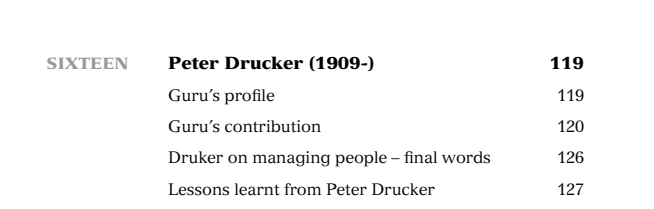
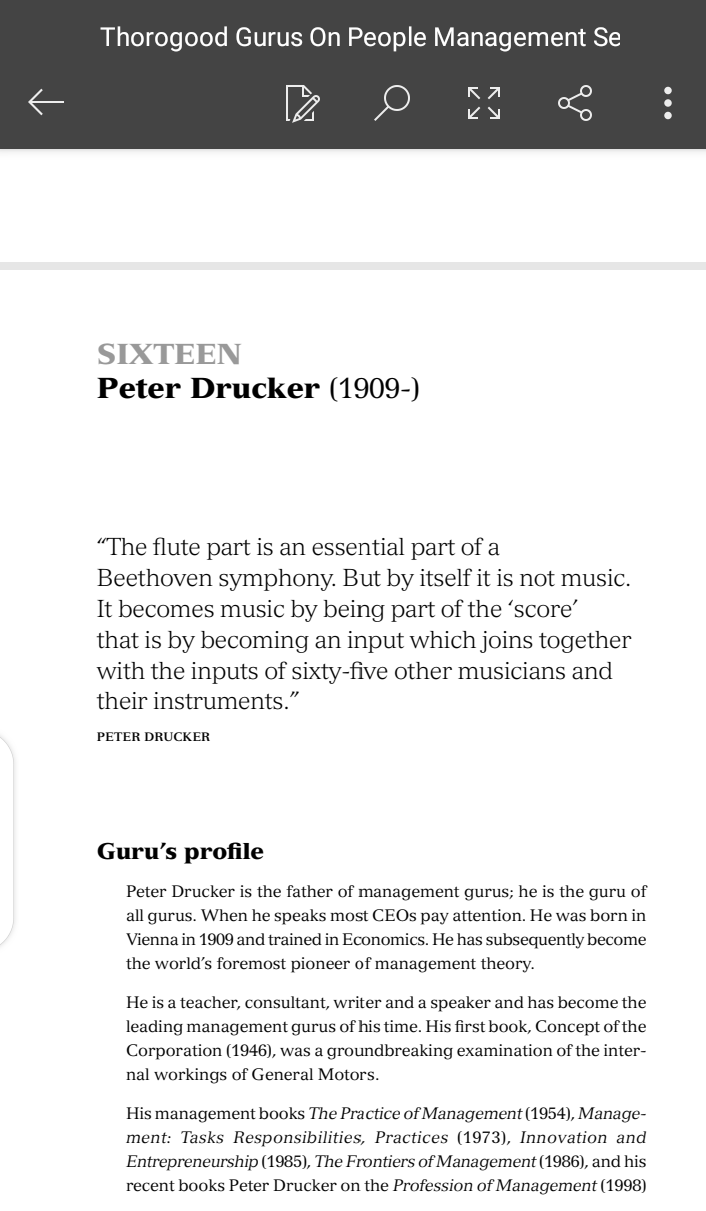
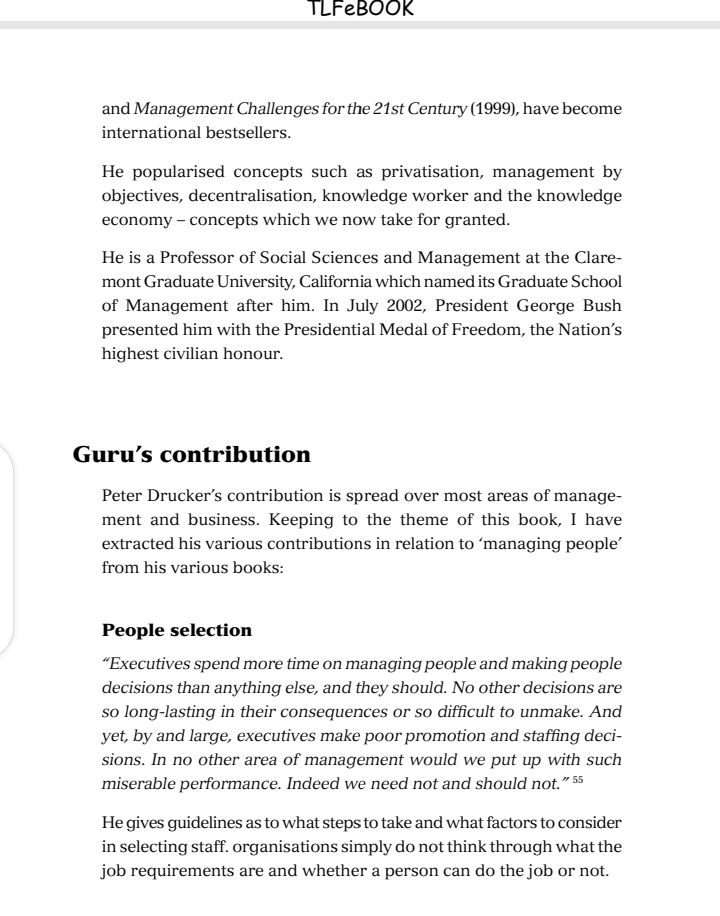
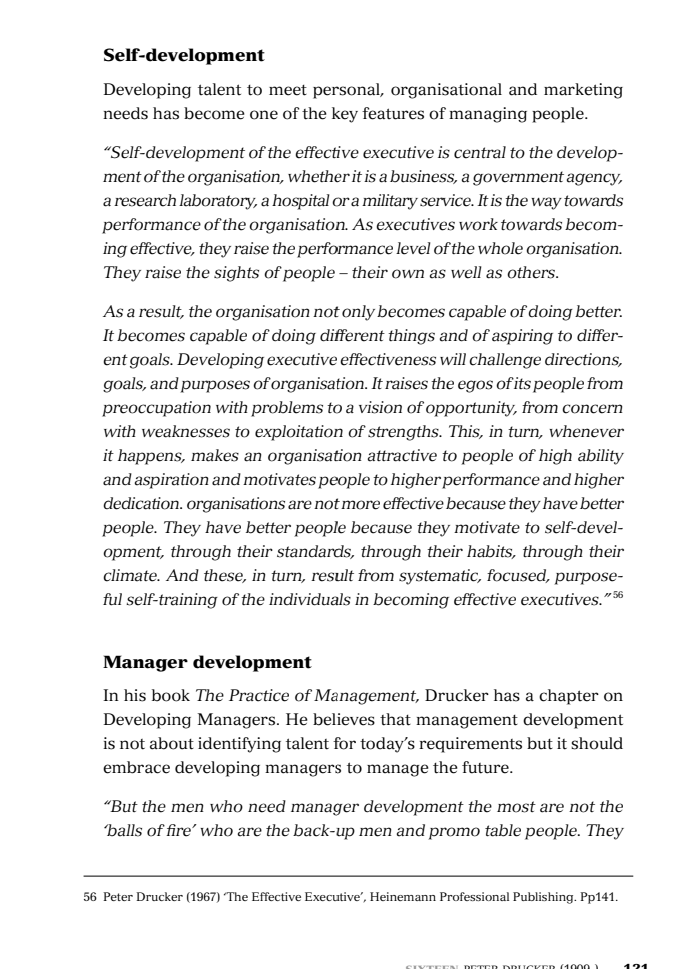
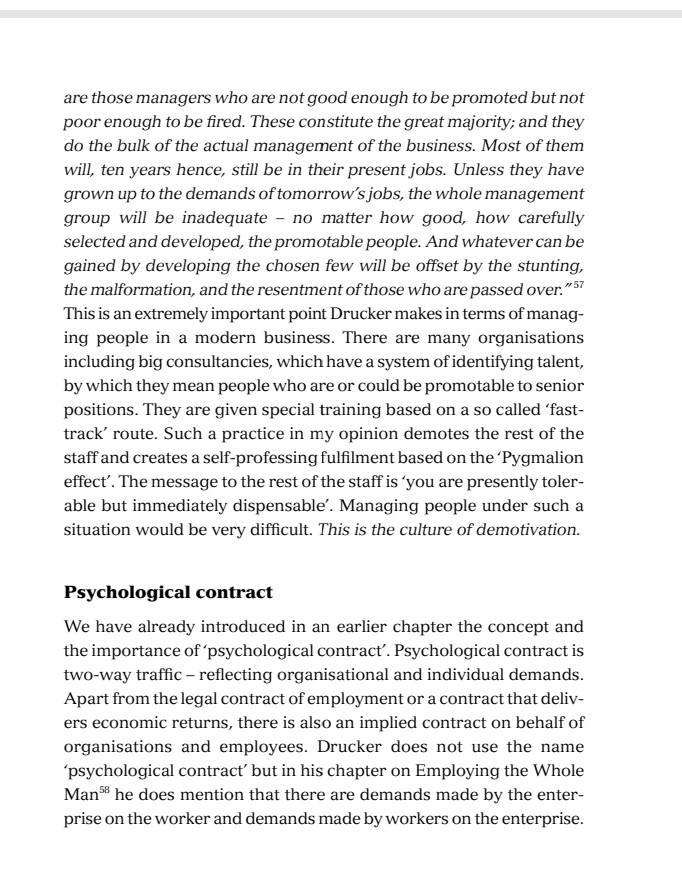
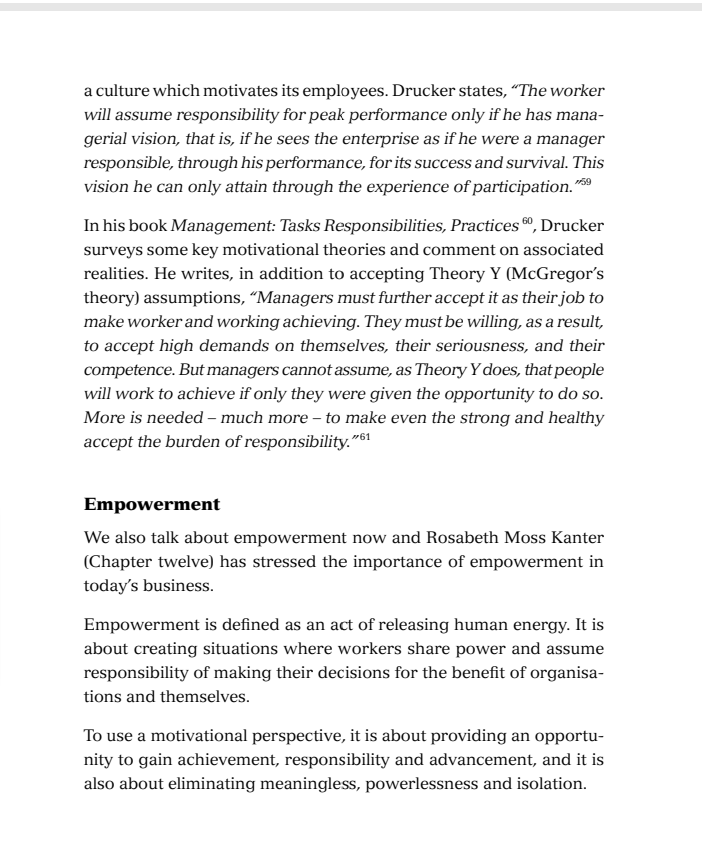
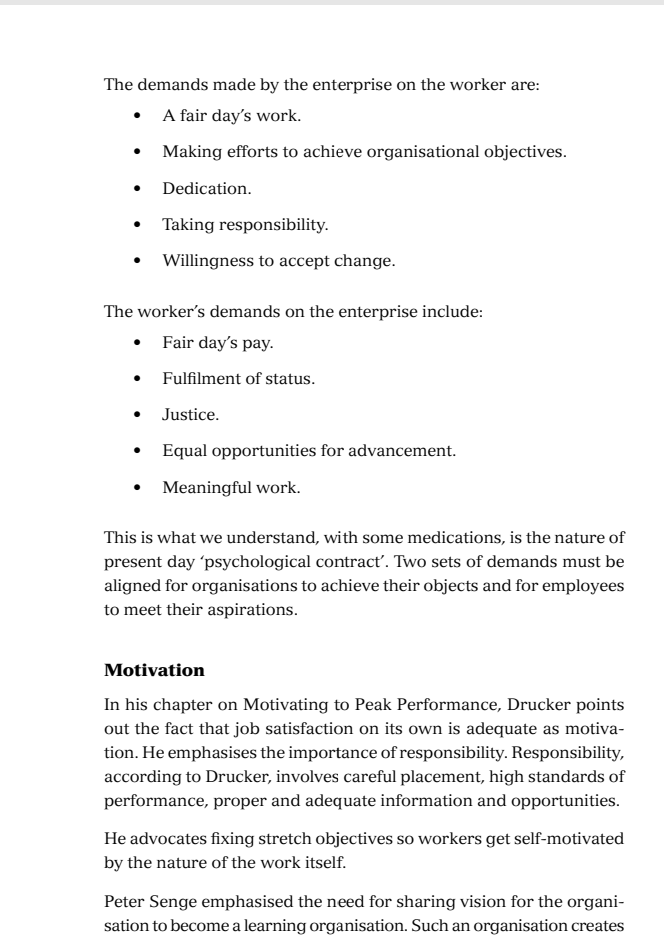
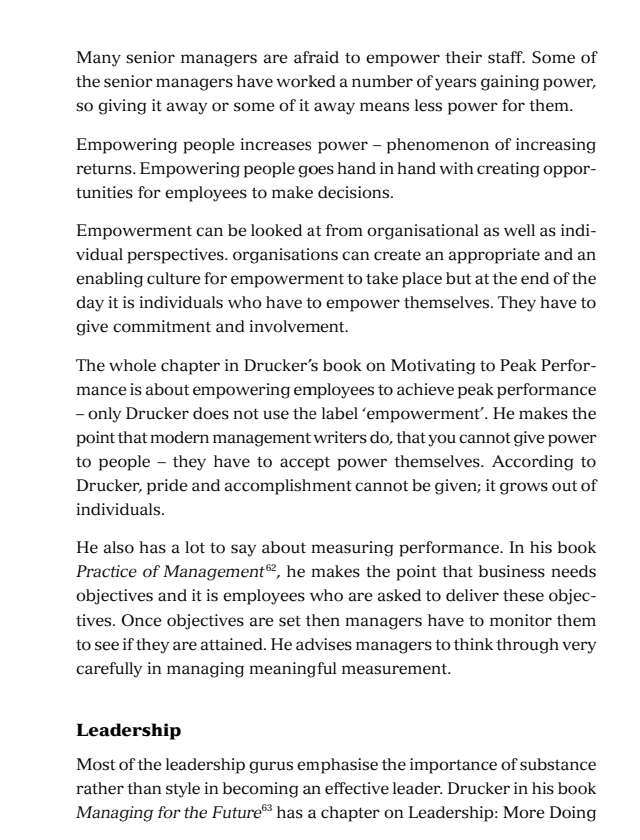
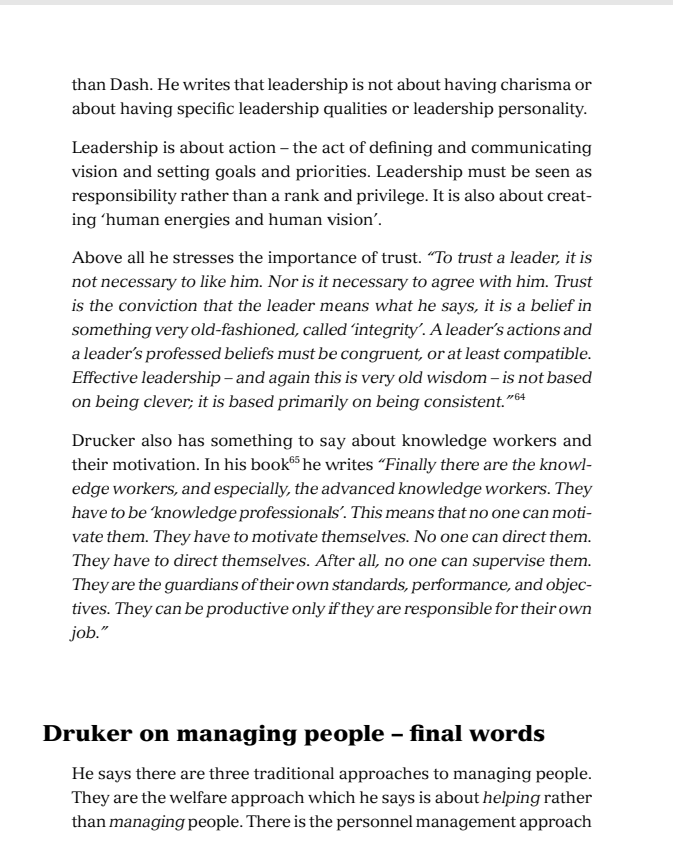
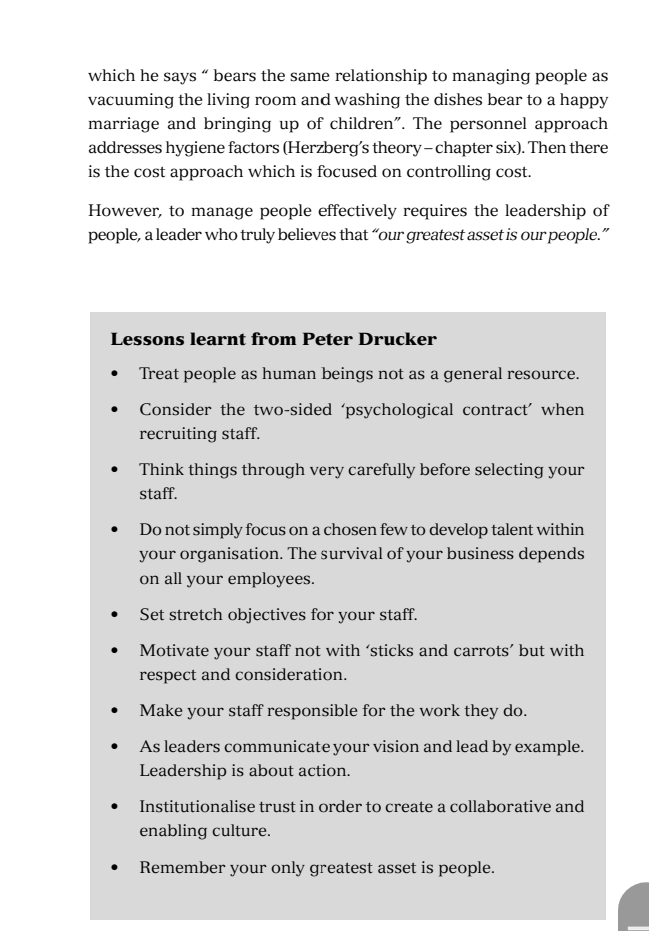
SIXTEEN 119 119 Peter Drucker (1909-) Guru's profile Guru's contribution Druker on managing people - final words Lessons learnt from Peter Drucker 120 126 127 Thorogood Gurus On People Management Se K Ky SIXTEEN Peter Drucker (1909-) The flute part is an essential part of a Beethoven symphony. But by itself it is not music. It becomes music by being part of the score' that is by becoming an input which joins together with the inputs of sixty-five other musicians and their instruments." PETER DRUCKER Guru's profile Peter Drucker is the father of management gurus; he is the guru of all gurus. When he speaks most CEOs pay attention. He was born in Vienna in 1909 and trained in Economics. He has subsequently become the world's foremost pioneer of management theory. He is a teacher, consultant, writer and a speaker and has become the leading management gurus of his time. His first book, Concept of the Corporation (1946), was a groundbreaking examination of the inter- nal workings of General Motors. His management books The Practice of Management (1954), Manage- ment: Tasks Responsibilities, Practices (1973), Innovation and Entrepreneurship (1985), The Frontiers of Management (1986), and his recent books Peter Drucker on the Profession of Management (1998) TLFeBOOK and Management Challenges for the 21st Century (1999), have become international bestsellers. He popularised concepts such as privatisation, management by objectives, decentralisation, knowledge worker and the knowledge economy - concepts which we now take for granted. He is a Professor of Social Sciences and Management at the Clare- mont Graduate University, California which named its Graduate School of Management after him. In July 2002, President George Bush presented him with the Presidential Medal of Freedom, the Nation's highest civilian honour. Guru's contribution Peter Drucker's contribution is spread over most areas of manage- ment and business. Keeping to the theme of this book, I have extracted his various contributions in relation to 'managing people' from his various books: People selection Executives spend more time on managing people and making people decisions than anything else, and they should. No other decisions are so long-lasting in their consequences or so difficult to unmake. And yet, by and large, executives make poor promotion and staffing deci- sions. In no other area of management would we put up with such miserable performance. Indeed we need not and should not. 55 He gives guidelines as to what steps to take and what factors to consider in selecting staff. organisations simply do not think through what the job requirements are and whether a person can do the job or not. Self-development Developing talent to meet personal, organisational and marketing needs has become one of the key features of managing people. "Self-development of the effective executive is central to the develop- ment of the organisation, whether it is a business, a government agency, a research laboratory, a hospital or a military service. It is the way towards performance of the organisation. As executives work towards becom- ing effective, they raise the performance level of the whole organisation. They raise the sights of people - their own as well as others. As a result, the organisation not only becomes capable of doing better. It becomes capable of doing different things and of aspiring to differ- ent goals. Developing executive effectiveness will challenge directions, goals, and purposes of organisation. It raises the egos of its people from preoccupation with problems to a vision of opportunity, from concern with weaknesses to exploitation of strengths. This, in turn, whenever it happens, makes an organisation attractive to people of high ability and aspiration and motivates people to higher performance and higher dedication organisations are not more effective because they have better people. They have better people because they motivate to self-devel- opment, through their standards, through their habits, through their climate. And these, in turn, result from systematic, focused, purpose- ful self-training of the individuals in becoming effective executives."56 Manager development In his book The Practice of Management, Drucker has a chapter on Developing Managers. He believes that management development is not about identifying talent for today's requirements but it should embrace developing managers to manage the future. "But the men who need manager development the most are not the balls of fire' who are the back-up men and promo table people. They 56 Peter Drucker (1967) The Effective Executive", Heinemann Professional Publishing. Pp141. TIN DICE (1000) 121 are those managers who are not good enough to be promoted but not poor enough to be fired. These constitute the great majority; and they do the bulk of the actual management of the business. Most of them will, ten years hence, still be in their present jobs. Unless they have grown up to the demands of tomorrow's jobs, the whole management group will be inadequate - no matter how good, how carefully selected and developed, the promotable people. And whatever can be gained by developing the chosen few will be offset by the stunting, the malformation, and the resentment of those who are passed over.57 This is an extremely important point Drucker makes in terms of manag- ing people in a modern business. There are many organisations including big consultancies, which have a system of identifying talent, by which they mean people who are or could be promotable to senior positions. They are given special training based on a so called 'fast- track' route. Such a practice in my opinion demotes the rest of the staff and creates a self-professing fulfilment based on the Pygmalion effect. The message to the rest of the staff is 'you are presently toler- able but immediately dispensable'. Managing people under such a situation would be very difficult. This is the culture of demotivation. Psychological contract We have already introduced in an earlier chapter the concept and the importance of psychological contract'. Psychological contract is two-way traffic reflecting organisational and individual demands. Apart from the legal contract of employment or a contract that deliv- ers economic returns, there is also an implied contract on behalf of organisations and employees. Drucker does not use the name psychological contract but in his chapter on Employing the Whole Man he does mention that there are demands made by the enter- prise on the worker and demands made by workers on the enterprise. a culture which motivates its employees. Drucker states, The worker will assume responsibility for peak performance only if he has mana- gerial vision, that is, if he sees the enterprise as if he were a manager responsible, through his performance, for its success and survival. This vision he can only attain through the experience of participation. 159 In his book Management: Tasks Responsibilities, Practices 60, Drucker surveys some key motivational theories and comment on associated realities. He writes, in addition to accepting Theory Y (McGregor's theory) assumptions, Managers must further accept it as their job to make worker and working achieving. They must be willing, as a result, to accept high demands on themselves, their seriousness, and their competence. But managers cannot assume, as Theory Y does, that people will work to achieve if only they were given the opportunity to do so. More is needed much more - to make even the strong and healthy accept the burden of responsibility. 761 Empowerment We also talk about empowerment now and Rosabeth Moss Kanter (Chapter twelve) has stressed the importance of empowerment in today's business. Empowerment is defined as an act of releasing human energy. It is about creating situations where workers share power and assume responsibility of making their decisions for the benefit of organisa- tions and themselves. To use a motivational perspective, it is about providing an opportu- nity to gain achievement, responsibility and advancement, and it is also about eliminating meaningless, powerlessness and isolation. The demands made by the enterprise on the worker are: A fair day's work. Making efforts to achieve organisational objectives. Dedication. Taking responsibility. Willingness to accept change. The worker's demands on the enterprise include: Fair day's pay. Fulfilment of status. Justice. Equal opportunities for advancement. Meaningful work. This is what we understand, with some medications, is the nature of present day psychological contract'. Two sets of demands must be aligned for organisations to achieve their objects and for employees to meet their aspirations. Motivation In his chapter on Motivating to Peak Performance, Drucker points out the fact that job satisfaction on its own is adequate as motiva- tion. He emphasises the importance of responsibility. Responsibility, according to Drucker, involves careful placement, high standards of performance, proper and adequate information and opportunities. He advocates fixing stretch objectives so workers get self-motivated by the nature of the work itself. Peter Senge emphasised the need for sharing vision for the organi- sation to become a learning organisation. Such an organisation creates Many senior managers are afraid to empower their staff. Some of the senior managers have worked a number of years gaining power, so giving it away or some of it away means less power for them. Empowering people increases power - phenomenon of increasing returns. Empowering people goes hand in hand with creating oppor- tunities for employees to make decisions. Empowerment can be looked at from organisational as well as indi- vidual perspectives. organisations can create an appropriate and an enabling culture for empowerment to take place but at the end of the day it is individuals who have to empower themselves. They have to give commitment and involvement. The whole chapter in Drucker's book on Motivating to Peak Perfor- mance is about empowering employees to achieve peak performance - only Drucker does not use the label 'empowerment. He makes the point that modern management writers do, that you cannot give power to people - they have to accept power themselves. According to Drucker, pride and accomplishment cannot be given; it grows out of individuals. He also has a lot to say about measuring performance. In his book Practice of Management 62, he makes the point that business needs objectives and it is employees who are asked to deliver these objec- tives. Once objectives are set then managers have to monitor them to see if they are attained. He advises managers to think through very carefully in managing meaningful measurement. Leadership Most of the leadership gurus emphasise the importance of substance rather than style in becoming an effective leader. Drucker in his book Managing for the Future63 has a chapter on Leadership: More Doing than Dash. He writes that leadership is not about having charisma or about having specific leadership qualities or leadership personality. Leadership is about action - the act of defining and communicating vision and setting goals and priorities. Leadership must be seen as responsibility rather than a rank and privilege. It is also about creat- ing human energies and human vision'. Above all he stresses the importance of trust. To trust a leader, it is not necessary to like him. Nor is it necessary to agree with him. Trust is the conviction that the leader means what he says, it is a belief in something very old-fashioned, called integrity'. A leader's actions and a leader's professed beliefs must be congruent, or at least compatible. Effective leadership - and again this is very old wisdom - is not based on being clever; it is based primarily on being consistent."64 Drucker also has something to say about knowledge workers and their motivation. In his book he writes Finally there are the knowl- edge workers, and especially, the advanced knowledge workers. They have to be knowledge professionals'. This means that no one can moti- vate them. They have to motivate themselves. No one can direct them. They have to direct themselves. After all, no one can supervise them. They are the guardians of their own standards, performance, and objec- tives. They can be productive only if they are responsible for their own job." Druker on managing people - final words He says there are three traditional approaches to managing people. They are the welfare approach which he says is about helping rather than managing people. There is the personnel management approach which he says bears the same relationship to managing people as vacuuming the living room and washing the dishes bear to a happy marriage and bringing up of children. The personnel approach addresses hygiene factors (Herzberg's theory-chapter six). Then there is the cost approach which is focused on controlling cost. However, to manage people effectively requires the leadership of people, a leader who truly believes that our greatest asset is our people. Lessons learnt from Peter Drucker Treat people as human beings not as a general resource. Consider the two-sided psychological contract when recruiting staff. Think things through very carefully before selecting your staff. Do not simply focus on a chosen few to develop talent within your organisation. The survival of your business depends on all your employees. Set stretch objectives for your staff. Motivate your staff not with sticks and carrots' but with respect and consideration. Make your staff responsible for the work they do. As leaders communicate your vision and lead by example. Leadership is about action. Institutionalise trust in order to create a collaborative and enabling culture. Remember your only greatest asset is peopleStep by Step Solution
There are 3 Steps involved in it
1 Expert Approved Answer
Step: 1 Unlock

Question Has Been Solved by an Expert!
Get step-by-step solutions from verified subject matter experts
Step: 2 Unlock
Step: 3 Unlock
 Study Help