







Question: Need help with the following task below: Scenario Prior to commencing your role as site supervisor, you will need to ensure that you are familiar
Need help with the following task below:
Scenario
Prior to commencing your role as site supervisor, you will need to ensure that you are familiar with Australia Wide Landscaping standards, values, ethics, policies, and procedures.
To complete the task, you will be required to locate and analyse a range of organisational documents by accessing the Australia Wide Landscaping Intranet, including:
- Performance Management Procedures
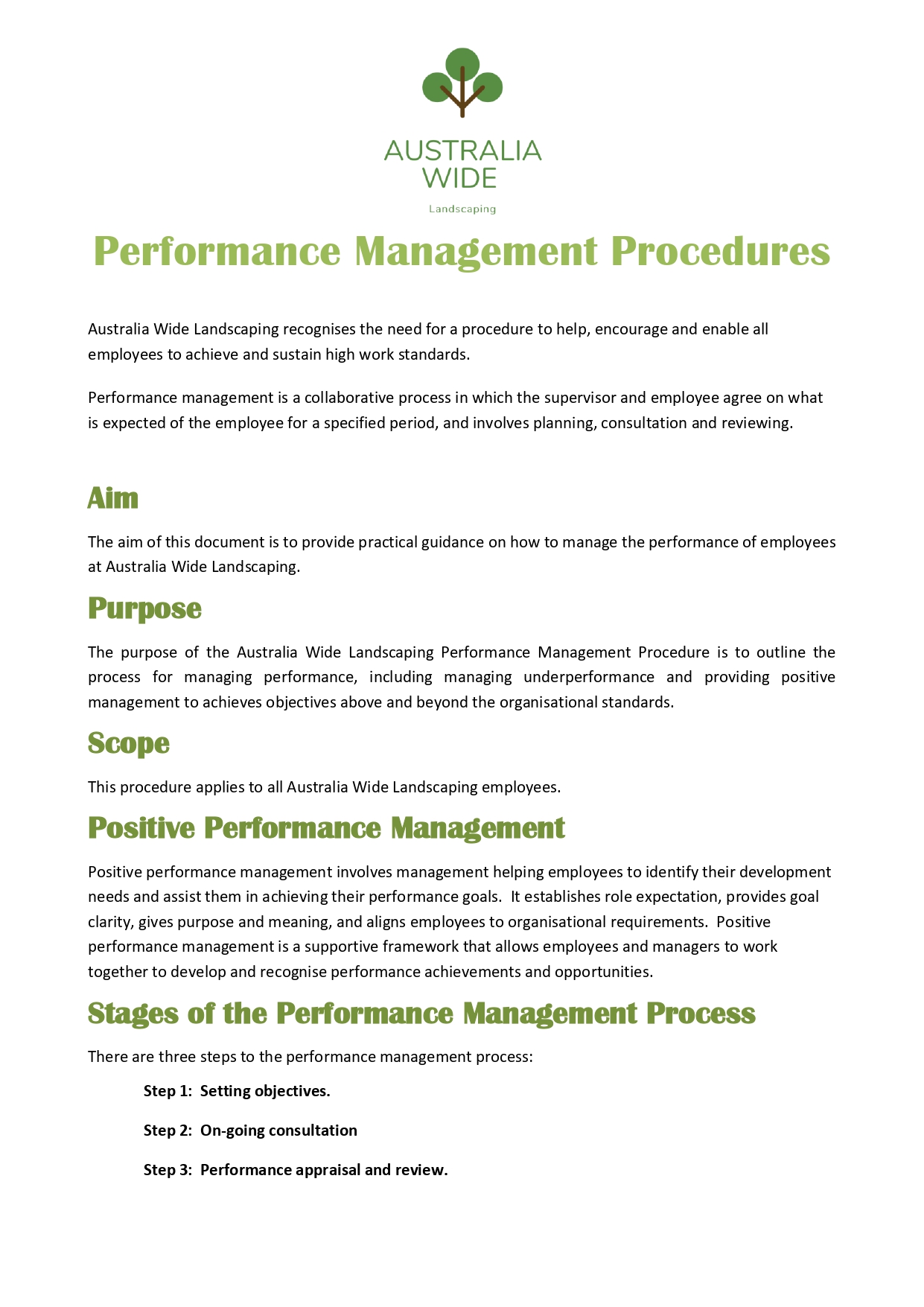
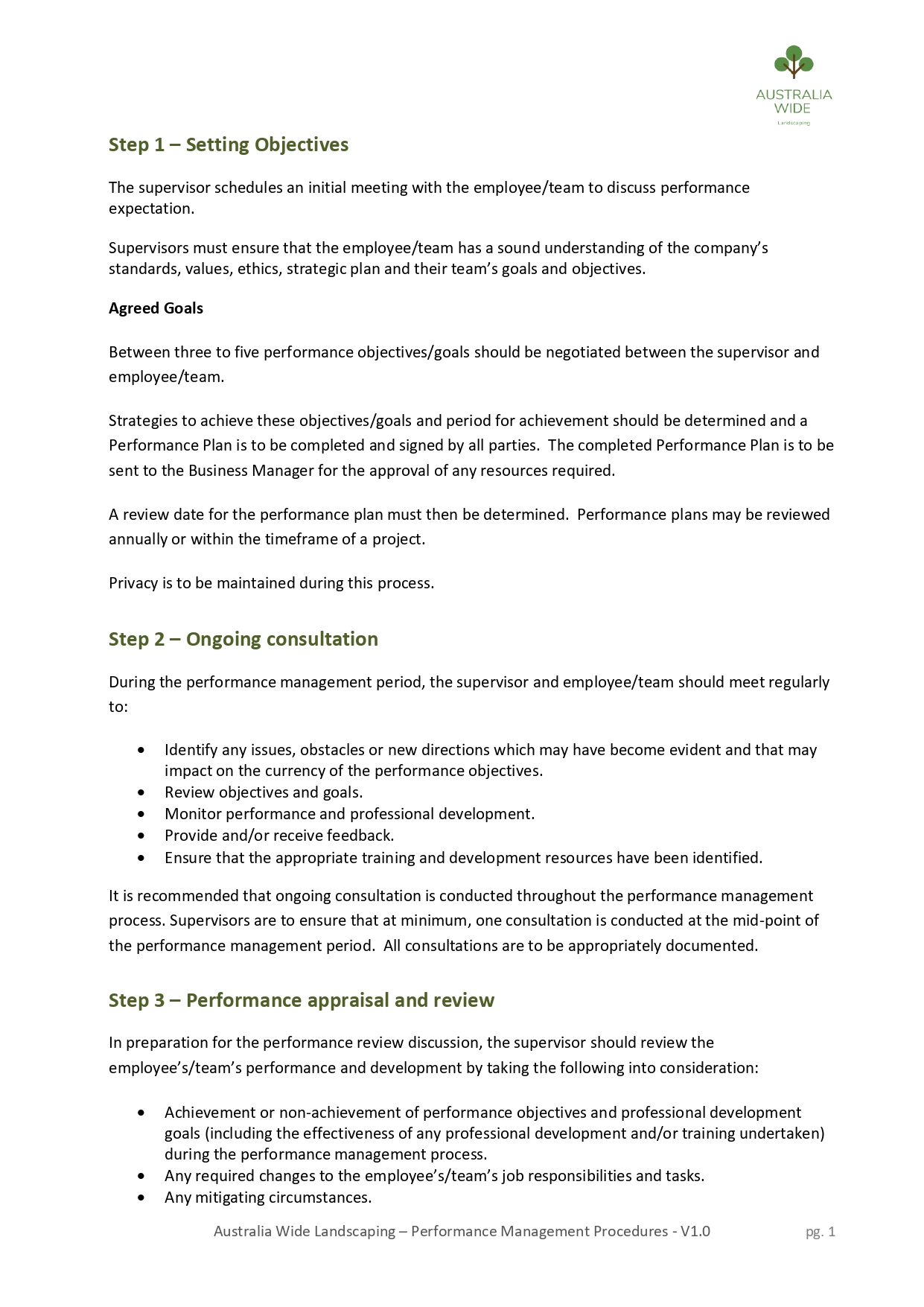
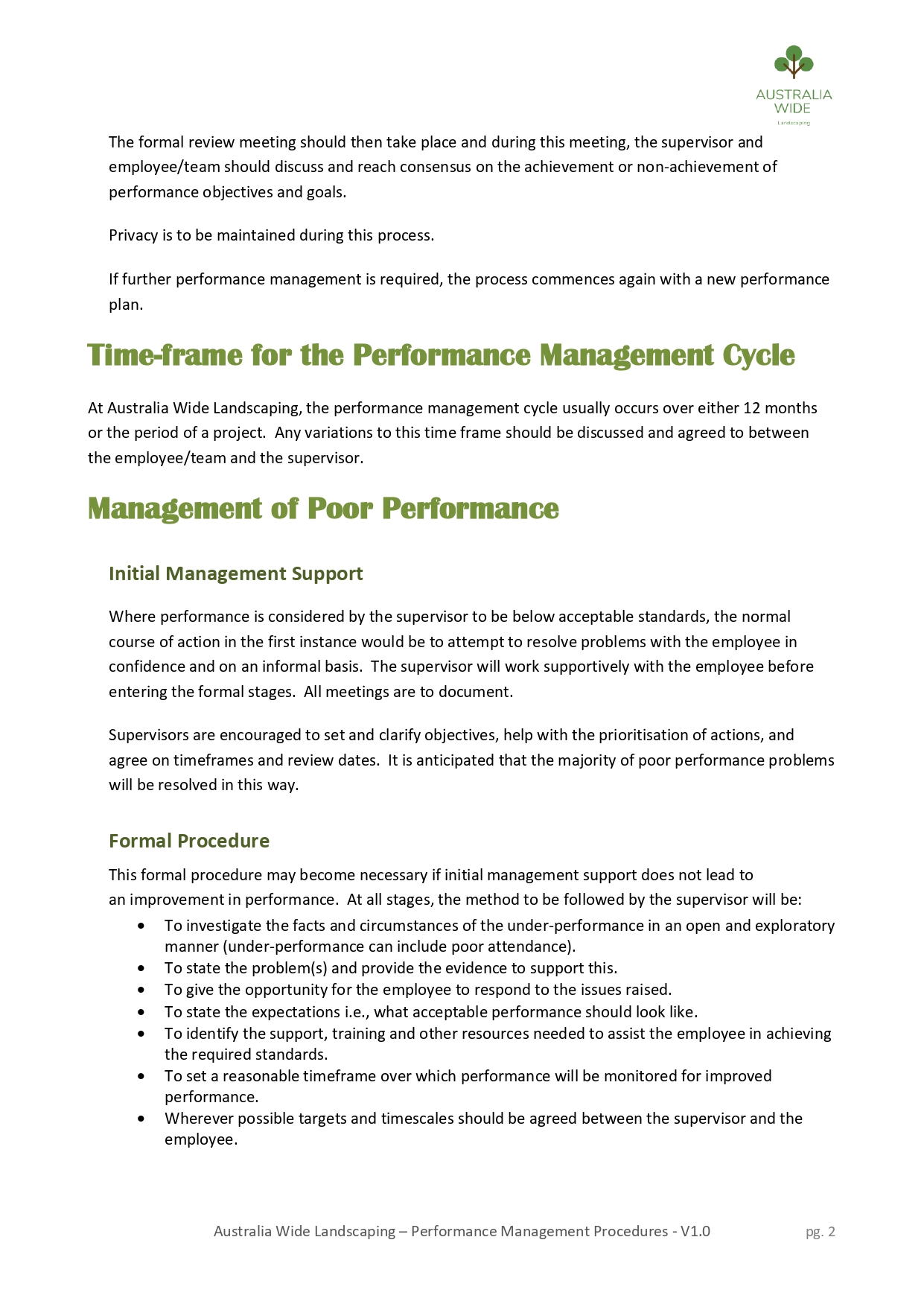
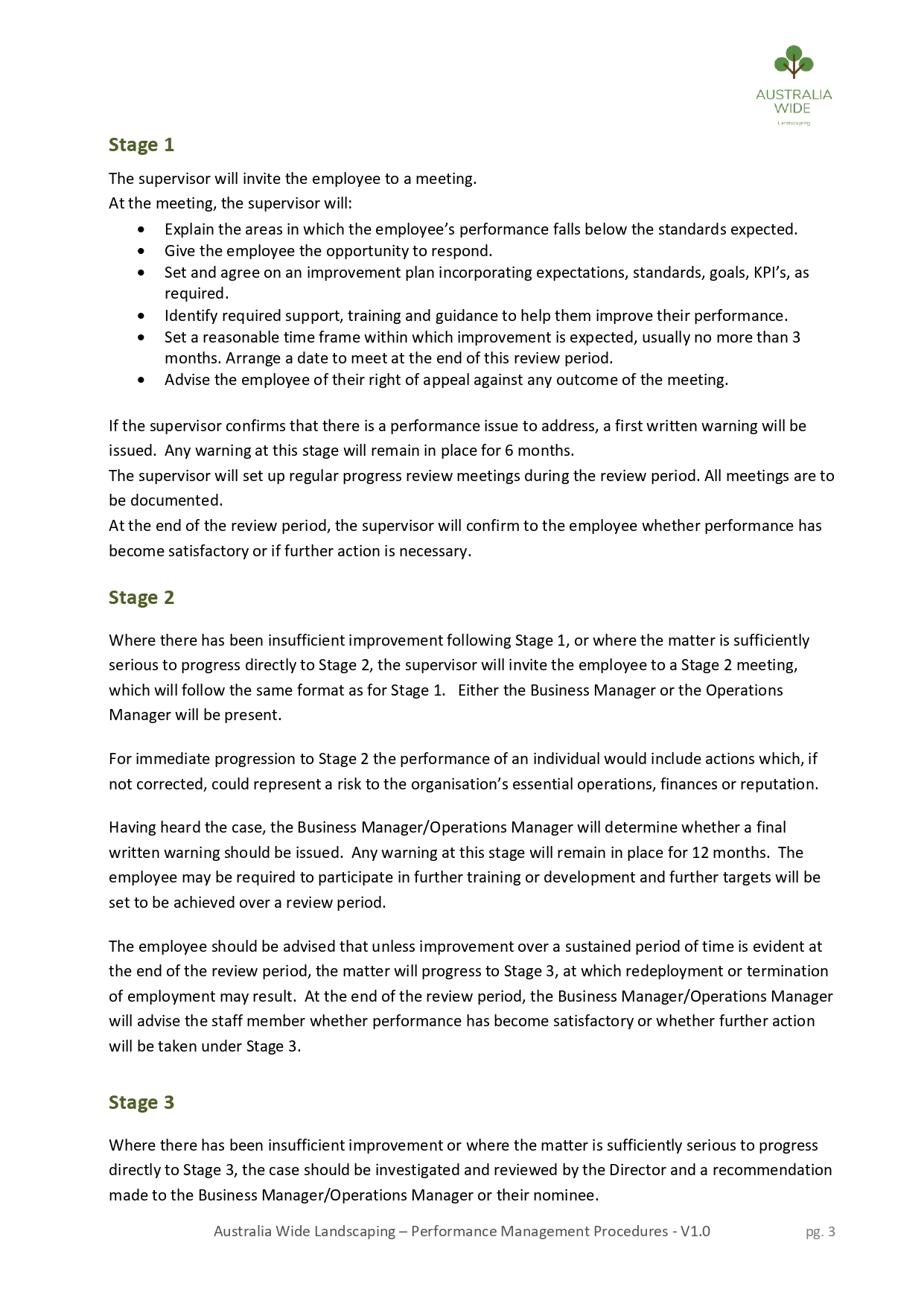
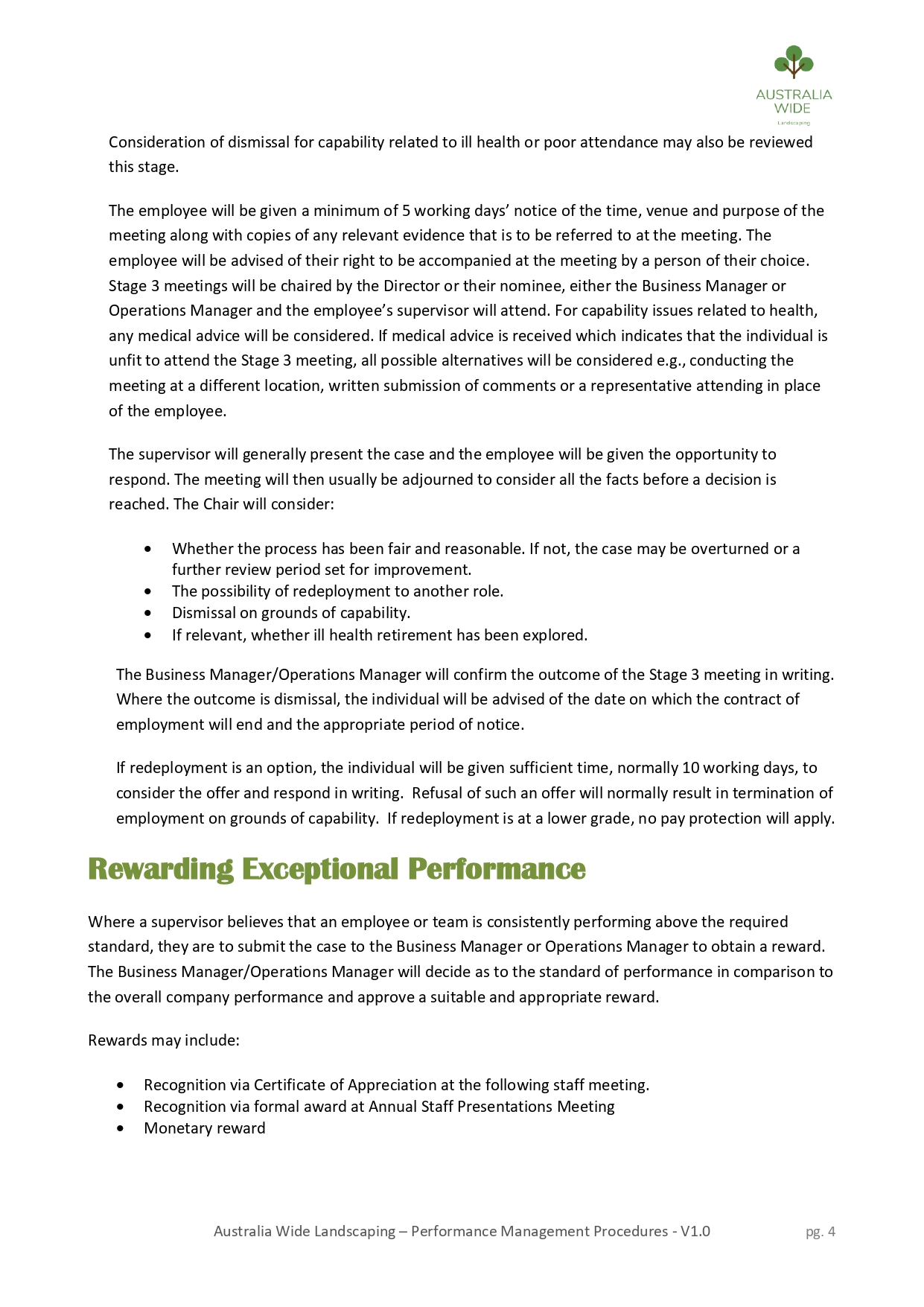
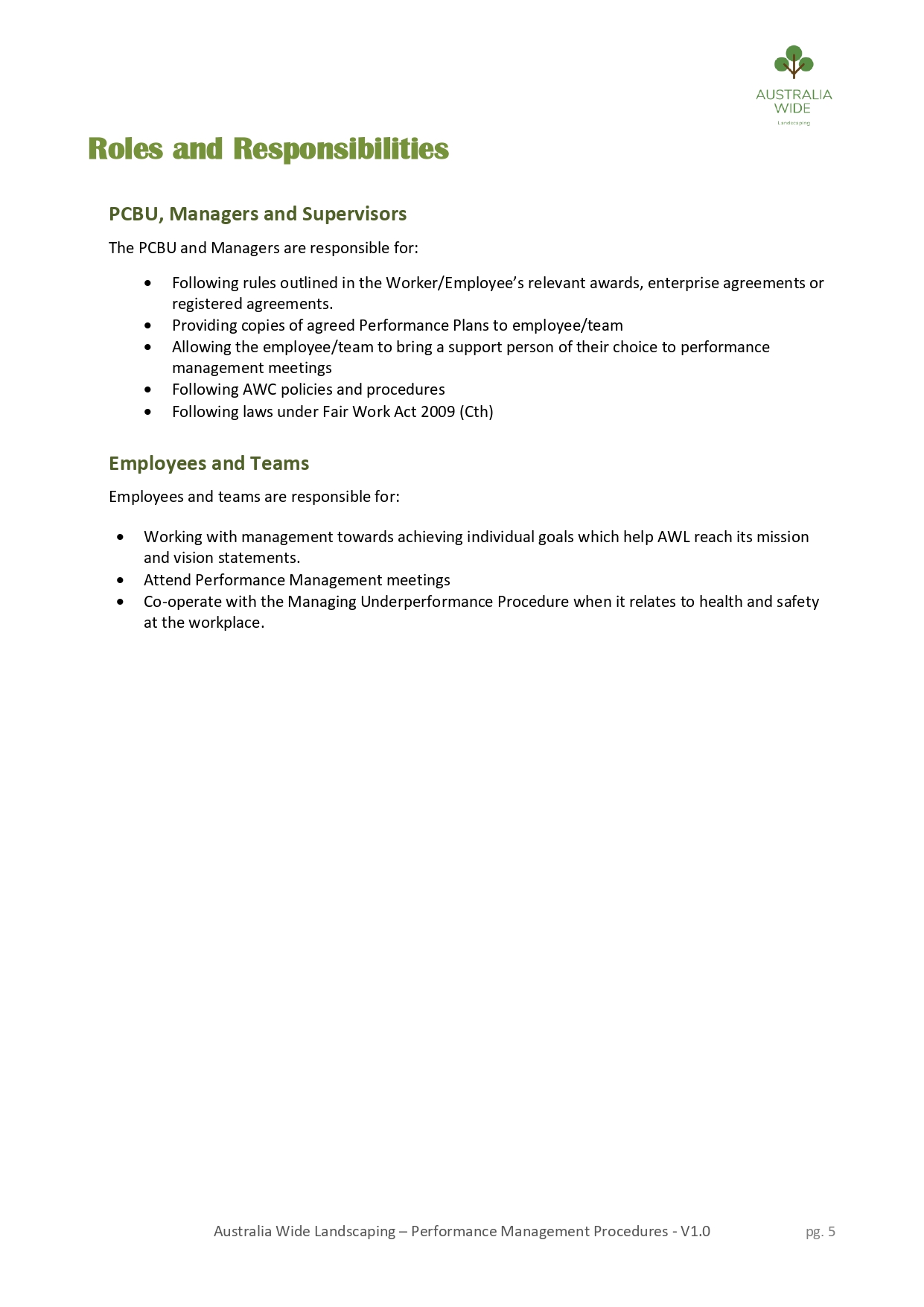
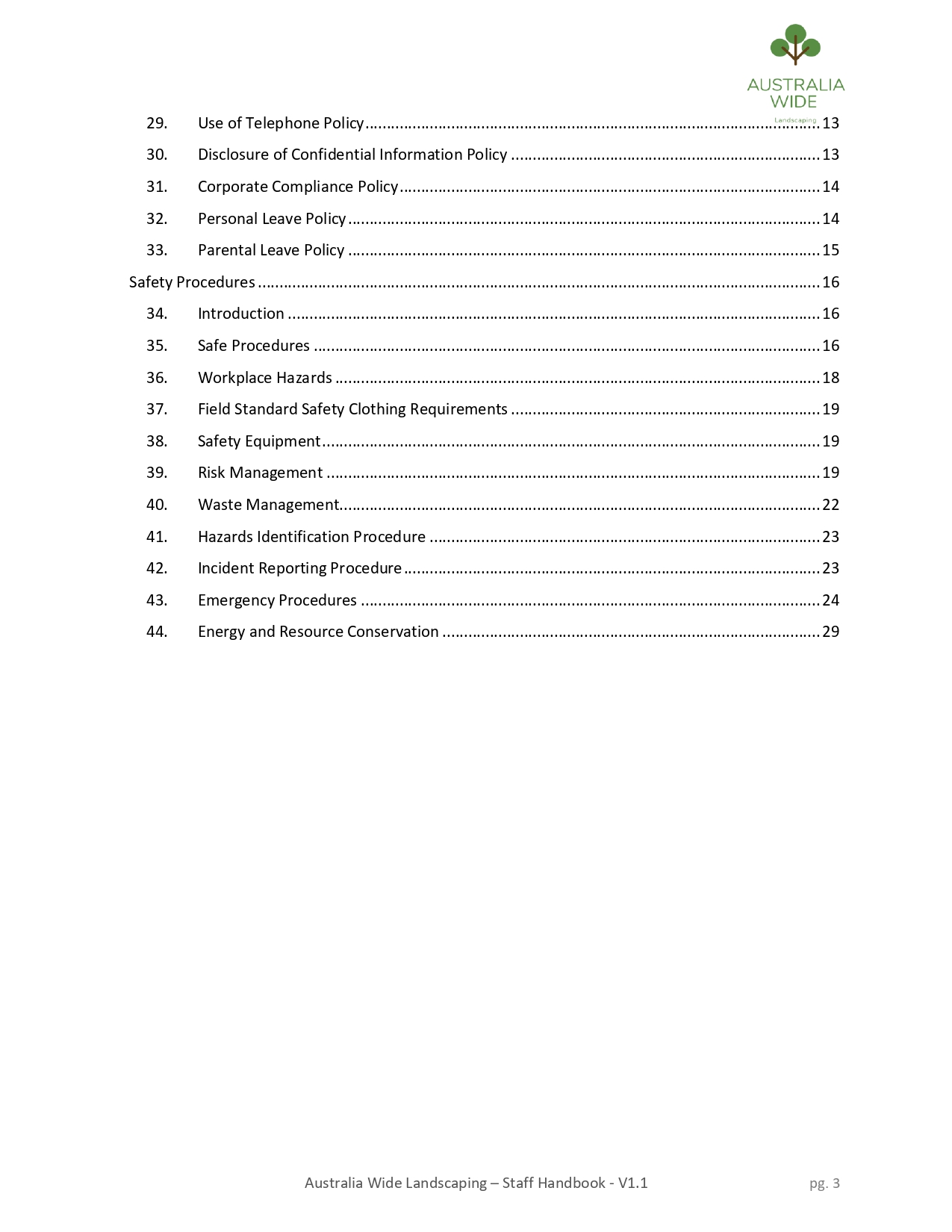
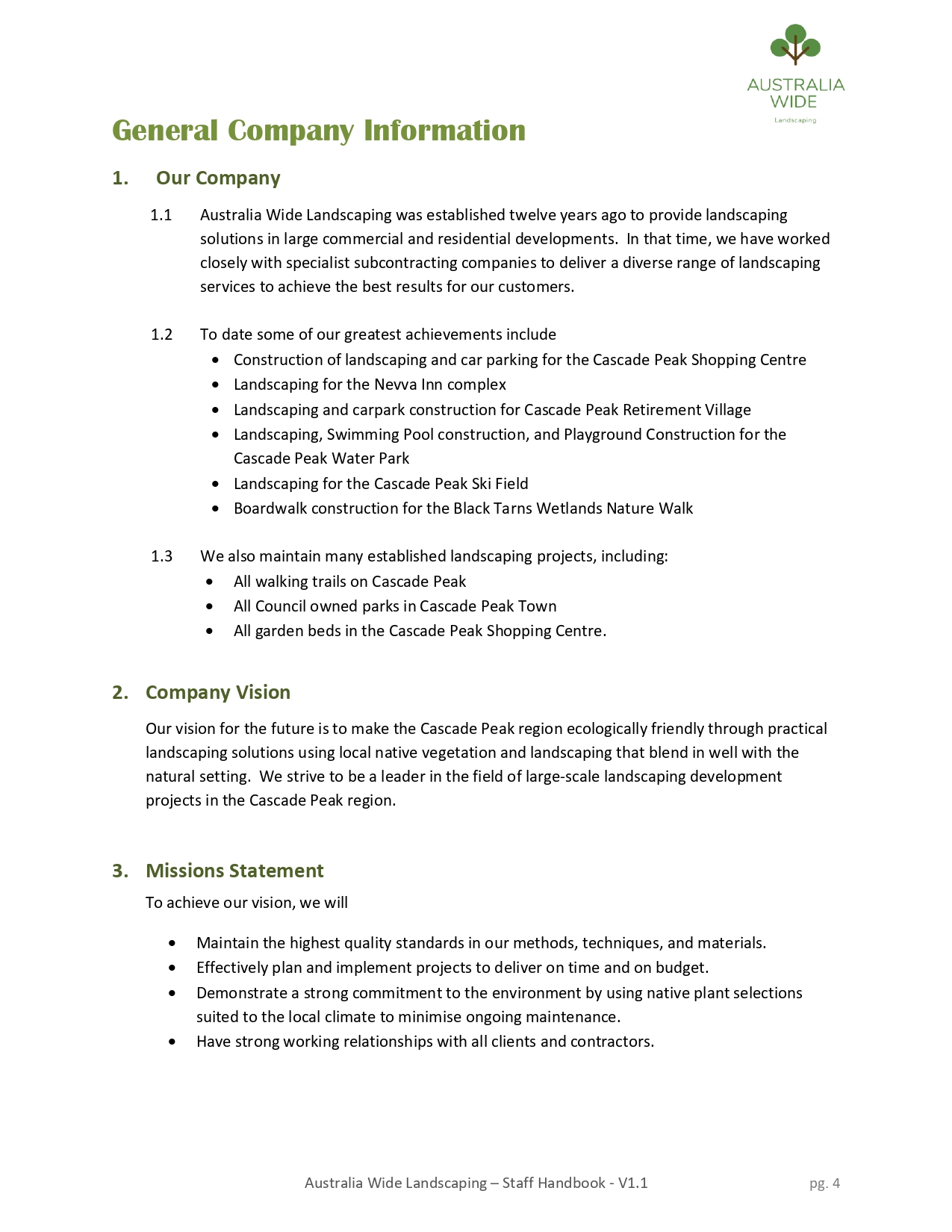
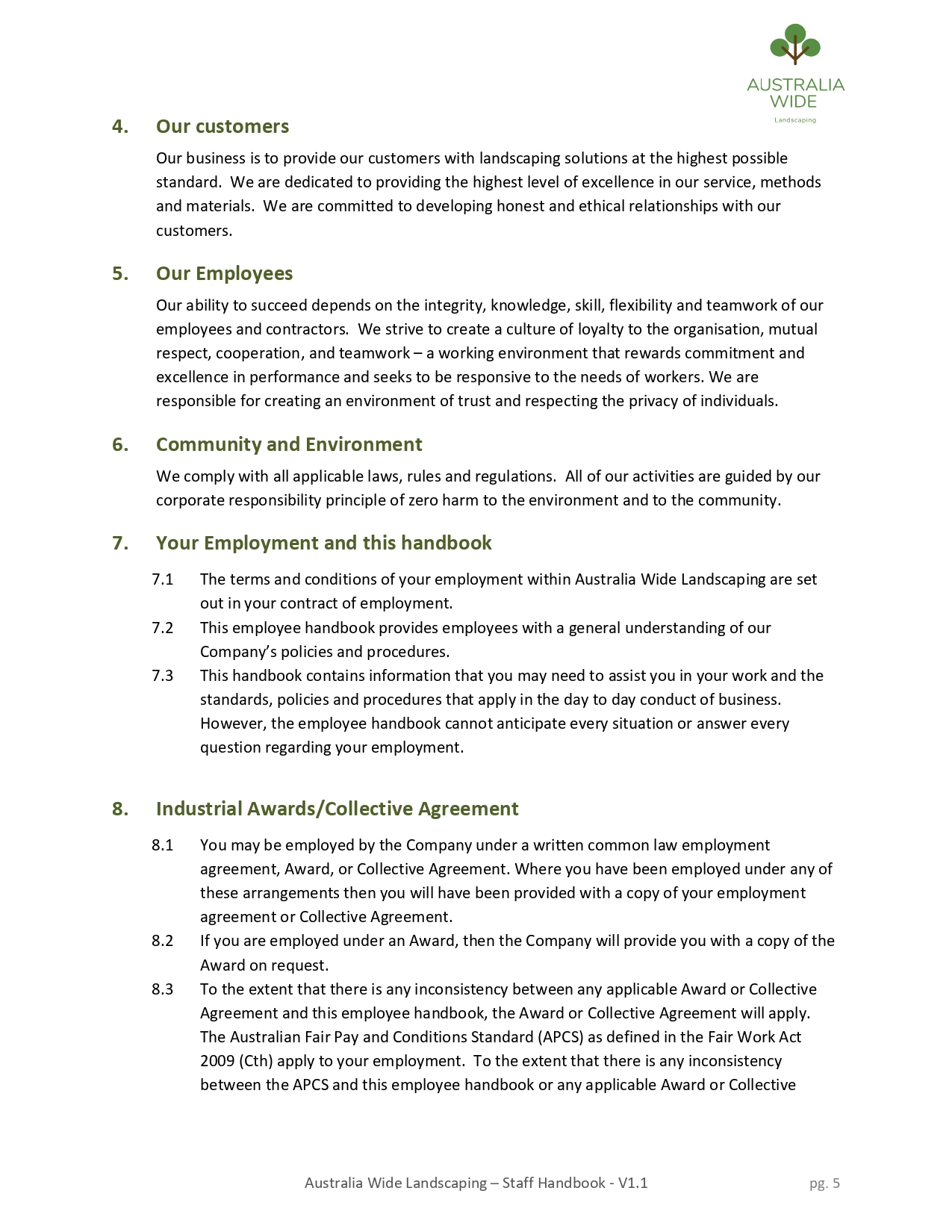
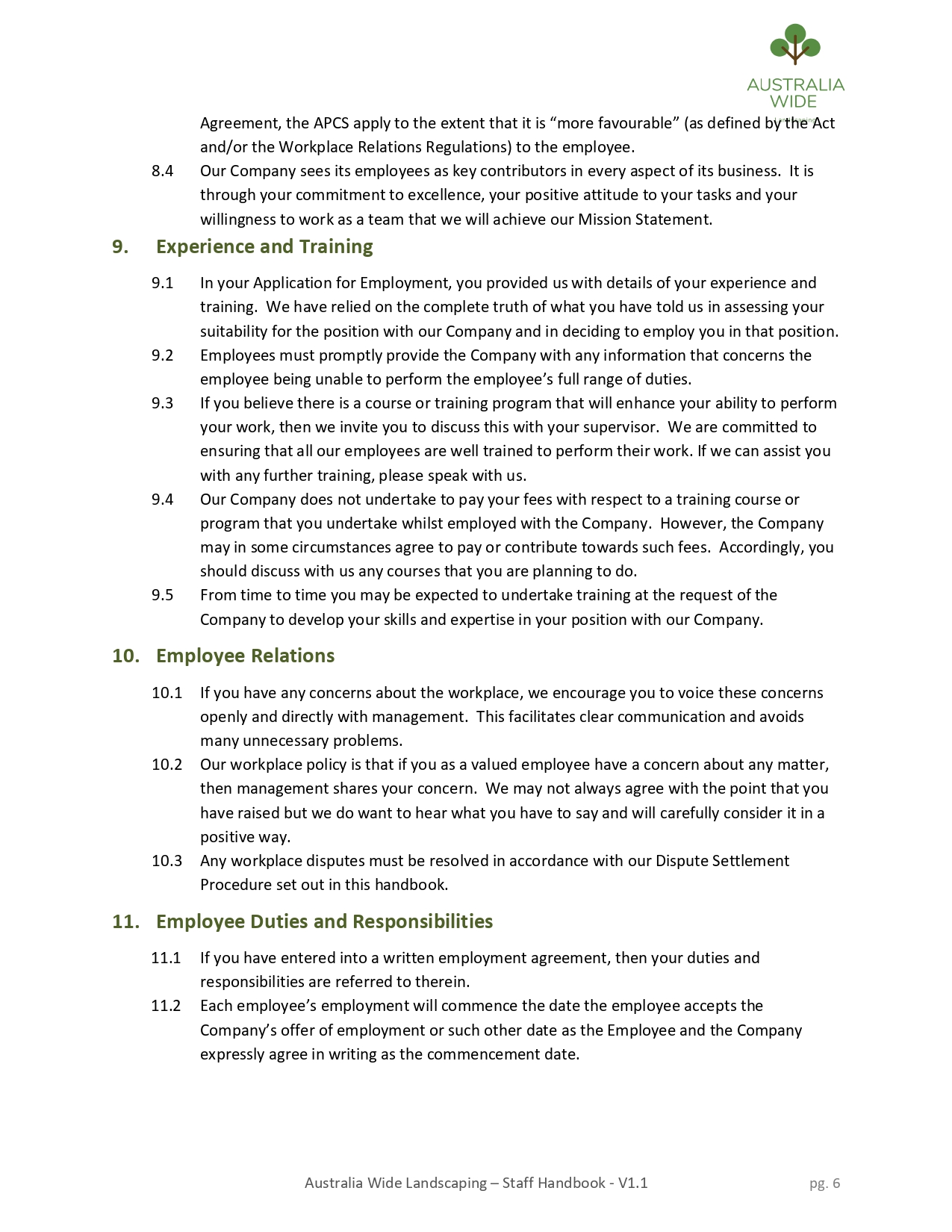
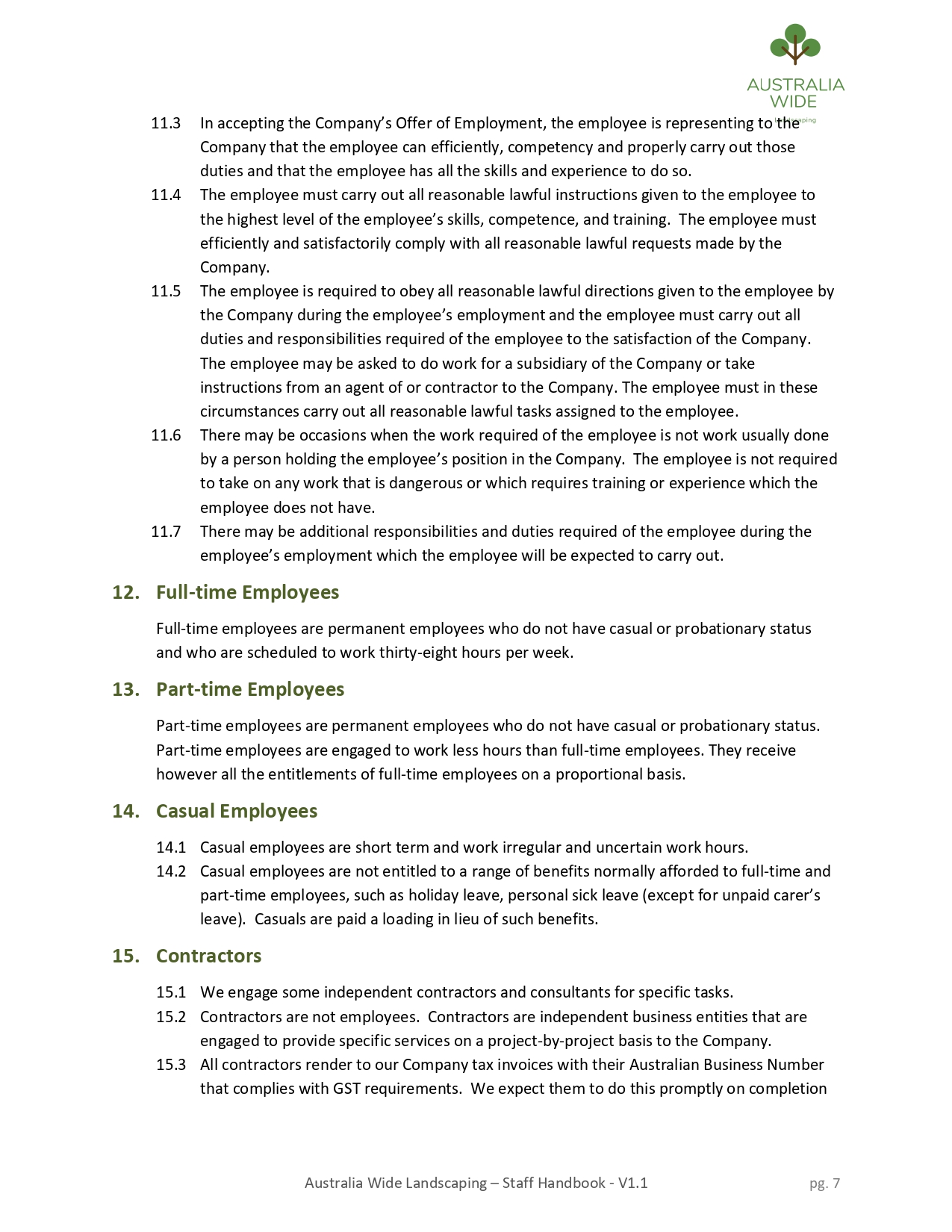
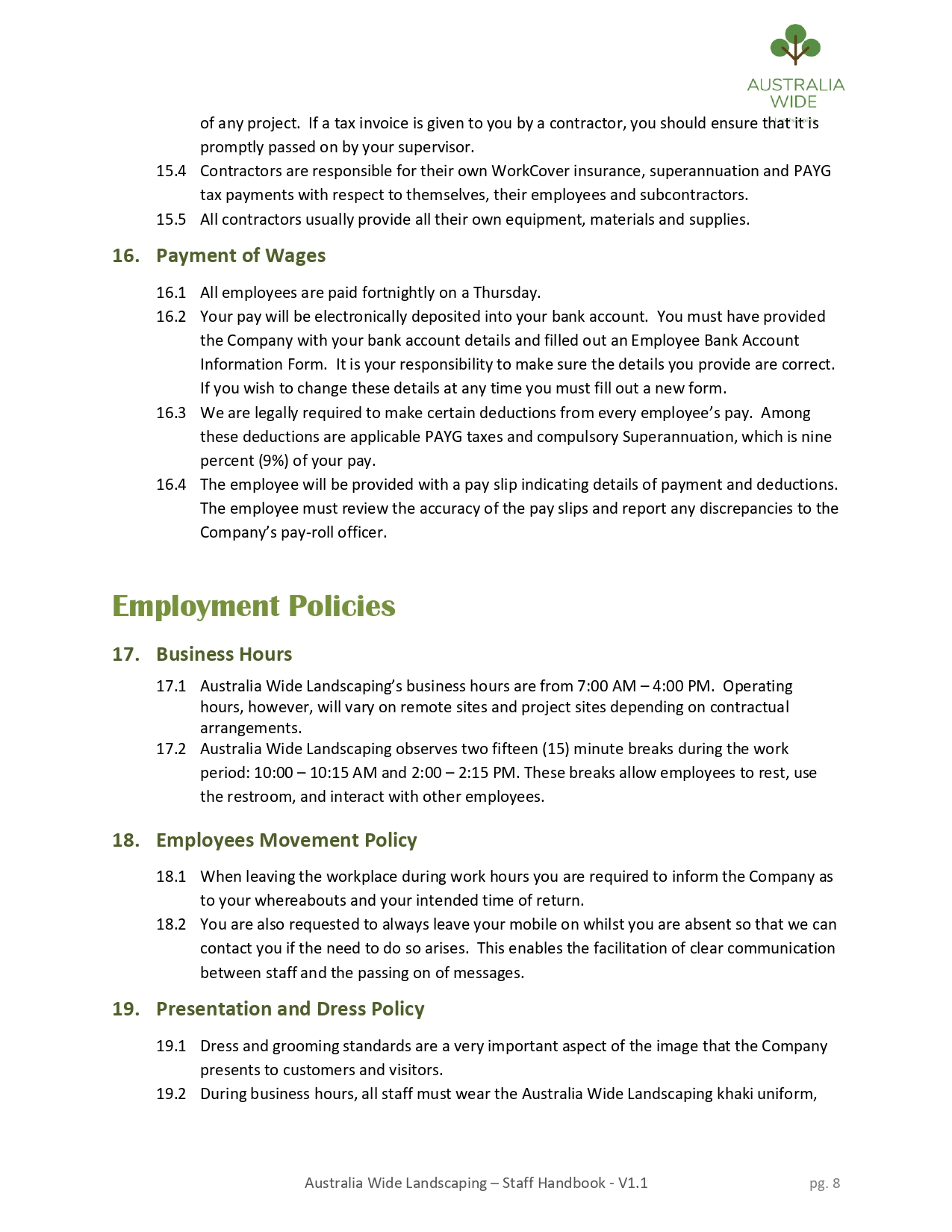
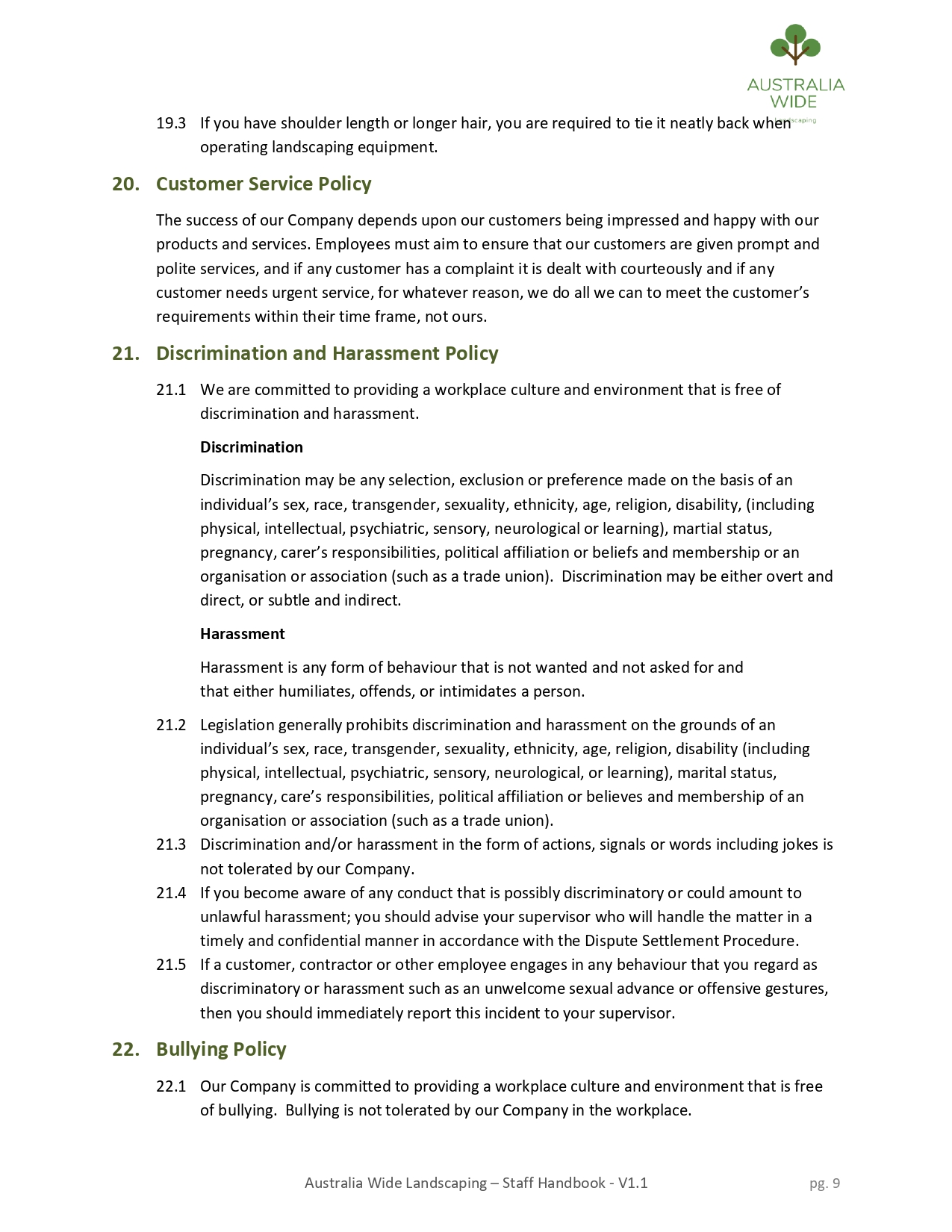
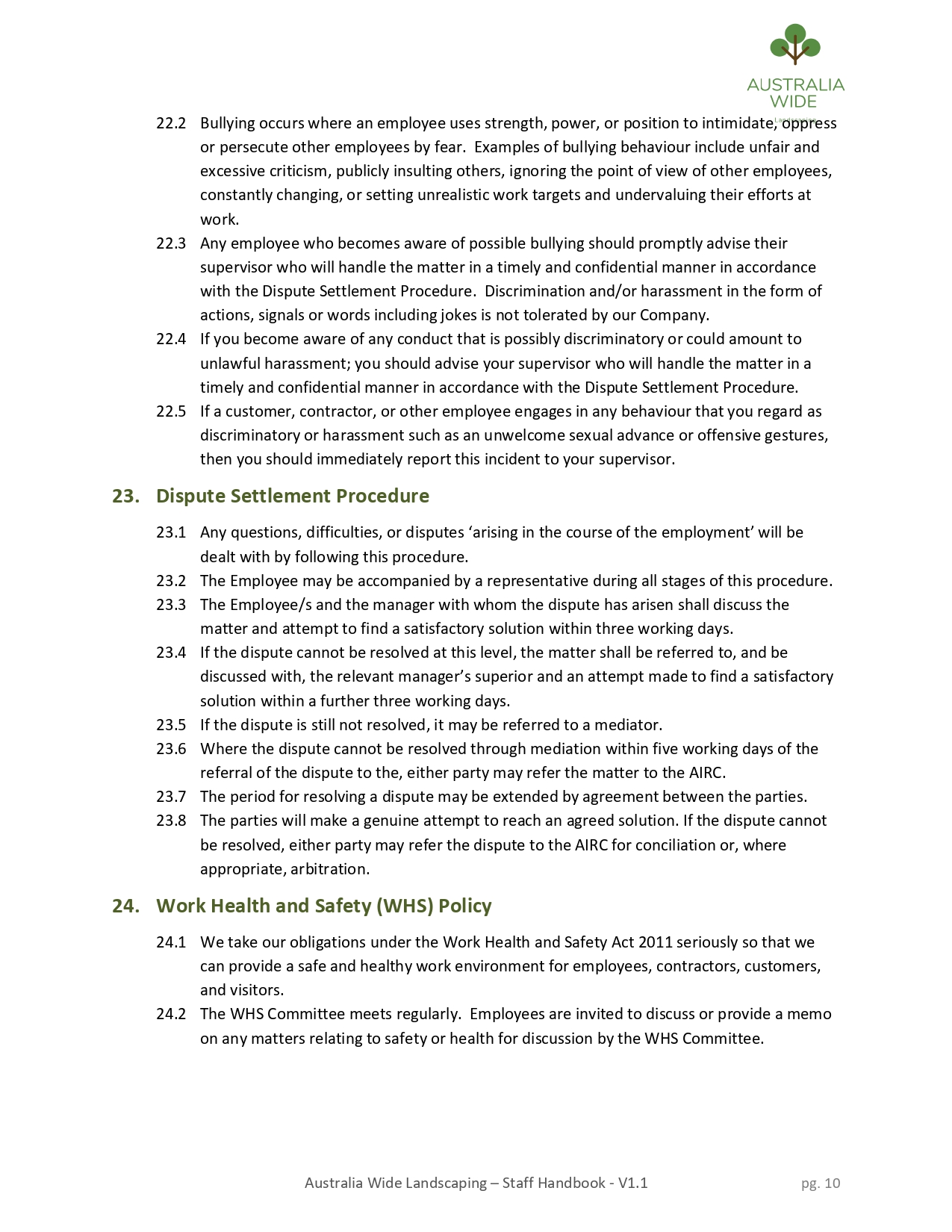
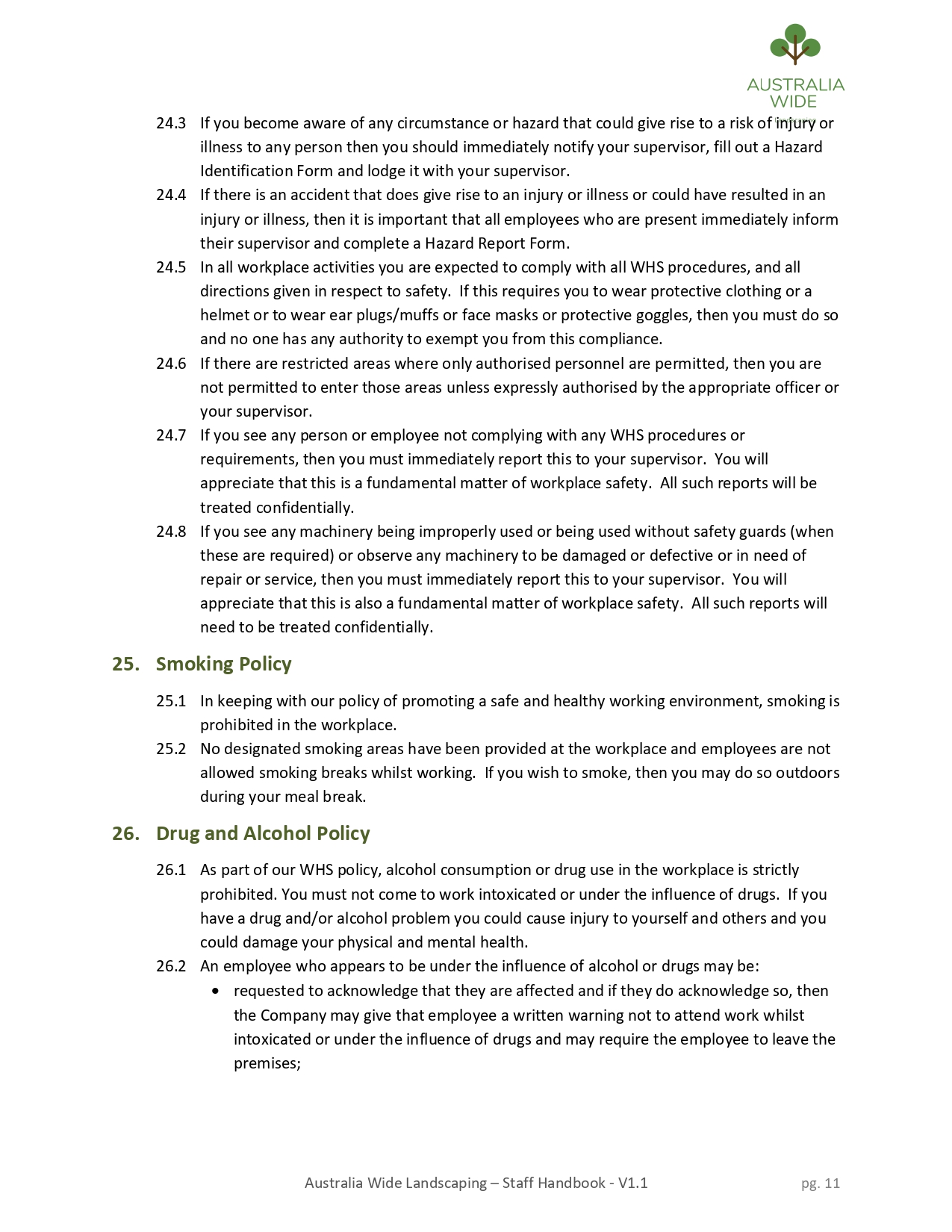
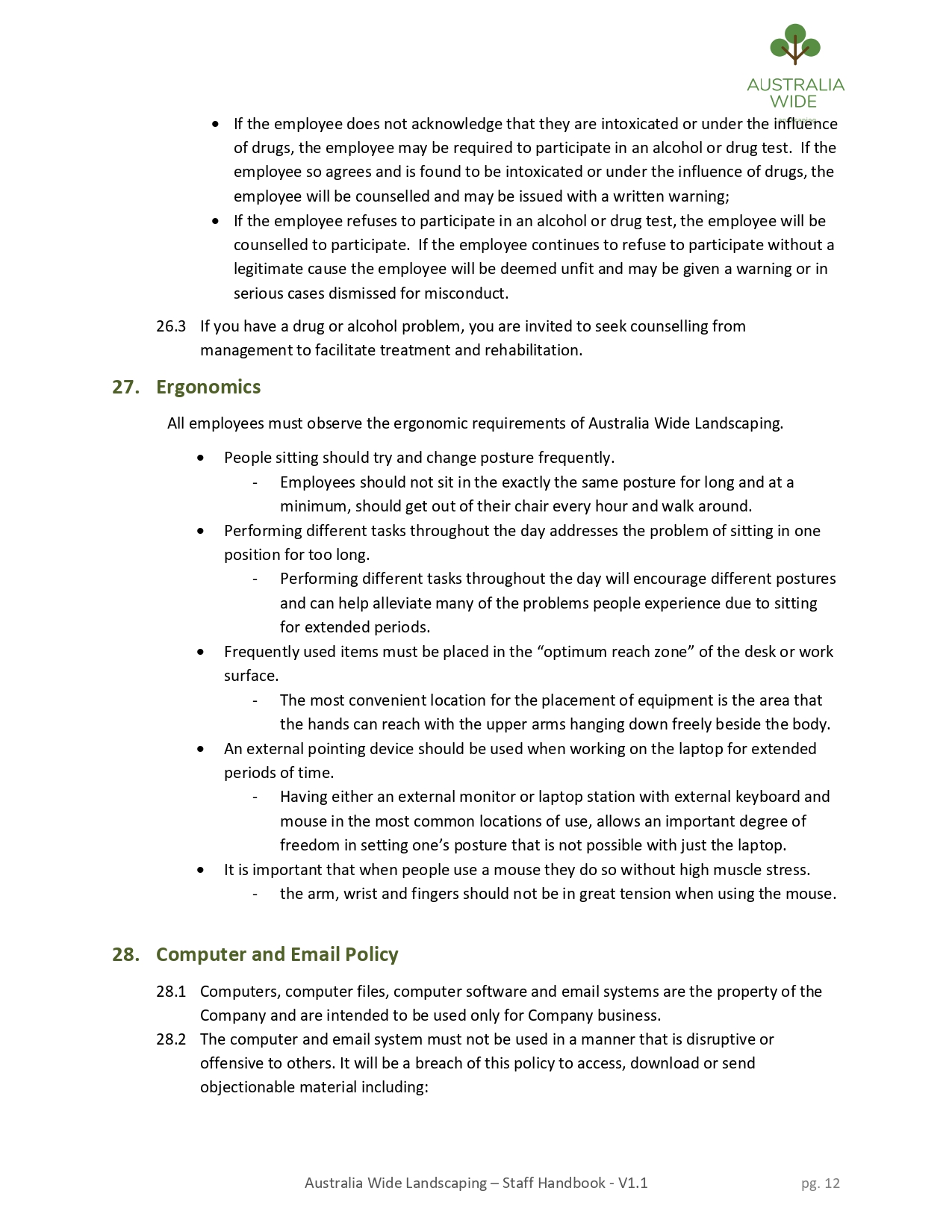
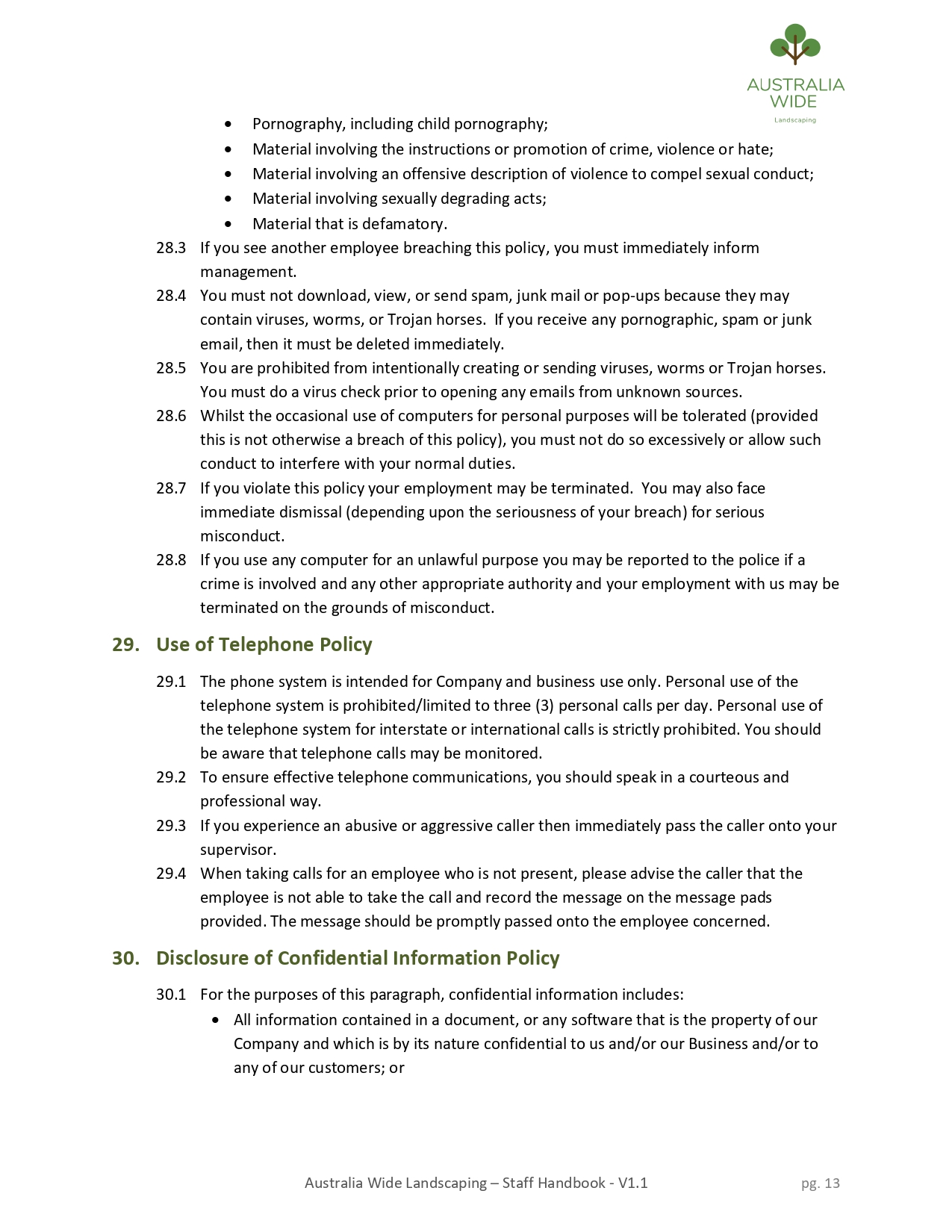
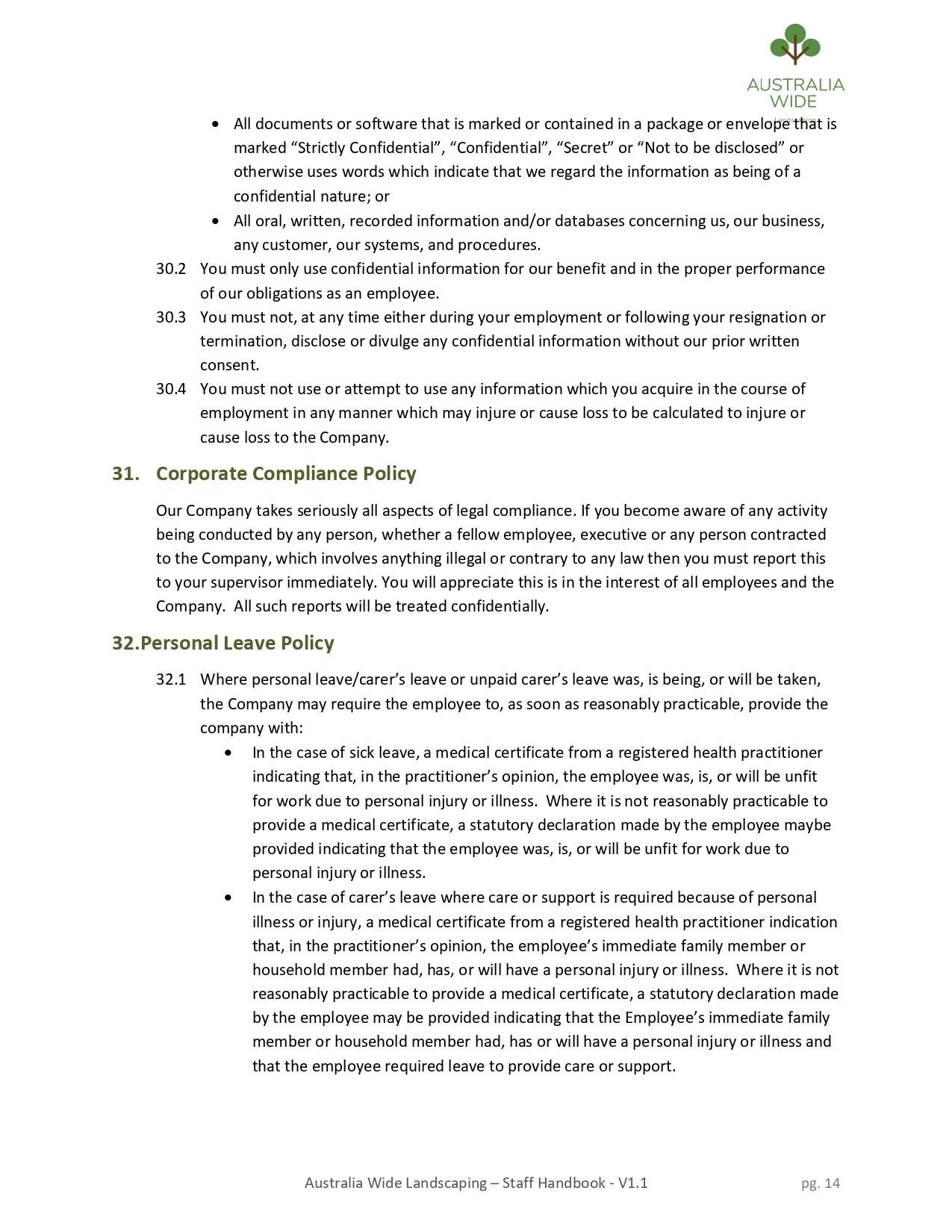
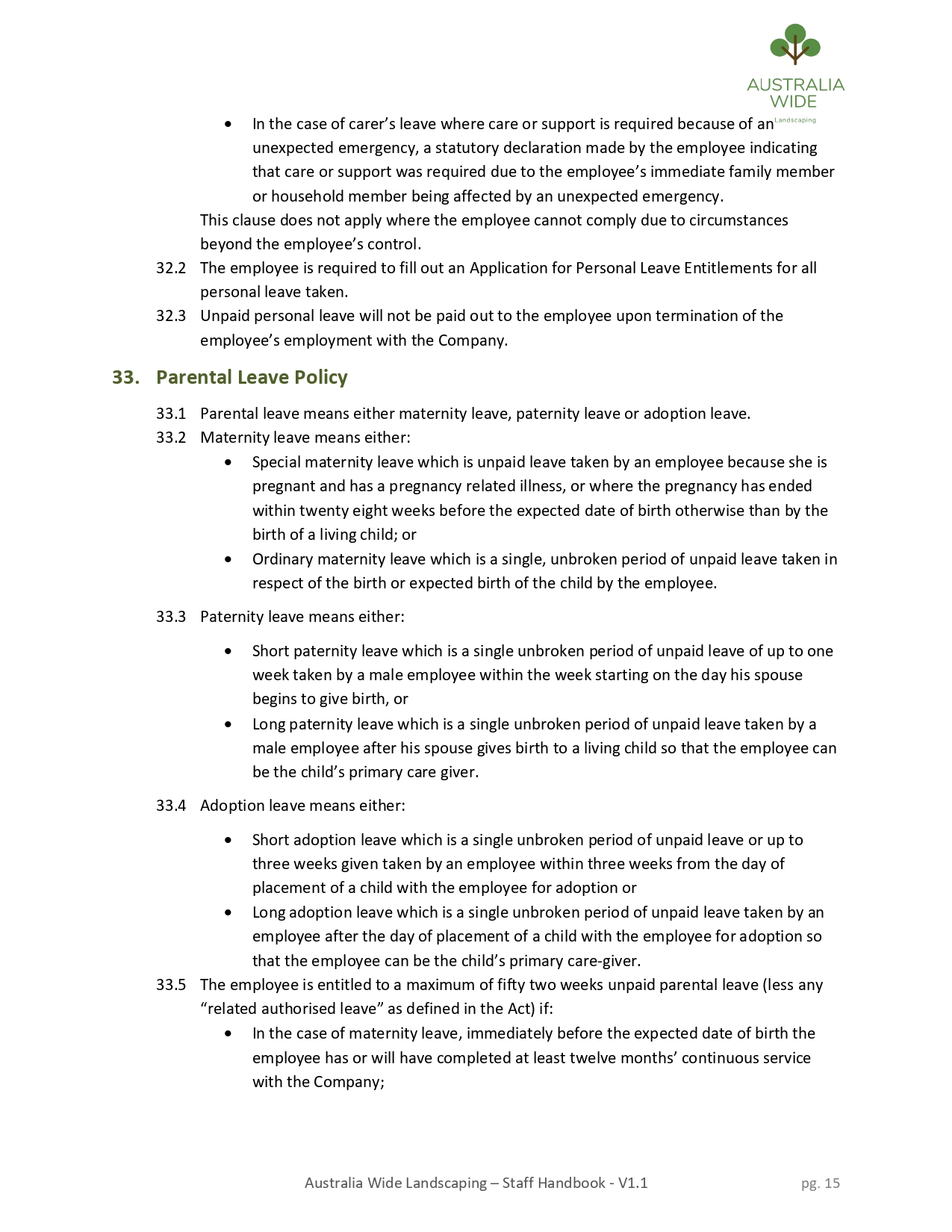
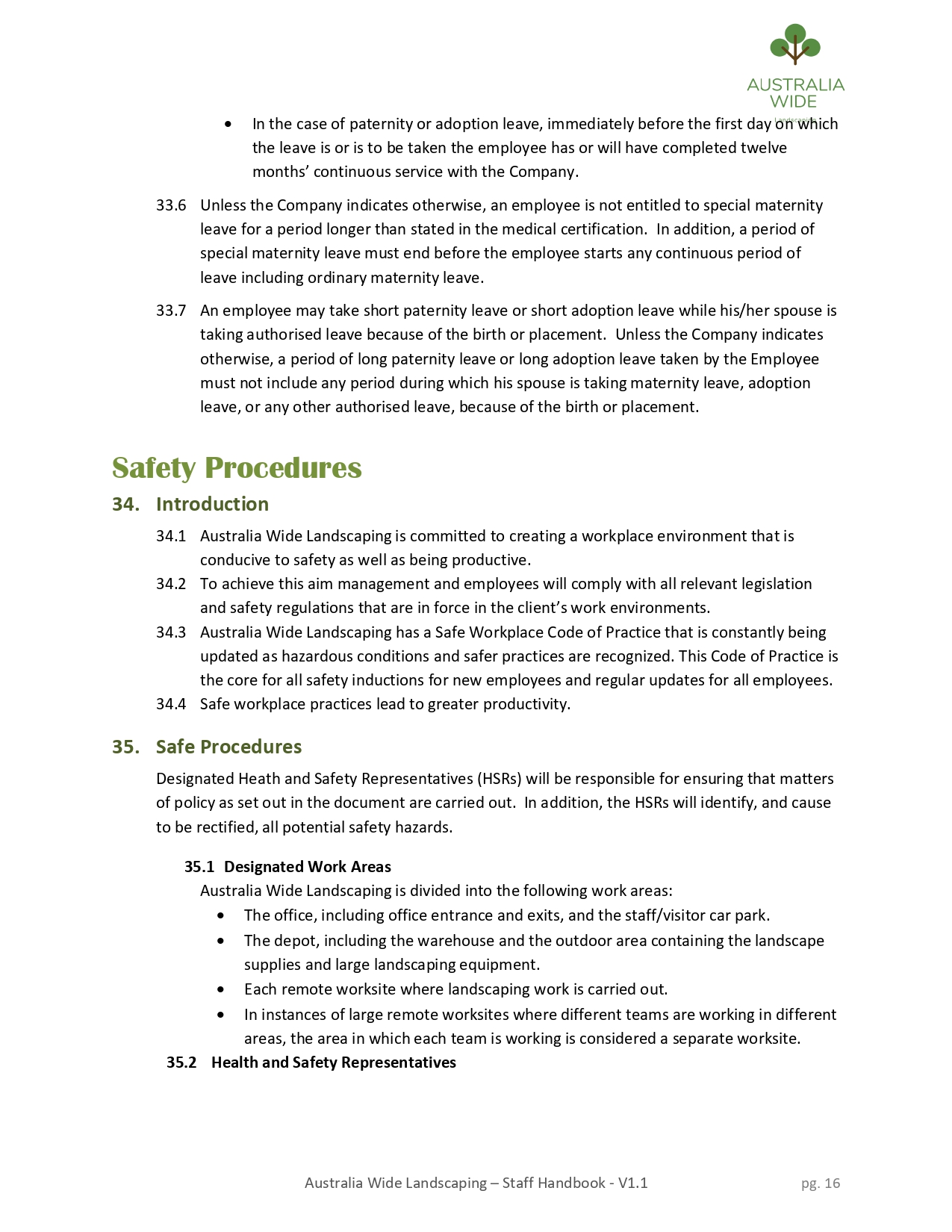
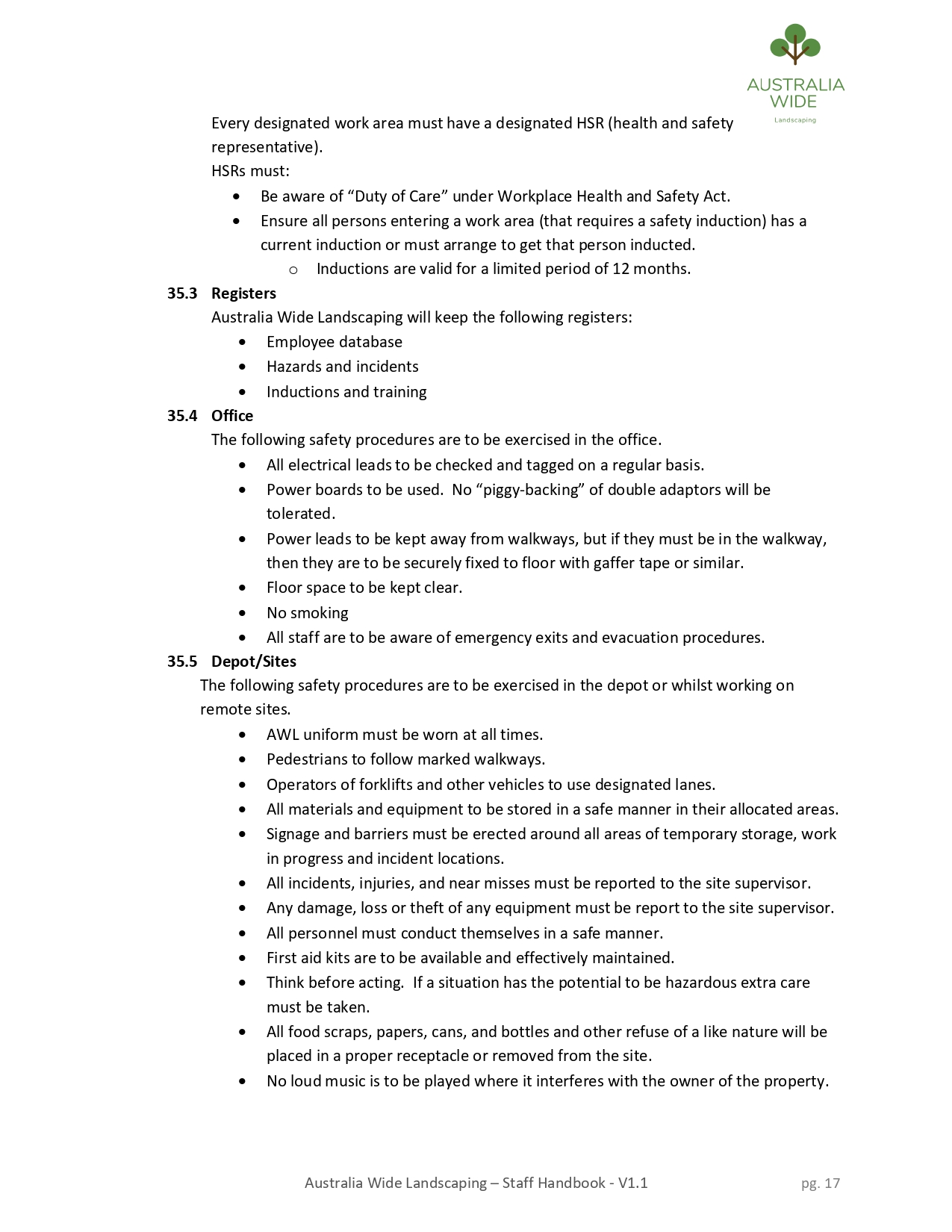
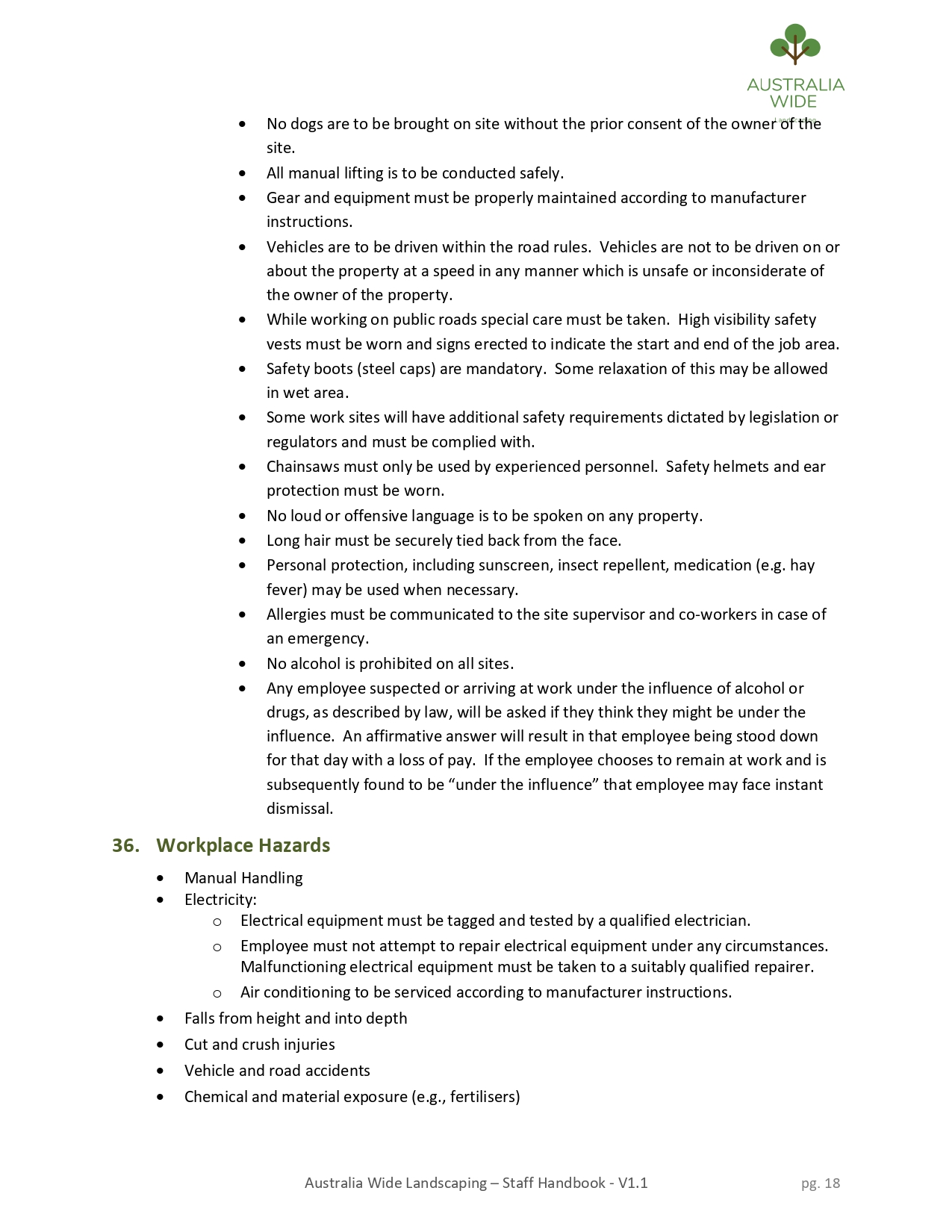
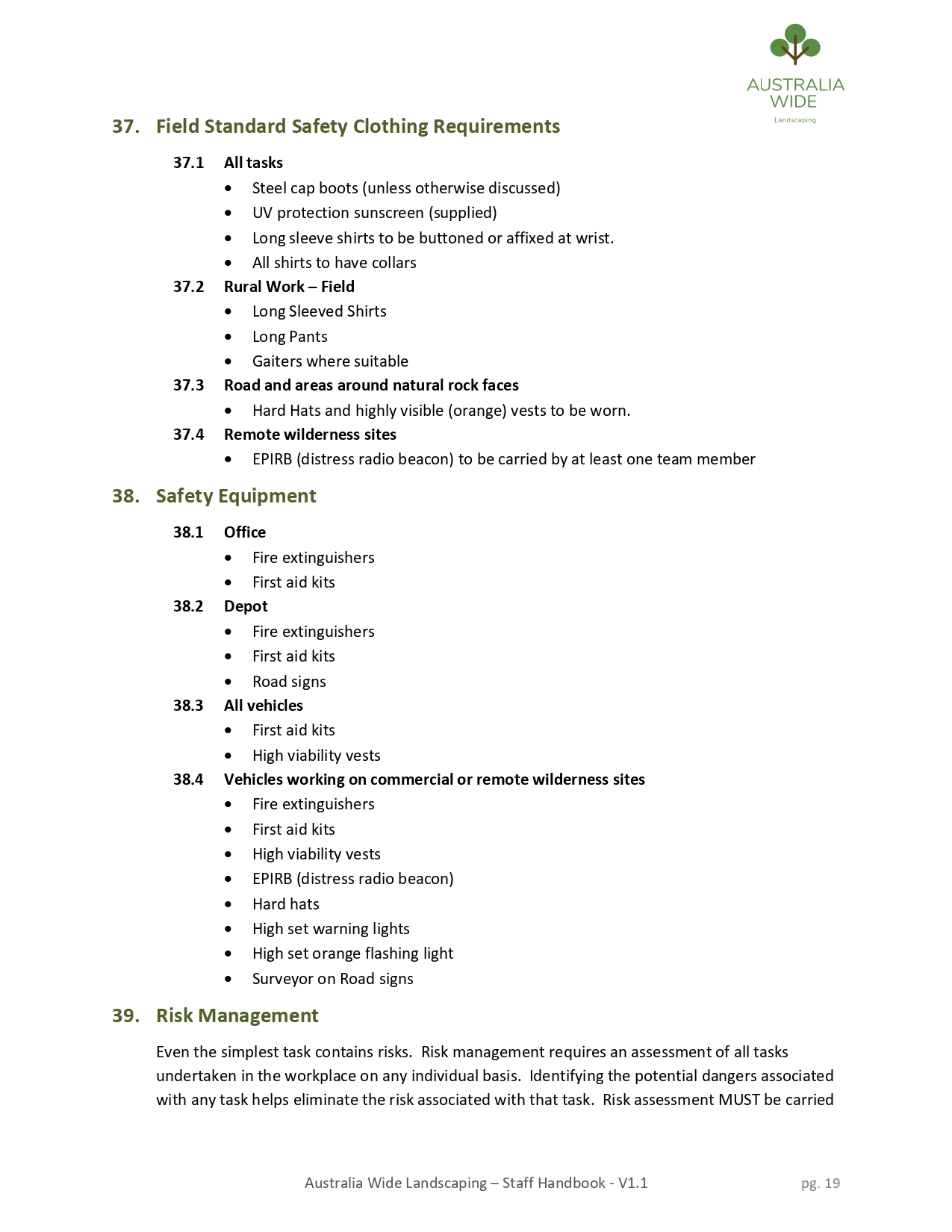
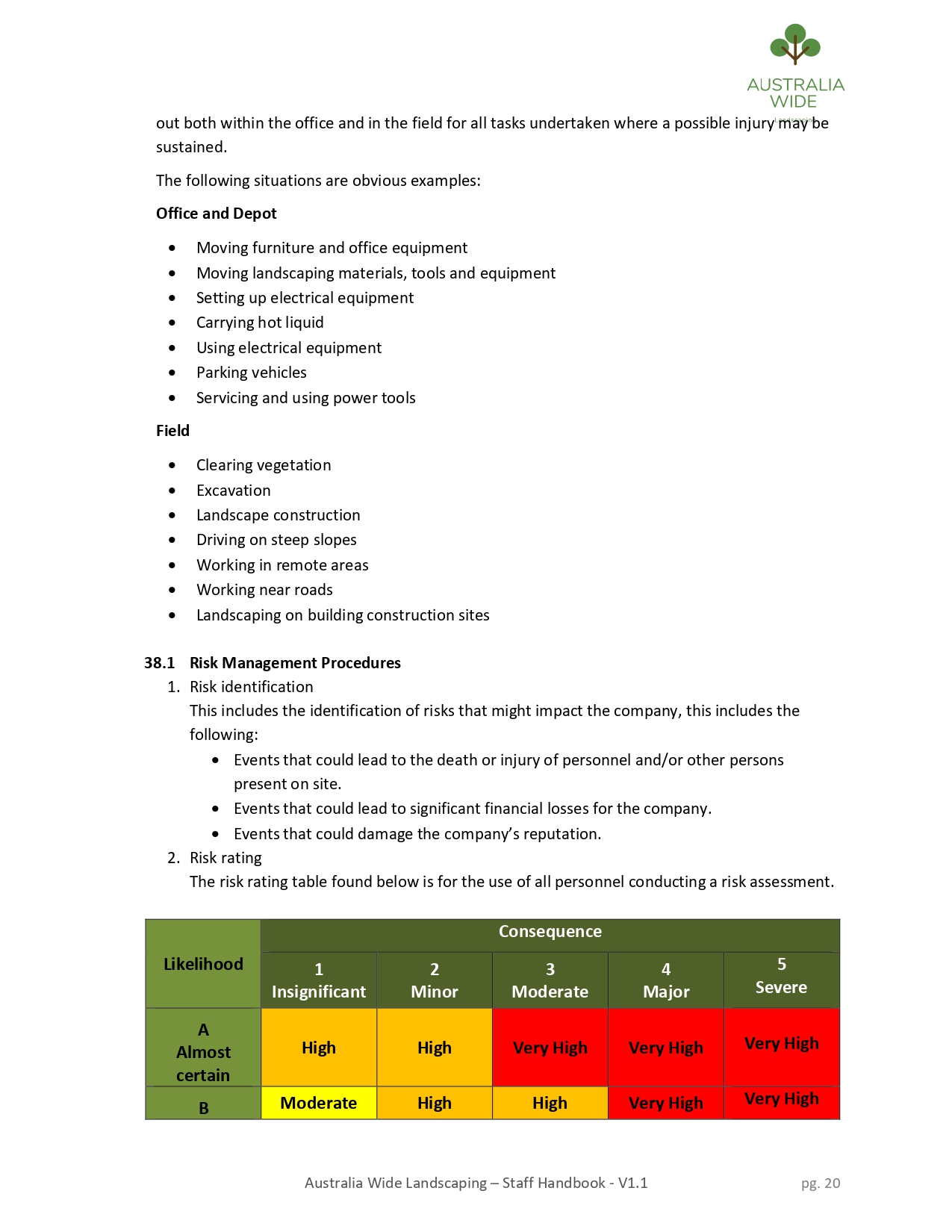
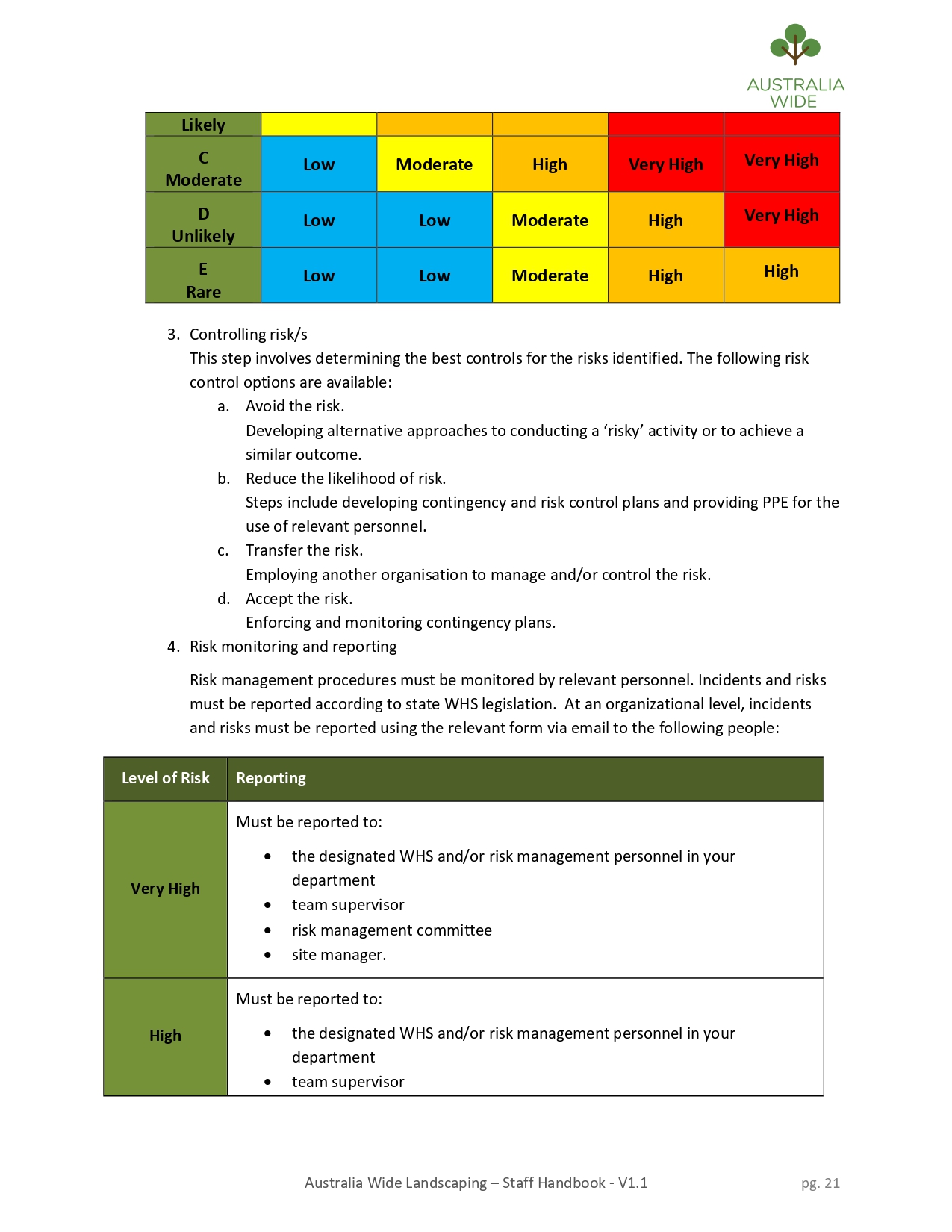
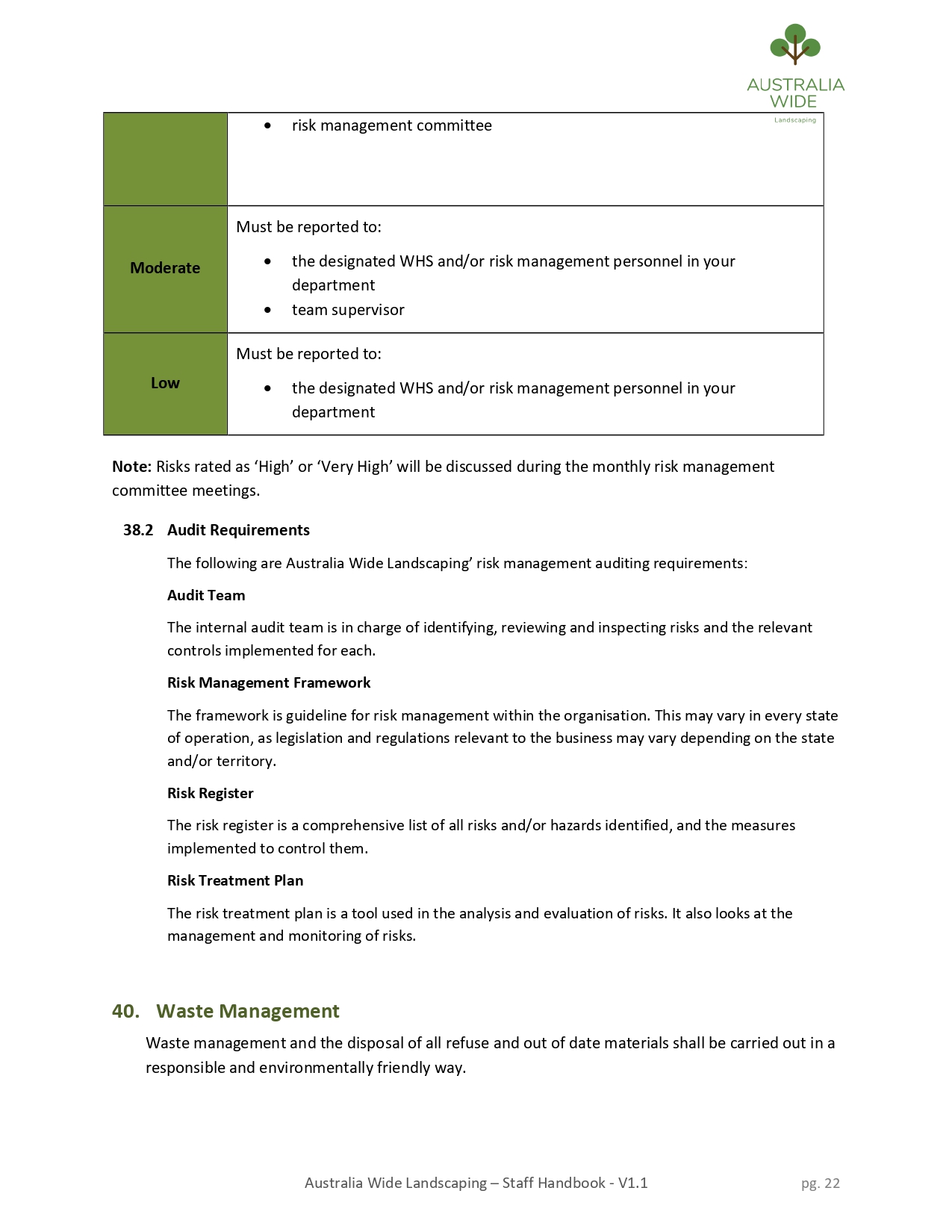
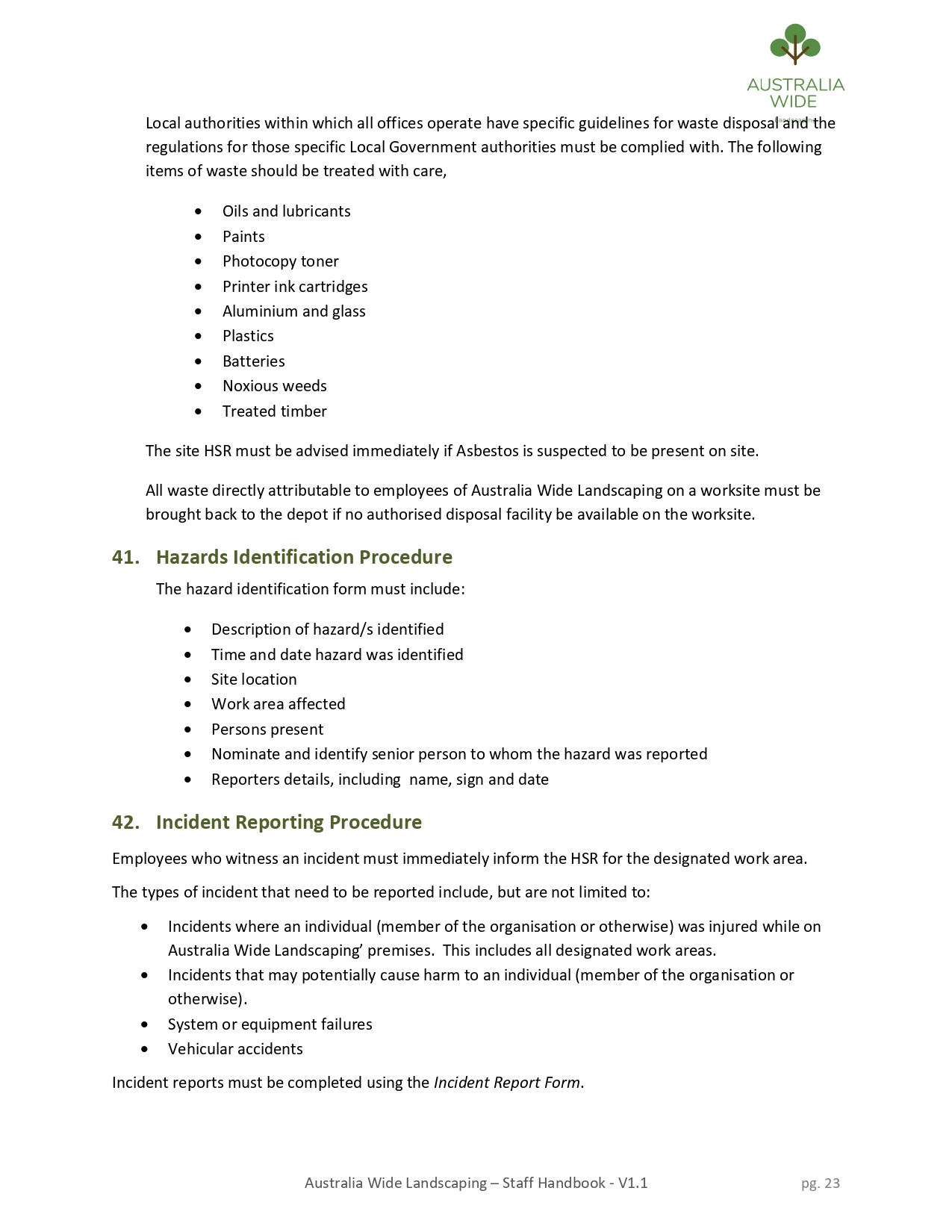
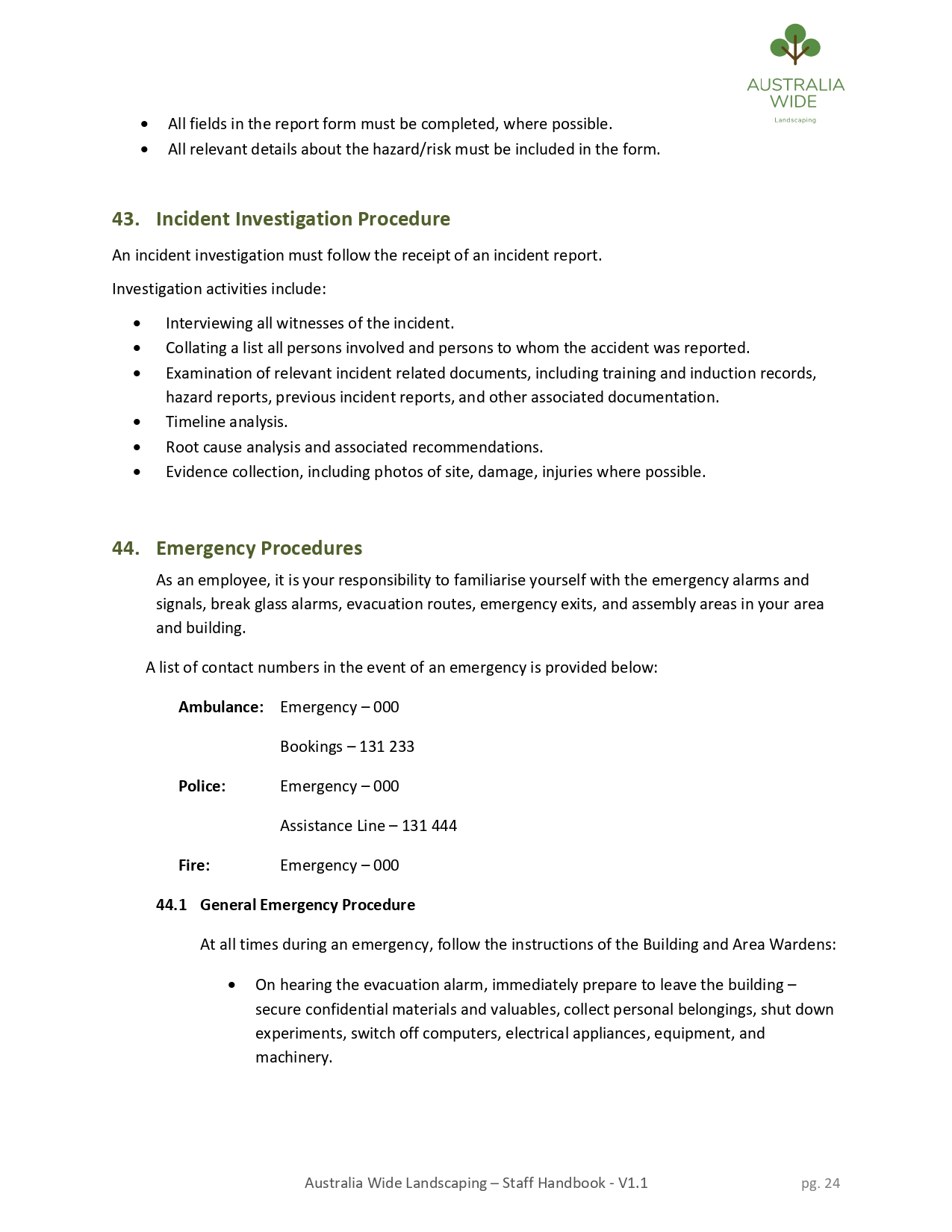
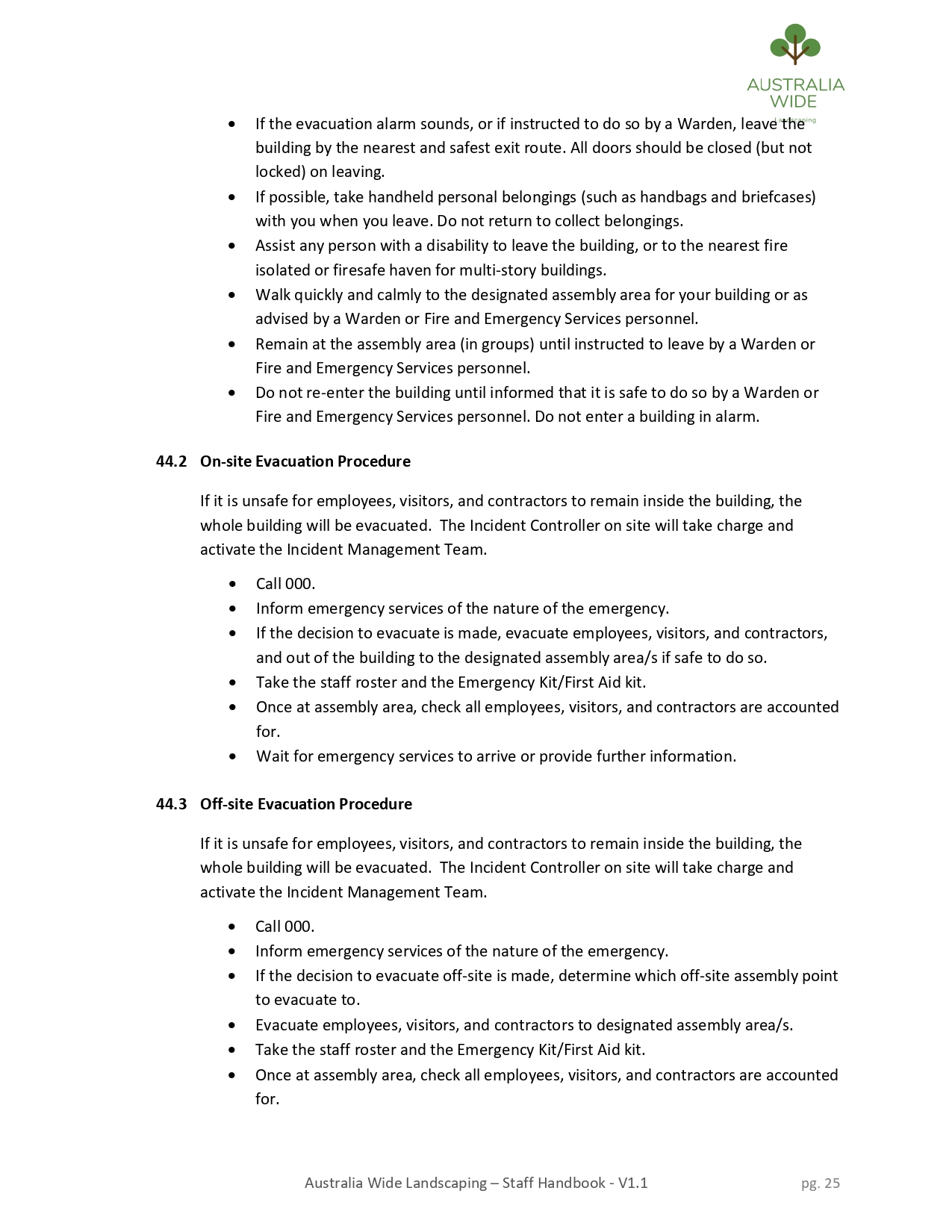
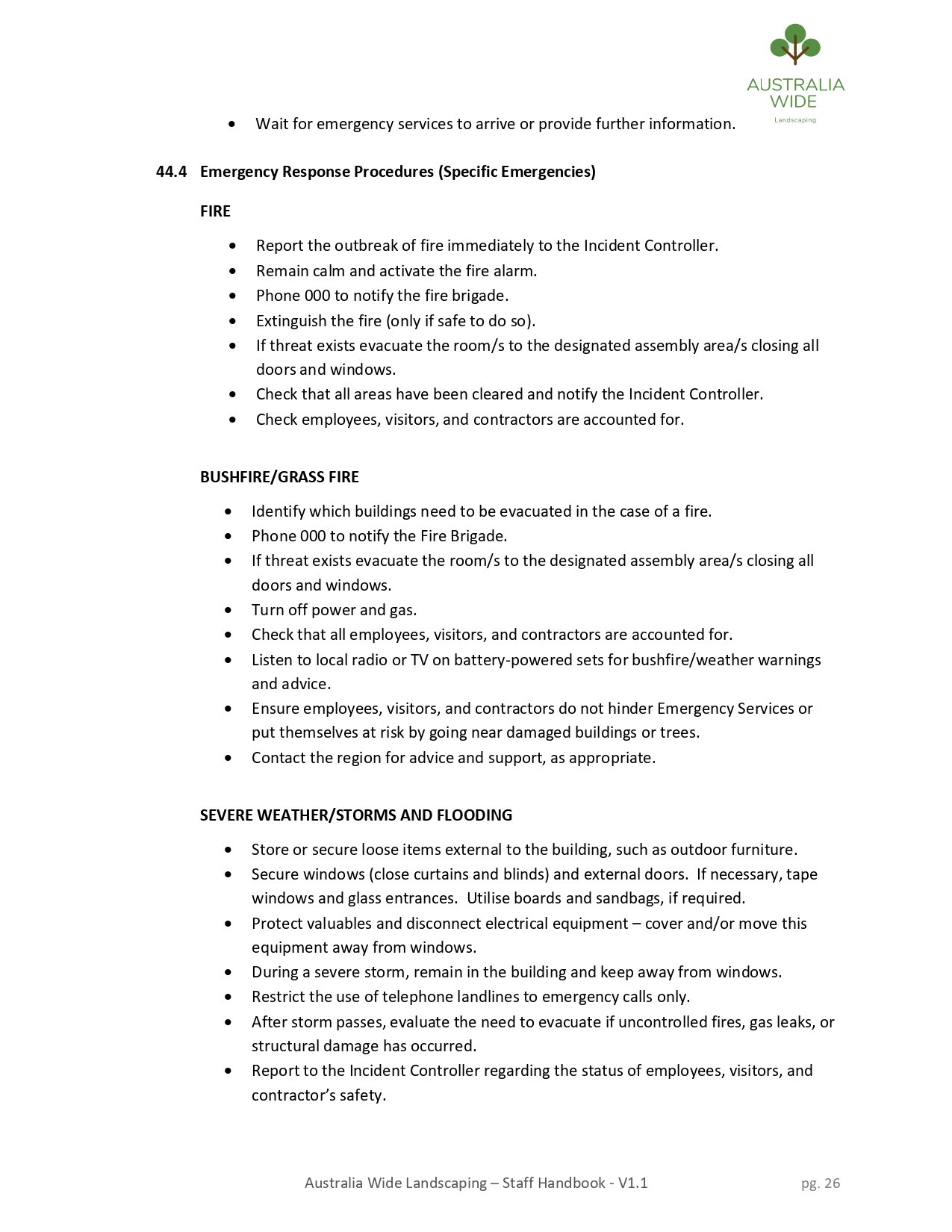
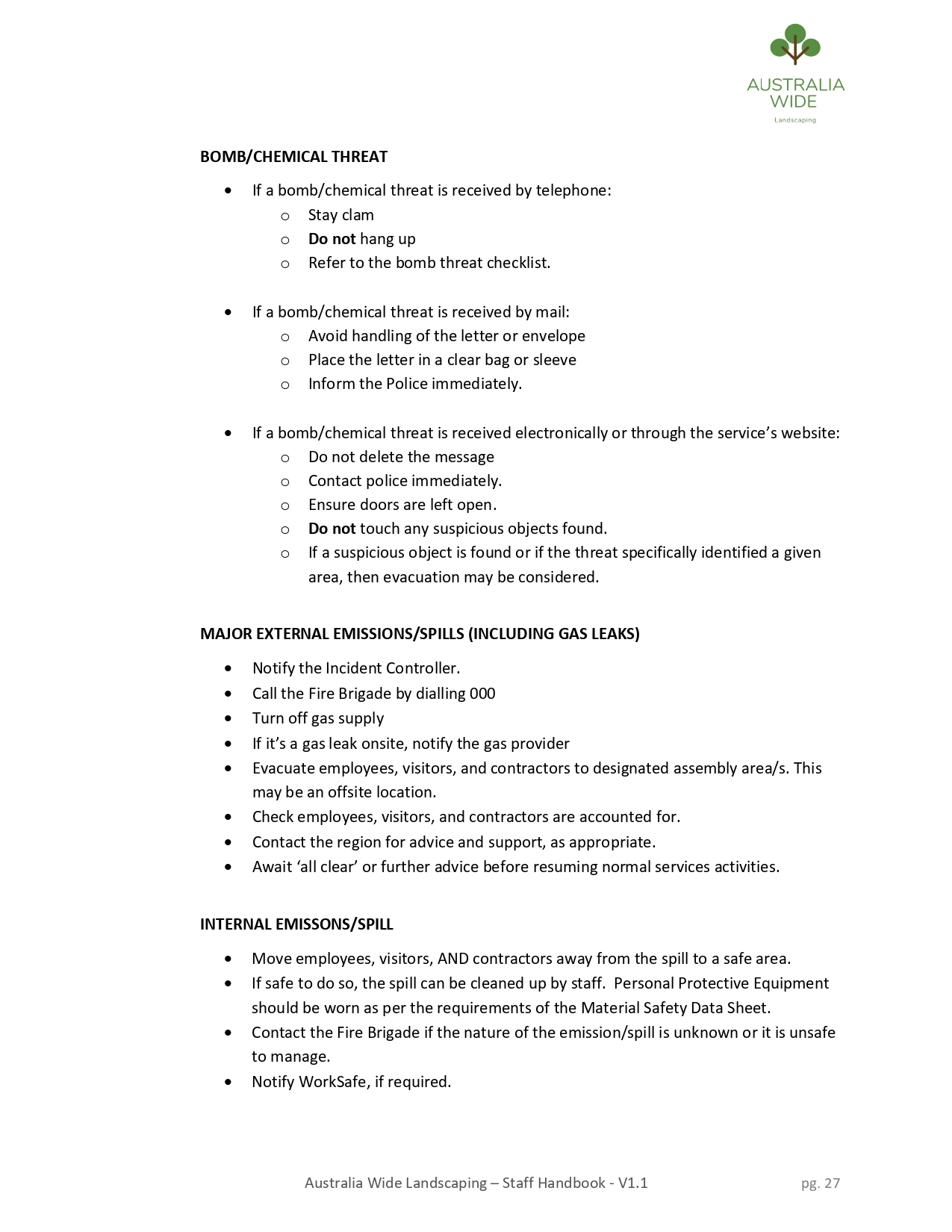
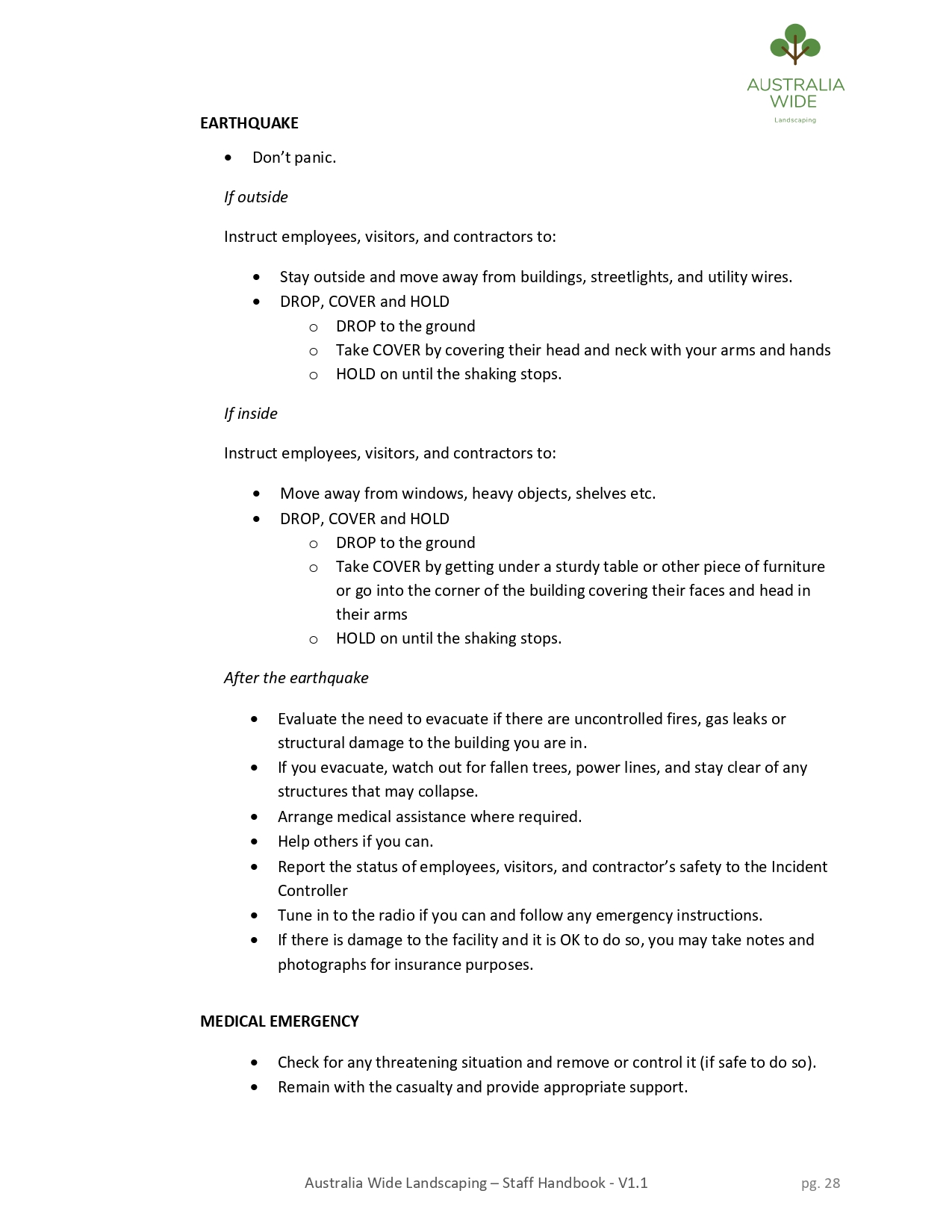
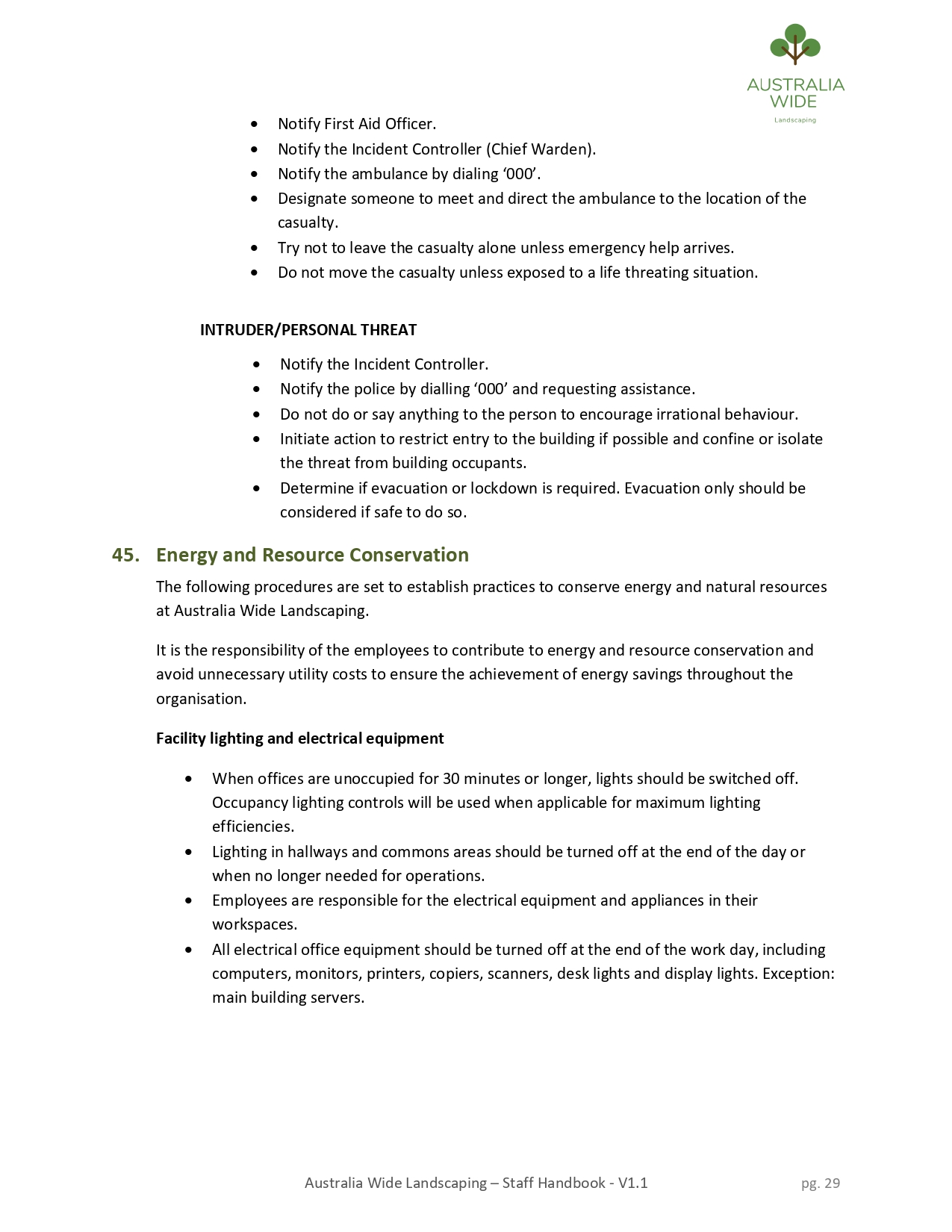
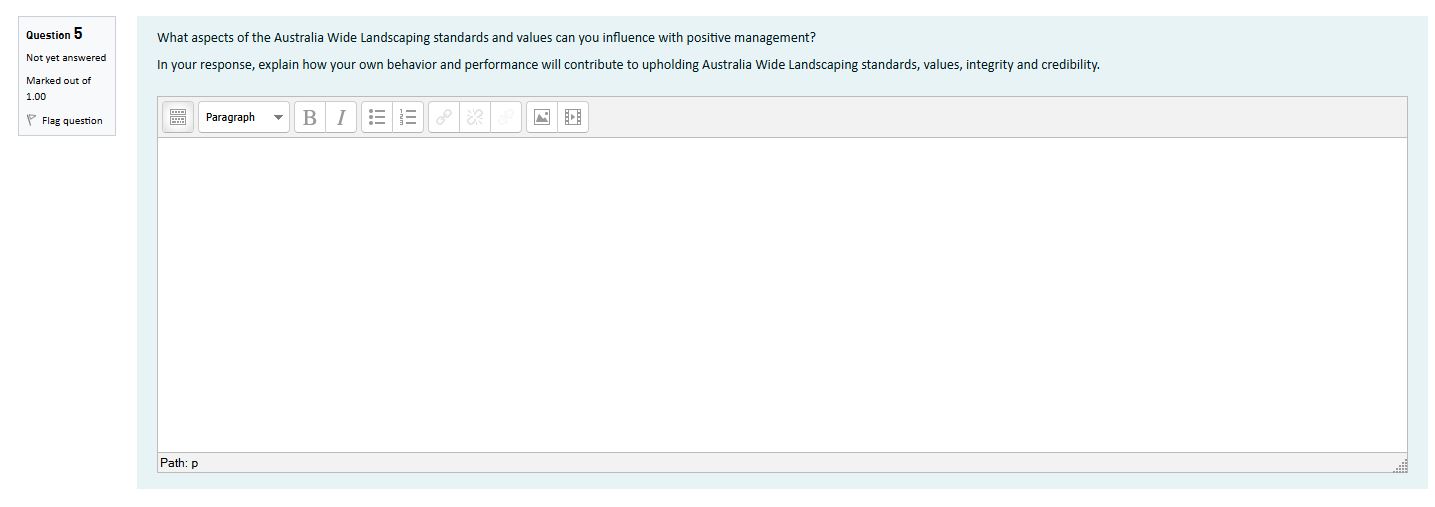
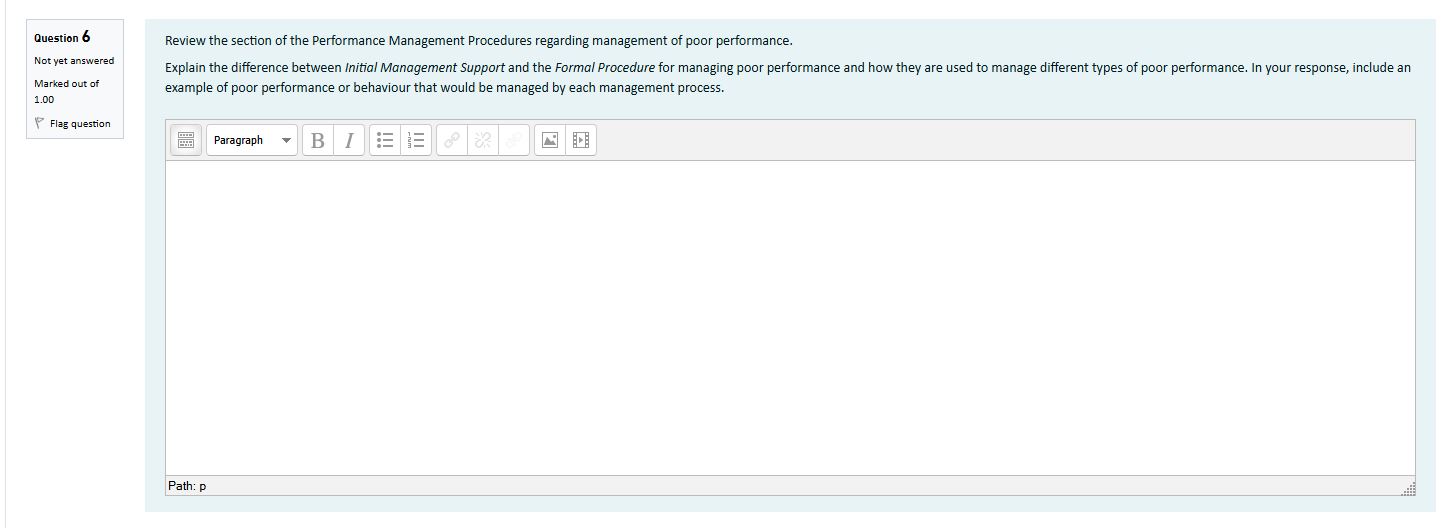
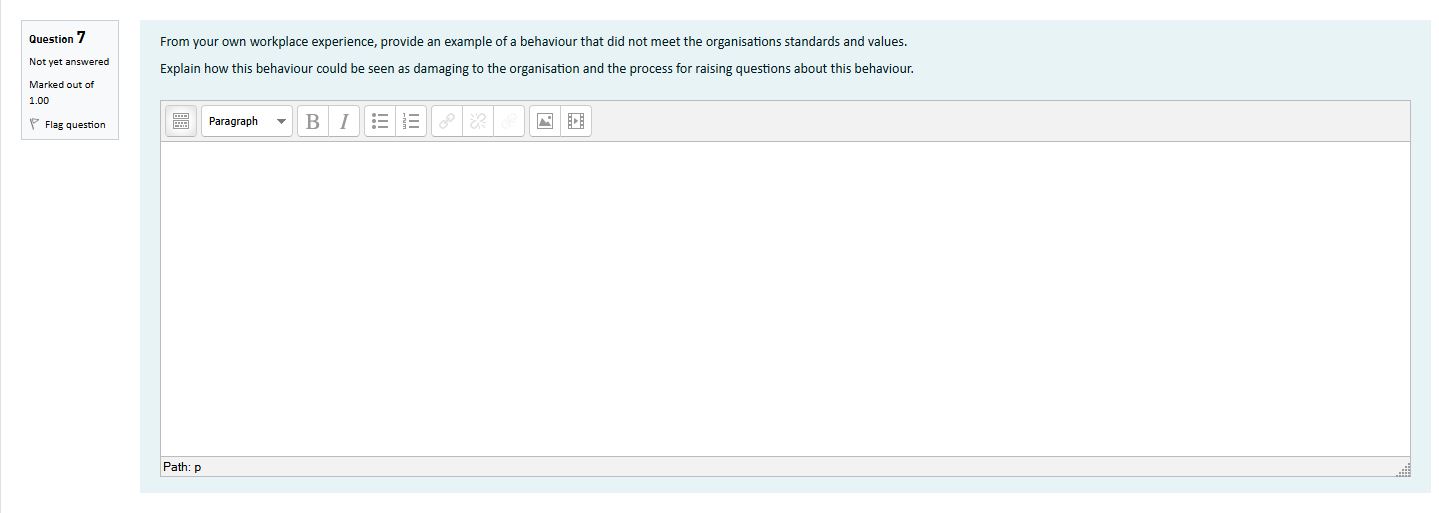
AUSTRALIA WIDE Landscaping Australia Wide Landscaping recognises the need for a procedure to help, encourage and enable all employees to achieve and sustain high work standards. Performance management is a collaborative process in which the supervisor and employee agree on what is expected of the employee for a specified period, and involves planning, consultation and reviewing. Aim The aim of this document is to provide practical guidance on how to manage the performance of employees at Australia Wide Landscaping. Purpose The purpose of the Australia Wide Landscaping Performance Management Procedure is to outline the process for managing performance, including managing underperformance and providing positive management to achieves objectives above and beyond the organisational standards. Scope This procedure applies to all Australia Wide Landscaping employees. Positive Performance Management Positive performance management involves management helping employees to identify their development needs and assist them in achieving their performance goals. It establishes role expectation, provides goal clarity, gives purpose and meaning, and aligns employees to organisational requirements. Positive performance management is a supportive framework that allows employees and managers to work together to develop and recognise performance achievements and oppaortunities. Stages of the Performance Management Process There are three steps to the performance management process: Step 1: Setting objectives. Step 2: On-going consultation Step 3: Performance appraisal and review. A AUSTRALIA l..'.'.'J'Dl Step 1 Setting Objectives The supervisor schedules an initial meeting with the employee/team to discuss performance expectation. Supervisors must ensure that the employee/team has a sound understanding of the company's standards, values, ethics, strategic plan and their team's goals and objectives. Agreed Goals Between three to five performance objectives/goals should be negotiated between the supervisor and employee/team. Strategies to achieve these objectives/goals and period for achievement should be determined and a Performance Plan is to be completed and signed by all parties. The completed Performance Plan is to be sent to the Business Manager for the approval of any resources required. A review date for the performance plan must then be determined. Performance plans may be reviewed annually or within the timeframe of a project. Privacy is to be maintained during this process. Step 2 Ongoing consultation During the performance management period, the supervisor and employee/team should meet regularly to: |dentify any issues, obstacles or new directions which may have become evident and that may impact on the currency of the performance objectives. e Review objectives and goals. e Monitor performance and professional development. e Provide and/or receive feedback. * Ensure that the appropriate training and development resources have been identified. It is recommended that ongoing consultation is conducted throughout the performance management process. Supervisors are to ensure that at minimum, one consultation is conducted at the mid-point of the performance management period. All consultations are to be appropriately documented. Step 3 Performance appraisal and review In preparation for the performance review discussion, the supervisor should review the employee's/team's performance and development by taking the following into consideration: e Achievement or non-achievement of performance objectives and professional development goals (including the effectiveness of any professional development and/or training undertaken) during the performance management process. * Anyrequired changes to the employee's/team's job responsibilities and tasks. e Any mitigating circumstances. Australia Wide Landscaping Performance Management Procedures - V1.0 pg. 1 A AUSTRALIA WIDE The formal review meeting should then take place and during this meeting, the supervisor and employee/team should discuss and reach consensus on the achievement or non-achievement of performance objectives and goals. Privacy is to be maintained during this process. If further performance management is required, the process commences again with a new performance plan. Time-frame for the Performance Management Cycle At Australia Wide Landscaping, the performance management cycle usually occurs over either 12 months or the period of a project. Any variations to this time frame should be discussed and agreed to between the employee/team and the supervisor. Management of Poor Performance Initial Management Support Where performance is considered by the supervisor to be below acceptable standards, the normal course of action in the first instance would be to attempt to resolve problems with the employee in confidence and on an informal basis. The supervisor will work supportively with the employee before entering the formal stages. All meetings are to document. Supervisors are encouraged to set and clarify objectives, help with the prioritisation of actions, and agree on timeframes and review dates. It is anticipated that the majority of poor performance problems will be resolved in this way. Formal Procedure This formal procedure may become necessary if initial management support does not lead to an improvement in performance. At all stages, the method to be followed by the supervisor will be: e Toinvestigate the facts and circumstances of the under-performance in an open and exploratory manner (under-performance can include poor attendance). e To state the problem(s) and provide the evidence to support this. * To give the opportunity for the employee to respond to the issues raised. e To state the expectations i.e., what acceptable performance should look like. e Toidentify the support, training and other resources needed to assist the employee in achieving the required standards. * To set a reasonable timeframe over which performance will be monitored for improved performance. * Wherever possible targets and timescales should be agreed between the supervisor and the employee. Australia Wide Landscaping Performance Management Procedures - V1.0 pg. 2 A AUSTRALIA WIDI Stage 1 The supervisor will invite the employee to a meeting. At the meeting, the supervisor will: * Explain the areas in which the employee's performance falls below the standards expected. s Give the employee the opportunity to respond. e Set and agree on an improvement plan incorporating expectations, standards, goals, KPI's, as required. |dentify required support, training and guidance to help them improve their performance. * Set a reasonable time frame within which improvement is expected, usually no more than 3 months. Arrange a date to meet at the end of this review period. s Advise the employee of their right of appeal against any outcome of the meeting. If the supervisor confirms that there is a performance issue to address, a first written warning will be issued. Any warning at this stage will remain in place for 6 months. The supervisor will set up regular progress review meetings during the review period. All meetings are to be documented. At the end of the review period, the supervisor will confirm to the employee whether performance has become satisfactory or if further action is necessary. Stage 2 Where there has been insufficient improvement following Stage 1, or where the matter is sufficiently serious to progress directly to Stage 2, the supervisor will invite the employee to a Stage 2 meeting, which will follow the same format as for Stage 1. Either the Business Manager or the Operations Manager will be present. For immediate progression to Stage 2 the performance of an individual would include actions which, if not corrected, could represent a risk to the organisation's essential operations, finances or reputation. Having heard the case, the Business Manager/Operations Manager will determine whether a final written warning should be issued. Any warning at this stage will remain in place for 12 months. The employee may be required to participate in further training or development and further targets will be set to be achieved over a review period. The employee should be advised that unless improvement over a sustained period of time is evident at the end of the review period, the matter will progress to Stage 3, at which redeployment or termination of employment may result. At the end of the review period, the Business Manager/Operations Manager will advise the staff member whether performance has become satisfactory or whether further action will be taken under Stage 3. Stage 3 Where there has been insufficient improvement or where the matter is sufficiently serious to progress directly to Stage 3, the case should be investigated and reviewed by the Director and a recommendation made to the Business Manager/Operations Manager or their nominee. Australia Wide Landscaping Performance Management Procedures - V1.0 pg. 3 A AUSTRALIA WIDE Consideration of dismissal for capability related to ill health or poor attendance may also be reviewed this stage. The employee will be given a minimum of 5 working days' notice of the time, venue and purpose of the meeting along with copies of any relevant evidence that is to be referred to at the meeting. The employee will be advised of their right to be accompanied at the meeting by a person of their choice. Stage 3 meetings will be chaired by the Director or their nominee, either the Business Manager or Operations Manager and the employee's supervisor will attend. For capability issues related to health, any medical advice will be considered. If medical advice is received which indicates that the individual is unfit to attend the Stage 3 meeting, all possible alternatives will be considered e.g., conducting the meeting at a different location, written submission of comments or a representative attending in place of the employee. The supervisor will generally present the case and the employee will be given the opportunity to respond. The meeting will then usually be adjourned to consider all the facts before a decision is reached. The Chair will consider: o Whether the process has been fair and reasonable. If not, the case may be overturned or a further review period set for improvement. e The possibility of redeployment to another role. e Dismissal on grounds of capability. e |If relevant, whether ill health retirement has been explored. The Business Manager/Operations Manager will confirm the outcome of the Stage 3 meeting in writing. Where the outcome is dismissal, the individual will be advised of the date on which the contract of employment will end and the appropriate period of notice. If redeployment is an option, the individual will be given sufficient time, normally 10 working days, to consider the offer and respond in writing. Refusal of such an offer will normally result in termination of employment on grounds of capability. If redeployment is at a lower grade, no pay protection will apply. ployi g p Y ploy g payp pply Rewarding Exceptional Performance Where a supervisor believes that an employee or team is consistently performing abaove the required standard, they are to submit the case to the Business Manager or Operations Manager to obtain a reward. The Business Manager/Operations Manager will decide as to the standard of performance in comparison to the overall company performance and approve a suitable and appropriate reward. Rewards may include: e Recognition via Certificate of Appreciation at the following staff meeting. e Recognition via formal award at Annual Staff Presentations Meeting e Monetary reward Australia Wide Landscaping Performance Management Procedures - V1.0 pg. 4 A AUSTRALIA WIDE Roles and Responsibilities PCBU, Managers and Supervisors The PCBU and Managers are responsible for: Following rules outlined in the Worker/Employee's relevant awards, enterprise agreements or registered agreements. Providing copies of agreed Performance Plans to employee/team Allowing the employee/team to bring a support person of their choice to performance management meetings Following AWC policies and procedures Following laws under Fair Work Act 2009 (Cth) Employees and Teams Employees and teams are responsible for: e Working with management towards achieving individual goals which help AWL reach its mission and vision statements. e Attend Performance Management meetings e Co-operate with the Managing Underperformance Procedure when it relates to health and safety at the workplace. Australia Wide Landscaping Performance Management Procedures - V1.0 pg. 5 \fAUSTRALIA WIDE Landscaping Table of Contents General Company Information ..........."."' . 4 1. Our Company .................um 2. Company Vision ...... . 4 3. Missions Statement .. ....... 4 4. Our customers............ 5 . Our Employees ... 6. Community and Environment ..........................um 7. Your Employment and this handbook ..............................". 8. Industrial Awards/Collective Agreement.............. .. 5 9. .. 6 10. Employee Relations..... ............ 6 11. Employee Duties and Responsibilities . .......................:" 12. Full-time Employees.......... 13. Part-time Employees............ 14. Casual Employees........ 15. Contractors ...... 16. Payment of Wages ........... Employment Policies....... 17. Business Hours ....... ........ 8 18. Employees Movement Policy ......................." 19. Presentation and Dress Policy...............................umm; ... 8 20. Customer Service Policy .................:.." 21. Discrimination and Harassment Policy .................... ........ 9 22. Bullying Policy . ........... 9 23. Dispute Settlement Procedure.............. 24. Work Health and Safety (WHS) Policy.........................."."' .. 10 25. Smoking Policy ...... MR. 11 26. Drug and Alcohol Policy ....... ...... 11 27. Ergonomics ....... 28. Computer and Email Policy .........." Australia Wide Landscaping - Staff Handbook - V1.1 pg. 2AUSTRALIA WIDE 29. Use of Telephone Policy .............:15:...mummum; 13 30. Disclosure of Confidential Information Policy .............."..."."." 31. Corporate Compliance Policy .................:14:1:15.....um MR. 14 32. Personal Leave Policy ........ .... 14 33. Parental Leave Policy ......... Q. 15 Safety Procedures ...... .... 16 34. Introduction ......... . 16 35. Safe Procedures ..... .. 16 36. Workplace Hazards ........ ........ 18 37. Field Standard Safety Clothing Requirements ......... .. 19 38. Safety Equipment....... OK. 19 39. Risk Management ... . 19 40. Waste Management................u" ... 22 41. Hazards Identification Procedure ........... ......... 23 42. Incident Reporting Procedure ...." 43. Emergency Procedures ... MORE.. 24 44. Energy and Resource Conservation ....... "UP.. 29 Australia Wide Landscaping - Staff Handbook - V1.1 pg. 3General Company Information 1. e AUSTRALIA WIDE Our Company 1.1 Australia Wide Landscaping was established twelve years ago to provide landscaping solutions in large commercial and residential developments. In that time, we have worked closely with specialist subcontracting companies to deliver a diverse range of landscaping services to achieve the best results for our customers. 1.2 To date some of our greatest achievements include Construction of landscaping and car parking for the Cascade Peak Shopping Centre Landscaping for the Nevva Inn complex Landscaping and carpark construction for Cascade Peak Retirement Village Landscaping, Swimming Pool construction, and Playground Construction for the Cascade Peak Water Park Landscaping for the Cascade Peak Ski Field Boardwalk construction for the Black Tarns Wetlands Nature Walk 1.3 We also maintain many established landscaping projects, including: All walking trails on Cascade Peak All Council owned parks in Cascade Peak Town All garden beds in the Cascade Peak Shopping Centre. Company Vision Our vision for the future is to make the Cascade Peak region ecologically friendly through practical landscaping solutions using local native vegetation and landscaping that blend in well with the natural setting. We strive to be a leader in the field of large-scale landscaping development projects in the Cascade Peak region. Missions Statement To achieve our vision, we will * Maintain the highest quality standards in our methods, techniques, and materials. e Effectively plan and implement projects to deliver on time and on budget. e Demonstrate a strong commitment to the environment by using native plant selections suited to the local climate to minimise ongoing maintenance. e Have strong working relationships with all clients and contractors. Australia Wide Landscaping Staff Handbook - V1.1 pg. 4 8. e AUSTRALIA WIDE Our customers Our business is to provide our customers with landscaping solutions at the highest possible standard. We are dedicated to providing the highest level of excellence in our service, methods and materials. We are committed to developing honest and ethical relationships with our customers. Our Employees Our ability to succeed depends on the integrity, knowledge, skill, flexibility and teamwork of our employees and contractors. We strive to create a culture of loyalty to the organisation, mutual respect, cooperation, and teamwork a working environment that rewards commitment and excellence in performance and seeks to be responsive to the needs of workers. We are responsible for creating an environment of trust and respecting the privacy of individuals. Community and Environment We comply with all applicable laws, rules and regulations. All of our activities are guided by our corporate responsibility principle of zero harm to the environment and to the community. Your Employment and this handbook 7.1 The terms and conditions of your employment within Australia Wide Landscaping are set out inyour contract of employment. 7.2 This employee handbook provides employees with a general understanding of our Company's policies and procedures. 7.3 This handbook contains information that you may need to assist you in your work and the standards, policies and procedures that apply in the day to day conduct of business. However, the employee handbook cannot anticipate every situation or answer every question regarding your employment. Industrial Awards/Collective Agreement 8.1 You may be employed by the Company under a written common law employment agreement, Award, or Collective Agreement. Where you have been employed under any of these arrangements then you will have been provided with a copy of your employment agreement or Collective Agreement. 8.2 Ifyou are employed under an Award, then the Company will provide you with a copy of the Award on request. 8.3 To the extent that there is any inconsistency between any applicable Award or Collective Agreement and this employee handbook, the Award or Collective Agreement will apply. The Australian Fair Pay and Conditions Standard (APCS) as defined in the Fair Work Act 2009 (Cth) apply to your employment. To the extent that there is any inconsistency between the APCS and this employee handbook or any applicable Award or Collective Australia Wide Landscaping Staff Handbook - V1.1 pg. 5 10. 11. 8.4 e AUSTRALIA WIDE Agreement, the APCS apply to the extent that it is \"more favourable\" (as defined bytheAct and/or the Workplace Relations Regulations) to the employee. Our Company sees its employees as key contributors in every aspect of its business. Itis through your commitment to excellence, your positive attitude to your tasks and your willingness to work as a team that we will achieve our Mission Statement. Experience and Training 9.1 9.2 9.3 9.4 9.5 In your Application for Employment, you provided us with details of your experience and training. We have relied on the complete truth of what you have told us in assessing your suitability for the position with our Company and in deciding to employ you in that position. Employees must promptly provide the Company with any information that concerns the employee being unable to perform the employee's full range of duties. If you believe there is a course or training program that will enhance your ability to perform your work, then we invite you to discuss this with your supervisor. We are committed to ensuring that all our employees are well trained to perform their work. If we can assist you with any further training, please speak with us. Our Company does not undertake to pay your fees with respect to a training course or program that you undertake whilst employed with the Company. However, the Company may in some circumstances agree to pay or contribute towards such fees. Accordingly, you should discuss with us any courses that you are planning to do. From time to time you may be expected to undertake training at the request of the Company to develop your skills and expertise in your position with our Company. Employee Relations 10.1 10.2 10.3 If you have any concerns about the workplace, we encourage you to voice these concerns openly and directly with management. This facilitates clear communication and avoids many unnecessary problems. Our workplace policy is that if you as a valued employee have a concern about any matter, then management shares your concern. We may not always agree with the point that you have raised but we do want to hear what you have to say and will carefully consider it in a positive way. Any workplace disputes must be resolved in accordance with our Dispute Settlement Procedure set out in this handbook. Employee Duties and Responsibilities 111 11.2 If you have entered into a written employment agreement, then your duties and responsibilities are referred to therein. Each employee's employment will commence the date the employee accepts the Company's offer of employment or such other date as the Employee and the Company expressly agree in writing as the commencement date. Australia Wide Landscaping Staff Handbook - V1.1 pg. 6 12. 13. 14, 15. 11.3 114 115 116 11.7 e AUSTRALIA WIDE In accepting the Company's Offer of Employment, the employee is representing to the" Company that the employee can efficiently, competency and properly carry out those duties and that the employee has all the skills and experience to do so. The employee must carry out all reasonable lawful instructions given to the employee to the highest level of the employee's skills, competence, and training. The employee must efficiently and satisfactorily comply with all reasonable lawful requests made by the Company. The employee is required to obey all reasonable lawful directions given to the employee by the Company during the employee's employment and the employee must carry out all duties and responsibilities required of the employee to the satisfaction of the Company. The employee may be asked to do work for a subsidiary of the Company or take instructions from an agent of or contractor to the Company. The employee must in these circumstances carry out all reasonable lawful tasks assigned to the employee. There may be occasions when the work required of the employee is not work usually done by a person holding the employee's position in the Company. The employee is not required to take on any work that is dangerous or which requires training or experience which the employee does not have. There may be additional responsibilities and duties required of the employee during the employee's employment which the employee will be expected to carry out. Full-time Employees Full-time employees are permanent employees who do not have casual or probationary status and who are scheduled to work thirty-eight hours per week. Part-time Employees Part-time employees are permanent employees who do not have casual or probationary status. Part-time employees are engaged to work less hours than full-time employees. They receive however all the entitlements of full-time employees on a proportional basis. Casual Employees 14.1 14.2 Casual employees are short term and work irregular and uncertain work hours. Casual employees are not entitled to a range of benefits normally afforded to full-time and part-time employees, such as holiday leave, personal sick leave (except for unpaid carer's leave). Casuals are paid a loading in lieu of such benefits. Contractors 15.1 15.2 15.3 We engage some independent contractors and consultants for specific tasks. Contractors are not employees. Contractors are independent business entities that are engaged to provide specific services on a project-by-project basis to the Company. All contractors render to our Company tax invoices with their Australian Business Number that complies with GST requirements. We expect them to do this promptly on completion Australia Wide Landscaping Staff Handbook - V1.1 pg.7 16. e AUSTRALIA WIDE of any project. If a tax invoice is given to you by a contractor, you should ensure that'it'is promptly passed on by your supervisor. 15.4 Contractors are responsible for their own WorkCover insurance, superannuation and PAYG tax payments with respect to themselves, their employees and subcontractors. 15.5 All contractors usually provide all their own equipment, materials and supplies. Payment of Wages 16.1 All employees are paid fortnightly on a Thursday. 16.2 Your pay will be electronically deposited into your bank account. You must have provided the Company with your bank account details and filled out an Employee Bank Account Information Form. Itis your responsibility to make sure the details you provide are correct. If you wish to change these details at any time you must fill out a new form. 16.3 We are legally required to make certain deductions from every employee's pay. Among these deductions are applicable PAYG taxes and compulsory Superannuation, which is nine percent (9%) of your pay. 16.4 The employee will be provided with a pay slip indicating details of payment and deductions. The employee must review the accuracy of the pay slips and report any discrepancies to the Company's pay-roll officer. Employment Policies 17. 18. 19. Business Hours 17.1 Australia Wide Landscaping's business hours are from 7:00 AM 4:00 PM. Operating hours, however, will vary on remote sites and project sites depending on contractual arrangements. 17.2 Australia Wide Landscaping observes two fifteen (15) minute breaks during the work period: 10:00 - 10:15 AM and 2:00 2:15 PM. These breaks allow employees to rest, use the restroom, and interact with other employees. Employees Movement Policy 18.1 When leaving the workplace during work hours you are required to inform the Company as to your whereabouts and your intended time of return. 18.2 You are also requested to always leave your mobile on whilst you are absent so that we can contact you if the need to do so arises. This enables the facilitation of clear communication between staff and the passing on of messages. Presentation and Dress Policy 19.1 Dress and grooming standards are a very important aspect of the image that the Company presents to customers and visitors. 19.2 During business hours, all staff must wear the Australia Wide Landscaping khaki uniform, Australia Wide Landscaping Staff Handbook - V1.1 pg. 8 20. 21. 22. e AUSTRALIA WIDE 19.3 If you have shoulder length or longer hair, you are required to tie it neatly back when operating landscaping equipment. Customer Service Policy The success of our Company depends upon our customers being impressed and happy with our products and services. Employees must aim to ensure that our customers are given prompt and polite services, and if any customer has a complaint it is dealt with courteously and if any customer needs urgent service, for whatever reason, we do all we can to meet the customer's requirements within their time frame, not ours. Discrimination and Harassment Policy 21.1 We are committed to providing a workplace culture and environment that is free of discrimination and harassment. Discrimination Discrimination may be any selection, exclusion or preference made on the basis of an individual's sex, race, transgender, sexuality, ethnicity, age, religion, disability, (including physical, intellectual, psychiatric, sensory, neurological or learning), martial status, pregnancy, carer's responsibilities, political affiliation or beliefs and membership or an organisation or association (such as a trade union). Discrimination may be either overt and direct, or subtle and indirect. Harassment Harassment is any form of behaviour that is not wanted and not asked for and that either humiliates, offends, or intimidates a person. 21.2 Legislation generally prohibits discrimination and harassment on the grounds of an individual's sex, race, transgender, sexuality, ethnicity, age, religion, disability (including physical, intellectual, psychiatric, sensory, neurological, or learning), marital status, pregnancy, care's responsibilities, political affiliation or believes and membership of an organisation or association (such as a trade union). 21.3 Discrimination and/or harassment in the form of actions, signals or words including jokes is not tolerated by our Company. 21.4 If you become aware of any conduct that is possibly discriminatory or could amount to unlawful harassment; you should advise your supervisor who will handle the matterin a timely and confidential manner in accordance with the Dispute Settlement Procedure. 21.5 |If a customer, contractor or other employee engages in any behaviour that you regard as discriminatory or harassment such as an unwelcome sexual advance or offensive gestures, then you should immediately report this incident to your supervisor. Bullying Policy 22.1 Our Company is committed to providing a workplace culture and environment that is free of bullying. Bullying is not tolerated by our Company in the workplace. Australia Wide Landscaping Staff Handbook - V1.1 pg. 9 23. 24. 22.2 22.3 224 225 e AUSTRALIA WIDE Bullying occurs where an employee uses strength, power, or position to intimidate, oppress or persecute other employees by fear. Examples of bullying behaviour include unfair and excessive criticism, publicly insulting others, ignoring the point of view of other employees, constantly changing, or setting unrealistic work targets and undervaluing their efforts at work. Any employee who becomes aware of possible bullying should promptly advise their supervisor who will handle the matter in a timely and confidential manner in accordance with the Dispute Settlement Procedure. Discrimination and/or harassment in the form of actions, signals or words including jokes is not tolerated by our Company. If you become aware of any conduct that is possibly discriminatory or could amount to unlawful harassment; you should advise your supervisor who will handle the matterin a timely and confidential manner in accordance with the Dispute Settlement Procedure. If a customer, contractor, or other employee engages in any behaviour that you regard as discriminatory or harassment such as an unwelcome sexual advance or offensive gestures, then you should immediately report this incident to your supervisor. Dispute Settlement Procedure 231 23.2 233 234 235 236 237 238 Any questions, difficulties, or disputes 'arising in the course of the employment' will be dealt with by following this procedure. The Employee may be accompanied by a representative during all stages of this procedure. The Employee/s and the manager with whom the dispute has arisen shall discuss the matter and attempt to find a satisfactory solution within three working days. If the dispute cannot be resolved at this level, the matter shall be referred to, and be discussed with, the relevant manager's superior and an attempt made to find a satisfactory solution within a further three working days. If the dispute is still not resolved, it may be referred to a mediator. Where the dispute cannot be resolved through mediation within five working days of the referral of the dispute to the, either party may refer the matter to the AIRC. The period for resolving a dispute may be extended by agreement between the parties. The parties will make a genuine attempt to reach an agreed solution. If the dispute cannot be resolved, either party may refer the dispute to the AIRC for conciliation or, where appropriate, arbitration. Work Health and Safety (WHS) Policy 241 24.2 We take our obligations under the Work Health and Safety Act 2011 seriously so that we can provide a safe and healthy work environment for employees, contractors, customers, and visitors. The WHS Committee meets regularly. Employees are invited to discuss or provide a memo on any matters relating to safety or health for discussion by the WHS Committee. Australia Wide Landscaping Staff Handbook - V1.1 pg. 10 25. 26. 24.3 244 24.5 246 24.7 24.8 e AUSTRALIA WIDE If you become aware of any circumstance or hazard that could give rise to a risk of injury or illness to any person then you should immediately notify your supervisor, fill out a Hazard Identification Form and lodge it with your supervisor. If there is an accident that does give rise to an injury orillness or could have resulted in an injury orillness, then it is important that all employees who are present immediately inform their supervisor and complete a Hazard Report Form. In all workplace activities you are expected to comply with all WHS procedures, and all directions given in respect to safety. If this requires you to wear protective clothing or a helmet or to wear ear plugs/muffs or face masks or protective goggles, then you must do so and no one has any authority to exempt you from this compliance. If there are restricted areas where only authorised personnel are permitted, then you are not permitted to enter those areas unless expressly authorised by the appropriate officer or your supervisor. If you see any person or employee not complying with any WHS procedures or requirements, then you must immediately report this to your supervisor. You will appreciate that this is a fundamental matter of workplace safety. All such reports will be treated confidentially. If you see any machinery being improperly used or being used without safety guards (when these are required) or cbserve any machinery to be damaged or defective or in need of repair or service, then you must immediately report this to your supervisor. You will appreciate that this is also a fundamental matter of workplace safety. All such reports will need to be treated confidentially. Smoking Policy 251 25.2 In keeping with our policy of promoting a safe and healthy working environment, smoking is prohibited in the workplace. No designated smaoking areas have been provided at the workplace and employees are not allowed smoking breaks whilst working. If you wish to smoke, then you may do so outdoors during your meal break. Drug and Alcohol Policy 26.1 26.2 As part of our WHS policy, alcohol consumption or drug use in the workplace is strictly prohibited. You must not come to work intoxicated or under the influence of drugs. If you have a drug and/or alcohol problem you could cause injury to yourself and others and you could damage your physical and mental health. An employee who appears to be under the influence of alcohol or drugs may be: * requested to acknowledge that they are affected and if they do acknowledge so, then the Company may give that employee a written warning not to attend work whilst intoxicated or under the influence of drugs and may require the employee to leave the premises; Australia Wide Landscaping Staff Handbook - V1.1 pg. 11 e AUSTRALIA WIDE e |f the employee does not acknowledge that they are intoxicated or under the irifltince of drugs, the employee may be required to participate in an alcohol or drug test. If the employee so agrees and is found to be intoxicated or under the influence of drugs, the employee will be counselled and may be issued with a written warning; o |f the employee refuses to participate in an alcohol or drug test, the employee will be counselled to participate. If the employee continues to refuse to participate without a legitimate cause the employee will be deemed unfit and may be given a warning or in serious cases dismissed for misconduct. 26.3 If you have a drug or alcohol problem, you are invited to seek counselling from management to facilitate treatment and rehabilitation. 27. Ergonomics All employees must observe the ergonomic requirements of Australia Wide Landscaping. e Peoplesitting should try and change posture frequently. - Employees should not sit in the exactly the same posture for long and at a minimum, should get out of their chair every hour and walk around. e Performing different tasks throughout the day addresses the problem of sitting in one position for too long. - Performing different tasks throughout the day will encourage different postures and can help alleviate many of the problems people experience due to sitting for extended periods. * Frequently used items must be placed in the \"optimum reach zone\" of the desk or work surface. - The most convenient location for the placement of equipment is the area that the hands can reach with the upper arms hanging down freely beside the body. * Anexternal pointing device should be used when working on the laptop for extended periods of time. - Having either an external monitor or laptop station with external keyboard and mouse in the most common locations of use, allows an important degree of freedom in setting one's posture that is not possible with just the laptop. e |tisimportant that when people use a mouse they do so without high muscle stress. - the arm, wrist and fingers should not be in great tension when using the mouse. 28. Computer and Email Policy 28.1 Computers, computer files, computer software and email systems are the property of the Company and are intended to be used only for Company business. 28.2 The computer and email system must not be used in a manner that is disruptive or offensive to others. It will be a breach of this policy to access, download or send objectionable material including: Australia Wide Landscaping Staff Handbook - V1.1 pg. 12 29. 30. 28.3 284 28.5 28.6 28.7 28.8 e AUSTRALIA WIDE * Pornography, including child pornography; e Material involving the instructions or promotion of crime, violence or hate; e Material involving an offensive description of violence to compel sexual conduct; e Material involving sexually degrading acts; e Material that is defamatory. If you see another employee breaching this policy, you must immediately inform management. You must not download, view, or send spam, junk mail or pop-ups because they may contain viruses, worms, or Trojan horses. If you receive any pornographic, spam or junk email, then it must be deleted immediately. You are prohibited from intentionally creating or sending viruses, worms or Trojan horses. You must do a virus check prior to opening any emails from unknown sources. Whilst the occasional use of computers for personal purposes will be tolerated (provided this is not otherwise a breach of this policy), you must not do so excessively or allow such conduct to interfere with your normal duties. If you violate this policy your employment may be terminated. You may also face immediate dismissal (depending upon the seriousness of your breach) for serious misconduct. If you use any computer for an unlawful purpose you may be reported to the police if a crime is involved and any other appropriate authority and your employment with us may be terminated on the grounds of misconduct. Use of Telephone Policy 291 29.2 293 294 The phone system is intended for Company and business use only. Personal use of the telephone system is prohibited/limited to three (3) personal calls per day. Personal use of the telephone system for interstate or international calls is strictly prohibited. You should be aware that telephone calls may be monitored. To ensure effective telephone communications, you should speak in a courteous and professional way. If you experience an abusive or aggressive caller then immediately pass the caller onto your supervisor. When taking calls for an employee who is not present, please advise the caller that the employee is not able to take the call and record the message on the message pads provided. The message should be promptly passed onto the employee concerned. Disclosure of Confidential Information Policy 301 For the purposes of this paragraph, confidential information includes: e All information contained in a document, or any software that is the property of our Company and which is by its nature confidential to us and/or our Business and/or to any of our customers; or Australia Wide Landscaping Staff Handbook - V1.1 pg. 13 e AUSTRALIA WIDE All documents or software that is marked or contained in a package or envelop&that is marked \"Strictly Confidential\33. e AUSTRALIA WIDE * Inthe case of carer's leave where care or support is required because of an"""" unexpected emergency, a statutory declaration made by the employee indicating that care or support was required due to the employee's immediate family member or household member being affected by an unexpected emergency. This clause does not apply where the employee cannot comply due to circumstances beyond the employee's control. 32.2 The employee is required to fill out an Application for Personal Leave Entitlements for all personal leave taken. 32.3 Unpaid personal leave will not be paid out to the employee upon termination of the employee's employment with the Company. Parental Leave Policy 33.1 Parental leave means either maternity leave, paternity leave or adoption leave. 33.2 Maternity leave means either: e Special maternity leave which is unpaid leave taken by an employee because she is pregnant and has a pregnancy related illness, or where the pregnancy has ended within twenty eight weeks before the expected date of birth otherwise than by the birth of a living child; or e Ordinary maternity leave which is a single, unbroken period of unpaid leave taken in respect of the birth or expected birth of the child by the employee. 33.3 Paternity leave means either: e Short paternity leave which is a single unbroken period of unpaid leave of up to one week taken by a male employee within the week starting on the day his spouse begins to give birth, or * long paternity leave which is a single unbroken period of unpaid leave taken by a male employee after his spouse gives birth to a living child so that the employee can be the child's primary care giver. 33.4 Adoption leave means either: e Short adoption leave which is a single unbroken period of unpaid leave or up to three weeks given taken by an employee within three weeks from the day of placement of a child with the employee for adoption or e Long adoption leave which is a single unbroken period of unpaid leave taken by an employee after the day of placement of a child with the employee for adoption so that the employee can be the child's primary care-giver. 33.5 The employee is entitled to a maximum of fifty two weeks unpaid parental leave (less any \"related authorised leave\" as defined in the Act) if: * Inthe case of maternity leave, immediately before the expected date of birth the employee has or will have completed at least twelve months' continuous service with the Company; Australia Wide Landscaping Staff Handbook - V1.1 pg. 15 e AUSTRALIA WIDE * Inthe case of paternity or adoption leave, immediately before the first day ofi'which the leave is or is to be taken the employee has or will have completed twelve months' continuous service with the Company. 33.6 Unless the Company indicates otherwise, an employee is not entitled to special maternity leave for a period longer than stated in the medical certification. In addition, a period of special maternity leave must end before the employee starts any continuous period of leave including ordinary maternity leave. 33.7 Anemployee may take short paternity leave or short adoption leave while his/her spouse is taking authorised leave because of the birth or placement. Unless the Company indicates otherwise, a period of long paternity leave or long adoption leave taken by the Employee must not include any period during which his spouse is taking maternity leave, adoption leave, or any other authorised leave, because of the birth or placement. Safety Procedures 34. Introduction 34.1 Australia Wide Landscaping is committed to creating a workplace environment that is conducive to safety as well as being productive. 34.2 To achieve this aim management and employees will comply with all relevant legislation and safety regulations that are in force in the client's work environments. 34.3 Australia Wide Landscaping has a Safe Workplace Code of Practice that is constantly being updated as hazardous conditions and safer practices are recognized. This Code of Practice is the core for all safety inductions for new employees and regular updates for all employees. 34.4 Safe workplace practices lead to greater productivity. 35. Safe Procedures Designated Heath and Safety Representatives (HSRs) will be responsible for ensuring that matters of policy as set out in the document are carried out. In addition, the HSRs will identify, and cause to be rectified, all potential safety hazards. 35.1 Designated Work Areas Australia Wide Landscaping is divided into the following work areas: e The office, including office entrance and exits, and the staff/visitor car park. e The depot, including the warehouse and the outdoor area containing the landscape supplies and large landscaping equipment. e Each remote worksite where landscaping work is carried out. * Ininstances of large remote worksites where different teams are working in different areas, the area in which each team is working is considered a separate worksite. 35.2 Health and Safety Representatives Australia Wide Landscaping Staff Handbook - V1.1 pg. 16 353 354 35.5 e AUSTRALIA WIDE Every designated work area must have a designated HSR (health and safety representative). HSRs must: e Be aware of \"Duty of Care\" under Workplace Health and Safety Act. e Ensure all persons entering a work area (that requires a safety induction) has a current induction or must arrange to get that person inducted. o Inductions are valid for a limited period of 12 months. Registers Australia Wide Landscaping will keep the following registers: * Employee database e Hazards and incidents Inductions and training Office The following safety procedures are to be exercised in the office. e All electrical leads to be checked and tagged on a regular basis. e Power boards to be used. No \"piggy-backing\" of double adaptors will be tolerated. e Power leads to be kept away from walkways, but if they must be in the walkway, then they are to be securely fixed to floor with gaffer tape or similar. * Floor space to be kept clear. No smoking e All staff are to be aware of emergency exits and evacuation procedures. Depot/Sites The following safety procedures are to be exercised in the depot or whilst working on remote sites. * AWL uniform must be worn at all times. e Pedestrians to follow marked walkways. e QOperators of forklifts and other vehicles to use designated lanes. e All materials and equipment to be stored in a safe manner in their allocated areas. * Signage and barriers must be erected around all areas of temporary storage, work in progress and incident locations. e Allincidents, injuries, and near misses must be reported to the site supervisor. e Any damage, loss or theft of any equipment must be report to the site supervisor. e All personnel must conduct themselves in a safe manner. e First aid kits are to be available and effectively maintained. e Think before acting. If a situation has the potential to be hazardous extra care must be taken. e All food scraps, papers, cans, and bottles and other refuse of a like nature will be placed in a proper receptacle or removed from the site. e No loud music is to be played where it interferes with the owner of the property. Australia Wide Landscaping Staff Handbook - V1.1 pg. 17 36. e AUSTRALIA WIDE e No dogs are to be brought on site without the prior consent of the owner f the site. e All manual lifting is to be conducted safely. e Gear and equipment must be properly maintained according to manufacturer instructions. * Vehicles are to be driven within the road rules. Vehicles are not to be driven on or about the property at a speed in any manner which is unsafe or inconsiderate of the owner of the property. While working on public roads special care must be taken. High visibility safety vests must be worn and signs erected to indicate the start and end of the job area. e Safety boots (steel caps) are mandatory. Some relaxation of this may be allowed in wet area. e Some work sites will have additional safety requirements dictated by legislation or regulators and must be complied with. e Chainsaws must only be used by experienced personnel. Safety helmets and ear protection must be worn. * No loud or offensive language is to be spoken on any property. e Long hair must be securely tied back from the face. e Personal protection, including sunscreen, insect repellent, medication (e.g. hay fever) may be used when necessary. e Allergies must be communicated to the site supervisor and co-workers in case of an emergency. e No alcohol is prohibited on all sites. * Any employee suspected or arriving at work under the influence of alcohol or drugs, as described by law, will be asked if they think they might be under the influence. An affirmative answer will result in that employee being stood down for that day with a loss of pay. If the employee chooses to remain at work and is subsequently found to be \"under the influence\" that employee may face instant dismissal. Workplace Hazards Manual Handling e Electricity: o Electrical equipment must be tagged and tested by a qualified electrician. o Employee must not attempt to repair electrical equipment under any circumstances. Malfunctioning electrical equipment must be taken to a suitably qualified repairer. o Air conditioning to be serviced according to manufacturer instructions. * Falls from height and into depth e Cut and crush injuries e Vehicle and road accidents e Chemical and material exposure (e.g., fertilisers) Australia Wide Landscaping Staff Handbook - V1.1 pg. 18 37. Field Standard Safety Clothing Requirements 37.1 Alltasks e Steel cap boots (unless otherwise discussed) e UV protection sunscreen (supplied) * Longsleeve shirts to be buttoned or affixed at wrist. e All shirts to have collars 37.2 Rural Work - Field e Long Sleeved Shirts e longPants * Gaiters where suitable 37.3 Road and areas around natural rock faces e Hard Hats and highly visible (orange) vests to be warn. 37.4 Remote wilderness sites e AUSTRALIA WID * EPIRB (distress radio beacon) to be carried by at least one team member 38. Safety Equipment 38.1 Office e Fire extinguishers * First aid kits 38.2 Depot e Fire extinguishers e First aid kits e Road signs 38.3 All vehicles e First aid kits e High viability vests 38.4 Vehicles working on commercial or remote wilderness sites e Fire extinguishers e First aid kits * High viability vests e EPIRB (distress radio beacon) e Hard hats e High set warning lights e High set orange flashing light e Surveyor on Road signs 39. Risk Management Even the simplest task contains risks. Risk management requires an assessment of all tasks undertaken in the workplace on any individual basis. Identifying the potential dangers associated with any task helps eliminate the risk associated with that task. Risk assessment MUST be carried Australia Wide Landscaping Staff Handbook - V1.1 pg. 19 AUSTRALIA WIDE out both within the office and in the field for all tasks undertaken where a possible injury may be sustained The following situations are obvious examples: Office and Depot Moving furniture and office equipment Moving landscaping materials, tools and equipment Setting up electrical equipment Carrying hot liquid . Using electrical equipment Parking vehicles Servicing and using power tools Field Clearing vegetation . Excavation Landscape construction Driving on steep slopes Working in remote areas Working near roads Landscaping on building construction sites 38.1 Risk Management Procedures 1. Risk identification This includes the identification of risks that might impact the company, this includes the following: . Events that could lead to the death or injury of personnel and/or other persons present on site. Events that could lead to significant financial losses for the company. . Events that could damage the company's reputation. 2. Risk rating The risk rating table found below is for the use of all personnel conducting a risk assessment. Consequence Likelihood 2 3 4 5 Insignificant Minor Moderate Major Severe A Almost High High Very High Very High Very High certain B Moderate High High Very High Very High Australia Wide Landscaping - Staff Handbook - V1.1 pg. 20e AUSTRALIA WIDE \" \" Moderate 3. Controlling risk/s This step involves determining the best controls for the risks identified. The following risk control options are available: a. Avoid the risk. Developing alternative approaches to conducting a 'risky' activity or to achieve a similar outcome. b. Reduce the likelihood of risk. Steps include developing contingency and risk control plans and providing PPE for the use of relevant personnel. c. Transfer the risk. Employing another organisation to manage and/or control the risk. d. Accept the risk. Enforcing and monitoring contingency plans. 4, Risk monitoring and reporting Risk management procedures must be monitored by relevant personnel. Incidents and risks must be reported according to state WHS legislation. At an organizational level, incidents and risks must be reported using the relevant form via email to the following people: Level of Risk Reporting Must be reported to: s the designated WHS and/or risk management personnel in your department e team supervisor * risk management committee site manager. Must be reported to: s the designated WHS and/or risk management personnel in your department e team supervisor Australia Wide Landscaping Staff Handbook - V1.1 pg. 21 e AUSTRALIA WIDE * risk management committee Must be reported to: e the designated WHS and/or risk management personnel in your department e team supervisor Must be reported to: * the designated WHS and/or risk management personnel in your department Note: Risks rated as 'High' or \"Very High' will be discussed during the monthly risk management committee meetings. 38.2 Audit Requirements The following are Australia Wide Landscaping' risk management auditing requirements: Audit Team The internal audit team is in charge of identifying, reviewing and inspecting risks and the relevant controls implemented for each. Risk Management Framework The framework is guideline for risk management within the organisation. This may vary in every state of operation, as legislation and regulations relevant to the business may vary depending on the state and/or territory. Risk Register The risk register is a comprehensive list of all risks and/or hazards identified, and the measures implemented to control them. Risk Treatment Plan The risk treatment plan is a tool used in the analysis and evaluation of risks. It also looks at the management and monitoring of risks. 40. Waste Management Waste management and the disposal of all refuse and out of date materials shall be carried out in a responsible and environmentally friendly way. Australia Wide Landscaping Staff Handbook - V1.1 pg. 22 e AUSTRALIA WIDE Local authorities within which all offices operate have specific guidelines for waste disposal'andthe regulations for those specific Local Government authorities must be complied with. The following items of waste should be treated with care, e Qilsand lubricants e Paints * Photocopy toner e Printer ink cartridges e Aluminium and glass * Plastics e Batteries e Noxious weeds e Treated timber The site HSR must be advised immediately if Asbestos is suspected to be present on site. All waste directly attributable to employees of Australia Wide Landscaping on a worksite must be brought back to the depot if no authorised disposal facility be available on the worksite. 41. Hazards Identification Procedure The hazard identification form must include: e Description of hazard/s identified * Time and date hazard was identified * Site location e Work area affected * Persons present * Nominate and identify senior person to whom the hazard was reported e Reporters details, including name, sign and date 42. Incident Reporting Procedure Employees who witness an incident must immediately inform the HSR for the designated work area. The types of incident that need to be reported include, but are not limited to: Incidents where an individual (member of the organisation or otherwise) was injured while on Australia Wide Landscaping' premises. This includes all designated work areas. * Incidents that may potentially cause harm to an individual (member of the organisation or otherwise). e System or equipment failures e Vehicular accidents Incident reports must be completed using the Incident Report Form. Australia Wide Landscaping Staff Handbook - V1.1 pg. 23 43. e AUSTRALIA WIDE All fields in the report form must be completed, where possible. All relevant details about the hazard/risk must be included in the form. Incident Investigation Procedure An incident investigation must follow the receipt of an incident report. Investigation activities include: 44. Interviewing all witnesses of the incident. Collating a list all persons involved and persons to whom the accident was reported. Examination of relevant incident related documents, including training and induction records, hazard reports, previous incident reports, and other associated documentation. Timeline analysis. Root cause analysis and associated recommendations. Evidence collection, including photos of site, damage, injuries where possible. Emergency Procedures As an employee, it is your responsibility to familiarise yourself with the emergency alarms and signals, break glass alarms, evacuation routes, emergency exits, and assembly areas in your area and building. A list of contact numbers in the event of an emergency is provided below: Ambulance: Emergency 000 Bookings 131 233 Police: Emergency 000 Assistance Line 131 444 Fire: Emergency 000 44.1 General Emergency Procedure At all times during an emergency, follow the instructions of the Building and Area Wardens: e On hearing the evacuation alarm, immediately prepare to leave the building secure confidential materials and valuables, collect personal belongings, shut down experiments, switch off computers, electrical appliances, equipment, and machinery. Australia Wide Landscaping Staff Handbook - V1.1 pg. 24 e AUSTRALIA WIDE If the evacuation alarm sounds, or if instructed to do so by a Warden, leave the\" building by the nearest and safest exit route. All doors should be closed (but not locked) o
Step by Step Solution
There are 3 Steps involved in it

Get step-by-step solutions from verified subject matter experts
 Study Help