Question: | need someone to make me a architecture diagram for software engineering. Please no Al genereated | just need a simple one not to crazy.
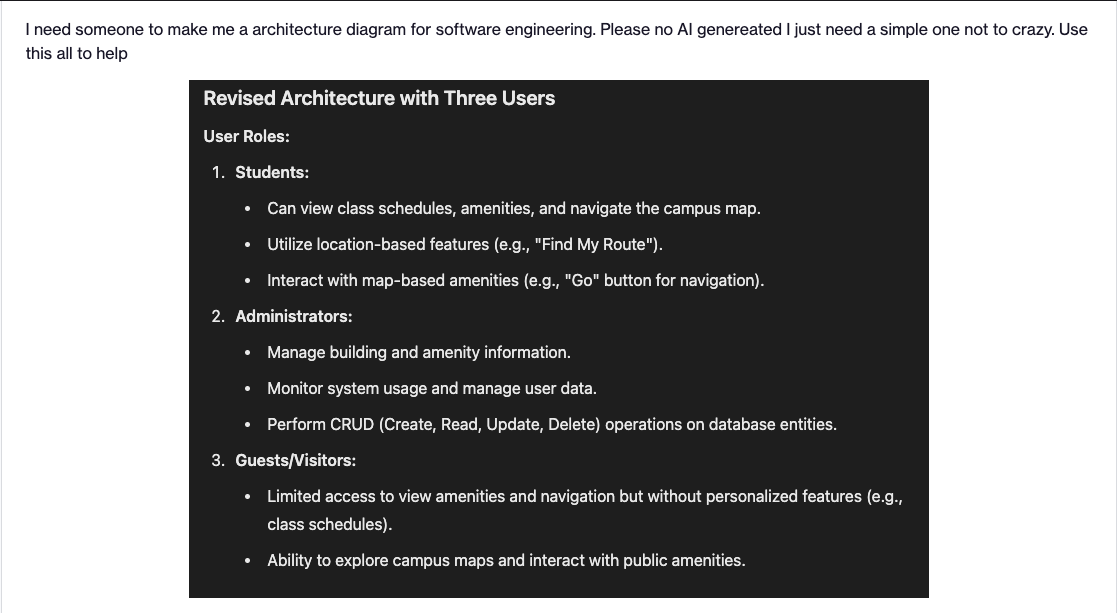
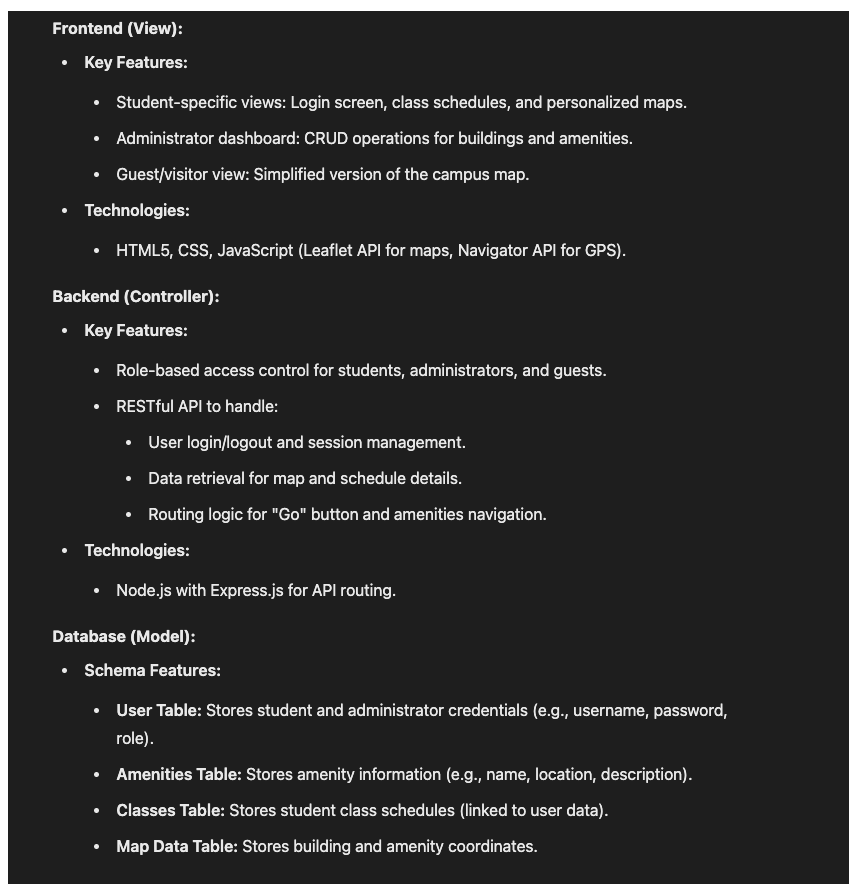
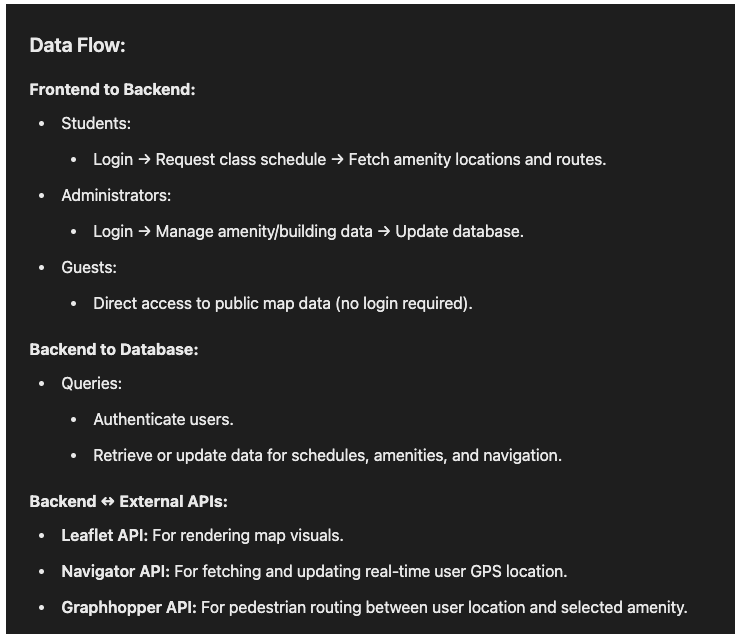
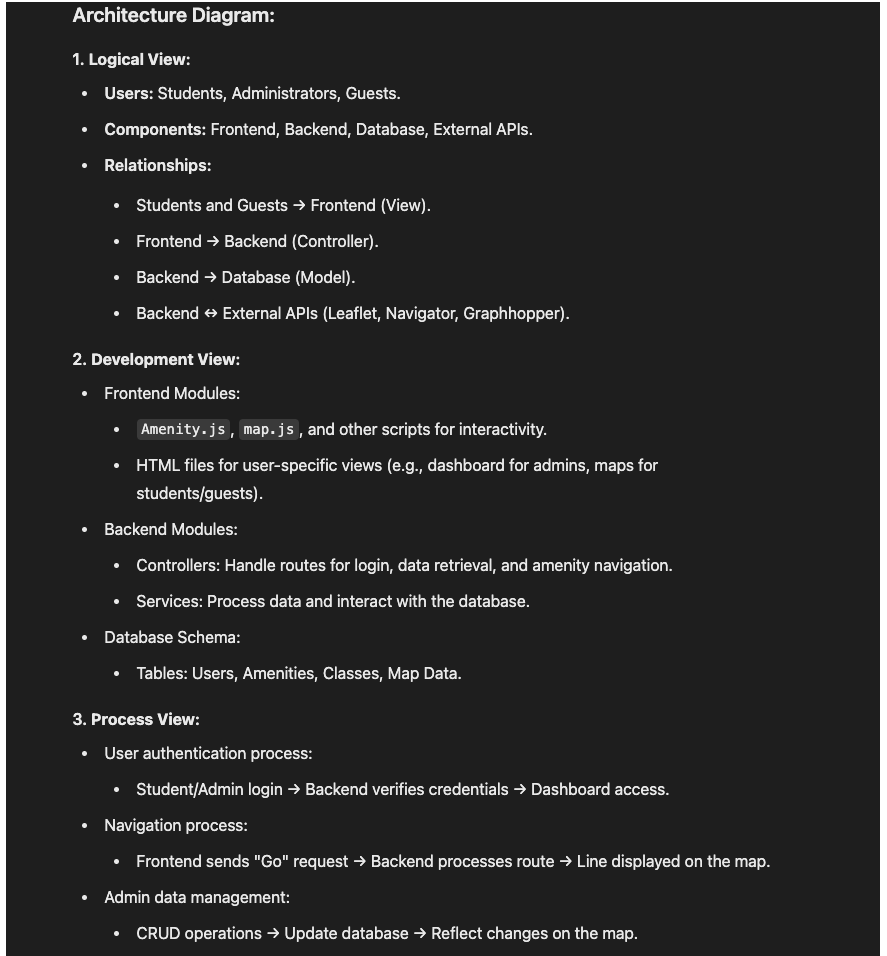
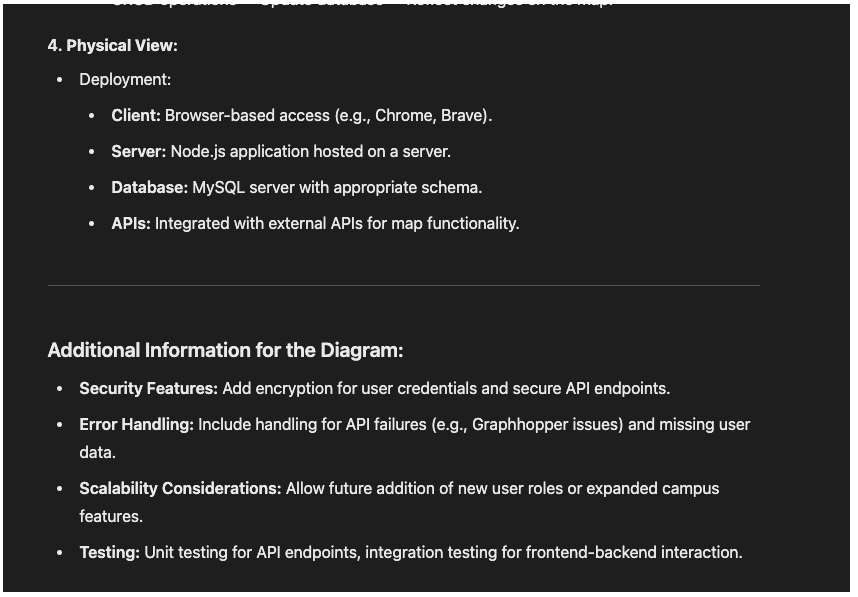
| need someone to make me a architecture diagram for software engineering. Please no Al genereated | just need a simple one not to crazy. Use this all to help Revised Architecture with Three Users User Roles: 1. Students: = Can view class schedules, amenities, and navigate the campus map. Utilize location-based features (e.g., "Find My Route"). Interact with map-based amenities (e.g., "Go" button for navigation). 2. Administrators: Manage building and amenity information. + Monitor system usage and manage user data. Perform CRUD (Create, Read, Update, Delete) operations on database entities. 3. Guests/Visitors: Limited access to view amenities and navigation but without personalized features (e.g., class schedules). = Ability to explore campus maps and interact with public amenities. Frontend (View): = Key Features: Student-specific views: Login screen, class schedules, and personalized maps. Administrator dashboard: CRUD operations for buildings and amenities. Guest/visitor view: Simplified version of the campus map. Technologies: HTML5, CSS, JavaScript (Leaflet API for maps, Navigator API for GPS). Backend (Controller): * Key Features: * Role-based access control for students, administrators, and guests. RESTful API to handle: * User loginflogout and session management. * Data retrieval for map and schedule details. = Routing logic for "Go" button and amenities navigation. Technologies: Node.js with Express.js for API routing. Database (Model): = Schema Features: User Table: Stores student and administrator credentials (e.g., username, password, role). Amenities Table: Stores amenity information (e.g., name, location, description). Classes Table: Stores student class schedules (linked to user data). Map Data Table: Stores building and amenity coordinates. Data Flow: Frontend to Backend: Students: Login > Request class schedule + Fetch amenity locations and routes. Administrators: . Login > Manage amenity/building data + Update database. Guests: Direct access to public map data (no login required). Backend to Database: Queries: . Authenticate users. Retrieve or update data for schedules, amenities, and navigation. Backend + External APIs: Leaflet API: For rendering map visuals. Navigator API: For fetching and updating real-time user GPS location. . Graphhopper API: For pedestrian routing between user location and selected amenity.Architecture Diagram: 1. Logical View: Users: Students, Administrators, Guests. Components: Frontend, Backend, Database, External APIs. . Relationships: Students and Guests + Frontend (View). Frontend - Backend (Controller). Backend - Database (Model). Backend + External APIs (Leaflet, Navigator, Graphhopper). 2. Development View: . Frontend Modules: Amenity . js , map. js , and other scripts for interactivity. HTML files for user-specific views (e.g., dashboard for admins, maps for students/guests). Backend Modules: Controllers: Handle routes for login, data retrieval, and amenity navigation. Services: Process data and interact with the database. . Database Schema: Tables: Users, Amenities, Classes, Map Data. 3. Process View: . User authentication process: Student/Admin login - Backend verifies credentials - Dashboard access. Navigation process: Frontend sends "Go" request - Backend processes route - Line displayed on the map. Admin data management: . CRUD operations - Update database - Reflect changes on the map.4. Physical View: . Deployment: Client: Browser-based access (e.g., Chrome, Brave). Server: Node.js application hosted on a server. Database: MySQL server with appropriate schema. . APIs: Integrated with external APIs for map functionality. Additional Information for the Diagram: . Security Features: Add encryption for user credentials and secure API endpoints. . Error Handling: Include handling for API failures (e.g., Graphhopper issues) and missing user data. . Scalability Considerations: Allow future addition of new user roles or expanded campus features. . Testing: Unit testing for API endpoints, integration testing for frontend-backend interaction
Step by Step Solution
There are 3 Steps involved in it
1 Expert Approved Answer
Step: 1 Unlock
Question Has Been Solved by an Expert!
Get step-by-step solutions from verified subject matter experts
Step: 2 Unlock
Step: 3 Unlock
Students Have Also Explored These Related Law Questions!